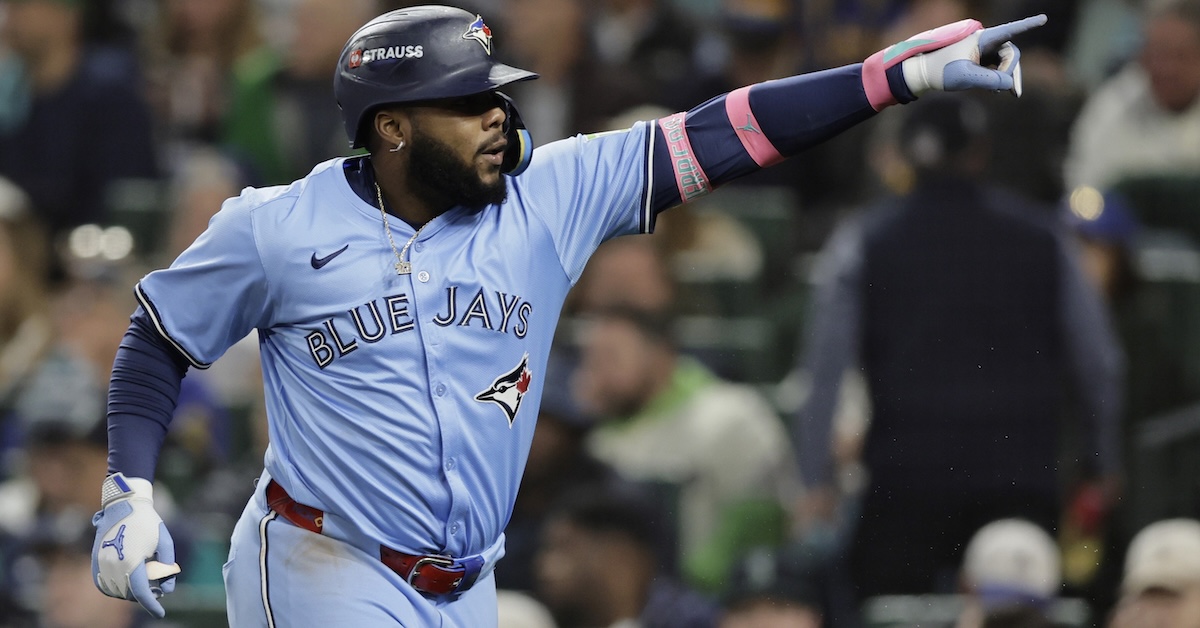
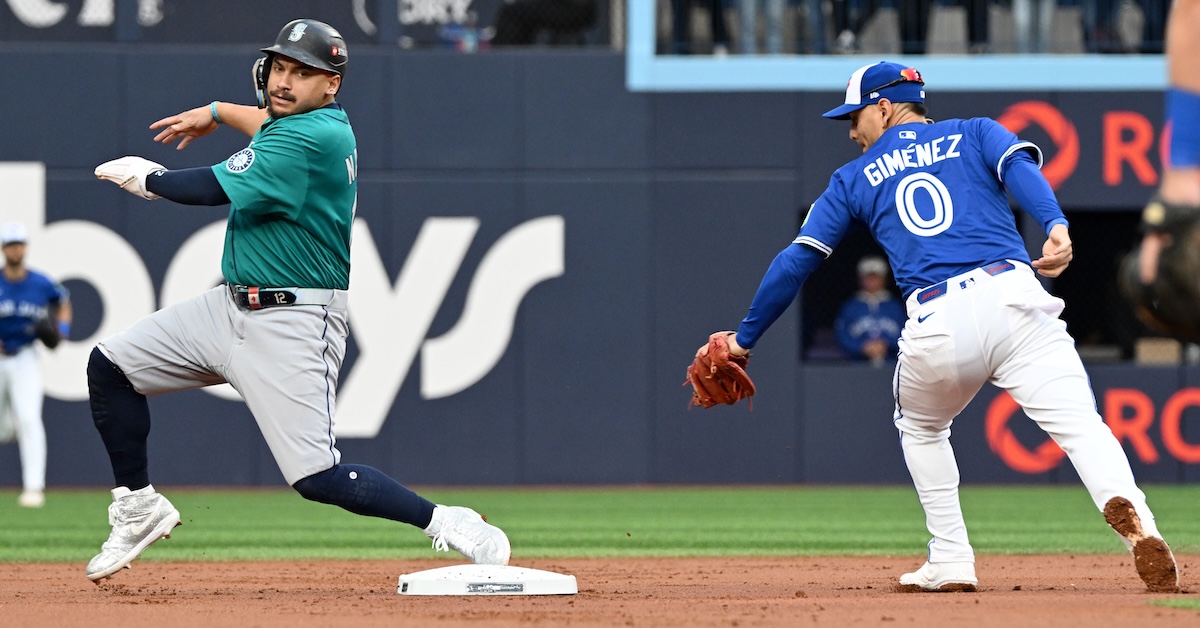
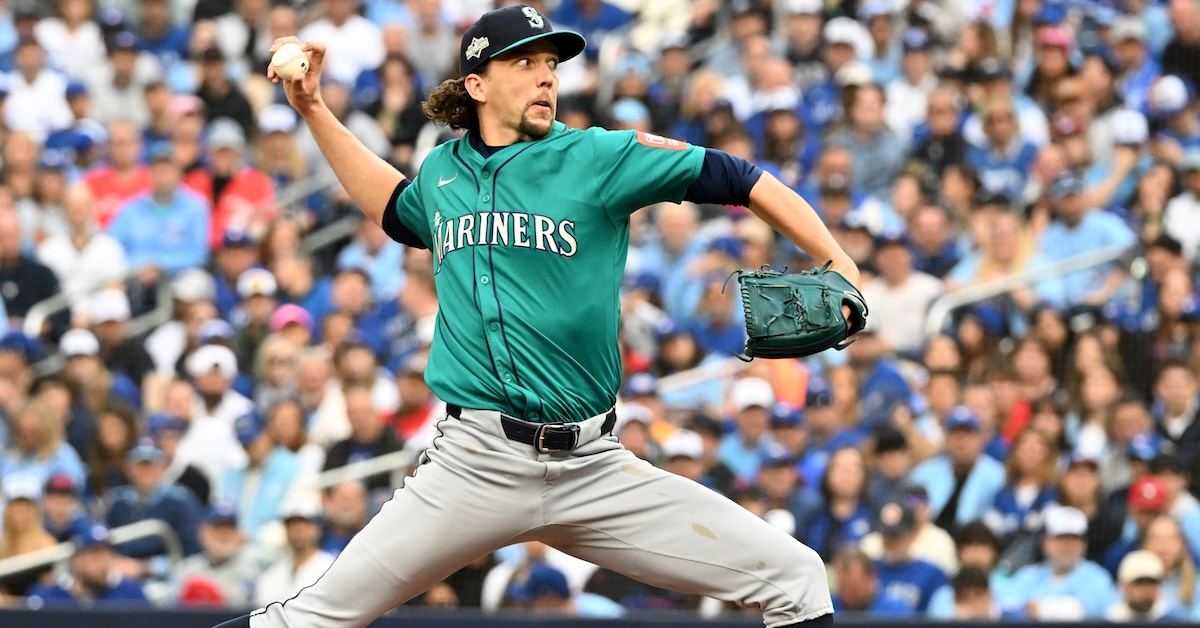
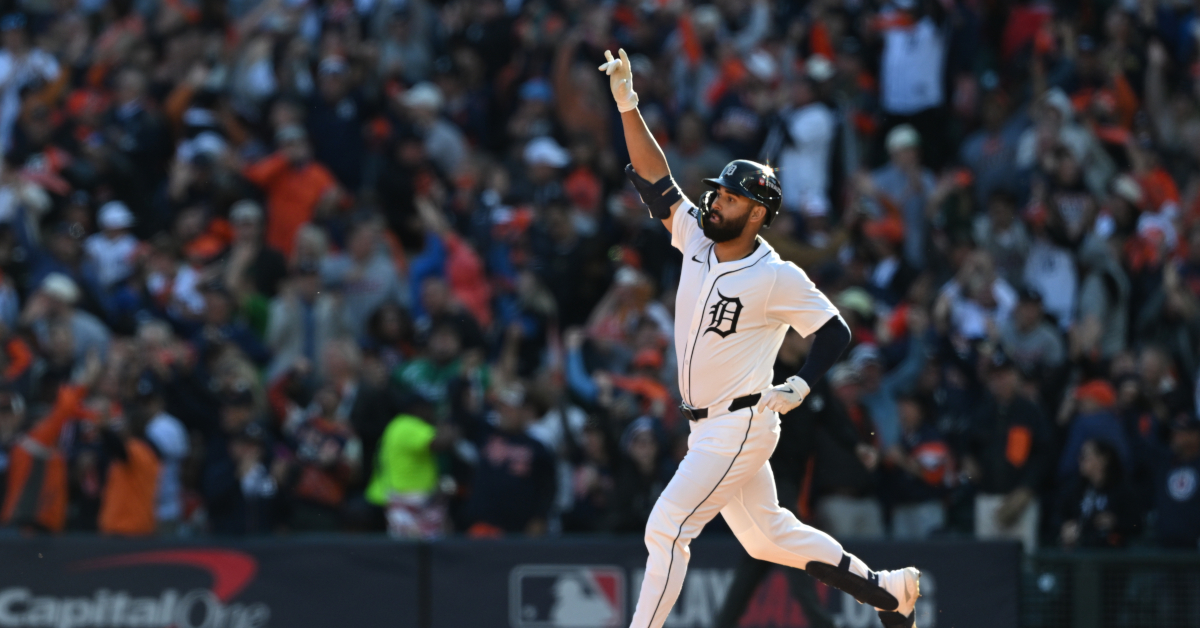
You could be forgiven for having thought that Max Scherzer had reached the end of the line. For the second season in a row, the three-time Cy Young winner and future Hall of Famer missed significant time due to injuries, and when he was available, he struggled like never before. The 41-year-old righty put up the majors’ highest ERA in the first inning (12.96), had issues with tipping pitches, and after allowing 25 runs in his final 25 innings, missed the cut for the Division Series roster. Yet on Thursday, with the Blue Jays trailing the Mariners two games to one in the ALCS, Scherzer turned back the clock, holding Seattle to just two runs over 5 2/3 innings while an aggressive offense chased Mariners starter Luis Castillo in the third inning. With Andrés Giménez and Vladimir Guerrero Jr. both homering for the second straight night, the Blue Jays won 8-2 to even the series.
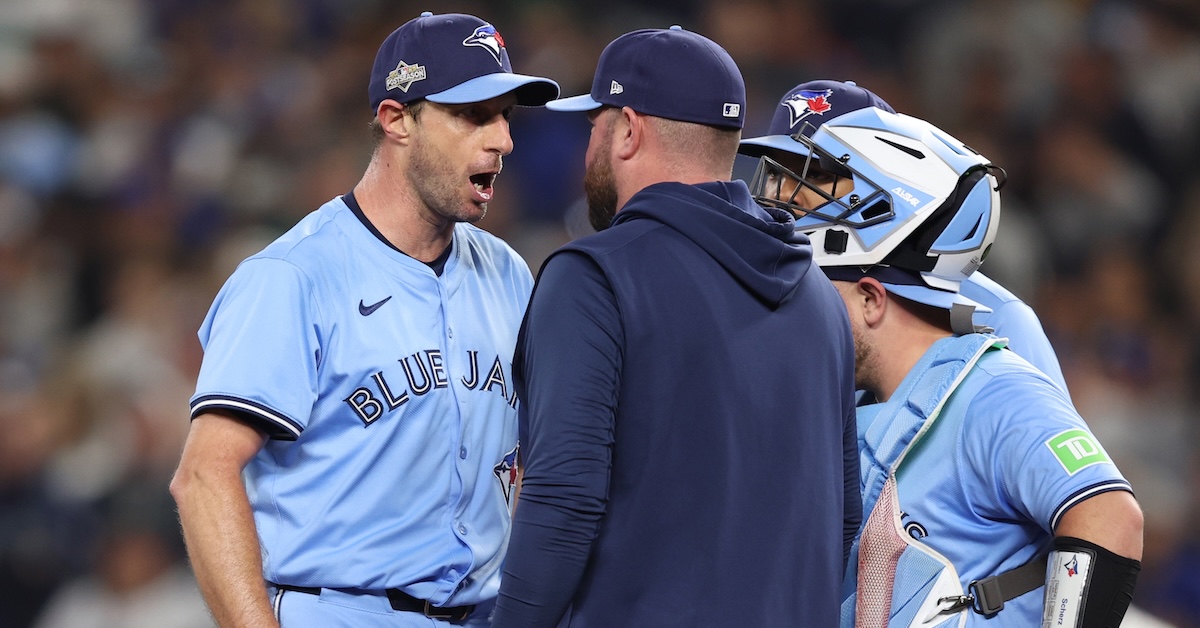
Scherzer, who had last pitched in a game on September 24, added to the Mad Max lore, displaying his legendarily competitive fire in the fifth inning. With two outs, a runner on first base and Toronto leading 5-1, manager John Schneider went to the mound to talk to Scherzer, who growled and chased the skipper away, struck out Randy Arozarena on a curveball in the dirt, then retired two batters in the sixth before finally getting the hook.
“I’ve been waiting for that all year, for Max to yell at me on the mound,” said Schneider afterwards. “It was awesome, I thought he was going to kill me.” Read the rest of this entry »
SEATTLE — There’s an age-old question among pitching philosophers. Should an approach focus more on the pitcher’s strengths or the hitter’s weaknesses? In my experience, pitchers do not ask themselves this question, though. They almost always prefer to pitch to their own strengths. They might tweak their strategy if a hitter has an obvious and exploitable weakness that they feel comfortable attacking, but mostly they’d rather stick to what they do best.
But what happens when what a pitcher does best aligns perfectly with what his opponent does best? When it’s not just that he’s ignoring the hitter’s weakness, but that he’s also pitching to the hitter’s strength? Game 3 of the ALCS between the Mariners and the Blue Jays gave us a data point to consider when answering that question. Toronto walked away with a 13-4 victory in Seattle to cut the Mariners’ series lead to 2-1, and did so by sticking to its strengths in the batter’s box. Read the rest of this entry »
Until the Mariners traded for the Diamondbacks’ Josh Naylor on July 24, they had a first base problem. For the second season in a row, subpar first-half production from their first sackers threatened to derail their bid for a playoff spot, and while they hadn’t shied away from addressing the issue last summer, they ended up missing a Wild Card berth by a single win nonetheless. In his first big swing at upgrading their roster this summer, president of baseball operations Jerry Dipoto dealt for Naylor, and since then, he’s proven to be one of their most reliable players — not just at the plate, but on the bases and in the field as well. He’s shown off all facets of his game during this postseason, including in Monday night’s 10-3 ALCS Game 2 win over the Blue Jays, during which he notched his third three-hit effort in the past four games.
After collecting the hit that helped the Mariners clinch a playoff berth — a bases-loaded, eighth-inning double off the Rockies’ Victor Vodnik on September 23 — and closing the regular season with a 12-game hitting streak, Naylor’s October actually began inauspiciously. He went hitless in the Mariners’ first three Division Series games against the Tigers, with a first-inning walk against Game 1 starter Troy Melton his only positive result across a stretch of 14 plate appearances; he just missed hitting one out against Melton in the fourth inning of that game, a 108.2-mph drive hauled in just a few feet in front of the right-center field wall. Only once during the regular season had he gone hitless in three straight games, that from June 1–4 while a member of the Diamondbacks. One of the few highlights from his more recent dry spell was his unassisted double play to seal the Mariners’ Game 3 victory, when he speared a liner off the bat of Parker Meadows, then doubled Andy Ibáñez off first.
Naylor started filling in the hit column with a 3-for-4 afternoon in the Mariners’ 9-3 loss in Game 4, doubling off Casey Mize and scoring a run in the second inning, then singling off Tyler Holton and coming around to score in the fourth, at which point the Mariners led 2-0. He pulled off another unassisted double play in the fourth, this time off a Colt Keithone-hopper that caught Gleyber Torres retreating to first base. Alas, by the time Naylor led off the eighth with a single off Melton, Seattle trailed 8-3. Too little, too late. Read the rest of this entry »
On Friday night in Seattle, Logan Gilbert was on the mound gutting out two scoreless innings of relief a mere two days after he’d won the third game of the American League Division Series. That performance was do or die; hold the Tigers scoreless or head home for winter. The entire Mariners team contributed to that 15-inning win, never mind any knock-on effects for the pitching staff. A few days after that, on Monday in Toronto, Gilbert tried to reprise his heroic, short-rest effort against a relentless Blue Jays offense in Game 2 of the American League Championship Series.
The Mariners couldn’t expect to get a peak Gilbert start, so their bats had to put up enough runs to outrun the ongoing effects of the massive workload its pitching staff shouldered late last week. The offense delivered plenty of scoring, and the pitchers more than held their own despite the circumstances. When it was all settled in a 10-3 Seattle win, the Mariners were just two wins away from their first World Series appearance in franchise history. Read the rest of this entry »
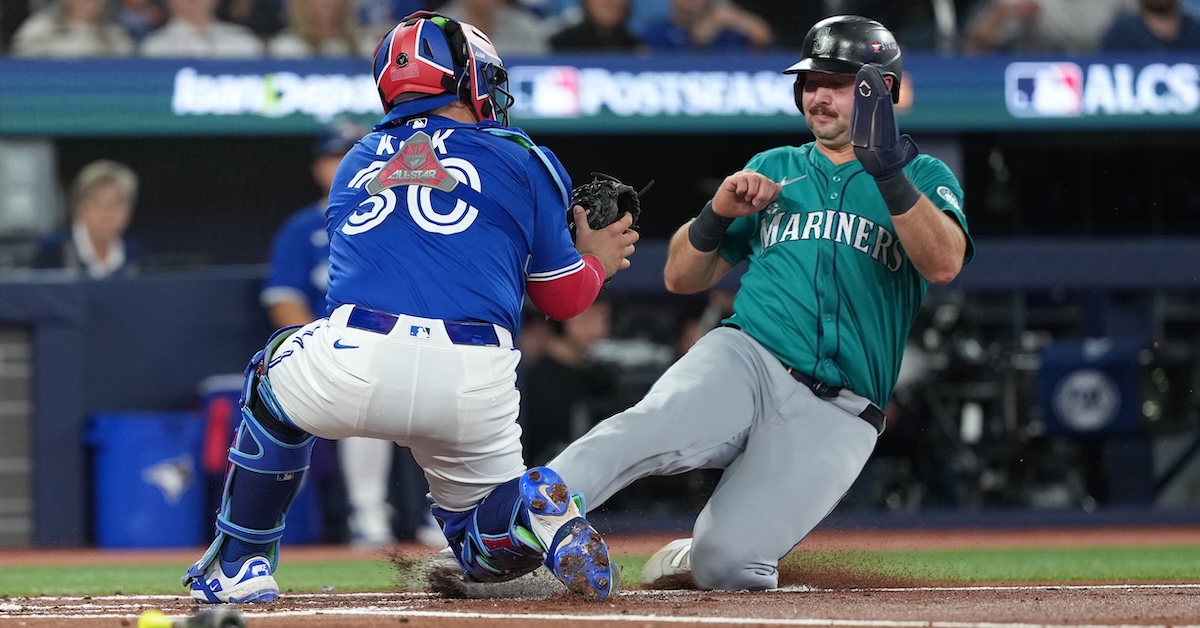
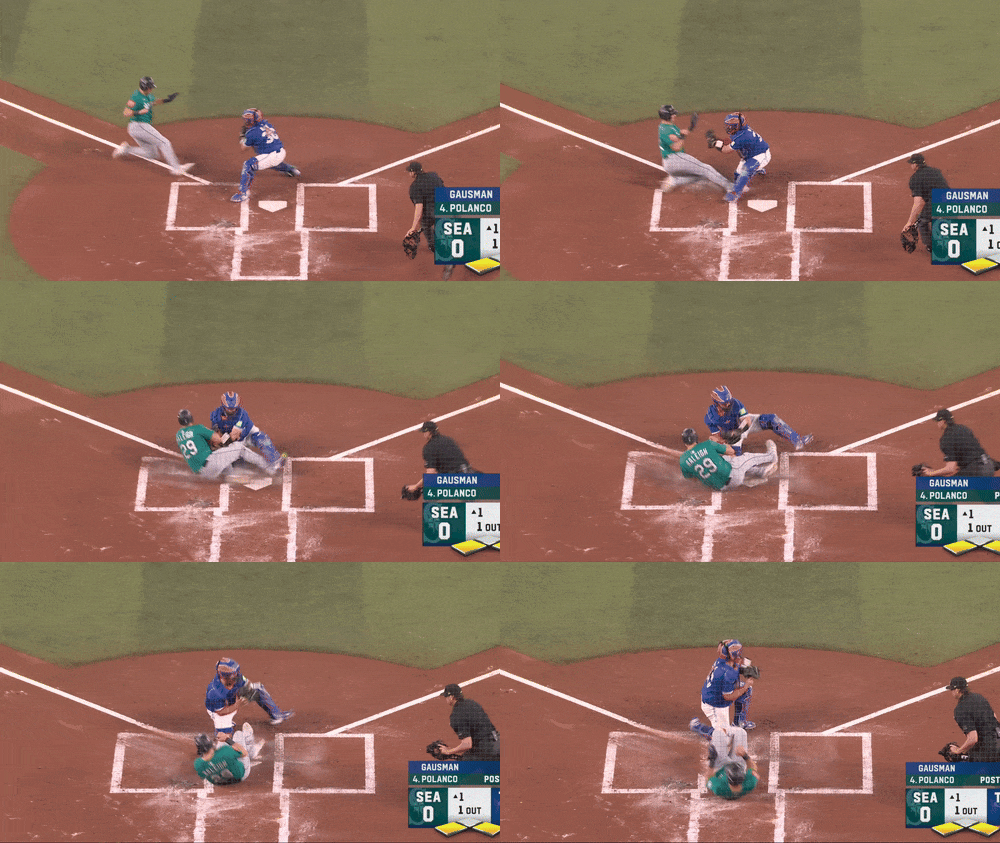
It was really close. On Sunday, in Game 1 of the American League Championship Series, in the top of the first inning, with one out and runners on first and third, once and future hero playoff hero Jorge Polanco hit a bouncer to the third baseman. The runner on third was going on contact, but the runner on third was Cal Raleigh, and while relatively quick for a catcher, the Sultan of Squat is not exactly known for his speed. Had the ball been hit anywhere other than directly at a corner infielder, he might have beaten it easily. Instead, Addison Barger’s throw beat Raleigh to the bag by at least three metres (the game was in Canada, after all). But it was still really close.
The throw arrived in plenty of time, and it was by no means off target. To make sure he ran no risk of hitting the runner, Barger wisely threw the ball toward the right side – the first base side – of catcher Alejandro Kirk’s body. The throw wasn’t high either, but it did arrive at shoulder height. Raleigh was running as hard as he could, and in the time it took Kirk to swing his catcher’s mitt from high on his right side to low on his left side, he’d closed the distance to roughly one metre. Then Kirk made an important decision. With Raleigh bearing down on him, he chose not to keep swinging the glove down and toward the plate. He reached out for a high tag and swept the left side of his body out of the way in the same moment. Self-preservation undoubtedly played a role in the decision. It cost him valuable centimetres (God, this feels wrong), and it very nearly allowed Raleigh to sneak his right cleat between Kirk’s legs and onto home plate before his torso crashed into the mitt. For the briefest of moments, the two catchers looked like colliding galaxies, smashing then spinning together as their gravitational fields intertwined:
In real time, the play went from looking like a sure out to an impossibly close call. Maybe Raleigh got his foot in there and maybe he didn’t. The call on the field was out, and unbelievably, the Mariners declined to challenge it. The video never got dissected by the replay room in New York. The chief marketing officer of Zoom Communications, Inc. surely wept. Read the rest of this entry »
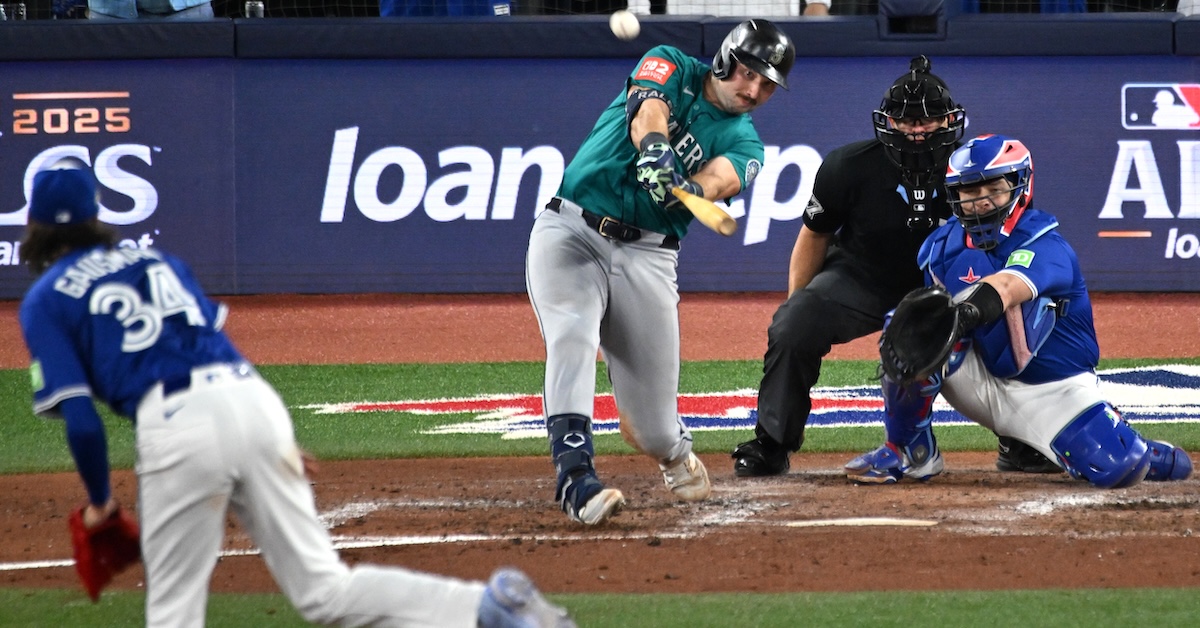
Jorge Polanco played the hero on Friday night, ending the epic Division Series Game 5 with an RBI single in the 15th inning off the Tigers’ Tommy Kahnle. Two nights later, in the American League Championship Series opener in Toronto, Polanco added to his October highlight reel with a pair of late-inning RBI singles against Blue Jays relievers, the first of which gave Seattle the lead. The switch-hitting second baseman wasn’t the only Mariner who came up big, as Bryce Miller tossed six strong innings on three days of rest, Cal Raleigh clubbed a game-tying solo homer, and three relievers turned in perfect innings as the Mariners took Game 1 in Toronto, 3-1.
In marked contrast to the four-hour and 58-minute Division Series finale that allowed Seattle to advance, this was a comparatively concise and fast-paced game, completed in two hours and 48 minutes. After throwing 209 pitches to the Tigers on Friday night, the Mariners mercifully needed just an even 100 pitches to dispatch the Blue Jays while giving up just two hits.
For as compelling a matchup as an ALCS pitting the two 1977 expansion teams — one seeking its first World Series berth in 32 years, the other its first-ever pennant — the pairing of Blue Jays starter Kevin Gausman against Miller appeared to be a mismatch based on their respective arcs. Coming off a strong regular season and a stellar Division Series Game 1 start against the Yankees, and with seven days of rest under his belt, Gausman appeared to have quite the advantage on Miller, who scuffled this year due to injuries, took an early exit in his Division Series Game 4 start against the Tigers, and started on Sunday only because ALDS Game 2 starter Luis Castillo and Game 3 starter Logan Gilbert were both called upon in relief during the extra innings of Game 5. Read the rest of this entry »
One of the first lessons we learn about life is that it’s rarely fair. Neither the Seattle Mariners nor the Toronto Blue Jays are historical doormats, but both franchises have been plagued over the last three decades by a lack of postseason success, if they reached the playoffs at all.
After the Jays won the 1993 World Series, it was 22 years until they made another postseason. Toronto has a lot of recent October appearances, but finished last in the AL East in 2024 and came into the 2025 playoffs after being swept out of the wild card round in its last three opportunities, including by Seattle in 2022. Aside from that series three years ago, the Mariners have had it even worse: They’ve never won a World Series — never even played in one — and their 2022 postseason appearance snapped a 21-year playoff drought. So the 2025 ALCS is a pretty big deal for both teams, as someone is going to face the Brewers or Dodgers for baseball’s championship. Read the rest of this entry »
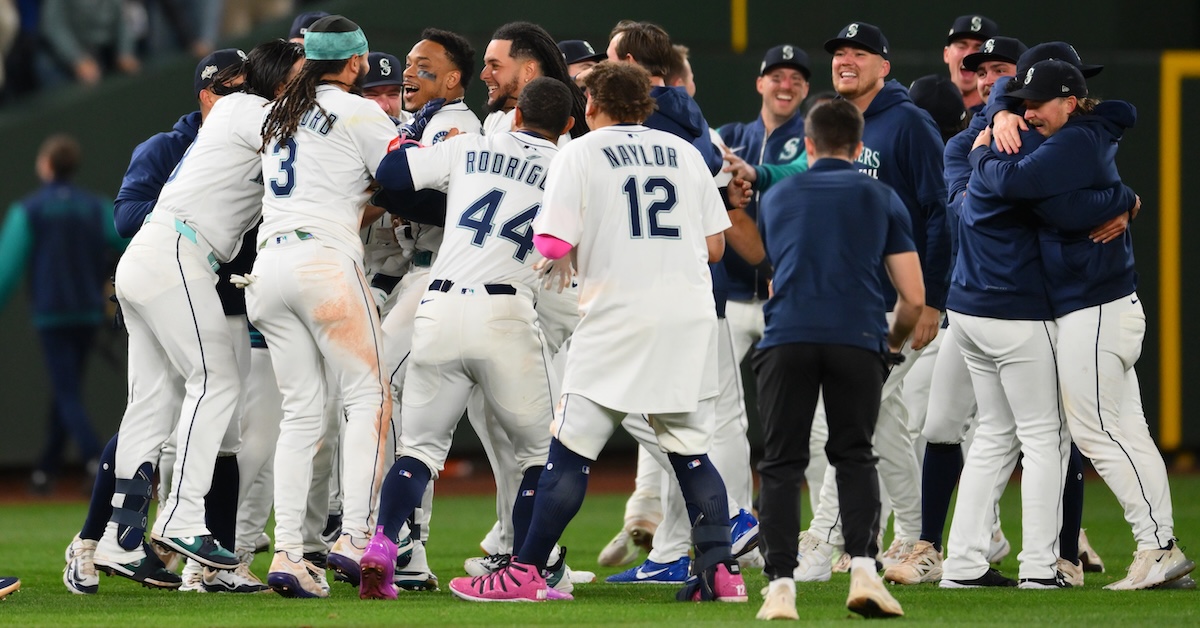
SEATTLE — On a per-game basis during the regular season, the Mariners and Tigers both scored and allowed roughly the same number of runs — 4.70 and 4.28, respectively. Through the first four games of the best-of-five ALDS, each team eked out a one-run win and each team triumphed in something of a laugher. Both teams won one game at home and one game on the road, and both teams relied extensively on their bullpens. Heading into Game 5 on Friday night in Seattle, it was clear one team was going to need to do something to distinguish itself. These teams entered the night locked in a dead heat, having played matching hands for much of the series and needing a new strategy, something different to get an edge and break the stalemate, and even then, it required 15 innings and four hours and 58 minutes to do that. When it was all over, the Mariners had outlasted the Tigers, 3-2, on a walk-off single by Jorge Polanco to advance to the American League Championship Series for the first time in 24 years.
“I don’t even know where to begin to try to recap all the heroic efforts that went into today,” manager Dan Wilson said. “And 15 innings? I’ve got to say, I don’t know how the fans kept their energy going. It was unbelievably loud, even in the 15th inning. And this is a special place. T-Mobile Park is a special place, and they showed us that tonight. And just an incredible ballgame from top to bottom.”
Both starting pitchers were taking the mound for a second time in the series, and both brought a slightly different approach to Game 5 than what they put on tape in their prior starts. In Game 1, Seattle starter George Kirby threw his slider 31% of the time; it was the first pitch he threw to eight of the 22 batters he faced. In Game 5, Kirby went to his slider 50% of the time and threw it as the first pitch to 10 of the 18 batters he faced. After the game, he confirmed this was a conscious shift in strategy to show Detroit’s lineup something different from what it’d seen from him six days prior. “All those guys from top to bottom are probably looking for a heater to start,” Kirby said, “and just starting off with a slider, curveball, whatever it may be, just — if I kept them off balance a little bit, I was able to attack the zone a little bit more with my fastball.” By mixing in more sliders early in the count, he was able to maintain the effectiveness of his four-seamer despite the recent exposure. Though the slider-heavy approach meant Kirby racked up fewer strikeouts than usual, he finished his outing allowing just three hits and one earned run over five innings with six punchouts. Read the rest of this entry »
Even the best pitchers in baseball lose a game once in a while. Just ask Tarik Skubal. I’m sure you’ve read about it a hundred times by now, but the Mariners have won all three of their games this year where Skubal was the opposing starter. Seattle was the only team to hand him multiple losses during the regular season, and the Tigers dropped Game 2 of the ALDS — technically a no-decision for Skubal — less than a week ago. Now, thanks to his team’s roaring come-from-behind victory in Game 4, Skubal is lined up to start tonight’s decisive Game 5, giving him an opportunity to finally beat the Mariners this year.
I’ll give a warning upfront: This article is going to lean pretty heavily on batter-pitcher matchup stats; we’ll be examining some extremely small samples. But I think it’s an interesting investigation into the strategy that unfolds between familiar foes during a short postseason series.
What I really wanted to know is whether the Mariners had a specific approach that made them so successful against Skubal this year. As I mentioned, Skubal faced the Mariners twice during the regular season. On April 2, in Seattle, he allowed three runs in 5.2 innings; he gave up six hits and three walks while striking out eight. On July 11, he faced them again, this time in Detroit, and allowed four runs in five innings; he gave up just four hits and two walks while striking out five. His Game 2 start this past Sunday was his best yet: He surrendered two runs on five hits and one walk in seven innings while notching nine strikeouts. The two home runs off the bat of Jorge Polanco were his undoing. Read the rest of this entry »
Maybe the three runs the Tigers scored in the ninth inning of their Game 3 blowout loss weren’t so inconsequential after all. Maybe they were a sign of better things to come on Wednesday. Facing elimination, Detroit’s bats woke up in a big way in Game 4 en route to a 9-3 victory. That sends the American League Division Series back to Seattle on Friday for a decisive Game 5, allowing Tarik Skubal one more chance to beat the Mariners for good.
Consider this: Through the first three games of the ALDS, the Mariners had hit more home runs than the Tigers had extra-base hits. Kerry Carpenter hit a home run in Game 1, the team’s lone long ball to that point, and Spencer Torkelson and Gleyber Torres each had a pair of doubles, but that was it. Granted, three of those extra-base hits drove in runs, and two of them tied the game — the Tigers made the most of their limited opportunities — but Seattle had been absolutely outslugging Detroit:
Tigers Hitters, Through ALDS Game 3
Player
H
RBI
WPA
wOBA
xwOBA
wRC+
Gleyber Torres
4
0
0.03
0.382
0.372
147
Spencer Torkelson
2
4
0.39
0.299
0.337
90
Colt Keith
1
0
-0.05
0.225
0.370
39
Kerry Carpenter
1
3
0.00
0.210
0.405
29
Riley Greene
2
0
-0.15
0.147
0.117
-14
Zach McKinstry
1
1
0.10
0.131
0.145
-25
Indeed, outside of Carpenter’s clutch home run, a pair of two-run doubles from Torkelson, and four hits off the bat of Torres, the Tigers offense had been conspicuously absent during the series. Even after their mini-rally in the ninth on Tuesday, Detroit was batting .165 and slugging .233 as a team entering Game 4. On the other hand, Seattle was slugging .423 even while batting just .212 through three games. That narrative completely flipped on Wednesday. The Tigers collected seven extra-base hits (three home runs and four doubles), while the Mariners could only muster one. Torkelson, Torres, Zach McKinstry, and Javier Báez each had multiple hits, and Jahmai Jones had a huge pinch-hit double in the decisive fifth inning.
And as they have all series long, home runs defined the shape of Game 4. Riley Greene had been mostly bottled up during the ALDS; he had collected just two hits through the first three games of the series. His first extra-base hit against Seattle was a 454-foot blast to give the Tigers a 4-3 lead in the sixth inning. After hitting 36 homers during the regular season, his go-ahead home run was the first of his postseason career and broke open the floodgates for the Tigers. For his part, Báez hit his first postseason home run since the 2017 NLCS, a two-run shot, later in the inning. Then in the seventh, Torres continued his hot hitting by launching an opposite field solo shot to extend the Tigers’ lead, making it 8-3.
The game hadn’t started off so lopsided. As they have in each game of the series, the Mariners got on the board first, scoring a run in each of the second, fourth, and fifth innings. With a 3-0 lead halfway through the ballgame, things were looking pretty encouraging for the Mariners. They’ll likely look back on Wednesday and be haunted by some pretty big missed opportunities to put the game away early. In the fourth, Seattle loaded the bases with no outs, but wound up pushing just one run across after a double play and a pop out squelched the threat. The next inning, the first two batters reached, earning the team another run, but the Mariners couldn’t keep the rally going.
Things turned in the bottom half of that inning. Torkelson led off with a single, and after a fielder’s choice, Dillon Dingler drove in the Tigers’ first run with a double. That chased Bryce Miller from the game, and Mariners manager Dan Wilson went with trustworthy lefty Gabe Speier to face the bottom of Detroit’s lineup. Jones, pinch-hitting for Parker Meadows, ripped the first pitch he saw down the left field line to drive in Dingler, and Báez tied the game with a single up the middle in the next at-bat. Speier came back out in the sixth inning to face Greene, but the Tigers left fielder turned on a hanging slider and deposited it in the right field stands. From there, the flood gates opened. The Tigers scored three more in the sixth, capped off by Báez’s home run off Eduard Bazardo, and they added insurance runs in the seventh and eighth.
For Seattle, it’s a pretty concerning shift from what had been a fairly dominant bullpen through three games. Even when you include the three runs allowed by Caleb Ferguson in the ninth inning of Game 3, Mariners relievers had put up a 3.38 ERA and a 1.71 FIP in 13.1 innings during the ALDS — their ERA drops to 1.35 if you ignore those garbage time runs. The Tigers have also scored all of their runs in this series in the fifth inning or later, putting even more pressure on the Mariners’ relief corps.
The runs Speier and Bazardo allowed in Game 4 were their first of the series, and you have to wonder if familiarity is starting to work against Seattle’s ‘pen. Bazardo has appeared in all four games, while Speier has now gotten some high-leverage work in three of the four games, including facing Carpenter and Greene three times apiece. Because Detroit’s most dangerous hitters are left-handed, Speier will almost certainly be called on to work in Game 5 on Friday, and thanks to Ferguson’s struggles on Tuesday — he’s the only other lefty in Seattle’s bullpen — Speier seems like the most critical piece of the pitching puzzle for Wilson and the Mariners.
The Tigers turned to Game 1 starter Troy Melton to shut down the Mariners bats once they had tied it up in the fifth. Melton worked around some trouble in the sixth, getting Randy Arozarena to fly out to center after allowing two two-out baserunners. The right-hander carved through the heart of the Mariners order on seven pitches in the seventh, then erased a leadoff baserunner in the eighth with a made-to-order double play, again only needing seven pitches to set the M’s down in order; he has to have Tigers manager A.J. Hinch feeling really good should the team need a fireman to quell a late rally from the Mariners on Friday. Will Vest closed the door with a 1-2-3 ninth.
While Detroit’s starter for the decisive Game 5 isn’t in question, Seattle’s is still unsettled. Both George Kirby and Luis Castillo could start Friday’s game on normal rest, and both looked pretty good in their earlier starts this series. Ultimately, it’ll come down to who Wilson trusts more to work through the Tigers’ lineup twice, with whoever doesn’t make the start likely available out of the bullpen anyway. I should mention that between the two, Kirby is the only one who has made a relief appearance during his big league career, closing out Game 2 of the 2022 Wild Card series against the Blue Jays.
No matter who starts for the Mariners on Friday, this was the exact scenario they were hoping to avoid. Allowing Skubal two opportunities to affect the outcome of the series is a very dangerous proposition, even if Seattle has beaten him three times this year. Tempting fate a fourth time tips the scales toward Detroit; our ZiPS game-by-game odds currently give the Tigers a 54% chance of advancing to the ALCS (assuming a Kirby start for Seattle). That’s a percentage Mariners fans are well acquainted with.