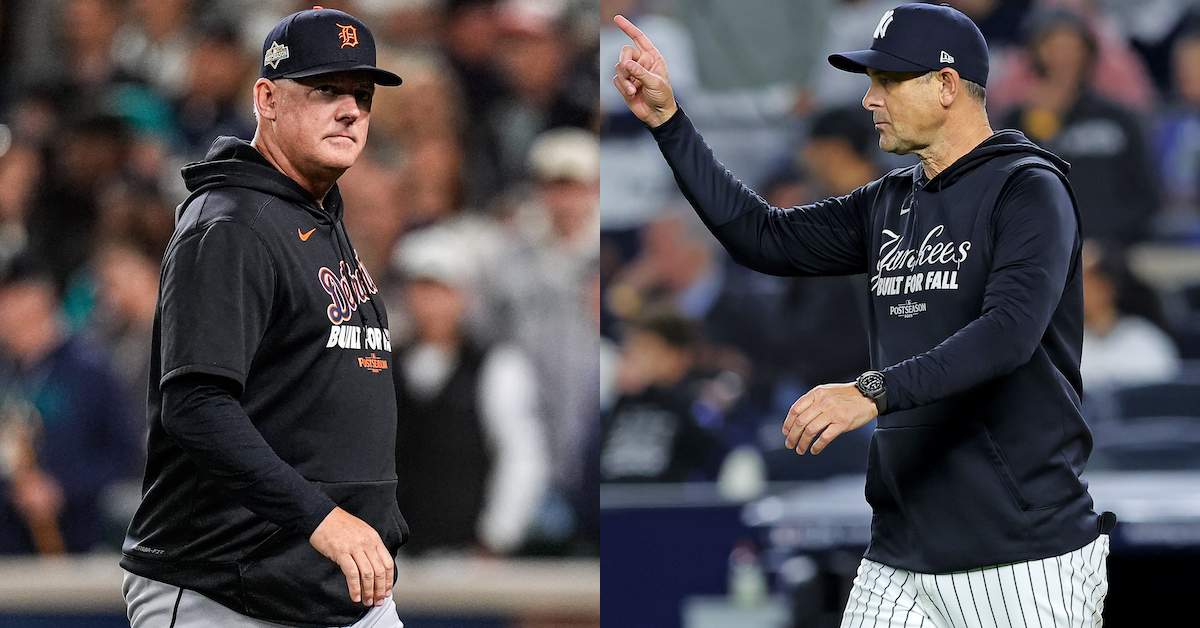
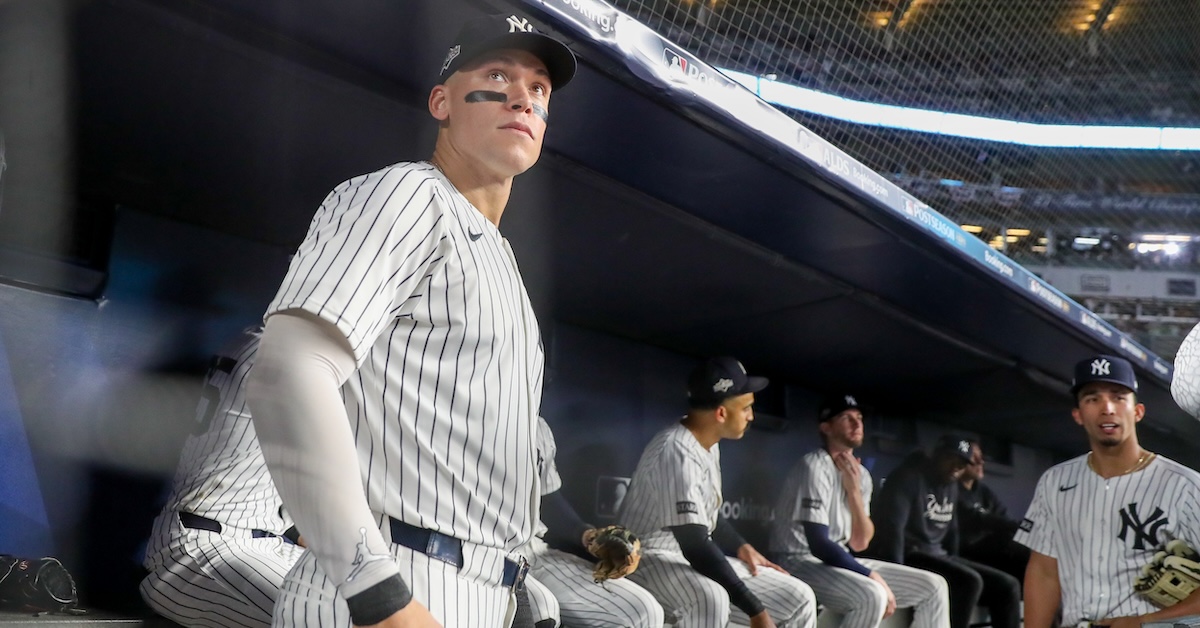
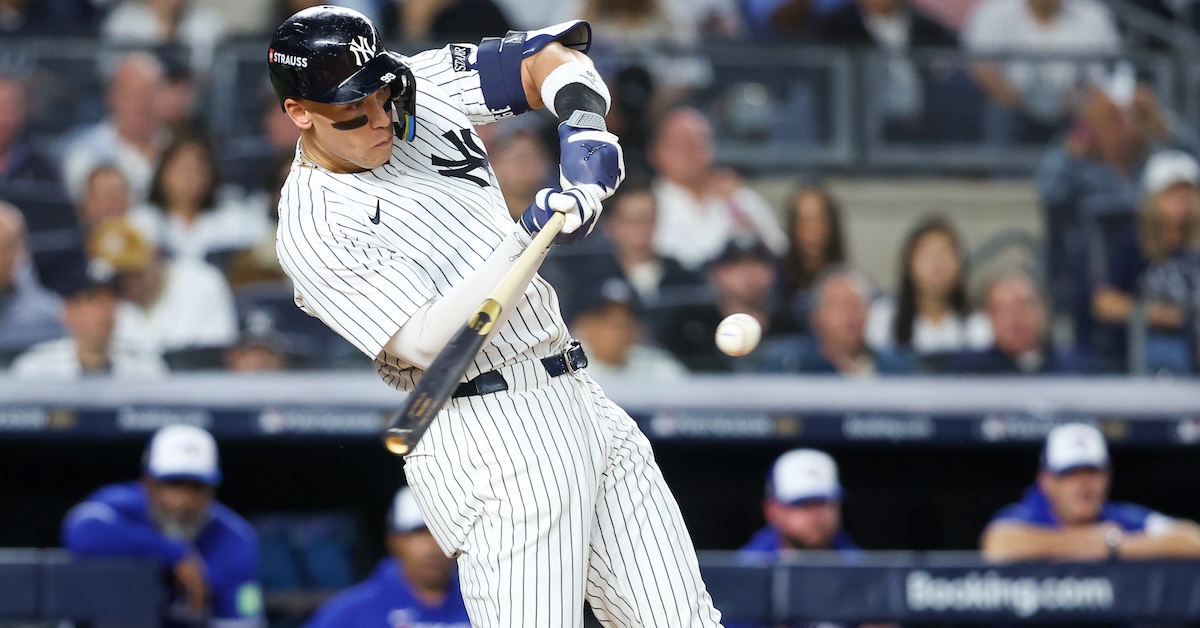
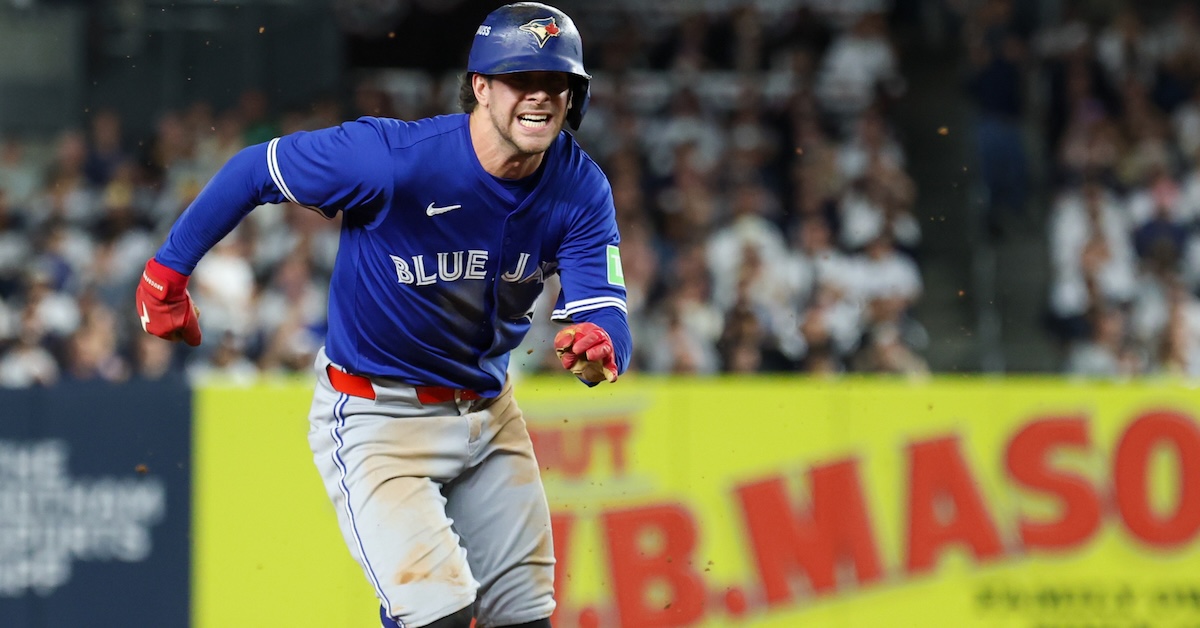
On Thursday, the New York Yankees became the first team to win a Wild Card Series after losing the first game of the best-of-three since the new playoff format was introduced in 2022. After dispatching the Boston Red Sox in the Wild Card, the Yanks have a matchup against another AL East foe lined up for the ALDS. For their part, the Toronto Blue Jays desperately needed their first-round bye to get their roster healthy after a breakneck final month of the season. These two teams finished 2025 with identical 94-68 records. The division race came down to the regular season’s final day, and the Jays only took the AL East crown thanks to a 8-5 head-to-head record against New York.
These division rivals are well acquainted with each other, though this will be the first time the two teams have met in the playoffs. (That’s pretty wild considering the Yankees’ long postseason history. There are now just three teams they haven’t faced in the playoffs: the White Sox, Nationals, and Rockies.) Their identical win totals during the regular season provide the primary storyline in this series: These are two evenly matched clubs battling for a spot in the ALCS.
NEW YORK — In just the second winner-take-all postseason matchup started by two rookies — in one of the sport’s most storied rivalries, no less — 24-year-old Yankees righty Cam Schlittler utterly dominated the Red Sox lineup on Thursday, striking out 12 without a walk while scattering just five hits over eight scoreless innings. His opposite number, 23-year-old lefty Connelly Early, matched Schlittler zero for zero through the first three frames, making up with deception what he lacked in velocity, at least relative to the New York starter. Alas, a mistake by the Red Sox defense opened the door to trouble in the fourth inning, as five of the first six Yankees reached base en route to a 4-0 lead. Boston manager Alex Cora, who pulled starter Brayan Bello after 28 pitches in Game 2, left Early to throw 33 pitches in the fourth inning alone. That outburst was more than enough, as the Yankees eliminated the Red Sox from the postseason for the first time since 2003, when current manager Aaron Boone hit a walk-off home run off Tim Wakefield.
This was the sixth time the two AL East rivals squared off in the postseason, with the Red Sox riding a series winning streak that included the 2004 American League Championship Series, the 2018 AL Division Series, and the 2021 AL Wild Card Game. The only other time two rookie starters met in a winner-take-all game was in Game 7 of the 2020 NLCS, when the Dodgers’ Dustin May and the Braves’ Ian Anderson went head to head, though May pitched just one inning and Anderson three, and neither figured in the decision.
The two starters in this one began the season in Double-A, and didn’t figure to contribute substantially this season. Schlittler joined a banged-up Yankees rotation on July 9 and pitched brilliantly during the second half, overpowering batters with a four-seam fastball that averaged 98.0 mph as well as an effective cutter. He posted a 2.96 ERA and 3.74 FIP with a 27.6% strikeout rate in 14 starts, and was an easy choice for Boone to start Game 3 following Max Fried and Carlos Rodón. By contrast, Early only debuted on September 9, and pitched brilliantly (2.33 ERA, 0.91 FIP) but might not have made the postseason roster — or at least would not have started — had Lucas Giolito not been sidelined by elbow trouble. While Garrett Crochet’s 7 2/3 innings in Game 1 required Cora to use only closer Aroldis Chapman in relief, the manager didn’t like what he saw from Bello in Game 2 and pulled him with one out in the third, leaving him to call upon six relievers, one of whom (Garrett Whitlock) threw a season-high 47 pitches and gave up the winning run. Read the rest of this entry »
NEW YORK — Jazz Chisholm Jr. was not a happy camper on Tuesday night. Despite a 31-homer, 31-steal season that included a solid showing against left-handed pitching, he spent the first seven innings of the Wild Card Series opener against the Red Sox on the bench instead of facing lefty Garrett Crochet. After the Yankees’ 3-1 loss, he was left muttering almost inaudibly at his locker with his back to reporters — a surreal scene. Back in the lineup on Wednesday night against righty Brayan Bello, Chisholm went 0-for-3 but made huge contributions on both sides of the ball, with two standout defensive plays and an eighth-inning walk that turned into the decisive run when he motored home from first base on Austin Wells’ long go-ahead single. The Yankees’ 4-3 win kept their season alive, pushing the series to Game 3.
Despite hitting a respectable .248/.322/.411 (106 wRC+) against lefties this year (compared to .240/.336/.508, 134 wRC+ against righties), Chisholm sat on Tuesday night in favor of righty Amed Rosario — who played just one game at second base after being acquired from the Nationals on July 26 — apparently on the basis of Rosario’s owning a 6-for-9 career line with two extra-base hits against Crochet entering play Tuesday. Rosario went hitless in three plate appearances against the Boston ace before yielding to Chisholm in the eighth inning; Chisholm flied out with the bases loaded in the ninth against Aroldis Chapman.
Manager Aaron Boone wasn’t worried that Chisholm’s disappointment at being left out of the lineup would carry over into Game 2. “I don’t need him to put a happy face on,” Boone said Wednesday afternoon. “I need him to go out and play his butt off for us tonight. That’s what I expect to happen.” Read the rest of this entry »
Dansby Swanson brought home back-to-back Gold Gloves in 2022 with the Braves and ’23 with the Cubs while leading the majors in Statcast’s Fielding Run Value in both seasons. Although he hasn’t added any hardware to his collection since then, and while his defensive metrics have slipped, he still grades out as comfortably above average in both FRV and Defensive Runs Saved. His defensive acumen was on display in Tuesday’s Wild Card Series opener between the Cubs and Padres, as he made a couple of pivotal, run-saving plays in Chicago’s 3-1 victory.
The Padres had taken the lead in the second inning, when Jackson Merrill and Xander Bogaerts opened the frame with back-to-back doubles off Matthew Boyd; Bogaerts took third when center fielder Pete Crow-Armstrong’s relay spurted away from Nico Hoerner at second base. Ryan O’Hearn then hit a sizzling 101-mph groundball, and Swanson, who was shaded up the middle, dove to his right to stop it. He looked Bogaerts back to third base, then threw to first for the out. The play loomed large as Bogaerts ended up stranded.
The Padres threatened again in the fourth, when Manny Machado drew a leadoff walk and took second on Merrill’s sacrifice bunt. Bogaerts legged out a chopper into the no-man’s land to the right of the mound for an infield single, and San Diego appeared poised to capitalize when O’Hearn hit a flare into shallow center field. Swanson had other ideas, making a great over-the-shoulder snag of the ball, then in one motion turning to fire home to keep Machado honest.
NEW YORK – One day before taking the mound at Yankee Stadium for the most important game of his life, Garrett Crochet sat in the visitor’s dugout with Alex Cora. A few members of the front office were out in the bullpen, and Cora told his ace that it’d be fun to give them a call.
“Tomorrow you are going to make one call to the bullpen,” Crochet said. “Maybe two,” the manager responded.
But the 26-year-old lefty was adamant. One pitching change, with Aroldis Chapman closing things out, was all it would take for the Red Sox to beat the Yankees in Game 1 of the best-of-three AL Wild Card Series.
So, naturally, that’s exactly what happened. Crochet dominated the best offense in baseball across 7 2/3 innings. He allowed one run, four hits, no walks, and struck out 11 before he was finally pulled after 117 pitches, the most he’d ever thrown in the majors. Cora called on Chapman, who secured a four-out save and a 3-1 Boston win. Read the rest of this entry »
As somebody who watched almost every single Anthony Volpe defensive play this year, I can confidently say that for a lot of the season, he didn’t look comfortable attacking the ball. What I mean by that is this: In his couple of steps right before fielding the ball, he didn’t look like he was moving in rhythm. He led the AL with 19 errors, 13 of which came while throwing.
Last season, he was one of the best defenders in the sport. What he lacks in top-end athleticism and arm strength he made up for with supreme footwork, instincts, and pace. He doesn’t have the luxury of a rocket arm, making all those features even more important. This season, the quality of his footwork around the ball was inconsistent and led to mistakes on plays he made consistently through the first two seasons of his career, both with his glove and the accuracy of his arm.
Some of Volpe’s defensive woes could be related to his health. He played through what was later revealed to be a partially torn labrum in his left shoulder, an injury that occurred on May 3, when he felt a pop in the joint while diving for a ball against the Rays. He finally received a cortisone shot to address the injury on September 10, more than four months later. Only three of his 19 errors came before he hurt his shoulder, and he didn’t make an error in his 12 games after returning to the field from the shot. Although the injury wasn’t to his throwing arm, it still could have affected his throws. Shortstops use their left arm as a stabilizer to lead them in the correct direction while throwing. Think of the basic mechanics you’re taught as a kid: Point your glove at the target, step at the target, then throw the ball. If your non-throwing shoulder is hurt, you may not be able to use it to properly begin the mechanics for an accurate throw. Many times, shortstops are fielding the ball while moving and don’t have time to plant their feet and step directly toward first base before releasing the ball. In these instances when the lower half of the body is neutralized some, it’s even more important to have a healthy non-throwing arm to direct the ball. That’s especially true for shortstops like Volpe who don’t have strong throwing arms and rely on a quick release to compensate. There’s no way to know how much the shoulder was bothering him, but that is likely how it would have hindered his play.
If the shot did the trick, and if the shoulder truly was the primary cause for Volpe’s poor fielding, then the Yankees should be in a much better position entering the postseason, when making one play could mean the difference between advancing and getting eliminated. He’ll be at shortstop tonight at 6:08 p.m. ET, when the Yankees host the Red Sox in Game 1 of the best-of-three AL Wild Card Series at Yankee Stadium.
With all that in mind, let’s break down Volpe’s defensive season to get an understanding of what went wrong and how, maybe, it could all be going right again at the most important time of the year. Read the rest of this entry »
For the third time in the past eight seasons, and the sixth time since 1999, one of the game’s most storied rivalries has spilled over into the playoffs. In the matchup of the top two AL Wild Card seeds, the Yankees (94-68) host the Red Sox (89-73) for a best-of-three series at Yankee Stadium. Though they won 11 of their last 12 to erase a five-game lead in the AL East by the Blue Jays, the Yankees lost their season series tiebreaker to Toronto, 8-5, bumping them into the Wild Card round, making their road to return to the World Series that much harder.
The Red Sox have taken the past three postseason matchups between the two clubs, most recently beating the Yankees in the 2021 AL Wild Card Game at Fenway Park and before that the 2018 Division Series. You have to dial back to 2003 for the last time the Yankees defeated the Red Sox in October — with current manager Aaron Boone hitting a walk-off homer off Tim Wakefield to send New York to the World Series.
In terms of more recent and somewhat more relevant history, the Red Sox did win the season series, 9-4, and took seven out of nine at Yankee Stadium. That said, the Yankees won three of the final four games between the two teams. Read the rest of this entry »
With just 12 days left to go in the regular season, two teams — the Brewers and Phillies — have clinched playoff berths, and on Monday the latter became the first to win its division. From among the four other division races, only in the AL West and NL West are the second-place teams closer than five games out, putting the chances of a lead change in the range of low-fat milk. With the exception of those two races, the lion’s share of the remaining drama centers around the Wild Card races.
Once upon a time, this space would be filled with my reintroduction of the concept of Team Entropy, but through the 2022 Collective Bargaining Agreement, Major League Baseball and the players’ union traded the potential excitement and scheduling mayhem created by on-field tiebreakers and sudden-death Wild Card games in exchange for a larger inventory of playoff games. The 12-team, two-bye format was designed to reward the top two teams in each league by allowing them to bypass the possibility of being eliminated in best-of-three series. Often, however, things haven’t worked out that way, because outcomes in a best-of-five series are only slightly more predictable than those of a best-of-three.
Aside from the Dodgers beating the Padres in last year’s Division Series, every National League team that has earned a first-round bye under the newish system had been bounced at the first opportunity, with the Dodgers themselves falling in rather shocking fashion in both 2022 and ’23. The AL has had only one such upset in that span: the 2023 Rangers, who beat the Orioles and went on to win the World Series. Read the rest of this entry »
Cam Schlittler was on the doorstep of the big leagues when he led Sunday Notes on the penultimate day of June. Just 10 days later, the 24-year-old right-hander took the mound at Yankee Stadium against the Seattle Mariners and earned a win in his MLB debut. He’s been a presence in New York’s rotation ever since. In 11 starts for the pinstripers, Schlittler has a 3-3 record to go with a 3.05 ERA and a 3.73 FIP over 56 solid innings.
The 98-mph cut-ride fastball that Schlittler addressed in the article has been his most prominent pitch. Thrown at a 56.2% clip, it has elicited a .202 BAA and just a .298 slug. Augmenting the high-octane heater are a quartet of secondaries — none of which is the offering he planned to add to his arsenal this season.
“When I talked to you in the spring, I was working on a splitter,” Schlittler told me at Fenway Park on Friday. “But I just couldn’t figure it out. I didn’t want to go into the season competing with something I wasn’t really comfortable throwing, so I stopped throwing it.”
The 2022 seventh-round pick Northeastern University product began this season in Double-A, where he attacked hitters with the aforementioned fastball, a sweeper, and a curveball. He introduced a cutter — “metrically, it’s kind of in-between a slider and a cutter” — in his final start before being promoted to Triple-A in early June. He’s since added a two-seamer, giving him a pitch he can use to bore in on righties.
Which brings us back to the shelved splitter. Why does the young hurler feel that he wasn’t able to master the pitch? Read the rest of this entry »
Vincent Carchietta, Joe Nicholson, Kirby Lee-Imagn Images
Aaron Judge stands alone. Well, Aaron Judge usually stands alone. This year, he’s got company. Judge leads all players with 8.3 WAR. Shohei Ohtani is right behind him with 7.8 total WAR (6.5 as a hitter and 1.4 as a pitcher), and Cal Raleigh is right behind him with 7.6. With a difference of less than three-quarters of a win, that’s an extremely tight race to be baseball’s WAR leader. It got me wondering how often these races are that tight, so I hit the spreadsheets. I pulled the top three WAR-getters in each season since 1901 and checked to see whether this year’s race is an outlier, and if so, just how out there it is compared to seasons past. The short answer is yes, this race is really tight by pretty much any historical standard.
Before we get into it, I’ve got to make a couple notes on the data and methodology here. First, I used FanGraphs WAR, both because I work here and because I’m a FanGraphs fan. (I’m also a fan of FanGraphs’ graphs, which makes me FanGraphs graphs fan. I could keep going.) Ohtani leads baseball in WARP, Baseball Prospectus’ version of WAR. As Ginny Searle wrote on Wednesday over at BP, Judge leads Raleigh by much more in both Baseball Reference WAR (which doesn’t incorporate pitch framing) and WARP (because DRC+ thinks Raleigh’s deserved offensive performance is slightly below his actual performance). Still, we’re going with fWAR, or as we refer to it here at FanGraphs, WAR.
Second, no matter which version you use, you’re really not supposed to dice WAR up like this. It’s a great stat that captures a lot, but it has error bars like any stat, and there are probably bits of value players produce that we can’t measure. If you’re selecting an MVP or comparing any two players based on fractions of a win, you’re probably doing it wrong. But I double-checked, and it turns out that nobody’s going to fire me for handling WAR slightly irresponsibly. Today, we’ll have some fun doing it wrong. Read the rest of this entry »