FanGraphs Baseball

Effectively Wild Episode 2536: Wrong Division

EWFI
This is a free preview of a paid episode. To hear more, please visit our Patreon.

Ben Lindbergh and Meg Rowley banter about the heroics of Astros outfielder Lucas Spence and the potential for pennant races and postseasons to anoint unlikely heroes, then discuss whether the playoff format puts too much priority on divisions and should incorporate reseeding prior to and/or following the wild card round. They also follow up (28:42) on a few topics from the preceding episode (the Marlins putting starting pitchers in the pen, Vladimir Guerrero Jr.’s apology, Randy Johnson’s home-defense baseballs), Stat Blast (40:34) about teams improving their winning percentage in several consecutive seasons, hitters who were the worst hitter for one team and the best hitter for a different team in the same season, and franchises that have seen the most visiting teams clinch on their field, before examining (58:19) new baseball and softball TV series. Finally (1:10:51), they talk to Sam Nichols (aka “sportydolphin”) about his MLB/WPBL stats site, the challenges in bringing sabermetrics to a fledgling league and a small-sample season, the WPBL’s most valuable player, league tactics, the WPBL community, and more.

Audio intro: Tom Rhoads, “Effectively Wild Theme”
Audio interstitial: Ted Berg, “Small Sample Size Song”
Audio outro: Jonathan Crymes, “Effectively Wild Theme”

Link to Spence story
Link to Axisa on the playoffs
Link to Paine on the playoffs
Link to Normandin on the playoffs
Link to Manfred on the playoffs
Link to Paine on regular-season predictiveness
Link to Junk appearance
Link to latest Guerrero comments
Link to previous Guerrero comment
Link to 1995 RJ article 1
Link to 1995 RJ article 2
Link to RJ vs. Kruk
Link to RJ on EW
Link to Grichuk homer
Link to clinches spreadsheet
Link to 2009 draft first round
Link to Sam on Grichuk
Link to listener emails database
Link to Colin From Accounts wiki
Link to Team Moms: Baseball trailer
Link to THR on Team Moms: Baseball
Link to Team Moms: Baseball review
Link to Kim K. on baseball
Link to Slo Pitch trailer
Link to Slo Pitch wiki
Link to Slo Pitch interview
Link to Heated Rivalry wiki
Link to Farmer Wants a Wife wiki
Link to previous week’s WPBL segment
Link to sportydolphin.fun
Link to The New Yorker on AIM
Link to sportydolphin run values
Link to sportydolphin draft analysis
Link to sportydolphin Scorigami
Link to sportydolphin photos
Link to sportydolphin fan voting
Link to Bradley on the championship
Link to sportydolphin linked writing
Link to D.A. Espinoza newsletter
Link to Mary Mustard newsletter
Link to Sam on LinkedIn
Link to Ben on the pitching shortage

 Sponsor Us on Patreon
 Give a Gift Subscription
 Email Us: podcast@fangraphs.com
 Effectively Wild Subreddit
 Effectively Wild Wiki
 Apple Podcasts Feed 
 Spotify Feed
 YouTube Playlist
 Facebook Group
 Bluesky Account
 Twitter Account
 Get Our Merch!

0:28:10

The Weakest Positions on the Remaining National League Contenders

Brett Davis and Jayne Kamin-Oncea-Imagn Images

Ozzie Albies, Austin Riley, and Freddie Freeman were vital contributors to the Braves when they won the 2021 World Series after getting as far as Game 7 of the National League Championship Series against the Dodgers the year before. Half a decade later, all three remain lineup staples — the first two in Atlanta, the third in Los Angeles — but as the postseason approaches, they rate as significant concerns for their respective teams. Though neither Albies nor Riley has turned 30 yet, both have not only had disappointing seasons, they appear to be multiple years into their decline phases, held in place by a combination of loyalty, track record, and long-term extensions. Freeman is 36 years old and a future Hall of Famer nearing the end of his 10th All-Star season, but while he would seem to be on firmer footing, he’s been dealing with a power outage that has coincided with a bout of patellar tendinitis in his right knee. He’s played through it at a time when the Dodgers have dealt with bigger injury concerns, though at least he’s got a first-round bye to help him recover for a few days.

Earlier this week, I went around the diamond to identify the most notable vulnerabilities in the lineups of teams still contending for playoff spots in the American League — a companion of sorts to my annual pre-deadline Replacement Level Killers series, albeit among a more limited field. For the National League, that means the Brewers, Dodgers, Braves, Cubs, and Padres, all of whom have clinched spots (the last two of those on Thursday), plus the Phillies and Diamondbacks. Arizona trails Philadelphia by two games with three to play and has Playoff Odds of just 11.1% before accounting for the complicated and unresolved tiebreaker scenario involving those two teams.

While full-season performances play a significant part in these selections, I’m more concerned with who’s worst now, with injuries and adjustments in mind. Each position has a headliner (or two, if it’s a job share), but at several positions, I’ve noted other teams with concerns, particularly injury-related ones. Read the rest of this entry »


Formerly Wan Steven Kwan Once Again Has Got It Going On

Bruce Kluckhohn-Imagn Images

Back on June 23, I wrote an article called “What’s Going on With Wan Steven Kwan?” A week later, Kwan responded, “Nothing!” Well, he said it with his bat, anyway. On July 1, he went 1-for-2 with a triple, then 1-for-2 with two walks the next day, and then he hit another triple two days after that. Since July 1, Kwan is batting .350 with more walks than strikeouts for a 154 wRC+. My deep dive into Kwan’s troubles was an attempt to answer a question from a reader named Kevin, and now that Kwan is back on top again, Kevin has written back to ask what’s changed. I wanted to write about it, but this graph gave me pause.

Kwan got unbelievably hot at the beginning of July, and then he spent the next two months and change slowly cooling off. Every batter’s rolling wRC+ graph is full of ups and downs, but this one made me a bit wary. Zack Meisel had written a story about the turnaround for The Athletic back on September 1. In it, Kwan described poring over journal entries from previous slumps looking for the right attitude adjustment to get him back on track. And then over the next 12 games, Kwan ran a wRC+ of 80 and struck out twice as often as he walked. That’s the danger of writing about a hot streak. But over Kwan’s most recent 10 games, he’s back on top with a 178 wRC+, and honestly, I’m still curious. Has he fixed whatever was wrong? Is this just about BABIP? I really don’t know, Kevin. I’m writing this introduction before I dig into the numbers so that we can go on a journey of discovery together. Let’s away. Read the rest of this entry »


Eric Longenhagen Prospects Chat: 9/25

12:02
Eric A Longenhagen: Hello friends and neighbors, it’s good to be home in Tempe and back on the backfield grind. Let’s chat for an hour and go do some more, shall we?

12:04
rossredcay: Anything to get excited about with Max Williams?  Sounds like big EVs and decent enough contact rates?  Is this a possible helium guy?

12:07
Eric A Longenhagen: Marlins good-bodied OF prospect out of Florida State, really physical 22-year-old kid with big lefty pop. Missed most of the season with a shoulder issue (iirc) and then raked in a limited sample. Plus power, metrics way better than they were last year. I can see why Beeg slid him off the main section of the Marlins list based on last year’s data, but it looks way different than in ’25. 51% hard hit, 114 max. Contact rate is scary, down at 70% even though he was mostly in A-ball this year. Def a prospect, still probably a lower-ranked one.

12:08
Bud Smith: Any idea what happened to Aiva Arquette? It was surprising to see him placed on the IL with two days left in the AA season

12:09
Eric A Longenhagen: Blerg, I didn’t see that. Let me see if I can run down what happened and his Fall League prognosis during chat…

12:10
Charles Bengal Tiger: Of the players likely coming over this offseason from Korea and Japan, who projects to have the biggest impact … and contract?

Read the rest of this entry »


Five Things I Liked (Or Didn’t Like) This Week, September 25

Darren Yamashita-Imagn Images

Welcome to the last 2026 edition of Five Things I Liked (Or Didn’t Like) This Week. The regular season is headed to a conclusion, with two division titles and four playoff spots still up for grabs. For me, late September is a great time to catch my breath and watch a little meaningless baseball as a palette cleanser before flipping the switch to the maximum-intensity world of October. So while there are some consequential games this week, this column isn’t about those. It’s about some goofy things I saw in low-stakes matchups, a player I enjoyed watching all season, and some voices that have enriched my baseball-viewing experience over the years. With my customary acknowledgment of Zach Lowe of The Ringer, who popularized the format this column shamelessly copies, let’s get started.

1. Professional Courtesy
Baseball players on opposite teams are competitors, but they’re also workers in the same field. Yes, you’d like to beat the other team, but your counterpart on their squad is one of the people who can most relate to your daily struggles. You might compete against them 10 times a year; the other 355 days, your lives are far more alike than different. Catchers have a particular bond; let people throw projectiles right at you all day, and you’ll naturally gain a lot of respect for other people willing to do the same thing.

When the Brewers and Phillies squared off this week, the stakes were moderate. The Brewers hadn’t clinched the top overall seed yet, though they were headed there. (They did last night, when the Dodgers lost to the Padres.) The Phillies haven’t yet clinched a playoff spot, though again, the writing is on the wall. For the most part, it was a playoff tuneup for both sides. In the top of the ninth on Tuesday, with the Phillies up three and cruising home, William Contreras decided that he might as well burn a challenge:

Read the rest of this entry »


Sandy Alcantara, Quality Reliever

Patrick Gorski-Imagn Images

It feels like ages ago that I wrote about Sandy Alcantara and how he’s on pace to lap the field in innings pitched for the second time in five seasons. Actually, it’s only been a week and change, and two very interesting things have happened in that time, meriting further exploration.

Those two things: Alcantara’s first two career saves. On September 16, two days after his last start and with the Marlins’ bullpen depleted, Alcantara came in to throw a clean ninth inning to preserve a one-run win against Arizona. He started as normal on Sunday against the Padres, and then, after two days’ rest, he locked down another one-inning save against the Cubs.

Alcantara is as pure a starter as you’ll ever find. His first eight major league appearances came out of the bullpen for the Cardinals in 2017. (I sometimes forget that the Marlins got Alcantara and Zac Gallen in the same trade.) It was nine years and 201 big league starts before Alcantara made another relief appearance. Read the rest of this entry »


Scouting in the Age of Machines

Rick Scuteri-USA TODAY Sports

While I was on vacation last month, the Miami Marlins axed their pro scouting department. They’re just the latest team to do so: Per recent reporting from Yahoo Sports’ Jake Mintz, four teams have no pro scouts and another five have four or fewer on staff, though the Nats are hiring, and as Jake notes, exact roles and titles can vary team to team.

I should be up front about my perspective: I worked as a pro scout for the Pittsburgh Pirates for four years. It was a great experience and I saw firsthand how scouts can add value to a front office, even one with strong analytical chops. While it’s gutting any time friends or former colleagues lose their jobs, I’m both frustrated and baffled when orgs choose to cut, or severely curtail, their entire department. For mediocre middle reliever money, clubs can have a team of expert player evaluators provide information that statistical and acquisition models can’t produce, and challenge some of the conclusions they can. In an era where teams increasingly rely on (similar) data to build their models and evaluate talent, scouting should be more important, not less.

Given the state of the pro scouting landscape, that’s clearly not an intuitive conclusion. In part, that’s because the scouting profession doesn’t look the same as it did 20 years ago: Statcast, TrackMan, and other tools have reshaped the role and, in some places, taken a bit of the guesswork out of the job. Some scouts still primarily evaluate in the park but many others primarily scout on video, much like Eric and I do here at FanGraphs. As with the radar gun a generation ago, in my view, these tools are both helpful for scouts and not nearly sufficient to replace them. While modern scouts must be more data literate than their forebears, sharp eyes and sound information-gathering skills remain the most critical tools of the trade. Holistic evaluation is the best way to analyze players, and scouts who can blend analytical fluency with strong visual evaluations are worth their weight in gold. Even in a world with robust data, it’s immensely valuable to have scouts who can project which players will under- or over-perform their statistical projections. To help bolster that conviction, let’s look at some of the specific ways scouts help big league clubs. Read the rest of this entry »


Effectively Wild Episode 2535: It’s Go Time

EWFI
Ben Lindbergh and Meg Rowley banter about Alex Bregman likening getting hit by a baseball to getting hit by a baseball bat, the latest Aaron Judge-Aaron Boone drama, which records to root for in the AL West, the Max Scherzer–Justin Verlander career strikeouts rivalry, the Marlins’ pattern of using starters in relief, how many players in a new book about baseball superstars are actually superstars, the turnover among top hitters this season, Vladimir Guerrero Jr.’s comments about what he was paid for, the AL West making the Central look good, and more.

Audio intro: Ted O., “Effectively Wild Theme”
Audio outro: Liz Panella, “Effectively Wild Theme”

Link to Bregman clip
Link to Bregman tape photo
Link to Parker mask
Link to Bregman update
Link to Newton’s Second Law
Link to “The Green Ribbon” collection
Link to Boone quotes
Link to Judge quotes
Link to Judge video
Link to Aarons update
Link to Dark Matter wiki
Link to Stanton jogging
Link to Stanton article
Link to Davis call of Ohtani fly
Link to Rockies 100-losses streak
Link to Scherzer article 1
Link to Scherzer article 2
Link to Verlander quote
Link to career strikeouts leaderboard
Link to Scherzer/Verlander article
Link to 2023 Scherzer quote
Link to Mandelbaums Seinfeld clip
Link to Alcantara article
Link to Alcantara postgame interview
Link to latest Alcantara fun fact
Link to Marlins tweet 1
Link to Marlins tweet 2
Link to Episode 305 wiki
Link to Episode 2465 wiki
Link to three-inning-saves Blast
Link to Dan S. on WBC players
Link to Baseball Superstars 2027
Link to previous Baseball Superstars
Link to wRC+ repeaters data
Link to 2025 wRC+ leaders
Link to 2026 wRC+ leaders
Link to Guerrero interview clip
Link to Guerrero article 1
Link to Guerrero article 2
Link to Guerrero article 3
Link to Guerrero value numbers
Link to private equity report

 Sponsor Us on Patreon
 Give a Gift Subscription
 Email Us: podcast@fangraphs.com
 Effectively Wild Subreddit
 Effectively Wild Wiki
 Apple Podcasts Feed 
 Spotify Feed
 YouTube Playlist
 Facebook Group
 Bluesky Account
 Twitter Account
 Get Our Merch!

1:47:01

Are World Baseball Classic Players Actually Underperforming in 2026?

Denis Poroy and Kevin Sousa-Imagn Images

Approaching the end of a 2026 season that didn’t match his stratospheric standards, Paul Skenes attributed some of his problems this year with velocity to his participation in the World Baseball Classic.

Usually, that time of year, you’re kind of ramping up and it’s a little bit slow. You can kind of get onto the slope and find your body. One live [batting practice], you’re topping at 97 [mph], and then the next you’re 98, 99. And that wasn’t the case this year. Looking back, I don’t think that really helped.

This notion from Skenes did not come out of nowhere. A wide assortment of people has addressed this question on some level. Our very own Michael Baumann touched on it in 2023, though he was looking more at teams as a whole than players.

I’m a natural skeptic when it comes to claims of causation, which tend to be fueled by anecdote. From the supposed sophomore slump to the suspected swing-ruining impact of the Home Run Derby, there’s a lot of loosey-goosey if-then statements going around. But as these things go, the theory that WBC participation in a given year negatively affects player performance in the corresponding campaign has a lot of plausibility. The WBC is a very different environment than typical spring training games, and it comes at a time when players are normally focused on getting ready for the regular season. It doesn’t sound crazy to think these changes in preparation have some kind of deleterious effect on a player. However, we should test these things. Read the rest of this entry »


Vote For JJ (Or Carson)

Joe Puetz and Wendell Cruz-Imagn Images

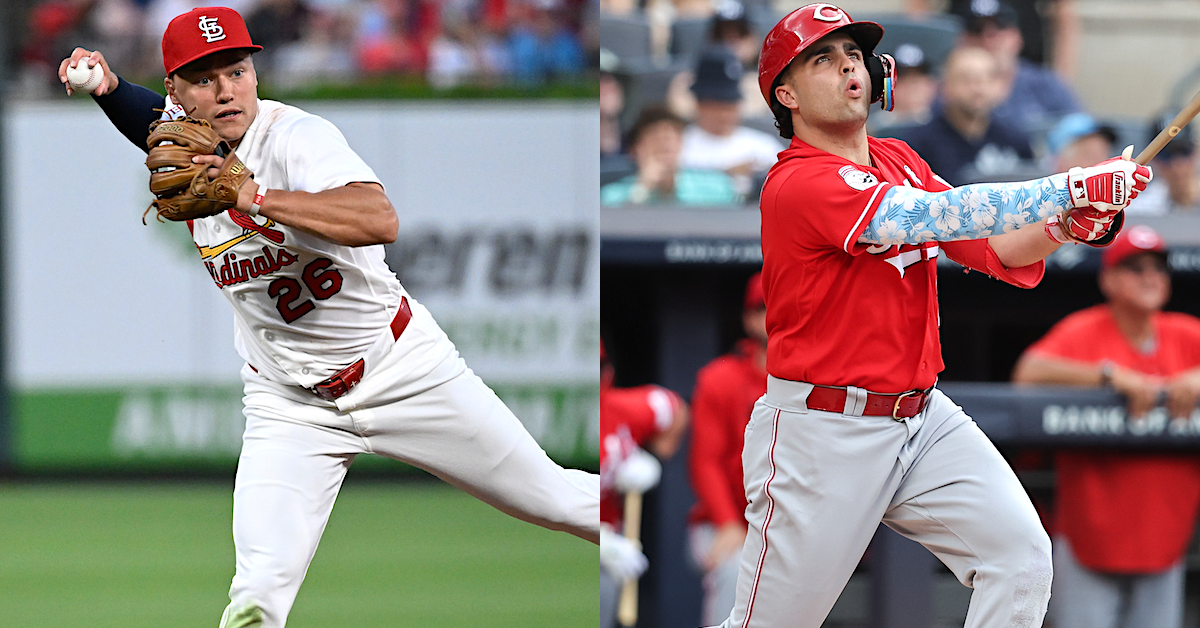
Most of baseball’s awards races are formalities this year. The favorites are clear, and deservedly so. Pete Crow-Armstrong is having one of the greatest seasons of the 21st century. Jacob Misiorowski is a closer throwing starter innings. Bobby Witt Jr. has been terrific, but Yordan Alvarez is unsolvable. Cam Schlittler has more fastballs than batters have answers. Kevin McGonigle is a phenom. But I’m most interested in the sixth major race: National League Rookie of the Year. The gambling odds would tell you that it too is settled, with Sal Stewart the prohibitive favorite. But if I had a vote this year, I’d cast it for JJ Wetherholt, and I want to explain myself because I think this race provides a fascinating look into old school versus new school baseball statistics, and how both have blind spots.

Before we get into my argument, let’s get a few disclaimers out of the way. I am not voting for NL Rookie of the Year. I’m not a member of the BBWAA, even. I haven’t placed any wagers on NL ROY, or on any awards, or on anything even peripherally related to this. I was a Cardinals fan before I started working in baseball, but that has faded away. I have a lot of fond memories of Ozzie Smith, but I’m a fan of the sport now, not a team, and I’ve watched more Reds games than Cardinals games this year because I love watching Elly De La Cruz play. No one in the world is truly unbiased, but I don’t have a horse in this race in any meaningful way.

With that out of the way, let’s get down to brass tacks. The two leading candidates for the award are Stewart and Wetherholt, with Carson Benge a distant-enough third according to the odds that I’m largely leaving him out of the discussion, though he’ll make some cameos. Stewart’s résumé revolves around his thunderous bat. He’s batting .266/.333/.465, with 32 homers and a gaudy 110 RBI. Even in an offense-friendly home park, that’s good for a 115 wRC+, 15th-best among qualifying first basemen, and of course the RBI total is better than that. He’s played so-so defense at first – not that I care much about that in award voting – and has accrued 2.2 WAR per our calculation of the statistic. Read the rest of this entry »