Author Archive

More Young Players Who Should Be Next to Sign Long-Term Deals

Walker Buehler
Jayne Kamin-Oncea-USA TODAY Sports

Last week, I discussed some of the young, pre-free agency players who teams should be trying to sign to long-term contract extensions. I hadn’t been planning for there to be a part two, but you guys had so many additional players you wanted to talk about, and I can’t remember the last time I got more DMs about a piece than that one — well, about a piece for which everyone isn’t mad at me, at least!

So, let’s oil up and turn the crank on the ol’ ZiPS-o-Matic and get this projection mill hopping for seven more players.

Walker Buehler, Los Angeles Dodgers: Eight years, $204 million

Buehler is currently in the second and final year of an extension with the Dodgers that pays him $4 million a year. His next deal will be a tad more pricey. Clayton Kershaw is still around in Dodger blue, but his injury history and mild decline resulted in 2021 being the year that Buehler became The Man in the rotation, reducing Kershaw to the role of deuteragonist. And while Los Angeles still has a rocking rotation, the depth isn’t quite what it was in recent years, so there should be more than slight concern that the franchise’s most valuable pitcher is unsigned. With Buehler two years from free agency, the Dodgers aren’t likely to get any massive discounts, but this is the best time to sign him if you don’t want to pay him Gerrit Cole money later. The Dodgers don’t necessarily have to stop at this figure, either; what’s the fun of being wealthy if you don’t use that cash to pay for cool things?

There may be some concern in some places about the dropoff in Buehler’s strikeout rate, but while strikeout rate changes do tend to stick very quickly, they stick far more when the underlying stats support the drop-off than when they don’t. In this case, the contact rates and swinging-strike rates haven’t worsened at all, nor has his velocity fallen off a cliff, suggesting that it’s a blip rather than a plunge. You can make a similar argument for the Dodgers signing Julio Urías to an extension, likely for a significantly lesser haul, but given the workload Buehler has shown he can handle, he’d be my priority. Read the rest of this entry »


Pablo López Is One of Baseball’s Most Overlooked Starters

© Orlando Ramirez-USA TODAY Sports

Last week, I talked about a few young players who teams should be itching to sign to long-term contracts. Due to public demand, another set of projections is on the way, but I’ll admit I intentionally omitted one pitcher, Pablo López, from the first look because I wanted more space to talk about him.

Unlike a lot of pitchers the Marlins have accumulated during their various fire sales, López wasn’t a highly touted arm in the minors. Prior to 2017 — the season during which he and three other players were traded by the Mariners to the Marlins for reliever David Phelps — he was basically a non-entity among prospect-watchers. He didn’t receive an official ZiPS projection that year, but if he had, it would have been similar to the projection he received before the 2018 season, which essentially saw him as a below-average innings-eater at his peak. At no time did he rank on a ZiPS Top 100 prospect list.

His first couple of campaigns with the Marlins featured decidedly mixed results. While López was essentially a league-average pitcher thanks to exit velocities that ranked towards the top of the league (the good kind of top of the league), he lacked the ability to finish off batters. From 2018-19, he basically threw four pitches: a relatively straight fastball, a sinker, a curve, and a changeup. None them were whiff-makers, and none of them had even a 20% put-away rate, resulting in a mediocre 7.5 K/9 combined over those two seasons. Read the rest of this entry »


What Does Max Scherzer’s Injury Mean for the Mets?

© Wendell Cruz-USA TODAY Sports

The Mets lost another starting pitcher on Thursday, as the team announced that the pain that forced Max Scherzer from his start Wednesday has been diagnosed as a moderate to high grade oblique sprain; the anticipated timetable for Scherzer’s return is six to eight weeks. After throwing a slider to Albert Pujols, Scherzer was in visible discomfort and quickly pulled the plug himself, sparing Buck Showalter the most dangerous part of a manager’s job: telling Max Scherzer to hit the showers:

The loss of Scherzer comes at a time the Mets are already down two other starting pitchers (three if you count Joey Lucchesi‘s loss to Tommy John surgery, which I’m not). Most notably, Jacob deGrom’s 2022 season has yet to begin due to a stress reaction in his right scapula. Tylor Megill is also currently on the IL due to biceps tendinitis diagnosed after the worst start of his professional career. Luckily, there’s reason to be hopeful in both cases. The most recent imaging of deGrom’s scapula indicated it is healing effectively, raising hopes that the ace’s return isn’t too far off. Meanwhile, Megill’s MRI didn’t reveal anything darker than a case of tendinitis, and he’s already scheduled to play catch today:

Read the rest of this entry »


Dan Szymborski FanGraphs Chat – 5/19/22

12:00
Avatar Dan Szymborski: And we are here as this is a chat!

12:01
Guest: Martin Perez is on a tear! Small sample luck? Better pitch mix? Dead ball? Can any of this be sustainable?

12:02
Avatar Dan Szymborski: The dead ball helps him a bit. His cutter’s generally been working, and his peripheral numbers have improved too. He’s had runs where his cutter’s been working and he’s been effective, but he has had trouble keeping that up

12:02
M.F. Luder: Is there any hope for Alex Verdugo?

12:03
Avatar Dan Szymborski: Yeah, in fact, he has better advanced hitting stats better than most guys playing that poorly

12:04
Joey Baggadonuts: If/when the Nats call up Luis Garcia, what do you expect to see from him rest-of-season? He’s absolutely crushed AAA while being quite young for the level; Steamer seems like it’s underselling him…

Read the rest of this entry »


Which Young Players Should Be Next To Sign Long-Term Deals?

Yordan Alvarez
David Butler II-USA TODAY Sports

The main reason why the Astros have been able to survive and thrive despite the departure of a large percentage of the core of their 2017 World Series-winning team is their success in developing their young talent. One of the most prominent of these players, Kyle Tucker, had his breakout season in the shortened 2020 and cemented those gains with a .294/.359/.557, 4.9 WAR 2021 campaign that saw him get his first MVP votes. With Tucker heading to arbitration this winter for the first time, the Astros discussed a long-term contract with their incumbent right fielder in recent weeks, but the deal has apparently fallen through.

While it hasn’t worked out, it’s the right idea. Teams want to lock up their best young players, and many players, especially before they get that first big arbitration bump, are interested in mitigating their personal risk. Wander Franco was more likely than not to beat the $182 million he’ll receive from the Rays and the team they trade him to around 2029, but it also provided him some real security, given he’s still a couple years from arbitration. These types of deals can be win-win.

So who should be the next players to get inked for the long haul? Here are my favorite picks. For each, I’ve included their ZiPS projections for both performance and a fair contract; after all, I don’t own a team, so I don’t have the motivation to pitch any absurdly team-friendly agreements like the one Ozzie Albies signed with the Braves. I’ve also omitted Juan Soto since we’ve already talked about him and a long-term deal quite a bit, most recently in Jay Jaffe’s piece before the season that already has the ZiPS projections. If you want a figure, let’s just say 10 years and all circulating US currency. Read the rest of this entry »


Injury Rundown: Kershaw, Megill, Luzardo Get Put on the Shelf

Clayton Kershaw
Charles LeClaire-USA TODAY Sports

Pitchers getting injured is never good news, even in a year in which pitching talent seems relatively easy to come by. Sadly, we got a bunch of high-profile names hitting the IL over the weekend, so here’s a quick Monday rundown in case you were doing something more fun on Sunday than stressing about injuries, like watching the baseball games (non-Giants fans, at least).

Tylor Megill, New York Mets

Given the monumental task of replacing Jacob deGrom in the Mets’ rotation at the start of the season, Megill took his job surprisingly literally, doing his best imitation of the team’s ace. Through six starts, his ERA stood at 2.43 with a nearly identical FIP at 2.44, improving significantly on his major league debut in 2021. Then came the worst start of his professional career — including the minors — as he surrendered eight runs and didn’t even make it through the second inning against the Nationals last Wednesday. Megill can’t point to bad luck either; it’s hard to complain too strenuously about BABIP when you have an xBA of .563 and an xSLG of 1.263.

On the plus side, Megill’s velocity wasn’t down during that disaster of a start, and he didn’t report any discomfort until after the game. One thing that struck me, however, is how much his horizontal release point has changed in a lateral direction throughout the season. From his first start to his last outing, Megill’s horizontal release point has shifted about five inches; those release points tend to be far more consistent in-season, as players are more likely to tinker with this in the winter and spring. Release point inconsistency is a concern, and at least one study that I’m familiar with has linked shifting lateral release points with an eventual need for Tommy John surgery, albeit with low odds (a roughly 5% higher chance of a UCL tear with every 10 centimeters of movement). That’s getting ahead of ourselves, but it’s something to file in the back of your mind.

The decision to put Megill on the IL was made after he experienced soreness during his bullpen on Saturday, with biceps tendinitis as the announced culprit. Colin Holderman got the immediate call-up to take Megill’s spot on the roster, though that may be short-lived, as David Peterson started on Friday. Trevor Williams will get Megill’s start on Monday night against the Cardinals.

In other Mets injury news — of course there’s more, it’s the Mets — catcher James McCann will be out six weeks due to a broken hamate bone. Patrick Mazeika was called up and likely endeared himself to Mets fans more than McCann has by hitting the go-ahead home run in the seventh on Saturday against the Mariners. McCann’s offense has disappeared so quickly over the last year-plus that there’s not likely to be any real consequence for the Mets other than a thinning of the depth chart.

Jesús Luzardo, Miami Marlins

Amid a promising comeback campaign, Luzardo took a step back last week, walking four and allowing four runs in 2.2 innings against the Diamondbacks, bloating his ERA to 4.03. Like Megill, there were no suspicious velocity dropoffs — something to watch for given Luzardo’s injury history — but he reported forearm soreness after the game. In “crossing our fingers” news, he did not believe the pain was similar to what he experienced before his first Tommy John surgery, back when he was a high schooler in 2016:

I just started feeling a little something in the San Diego game, towards the back end of it, but nothing when I was pitching or anything like that. It was more just a little soreness. I kind of backed off a little between my starts. There wasn’t really pain or anything, more like stiffness.

The Marlins held off until this weekend to place Luzardo on the IL, retroactive to his May 10 start, when it became evident that he would be unavailable. It seems that Cody Poteet, already stretched out a bit in relief of Luzardo against Arizona and not used since, will get the spot start on Tuesday, with Sandy Alcantara going on Monday.

As for replacing Luzardo long-term, it doesn’t appear as if the Marlins plan to recall top prospect Max Meyer to fill the spot. My reading of the tea leaves is that they’re not going to push Edward Cabrera up soon as a replacement either; while he’ll get another chance in the not-too-distant future, I think Saturday’s start against Triple-A Nashville would have been a few tune-up innings rather than a 90-pitch outing if a callup was imminent.

Short of any additional bad news, it’s entirely possible that, with two off days in the next week, Luzardo may only miss just the one start.

Clayton Kershaw, Los Angeles Dodgers

Kershaw was a late scratch on Friday against the Phillies, pushing Walker Buehler’s start up a day on normal rest. Kershaw has a history of lower back pain and at least one instance (2012) of hip impingement, so the Dodgers are being careful with him. The culprit this time is inflammation of the SI joint, which, I believe, is the sacroiliac joint and not the Sports Illustrated joint; on the pelvis, it’s between the hip and the spine. As I did not attend Hollywood Upstairs Medical College, and my medical knowledge is primarily evaluating how sick I’ll feel if I eat some deliciously spicy food, let’s consult actual doctors here:

Biomechanically, the sacroiliac joint performs several functions. Primarily, its purpose is to attenuate the distribution of force loads from the lower extremities. It functions both as a shock absorber for the spine above and converts torque from the lower extremities into the rest of the body.

As pitching largely involves transfers of force between body parts, it’s understandable why the Dodgers see the need to be cautious. Last year was the first time Kershaw was placed on the IL with elbow issues, and given that it scared them enough to shut him down quickly for the postseason, this is not unexpected caution.

To replace Kershaw on the roster, the Dodgers called up Michael Grove, who got the start on Sunday and may get another down the road, though with a very quick hook. Andre Jackson looked like a rotation fallback option at the start of the season, but he’s failed to finish the third in each of his last three starts for Triple-A Oklahoma City, allowing 10 walks in just 3.1 innings.


Shane McClanahan Is Changing Things Up

© Gary A. Vasquez-USA TODAY Sports

If there’s anything as inevitable as the Tampa Bay Rays trading away a top starting pitcher, typically for salary reasons, it’s their development of the next one. Shane McClanahan looks a lot like their next one. The Baltimore native was highly effective in his rookie season, putting up a 3.34 ERA and 3.31 FIP with 10 strikeouts per nine over 25 starts in 2021. Even more impressive, he did it with minimal professional experience, with only four games in the high minors before becoming the first pitcher to make his major league debut in a playoff game.

2021 was a fine rookie season for McClanahan, but 2022 is looking like something special. In seven starts, his ERA stands at 2.52, and with a FIP of 2.67, it’s not a BABIP-fueled mirage. His strikeout percentage has jumped by about 40% year-on-year, from 27% to 38%, a notable improvement even in a very pitcher-friendly season. Batters are making both less contact than last year (dipping from 70.4% to 63.6%) and worse contact — their average exit velocity declined from 91.7 mph to 89.3, while their Statcast sweet spot percentage dipped from 36.8% to 26.5%. Among all pitchers with at least 20 innings thrown this season, only Corbin Burnes and Michael King have lower contact rates.

One of the primary differences between this season and last season for McClanahan has been the development of his changeup. Despite a fastball that can hit the high-90s with some nasty late break, McClanahan does not use his heat to finish off batters the way pitchers like Brandon Woodruff or Lance Lynn tend to. In fact, when batters get to him, it’s usually on the fastball, with a batting average well over .300 and 12 of his 19 career home runs allowed coming on the heater. Read the rest of this entry »


Dan Szymborski FanGraphs Chat – 5/12/22

12:02
Avatar Dan Szymborski: Good afternoon!

12:03
Avatar Dan Szymborski:

12:03
Jeff: What do we make of Semien? Same slow start as last year, or something else?

12:03
Avatar Dan Szymborski: I’m still on slow start.

12:03
Ryan: What language do you primarily code in? Does the answer depend on the project? I.e the ZIPS model vs. a random Thursday article research

12:04
Avatar Dan Szymborski: Depends. I’m not a coder, I’m a math guy who codes a little when he’s stuck doing. I use a combination of Excel with some statistical package third party add-ons and Visual Basic

Read the rest of this entry »


ZiPS Time Warp: What Could a Healthy Byron Buxton Do?

Byron Buxton
Jordan Johnson-USA TODAY Sports

Every year, Byron Buxton seems to find another gear. With the exception of his abbreviated 2018 (94 plate appearances in the majors), Buxton’s OPS has increased every single season compared to the year before. In 2022, partly thanks to becoming a fastball-crushing machine since the start of last year, he’s continued this pattern, hitting .278/.342/.722 in 79 plate appearances (all stats are through Monday’s action). He’s even tied for the league lead in home runs with nine, especially impressive given that he’s missed more than a third of Minnesota’s games.

It’s that last fact that is troubling, as Buxton’s career has been hampered by an unfortunate inability to stay healthy. And it hasn’t been one, consistent problem that keeps him out of games but rather a succession of nagging ones, with each season bringing a mystery grab bag of misfortune. This year, it’s been a sore knee from a slide, a hand contusion, and a hip problem. Last year, it was a hip, a hamstring, and a broken hand. Before 2021, he missed time due to a concussion, a sore left shoulder, a sprained left foot, a torn labrum, another concussion, a hit by a pitch to the wrist, a different strain to the same wrist, a broken toe, serious migraines after an outfield wall collision, a strained groin, and a sprained knee — and that doesn’t count the myriad day-to-day issues.

The last time Buxton played even 100 games in a season was in 2017 (while there were only 60 games in 2020, he still missed a third of them). I was born in 1978; growing up, Eric Davis was the five-tool, mega-skilled exemplar of the dynamic superstar who couldn’t stay healthy, but even he still managed to get into 130 games a year during his 1986–90 peak. Buxton debuted almost seven years ago, in June 2015, and barely has three years’ worth of playing time in the majors to go along with another half-season in the minors due to Minnesota’s early proclivity for demoting him every time he fell into a slump. Read the rest of this entry »


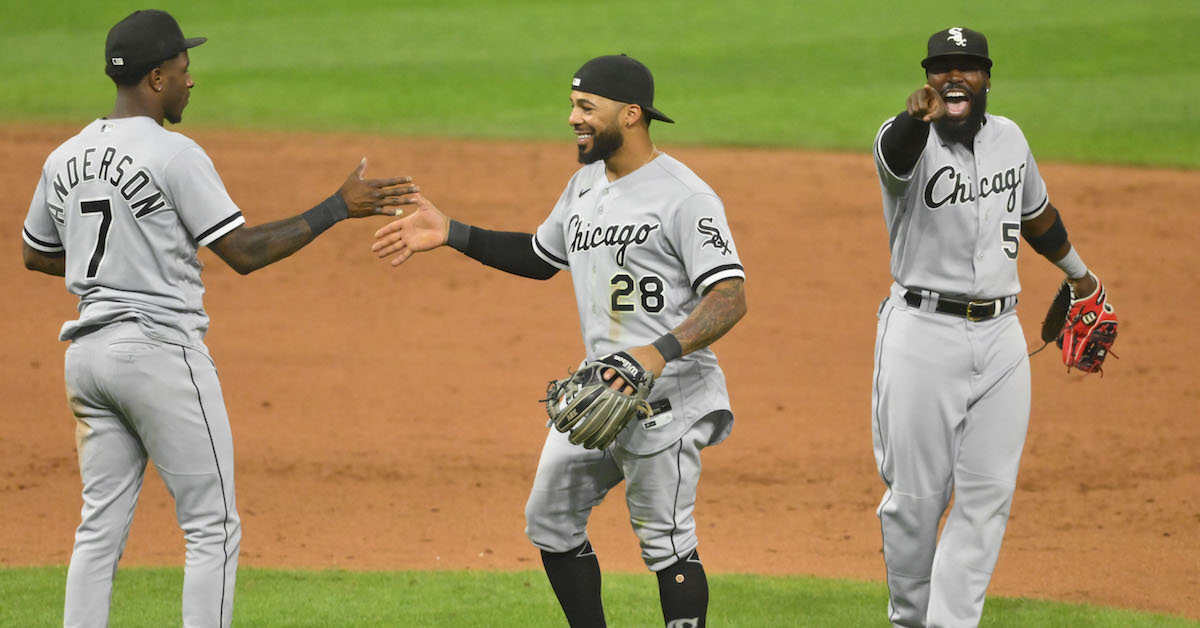
How Worried Should the White Sox Be?

Tony La Russa
Matt Marton-USA TODAY Sports

On May 1, the Twins beat the Rays while the White Sox saw a late-inning comeback attempt against the Angels foiled. There was nothing particularly newsworthy about these games, but they did have a significant impact in the ZiPS projections: for the first time since early 2021, the White Sox were no longer the favorite to win the division.

Before the season started, ZiPS saw the AL Central as Chicago’s to lose, a calculation that was not going against the conventional wisdom. With a 61.9% projected chance of winning the division, ZiPS had the White Sox with the second-best divisional crown probability of any team in baseball on Opening Day, just below the Astros and their 62.8% chance of winning the AL West. And that projection had been even sunnier a month prior. When the lockout ended and we started Hot Stove League II: The Legend of Manfred’s Gold, ZiPS gave the White Sox a 10-game lead in the division and a 70.7% chance of finishing first in the Central. The team ZiPS was most worried about, from the point of view of the Pale Hose, wasn’t the Twins, but the Guardians, a team that didn’t even project to reach the .500 mark.

Amid the flurry of moves leading up to the lockout, Minnesota was very quiet, with Dylan Bundy as the club’s “big” signing. But once the lockout lifted, the Twins got into gear, picking up Sonny Gray, Gio Urshela, Gary Sánchez, Chris Paddack, Emilio Pagán, and Isiah Kiner-Falefa and trading away Josh Donaldson, Taylor Rogers, various prospects, and… Isiah Kiner-Falefa. The Twins also shocked the baseball world by getting Carlos Correa, one of the winter’s prime free agents, to sign a three-year contract worth $105.3 million, with opt-outs.

By the time all the roster shakeups and offseason moves finished, ZiPS had Minnesota’s 13-win shortfall against the White Sox down to just five wins. That’s a respectable cushion, but not one that will provide padding for all butts in all situations. And as I noted above, said cushion was all but gone by the beginning of May, though after two losses by the Twins and a win (and an off-day) for the White Sox, Chicago has narrowly taken back the lead in the projections:

ZiPS Projected Standings – AL Central (5/6)
Team W L GB Pct Div% WC% Playoff% WS Win%
Chicago White Sox 85 77 .525 44.8% 12.2% 57.0% 4.2%
Minnesota Twins 85 77 .525 41.1% 12.9% 53.9% 2.8%
Cleveland Guardians 80 82 5 .494 13.1% 8.0% 21.1% 0.7%
Detroit Tigers 71 91 14 .438 0.8% 0.6% 1.4% 0.0%
Kansas City Royals 68 94 17 .420 0.2% 0.2% 0.4% 0.0%

Chicago is the very slight favorite right now, but that can hardly be taken as a victory considering it represents basically a quarter-of-a-division crown that has evaporated in the last two months.

Some, but not all of the differences can be attributed to injury. Yoán Moncada was injured the day I ran the projections, though it didn’t look significant at that point. Eloy Jiménez is out as well, likely for a couple of months at least, and Lance Lynn is yet to make a start. Andrew Vaughn, one of the team’s few offensive bright spots, is also out with a bruised hand, though that looks far less serious than Jiménez’s hamstring.

But the Twins have their own recent injuries as well, in Gray, Bailey Ober, Jhon Romero, Miguel Sanó, and now Correa, who left Thursday’s game with a potentially fractured finger on his right hand. You always expect some injuries in the course of play; everyone being healthy isn’t the baseline expectation for anyone being realistic. The White Sox have good pitching depth that’s helped them survive Lynn’s absence and a brief IL stint by Lucas Giolito, but some of the offensive struggles (13th in the AL in runs scored) have to be chalked up to poor planning by the organization, and that’s not something you can attribute to poor luck.

Entering the season with a major hole at second base was a choice, not something fate thrust upon them. I thought at the time of the Craig Kimbrel trade that giving up Nick Madrigal was reasonable, something that many of you disagreed with at the time (and so far, it’s looking like I’m the loser in that debate). But my feelings about that trade would have been very different if you told me in advance that the White Sox were basically going to shout “Pass!” when it came to finding a replacement and would roll with a Leury García/Josh Harrison combination. No team we projected with a winning record had a worse depth chart projection at second entering the season.

Similarly, in right field, our preseason depth charts had the Sox above only two other squads projected to finish above .500. Picking up AJ Pollock was a good development, but the rest of the outfield consisted of two young players who missed a lot of time in 2021 with serious injuries (Jiménez and Luis Robert), Pollock has a lengthy injury history himself, and Vaughn was still a bit of a question mark. It only took a few injuries to stretch the team’s depth in both the infield and outfield.

Baseball’s new playoff system should have the White Sox determined to do more than coast to the divisional crown; with the weakest division winner put into a short wild-card round, ZiPS projected them as being the biggest loser in a 12-team playoff format. The good news is that, despite the problems so far, ZiPS sees Chicago’s decline in rest-of-season roster strength as a small one, from .531 to .527 before the strength of schedule is taken into consideration; the Twins have only improved from .508 to .509. The problem is that the good news is also bad news: ZiPS thinks that the relative strengths of the two teams aren’t drastically different than a month ago and still sees the division as a coin flip. To get the White Sox a comfortable division lead, you now have to think the White Sox are considerably better than their preseason projection.

White Sox Divisional Wins by Roster Strength
White Sox Roster Strength 2022 Division %
.480 17.4%
.490 22.2%
.500 27.7%
.510 33.7%
.520 40.1%
.527 (Current Projection) 44.8%
.530 46.6%
.540 53.2%
.550 59.7%
.560 66.1%
.570 72.2%
.580 77.6%

In short, the White Sox need to be better than they are now to regain the projected ground they lost. Even with a second wild card, that’s not necessarily a simple fallback position; ZiPS sees the average second AL wild card being an 89-win team and the average AL Central victor an 88-win team. What this means is that the Sox ought to be incentivized to be aggressive rather than reactive. Robinson Canó may be toast, but the chance that he isn’t is certainly worth the risk of a minimum salary. Don’t wait for another team to acquire Ramón Laureano in July before making an underwhelming counter-move; be the team that snags him in the first place, as quickly as possible. Get away from the idea that the contributions from any position are “enough” and adopt the mindset of brutally grabbing any opportunity that arises in the coming months. That’s what the Dodgers do.

The White Sox didn’t expect to be in a tight divisional race in 2022. They are now, and it’s time for them to act like it.