If you’re a regular FanGraphs reader, then you know that this week, the week after the Winter Meetings, is a week for roundups. The Rangers make a couple moves on a Friday? I’ll bundle them into one snug article. A passel of lefties comes off the board on a Tuesday? Michael Rosen will arrange them into a tidy bouquet. A couple teams talk themselves into believing that they could be the ones to figure out Josh Bell and Adolis García? Michael Baumann will slam his head into the wall repeatedly for our amusement. That’s how it goes.
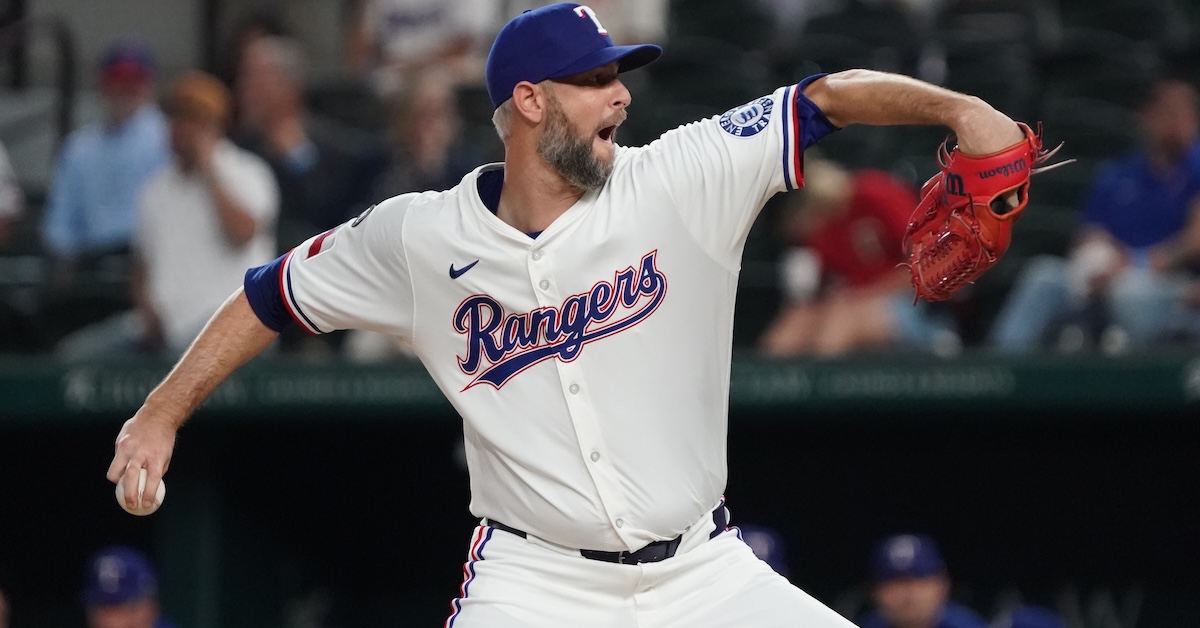
On Wednesday, Chris Martin, the big, 39-year-old middle reliever from Texas, signed up for one last rodeo with his hometown Rangers. As with many minor deals, no one has reported how much Martin will be paid for the 2026 season. The news seemed all but destined to occupy one quarter of a reliever roundup, but I’d like to give Martin single billing here, because I don’t think we’ve done a good enough job of celebrating just how good he’s been. Let’s start at the beginning. Read the rest of this entry »
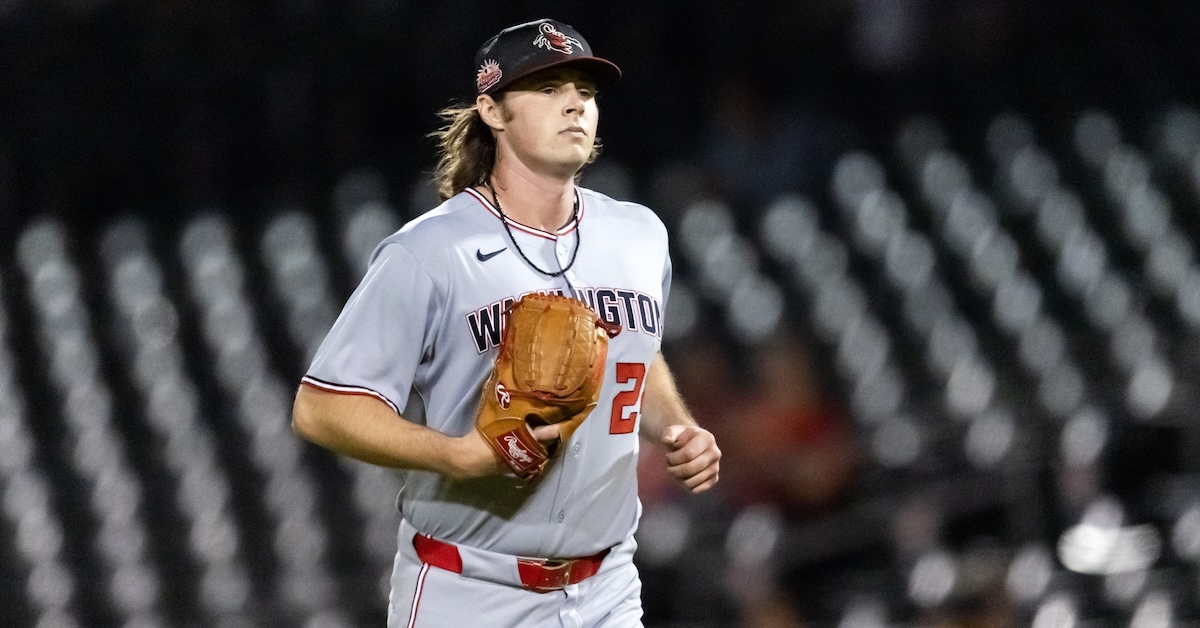
Patrick Gorski, Darren Yamashita, Mark J. Rebilas-Imagn Images
At first, it was a trickle. A Gregory Soto here, a Hoby Milner there. On Tuesday, though, we were staring down a veritable deluge. In a single day, the low-to-mid-tier short-term left-handed pitching market got ransacked like a Ralph’s on the Wednesday before Thanksgiving. In rapid succession, three cromulent southpaws inked deals. First, it was Caleb Thielbar, returning to the Cubs on a one-year pact. Foster Griffin followed, lured back from Japan by a $5.5 million guarantee from the Nationals. Finally, Caleb Ferguson linked up with the Reds, also for a single year. (Later on Tuesday, Drew Pomeranz joined the party; he agreed to a one-year contract with the Angels, which be covered in a separate post.) Let’s assess each of these deals in the order in which they signed:
Caleb Thielbar
When Thielbar appeared on one of these roundups around this time last year, it was under sorrier circumstances. The weathered middle reliever had just dropped a stinker, walking 11.1% of hitters on his way to 47 1/3 innings of a 5.32 ERA. The Cubs handed him a “here’s your last chance” $2.75 million; given that Thielbar was heading into his age-38 season, another shoddy campaign would’ve likely marked the end of a surprisingly successful career for the former 18th rounder.
Instead, the wily veteran innovated his way out of a hole, adding a new pitch and delivering a vintage Thielbar performance. The terms of his deal have not yet been disclosed, but considering that many relievers this offseason have signed for more money than they were expected to get, Thielbar almost certainly received a healthy raise to keep playing ball for a living.
In 2025, his strikeout rate remained down a few points from his 30ish% peak, but Thielbar got his command back, in part due to his decision to replace a good chunk of his big old sweepers with a tighter, cutterish hard slider. The slutter (sorry) was a genius bridge between his three other pitches, which are all relatively easy to identify out-of-hand. By adding a pitch that he could conceivably tunnel with his four-seamer, curveball, and sweeper, he seems to have increased the effectiveness of his entire arsenal.
See all of those yellow dots on the pitch plot above? That pitch did not exist before this year. In 2024, Thielbar primarily attacked lefties with the sweeper, throwing it 55% of the time in same-handed matchups. A pitch with all that movement — 14 inches of horizontal movement on average — is hard to land for strikes. His new slider doesn’t have that sort of crazy break, and he had a much easier time throwing it in and around the zone.
And it wasn’t just a chase pitch to lefties. Thielbar also used the new slider as a soft-contact generator against right-handed batters, jamming them inside with respectable velo and glove-side break:
Otherwise, it was vintage Thielbar, slinging slow, high-ride fastballs and some of the prettiest curveballs in the sport. He handled righties and lefties alike, and will assume a similar role in the Chicago bullpen, navigating medium-high leverage situations, particularly when that leverage context coincides with a run of lefties.
Foster Griffin
Last we saw of Griffin stateside, it was 2022, and he was languishing in Quad-A limbo, making brief cameos with the Royals and Blue Jays before hopping on a bus back to Omaha or Buffalo. Back then, he was a fringy bullpen arm, leaning on a cutter with a movement profile that coincidentally resembled Thielbar’s new slider. On top of the cutter, Griffin featured a dead-zone four-seamer at 93 mph, a pretty standard curveball, and a changeup with some quality arm-side fade.
The uninspiring stuff and varied arsenal felt more befitting of a backend starter, and starting is exactly what Griffin took to with the Yomiuri Giants, where he pitched some excellent ball for three seasons. The final was his finest for the Tokyo-based club. He posted the third-best FIP (1.78) among NPB hurlers with at least 70 innings pitched, striking out a quarter of hitters and allowing just a single home run.
What changed? For that, I’ll hand it over to James Fegan, who wrote up a little blurb on Griffin for The Board:
The addition of a low-80s splitter is the profile-changing development since the last of Griffin’s eight career big league innings. Its raw action won’t knock you out of your chair, but it flirted with a 50% miss rate this past season because Griffin almost never leaves it in mistake locations. His steep approach angle makes the pitch nearly impossible to lift, allowing Griffin to allow fewer home runs (18) in over 300 innings in Japan than he gave up in his last full season in the PCL (20) in 2019. Even topping out at 93 mph now, this is still too much of a nibbling profile to project him beyond a multi-inning swingman role. But now that he can wield his splitter as an out pitch to either side, it’s easier to see Griffin carving out a Tyler Alexander-shaped niche at the end of a pitching staff.
The prospect team gave Griffin a 35+ FV grade, suggesting he is unlikely to do much more than hoover up innings for the Nationals. But if there’s a club in need of some innings-hoovering, it’s the Nats, who have a bunch of question marks on the staff after MacKenzie Gore, and that’s assuming they hang onto Gore, which, who knows.
Caleb Ferguson
The second left-handed Caleb in this roundup is 10 years younger than his predecessor. Once a whiff chaser with shaky command, Ferguson leaned hard into contact suppression in 2025, scaling back his four-seamer against same-handed hitters while boosting the sinker to nearly 50% usage. At times, this worked great. His strikeout rate dropped over eight percentage points, but the heavy combination of sinkers and cutters gave Ferguson some of the lowest barrel rates and exit velocities in the league.
Chasing weak contact as a relief pitcher can be a blessing and a curse. Attacking the zone with three fastballs keeps the walks down and the extra base hits to a minimum. But it also means a big chunk of balls in play, and one day the BABIP gods will rise with vengeance and rain misery upon your poor ERA. Unfortunately, this happened to Ferguson at a crucial juncture. Plucked from Midwestern obscurity in Pittsburgh and thrust into a playoff push in Seattle, he initially performed well before running into a spate of poor performances in late August and early September. In a tight postseason race, that was that — Ferguson didn’t get many leverage opportunities for the remainder of the season, and his brief playoff work went terribly. Brought in to close down a seven-run lead in the ninth inning of ALDS Game 3, Ferguson allowed three runs without recording an out, requiring Dan Wilson to throw Andrés Muñoz on a day that he could’ve secured some crucial rest. It cannot be great for a reliever to get shelled on a big stage in his final moments before hitting the free market.
For most of his Mariners tenure, Ferguson was treated like a member of the B team, deployed mostly in losing efforts. Will the Reds, themselves a recent playoff club, trust him to handle leads in close games? It’s sort of on the edge. RosterResource sees Ferguson as the fourth arm out of the pen, behind Emilio Pagán, Tony Santillan, and Graham Ashcraft. Astute readers will note that all three of those guys throw baseballs with their right arm, and so Ferguson will assume the mantle of Most Trusted Lefty, prying that loosely held title from Sam Moll’s fingertips.
Every year, FanGraphs (in this case, I am FanGraph) releases contract predictions for our top 50 free agents. We also run a contract crowdsourcing project for those players, and I have to say, the crowd is spectacularly good at this. Last year, for example, I looked through all of the various predictions across the internet and awarded the crowd the title of best overall prognosticator.
But honestly, the winner of that award was hard to determine because I didn’t have a great way to evaluate the various predictions. Why so difficult? Because not every deal ended up being for the length we all predicted. As an example, I predicted 12 years and $48 million per year for Juan Soto, while the crowd predicted 13 years and $45 million per year. Soto signed a deal that was for 15 years and $51 million per year. Who was closest to the mark? It’s not immediately clear. I did better on the AAV, but the crowd did better on the number of years. There’s no obvious determining factor to use when comparing the two. Even worse, the two are inversely correlated; more years generally means a lower AAV. The two predictions seem pretty similar to me, but I had to grade AAVs and total guarantees separately, and that just felt clunky and confusing.
After some time bouncing ideas off my friends and colleagues, and plenty of time in the FanGraphs Idea Generation Lab (not real, but man, it should be), I think I have a solution. It’s simple, really. Evaluating contract predictions would be much easier if the predictions and the actual contract were for the same length, so I made them all the same length. Read the rest of this entry »
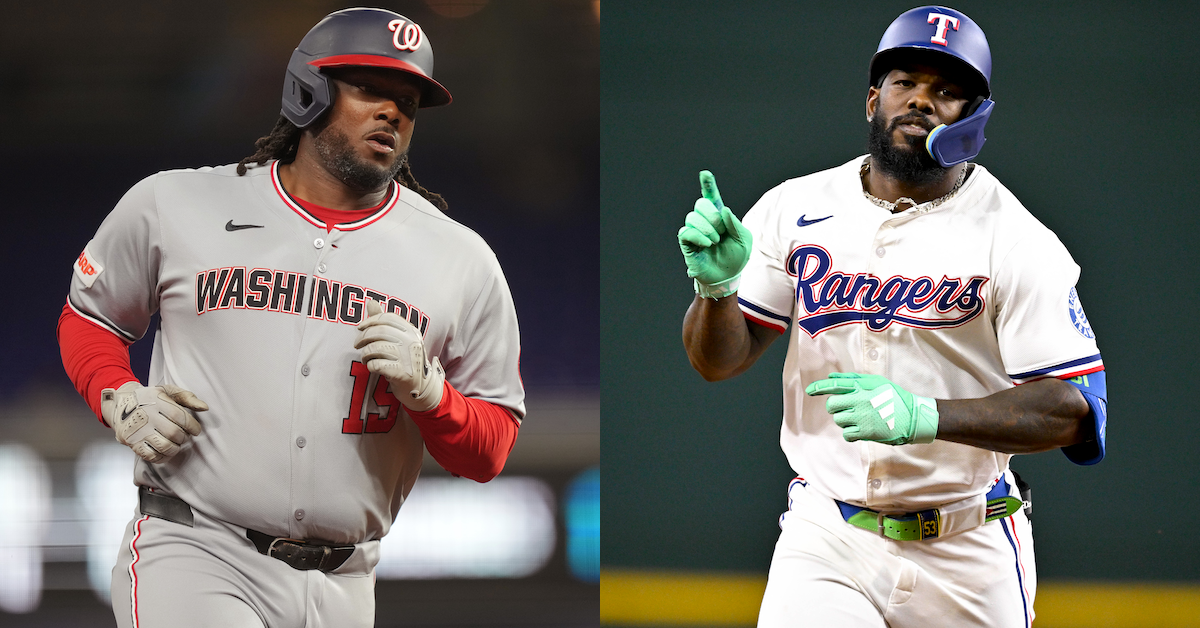
On Monday morning, the Twins signed Josh Bell to a one-year contract with a mutual option for 2027. Between salary, signing bonus, and option buyout, the deal guarantees Bell $7 million. A couple hours later, the Phillies and outfielder Adolis García agreed to terms on a one-year, $10 million contract.
Look around whatever room you’re sitting in as you read this. Consider the material of the walls, the furniture, whatever appliances (if any) are in view. The carpet, or wood or laminate or tile of the floor. Pens and pencils, soap, hand lotion, power cables, books, magazines, children’s toys… whatever you can see, you know what it’d feel like and taste like if you licked it.
That’s from experience. At some point in your life, you put everything you encountered in your mouth, just to see what would happen. If you’ve ever raised a child, or met a child, or been a child, you know kids are always putting stuff in their mouths. You know equally well that kids aren’t supposed to do that. They could choke, or get sick, or otherwise come to harm by licking the sidewalk.
But they do it anyway, no matter how forcefully their parents remind them not to. There’s only one way to know for sure what the TV remote tastes like, and it’s too important an issue to take anyone else’s word for it. Read the rest of this entry »
Throughout history, the Miami Marlins have only produced four kinds of season: The star-studded World Series team of 1997, the star-studded last place team of 2012, unwatchable detritus, and a feisty .500ish club with some fun talent. (The 2003 World Series-winning Marlins were the latter group, plus a one-year cameo by Ivan Rodriguez.)
That team looked like a juggernaut in the making, because it had a roster full of guys who would spend most of the next decade starting for playoff teams. Just, you know, other playoff teams, and not the Marlins. Read the rest of this entry »
Last night, the Boston Red Sox and the Washington Nationals swapped pitching prospects in a one-for-one challenge trade that will likely have an impact on both clubs in 2026. Hard-throwing 22-year-old righty Luis Perales heads to Washington, while changeup-oriented lefty Jake Bennett goes to Boston. Both pitchers participated in the 2025 Arizona Fall League, starting a game against each other on November 1.
Of the two, I slightly prefer the 25-year-old Bennett, who I have evaluated as a near-ready starter and a potential Top 100 prospect this offseason due to his floor and proximity to the majors. Bennett entered pro ball much more fully formed than most pitching prospects from a stamina standpoint, as he worked 117 innings as a junior at Oklahoma. He had Tommy John at the very end of his first pro season, in September of 2023, which cost him all of 2024. He returned to action this past May, and his stuff was up about two ticks compared to when he was last healthy, while his feel for location was intact. He posted a 2.27 ERA across 75.1 innings while reaching Double-A, then picked up 20 more innings in Arizona and was added to the Nationals 40-man roster after the season. Read the rest of this entry »
Charles LeClaire, Jerome Miron, Vincent Carchietta – Imagn Images
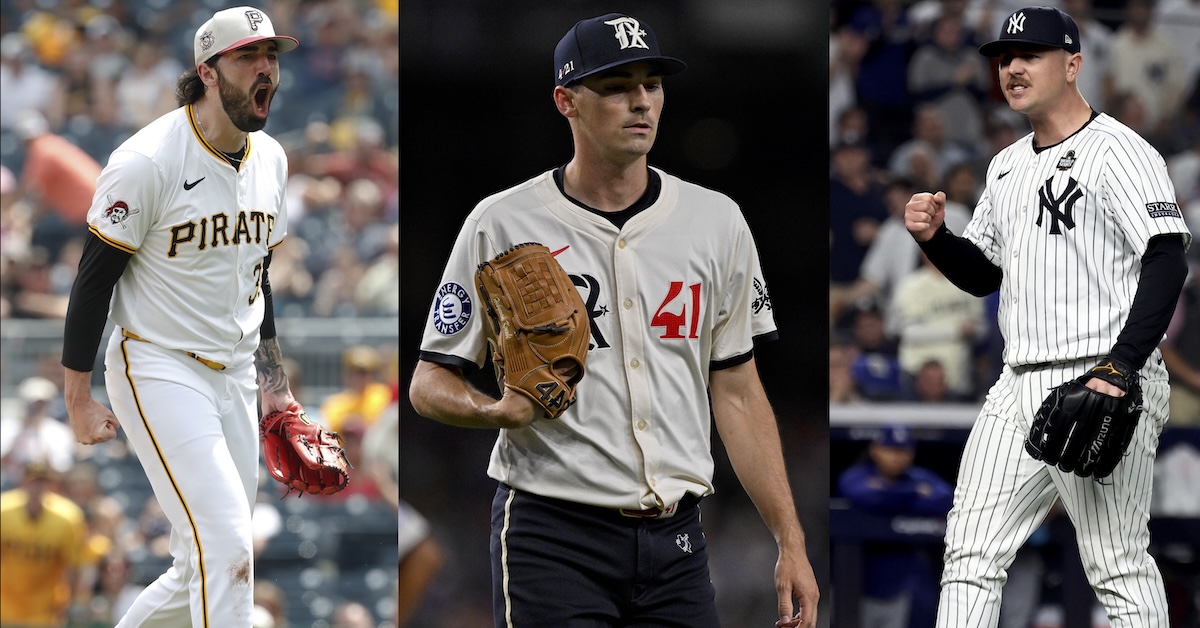
Every winter, the shiniest free agents on the market capture the attention of baseball fans everywhere. “Ooh, could you imagine Kyle Tucker in my team’s colors?” That’s a fun conversation regardless of which team you root for. But most teams aren’t going to sign Kyle Tucker. Most teams aren’t going to sign a top 10 free agent, period. Indeed, come June and July, there’s a good chance that the free agent signing you’re going to either laud or rue will involve some reliever you’d never heard of six months prior. So let’s meet a batch of pitchers who are going to make fans remember their name, one way or another, in 2026: Hoby Milner, Mark Leiter Jr., and Colin Holderman.
I used to think of Hoby Milner as one of the unending wave of Brewers who looked unbeatable in navy and gold and unspectacular elsewhere, but as it turns out, that was unfair to him. He departed the upper Midwest for the first time since 2020 last winter, signing a $3 million deal with the Texas Rangers after Milwaukee non-tendered him. Far from crashing out, though, he spun another solid season, his fourth in a row, while handling 70.1 innings of the highest-leverage work of his career. He finished the season with a 3.84 ERA and a 3.39 FIP, pretty much a dead ringer for his career numbers.
Why, then, is his deal with the Chicago Cubs for just one year and $3.75 million? It’s because he’s an extreme lefty specialist, and that skill set generally comes with a limited market. Milner isn’t a traditional late-inning reliever, a matchup-proof flamethrower. He has enormous platoon splits, triple the league average for lefty pitchers over a fairly substantial sample. It’s for exactly the reason you’d expect: Milner throws sidearm and with little velocity, relying on a sweeper that he throws nearly half the time against lefties to tie them into knots. Read the rest of this entry »
Mark Hoffman / Milwaukee Journal Sentinel-USA TODAY NETWORK via Imagn Images, Katie Stratman and Patrick Gorski-Imagn Images
The Rangers had just 35 players on their 40-man roster at the end of the Winter Meetings, and they did their best to rectify the situation on Friday, signing catcher Danny Jansen to a two-year deal and relievers Alexis Díaz and Tyler Alexander to one-year deals. The three moves have not yet been officially announced by the club, but with the agreements, the roster is starting to look not just fuller, but much more settled. These moves may look underwhelming on the surface, but Jansen fills the team’s biggest hole, and the relievers give the Rangers the kind of upside play they’ll need to find their way back into the playoff picture in 2026.
We’ll start with Jansen, who has agreed to a two-year, $14.5 million contract, according to Robert Murray of FanSided. He is the youngest of the three catchers who made our Top 50 Free Agents list, slotting in at 38th between J.T. Realmuto (30th) and Victor Caratini (39th). Jansen beat Ben Clemens’ estimated one year and $9 million contract, and the Rangers got an extra year at a lower AAV. You may be inclined to chalk that up the relative weakness of the catcher market, but keep in mind that last year, Jansen was the only catcher to make the top 50, and the Rays gave him one year and $8.5 million. Read the rest of this entry »
The remaking of the Mets continues apace. After losing fan favorites Edwin Díaz and Pete Alonso to other teams in free agency last week, the Mets took a step towards replacing the latter by signing switch-hitting infielder Jorge Polanco to a two-year, $40 million deal on Saturday. Though he has almost no experience at first base, the Mets believe he can learn the position well enough for it to be his primary position.
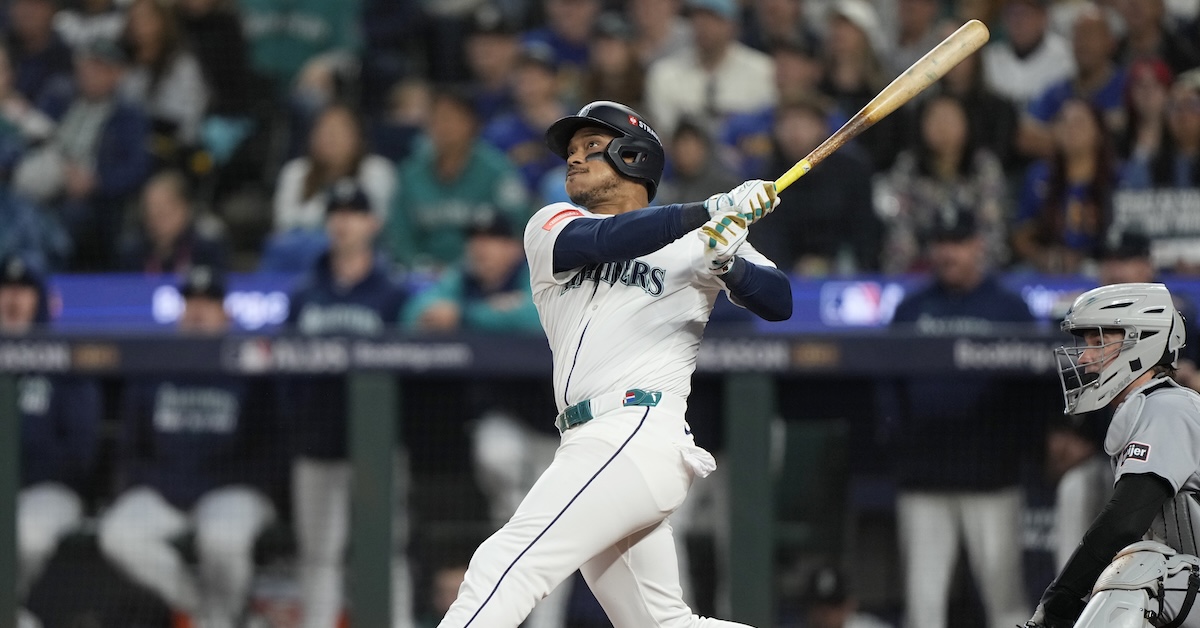
The 32-year-old Polanco probably isn’t the first player anyone thought of as an Alonso replacement, particularly given the bigger-ticket free agents out there and the Mets’ spending power, but he’s coming off a strong season at the plate (.265/.326/.495/, 132 wRC+ with 26 homers) for the Mariners as well as a memorable October. Though he hit just .208/.269/.417 (95 wRC+) in 52 plate appearances during the postseason, his two homers off the Tigers’ Tarik Skubal powered Seattle to a 3-2 win in Game 2 of the Division Series, and his bases-loaded single off Tommy Kahnle in the 15th inning of Game 5 gave the team its first postseason series victory in 24 years. In the ALCS opener against the Blue Jays, he drove in the Mariners’ last two runs with RBI singles in their 3-1 win, then hit a three-run homer off Louis Varland that gave Seattle the lead for good in Game 2. Alas, he went just 2-for-17 the rest of the way as the Mariners fell to the Blue Jays in seven games.
Polanco, who spent the past two seasons with the Mariners and before that parts of 10 seasons with the Twins, has played mainly second base and shortstop during his major league career, though he hasn’t played the latter position since 2022, and the defensive metrics attest that it’s not a good idea anymore. Even at second base, his metrics have descended into the red, to the point that he was primarily a designated hitter last season following an October 2024 surgery to repair his left patellar tendon. He accumulated -2 DRS and -3 FRV in just 287.1 innings at second in 2024, and -1 DRS and -8 FRV in 925.1 innings there the year before. Read the rest of this entry »
The Royals had themselves a productive weekend. The kind where you re-organize the garage and get your meal prep done for the week before the Sunday Scaries set in. On Friday, news broke that the team was finalizing a deal to extend third baseman Maikel Garcia. The contract spans five years, including all four of Garcia’s arbitration-eligible seasons, with a guaranteed value of $57.5 million that could reach $85 million with options and escalators. He will make $4 million in 2026, $7 million in 2027, $10 million in 2028, $13 million in 2029, and $19 million in 2030, and the team holds a $21 million club option for 2031, with a $3.2 million buyout. Then, following the news of the Garcia signing, ESPN’s Jeff Passanreported on Saturday that the Brewers were sending outfielder Isaac Collins and right-handed reliever Nick Mears to the Royals in exchange for left-handed reliever Angel Zerpa. We’ll get into a more detailed discussion of both moves in a minute, but first let’s put this in the larger context of the Royals as an organization.
A lot of sitcoms have that one oddball character that doesn’t quite fit with the rest of the cast. The person that requires viewers to suspend their disbelief, because in real life, there’s no way the other main characters would associate with this weirdo. Your Phoebes, your Kramers, your Kimmy Gibblers, etc. These characters are a part of the main cast or have regularly recurring roles, and though they frequently find themselves integrated into the show’s primary conflicts, they’re typically situated off to the side doing their own thing. Writers insist on including these characters because they provide interesting narrative texture to group dynamics. In real life, we tend to gravitate toward like-minded people with common interests, which is great for forming meaningful connections but makes for boring TV.
Fortunately, MLB teams behave more like TV characters than real life besties, which makes for better entertainment. And with 30 teams, the league doesn’t limit itself to just one Phoebe. Several squads are singing about fetid felines and boycotting Pottery Barn, and among them we have the Royals. Kansas City has never seemed tempted to jump on the latest trends in roster construction or follow the crowd as it attempts to implement whatever the “new Moneyball” is at any given point in time. No, the Royals tend to stay true to themselves, even if that means zigging while everyone else zags or using unorthodox tactics to make sure everyone in the organization stays focused on baseball. Read the rest of this entry »