Archive for Featured Prospects

Updating the International Player Rankings

Kelvin Kuo-USA TODAY Sports

Prospect Week continues with an update to the International Players section of The Board. Some of it is housekeeping, while some of it is scouting-driven and news-oriented.

Let’s begin with the housekeeping. For those of you who don’t care about this sort of thing and want to skip ahead, I’ve indicated below where the housekeeping ends. As you can see in the dropdown menu on the International Players tab, there has been a nomenclature change when the lists transition from 2019 to 2021. There was essentially no 2020 signing class because the pandemic pushed what was supposed to be the July 2nd 2020 class to January of 2021. It doesn’t appear that the international signing period calendar will ever return to the pre-pandemic July-through-May structure; the current format is either here to stay, or at some point we’ll get an international draft. We had previously referred to a given year’s signing period as its “July 2 Signing Period” because it ran across two calendar years, until the following May. If a prospect signed in April of 2015, for instance, he signed during the “2014 July 2 Signing Period.” Now that the signing period is basically flush with the calendar year, going forward we’ll refer to it as “20XX International Signing Period” on the prospect lists and “20XX International” on The Board. Capsules for players who signed in 2019 or earlier will still say “July 2nd Signing period, 20XX” until the prospects from that era are no longer part of the prospect population. Read the rest of this entry »


Updating the 2023 Draft Prospect Rankings

Jake Crandall/ Advertiser / USA TODAY NETWORK

As the 2023 NCAA baseball season gets underway, so too does this year’s Prospect Week, which begins with a fresh coat of paint on my 2023 draft prospect rankings. I asked around the industry for thoughts about how many prospects it makes sense to ordinally rank at this time of year, and scouts’ and executives’ answers ranged from as low as 30 to as many as 75, with most answers falling close to 50. Typically, there are enough 40+ FV or better prospects by draft day to fill the first two rounds of the draft. For this update, I worked back through the players who already populated the 2023 rankings on The Board to revise their grades and reports, revisited my 2022 summer and fall in-person scouting notes, and integrated data from last season to identify and then help evaluate college prospects who weren’t already on there. I did that until I stopped finding players who comfortably hovered around the 40+ FV line or above.

Ideally, my draft list will eventually include all of the eligible players who are talented enough to make a pro team’s prospect list. Usually about 150 players end up migrating to the pro side of The Board right after the draft, a good many of whom haven’t even popped up yet. For a handful of them, the draft itself is my means of identification, with post hoc analysis generating their grade and ranking. Players who I already have notes and opinions about but who exist beneath the 40+ FV scope that I have hard ranked right now still make sense to have on The Board, just not yet with an ordinal ranking. The number of players in the 40 FV tier (future fifth starters and middle relievers, low-ceiling bench hitters, and volatile high school pitchers) and below is so substantial that it’s almost impossible to maintain a precise ranking into the fifth, sixth and seventh rounds of the draft (we’re talking about 200 rapidly changing youngsters at that point) since chunks of that would be rendered obsolete as early as this weekend. I have a few of these kinds of players bucketed by demographic below the ordinally ranked guys, as I have on past draft lists. Players will be added to those buckets, and the depth of the ordinal rankings will increase as the spring marches along and these players can be assessed with greater precision. Read the rest of this entry »


Pittsburgh Pirates Top 43 Prospects

Jayne Kamin-Oncea-USA TODAY Sports

Below is an analysis of the prospects in the farm system of the Pittsburgh Pirates. Scouting reports were compiled with information provided by industry sources as well as our own observations. This is the third year we’re delineating between two anticipated relief roles, the abbreviations for which you’ll see in the “position” column below: MIRP for multi-inning relief pitchers, and SIRP for single-inning relief pitchers. The ETAs listed generally correspond to the year a player has to be added to the 40-man roster to avoid being made eligible for the Rule 5 draft. Manual adjustments are made where they seem appropriate, but we use that as a rule of thumb.

A quick overview of what FV (Future Value) means can be found here. A much deeper overview can be found here.

All of the ranked prospects below also appear on The Board, a resource the site offers featuring sortable scouting information for every organization. It has more details (and updated TrackMan data from various sources) than this article and integrates every team’s list so readers can compare prospects across farm systems. It can be found here. Read the rest of this entry »


Baltimore Orioles Top 38 Prospects

Tommy Gilligan-USA TODAY Sports

Below is an analysis of the prospects in the farm system of the Baltimore Orioles. Scouting reports were compiled with information provided by industry sources as well as my own observations. This is the third year we’re delineating between two anticipated relief roles, the abbreviations for which you’ll see in the “position” column below: MIRP for multi-inning relief pitchers, and SIRP for single-inning relief pitchers. The ETAs listed generally correspond to the year a player has to be added to the 40-man roster to avoid being made eligible for the Rule 5 draft. Manual adjustments are made where they seem appropriate, but I use that as a rule of thumb.

A quick overview of what FV (Future Value) means can be found here. A much deeper overview can be found here.

All of the ranked prospects below also appear on The Board, a resource the site offers featuring sortable scouting information for every organization. It has more details (and updated TrackMan data from various sources) than this article and integrates every team’s list so readers can compare prospects across farm systems. It can be found here. Read the rest of this entry »


Tampa Bay Rays Top 48 Prospects

Eric Longenhagen

Below is an analysis of the prospects in the farm system of the Tampa Bay Rays. Scouting reports were compiled with information provided by industry sources as well as my own observations. This is the third year we’re delineating between two anticipated relief roles, the abbreviations for which you’ll see in the “position” column below: MIRP for multi-inning relief pitchers, and SIRP for single-inning relief pitchers. The ETAs listed generally correspond to the year a player has to be added to the 40-man roster to avoid being made eligible for the Rule 5 draft. Manual adjustments are made where they seem appropriate, but I use that as a rule of thumb.

A quick overview of what FV (Future Value) means can be found here. A much deeper overview can be found here.

All of the ranked prospects below also appear on The Board, a resource the site offers featuring sortable scouting information for every organization. It has more details (and updated TrackMan data from various sources) than this article and integrates every team’s list so readers can compare prospects across farm systems. It can be found here. Read the rest of this entry »


Cleveland Guardians Top 50 Prospects

Jeff Lange / USA TODAY NETWORK

Below is an analysis of the prospects in the farm system of the Cleveland Guardians. Scouting reports were compiled with information provided by industry sources as well as my own observations. This is the third year we’re delineating between two anticipated relief roles, the abbreviations for which you’ll see in the “position” column below: MIRP for multi-inning relief pitchers, and SIRP for single-inning relief pitchers. The ETAs listed generally correspond to the year a player has to be added to the 40-man roster to avoid being made eligible for the Rule 5 draft. Manual adjustments are made where they seem appropriate, but I use that as a rule of thumb.

A quick overview of what FV (Future Value) means can be found here. A much deeper overview can be found here.

All of the ranked prospects below also appear on The Board, a resource the site offers featuring sortable scouting information for every organization. It has more details (and updated TrackMan data from various sources) than this article and integrates every team’s list so readers can compare prospects across farm systems. It can be found here. Read the rest of this entry »


Cincinnati Reds Top 46 Prospects

© Kareem Elgazzar/The Enquirer / USA TODAY NETWORK

Below is an analysis of the prospects in the farm system of the Cincinnati Reds. Scouting reports were compiled with information provided by industry sources as well as my own observations. This is the third year we’re delineating between two anticipated relief roles, the abbreviations for which you’ll see in the “position” column below: MIRP for multi-inning relief pitchers, and SIRP for single-inning relief pitchers. The ETAs listed generally correspond to the year a player has to be added to the 40-man roster to avoid being made eligible for the Rule 5 draft. Manual adjustments are made where they seem appropriate, but I use that as a rule of thumb.

A quick overview of what FV (Future Value) means can be found here. A much deeper overview can be found here.

All of the ranked prospects below also appear on The Board, a resource the site offers featuring sortable scouting information for every organization. It has more details (and updated TrackMan data from various sources) than this article and integrates every team’s list so readers can compare prospects across farm systems. It can be found here. Read the rest of this entry »


Los Angeles Dodgers Top 51 Prospects

Jayne Kamin-Oncea-USA TODAY Sports

Below is an analysis of the prospects in the farm system of the Los Angeles Dodgers. Scouting reports were compiled with information provided by industry sources as well as my own observations. This is the third year we’re delineating between two anticipated relief roles, the abbreviations for which you’ll see in the “position” column below: MIRP for multi-inning relief pitchers, and SIRP for single-inning relief pitchers. The ETAs listed generally correspond to the year a player has to be added to the 40-man roster to avoid being made eligible for the Rule 5 draft. Manual adjustments are made where they seem appropriate, but I use that as a rule of thumb.

A quick overview of what FV (Future Value) means can be found here. A much deeper overview can be found here.

All of the ranked prospects below also appear on The Board, a resource the site offers featuring sortable scouting information for every organization. It has more details (and updated TrackMan data from various sources) than this article and integrates every team’s list so readers can compare prospects across farm systems. It can be found here. Read the rest of this entry »
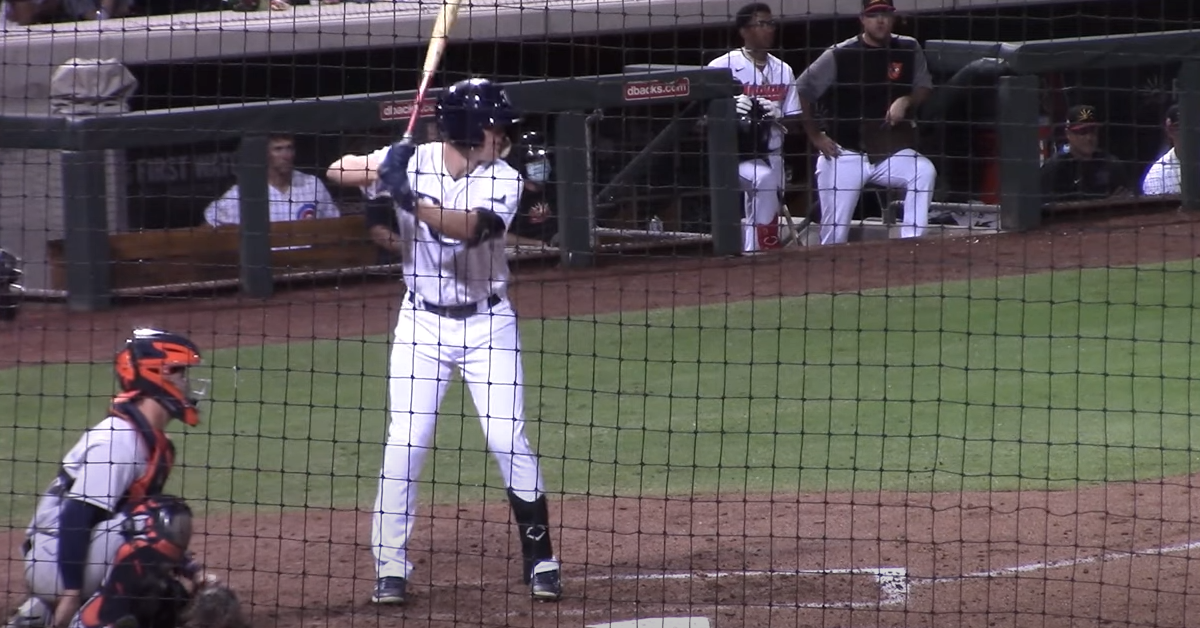

Chicago White Sox Top 26 Prospects

Eric Longenhagen

Below is an analysis of the prospects in the farm system of the Chicago White Sox. Scouting reports were compiled with information provided by industry sources as well as my own observations. This is the third year we’re delineating between two anticipated relief roles, the abbreviations for which you’ll see in the “position” column below: MIRP for multi-inning relief pitchers, and SIRP for single-inning relief pitchers. The ETAs listed generally correspond to the year a player has to be added to the 40-man roster to avoid being made eligible for the Rule 5 draft. Manual adjustments are made where they seem appropriate, but I use that as a rule of thumb.

A quick overview of what FV (Future Value) means can be found here. A much deeper overview can be found here.

All of the ranked prospects below also appear on The Board, a resource the site offers featuring sortable scouting information for every organization. It has more details (and updated TrackMan data from various sources) than this article and integrates every team’s list so readers can compare prospects across farm systems. It can be found here. Read the rest of this entry »


Milwaukee Brewers Top 39 Prospects

© Curt Hogg / Milwaukee Journal Sentinel / USA TODAY NETWORK

Below is an analysis of the prospects in the farm system of the Milwaukee Brewers. Scouting reports were compiled with information provided by industry sources as well as my own observations. This is the third year we’re delineating between two anticipated relief roles, the abbreviations for which you’ll see in the “position” column below: MIRP for multi-inning relief pitchers, and SIRP for single-inning relief pitchers. The ETAs listed generally correspond to the year a player has to be added to the 40-man roster to avoid being made eligible for the Rule 5 draft. Manual adjustments are made where they seem appropriate, but I use that as a rule of thumb.

A quick overview of what FV (Future Value) means can be found here. A much deeper overview can be found here.

All of the ranked prospects below also appear on The Board, a resource the site offers featuring sortable scouting information for every organization. It has more details (and updated TrackMan data from various sources) than this article and integrates every team’s list so readers can compare prospects across farm systems. It can be found here. Read the rest of this entry »