Brendan Gawlowski: As you all undoubtedly saw, I published the Giants list last week.
2:03
Brendan Gawlowski: Eric and James are working furiously on the Twins. I’m about 20 players into the Marlins system, that’s gonna be a long one. I see a path for us to have TB and Miami done next week and be finished with the whole kit and kaboodle but those are both deep systems so we’ll see.
2:03
Brendan Gawlowski: I’ve Isotopes/Rainiers fired up in the background
2:03
Brendan Gawlowski: Let’s go
2:04
Phillip Denny: What’s your 2/5 of the way through the season evaluation of the DePodesta regime in CO?
With a clear mind, a full heart, and an empty stomach, I stepped out of my Crown Heights apartment at 8:40 AM on Sunday. I walked over to the black Toyota RAV4, opened the door, and slid into the backseat next to my friend Anthony and his girlfriend Cristina. Immediately, Anthony gestured to the hot dog costume peeking out of the tote bag between his feet. “Dude, I’m so f—— hyped,” he said with a glizzy-eating grin on his face. “We were born for this.” He then took off his jacket to reveal he was wearing the gray cotton t-shirt that I got him for his birthday. Across the chest in all caps were the words: BAD DAY TO BE A GLIZZY.
The Uber driver pulled away from the curb and started down the street. We were on our way to Coney Island for the first annual Hot Dog Jog, a race hosted by the Brooklyn Cyclones as part of Weenie Weekend. Hot Dog Jog participants run four laps around the ballpark, covering about a mile. Sure, that’s a short distance for a run, but this race isn’t meant to be a feat of endurance. Instead, it’s a test of intestinal fortitude. After every lap, contestants have to stop and eat a hot dog. Anthony and I were running in the race, while Cristina came to see the spectacle, cheer us on, and laugh at us if we puked.
The event was slated to begin at 9 AM, but a few days earlier, we received an email telling us that we would be running in Group 4 and should report to the race no later than 9:40 for registration. The first race, the Cocktail Frank Kids Division, had already begun by the time we were dropped off outside Maimonides Park a little before 9:20. King Henry, the on-field emcee of the Cyclones, was announcing the action through a megaphone and motivating contestants with hot dog puns. We exited the car to a cacophony of crowd chants, color commentary, and Lady Gaga’s “Born This Way.” It was then that we knew we were on the edge of the most glorious day of our lives. Read the rest of this entry »
Brendan Gawlowski: Hello everybody. I’ve been told that in this chat, only folks with an account are able to ask questions. It’s a new system. DA has invited us all to share the following statement about that: “We’re trying out a new system where you’re required to log in to FanGraphs to ask a question. You don’t need to be a Member, but you do need to have an account, just like you need an account to comment on any article. We’ll see how it goes. If you have feedback, feel free to just leave it as a question, or you can send a note to support@fangraphs.com.”
2:01
Brendan Gawlowski: Looks like a lot of you aren’t having problems, but perhaps it’s a better day than normal for you regulars to submit a few questions. We’ll see!
2:02
Brendan Gawlowski: Housekeeping: I’m working furiously on Giants, Eric is almost done with Pirates, James is battling on a Twins list.
2:02
Brendan Gawlowski: our milb.tv game of the day is Springfield-Frisco. I’ve got my eye on Rafe Perich in particular, a guy I kinda liked on the backfields in ’25. He crushed High-A this year and is now up in AA.
2:02
Brendan Gawlowski: And away we go
2:03
P: You and Eric both talked about the the ball possibly being juiced at Double A and below on your chats last week. Have pitching prospects across the board performed worse this season because of it? I’ve been wondering why the Braves hitters seem to be raking this year, but the pitchers don’t seem to be.
Matt Seelinger has taken an atypical path to the doorstep of the big leagues. Drafted in the 28th round by the Pittsburgh Pirates out of Division-III Farmingdale State College in 2017, the 30-year-old right-hander subsequently played in the Tampa Bay Rays, San Francisco Giants, and Philadelphia Phillies organizations before getting released and hooking on with the Atlantic League’s Long Island Ducks before the 2024 season. His fortunes turned last summer. The Detroit Tigers signed Seelinger in late June, and since returning to affiliated ball he has logged a 1.26 ERA and a 38.4% strikeout rate over 29 relief appearances between Double-A Erie and Triple-A Toledo. So far this season, the Westbury, New York native has a 4-0 record to go with a 0.57 ERA and a 30.9% strikeout rate over nine appearances, the last five of them with the Mud Hens.
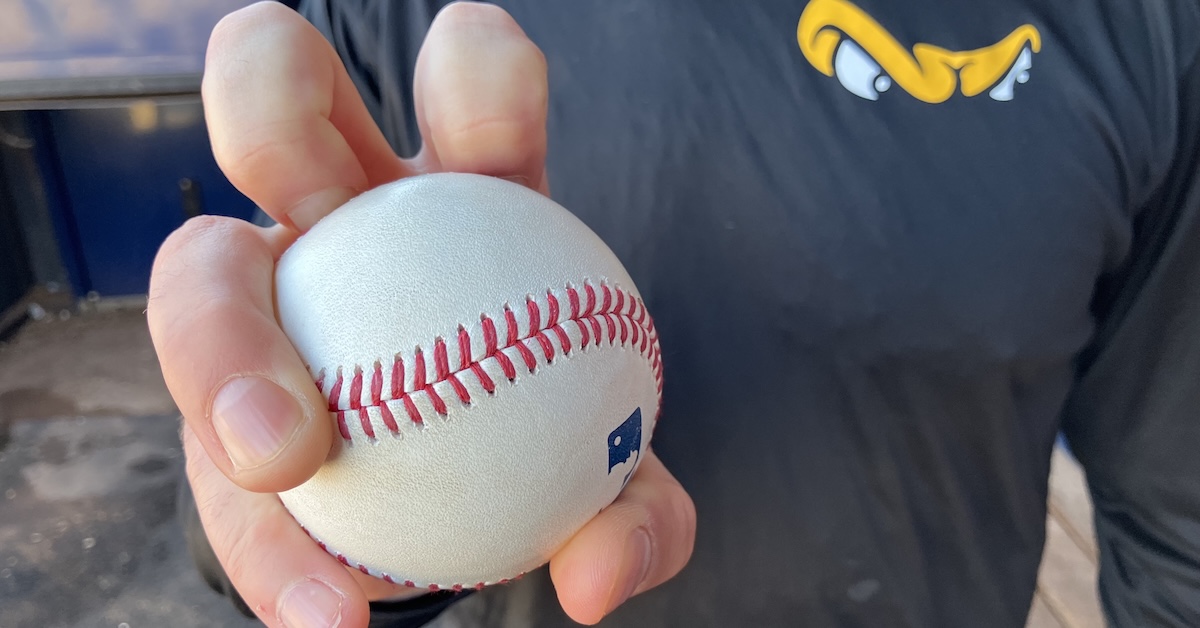
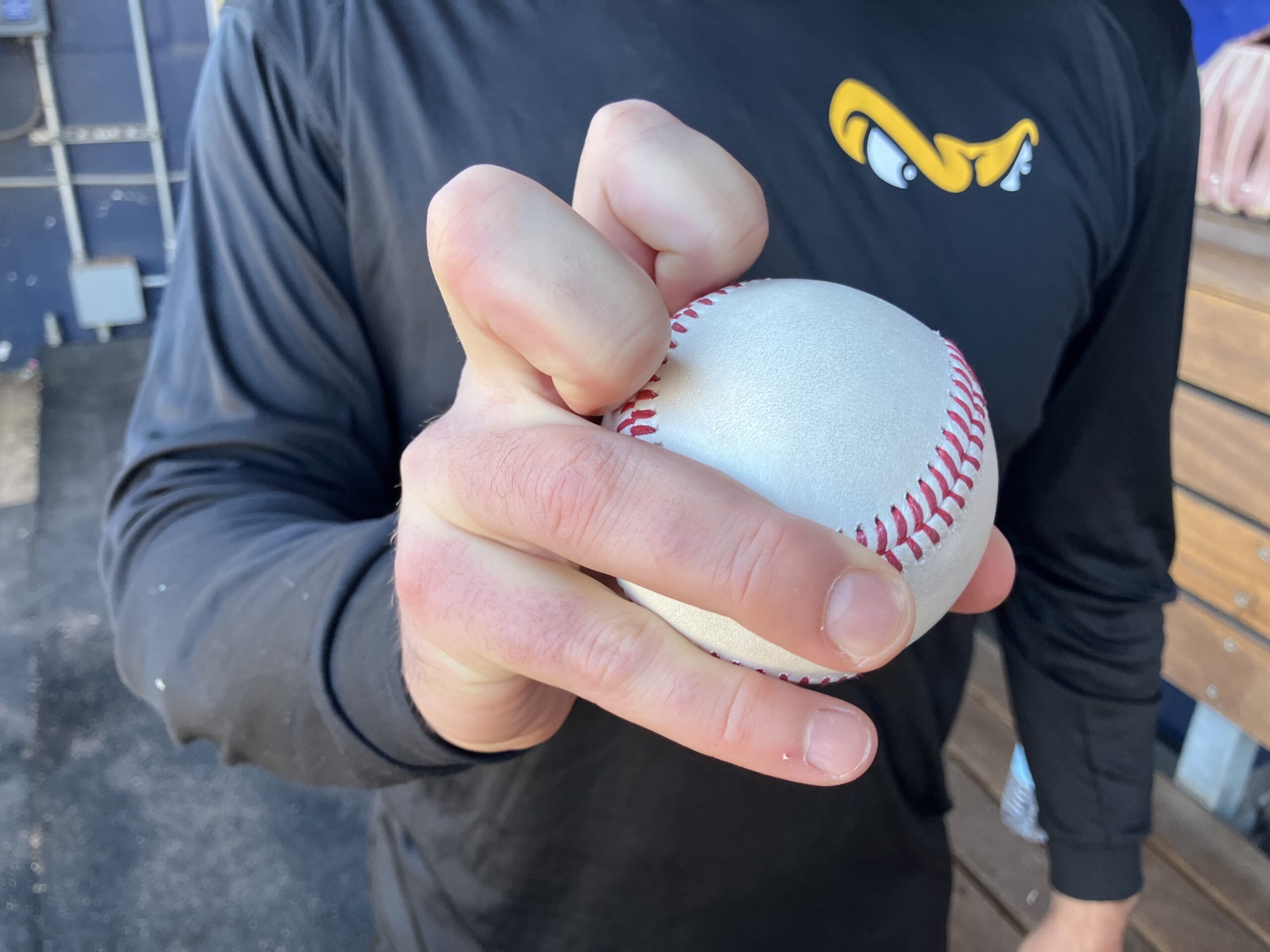
His signature pitch is every bit as notable as his late-bloomer success. Seelinger’s repertoire includes a four-seam fastball and a cutter/slider, but it is his unique offering with an unorthodox grip that most stands out. Seelinger shared the story behind it when Toledo visited Triple-A Worcester last week.
———
David Laurila: You throw a unique pitch. What exactly is it?
Matt Seelinger: “So, it was coined on Long Island, where I’m from. It’s called a knuckle drop. Basically, what I do is take a four-seam fastball grip and flip it so that the horseshoe is on the inside. I take my two fingers — my pointer finger and my middle finger — and bend them. I take the top lace, and put them on the bottom of it. I put my ring finger and pinky on the seams. The thumb, I try to get underneath as much as possible, although thumb placement isn’t as big of deal as long as it’s not too high up on the ball. From there, I throw it just like a fastball, only I’m pushing it out.”
Once all the blurbs for a prospect list have been written, I comb back through the giant spreadsheet that populates what readers see on The Board and double check its many fields for errors and inconsistencies. Two data points I’ve kept manually since 2017 are the heights and weights of the prospects who have passed through that space. At times, this has felt nonsensical — there are heights and weights on our player pages, and they could easily be pulled into the machinery that pumps out the tables that accompany the write-ups you see on our lists. But players’ measurables, especially in the minors, are often obviously wrong, and so for a little over a half decade, I’ve used my own judgment to make manual adjustments in cases when what is listed is clearly incorrect.
This has mostly meant manually adjusting players’ weights as they’ve gotten older and bigger, because even when players are on big league rosters, there is sometimes radical imprecision around their actual specs. When it comes to heights, however, I’ve overwhelmingly deferred to those on minor league player pages unless there was an egregious under-reporting (I think Oneil Cruz was the last one I manually fudged). Once the 2023 minor league season began, my pre-publication checks revealed a strange pattern: Many minor league players, mostly hitters, were suddenly listed on minor league player pages as being one or two inches shorter than my previous records indicated, and some of them had shrunk by as many as four inches.
While incorrect heights and weights are prevalent, widespread change to them across the entire player population was strange and struck me as probably having a cause. I’m going to show you the list of changes to players’ heights and go over potential explanations for how and why this has happened (and why so many heights were wrong in the first place), but first let’s talk about why this is an important detail. Read the rest of this entry »
Of all the things that happened in baseball this weekend, the only one I cared about was a Double-A game between the Chattanooga Lookouts and the Rocket City Trash Pandas. Now, I know what you’re thinking. If an April Double-A game is worth caring about at all, it must be a real doozy. To have it overshadow a weekend of MLB action — the Rays went to 9-0, Jordan Walker tied Ted Williams’ record for longest career-opening hitting streak, Oneil Cruz got hurt — well surely I must be exaggerating.
Try this on for size: The Trash Pandas led 3–0 heading into the seventh and final inning of the game, having not allowed a hit. They went on to lose that game 7–5, still not having allowed a hit. “You can’t predict baseball” is a bit of a cliché; baseball has been around for more than 150 years. All of this has happened before and all of this will happen again. But allowing seven runs while preserving a no-hitter? That’s worthy of detailed examination. Read the rest of this entry »
If Oakland Coliseum is indeed “baseball’s last dive bar,” as has often been asserted, then it must have one hell of a booking manager. Let’s not forget, after all, that this dive bar has a stage. And yes, that stage may be a bit far from the audience, and sure, it is housed in a hulking cement behemoth that shares a BART station with the airport, and fine, it might be subject to the occasional rodent or plumbing issue. But it still draws the same big names as other, glitzier venues. The Coliseum’s dinginess might generate headlines, but lately I’ve been struck more by the unique backdrop it offers attendees for seeing the major’s biggest names.
When I used this metaphor to describe my experience at an August 9 Shohei Ohtani start at the Coliseum, a friend likened it to seeing Metallica play an unannounced show a few years ago at The Metro, a venue just a stone’s throw up Clark Street from Wrigley Field, with a capacity of 1,100. You may remember this early-August Ohtani outing: one of those Tungsten Arm games – unremarkable but for the home run he launched into the right field bleachers and the win he secured, allowing him to reach the Babe Ruth milestone of recording 10 wins and 10 home runs in a season, though Ohtani’s home run total for the season had long eclipsed Ruth’s. The vastness of the stands only emphasized how few people I was sharing my baseball viewing experience with.
The next day, I followed up that major league masterclass with a Low-A day game in the uncovered San Jose grandstand, watching a teenager struggle to throw strikes under the blazing sun. If Ohtani at the Coliseum is Metallica at the Metro, then this game, where I went to watch prospects from the San Francisco Giants organziation, was sitting in on a garage band rehearsal. Low-A is an altogether different brand of baseball, where tweaks are made every day – sometimes even mid-game – in the hopes of tapping into young players’ potential. Read the rest of this entry »
Unionizing a workplace isn’t as simple as buying a bullhorn and stamping out some buttons, though both are obviously essential steps in the process. It requires huge amounts of organizing effort, cajoling, and, unfortunately, paperwork.
Last week, the MLBPA announced that it had sent out authorization cards to thousands of minor league players; if a majority of players give the union consent to negotiate on their behalf, federal labor law will require MLB to negotiate collectively with those players over pay and working conditions. Tuesday, the MLBPA announced that a majority of minor league players had signed and returned those cards, and sent a letter to the league asking for recognition.
The hardest thing to do in sports is hit a baseball, but following the internecine contours of collective bargaining procedure has to be up there on the list. So let’s trace out the next few steps in a process that will likely take months, if not years, to complete. And since minor league ballplayers are merely one of many groups undertaking high-profile unionization efforts these days, knowing how this works might help you impress people the next time, say, the Starbucks union comes up at a party. (I need to start going to cooler parties.) Read the rest of this entry »
Michael Fransoso is a great fit for a Mariners player-development machine that thrives with a process-based philosophy. Seattle boasts one of the top farm systems in the game, and Fransoso, a 31-year-old University of Maine graduate who played multiple professional seasons, is an up-and-coming hitting instructor who is fully-invested in that approach. His tutelage has thus far been at the lower rungs of the minors: He spent last season working with many of the organization’s best position-player prospects in the Arizona Complex League, and this year, he’ll be the hitting coach at low-A Modesto.
Earlier this month, Fransoso discussed the Mariners’ developmental philosophy and the some of the young hitters he’s been helping to hone.
———
David Laurila: You joined the organization in November 2019. What were the conversations like during, and immediately following, the hiring process?
Michael Fransoso: “Very process-based. Andy McKay was our farm director, and everything kind of flows through him. He’s very process-based, and also big into the mental game. That was huge. I felt like all of my conversations with the hitting department aligned. Everybody was on the same page in terms of the Mariners’ process — how we want to develop hitters — and they were able to deliver that message to me in a clear way. Really, it’s about dominating the zone.”
Laurila: I think it’s safe to say that all teams want their hitters to dominate the zone. What is the actual process?
Fransoso: “When you hear ‘dominate the strike zone,’ you might think it means ‘swing at strikes and take balls,’ but it’s not that simple. We want it to be simple, but hitting isn’t simple. Dominating the zone is more of a mindset. It’s also an individual approach to manage that hitter-pitcher matchup. When you break it down, the only thing a hitter controls is whether we swing at that pitch. We don’t have control over what the pitcher throws, how hard he’s throwing, or the break. We don’t even control whether it’s a ball or strike, because that’s up to the umpire. Read the rest of this entry »