Archive for Angels

The Early Shift: Gunned Down

Kiyoshi Mio-Imagn Images

Hello. While on paternity leave, I kept a journal about baseball and my daughter, who is not named Derek Jr., but who will henceforth be referred to as Derek Jr. You can read all of the entries here.

May 21
So Jose Siri made the coolest play I’ve seen in a while. He’s on the Angels now, a fact I had missed entirely, even though I now realize I saw him pinch-running against the A’s just two nights ago. When you think about Jose Siri, you think of great center field defense (and one million strikeouts), but that great center field defense usually comes in the form of great jumps and fantastic athletic catches. Tonight, however, he racked up an out with a combination of savvy and a perfect, powerful throw. A’s right fielder Carlos Cortes hit a routine single back up the middle. There was nothing notable about that whatsoever, but the Angels must have a scouting report that says Cortes likes to take aggressive turns when he singles. Whoever wrote it deserves a raise.

Siri played the ball normally right up until the moment when he didn’t. He intercepted it at a slow jog. It looked like he wasn’t taking the threat of Cortes going for a double seriously, but what he was actually doing was baiting Cortes, while also allowing the slow route to let him field the ball with his momentum still pushing him to his left, toward first base. That way, when he came up firing behind Cortes, he was able to got everything he had behind the throw. First baseman Nolan Schanuel was clearly in on it too. He lurked in foul territory, out of view of both Cortes and the first base coach so as to avoid arousing any suspicion, then popped back onto the field in time to catch the throw and apply the tag.

Read the rest of this entry »


FanGraphs Weekly Mailbag: July 18, 2026

Ron Chenoy-Imagn Images

I’ve been thinking a lot about the baseball calendar in recent days, specifically how we use it to both mark the passage of time and look ahead to the possibility of what’s yet to come. As fans, we slice up the season to make it easier for us to discuss noteworthy performances, evaluate trends, and justify our irrational faith that our team just might turn things around. As analysts, we know that we shouldn’t draw grand conclusions from these individual slivers — the sample sizes are just too small — but we also recognize the benefits of using these otherwise arbitrary segments to understand the season as it unfolds.

I mention all of this because this weekend is start of the second half of the season. Of course, we all know that the All-Star break hasn’t been the season’s true midpoint for some time now, as Opening Day is scheduled earlier in the year than it used to be while the All-Star Game continues to be played on the second Tuesday of July. Even so, there are three reasons that I continue to find value in splitting up the season in mid-July. First, pausing the regular season for a few days provides a natural demarcation point. Second, with playoff field now expanded to 12 teams, the postseason lasts longer than ever before. Because the team that wins the World Series could play up to 22 additional games, the All-Star break ends up being much closer to the halfway point on the journey from Opening Day to the decisive game of the Fall Classic. Finally, the three-week stretch after the All-Star Game is a frenetic rush to the trade deadline that then rolls right into the Dog Days of August and the strenuous sprint of September. The games after the All-Star break are much more demanding than the ones before it, thus making the few days of respite in July feel like a more representative dividing line than Game 81 in late June.

Anyway, in this first mailbag of the second half, we’re answering your questions on what it would be like if MLB had a loan mechanism like professional soccer, Kyle Karros’ breakout, the longest time a team has spent within a half-game of .500, and what Anthony Rendon’s career might have been. But first, I’d like to remind you that this mailbag is exclusive to FanGraphs Members. If you aren’t yet a Member and would like to keep reading, you can sign up for a Membership here. It’s the best way to both experience the site and support our staff, and it comes with a bunch of other great benefits. Also, if you’d like to ask a question for an upcoming mailbag, send me an email at mailbag@fangraphs.com. Read the rest of this entry »


FanGraphs Weekly Mailbag: July 4, 2026

William Liang-Imagn Images

Happy Fourth of July! To commemorate the United States’ Semiquincentennial, I’m going to run through some fun baseball stats that feature the number 250, and also ask a few trivia questions, which you can answer in the comments. As of Thursday morning, there is one player in MLB history with exactly 250 career home runs. He’s an active player for an NL West team. Can you name him? Seven players have recorded exactly 250 doubles in their career; only one of them is in the Hall of Fame. The six non-Hall of Famers are Ozzie Albies, Travis Hafner, Deivi Cruz, Bruce Bochte, Irish Meusel, and Jake Daubert. The Hall of Famer is a 19th century catcher. Who is it?

There are 25 members of the 250 Home Run/250 Stolen Base Club, nine of whom are Hall of Famers. Sorted by home runs, those nine are Willie Mays (660 HR, 339 SB), Andre Dawson (438, 314), Carlos Beltrán (435, 312), Rickey Henderson (297, 1,406), Craig Biggio (291, 414), Ryne Sandberg (282, 344), Joe Morgan (268, 689), Derek Jeter (260, 358), and Robin Yount (251, 271). Two others are active: José Ramírez (295, 311) and Jose Altuve (263, 326). Can you name the other 14 members of the 250/250 Club? Lastly, seven players have tallied at least 250 hits in a season. Six of them — Ichiro Suzuki (262 in 2004), George Sisler (257 in 1920), Bill Terry (254 in 1930), Al Simmons (253 in 1925), Chuck Klein (250 in 1930), and Rogers Hornsby (250 in 1922) — are Hall of Famers. Can you name the one non-Hall of Famer?

I’ll reveal the answers in next week’s mailbag. In this week’s edition, we’ll answer your questions on challenging the first pitch of a game, sustained runs of low playoff odds, a team of Frank Thomases and Luis Aparicios, and more. But first, I’d like to remind you that this mailbag is exclusive to FanGraphs Members. If you aren’t yet a Member and would like to keep reading, you can sign up for a Membership here. It’s the best way to both experience the site and support our staff, and it comes with a bunch of other great benefits. Also, if you’d like to ask a question for an upcoming mailbag, send me an email at mailbag@fangraphs.com. Read the rest of this entry »


To Challenge, or Not To Challenge — That Is the Question

Darren Yamashita-Imagn Images

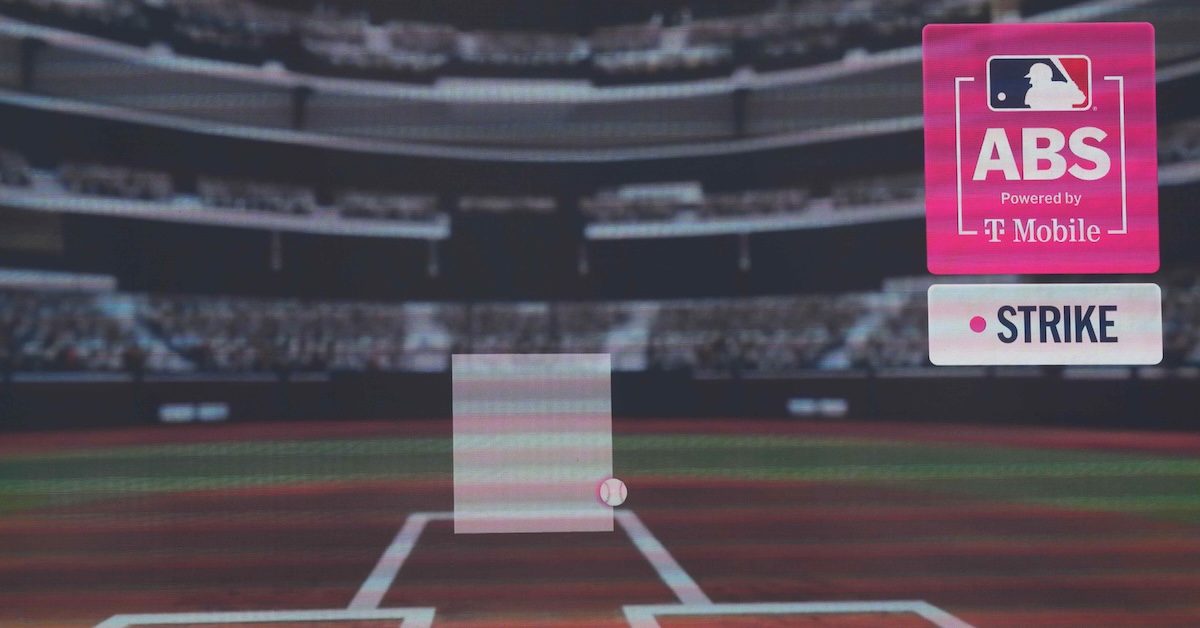
On April 15, Zach Neto was at the plate with one out and nobody on in the top of the fifth inning of the Angels’ game in the Bronx, where his team trailed the Yankees, 3-2. The first two pitches, a low changeup and a high slider, were nowhere near the zone, and Neto laid off easily. The 2-0 pitch from Luis Gil was another slider, this one about belt high and bending away from the right-handed Neto, who kept the bat on his shoulder and watched as the pitch appeared to clip the outside edge of the zone. Home plate umpire Lance Barksdale held up his hand. Strike one. Neto tapped his helmet immediately to challenge the call.

The graphic on the gigantic video board in center field showed that the pitch had missed by 0.4 inches. The call was overturned; the count was now 3-0. Neto walked on the next pitch. Mike Trout stepped in, took a fifth straight ball from Gil, then let a four-seam fastball over the heart of the plate get deep on him. He unloaded, clobbering the cookie 383 feet into the right field seats for a go-ahead two-run blast.

The no-doubt Trout clout would have been the decisive blow in an Angels win if not for a misplayed popup and a Jordan Romano meltdown. The Yankees walked it off on a José Caballero single, relegating Neto’s challenge to a footnote in that night’s game story, if it was mentioned at all. Even so, the gamble was an early example of how the new automated ball-strike challenge system can make the difference between winning and losing a game. Read the rest of this entry »


We Should Account For Inherited Runners Better

Benny Sieu-Imagn Images

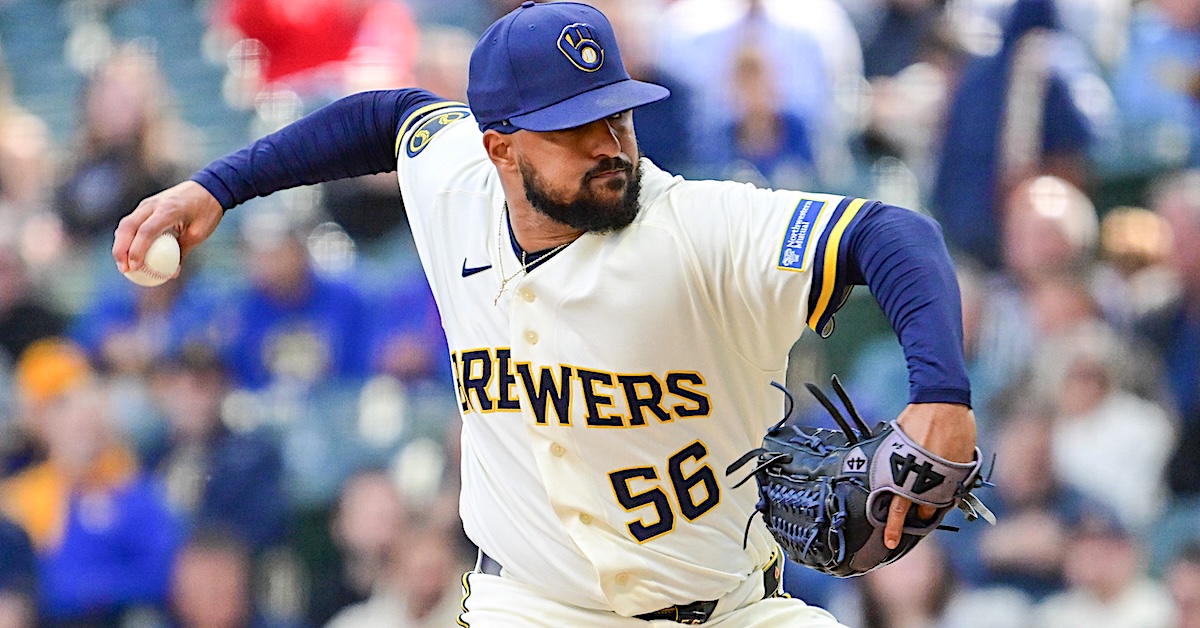
On April 21, Grant Anderson inherited a hot mess. With the Brewers ahead 3-0 in the fourth inning, starter Kyle Harrison lost his feel. He walked Riley Greene and Spencer Torkelson in two uncompetitive plate appearances, then gave up a rifled line drive on one of his slowest fastballs of the day, a center-cut cookie to Hao-Yu Lee. Pat Murphy called Anderson in from the bullpen to face the bases loaded with no one out.

Anderson delivered nearly flawlessly. He got Javier Báez to ground into a first-pitch double play, then struck out pinch-hitter Kerry Carpenter to escape the inning with only a single run allowed. That run, of course, went on Harrison’s ledger. Anderson got credit for a scoreless inning, no more or less.

On May 16, Chase Silseth tried to pull off the same trick. José Soriano fought through five strong innings against the Dodgers, but he didn’t have it in the sixth. After an inning-opening groundout, he walked four of the next five batters and hit the fifth, driving in two runs and leaving the bases loaded. Silseth came in to put out the fire – but he might as well have poured kerosene on it. He hit the first batter he faced, then gave up a two-run single immediately after, pushing the score to 6-0. He finally got the last two batters of the inning – which meant that in the game’s official log, he pitched two-thirds of an inning and didn’t allow a run.

These two pitching performances went quite differently. Anderson had a tougher task and performed better. But the two of them each got credit for a clean sheet. This is far from the only problem with the way we calculate ERA, but it’s one that stands out to anyone following. Anderson and Silseth didn’t deserve the same counting statistics there. Likewise, Soriano got tagged for three runs, while Harrison got tagged with only one. But that didn’t reflect what happened to them – both of them lost it and had to be removed from the game because of all the runners they’d allowed. Read the rest of this entry »


We Are Closer to the End Than the Beginning

Vincent Carchietta-Imagn Images

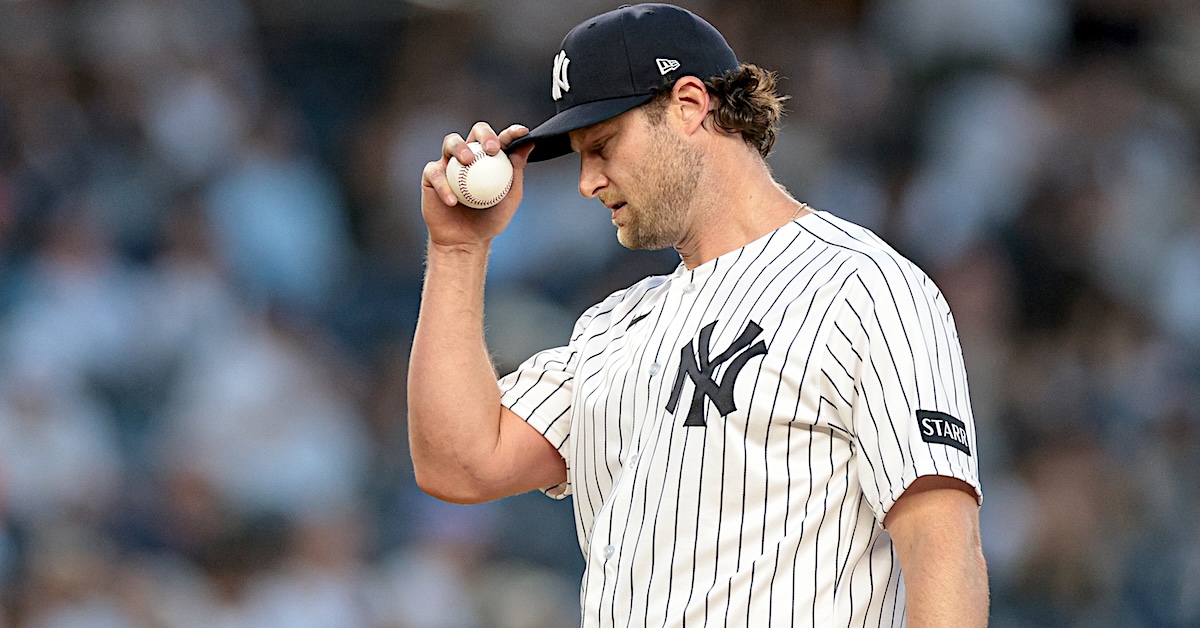
On Wednesday night, Gerrit Cole took his first loss since coming back from Tommy John surgery. After two starts of at least six scoreless innings, Cole got tagged for three home runs against the Guardians. Even so, it’s a promising return for the Yankees’ ace, who’s still throwing in the mid-to-upper 90s. His curveball is still curving, and while his fastball mix has evolved over his career in response to some trend or other, I’m confident he’ll find something that works. He always has.

I got to thinking about Cole in the context of a question I posed earlier this week about Adley Rutschman: Who’s the best draft prospect of the 21st century? Who presented the best combination of high floor and elite upside? The answer to that question is probably not Cole; if you were going for a workhorse college starter, you’d pick Mark Prior, Stephen Strasburg, or Paul Skenes. Or maybe even Carlos Rodón. But Cole definitely fits the bill; there’s a reason he was the top pick in the best draft class of the past 15 years. Read the rest of this entry »


Reid Detmers Commands His Fate

Jay Biggerstaff-Imagn Images

Reid Detmers has saved his career — again.

Detmers, if you weren’t aware, is a top 10 starting pitcher to this point in 2026. He has accrued 2.0 WAR, which is slightly more than Chris Sale, Max Fried, and Jesús Luzardo. If it weren’t for Cristopher Sánchez, Detmers might have a case as the best lefty starter in baseball right now. He’s also been the Angels’ best pitcher, even a step ahead of José Soriano, who burst onto the national stage with a red-hot April before cooling in recent weeks. Detmers has kept plugging away, quietly — surprisingly — excelling in the background.

If you’d told me in 2022 that Detmers would be a top 10 starter in baseball by 2026, I would have said, “Sure, that sounds reasonable.” That was his first “full” season in the majors, and he posted a 3.79 FIP with fine peripherals. Yes, he got sent down for about a month in the summer to work on some things, but it was a solid rookie season overall. He even showcased his ceiling with a no hitter that May.

It’s what happened in the seasons that followed that makes this one of the most unexpected early performances of the year. Detmers didn’t improve in 2023. He struck out more batters, which is good, but he developed a pesky command issue that resulted in more walks and home runs. And things got worse in 2024. He again boosted his strikeout rate, and he again gave up more walks and home runs than he had the year before. By June, the Angels had seen enough and sent him down to Triple-A. They recalled him in September for five final starts, and when he returned? Even more strikeouts, even more walks, and even more homers. Read the rest of this entry »


The Early Shift: An Imperfect Mason Miller

William Liang-Imagn Images

Hello. While on paternity leave, I kept a journal about baseball and my daughter, who is not named Derek Jr., but who will henceforth be referred to as Derek Jr. This is the second installment of that series. You can read all of the entries here.

April 17

Like any new parents, my wife and I spend a lot of time staring at our baby and talking about how beautiful she is. Of course we do. Evolution has programmed us to be completely overwhelmed by the baby’s beauty so that we don’t leave her on the doorstep of the nearest convent when we get fed up with the wailing and the sleepless nights and the relentless, unceasing, never-ending pooping. It has worked. We are ensorcelled. Derek Jr.’s future is wimple-free. But I’m starting to think it has hit my wife harder.

I say this because she has started to insist that Derek Jr. is “an objectively beautiful baby.” Objectively beautiful. You’re familiar with beauty, right? The thing that is, famously, in the eye of the beholder? Apparently one beholder knows better. It’s not enough that she thinks the baby is beautiful, and that everyone tells her all day long how beautiful the baby is. She now needs it to be proven empirically.

I used the word “insist” earlier because I have been pushing back ever so slightly on this one. I spend a whole lot of time analyzing players or trends, and it requires rooting out biases and confounding variables. Call me crazy, but I’m picking up on a possible conflict of interest here. I’m not prepared to get in a fight over this, but I have gently pointed out that the fact that my wife is throwing around the word “objectively” here is — objectively — hilarious. Read the rest of this entry »


Sunday Notes: Nationals Prospect Erik Tolman Has a Remarkable Backstory

Erik Tolman has a remarkable backstory. Currently playing for the Triple-A Rochester Red Wings, the 26-year-old left-hander threw to one of baseball’s most prolific pitchers as a prep, and that is a comparatively insignificant part of his past. His level of perseverance is nothing short of remarkable. Tolman has overcome debilitating injuries on his journey to the doorstep of the big leagues.

His travails began in 2021, the year the Washington Nationals drafted him in the 14th round out of Arizona State University. He had the first of two Tommy John surgeries, costing him all but three games in his final collegiate campaign — and his bad fortune was only just beginning.

“I tore my UCL again at the end of my rehab,” Tolman explained. “Fourteen months after having surgery, in my last live ABs, I felt my elbow go again. It was a sad moment, honestly. But I talked to my family, and I believed in myself — I thought I could still be a big-leaguer — so I kept at it. Unfortunately, on my fifth start back, in August 2023, I dislocated my knee. That made for a whole new mountain that I’ve had to climb.

“The injuries have driven me to have a work ethic, and a mental fortitude, of just going balls to the wall,” he added. “I figured I could either struggle coming back from the injuries, playing baseball, or struggle out in the real world. At the end of the day, we’re the ones responsible for our lives and careers. If you get hurt, are you going to cave, or are you going to overcome?”

Tolman did far more than simply dislocate a knee after returning from the second TJ. What happened was not only catastrophic: it was hard to fathom. Read the rest of this entry »


Ronald Acuña Jr. Lands on IL in Weekend of Significant Injuries

Christopher Hanewinckel-Imagn Images

The best team in baseball will be without its biggest star for a few weeks.

The Braves placed Ronald Acuña Jr. on the injured list Sunday with a strained left hamstring. Acuña exited Saturday’s game after pulling up in considerable pain while running out a groundout. Manager Walt Weiss told reporters that imaging revealed a Grade 1 strain, the least severe grade. According to MLB.com, Weiss said:

“It’s not going to be just a couple days. It’s gonna be more than that, so we need to put him on the IL, and hopefully it’ll be sooner than later. No idea with these soft tissue injuries how long they’re gonna take, but I think the silver lining is that the MRI showed it wasn’t too serious.”

While many players return from Grade 1 hamstring strains in just a couple weeks, or even following the 10-day minimum, this is an injury that can linger and delay a return.

This is, obviously, less than ideal for the Braves. Acuña is their best player and was projected in the preseason as the ninth-best position player in baseball with 5.4 WAR, according to our Depth Charts. Though his performance hasn’t been spectacular thus far, with a 111 wRC+ in 152 plate appearances, his .381 xwOBA and 12.2% barrel rate — along with strong strikeout and walk rates — suggest he hasn’t missed a beat this year, coming off his bounce-back 2025 season.

Of course, last year was a comeback campaign because Acuña missed most 2024 (and the early part of 2025) after tearing his ACL. He also missed chunks of 2021 and 2022 with a torn ACL in his other knee. In 2018, he missed about a month with a mild ACL sprain. That means Acuña’s hamstring strain is his fourth lower body injury requiring IL time in his career. Read the rest of this entry »