Archive for Teams

The Impossible Quest for Im-Morton-ality

Daniel Kucin Jr.-Imagn Images

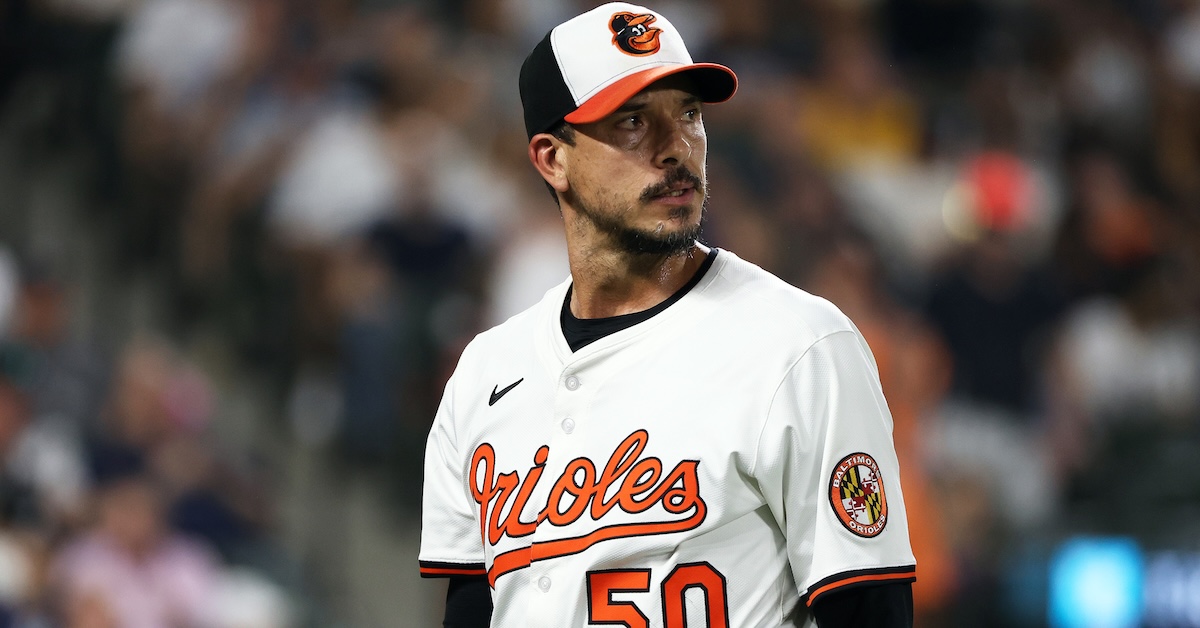
Charlie Morton has been about to retire for a while now. The lanky curveball specialist first made headlines in the early 2010s; he’d been struggling over his first three major league seasons, so he came up with a novel, but hilariously simple, solution: Copy what Roy Halladay was doing. It worked for a while, but injuries piled up, and it wasn’t until Morton landed with the Astros in 2017 that he really, truly put it together.

In the first season of a two-year deal with the Astros, Morton set new career highs in wins, WAR, and strikeouts. He not only won a championship for the first time in his career, he was the winning pitcher in Game 7 of both the ALCS and the World Series, and got the last out of the season in the latter case. He turned 34 five days after the Astros’ championship parade, and by the following spring he was already musing publicly about hanging up his spikes. Read the rest of this entry »


Five Things I Liked (Or Didn’t Like) This Week, May 9

Brian Fluharty-Imagn Images

Welcome to another edition of Five Things I Liked (Or Didn’t Like) This Week. For once, I don’t have a fistful of double plays to show you. I don’t even have that many great catches. The baseball I watched this week was disjointed and messy, the regular season at its finest. Making the easy plays tough? We’ve got that. Bringing in your lefty to face their righty slugger? Got that too. Doubles that weren’t? Collisions between out-of-position players? Yes and yes. So thanks Zach Lowe for the wonderful article format, and let’s get started.

1. Tell ‘Em, Wash
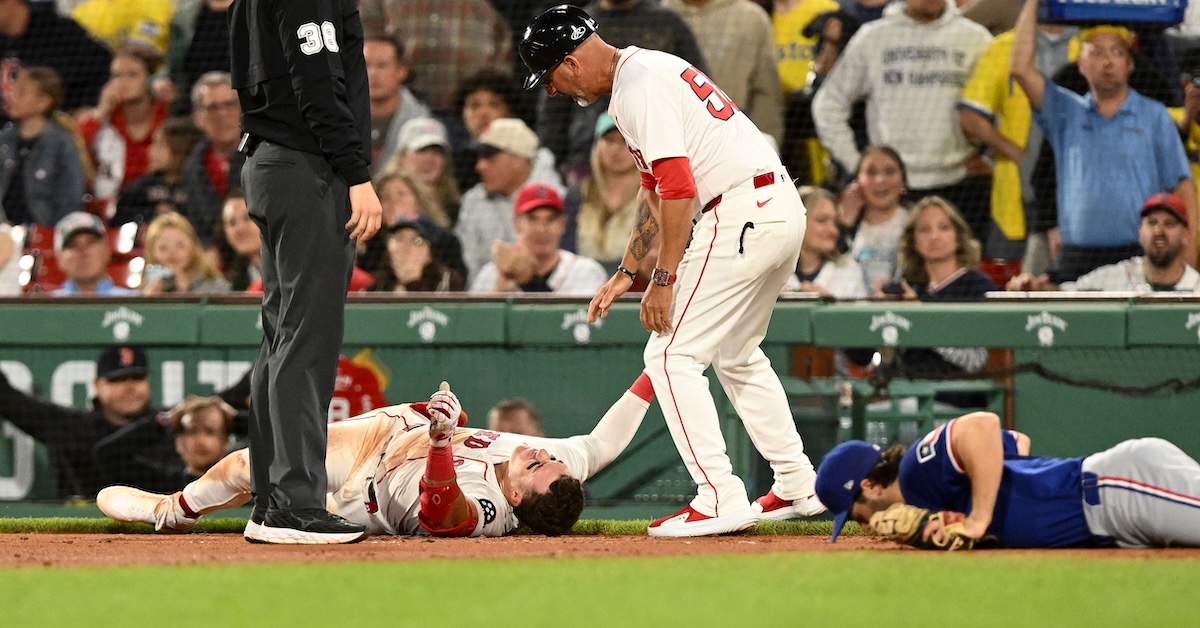
I mean, how hard could first base be? Incredibly hard, of course. The Red Sox and Rangers are both on to their respective Plan Bs at first base after Triston Casas ruptured his patellar tendon and Jake Burger got sent down to Triple-A. No big deal defensively, right? Each team plugged in a utility player — Romy Gonzalez for Boston and Josh Smith for Texas — and moved on with life. Look how easy first is:

Read the rest of this entry »


OAA Has Come for Emmanuel Clase

David Richard-Imagn Images

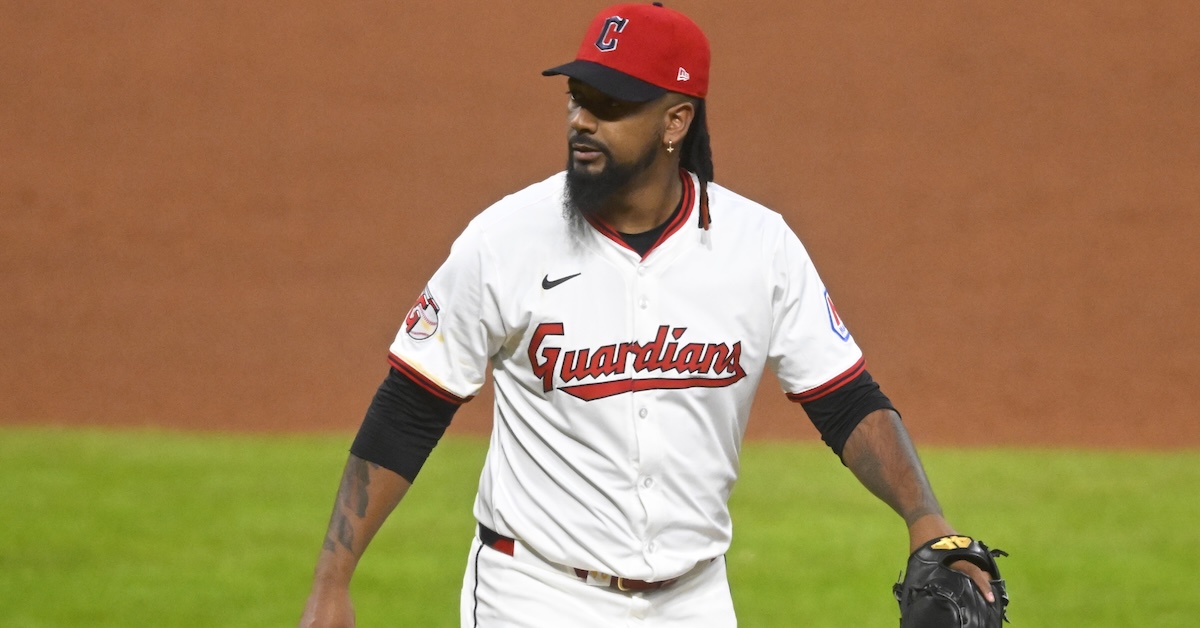
It’s rough being a reliever. Your whole career is a small sample. Emmanuel Clase has been one of the best pitchers in baseball since pretty much the moment he set foot on a major league mound in 2019, but over his entire career, he’s thrown just 338 innings. Our leaderboard says that total has been bested in 534 different player-seasons. That’s 534 times that one single player in one single season threw more innings than Clase has over his whole career. Clase set a personal best by throwing 74 1/3 innings last season, and on the individual season leaderboard, that total put him in a 79-way tie for 20,484th place. A small sample size means high variance. Over his entire career, Clase has never finished a season with an xFIP below 2.18 or above 3.42, which is pretty stable for a reliever. But after running a microscopic 0.61 ERA last season, his ERA is currently a so-big-you-can-see-it-from-space 5.51. Five-run swings are decidedly less stable.

When things go wrong to this degree, it’s usually because a combination of factors have conspired to make it happen. When you’re as good a pitcher as Clase, it takes both luck and skill to get results this bad. Our focus today will be on the extraneous factors. You know what else is subject to wild variations in short samples? Defense. And defense is letting Clase down in a big way. We’re here today because Mike Petriello asked me to look into something. Petriello is Major League Baseball’s Director of Stats and Research, and it’s my understanding that as such, I am legally required to investigate any statistical anomalies he assigns me. Here’s what he sent my way:

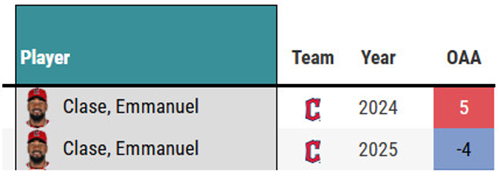
When Clase was on the mound in 2024, the Guardians racked up 5 Outs Above Average. They were great defensively. This season, even though he’s only pitched roughly one-fifth of the innings he did last year, Guardians fielders are already all the way down at -4. That’s an absurdly big swing. How is that even possible? Is it just luck? Read the rest of this entry »


Jackson Chourio, Stuck in the Middle

Patrick Gorski-Imagn Images

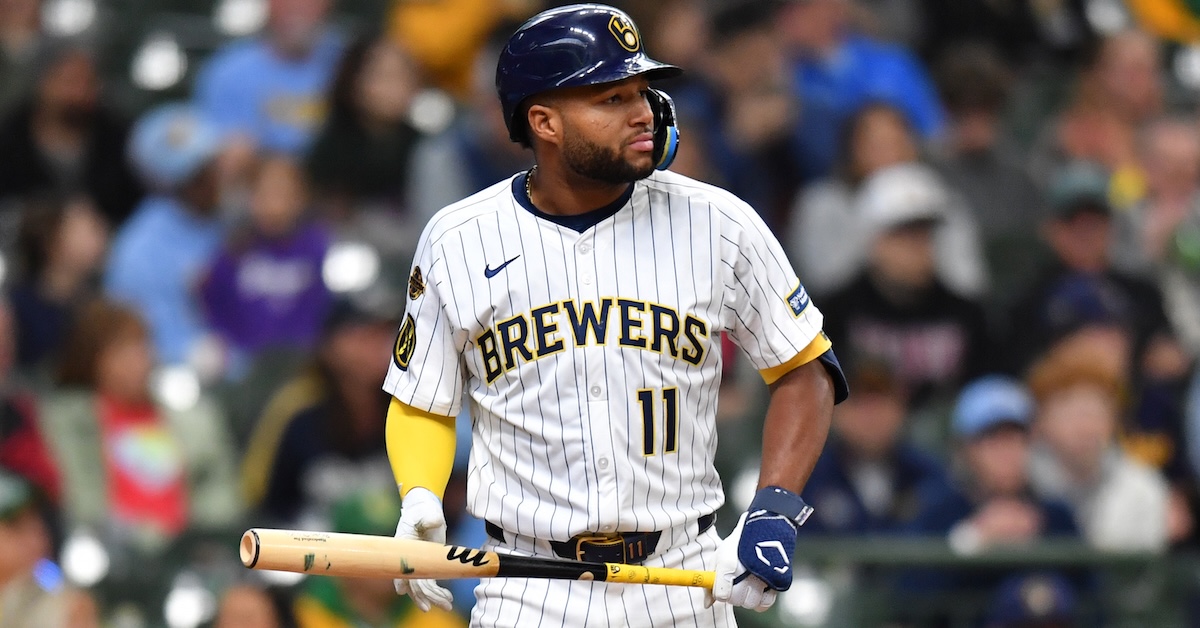
Jackson Chourio is a star. You can see it the second he steps to the plate. He looks like he’s always been in a batter’s box, like hitting comes as easily as breathing. He has easy power and shockingly good contact skills for someone who swings so hard. So, uh, why can’t he take a walk?

Fine, that’s hyperbole. It’s May 8, 38 games into the season, and he’s walked three times in 165 plate appearances. That works out to a 1.8% walk rate, the third lowest among qualified hitters. Jacob Wilson? He’s walked six times already. Michael Harris II? Four walks in fewer games. Name a guy you think can’t walk, with the exception of platoon players Kerry Carpenter and Michael Massey, and you can be sure that Chourio is walking meaningfully less than they are. Chourio didn’t walk a ton in 2024 – his 6.8% walk rate was in the 31st percentile – but this is something different entirely.

Naturally, when I started writing this piece before Tuesday’s game, Chourio had two walks in 161 plate appearances for the lowest walk rate in baseball, but then he walked his second time up in the Brewers’ 9-1 loss to the Astros. (For the rest of this article, I’ll be using stats as of the start of play on Tuesday.) Anyway, the point still stands: Chourio isn’t walking. What’s going on here? Read the rest of this entry »


Matt Seelinger Is a Long Island-Raised Mud Hen With a Knuckle Drop

David Laurila/FanGraphs

Matt Seelinger has taken an atypical path to the doorstep of the big leagues. Drafted in the 28th round by the Pittsburgh Pirates out of Division-III Farmingdale State College in 2017, the 30-year-old right-hander subsequently played in the Tampa Bay Rays, San Francisco Giants, and Philadelphia Phillies organizations before getting released and hooking on with the Atlantic League’s Long Island Ducks before the 2024 season. His fortunes turned last summer. The Detroit Tigers signed Seelinger in late June, and since returning to affiliated ball he has logged a 1.26 ERA and a 38.4% strikeout rate over 29 relief appearances between Double-A Erie and Triple-A Toledo. So far this season, the Westbury, New York native has a 4-0 record to go with a 0.57 ERA and a 30.9% strikeout rate over nine appearances, the last five of them with the Mud Hens.

His signature pitch is every bit as notable as his late-bloomer success. Seelinger’s repertoire includes a four-seam fastball and a cutter/slider, but it is his unique offering with an unorthodox grip that most stands out. Seelinger shared the story behind it when Toledo visited Triple-A Worcester last week.

———

David Laurila: You throw a unique pitch. What exactly is it?

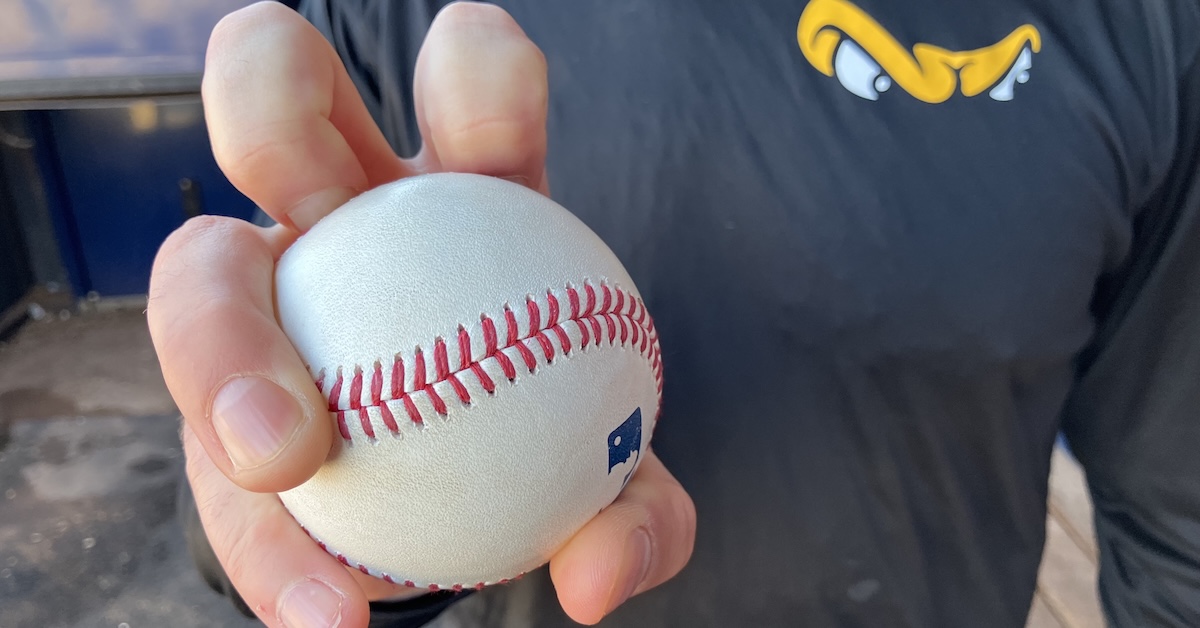
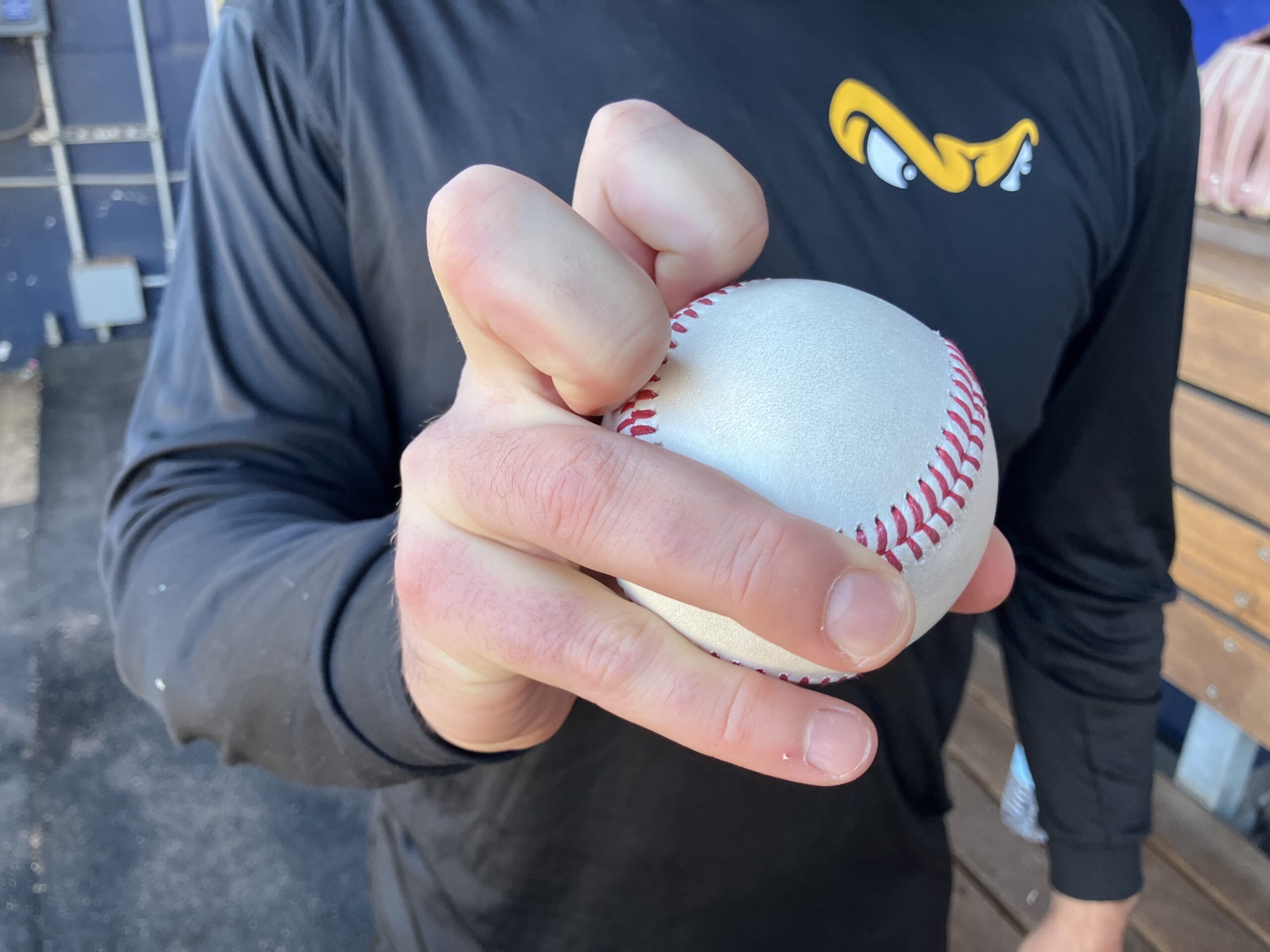
Matt Seelinger: “So, it was coined on Long Island, where I’m from. It’s called a knuckle drop. Basically, what I do is take a four-seam fastball grip and flip it so that the horseshoe is on the inside. I take my two fingers — my pointer finger and my middle finger — and bend them. I take the top lace, and put them on the bottom of it. I put my ring finger and pinky on the seams. The thumb, I try to get underneath as much as possible, although thumb placement isn’t as big of deal as long as it’s not too high up on the ball. From there, I throw it just like a fastball, only I’m pushing it out.”

Matt Seelinger demonstrates how he grips his knuckle drop.
David Laurila/FanGraphs

Laurila: The bent fingers are straightening as you’re releasing the ball… Read the rest of this entry »


The Wait Is Over. Liberatore Is at Hand.

Jeff Curry-Imagn Images

On Tuesday night, Paul Skenes — the most electric pitcher in baseball, the future face of the sport, the only reason (apart from potatoes or metallurgy) that anyone would want to go to Pittsburgh — took the mound and did his stuff. He struck out six Cardinals in six innings pitched, allowed just two runs, and threw 22 four-seam fastballs that clocked between 98.0 and 99.1 mph. If you watched the game, you got what you were promised.

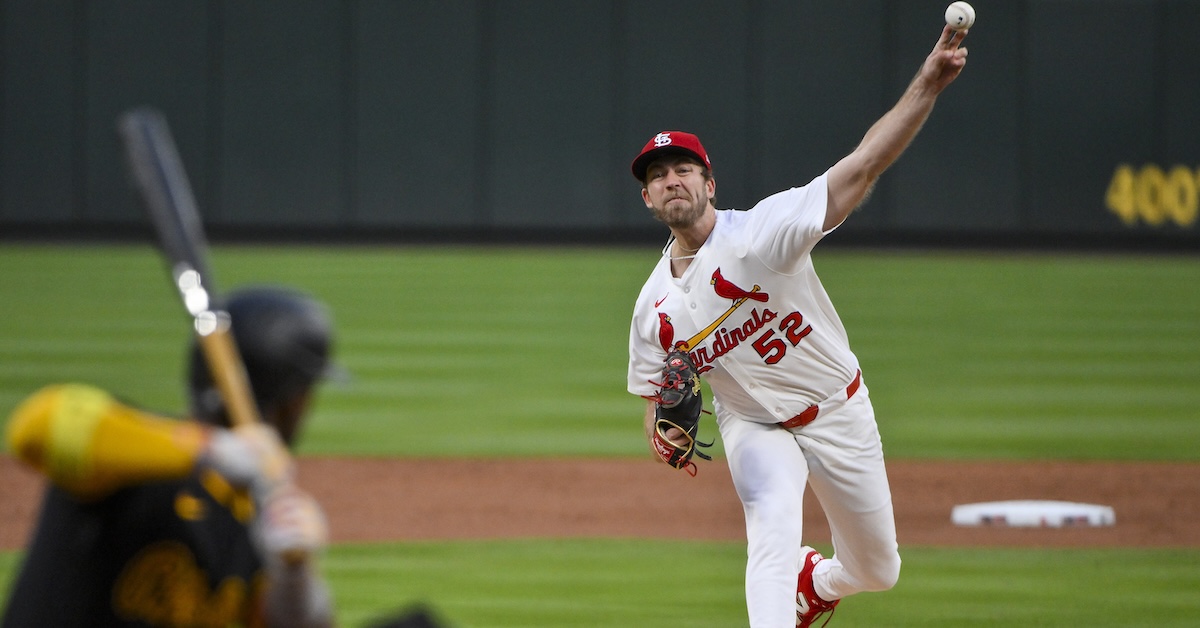
But Skenes was outdueled on the evening, by a pitcher whose developmental track took substantially longer than Skenes’. Matthew Liberatore struck out eight batters over seven innings, allowed only one run, put six baserunners on to Skenes’ seven, threw 70 strikes on 99 pitches to Skenes’s 60 out of 102, and got 17 whiffs to Skenes’ 13. Read the rest of this entry »


Job Posting: Milwaukee Brewers – User Interface/Experience UI/UX

Associate – Baseball Systems – User Interface/Experience UI/UX

Location: Milwaukee, WI

Position Summary:
The Associate – Baseball Systems – UI/UX will work closely with the Software Engineering team within the Baseball Systems department. This position will be responsible for supporting the creation of intuitive, accessible, and visually appealing user experiences that enhance existing web and mobile technologies and creation of new tools.

Core duties for this role include, but are not limited to:

  • Create wireframes, mockups, and prototypes for web and mobile applications.
  • Participate in user research activities (e.g., user interviews, surveys, usability testing).
  • Analyze user feedback and research to refine designs.

The ideal candidate will be currently enrolled pursuing a bachelor’s degree (B. A.) in Computer Science, Human-Computer Interaction, Information Design, Digital/Graphic Design, or related field from four-year college or university; or related experience and/or training; or equivalent combination of education and experience.

Our Team
Baseball Systems is the software backbone of Baseball Operations. We provide data and decision-making tools for analysts, coaches, and front office personnel to help win a World Series. Our department consists of a team of data engineers and a team of software engineers who work across all different aspects of Baseball Operations providing support and tools relevant to each group. We work directly with stakeholders in every department of Baseball Operations to ensure every project we work on drives value to the organization and helps us win more games on the field. We help drive technical innovation to find new ways to solve baseball problems.

Our Pitch
You come here to make a difference. We are a purpose-led organization, focused on building an inclusive and engaging culture that fosters excellence, collaboration, and ingenuity. We strive to be a model employer and cultivator of talent, empowering our teams to drive innovation through the inclusion of diverse thoughts, ideas, and perspectives. We operate at the highest standard of excellence, investing in the development of our staff across all levels and embracing differences through a culture of respect and understanding.

We are proud to offer a highly competitive perks and benefits package including:

  • League wide medical insurance plan
  • 401(K) match and an additional annual contribution from the Club
  • Collaborative recognition program and incentives
  • Online educational platform for personal and professional development
  • Employee Resource Groups
  • Paid time off for volunteering
  • Year-round diversity, equity and inclusion training and development
  • Brewers Home Game tickets, promotional giveaways and other discounts!

For more information about our Crew, other benefits and insight into our Club culture please visit our Careers Page

To Apply:
To apply, please follow this link

The content in this posting was created and provided solely by the Milwaukee Brewers.


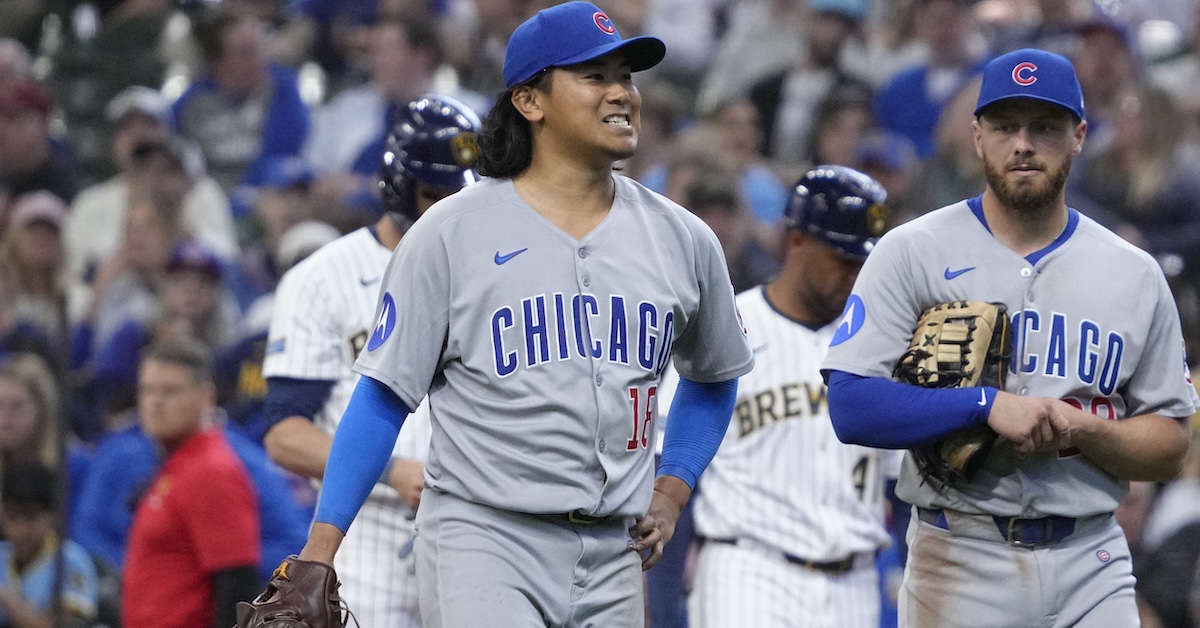
Shota Imanaga’s Hamstring Strain Magnifies Cubs’ Other Rotation Losses

Michael McLoone-Imagn Images

While the Cubs are 22-15 and own a three-game lead in the NL Central — the largest of any team at this writing — the rotation that’s helped them to that perch has taken its hits recently. Last month, 2023 All-Star lefty Justin Steele underwent surgery to repair his ulnar collateral ligament, and Javier Assad suffered a setback while rehabbing to return from an oblique strain. And then on Monday, the Cubs placed 2024 All-Star lefty Shota Imanaga on the injured list due to a left hamstring strain. While his injury isn’t considered to be major, his loss could tighten the division race and test the depth of the already-depleted rotation.

After leaving his April 29 start against the Pirates after five innings due to cramps in both quadriceps, Imanaga cruised through the first five innings against the Brewers on Sunday in Milwaukee, allowing just three singles while striking out four without a walk. The 31-year-old’s afternoon ended on a sour note, however. With the game still scoreless in the sixth, he yielded a leadoff single to Jackson Chourio and then a one-out walk to William Contreras. It looked as though he might escape unscathed when he got Christian Yelich to ground to first baseman Michael Busch, who started a potential 3-6-1 double play. Imanaga ran to cover first base, but not only was Dansby Swanson’s throw a bit late, the pitcher came up limping, forcing him out of the game.

Reliever Julian Merryweather entered, threw a wild pitch that allowed Chourio to score from third, and by the time he got the final out, three more runs had scored in what ended as a 4-0 loss for the Cubs. They suffered a much more gruesome defeat on Tuesday, when reliever Ryan Pressly allowed eight straight Giants to reach base in what became a nine-run 11th inning and a 14-5 drubbing. Read the rest of this entry »


On Chasy Chases and Choosy Chases

Matt Marton-Imagn Images

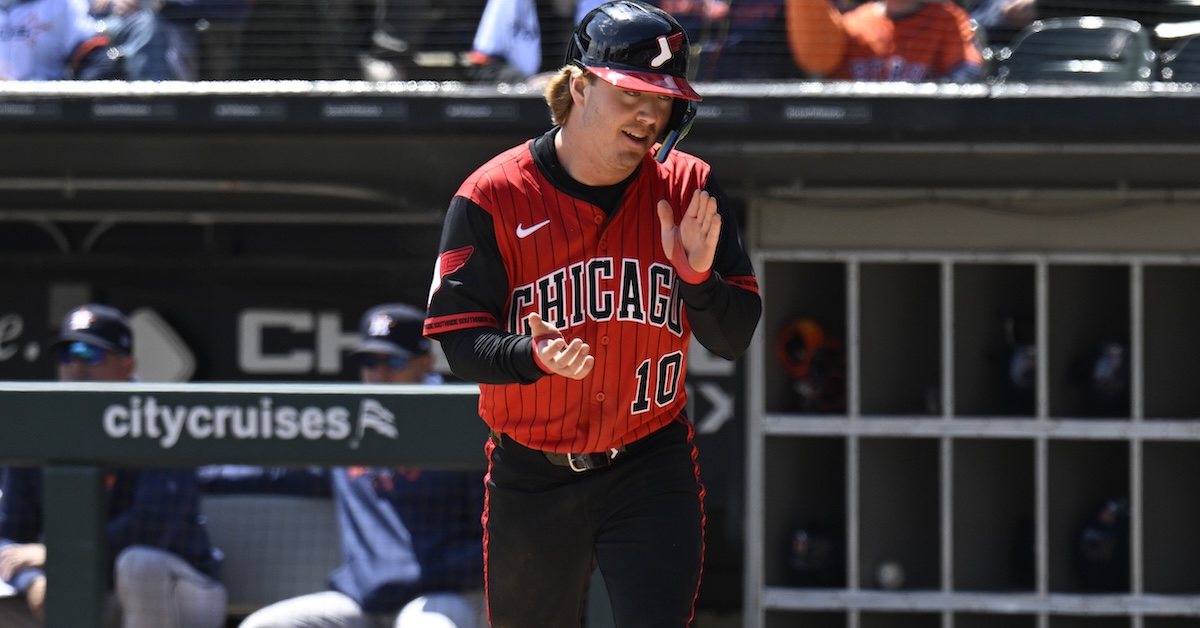
Yesterday, James Fegan wrote a great story at Sox Machine about how Chase Meidroth became one of the most patient players in baseball. The White Sox want Meidroth to be more aggressive, but after a recent call-up, he’s running a minuscule 17.3% chase rate. He ran that exact same chase rate last season in Triple-A, and it ranked fifth lowest among the 381 players who saw at least 500 pitches outside the zone. Here at FanGraphs, Michael Baumann also covered Meidroth’s overabundance of patience a couple weeks ago. Unsurprisingly, Baumann’s article featured something Fegan’s didn’t: a paragraph about nominative determinism. The defining characteristic of Meidroth’s profile is that he’s a Chase who doesn’t chase. But Meidroth isn’t the only Chase in baseball. Maybe he’s an outlier. Maybe the other players named Chase rack up chases, if only out of a sincere desire to obey the fifth commandment.

Chase Utley was the first major league Chase. He debuted in 2003, conveniently just a year after Sports Info Solutions started tracking pitches. That means that we can track the chase rate of every Chase who’s ever played. I went through his year-by-year chase rates in order to calculate a league-adjusted figure, which we’ll call Chase Rate Plus for the remainder of this article. Utley’s Chase Rate Plus was 88, 12% below the league average, and it helped him run a walk rate that was 6% above the league average. In other words, the first Chase in history didn’t chase much either. What about the rest of the bunch? Read the rest of this entry »


Goodbye, Mr. Baseball. It’s Ben Rice Knowing You.

Gregory Fisher-Imagn Images

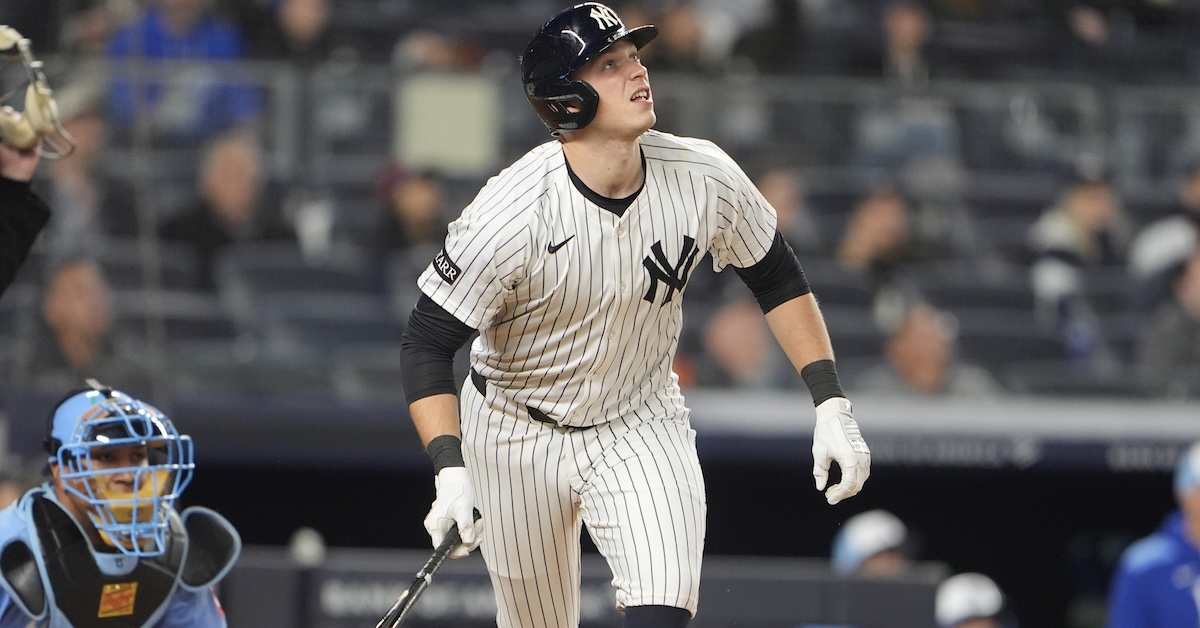
When the Yankees lost Gerrit Cole and Luis Gil before the season started, I thought they were screwed. Turns out, at least so far, that New York’s stripiest sports team is right where it ended last year: First place in the AL East. That’s because the Yankees, as of this writing, lead the league in home runs, OBP, SLG, and (by a pretty big margin) wRC+. It helps that the rest of the AL East (especially the Orioles) has started slow, but the best defense is a good offense and all that.

And it’s not just Aaron Judge, who is 20% of the way through an offensive campaign that makes Babe Ruth look like Rey Ordonez. Judge can only bat four of five times a game; even he can’t do it alone. But even with Giancarlo Stanton hurt and Austin Wells and Jasson Domínguez offering only token offensive contributions, Judge has had the running buddy he needs. It’s… Ben Rice, believe it or not. Read the rest of this entry »