Chase Lee is now a Blue Jay after enjoying a mostly successful 2025 rookie season as a Tiger. The 27-year-old, sidewinding right-hander made 32 relief appearances with Detroit, logging a 4.10 ERA, a 24.3% strikeout rate, and a 6.1% walk rate over 37-and-a-third innings. He allowed 32 hits, seven of which left the yard, and was on the winning end of four of five decisions. Toronto acquired him in exchange for 24-year-old farmhand Johan Simon in mid-December
He was originally in the Rangers system. Texas took Lee in the sixth round of the 2021 draft out of the University of Alabama, only to move him to Motown at the 2024 trade deadline as part of the Andrew Chafin deal. Lee then headed into last season with Eric Longenhagen calling him a “a sinker/slider sidearmer who has posted strikeout rates up around 30% his entire minor league career… a high-probability up/down look reliever.” That proved accurate. Lee rode the Detroit-Toledo shuttle multiple times, making 23 appearances as a Mud Hen.
Talking to him Jays camp on Friday, I learned that the well-educated hurler places a high value on the information he gets from hitters.
“That’s where pitchers get a lot of their information,” the Alabama graduate told me. “When I’m working on new pitches, new shapes, new locations — whatever it may be — I normally go to the hitting coaches. It’s like, ‘Hey, if your team were to face me, what would the plan be?’ I take that, then it’s, ‘OK, how can I mess up that plan?’
“I did this the other day,” the former walk-on to the Crimson Tide baseball team added. “I talked to Cody Atkinson, who is one of our hitting coaches here. I knew Cody in [the Texas Rangers organization]. I asked him to write me a 30-second report on what he would tell hitters to do if we were on different teams and I was coming into a game. He said he would tell them to look in a certain location, for these two pitches. If I were to instead throw a fastball up, or a fastball in, that would ruin the entire plan.” Read the rest of this entry »
Ben Lindbergh and Meg Rowley banter about speedster Braiden Ward’s record spring, whether there’s a baseball equivalent of Bam Adebayo’s 83-point game, and Paradise being a baseball show, then preview the 2026 Atlanta Braves (38:00) with From the Diamond’s Grant McAuley, and the 2026 Chicago White Sox (1:29:45) with Sox Machine’s James Fegan.
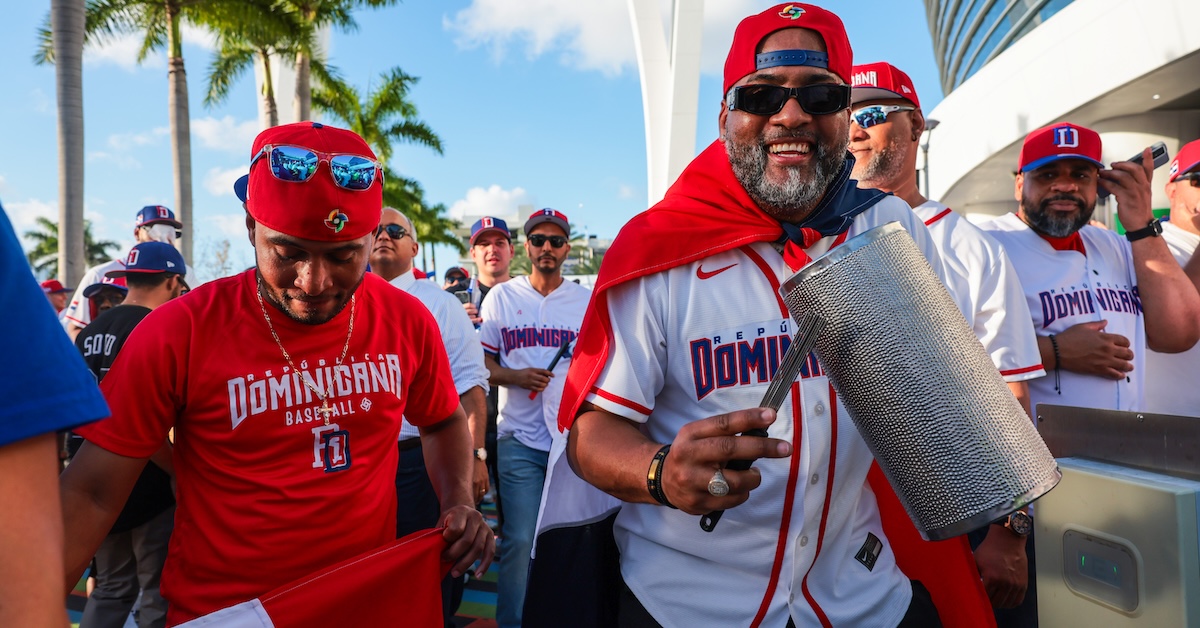
I’ve covered Red October playoff games in Philadelphia, and white out football games at Penn State. I’ve also attended professional games in Panama and covered plenty of Little League World Series games, giving me a taste of how different cultures enjoy baseball. But I have never witnessed a sporting event quite like Wednesday night’s World Baseball Classic game between the Dominican Republic and Venezuela.
It wasn’t just the chanting, the instruments blaring, or the dancing that made for such an exhilarating experience; all of those things were also a part of the previous Pool D games played by the Dominican Republic and Venezuela. I know what passionate fandom looks and sounds like, and this was something altogether different. Venezuelan and Dominican fans don’t merely watch baseball; they participate in it. It’s kinetic, and when the force of their fandom collided under the closed roof of loanDepot park, it created a unique, unforgettable energy. I hope all of you reading this can experience something like it at some point in your life, because getting to feel that power pulsing through the stadium is one of the great privileges of this job.
That’s the last we’ll talk about the WBC in this week’s mailbag. Instead, we’ll be answering your questions on how baseball would change if it were played exclusively left-handed, how often we might see an Ultimate ABS Challenge, and whether the 2026 Angels roster would’ve been a playoff team in 2024. But first, I’d like to remind you that this mailbag is exclusive to FanGraphs Members. If you aren’t yet a Member and would like to keep reading, you can sign up for a Membership here. It’s the best way to both experience the site and support our staff, and it comes with a bunch of other great benefits. Also, if you’d like to ask a question for an upcoming mailbag, send me an email at mailbag@fangraphs.com.
__
How would baseball change if there was no such thing as right-hand dominance? All hitters and pitchers from the game’s inception to the present performed exactly the same, except now all as left-handed throwers and hitters, exclusively?
How different would that be from a baseball universe in which everyone was exclusively right-handed?
From,
“Transmission”
Michael Baumann: I’d like to begin by saluting you, Transmission — I’m gonna call you Mish for short — for submitting the best mailbag question I’ve ever received. Better than the dog first baseman one, better than the one about why God hates the Reds. Nothing’s even close.
The first thing that comes to mind is that if everyone in the world were left-handed we would absolutely be running the bases the other way. Most obviously because of the way the infield is oriented now, three of the toughest defensive positions are incredibly awkward to play as a left-handed fielder. So much so that you never see it past the dandelion-picking levels of Little League.
I know that lefties get an advantage over righties by being closer to first base, but there’s a logic in having the batter run to the base he’s facing. The big question is whether baseball’s founding fathers would have bothered to create a right-handed batter’s box at all. And conversely, would an all-right-handed baseball league have created a left-handed batter’s box? (For what it’s worth, if everyone threw with the same hand, I don’t think it’d matter which hand it was; all-lefty baseball would look the same as all-righty baseball, just in reverse.)
But if everyone in baseball hit from the same side of the plate, pitching strategy would be enormously different than it is in our ambidextrous world. The value of the platoon advantage was understood very early on in the history of the game; switch-hitters came into existence around the same time as the baseball glove, in the 1870s.
If every player in the league were left-handed, and it was understood that hitters fared better against breaking pitches that moved toward them, would anyone have ever developed the sinker or the changeup? Probably — even now, you see pitchers whose offspeed pitches are dominant enough to be effective against same-handed hitters — but the shape and deployment would probably be different. Creating screwball action would take a backseat to deception; for that matter, maybe breaking pitches would have developed on a continuum of shape and speed, rather than being distinct, the way we separate sliders and curveballs now.
But if I had to guess, I’d say that entirely left-handed baseball would have developed symmetrical batting positions, as ambidextrous baseball has in real life. I’m not aware of a stick-and-ball sport that forces the player to address the ball from a specific side — then again, we live in a world where right-handed people exist, which would not be the case in Mish’s hypothetical.
A left-handed grip on a baseball bat — which is to say, left hand on top, right hand on the bottom — is also a left-handed grip on a variety of tools that would’ve been familiar to 19th Century Americans: axes, brooms, shovels, even swords. It stands to reason that baseball would’ve evolved along those lines.
But maybe not universally so.
When I was growing up, the kids in my neighborhood would play street hockey every afternoon, from when school got out to when it got dark. Hockey has left- and right-handed shooting positions that correspond with the batting positions of the same name. I write right-handed, I throw and hit right-handed, and I play hockey right-handed. Most of the kids I grew up with were also right-handed and played baseball right-handed, but in hockey they shot lefty.
In both baseball and hockey, the fine control of the bat or stick is done with the top hand — that’s where you want your dominant hand. But because the baseball bat is held up, the top hand is further from the knob, while the hockey stick — held close to the ground — has the top hand at the knob. In order to put the dominant hand in control of the stick, a right-handed hockey player would have to shoot lefty.
Most of my left-handed-shooting friends learned how to play hockey before they learned how to play baseball, so if they were right-handed they were taught to shoot lefty. I came to hockey later, after already having committed to a right-hand-over-left baseball grip, so I played hockey with the same hand position.
The point is, it’s easier to hit right-handed if you’re naturally right-hand dominant, but not by much. It can be learned or unlearned fairly quickly; plenty of high-level ballplayers who don’t switch-hit in games will switch-hit in practice for their own amusement.
If a right-handed batter’s box were available by rule, it would take about 10 seconds for someone to try to figure out how to gain an advantage by using it. It would start with the kind of jailbreak swing you see from left-handed fast-pitch softball players. (Remember, we’re running the bases clockwise in this hypothetical.) Before too long, an enterprising switch-hitter would realize that he was having an easier time seeing left-handed breaking pitches and commit to hitting righty full-time.
Eventually, the entire league would follow suit. If every pitcher you face is left-handed, why would you ever subject yourself to a platoon disadvantage if you could avoid it? So eventually, some left-handed pitchers would experiment with throwing righty, which would be awkward but not impossible. Remember, Billy Wagner is naturally right-handed. (So is Michael Vick, if you want a non-baseball example.)
From the start of the National League in 1876, it took 119 years for Greg Harris to come along and pitch with both arms in a single game. That was a novelty act from a pitcher on the verge of retirement; it’d be another 20 years before Pat Venditte reached the majors. Soon, Jurrangelo Cijntje will come to the majors with conventional big league-quality stuff from both sides.
In a world where every pitcher throws left-handed and every hitter is left-handed but bats righty, the evolution toward non-dominant-hand pitching would not take nearly that long. Eventually, we’d see a mix of switch-pitching and switch-hitting players, and maybe even right-handed-throwing first basemen.
From there, how long until baseball players start trying to write with their non-dominant hand, too? Would baseball bring an end to this wholly left-handed world? Is this thought experiment inherently self-negating? Fascinating stuff.
__
Dear Mailbag,
Let’s define the Ultimate ABS Challenge as the following: bottom of the ninth or later, bases loaded, two outs, full count, and either a walk or a strikeout is challenged. Is it possible to estimate the likely frequency of future UABSCs? We would be looking for past walks and strikeouts in that area in which Statcast suggested the ball was within, say, 1.5 inches of the edge of the zone on either side of it, I should think.
Thanks!
Andrew
Ben Clemens: What an incredibly specific query! The answer is that this is probably going to happen almost never. Forget the distance from the borders of the strike zone. From 2021 to 2025, there were exactly 23 pitches that meet the rest of your criteria: bases loaded, bottom of the ninth or later, full count, two outs, taken for a strike or ball. Here’s a Baseball Savant search string for that.
Out of those 23 pitches, 15 were taken for balls. Those balls were all pretty far outside the strike zone. The closest one was 1.7 inches off the plate, and that’s grading generously. Statcast measures the location of the center of the ball; I, of course, included the radius of the ball in my calculations. Sure, the Cardinals would have challenged that one, but I don’t think there’d be much drama. No one on either team thought that it was a strike.
Out of the eight pitches taken for a strike, only one had a location within 1.5 inches of being overturned on a challenge. That’s this bending changeup from Tyler Holton, and it would have been overturned. The closest among the others was this slider from J.B. Bukauskas that dotted the inside corner. I’m sure Amed Rosario would have challenged it, but the truth is that it was in the zone by a lot. It’s a strike if any part of the ball clips the zone, and the center of this one was in the zone. The inside edge of this pitch was nearly two inches into the strike zone; it wouldn’t have been close to getting overturned.
In other words, you might get a few challenges – five pitches in the last five years within two inches, for example – but probably not that many overturns. Maybe zero overturns, in fact. Batters don’t get into this situation — bases loaded, 3-2 count, two outs, bottom of the ninth — very often in the first place. And I doubt they’re going to suddenly start taking more pitches either. When batters swing at close pitches in these situations, it’s not because they’re worried the ump will botch the call. Rather, it’s because they’re tracking a spinning projectile in flight, making a swing decision well before they see where it ends up, and trying to approximate a trajectory. They don’t even know exactly where the strike zone border is. I don’t think this behavior will change much at all. No one’s that good at knowing where a pitch will end up before they swing; even Juan Soto chases. I hope that we see at least a few, but I’m glad that they’ll happen pretty rarely.
__
The Angels are accumulating a large number of players who were good roughly a few years ago, mostly in 2023. Some are declining vets like Jorge Soler and Mike Trout. Some are young enough guys that only had one really good year, like Josh Lowe and Alek Manoah. Some probably had really good projections some spring but never launched, like Grayson Rodriguez and Vaughn Grissom and Oswald Peraza. Some blew out their arms, like Jordan Romano and Robert Stephenson. If you took the best preseason projections in the 2022-2024 period for each player you probably have a playoff team. Could you run the projections to see if my theory is true? — Jason
Dan Szymborski: Hi, Jason, I always appreciate an attempt to make the 2026 Angels seem like an interesting team. We elected to do this exercise for the current Angels roster with their projections entering the 2024 season. You’ll see why in a moment.
The time machine 2024 Angels, in a ZiPS simulation, continue to struggle in the current AL West, though they do improve. You get better projections from Mike Trout, Logan O’Hoppe, Jorge Soler, and Nolan Schanuel, but you also lose Zach Neto’s breakout. Alek Manoah gets a bit of a boost, but both Yusei Kikuchi and José Soriano lose some of their current projected value.
In the end, it’s enough to bump the Angels from what is currently a 69-win projection to a 73-win projection, and their playoff probability from 2.9% to 9.1%, but it’s a team that would still need an awful lot of things to go right.
However, since we’re already using a time machine to violate baseball’s rules, and possibly physical laws of the universe, how about we take the approach of “in for a penny, in for a pound” and also purloin Shohei Ohtani himself entering the 2024 campaign? After all, as Tom Verducci reported in a March 2024 Sports Illustrated cover story, that might’ve happened if Arte Moreno had been willing to match the offer Ohtani got from the Dodgers, deferrals and all.
Now, with Ohtani and the pre-2024 projections, the Angels project as an 81-win team with a 32% chance of making the playoffs in 2026. If that still feels a little disappointing, you have to remember that this is a team that could give a TED Talk about how not to build a good baseball team while employing both Trout and Ohtani, which is a little like losing the Tour de France despite being allowed to use a motorcycle.
__
As someone fascinated by baseball player birthdays, I loved Ben’s response last week about birthday and WAR. It reminded me that a few years ago, I noticed that then-Diamondback teammates David Peralta and Jeremy Hazelbaker were born on exactly the same day (8/14/1987). They, in fact, batted back-to-back one game. It got me to wondering if – besides twins like the O’Briens or Rogers – what other teammates born the same day ever played in the same game as teammates?
Enjoying all of the great work. — jds
Jon Becker: Fun question! Upon querying our game-by-game database, I was surprised to find that this has happened more often than I would have guessed. Teammates with the same birthday (including twins) have played in the same game 4,477 times, with 10 of the 187 distinct pairs doing so at least 100 times:
Same-birthday-teammate games occurred 84 times last year alone, mostly thanks to two pairs: Brandon Nimmo and Clay Holmes, and Matt McLain and Hunter Greene. Nimmo and Holmes are no longer teammates, of course, but McLain and Greene — who’ve shared the field for the Reds 24 times already — will keep moving up the list when Greene returns from his elbow injury around midseason.
George Lombard Jr. Photo: Nathan Ray Seebeck-Imagn Images
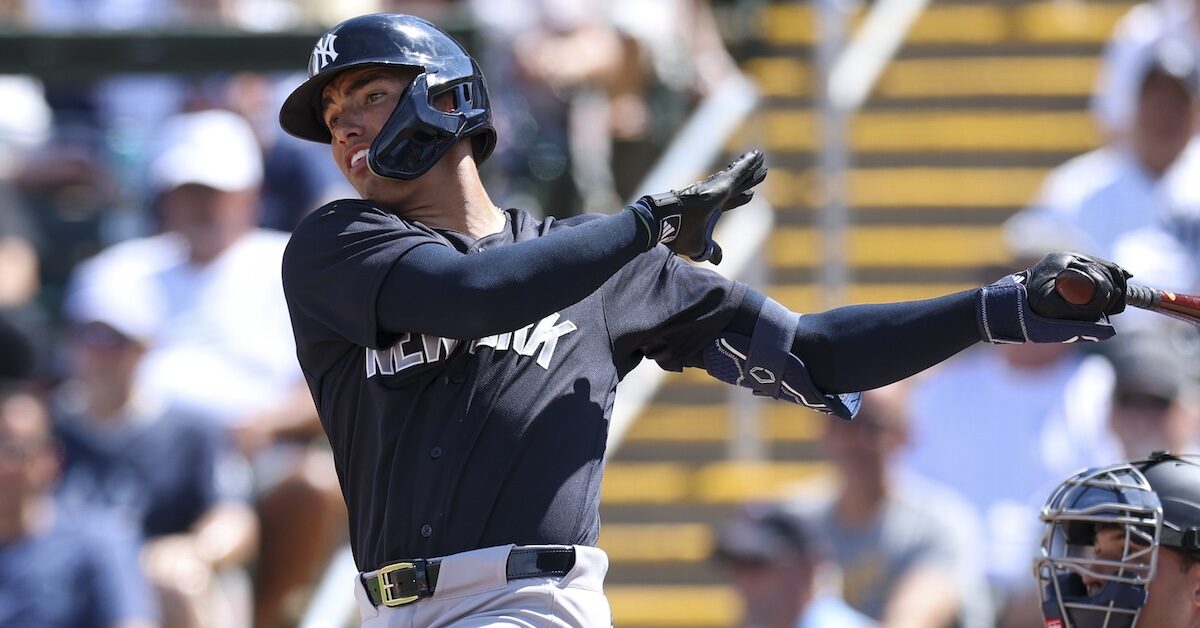
Below is an analysis of the prospects in the farm system of the New York Yankees. Scouting reports were compiled with information provided by industry sources as well as our own observations. This is the sixth year we’re delineating between two anticipated relief roles, the abbreviations for which you’ll see in the “position” column below: MIRP for multi-inning relief pitchers, and SIRP for single-inning relief pitchers. The ETAs listed generally correspond to the year a player has to be added to the 40-man roster to avoid being made eligible for the Rule 5 draft. Manual adjustments are made where they seem appropriate, but we use that as a rule of thumb.
A quick overview of what FV (Future Value) means can be found here. A much deeper overview can be found here.
All of the ranked prospects below also appear on The Board, a resource the site offers featuring sortable scouting information for every organization. It has more details (and updated TrackMan data from various sources) than this article and integrates every team’s list so readers can compare prospects across farm systems. It can be found here. Read the rest of this entry »
Ben Lindbergh and Meg Rowley banter about Team Italy’s triumphs (and good vibes) at the WBC, a tumultuous week for Team USA and Mark DeRosa, and where the tournament stands entering the quarterfinals, then preview the 2026 Philadelphia Phillies (39:21) with The Athletic’s Matt Gelb, and the 2026 Los Angeles Angels (1:21:00) with The Athletic’s Sam Blum, plus a postscript (2:09:08).
I’ve now spent nearly a quarter of a century working with baseball projections, and in that time, I’ve always been struck by the certainty with which so many people view them. People are far more certain than they should be that great teams will be great, star players will be stars, and so on. However, one of the things that comes from working with projections for a big chunk of your life is that you develop a painful awareness of how much of the future cannot be known until it actually happens.
As in most seasons, we enter without a general conception of which teams will be the best. We may pretend everyone starts off with a clean slate, but absolutely nobody expects the Rockies to be better than the Dodgers. But even if that particular scenario is extremely unlikely, every one of the top teams has a scenario in which things fall apart. These clubs have a vested interest in protecting against that potential downside, as much as possible, so I thought it would be interesting to look at the doomsday scenario for some of the best teams in baseball.
To get an idea, I did a full seasonal simulation of the ZiPS projected standings, and instead of looking at the standings overall, I looked at the bottom 20% of outcomes to see what we could glean from the results. According to ZiPS, every team except the Dodgers misses the playoffs when it performs no better than its 20th-percentile win total.
Philadelphia Phillies: Rotation Depth
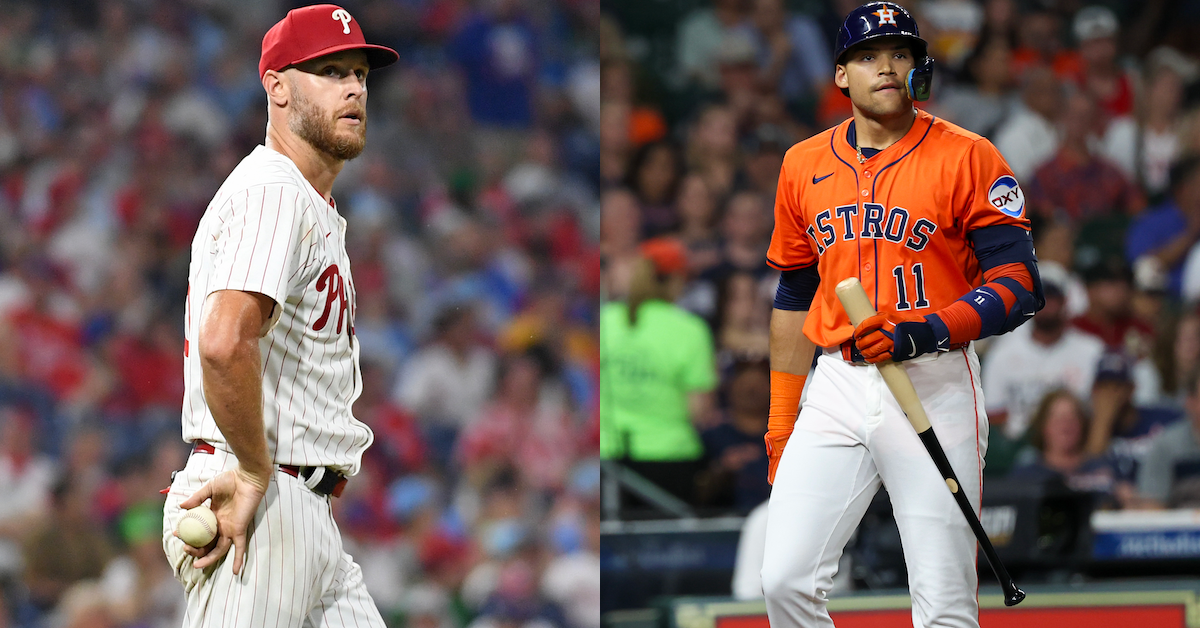
This almost seems counterintuitive given just how good the rotation projections are for the Phillies, but the projections are not enthusiastic about their depth here. And what makes that especially worrisome is that with so much uncertainty around the health of Zack Wheeler and the performance of Aaron Nola, Philadelphia is probably going to need that depth more than it did last year. This time around, the Phillies are missing Ranger Suarez, who signed with the Red Sox during the offseason. Andrew Painter was healthy in 2025, but one cannot ignore that he was rather middling against Triple-A hitting. The outfield looks like a problem, as well, but it generally has been, and ZiPS is a fan of Justin Crawford.
If Philadelphia adds one of the innings-eaters still available in free agency, ZiPS sees the team’s outlook improve, much more than I expected. Just having someone like Lucas Giolito, Tyler Anderson, or even Patrick Corbin around did a lot to alleviate the rotational downside. It may come down to which of these pitchers is open to a swing role or a minor league deal with an opt-out date. And yes, I do think it feels weird to suggest Corbin as an upgrade for a team in 2026.
New York Mets: Right Field
The Mets certainly don’t dominate in either the rotation or bullpen projections, but ZiPS is fairly confident that both of these units will hold up over the course of the season. Despite a solid projection for Carson Benge in right field, the range of outcomes is quite high, and in the simulations where Benge struggles, ZiPS has trouble competently filling in right field. Tyrone Taylor is an underwhelming option, and ZiPS thinks Brett Baty would have a tough time defensively in the outfield. With no particularly interesting outfielders available in free agency, the best solution might simply be making sure Jacob Reimer gets some time in the outfield. New York’s roster just isn’t really set up to get him time at third base, where he probably is most valuable. But he also represents the most tantalizing 2026 upside of any player the Mets have in the minors, so they ought to try and be open to promoting him aggressively, and getting a little weird with it, if need be.
New York Yankees: Injuries
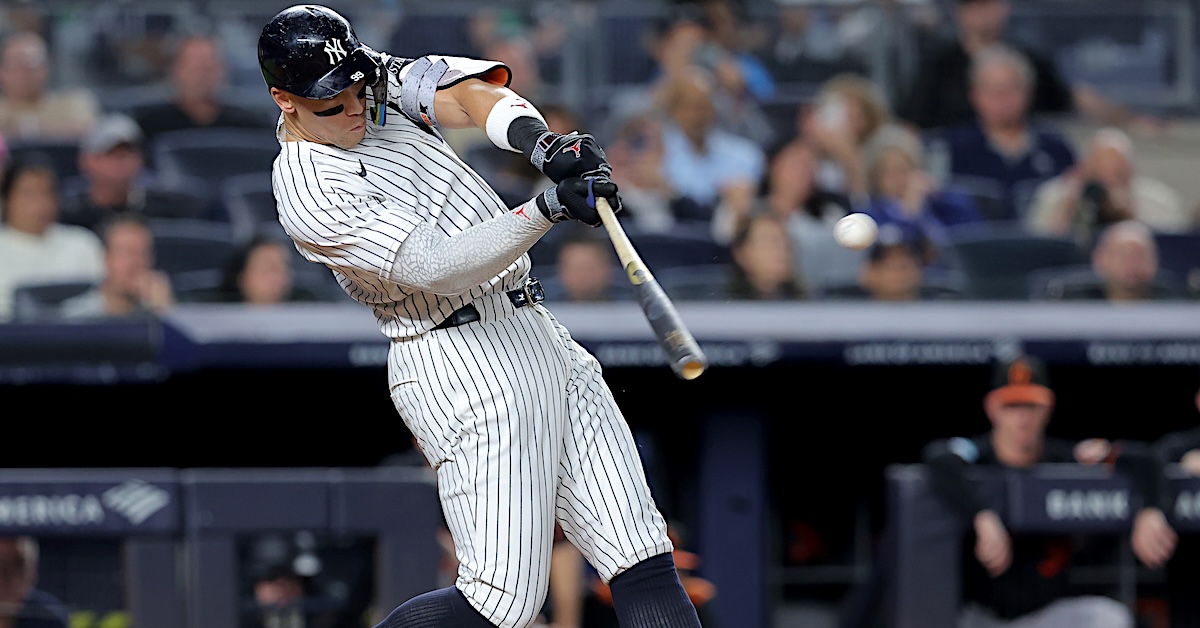
The Yankees’ outcomes are weird, in that their bad seasons were mostly ones in which Aaron Judge, for whatever reason, ended up with fewer than 300 plate appearances, and only occasionally something else. Getting limited innings from Gerrit Cole and Carlos Rodón was already baked into the cake, and ZiPS thinks there are enough fourth-starter types to patch up any rotation holes that might pop up. The problem is, just how do you replace Judge? I’m not sure there’s a scenario where the Yankees can do much to mitigate any risk there, for the simple reality that in a tightly projected division, suddenly losing six wins is likely to drop them out of the AL East divisional race. At the very least, the Yankees should hold off on shopping Spencer Jones for help elsewhere, but it wouldn’t fix a Judge loss.
Baltimore Orioles: Rotation Quality
Baltimore has potential aces in both Trevor Rogers and Kyle Bradish, but that word potential is an unpleasant adjective. Adding Pete Alonso and Taylor Ward really stabilizes the offense, which was a concern last year, but the rotation is an issue. The Orioles finished with a bottom five rotation in the ZiPS simulations more often than all other AL East teams combined. There’s nothing on the farm that helps this, and I think that with the Orioles increasingly pushing their chips in, they ought to be aggressive at taking the opportunity to loot struggling teams of their top pitching, even if the prospect hit would be tremendous. I think there are even scenarios, though not many, in which it might make sense for the O’s to trade either Adley Rutschman, assuming he has a bounce-back season, or Samuel Basallo.
Boston Red Sox: First Base
The good news is that ZiPS sees the Red Sox as the most stable of AL contenders, with the lowest percentage of sub-.500 seasons of any AL team. The rotation isn’t the best in baseball, but it may be the most bulletproof one, and that isn’t even counting on getting lots of innings from pitchers like Payton Tolle and Connelly Early, who would be Plan As in most rotations in baseball. In fact, when the Red Sox had their worst performance, it was almost entirely the offense that fell short, and not necessarily from the position you might expect.
Most people have focused on third base because of the loss of Alex Bregman, but Caleb Durbin is actually a decent option. Plus, if Durbin struggles, Marcelo Mayer could very likely provide what the former isn’t. Where there is real downside risk is at first base. I liked the Willson Contreras acquisition, too, and he’s probably going to be at least solidly average in 2026, but he’s also going to be 34 in May. It’s an age where you look at the long left tails of the outcome distribution for non-elite first basemen, and there’s always a real risk of a very sudden plummet off a cliff. Triston Casas hasn’t played in a game since last May — and won’t even play in any spring training games this year — and he has a real mixed history.
What to do? That’s a lot trickier. Boston obviously isn’t going to replace Contreras before he has that downside year. But this team should be ready for that possibility, and if the surplus of pitching turns out to be real, the Sox will have a position of depth from which to trade.
Chicago Cubs: Rotation Quality
The outlook improved with the addition of Edward Cabrera, but ZiPS still has the Cubs with the weakest rotation of the 10 teams listed here. In the ZiPS simulations, the rotation was largely the source of the Cubs’ worst seasons. There aren’t really any exciting starters left out there in free agency, but I think I’d do what I suspect the Cubs are already thinking of doing: giving Ben Brown’s upside as a starting pitcher more serious consideration. He allowed too many home runs and had a high BABIP on a really good defensive team, but it’s guys like that who tend to come out of nowhere quickly (see Corbin Burnes in 2019). Brown has swing-and-miss stuff, and I think given the potential, I’d rather see him starting at Triple-A than pitching in relief in the majors.
Houston Astros: Outfield Corners
Not counting 2020, for obvious reasons, the 686 runs the Astros scored in 2025 represented their fewest since 2014. A full, healthy season of Yordan Alvarez would be incredibly helpful, but the team’s also not likely to wring another 135 wRC+ out of Jeremy Peña. Not helping matters is that Joey Loperfido and Cam Smith project as one of the weakest corner outfield tandems in the majors in 2026. Smith surprised many, including me, in the early months last year, but an OPS that fell shy of .500 in the second half is highly concerning. There’s a chance that the Astros get little from their outfield corners, which is a problem for a team with a middling offense that just lost ace Framber Valdez in free agency. In some 30% of simulations, the Astros got a sub-90 wRC+ out of their corner outfielders, and in those runs, they had a .475 winning percentage. If there’s a team that should aggressively go after either Jarren Duran or Wilyer Abreu, it’s Houston.
Toronto Blue Jays: Rotation Depth
Even with the loss of Anthony Santander to shoulder surgery, ZiPS still sees the Blue Jays’ rotation as their biggest pain point. There are simply a lot of question marks once you get past Dylan Cease and Kevin Gausman, something I mentioned a bit in Toronto’s ZiPS rundown in January. In a lot of the sims, the team got next to nothing out of any of Cody Ponce, José Berríos, Shane Bieber, and Max Scherzer, whether because of injury, decline, or general performance issues. If Sandy Alcantara looks anywhere near his old self with the Marlins in the early months, I think the Jays ought to be one of his suitors. At the very least, Alcantara would do well with an infield that has Andrés Giménez and Ernie Clement.
Seattle Mariners: Outfield Corners
As with the Astros, ZiPS sees Seattle’s corner outfield spots as having the most downside. Unlike the Astros, ZiPS doesn’t view it as truly a doomsday scenario. After the Red Sox and Dodgers, ZiPS considers the Mariners to be the contender with the least downside. Randy Arozarena’s projection distribution is pretty interesting, with the bottom falling out of him once you get under the 15th-percentile projection or so; while his 20th-percentile OPS+ is a non-disastrous 94, it drops to 70 for the 10th-percentile level. As for Victor Robles, he’s been all over the place in his career, and the Plan Bs in the organization are unimpressive. I think Seattle’s strong enough that it doesn’t necessarily have the same need to be aggressive as Houston does, but this is still a potential point of weakness that could pose an issue.
Los Angeles Dodgers: Black Swans
It’s really hard to kill the Dodgers. I argued after the 2024-2025 offseason, a very busy one, that the Dodgers weren’t really improving their average outcome so much as drastically raising their floor. I stand by it; they’ve added Kyle Tucker and Edwin Díaz while losing nobody who was crucial to the 2025 team. That doesn’t mean they’re going to be projected to win 105 games or anything, but it does mean that in most of their worst projected outcomes, they’re still a playoff contender. Their 10th-percentile projection, for example, is 86 wins. Their 2% chance of finishing below .500 is the smallest percentage I’ve ever projected, a record that now goes back more than 20 years. Doomsday for the Dodgers may require an actual doomsday scenario like societal collapse, nuclear war, or a vacuum metastability event. Since I do not know how to prevent any of those, there’s nothing more I can add.
The Angels haven’t changed. It’s Mike Trout who is worse.
The Angels are bad. It’s the truest thing about them. Their hitting is bad, their pitching is bad, their fielding is bad, and everything else is bad, too. This isn’t breaking news. They’ve finished below .500 each year since 2015, the only team not to make the postseason in that time. But expectations have reached a new low as we enter 2026:
Angels Preseason Projections
Year
Playoff Odds
Projected Wins
Projected WAR
2026
5.2%
72.5
27.2
2025
9.5%
75.1
32.1
2024
16.8%
77.6
30.6
2023
48.0%
83.5
37.7
2022
44.7%
83.3
38.2
2021
39.5%
84.7
36.7
2019
19.5%
82.3
36.0
2018
27.1%
82.5
37.7
2017
33.3%
82.7
36.2
2016
26.5%
80.7
32.9
Source: Depth Charts, Steamer
I was initially skeptical of these figures, or at least the direction of them. How could the Angels possibly be going backwards? They don’t seem to be rebuilding, and their depth chart looks the same as ever: a few truly good players, a few players who would be good if they were playing a different position (or perhaps in a different organization), a few players who were drafted far too recently, a few aging veterans who were nearly All-Stars at one point, and Trout. Read the rest of this entry »
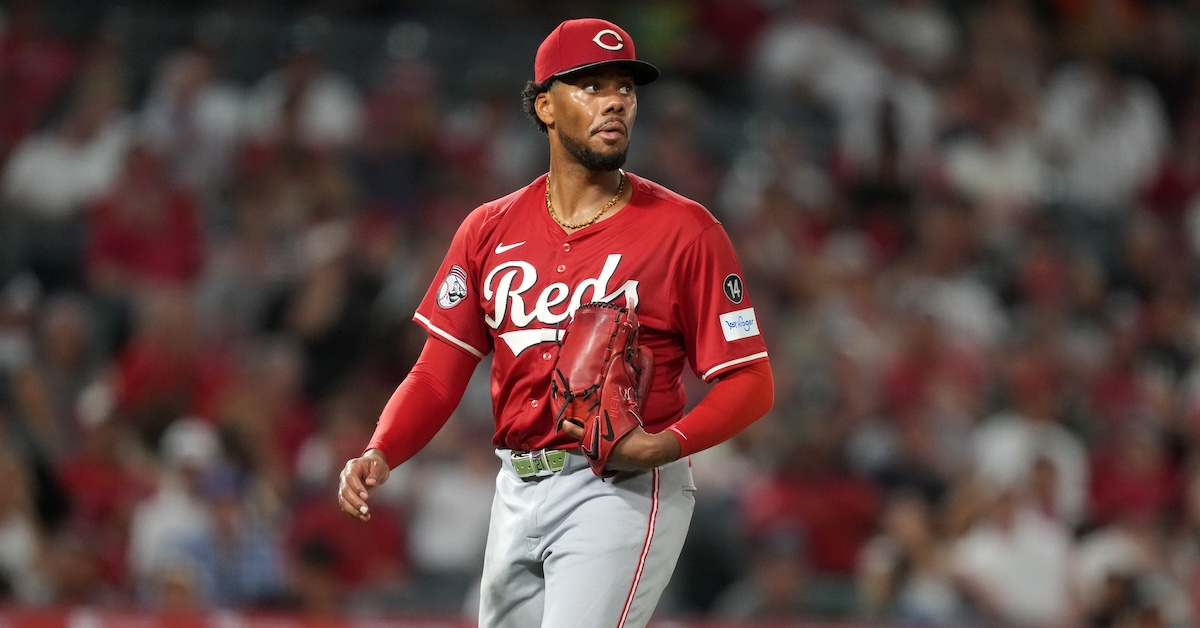
Last week, the Reds sent Hunter Greene for imaging on his throwing elbow. Never a good sign for the no. 1 starter on a team that made the playoffs last season. In those situations, we on the outside are usually conditioned to fear the worst, or at least Tommy John surgery, recovery from which — while all but routine these days — takes more than a year.
Only in that context could Tuesday’s news be taken as positive: Greene will have surgery to remove bone chips from his elbow. (In fact, as you read this, he may have already undergone the procedure.) The recovery time is expected to be on the order of three to four months, but losing an ace until the trade deadline is much better than losing him until 2027.
This is a banner year for bone chips and loose bodies. The Braves alone have two starters — Hurston Waldrep and Spencer Schwellenbach — on the IL after receiving similar treatment. Actually, since we’re talking about bone chips, this feels like a good excuse to talk about Dazzy Vance. Read the rest of this entry »
The baseball season will soon be upon us, which means it’s time for an age-old question: How long until the best hitter’s reign ends? This year, and seemingly every year of late, that means Aaron Judge. You can quibble about who the best overall player is, but Judge is pretty clearly the best offensive player on the planet. Over the last four years, he has a composite 204 wRC+, miles clear of the competition, and he just put up that exact number in 2025. In 2026, we think he’s going to be the best hitter again, obviously.
Will we in 2027, though? It depends, of course. If Judge looks like his usual self this year, it’s hard to imagine anyone taking the crown. I wanted a little bit more rigor than that, however, so I dusted off the Marcel projection methodology. Marcel is what Tom Tango dubbed the minimum sufficient projection system. It’s as simple as taking the last three years of performance, weighting them, and tossing in some league average.
Let’s take Judge’s last few seasons as an example. I grabbed his wOBA and plate appearances for 2023-2025 and threw them into a table. Then I calculated league average across those three years (the exact calculation uses some weighting to match Judge’s playing time by season). That looks like this:
Aaron Judge, Marcel Projections
Year
PA
wOBA
2025
679
.463
2024
704
.476
2023
458
.420
League Average
600
.313
Turning those into a Marcel projection is simple. Multiply the most recent year’s plate appearances by five, the next-most-recent year’s by four, the next by three, and the league average by two. Take a weighted average of these new values. The result is Judge’s 2026 Marcel projection – which works out to a .440 wOBA. That tracks logically, which is the point of Marcel. It’s really close to what you and I would think about a player’s skill. Post a wOBA above .450 for two straight years, and I’ll expect you to come back to the pack a little but still do something outrageous the next year.
Using this methodology, here are the top projected hitters for 2026:
Ben Lindbergh and Meg Rowley banter about Cal Raleigh, Randy Arozarena, and WBC handshake etiquette, whether a mercy-rule-inducing dinger qualifies as a walk-off, whether a winning home team could voluntarily play the bottom of the ninth, MLB’s ban of the Brewers’ challenge-system system, why the MLBPA should defend Jurickson Profar and other players with positive PED tests, and Joe Sewell’s indestructible bat, then preview the 2026 New York Mets (56:35) with The Athletic’s Tim Britton, and the 2026 Washington Nationals (1:40:27) with The Athletic’s Spencer Nusbaum, plus several postscript updates (2:27:10).



 Sponsor Us on Patreon
 Give a Gift Subscription
 Effectively Wild Subreddit
 Effectively Wild Wiki
 Apple Podcasts Feed
 Spotify Feed
 YouTube Playlist
 Facebook Group
 Bluesky Account
 Twitter Account
 Get Our Merch!