In a race for the National League batting title that ended up coming down to the final day, Jeff McNeil emerged victorious, hitting .465 (20-for-43) in his last 11 games of the season (he was a late defensive replacement Wednesday, but didn’t hit) to finish at .326, one point higher than Freddie Freeman for the highest in the majors. McNeil’s final two weeks put a bow on a career year. He finished with 5.9 WAR, 16th among major league hitters and the most by any Mets primary second baseman save Edgardo Alfonzo, who set the mark with 5.9 WAR in 1999 and then bested it with 6.4 in 2000 (of course, McNeil also spent a good chunk of time in the outfield). He started the All-Star Game at Dodger Stadium, some 100 miles from his southern California home, and now his Mets are headed to his first career postseason. It’s a good year to be Jeff McNeil.
McNeil has generated his value with a set of skills very different from those of your typical modern All-Star or 5.9-WAR player. In a home run era, he’s been as far from a power hitter as an All-Star gets. He finished 2022 with nine home runs, including two in his final three games, making him just the third player in the last decade to amass as many as 5.5 WAR without clearing the fence 10 times. He hit 23 home runs in 2019, the homer-happiest season in major league history, but even with that outlier included, he’s still gone deep in just 2.3% of his big league plate appearances.
In truth, your 2022 batting champion is among the softest-hitting big leaguers in the game, ranking in the 12th percentile in average exit velocity, the eighth percentile in hard-hit percentage, and the seventh percentile in barrel percentage. Just 13 of his 477 batted balls this season registered as barrels: Read the rest of this entry »
The 2022 season was the year to break long-standing playoff droughts. The Mariners ending their two-decade stretch of futility got the bigger headlines, but the Phillies closed out their own decade of suffering by clinching the NL’s final Wild Card berth on Monday. It didn’t come easy — under the previous playoff structure, they would have missed out on the postseason by two games — but the expanded field gives them an opportunity to make some noise in October. Their opponent will be a familiar one: the Cardinals, who eliminated the Phillies in a hard-fought Division Series the last time they were in the playoffs.
St. Louis hasn’t had to weather a lengthy playoff drought since the 1970s, qualifying for the postseason for the fourth consecutive year and winning its second division title in that span. The Cardinals also posted their third 90-plus win season in that period, with the shortened 2020 season as the only outlier. More remarkably, they haven’t finished below .500 since 2007, with 10 postseason appearances in those 15 years. As far as consistent competitors go, the Cardinals are essentially an October staple.
Team Overview: Phillies vs. Cardinals
Overview
Phillies
Cardinals
Edge
Batting (wRC+)
107 (5th in NL)
114 (3rd in NL)
Cardinals
Fielding (RAA)
-32 (14th)
17 (3rd)
Cardinals
Starting Pitching (FIP-)
87 (2nd)
102 (9th)
Phillies
Bullpen (FIP-)
91 (4th)
101 (8th)
Phillies
The Phillies’ route to their Wild Card berth wasn’t a straight one. They wandered through the first two months of the season, posting a disappointing 21–29 record, which led to the dismissal of manager Joe Girardi on June 3. But after that, they went 64–46 under interim manager Rob Thompson, the fourth-best record in the NL over the rest of the season. All that success during the summer came despite losing Bryce Harper for a significant chunk of the year. He fractured his thumb on June 25 and returned on August 26 but never truly regained his MVP form, with an 84 wRC+ over the final month and change of play.
With its superstar on the shelf, a number of Philadelphia’s veteran sluggers stepped up to lead the offense. The biggest contributor was J.T. Realmuto. As Michael Baumann covered a week ago, the veteran catcher carried the load with a 162 wRC+ in the second half, accumulating the third most WAR in that time behind Aaron Judge and Adley Rutschman. Despite his slow-ish start, Realmuto wound up posting career bests in wRC+ and WAR. Then there was Kyle Schwarber, who led the NL in home runs with 46, a surprise given his similar slow start to the season; he hit just 11 homers in the first two months of the season but exploded in June with 12 and added 23 more over the next three months.
The other big free-agent deal the Phillies handed out over the offseason hasn’t worked out as well. After posting a 122 wRC+ over the last five seasons, Nick Castellanos couldn’t find his footing in Philadelphia, slumping to a 95 wRC+, his worst year at the plate since 2015. His biggest problem was a bad case of chasing breaking balls off the plate, leading to big issues making authoritative contact. His barrel rate and hard-hit rate fell to career lows, resulting in a dismal .392 slugging percentage.
But we can’t talk about the Phillies without talking about their defense. Put simply, it’s bad. It’s not a surprise either, considering that Schwarber and Castellanos occupy the corner outfield spots. The only positive contributor in their starting lineup is second baseman Jean Segura, who graded out as a +4 in Outs Above Average this year. The Phillies’ biggest issue, though, isn’t making mistakes; they actually committed the fourth-fewest errors in the majors this year. Instead, they simply let too many batted balls find the grass, which significantly hurt their ability to prevent runs from scoring. It’s a big reason why their pitching staff posted a top-10 FIP in baseball but a team ERA that was just 18th.
Leading said pitching staff is Aaron Nola, a quiet contender for the NL Cy Young award this year. One major reason why is that the righty was able to cut his home run rate to just 9.8% this year, a huge improvement over his career rate of 13.2%. He also posted a career-low walk rate this year while still maintaining his big strikeout totals. He’ll be on the mound for Game 2 of this series. To open, the Phillies will turn to Zack Wheeler. He followed up a career year in 2021 with a season nearly as good, though he pitched 60 fewer innings. The health of his forearm was a big question mark through the end of the summer, but he managed to make it back to the mound in late September and posted three good starts to finish the regular season. If the series goes to a Game 3, Philadelphia will likely turn to Ranger Suárez, a quality starter in his own right but not up to the level of Nola or Wheeler.
Where the Phillies will lead off with their two aces, the Cardinals enter this series with less established options up top.
Ordinarily, it would be hard to imagine a Cardinals playoff series without Wainwright, but given how the final month of the season went, manager Oli Marmol may opt for hiding his veteran righty.
Cardinals Starters in September
Player
IP
K%
BB%
ERA
FIP
Adam Wainwright
28.2
9.4%
8.0%
7.22
4.37
Miles Mikolas
34
22.0%
6.8%
2.38
3.73
José Quintana
33.1
23.1%
3.3%
0.81
1.88
Jack Flaherty
28
21.6%
10.4%
3.86
4.40
Jordan Montgomery
33
23.4%
6.4%
4.36
3.90
Wainwright allowed a whopping 23 runs in his six September starts, and his strikeout and walk rates both took a turn for the worse. That performance has likely pushed him out of the picture for a Wild Card start; at best, the Cardinals could hand him the ball on an extremely short leash and have Montgomery or Flaherty ready on standby if things go south quickly.
Luckily, Mikolas and Quintana finished the regular season on strong notes; the latter, per Marmol on Thursday, will take the ball for Game 1, and the former will start Game 2, with Game 3’s starter TBD. Quintana hasn’t pitched this well since he was a member of the White Sox back in 2017 and has been even better since coming over from the Pirates at the trade deadline. Chris Gilligan looked at Quintana’s rejuvenation earlier this week and noted his transition from a pitcher who relied on strikeouts to one who induces tons of weak contact:
He has deployed his arsenal by throwing mostly outside the strike zone, elevating his fastball more and making hitters reach for curveballs and changeups. His 35.4% zone rate is the lowest in a full season of his career, around 10 percentage points lower than his typical early-career season, and the second-lowest among qualifying pitchers this year. And it’s working – he’s enticing swings on a career-high 36.2% of his pitches outside of the zone, the 10th-highest rate among qualifiers. … By drawing hitters outside the strike zone, he has significantly diminished the quality of their contact without conceding bases on balls with any sort of damaging frequency.
That leaves Montgomery, Flaherty, and Wainwright to start in a potential Game 3. Like Quintana, Montgomery holds the platoon advantage over some of Philadelphia’s more potent bats, and Flaherty’s stuff could play up in shorter outings if he were pushed to the bullpen. So the decision comes back around to what to do with Wainwright, and that’s not an easy one given how much history he has with the franchise, particularly in the playoffs.
Offensively, St. Louis has far less to worry about. Led by superstars Paul Goldschmidt and Nolan Arenado, the Cardinals had the third-best offense in the NL, scoring 4.77 runs per game. After looking like an MVP candidate for most of the season, Goldschmidt slumped a bit in September, posting a 108 wRC+ over the last month of the season, which cost him a shot at the Triple Crown after he made a run at it through the summer. Arenado, meanwhile, bounced back from a disappointing first year in St. Louis to post the best season of his career. Those two provide a fantastic one-two punch in the heart of the lineup.
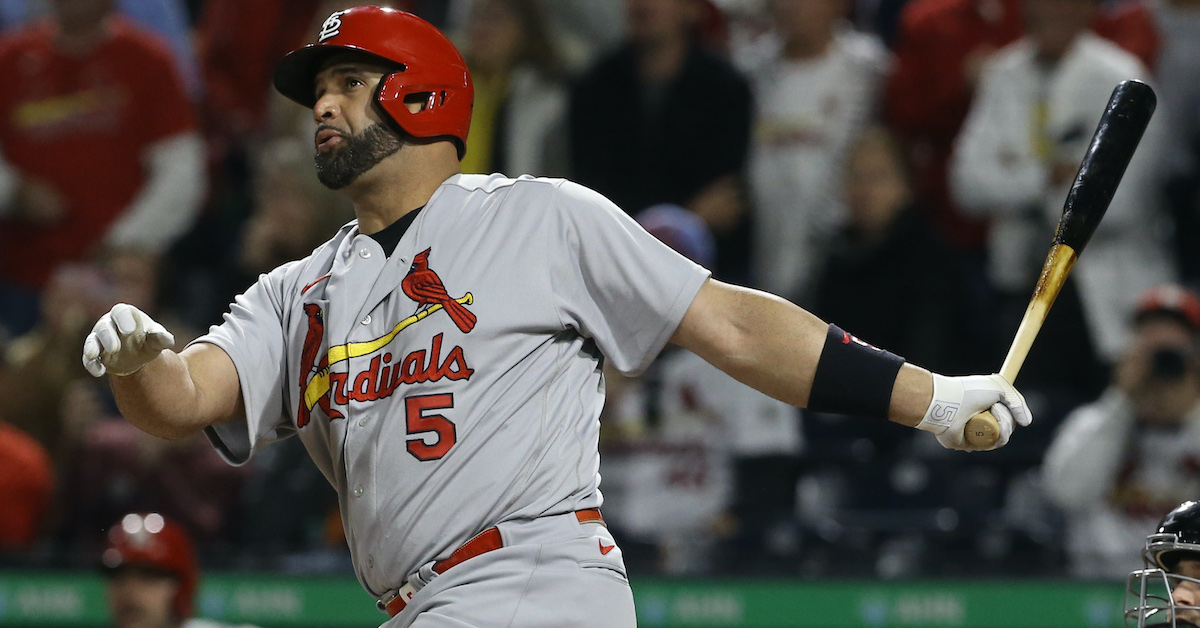
The biggest story in St. Louis, though, has to be the rejuvenation of Albert Pujols. He returned to the Cardinals for one last reunion tour after a slow and painful decline in Los Angeles but has defied time and age by becoming a key contributor as the team’s semi-regular designated hitter. He hit just six dingers during the first half of the season, but chasing his milestone 700th home run sparked a miraculous second half. He blasted 18 bombs after the All-Star break — only Judge hit more during that span — with all of his power peripherals taking a sudden turn for the better. I’m sure the Cardinals couldn’t have imagined their franchise icon leading them to the postseason again when they signed him back in the winter, but here we are.
As far as roster construction goes, these two teams found their success through very different means. St. Louis’s position group put together a cumulative 33.1 WAR, second in the NL and a testament to their quality production at the plate and phenomenal defense in the field. Philadelphia’s lineup can score runs in bunches, but the defense is atrocious. The team’s strength lies instead in a top-heavy rotation led by two of the best pitchers in the league. Also worth noting is that the Cardinals went 53–28 at home during the regular season, giving them the advantage at the outset. But these teams are more evenly matched than they appear on paper, which should make for some excellent baseball this weekend.
While the postseason drought spanning more than two decades is over, so too is the celebration in Seattle, as the Mariners travel to the other side of the continent to face the slugging, battle-tested Blue Jays, who emerged from baseball’s best division as the top wild card.
Toronto’s lineup is dangerous from top to bottom, stacked with marquee names who have thirteen combined All Star appearances (George Springer has four of his own, Matt Chapman somehow only has one). The group had the fifth-lowest strikeout rate in baseball during the regular season, ranked third in slugging, and were second only to the Dodgers in team wRC+. Except for Raimel Tapia and Whit Merrifield, every member of the Blue Jays’ regular starting lineup posted a wRC+ over 100 on the season, and Merrifield closed the season on a .361/.385/.639 heater. If Lourdes Gurriel Jr.’s hamstring is healed in time for him to be inserted in the lineup, he’s an easy offensive upgrade on Tapia, though he may not have his timing immediately due to his lack of at-bats.
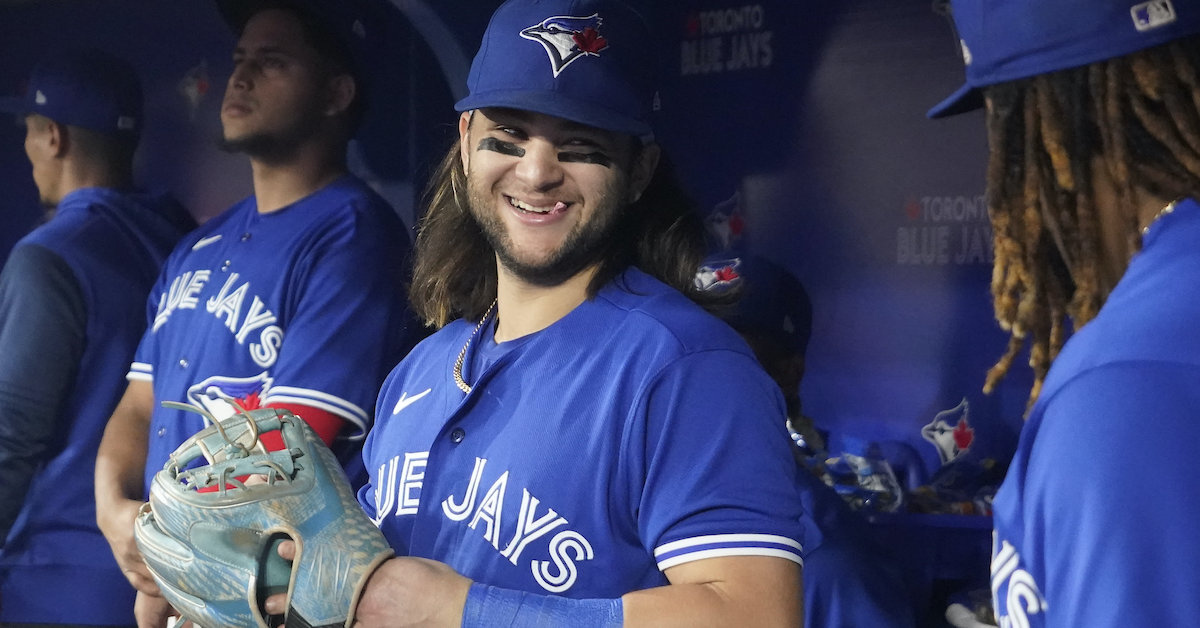
While Toronto’s lineup has undeniable star power, it may have an unexpected fault at its core. While his season, overall, was very good, Vladimir Guerrero Jr. is ice cold right now. During the last month of the season he slashed a paltry .235/.290/.390 and struggled with plate discipline. Vladdy’s chase rate during September (40%) was a full ten percentage points higher than his career norm (31%), as he struggled to lay off sliders away from him and well off the plate. Two-pitch Robbie Ray should be a great matchup for Vlad, as he doesn’t have a secondary pitch that moves away from right-handed hitters aside from an unfamiliar changeup. But the Mariners have bullpen weapons that are well-suited to exploit his recent issues in Penn Murfee, Diego Castillo, and Matt Brash, who all have sliders that finish in a spot Guerrero can’t seem to get to right now. Streaky Jays shortstop Bo Bichette has been the polar opposite, second only to Aaron Judge in WAR since the calendar flipped to September, slashing .405/.443/.664 and clubbing 19 extra-base hits during that span and entering postseason play as one of the planet’s most dangerous hitters. Read the rest of this entry »
Despite spending 175 of the season’s 182 days atop the NL East, building a 10.5-game lead by the end of May, and winning 101 games, the New York Mets lost out in the division race to a red-hot Atlanta Braves team that has played at a .696 clip since the start of June — and lost out via a tiebreaker, a 10-9 season series disadvantage. Now they’ll have to take the long route through the new postseason format, one that includes a potential matchup with the top-seeded, 110-win Dodgers if they advance beyond the Wild Card Series.
That can’t be taken for granted. Even with Max Scherzer and Jacob deGrom available to start in this best-of-three series, all of which will be played at Citi Field, they can’t overlook the Padres, who can offer some top-notch starting pitching themselves and who beat the Mets in four of the six meetings between the two teams. Not that such results are predictive — and it’s worth noting that the aforementioned pair combined for one start in the six games (Scherzer in a 4-1 loss opposite Yu Darvish on July 22) — but they do illustrate the range of possibilities here. The ZiPS Playoff Odds pegged this as the biggest mismatch of the Wild Card round, narrowly edging out the Mariners-Blue Jays series, but with the Padres still having a 42.4% chance of scoring an upset.
Both deGrom and Scherzer looked all too human last weekend during the Braves’ division-s(t)ealing sweep, combining to allow five home runs and seven runs in 11.2 innings. If there’s good news, it’s that manager Buck Showalter didn’t have to send deGrom to the hill in Game 162 in hopes that the Mets would win and the Braves would lose, because that would have ruled him out of the Wild Card round had they lost. Read the rest of this entry »
Cal Quantrill epitomizes the term “pitcher.” Twenty-seven years old and in his fourth big-league season, the Cleveland Guardians right-hander not only attacks hitters with a multi-pitch arsenal, he does so with a combination of aggressiveness and guile. Mixing and matching with aplomb, he’s won 23 of 32 decisions and logged a 3.16 ERA in 336 innings over the past two seasons. As my colleague Michael Baumann pointed out just last month, Quantrill isn’t overpowering, but he gets the job done.
Drafted eighth overall in 2016 by the San Diego Padres out of Stanford University, Quantrill was acquired by Cleveland at the 2020 trade deadline as part of the nine-player Mike Clevinger deal. He’s expected to start against the Tampa Bay Rays on Sunday if their Wild Card Series requires a deciding Game 3.
Quantrill discussed his evolution as a pitcher and his it’s-all-about-getting-outs approach this past weekend.
———
David Laurila: We discussed your repertoire in spring training of 2018 when you were in the Padres system. How have you changed as a pitcher since that time?
Cal Quantrill: “If we’re looking at it from a literal standpoint, I flattened out the slider and turned it into a cutter. I went to more of a 50/50 mix with the two-seam and four-seam. I’ve kind of kept a little curveball wrinkle to keep them off the hard stuff. Read the rest of this entry »
Who was the Nationals’ best player in 2022? Before you try to answer, I should acknowledge that this is not a fair question to ask. For starters, it’s a trick question. More importantly, you haven’t been watching the Nationals. You’ve been doing the best you can to avoid even thinking about the Nationals. That’s called self-care, and I commend you for it. Even the Nationals’ general manager called it “a daily grind to come here and lose baseball games.” He also called trading Juan Soto a “courageous move by ownership,” so maybe don’t listen to him.
Regardless, go ahead and give it a shot! Keibert Ruiz would be a reasonable guess. The promising young catcher posted 1.7 WAR this season. You could also be forgiven for going with Joey Meneses, who put up 1.5 WAR in just 228 plate appearances since his promotion in August. Read the rest of this entry »
Department: Baseball Operations Location: St. Louis, MO, USA Reports To: SRVPGM – Senior VP/General Manager
Summary of Responsibilities:
The St. Louis Cardinals are currently seeking candidates for a Baseball Operations Fellow position for 2023. This Fellowship is a one-year opportunity. At the end of the Fellowship, the Cardinals and the Fellow will jointly determine if there is an appropriate opportunity for full-time employment with the Cardinals. Fellows will not return in the same position in 2024. The Fellow will report directly to the Manager of Video Operations and will work on projects at the direction of senior leadership from the Baseball Development, Domestic & International scouting, Player Development, and Performance departments. Additional training may be provided in topics from scouting to analytics depending on the needs of the team and the Fellow’s interest.
The ideal candidate will have demonstrated a strong work ethic, the ability to learn and adapt to new processes, and a passion for baseball. The Fellowship will provide such a candidate with a broad range of experiences across Baseball Operations and the possibility of permanent employment.
The Baseball Operations Fellow position is a full-time position including salary, health insurance, and benefits
This position is from early 2023 through the end of the calendar year
This position is in St. Louis, MO and will require relocation<
The St. Louis Cardinals are committed to building an inclusive organization where we have a diverse workforce as well as a culture where employees feel they belong and contribute their unique abilities to the team. This Fellowship is dedicated to continuously building a diverse staff, and we strongly encourage candidates who are members of historically marginalized groups, which may include, but are not limited to persons of color, LGBTQIA+, gender, veterans, and persons with disabilities, to apply. If you meet any of the qualifications listed below we welcome you to apply, or to reach out to us at hrinfo@cardinals.com for more information.
Essential Functions of the job:
Assisting in the video capture and processing of domestic amateur, international amateur, and affiliated and unaffiliated professional baseball games
Assisting Baseball Development and other groups within Baseball Operations with data collection and entry for analysis
Communicate effectively with Baseball Operations staff and complete ad-hoc requests as needed
Education and Experience:
Current college senior or postgraduate
Strong interest in and understanding of baseball/softball
Excellent written and verbal communication skills
Strong organizational skills
Aptitude and comfortability with Microsoft Excel and Google G-Suite (e.g. Docs, Sheets, Slides)
Proficient with computers, iPads, and other electronic devices
Ability to work weekdays, nights, weekends, and holidays
Department: Baseball Operations Location: USA Reports To: SRVPGM – Senior VP/General Manager
Summary of Responsibilities:
St. Louis Cardinals are currently seeking candidates for this position to be located at each of our domestic minor league affiliates and our Dominican Republic Academy. The Minor League Affiliate Fellow will manage all aspects of video and technology at these locations in supporting the minor league coaching staff (manager, hitting coach, and pitching coach). The data collected from video and technology will be utilized to provide feedback to players for development.
Pre-game this position will manage distribution, set up and usage of all baseball & sport science technology; during the game this position will manage technology resources for the minor league coaches from the dugout. Post-game this position will ensure all data and video collected from the day is available for reporting & analysis; create reports for players and coaches as required. This position will work directly with the Video & Technology Team and reports to the relevant minor league manager for day-to-day responsibilities at the affiliate.
The ideal candidate will have demonstrated a strong work ethic and impressive intellect. The position is a seasonal job for the 2023 season only, but may lead to full-time employment in Player Development, Scouting, or elsewhere within Baseball Operations.
The Minor League Affiliate Fellow position is considered a full-time position including salary, health insurance, benefits, housing stipend and meal money during road trips.
Essential Functions of the Job:
Manage baseball & sport science technology and video capture at the affiliate (e.g. Trackman, Blast Motion, Edgertronic Camera, Polar, Whoop, etc.).
During the game, depending on staff needs:
Manage in-game capture of technology and video from the dugout
Quality assurance of the video and data collected for analyses
Communicate any implementation issues to Technology Specialist / Technology Integration Coordinator that are not remediated through initial troubleshooting
Attend Spring Training and travel with assigned minor league team on the road
Education and Experience:
Postgraduate or college senior available to start work during Spring Training
Proven ability to use and troubleshoot baseball or sport science technology (like pairing portable trackman to an Edgertronic camera, syncing wearable technology to a mobile device, etc.)
Familiar with and/or demonstrate the willingness to learn technology such as Blast Motion, Trackman, and video integration
Ability to communicate effectively and efficiently
Proficient with computers, iPads, and other electronics
Ability to work weekdays, nights, weekends and holidays
The life of any top prospect is filled with pressure, but for Jarred Kelenic, that pressure might have been even greater than usual. Being the marquee prospect in a blockbuster trade must put extra weight on a player’s shoulders. For a time, it looked like the Mariners had pulled one over on the New York Mets. Kelenic was ranked fourth overall entering the 2021 season as a 60 FV prospect, and was viewed as one of the first in a wave of young players meant to save the Seattle Mariners from a protracted playoff drought. But the discourse around the trade that sent him to Seattle — in which he, Jay Bruce, Gerson Bautista, Justin Dunn and Anthony Swarzak went to the Mariners while Robinson Canó, Edwin Díaz, and $20 million went to the Mets — has flipped. Kelenic has struggled in his time in the majors, while Díaz has struck out half the batters he’s faced in 2022. Sometimes prospects get the chance to adjust to the big leagues in relative quiet, but Kelenic’s first 400 plate appearances have come with a high level of scrutiny, and his struggles have forced us to reconsider his ceiling as a hitter.
Yet Kelenic has recently made some strides. In 2021, he was bad against breaking balls, posting a .214 wOBA against them. Jumping ahead to 2022, Kelenic’s issues with breaking balls became even more apparent. In the season’s early going, his wOBA fell even further, down to .093. That’s not a passable mark for a quality big league hitter, and Kelenic was sent down in the middle of May. After a few months in the minors, he got another chance in August, but he had barely finished his cup of coffee before being optioned again. Read the rest of this entry »
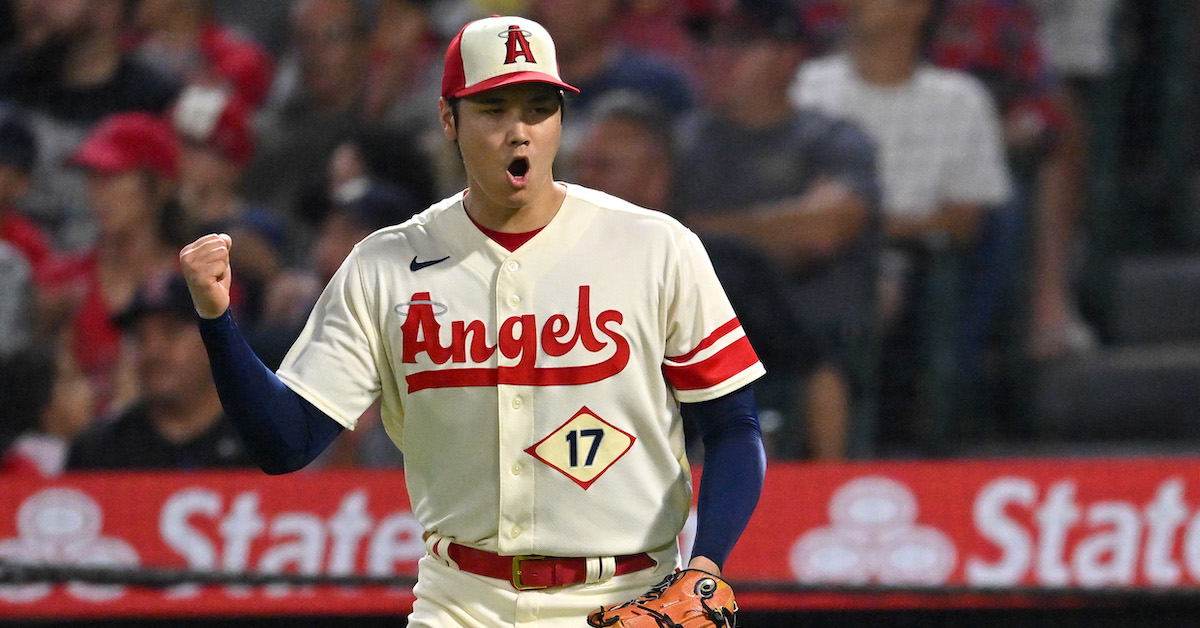
Shohei Ohtani is one of the best pitchers in baseball and one of the best hitters in baseball. That’s the first thing everyone thinks when his name comes up, and it always will be. He pitches and hits! How could you talk about anything other than that?
While that’s true, it’s leaving out something important. Ohtani is fascinating not just because he’s a two-way player, but because he’s completely overhauled his pitching approach in the middle of his best season yet. When Ohtani threw eight two-hit innings in his latest start, he hardly resembled the pitcher he was in 2021 – or even early in 2022.
When Ohtani pitched and hit his way to the American League MVP award last year (my colleague Jay Jaffe recently covered his quest to defend that title), he did so with a garden-variety pitch mix. He relied most on his four-seam fastball and complemented it with two plus secondaries, a slider and a splitter. He mixed in the occasional cutter and curveball, but mostly stuck with his best three offerings. It’s a classic pairing: fastball, breaking ball, offspeed pitch. It worked because all three pitches are excellent; if you had a 100 mph fastball, a fall-off-the-table splitter, and a biting slider, you’d probably do the same.
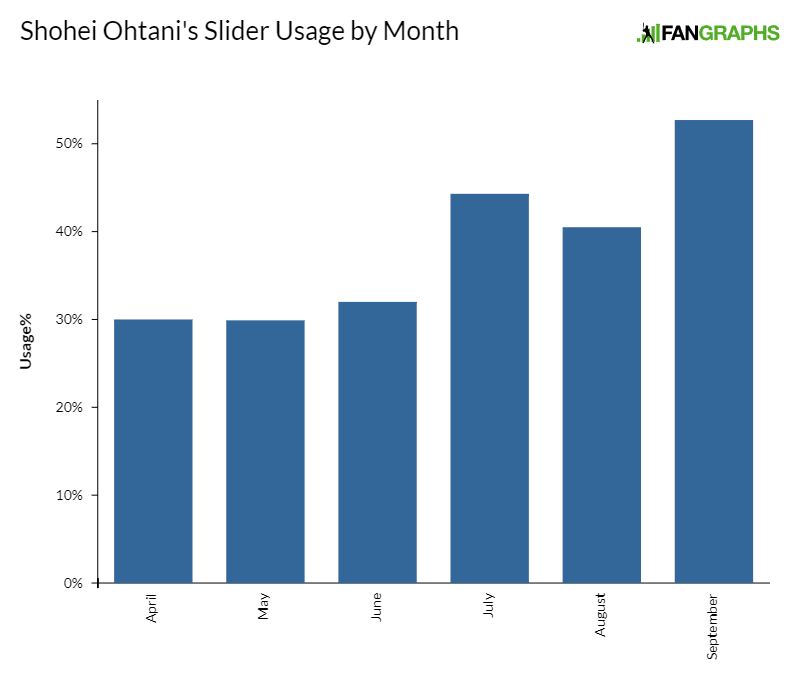
Over the offseason, though, Ohtani overhauled his slider. He came out this season throwing it harder and more frequently. In his third start of the year, he flirted with perfection against a loaded Astros lineup, and from that point on, he was a slider-first pitcher. Look at his slider usage by month this year and marvel:
For a moment, it seemed like Aaron Judge might not reach 62 home runs. After hitting his 61st in Toronto last Wednesday, he fell into what counts as a slump for him these days: four games, two hits, and a handful of walks. After feeling inevitable for most of September, 62 suddenly felt tenuous.
What a foolish sentiment. Judge, as we’ve seen all year, is a home run machine. He’s an offensive machine, in fact, blowing away the rest of the league with the kind of performance not seen since Barry Bonds in his prime. Unlike most single-season home run chases, Judge’s season isn’t defined by a single round number. His offensive greatness is so robust, so all-encompassing, that treating this accomplishment as the crowning achievement of his season is unfair.
The single-season home run record in major league baseball is 73. It was set in 2001, by Barry Bonds. Sixty-one has a ring to it, of course, because it was the record for so long. It was also the American League and Yankee record, two marks that feel weighty even if they aren’t quite as impressive as “best of all time.” Plenty of the fanfare around Judge comes from the sheer rarity of seeing so many homers, but plenty also comes from the fact that some fans would prefer to ignore everything that happened from 1998 to 2001 and make the record 61 again.
I’m giving you permission to tune all of that out. Sixty-two home runs is cool regardless of what the all-time record is. Only six players have ever accomplished the feat of hitting 60 home runs, and you know all of their names: Bonds, Mark McGwire, Sammy Sosa, Roger Maris, Babe Ruth, and now Judge. That alone is mind-blowing; baseball has been around an impossibly long time, through periods of high and low scoring, and yet only six players have ever cracked 60 home runs in a year throughout it all.
Does that mean hitting 62 is anti-climactic? I’ll leave that interpretation up to you. But more so than any one increment – would it be special at 63? 65? – I’m impressed by how handily Judge has lapped the league today. Is it cool to pass Maris? Undoubtedly. If nothing else, now Judge’s future offspring can traipse around the country and opine about someone else’s homers hit in the far-off future. More pressingly, though, Judge has left the rest of baseball behind in a way not seen for many years.
Home runs aren’t hit in a vacuum. The majors go through home run droughts and booms for myriad reasons, including pitcher talent, park dimensions, pitching style, and baseball composition. It’s hard to say whether 2022 Judge or 1961 Maris hit under easier conditions, but one way to look at it is to consider how many home runs separate the major league leader from their closest challenger at the end of each season. By that standard, Judge is in impressive company. Here are the top 11 seasons (including a 10th place tie) by home run gap since the dawn of the 20th century:
First, yeah, that Babe Ruth guy was pretty good. Since the 1920s and ’30s, though, no one has done what Judge is doing. The only player to come close was Willie Mays, not exactly shabby company. Last year, Shohei Ohtani won an MVP by playing the way people think Babe Ruth did – pitching and hitting. This year, Judge is likely going to win an MVP by playing like Ruth actually did: with a ludicrous string of home runs that makes everyone else playing look like a weakling by comparison.
Even without that gap between Judge and Kyle Schwarber, though, this season would be an all-timer. The great arrow of baseball time points inexorably towards more uniformity and more talent. It’s a professional game; even the up-and-down bullpen arms and utility infielders of today work year-round at their craft, honing their bodies and minds in pursuit of fame and riches. In a sport where we measure success relative to a league baseline, that means it’s harder than ever to stand out.
This arc of progress isn’t some new phenomenon. Stephen Jay Gould, the late and celebrated biologist, wrote about it in 1986, though he framed it in terms of the extinction of .400 hitters. Standing out from the field simply gets harder with every generation because even the lesser lights of baseball now search for every possible edge.
To wit: wRC+, our marquee offensive statistic here at FanGraphs, considers a player’s production relative to his peers. A 150 wRC+ has no fixed statistical translation. It merely means that a player’s overall batting line is 50% better than the league as a whole. Judge’s mark – 208 heading into today’s action – means that he’s 108% better than the overall league.
In Ruth’s day, when dinosaurs walked the earth and many of baseball’s best players weren’t allowed to play in the same league as him, a 200 wRC+ wasn’t particularly uncommon. But as competition increased, players lapped the rest of the field less often. Ruth and Ted Williams each had career wRC+ marks that approached 200. Since 1972, though, there have only been nine individual seasons that eclipsed 200:
Jeff Bagwell, Frank Thomas, and Juan Soto all accomplished their feats in shortened seasons. Bonds – well, he’s Barry Bonds. That just leaves Judge and McGwire out of the last half-century. Heck, order every season by wRC+ and exclude Bonds, and that gives Judge the best single season relative to his peers since Williams (223) and Mickey Mantle (217) posted similarly absurd seasons in 1957.
If I had my druthers, that’s how Judge’s season would be remembered. Sixty-two home runs is neat, and I’m glad he got there. A 16-homer lead on the field is spectacular, the stuff that only long-forgotten icons of the game have ever even dreamed of. But putting together an offensive season that blows away the rest of the league to this degree, at a time when his peers are as good as they are? Goodness gracious. We probably won’t see another season like Aaron Judge’s 2022 in our lifetimes. Let’s appreciate it.