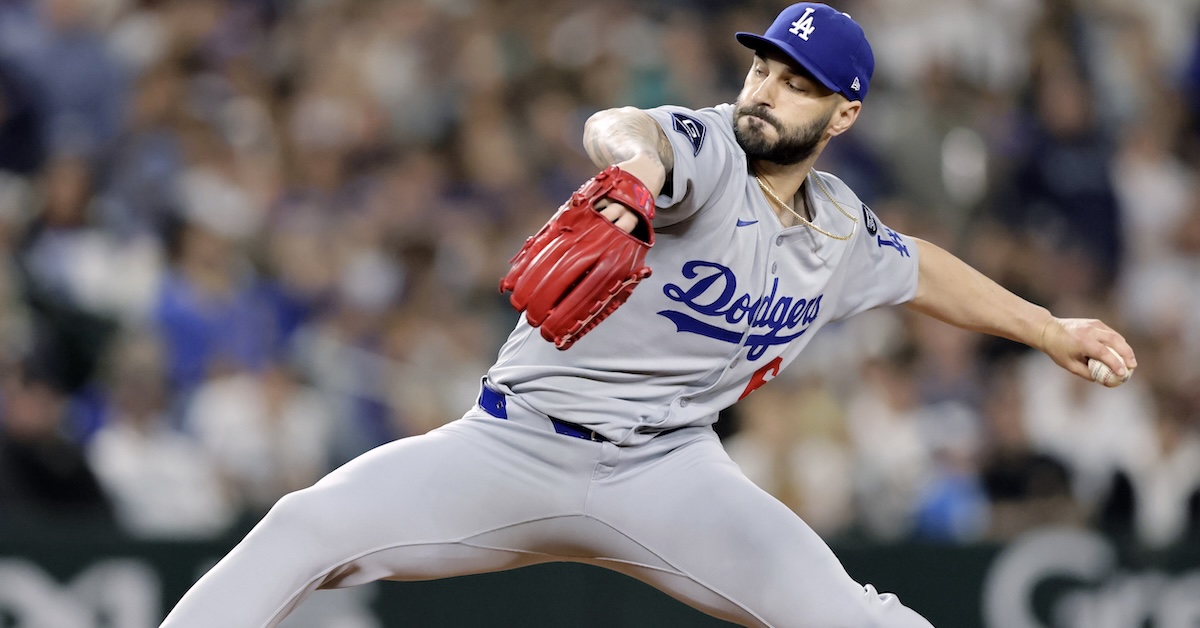
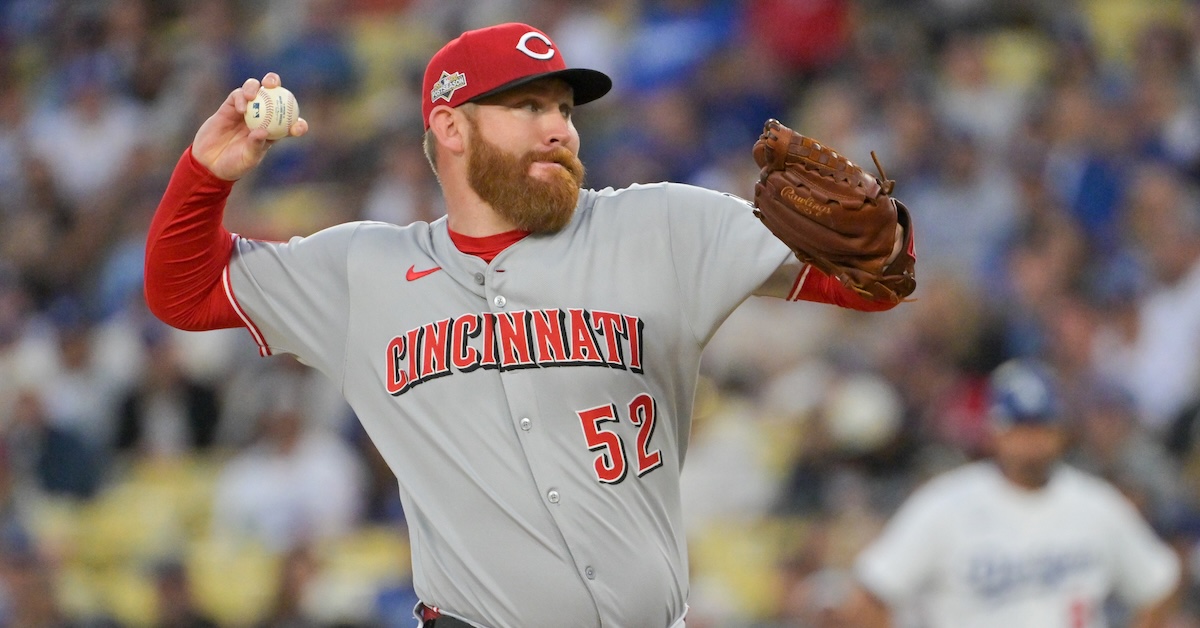
A pitcher goes to the mound hoping to record outs without allowing runs. Unfortunately, a lot goes on between the ball leaving the pitcher’s hand and the scoreboard changing. You can’t just toe the rubber, chuck the ball, and say, “God’s will be done,” as you stare glassy-eyed into the distance like Martin Sheen as Robert E. Lee in Gettysburg.
I mean, you could, but you wouldn’t like the results.
A modern pitcher goes to the mound with a plan to influence events much further up the causal chain. Every pitcher is special in his own way, but every plan boils down to this: By changing speed, movement, or location, trick the hitter into swinging somewhere other than where the ball will be. Read the rest of this entry »
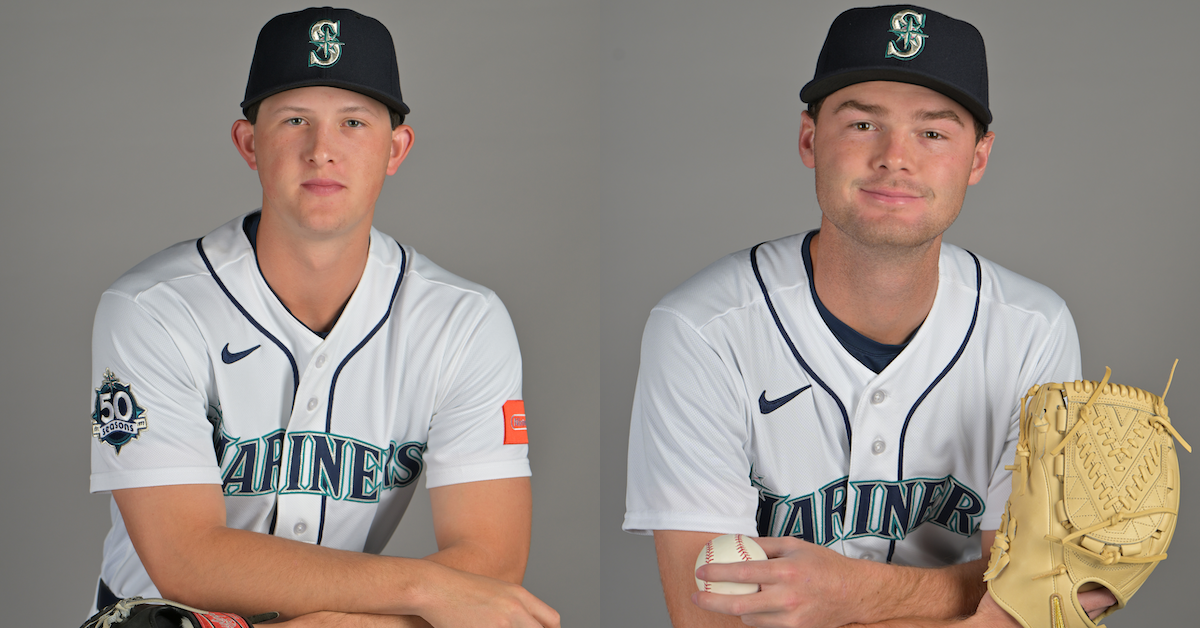
The Seattle Mariners boast two of the game’s most promising young arms. Second and third respectively in a highly regarded farm system, Ryan Sloan and Kade Anderson also reside in the front half of our 2026 Top 100 Prospects list. Sloan, a 20-year-old right-hander, ranks 20th, while Anderson, a 21-year-old southpaw, comes in at no. 50.
How do the two compare in terms of repertoire and approach? Both are profiled in the write-ups that accompany the aforementioned rankings, but what about how the pitchers see themselves? Moreover, how are they viewed by a catcher who knows them well and a prominent member of the organization’s pitching brain trust? Wanting to find out, I spoke to Anderson and Sloan, as well as to Luke Stevenson and Trent Blank, at Seattle’s spring training complex late last month.
Before we get to those perspectives, here are brief snapshots, augmented with quotes from our prospect analyst team of Eric Longenhagen, Brendan Gawlowski, and James Fegan:
Drafted third overall last year out of LSU, Anderson, who threw his first professional pitch this spring, was described as follows: “Maybe the best pitcher in the 2025 draft, [he] projects as a quick-moving mid-rotation starter with a great breaking ball.”
Sloan, who was drafted 55th overall in 2024 out of York Community High School in Elmhurst, Illinois, debuted professionally last season and logged a 3.73 ERA, a 3.18 FIP, and a 27.0% strikeout rate over 82 innings between Low-A Modesto and High-A Everett. “The upside is sky-high here,” wrote our prospect analysts, “and it’s not too early to say Sloan is one of the best pitching prospects in baseball.”
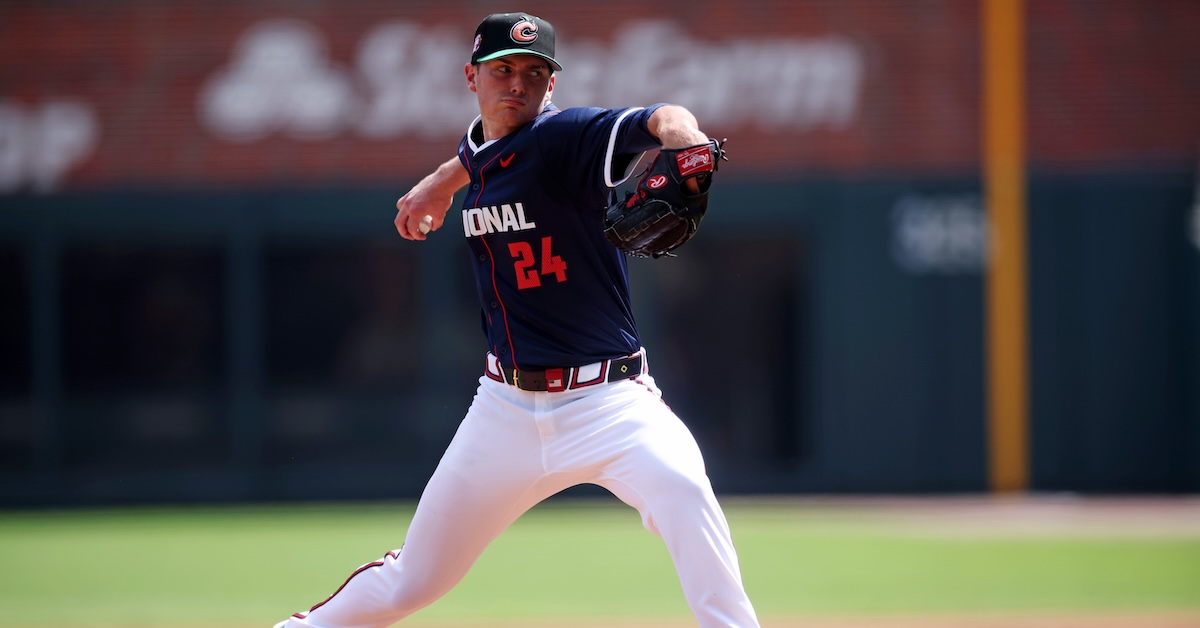
Below is an analysis of the prospects in the farm system of the Atlanta Braves. Scouting reports were compiled with information provided by industry sources as well as my own observations. This is the sixth year we’re delineating between two anticipated relief roles, the abbreviations for which you’ll see in the “position” column below: MIRP for multi-inning relief pitchers, and SIRP for single-inning relief pitchers. The ETAs listed generally correspond to the year a player has to be added to the 40-man roster to avoid being made eligible for the Rule 5 draft. Manual adjustments are made where they seem appropriate, but we use that as a rule of thumb.
A quick overview of what FV (Future Value) means can be found here. A much deeper overview can be found here.
All of the ranked prospects below also appear on The Board, a resource the site offers featuring sortable scouting information for every organization. It has more details (and updated TrackMan data from various sources) than this article and integrates every team’s list so readers can compare prospects across farm systems. It can be found here. Read the rest of this entry »
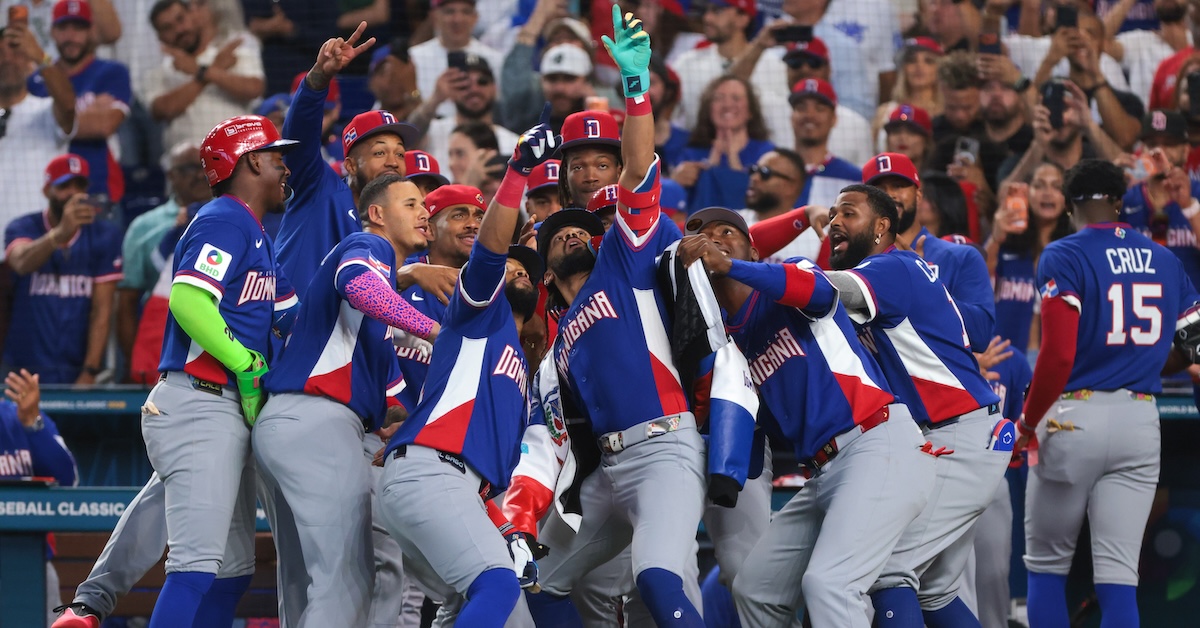
MIAMI — Through the first two games of the World Baseball Classic, the Dominican Republic had scored 24 runs, recorded 22 hits, and drawn 18 walks. Fifteen of those 24 runs had come on the team’s seven home runs. Collectively, the Dominican hitters were slashing .361/.506/.754; their 1.260 OPS was two points better than Babe Ruth’s was in 1927. They couldn’t possibly keep this up.
They cooled off some in Monday afternoon’s 10-1 win over Israel, lowering that slash line to a pedestrian .319/.488/.692. Those slackers.
Obviously, these numbers are staggering. Across three games, the Dominican squad has scored 34 runs and tallied 29 hits, nine home runs, and 29 walks; they’ve struck out just 13 times. Their OPS is now 1.180, slightly better than Ruth’s career mark of 1.164.
This is Ryan Blake’s first piece as a contributor for FanGraphs. He is a former newspaper reporter in the Inland Northwest and a current writer for Lookout Landing, where his work on the batter’s eye at T-Mobile Park was nominated for a 2026 SABR Analytics Conference Research Award.
A bottom-ranked pitching staff got a little deeper this weekend.
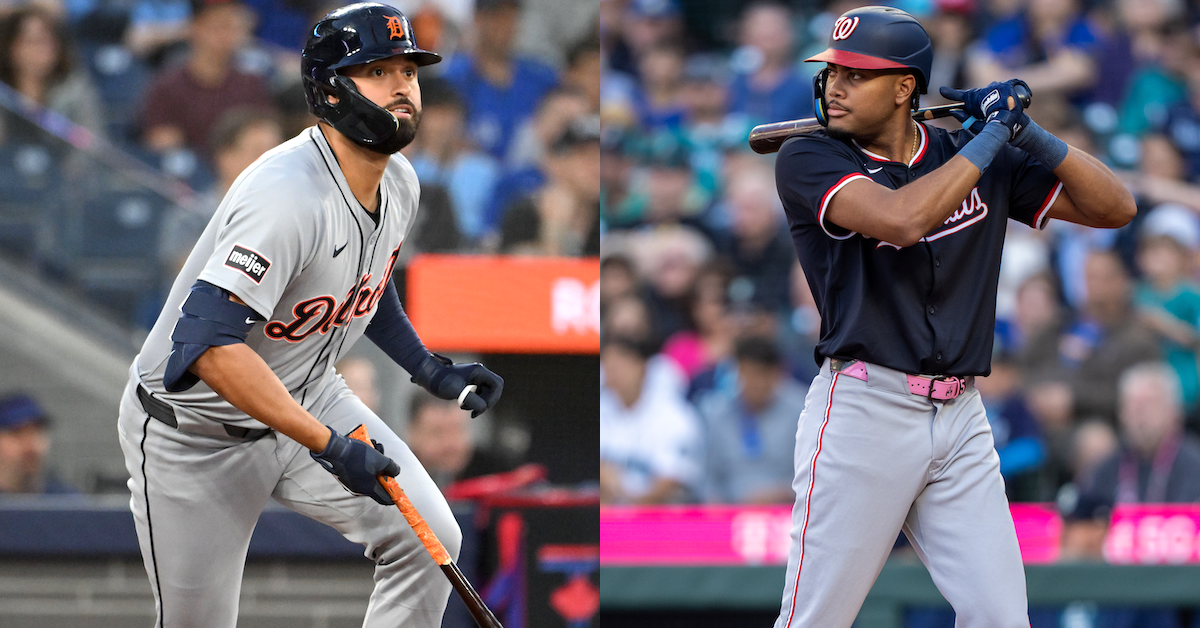
Zack Littell and the Nationals have agreed on a one-year contract, as several outlets reported Sunday. The price tag is currently unknown, though the deal includes a mutual option for 2027. Littell, 30, ranked next-to-last on our Top 50 Free Agents list this offseason. As it happens, he is also next-to-last to sign (only Lucas Giolito remains available).
Littell threw a career high 186.2 innings in 2025 across 32 starts for the Rays and Reds. Only 10 pitchers threw more innings last year. His 3.81 ERA was above average among qualified starters, and his 4.2% walk rate was the best in the majors. On the other hand, his 4.88 FIP, 17.1% strikeout rate, and 1.74 HR/9 each ranked in the bottom five. It was a mix of strengths and weaknesses that, taken together, made him the 88th-most valuable starting pitcher by WAR — useful depth for most organizations. Read the rest of this entry »
Charles LeClaire and Mark Hoffman/Milwaukee Journal Sentinel-USA Today Network via Imagn Images
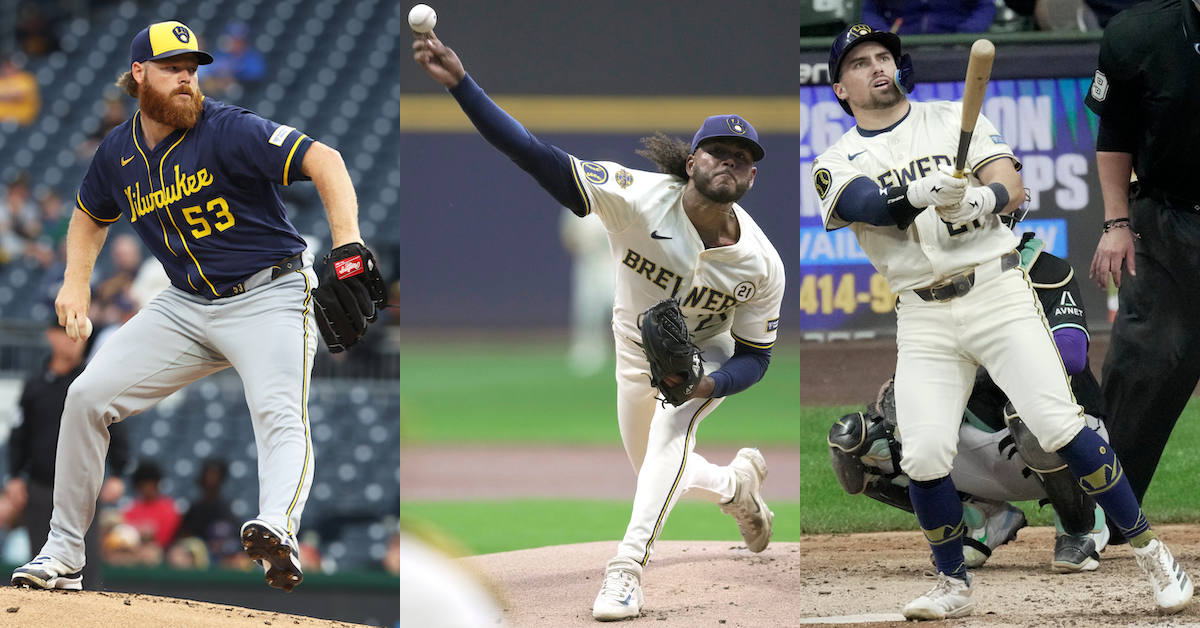
This offseason, I’ve taken high-level looks at the offseason decisions made by the New York Mets and the Boston Red Sox. It’s been a popular series, so today, I’m going to use the same framework to offer a holistic evaluation of the Brewers. As a refresher, here’s how I’ve been thinking about the exercise:
“How should we evaluate a front office, particularly in the offseason when we don’t have games to look at? I’ve never been able to arrive at a single framework. That’s only logical. If there were one simple tool we could use to evaluate the sport, baseball wouldn’t be as interesting to us as it is. The metrics we use to evaluate teams, and even players, are mere abstractions. The goal of baseball – winning games, or winning the World Series in a broad sense – can be achieved in a ton of different ways. We measure a select few of those in most of our attempts at estimating value, or at figuring out who “won” or “lost” a given transaction. So today, I thought I’d try something a little bit different.”
I won’t be offering a single grade. Instead, I’m going to assess the decisions that Matt Arnold and the Brewers made across three axes. The first is Coherence of Strategy. If you make a win-now trade, but then head into the season with a gaping hole on your roster, that’s not a coherent approach. It’s never quite that simple in the real world, but good teams make sets of decisions that work toward the same overarching goal. Read the rest of this entry »
OOPSY peak projections for all minor and major league players are now available for FanGraphs Members.
I’ve been publishing current season OOPSY projections since 2025. They broadly fit in with the other FanGraphs systems in terms of methodology (and accuracy), though like all projection systems, they have their own methodological quirks. OOPSY makes use of its own aging curves, major league equivalencies, park factors, league scoring environment factors, regression, and recency weights to project players. For those interested in learning more, the OOPSY introduction, 2025 review, and recent Top 100 Prospects list provide a more detailed overview of my methodology.
Since 2022, OOPSY peak projections have been featured on Scout the Statline and, since 2024, they have also been featured on RotoGraphs, where I’ve used them to generate fantasy-oriented top prospect lists. Last month, after incorporating defense into the projections using our prospect team’s work on The Board, I published OOPSY’s first top prospect list with a real-life focus, ranking prospects by peak projected WAR. Read the rest of this entry »
If there’s something even more satisfying than spending your hard-earned money, it’s spending someone else’s money that you didn’t earn. When we’re talking baseball, unless you’re an extremely high-net-worth individual who can casually spend hundreds of millions of dollars — if this describes you, call me and we can totally hang out or something — you only have the option to spend other people’s cash. I mean, I haven’t technically asked American Express to up my credit limit to $300 million, but I’m guessing the answer would be no. Every year around this time, I make a whole piece out of it, naming seven players I think teams should attempt to sign to long-term contracts now, rather than waiting until later. There are some additional complications, of course, with a lockout likely coming after this season, but teams and players could be willing to act with more urgency to sign contracts now before all the uncertainty ahead of them.
I’ve (hopefully) chosen seven players whose possible extensions would benefit both the player and the team, as all good contracts ought to do. I’ve included the up-to-date ZiPS projections for each player, as well as the contract that ZiPS thinks each player should get, though that doesn’t necessarily mean I think the player will end up with that figure or even sign an extension. Read the rest of this entry »
Collin Snider is with Chicago looking to recapture what he had two seasons ago with Seattle. Currently in camp with the Cubs, the 30-year-old right-hander was a pleasant surprise for the Mariners in 2024, logging a 1.94 with a 27.8% strikeout rate over 42 relief outings comprising 41-and-two-thirds innings. Last year was a different story. Hampered by a flexor strain and unable to get back on track, Snider struggled to the tune of a 5.47 ERA across 24 appearances in the majors, then posted an even uglier 8.06 ERA across 25 games with Triple-A Tacoma. Cut loose by Seattle in November, he subsequently inked a deal with the Cubs in December.
Despite the dismal results, Snider wasn’t without suitors. He had options — every team can use more pitching — and in the case of the Cubs, he also had connections. Tyler Zombro, the NL Central club’s Vice President of Pitching Strategy, previously worked at Tread Athletics, where Snider trained in previous offseasons. As the erstwhile Vanderbilt Commodore put it, “That really steered my decision. I like the way the pitching development is here.”
Asked about his poor 2025 performance, Snider pointed to how his injury contributed to bad mechanical habits that resulted in a drop in velocity, as well as “pitch shapes that weren’t the same.” He knew what was happening, but correcting it was another matter.
“I was very rotational, throwing too side-to-side, whereas I need to be north-south,” Snider said. “Side-to-side made the velo go down, because I couldn’t get behind the baseball. I was aware of what was going on, but I didn’t know why I was doing it, or how to make the adjustment quickly. It ended up being one of those things where I needed the offseason to straighten it out.”
Snider averaged 92.5 mph with his four-seamer last season, whereas in the prior two years that number was 94.2 and 95.3. His sweeper was also impacted by his delivery being out of sync. Read the rest of this entry »