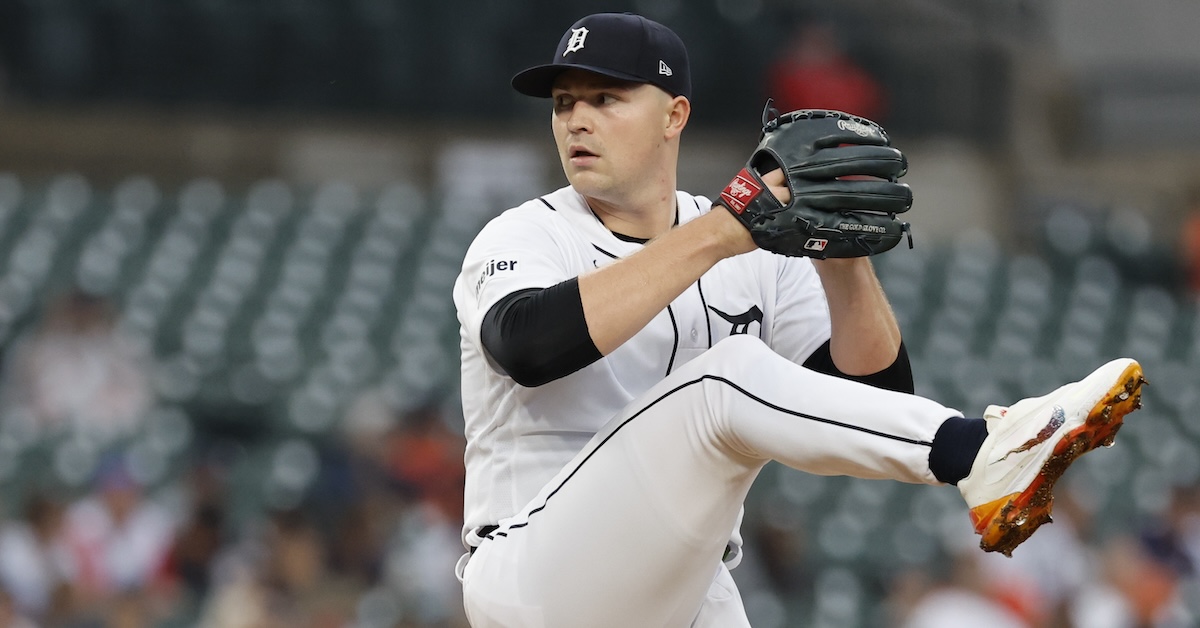
Red Sox Southpaw Tyler Samaniego Isn’t Perfect Anymore

Eric Canha-Imagn Images

Tyler Samaniego isn’t perfect anymore. After throwing 15 scoreless innings over his first 13 big league appearances, the left-hander was taken deep by Kyle Schwarber with a runner aboard in the eighth inning this past Thursday night as the Boston Red Sox fell to the Philadelphia Phillies, 3-1. The inevitable imperfection was followed by a double whammy. On Friday, Samaniego surrendered a 10th-inning walk-off two-bagger to Mike Yastrzemski — the only batter he faced — in a 3-2 loss to the Atlanta Braves. Flawless no more, he now has a still-stellar 1.17 ERA and a pair of losses over his first 15 outings.

His initial level of success was somewhat surprising, and the same could be said of the 27-year-old rookie having earned an opportunity to show his mettle in high-leverage situations. He was anything but a proven commodity at season’s start. As for his presence in the Red Sox bullpen, that wasn’t wholly unexpected. When he came to Boston as part of the five-player December deal that shipped “The Password” to the Pirates, Eric Longenhagen wrote that Samaniego was “fairly likely to play a role on Boston’s pitching staff in 2026… occupying a lefty specialist spot.”

Shortly before he suffered his first big league adversity, I approached the 2021 15th-round pick out of the University of South Alabama to learn more about him. I’d perused his stat sheet, seen him pitch a handful of times, and knew that he had undergone an internal brace procedure while in the minors, but that was about it. As such, I began by asking how he has progressed as a pitcher over the years. Read the rest of this entry »


Brayan Bello Is Going Through It

Jeff Curry-Imagn Images

Things could be going better for Brayan Bello. I guess that’s true of most Red Sox players these days, but the right-hander is having an especially rough go of things. On Sunday, Bello took the decision in an 8-1 loss to the Braves, allowing seven earned runs in five innings pitched.

That kind of line doesn’t necessarily signal a terrible outing; sometimes a starter trudges along in quality-start territory before running into trouble late. A couple quick walks, then the bullpen lets a couple inherited runners score… three runs allowed over four innings can turn into seven runs in five innings in a flash.

That wasn’t the case here. Seven of the first 10 Braves hitters reached base; five of them scored. Manager Chad Tracy let Bello wear it until he’d reached five innings and 98 pitches. And it was Bello’s 27th birthday on Sunday, too. Usually you only hear “wear it” on a guy’s birthday in the context of a party hat or a new shirt. Read the rest of this entry »


Job Posting: Colorado Rockies – Multiple Openings

Direct links to applications (please see job details below):

Baseball Analytics Fellow
Baseball Analytics Associate


Baseball Analytics Fellow

ABOUT US

The Colorado Rockies Baseball Club is embracing the climb, committed to building a championship-caliber organization on the field, in the clubhouse, and throughout our business operations. Playing at altitude presents unique competitive challenges and opportunities, and we embrace innovation, collaboration, and evidence-based practices to support elite performance. Rooted in the traditions of America’s pastime, we operate with integrity, service, quality, and trust while striving to create an exceptional experience for our players, staff, and fans.

ABOUT THE ROLE

The Baseball Analytics Fellow will support Baseball Operations and Research & Development by preparing, analyzing, and communicating data-driven insights that inform game strategy, player evaluation, scouting, and player development processes. This role is designed for an early-career analyst with strong technical skills, intellectual curiosity, and a desire to apply quantitative methods to meaningful baseball questions.

In this role, you will work with analysts, coaches, scouts, and Baseball Operations leadership to develop reports, visualizations, models, and research outputs that are clear, timely, and actionable. The ideal candidate is highly autonomous, communicates frequently, manages up effectively, and is comfortable supporting fluctuating baseball-season workflows.

RESPONSIBILITIES

Advance Preparation & Game Strategy

  • Assist in the preparation, quality review, and distribution of advance scouting reports for upcoming opponents.
  • Monitor daily lineups, roster moves, transactions, and other league information to support game planning and analysis.
  • Conduct ad hoc research to inform game strategy, including analysis of ABS-related questions and comparisons across players, teams, and game situations.
  • Coordinate and deliver advanced reports to Major League staff in a timely, usable format.

Research, Modeling & Data Preparation

  • Assist analysts with data preparation, validation, cleaning, and quality checks for modeling and reporting workflows.
  • Support predictive modeling projects by preparing datasets, engineering features, checking assumptions, and validating outputs.
  • Conduct research related to player development, scouting, player personnel, league trends, and other Baseball Operations priorities.
  • Support R&D staff with highly technical analysis, model development, and exploratory research based on departmental needs and the Fellow’s skills and interests.

Reporting, Visualization & Communication

  • Develop visualizations, dashboards, lightweight tools, and other mechanisms for disseminating analytical results across Baseball Operations.
  • Translate complex technical findings into clear, concise, and actionable insights for both technical and non-technical stakeholders.
  • Provide written summaries, presentations, and recommendations that clearly describe methodology, assumptions, limitations, and practical implications.
  • Help maintain and QA internal datasets, reports, and recurring workflows to ensure accuracy and consistency across sources.

Operational Support

  • Provide operational support across Baseball Operations and R&D, including recurring reporting, special projects, and time-sensitive requests.
  • Take ownership of assigned tasks and small-to-medium projects, driving them forward with limited day-to-day supervision.
  • Collaborate with analysts, developers, scouts, coaches, and front office personnel to understand needs and deliver practical solutions.
  • Contribute to a positive, curious, and collaborative Baseball Operations environment.

QUALIFICATIONS:

Required

  • Bachelor’s degree in a technical, quantitative, or otherwise relevant field, or equivalent demonstrated experience.
  • Proficiency with SQL and at least one statistical programming language, such as R or Python.
  • Experience preparing, cleaning, validating, and analyzing large or complex datasets.
  • Foundational understanding of statistics, modeling, data visualization, and research design.
  • Strong written and verbal communication skills, including the ability to explain analytical work to technical and non-technical audiences.
  • Demonstrated ability to work autonomously, manage competing priorities, communicate frequently, and proactively surface questions or risks.
  • Passion for baseball and curiosity about using data to support player evaluation, player development, scouting, and in-game decision-making.

Preferred

  • Degree or coursework in statistics, mathematics, computer science, data science, engineering, economics, operations research, physics, or a related technical field.
  • Experience with AWS or another cloud environment.
  • Experience using Git or similar version control workflows.
  • Experience developing web applications, dashboards, or interactive tools, including R Shiny, Python-based web apps, or similar frameworks.
  • Experience with machine learning, predictive modeling, simulation, computer vision, or player-tracking data.
  • Prior experience using AI tools to support software development, application building, analysis, or workflow automation; experience with Claude or similar tools is a plus.
  • Familiarity with public baseball research, baseball datasets, player evaluation concepts, scouting processes, or advanced scouting workflows.

SCHEDULE & TRAVEL

  • This role follows the rhythm of the baseball season and requires flexibility based on game schedules, reporting cycles, and Baseball Operation’s needs.
  • Workload and schedule may fluctuate throughout the season based on game schedules, trade deadlines, draft preparation, player evaluation cycles, and other departmental priorities.

PHYSICAL REQUIREMENTS

  • Sedentary work: regularly required to remain in a stationary position, use a computer, communicate via phone/video/email, and review information on screens for extended periods.
  • Occasionally required to move within an office or ballpark environment and attend meetings or events in person.

COMPENSATION & BENEFITS

  • Salary: at the rate of $58,000 per year. The role is expected to earn approximately $25,000 for the duration of the assignment through October 31, 2026.
  • This role may come with a housing stipend for non-local candidates.
  • Full benefits package including medical, dental, vision, 401(k), PTO, and more, subject to plan eligibility and applicable policies.

APPLICATION PROCESS:

  • Applications will be reviewed on a rolling basis but must be received by May 22, 2026. Please note that this is just an estimate, and the posting may be removed or extended at any time.
  • The estimated time to complete the recruitment process will be by June 15, 2026.
  • A note for Colorado Rockies employees:
    • Please apply via the internal job board in UKG by following these prompts: MENU > MYSELF > MY COMPANY > VIEW OPPORTUNITIES > select the position > CONSENT > APPLY NOW
    • If you cannot access UKG, please list your most recent Manager as an Employee Reference on your application.

To Apply
To apply, please follow this link.


Baseball Analytics Associate

ABOUT US

The Colorado Rockies Baseball Club is embracing the climb, committed to building a championship-caliber organization on the field, in the clubhouse, and throughout our business operations. Playing at altitude presents unique competitive challenges and opportunities, and we embrace innovation, collaboration, and evidence-based practices to support elite performance. Rooted in the traditions of America’s pastime, we operate with integrity, service, quality, and trust while striving to create an exceptional experience for our players, staff, and fans.

ABOUT THE ROLE

The Baseball Analytics Associate will provide part-time analytical, reporting, visualization, and operational support to Baseball Operations and Research & Development. This role is well suited for a current student or early-career analyst who can contribute independently to recurring reports, data validation, ad hoc research, and lightweight tools while continuing to build technical and baseball operations experience.

RESPONSIBILITIES

Advance Preparation & Game Strategy

  • Assist in the preparation, quality review, and distribution of advance scouting reports for upcoming opponents.
  • Monitor daily lineups, roster moves, transactions, and other league information to support game planning and analysis.
  • Conduct ad hoc research to inform game strategy, including analysis of ABS-related questions and comparisons across players, teams, and game situations.
  • Coordinate and deliver advanced reports to Major League staff in a timely, usable format.

Research, Modeling & Data Preparation

  • Assist analysts with data preparation, validation, cleaning, and quality checks for modeling and reporting workflows.
  • Support predictive modeling projects by preparing datasets, engineering features, checking assumptions, and validating outputs.
  • Conduct research related to player development, scouting, player personnel, league trends, and other Baseball Operations priorities.
  • Support R&D staff with highly technical analysis, model development, and exploratory research based on departmental needs and the Fellow’s skills and interests.

Reporting, Visualization & Communication

  • Develop visualizations, dashboards, lightweight tools, and other mechanisms for disseminating analytical results across Baseball Operations.
  • Translate complex technical findings into clear, concise, and actionable insights for both technical and non-technical stakeholders.
  • Provide written summaries, presentations, and recommendations that clearly describe methodology, assumptions, limitations, and practical implications.
  • Help maintain and QA internal datasets, reports, and recurring workflows to ensure accuracy and consistency across sources.

Operational Support

  • Provide operational support across Baseball Operations and R&D, including recurring reporting, special projects, and time-sensitive requests.
  • Take ownership of assigned tasks and small-to-medium projects, driving them forward with limited day-to-day supervision.
  • Collaborate with analysts, developers, scouts, coaches, and front office personnel to understand needs and deliver practical solutions.
  • Contribute to a positive, curious, and collaborative Baseball Operations environment.

QUALIFICATIONS:

Required

  • Currently enrolled in or recently completed an undergraduate (Junior going into Senior Year), graduate, PhD, postdoctoral, or technical program, preferably with a quantitative or technical focus.
  • Experience with SQL and R or Python.
  • General cloud experience, AWS exposure preferred.
  • Experience with Git or similar version control preferred.
  • Ability to communicate clearly, manage time independently, and provide frequent updates in a remote or hybrid environment.
  • Interest in baseball analytics, player evaluation, advanced scouting, and/or game strategy.
  • Ability to work in the United States and maintain availability during required Mountain Time work windows.

Preferred

  • Degree or coursework in statistics, mathematics, computer science, data science, engineering, Experience with AWS or another cloud environment.
  • Experience using Git or similar version control workflows.
  • Experience developing web applications, dashboards, or interactive tools, including R Shiny, Python-based web apps, or similar frameworks.
  • Experience with machine learning, predictive modeling, simulation, computer vision, or player-tracking data.
  • Prior experience using AI tools to support software development, application building, analysis, or workflow automation; experience with Claude or similar tools is a plus.
  • Familiarity with public baseball research, baseball datasets, player evaluation concepts, scouting processes, or advanced scouting workflows.

SCHEDULE & TRAVEL

  • This role follows the rhythm of the baseball season and requires flexibility based on game schedules, reporting cycles, and Baseball Operations needs.
  • Workload and schedule may fluctuate throughout the season based on game schedules, trade deadlines, draft preparation, player evaluation cycles, and other departmental priorities.

PHYSICAL REQUIREMENTS

  • Sedentary work: regularly required to remain in a stationary position, use a computer, communicate via phone/video/email, and review information on screens for extended periods.
  • Occasionally required to move within an office or ballpark environment and attend meetings or events in person.

COMPENSATION & BENEFITS

  • Salary: at the rate of $19.29 per hour for the duration of the assignment through October 31, 2026.
  • Part-time benefits include 401(k), sick time, and access to the Employee Assistance Program, subject to plan eligibility and applicable policies.

APPLICATION PROCESS:

  • Applications will be reviewed on a rolling basis but must be received by May 22, 2026. Please note that this is just an estimate, and the posting may be removed or extended at any time.
  • The estimated time to complete the recruitment process will be by June 15, 2026.
  • A note for Colorado Rockies employees:
    • Please apply via the internal job board in UKG by following these prompts: MENU > MYSELF > MY COMPANY > VIEW OPPORTUNITIES > select the position > CONSENT > APPLY NOW
    • If you cannot access UKG, please list your most recent Manager as an Employee Reference on your application.

To Apply
To apply, please follow this link.

The content in this posting was created and provided solely by the Colorado Rockies.


Cristopher Sánchez, Continuously Improving

Bill Streicher-Imagn Images

In high school statistics, we got one rule beaten into our heads over and over again: Don’t extrapolate outside the bounds of your data. Then, when we were done learning that one, we got another rule: Outliers tend to revert towards the mean. Gee, thanks a lot, Mr. Gilliam – how am I supposed to explain Cristopher Sánchez using those two rules?

Look at this table of pitching statistics. Clearly, extrapolating past the edge of Sánchez’s performance seems fine:

Cristopher Sánchez Keeps Getting Better
Year K% BB% ERA xERA FIP xFIP SIERA WAR/200 IP
2023 24.2% 4.0% 3.44 3.72 3.99 3.09 3.33 3.6
2024 20.3% 5.8% 3.32 3.60 3 3.19 3.58 5.2
2025 26.3% 5.5% 2.5 3.02 2.55 2.77 3.02 6.3
2026 29.9% 5.2% 1.82 2.74 1.91 2.27 2.48 7.8

We have all of these ERA estimators – FIP, xFIP, xERA, SIERA – because merely looking at someone’s ERA can be misleading. ERA is noisy. Between inherited runners, sequencing, scoring decisions, and just plain old variance, knowing a player’s ERA in one year doesn’t necessarily mean you know how well they played. The whole alphabet of advanced pitching statistics comes down to trying to solve that noise problem by focusing on indicators with greater stability.

In other words, advanced ERA estimators tend to move around less than actual ERA. It follows naturally that changes in ERA estimators are more predictive of future results than changes in ERA. When all of these markers are moving in tandem – and moving by a lot, to boot – the aggregate picture looks very different than your average pitcher with a shiny ERA early in the season. Read the rest of this entry »


Effectively Wild Episode 2480: The Most Embarrassing Baseball Play

EWFI
Ben Lindbergh and Meg Rowley banter about whether the Phillies’ surge would have happened the same way if Rob Thomson hadn’t been fired, discuss streaks that were snapped for the Mets and Rico Garcia, delight and dismay in John Kruk repeating a podcast talking point, try to determine the most embarrassing failure a player can suffer on the field, bemoan a missed opportunity for an ambidextrous pitching appearance, mark the promotion of Mariners prospect Colt Emerson, and then discuss which of this season’s most over- or underperforming teams will regress.

Audio intro: Alex Ferrin, “Effectively Wild Theme
Audio outro: The Spaghettis, “Effectively Wild Theme

Link to team records since 4/28
Link to team run differentials since 4/28
Link to team records since 4/26
Link to Dan S. on managerial firings
Link to Neil P. on managerial firings
Link to Mets comeback game story
Link to past Mets streak discussion
Link to Holmes injury story
Link to Davis call story
Link to Garcia hit
Link to .000 BABIP streaks
Link to mound-charge strategy discussion
Link to Kruk clip 1
Link to Kruk clip 2
Link to Phillies vs. Pirates game
Link to Adolis arms
Link to Reds walk streak
Link to Cortes pitching play log
Link to Cortes profile
Link to 2025 Cortes switch-throwing game
Link to Venditte glove article
Link to Cortes pitching tweet
Link to FG post on Emerson
Link to MLBTR on Emerson
Link to Crawford fielding stats
Link to preseason playoff odds
Link to BaseRuns standings
Link to team performance vs. projections
Link to Sheehan on the Rays
Link to Sheehan on the Cardinals
Link to Ben on playoff velo
Link to updated PR pickoff data
Link to team positioning runs
Link to MLB.com Walls article

 Sponsor Us on Patreon
 Give a Gift Subscription
 Email Us: podcast@fangraphs.com
 Effectively Wild Subreddit
 Effectively Wild Wiki
 Apple Podcasts Feed 
 Spotify Feed
 YouTube Playlist
 Facebook Group
 Bluesky Account
 Twitter Account
 Get Our Merch!


Colt Emerson Debuts in Seattle Amid AL West Skid

Steven Bisig-Imagn Images

The Mariners didn’t expect to call up Colt Emerson, but they had no choice.

Emerson made his big league debut Sunday in the Mariners’ 8-3 loss to the Padres. It wasn’t a particularly eventful day in the box score. He flied out to right field in his first at-bat, drew a walk in his second, and flied out to right field again in his third. But at just 20 years old, he became the youngest Mariner to reach the majors since Félix Hernández in 2005.

General manager Justin Hollander told reporters that calling up Emerson wasn’t a move he anticipated making when he woke up that morning. However, Emerson was next on the depth chart, and once it became clear that Brendan Donovan needed time on the injured list, Hollander felt it was the only choice to make. Read the rest of this entry »


Ben Clemens FanGraphs Chat – 5/18/26

Read the rest of this entry »


FanGraphs Power Rankings: May 11–17

Last week’s slate of games concluded with Rivalry Weekend, leading to some dramatic games between crosstown and cross-state foes, most notably between the New York teams and the Chicago clubs. Maybe those come-from-behind wins will spark the Mets and White Sox to greater things over the next few weeks.

Our power rankings use a modified Elo rating system. If you’re familiar with chess rankings, you’ll know that Elo is an elegant ranking format that measures teams’ relative strength and is very reactive to recent performance. To avoid overweighting recent results during the season, we weigh each team’s raw Elo rank using our coin flip playoff odds. (Specifically, we regress the playoff odds by 50% and weigh those against the raw Elo ranking, increasing in weight as the season progresses to a maximum of 25%.) The weighted Elo ranks are then displayed as “Power Score” in the tables below. As the best and worst teams sort themselves out between now and October, they’ll filter to the top and bottom of the rankings, while the exercise remains reactive to hot streaks and cold snaps. If you’re looking for a visual representation of the ups and downs of your team throughout the season, look no further than the brand new Power Rankings Board in the FanGraphs Lab.

First up are the full rankings, presented in a sortable table. Below that, I’ve grouped the teams into tiers with comments on a handful of clubs. You’ll notice that the official ordinal rankings don’t always match the tiers — there are times where I take editorial liberties when grouping teams together — but generally, the ordering is consistent. One thing to note: The playoff odds listed in the tables below are our standard Depth Charts odds, not the coin flip odds that are used in the ranking formula. Read the rest of this entry »


Everybody Who’s Anybody Is Getting Loose Bodies, and Now It’s Blake Snell’s Turn

Kiyoshi Mio-Imagn Images

It would be inaccurate to say that that Blake Snell saw what teammate Edwin Díaz and fellow two-time Cy Young winner Tarik Skubal both had and decided he wanted in. Clusters of injuries, such as the wave of broken hamate bones from this spring or the more recent outbreak of loose bodies in pitchers’ elbows, are just coincidences instead of sudden fads or outbreaks. Nonetheless, like Díaz and Skubal before him, Snell will undergo surgery on Tuesday, with the expectation that he’ll return this season.

This is already the second interruption to Snell’s season, and the third time that the now-33-year-old lefty has landed on the injured list since signing a five-year, $182-million deal with the Dodgers in November 2024. Last season, Snell made just two starts for the Dodgers before inflammation in his left shoulder forced him to the IL in early April. The Dodgers’ depth and focus on having their top starters available for the postseason allowed him to take his rehab slowly. He missed four months and made just 11 regular season starts, posting a 2.35 ERA and 2.69 FIP in 61.1 innings, then followed that by pitching brilliantly in the first three rounds of the playoffs, allowing just six hits and two runs in 21 innings against the Reds, Phillies, and Brewers, highlighted by eight innings of one-hit shutout ball in the NLCS opener against Milwaukee. His two starts against the Blue Jays in the World Series were less successful; he pitched his way into jams that neither he nor the Dodgers bullpen could escape unscathed, and was charged with five runs in each. He did come out of the bullpen to get four very big outs in the eighth and ninth innings in Game 7 before yielding to the heroics of Yoshinobu Yamamoto.

In January, Snell admitted that he felt “exhausted” at the end of the World Series. Mindful of his injury history — this is a pitcher who’s made more than 27 starts in a season just twice — and his lingering shoulder soreness, the Dodgers had him delay his offseason throwing program to the point that he didn’t even pitch in the Cactus League. He began the season on the injured list before going out on a rehab assignment on April 22, and totaled just eight innings over three starts, maxing out at four innings and 55 pitches before being brought to Los Angeles. Read the rest of this entry »


Sunday Notes: Astros Reliever AJ Blubaugh Used To Throw a Submarine Knuckleball

AJ Blubaugh has given a boost to the Astros bullpen since debuting in late April of last season. Over 29 big-league appearances (including three as a starter), the 25-year-old right-hander has logged a 3.22 ERA over 58-and-two-thirds innings while being credited with five wins, against three losses, and three saves. Drafted in the seventh round by Houston out of the University of Wisconsin-Milwaukee in 2022, he ranked third among the system’s prospects with a 45 FV when he reached The Show.

His backstory is atypical, in part because of a pitch he hasn’t thrown since his days as an Ohio prep. Moreover, the Mansfield native now has a delivery that is both conventional and consistent. That wasn’t always the case.

“When I was in high school and started to get into pitching, I threw from three different slots,” Blubaugh explained. “An over-the-top arm slot, a sidearm arm slot, and a submarine arm slot. I would differentiate that every single pitch. One pitch would be a curveball from over the top, then I’d drop to sidearm and throw a slider. Then I’d throw a fastball from submarine. I was just a funky junk-ball thrower. I threw a knuckleball a bunch, probably from the time I was 10 years old to the time I graduated. It was probably my main pitch.”

Remarkably, his butterfly wasn’t simply delivered from down under; it came from each of his arm angles. Read the rest of this entry »