Ben Lindbergh and Meg Rowley banter about the number of Opening Days/Nights at the start of the regular-season schedule and how long they think the challenge system will last, review some of their favorite offseason transactions, and do their annual draft of all 30 MLB teams in order of how fun they’ll be to follow this season.
And just like that, the end of winter has been heralded, not by a groundhog or the vernal equinox, but by 6 1/3 shutout innings by Max Fried last night at Oracle Park. Today is the official Opening Day in MLB, and as such, it’s time for the ZiPS projections to spit out its final preseason projections. Hopefully, its numbers are graceful and kind, just in case it has to eat them in six months. This is the 22nd such exercise I’ve done with the ZiPS projections, and as with the other 21 times, there’s not much to do but sit back and wait for reality to destroy the expectations. Most of you already know the methodology by now, but for those who don’t, I’ll do a quick rundown. The rest of you can skip straight to the reason you’re here: the standings!
The ZiPS projected standings are the results of a million simulations of the 2026 season, using the ZiPS projections and the actual team schedules. The methodology isn’t identical to the one we use for our playoff odds. So how does ZiPS calculate the season? Stored within ZiPS are the first- through 99th-percentile projections for each player. I start by making a generalized depth chart, using our Depth Charts as a jumping off point. Since these are my curated projections, I make changes based on arbitrary whimsy my logic and reasoning. ZiPS then generates a million versions of each team in Monte Carlo fashion. These projections do reflect the updated post-spring training projections, which were added to the FanGraphs database on Wednesday afternoon. Read the rest of this entry »
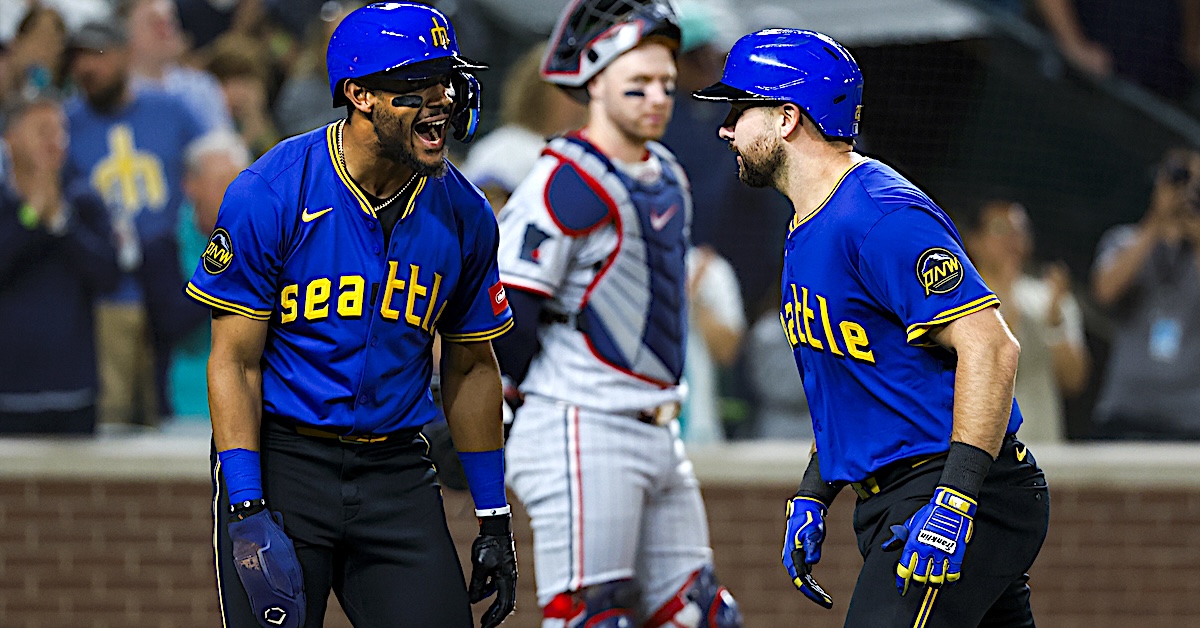
Since their first season together in 2022, Raleigh and Rodríguez have combined for 44.2 WAR. At 11.1 wins per season, that’s “on pace” for the best duo in team history, just ahead of Ken Griffey Jr. and Alex Rodriguez (65.9 WAR over six years), Griffey and Edgar Martinez (119.3 WAR over 11 years), and all sorts of other combinations from the star-studded squads of the 90s. Raleigh and Rodríguez certainly have much more to achieve before approaching these all-time greats, individually or together. But as the Mariners enter their 50th season, it appears the legacy of the franchise may finally be moving beyond its past. Read the rest of this entry »
Brad Penner, Kiyoshi Mio, Jay Biggerstaff, Sam Navarro-Imagn Images
Every year for Opening Day, I ask the FanGraphs staff to predict the season’s award winners, playoff field, and eventual World Series Champion. Those predictions tend to be heavily influenced by our playoff odds, projections, and prospect rankings, and while I appreciate the instinct to lean on data to make our guesses more educated, the results can feel a little chalky at times. That’s why I’ve starting asking our writers to make another prediction — a bold prediction. One that might be a little spicy, or perhaps a little silly. A prediction that eschews the obvious, but is still grounded in reality, even if only by one foot. Nineteen of our writers across FanGraphs and RotoGraphs answered the bell, including me. Will any of these predictions prove to be correct? Who knows! Let’s watch 2,430 games and find out. – Meg Rowley
We’ll See a Front Office Gambling Scandal
I realize this isn’t the most fun prediction you’re going to read here, but this just sort of strikes me as next. We’ve seen coach scandals, player scandals, and interpreter scandals. Well, front offices feature plenty of hyper-competitive people, many of whom are experts in the kind of risk analysis involved in gambling, and I don’t see any particular reason that they’d be immune to a disease that has infected so many other parts of baseball over the last few years. I think it’s more likely that the next scandal we see involves more minor league players, but we’re supposed to go bold here. It would be harder for a front office member to get caught. They’re not subject to the same public scrutiny that players are, and they can’t affect the outcome of a game as directly. They’d probably have to screw up in a bigger way. But it certainly seems possible. – Davy AndrewsRead the rest of this entry »
Over the past week and a half, we’ve published our annual season preview, ranking the league’s players by position and team based on a blend of our projections (a 50/50 split between ZiPS and Steamer) and our manually maintained RosterResource playing time estimates courtesy of Jason Martinez and Jon Becker. If you happen to have missed any of those installments, you can use the navigation widget above to catch up.
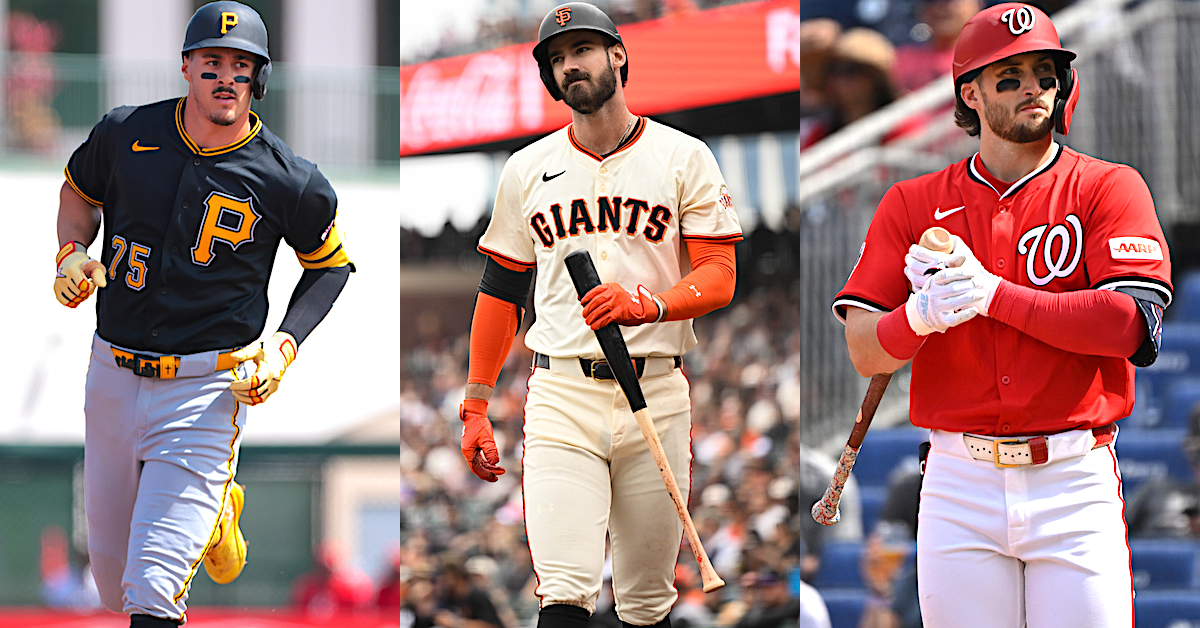
Today, I’m going to summarize the results. We’ll look at some tables and pick out a few interesting tidbits in a moment, but first, as I do every year, I’ll remind you that this exercise captures a snapshot of how we project teams to perform now. Teams aren’t static. Since we began publishing our rankings, top prospectsKevin McGonigle (no. 5), JJ Wetherholt (no. 12), and Carson Benge (no. 21) made their respective Opening Day rosters, while no. 1 overall prospect Konnor Griffin was sent down to get a bit more seasoning in the minors. Nationals outfielder Dylan Crews, the second overall pick in the 2023 draft and a former top prospect, was optioned to Triple-A Rochester. And a number of notable pitchers hit the injured list, including Spencer Strider, whose strained oblique will no doubt complicate his efforts to regain his 2023 form. Read the rest of this entry »
Sam Navarro, Eakin Howard, Rafael Suanes-Imagn Images
Dean Kremer has been a staple of the Orioles rotation in recent years. Even while missing significant time due to injuries in a couple of seasons, he’s made more starts than any other Baltimore pitcher since the beginning of 2022, a span that encompasses both the division-winning Orioles from ’23 and last year’s basement dwellers. Yet this past weekend, Kremer was optioned to the team’s minor league camp, the odd man out in a rotation battle. He’s not the only familiar name among those slated to start the season in the minors due to such decisions.
Opening Day is full of fanfare and so often freighted with meaning, but it’s still just one day on the baseball calendar; the decisions regarding who gets to be there (and who doesn’t) don’t actually define the season. Still, unless they’re recalled to replace injured players — which is hardly out of the question — optioned position players need to remain in the minors for 10 days and pitchers for 15 days, counting from March 25 (Opening Day for the Giants and Yankees). In other words, they’ll be eligible to return on April 4 or April 9. Beyond that, circumstances change as the season progresses, and rosters are in a constant state of flux.
Kremer stands out because he’s fully established himself in the majors, while the other high-profile decisions I’ve highlighted below involve players who are or were recently considered top prospects. They’re all headed to Triple-A, and I expect them to stay past the aforementioned dates, but they’re notable because they’re still expected to play substantial roles in 2026. The players are listed alphabetically. Read the rest of this entry »
At this time time last year, I made a series of predictions. I explained why each team might make it to the promised land, as well as why each team might find itself dead in a pit. We’re running it back this year. Will your favorite team win it all? Will it perish in a factory fire? Here’s how it might go down. Consider these the first- and 99th-percentile projections. If you missed the National League edition yesterday, you can check it out here. Today we’re on to the American League.
Baltimore Orioles Why They’ll Win It All: After two years of struggle, Adley Rutschman will come back and play like a star again. He’ll be a six-win MVP candidate. He’ll instantly look like he did in 2022 and 2023. Where has that guy been the past two years? The answer is simpler than you think. He’s been hiding in the basement while his secret twin, Badley Rutschman has limped to league-average performance. That’s right, he uses a double. This two-years-on, two-years-off gambit used to work well enough. Badley was more than capable of tearing up the Pac-12 and the high minors, but the big leagues are another story. Badley couldn’t quite hack it, but Adley will return and Badley will be back in the basement. (Don’t worry, it’s a nice enough basement.) The secret twin life is a tough one, but it’ll bring the O’s back into the first division.
Why They’ll Lose It All: Playing behind Alex Bregman in the World Baseball Classic will mess with Gunnar Henderson’s head. Do you know the last time Gunnar Henderson was a backup? Neither does Gunnar Henderson. He’s not meant to play third base second fiddle. He’s feeling like a second-class citizen for the first time. Number two’s supposed man the six, not bat seventh. By the Fourth of July, he’ll be striking out a third of the time and batting fifth and seven ate nine. Read the rest of this entry »
Opening Day is upon us! Yesterday, I laid out what the best- and worst-case scenarios looked like for the 12 teams projected to finish under .500 in 2026. Today, we turn our attention to the teams in the league who are forecast for a .500 or better record, the ones we expect to be vying for playoff position all season long.
Our power rankings use a modified Elo rating system. If you’re familiar with chess rankings or FiveThirtyEight’s defunct sports section, you’ll know that Elo is an elegant ranking format that measures teams’ relative strength and is very reactive to recent performance. For these Opening Day rankings, I’ve pulled the Depth Charts projections and calculated an implied Elo ranking for each team. First up are the full rankings presented in a sortable table. Below that, I’ve grouped the teams we’re covering today into tiers, with comments on each club. The delta column in the table below shows the change in ranking from the pre-spring training run of the power rankings in February.
Angelina Alcantar/News Sentinel-USA TODAY NETWORK via Imagn Images
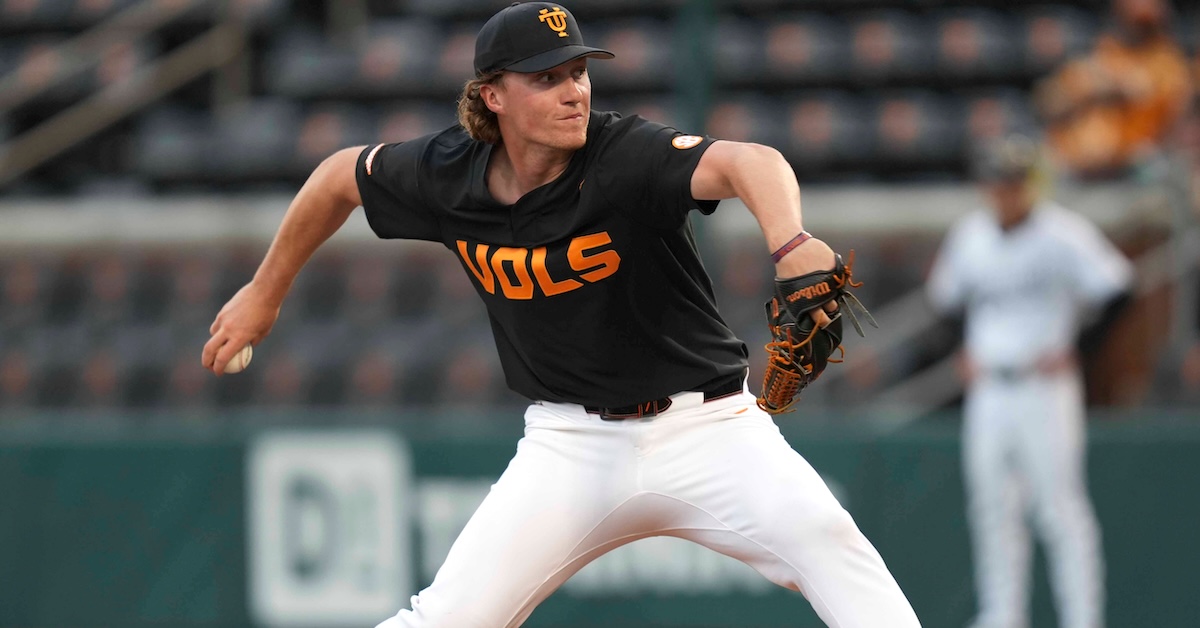
I’ve concluded my spring journey through the backfields and Breakout Games, which makes this a good time to drop a few more notes. As with last time, I’ve got a mix of updates on top prospects and some off-the-radar names who have played well. I’m again mostly limiting these notes to players and systems we’ve already covered; I have thoughts on Brody Brecht and will share all of them and more on our Rockies list, which is next up in the prospect list queue.
Ethan Holliday, SS, Rockies
Holliday enters the year as one of baseball’s most volatile prospects. Big, All-Star-caliber tools run into a long swing with a lot of moving parts, and the collision is producing hard-hit balls and tardy cuts in equal measure. He tends to be behind good velocity, or even average fastballs if they’re up in the zone. Conversely, he bruised a couple baseballs in his wheelhouse down and in, including a ringing hit on a pretty good cutter in the Breakout. Physically, he looks great, and while I still think he’ll need to make an adjustment to cut down on the length of his swing at some point, I’d give him all the time in the world to figure it out.
The pleasant surprise here is that Holliday’s glove has looked significantly better at short this week than it did in Fresno last August. His reactions off the bat are quick and accurate, he charges smartly, and he picked everything in his orbit. This wasn’t a long enough look to change course entirely on his defensive projection, as he’s already big and likely still growing, but for me his odds of staying at short went up this week.
Patrick Forbes, RHP, Diamondbacks
I tend to think that good spring performances are more meaningful than bad ones. For the latter, sometimes guys are just working on a pitch, battling through the dead arm period, trying a new stance, going through the motions, or otherwise focused more on “preparing” than “competing.” In that spirit, I’m not alarmed by Forbes’ outing in Arizona’s Breakout, though I do think it’s fair to note that he didn’t look great. Forbes was the first pick in the first compensation round of last year’s draft, and when he was in college, his velocity sat 94-97 mph and touched 99. On Saturday, though, he barely scraped 95 mph, sitting 92-94. He was scattered with both his heater and his slider, and while he missed several bats, he never got in a rhythm. He had trouble aligning his upper and lower halves, and in this outing he tended to pull the ball with him as he fell off the mound. Hopefully, this is just a blip, and he’s back to his high-octane self during the regular season.
Nate Snead, RHP, Angels
In last week’s notes, I covered how one Angels source highlighted Snead as a player who belongs on the main section of the club’s top prospects list. Good scouting on his part, as Snead looked sharp in their Breakout, where he struck out two (with two walks) in two innings of work. In the system overview, I wrote that Snead “regularly touches triple digits,” which is still part of his game. But I also wrote that “he needs a sharper breaking ball,” and on this look, it was evident that he’s got a very good one, a hard slider that flashes plus. That offering is substantially ahead of his curve, which looks fringy, but as a likely reliever, upper-90s and one plus breaker is all you really need. While he’s not the most deceptive guy in the world, I came away pleasantly surprised with his ability to hit a region and move the ball to both sides of the plate. Snead will jump toward the top of the 40 FVs or bottom of the 40+ FVs when I next update the Angels list, which should be soon.
Wellington Aracena, RHP, Diamondbacks
Speaking of pitchers who need to be added to a list. Aracena was the main return for the Diamondbacks when they shipped Blaze Alexander to the Orioles. He’s a big guy with elite velocity and two very hard secondaries. While he regularly touches triple digits, it’s his 97 mph cutter and 92-93 mph slider that are most impressive on the radar gun. He’s long thrown hard, but this is another step up from when we last covered him in June. Overall, the 21-year-old struck out three in his three innings of work, with no free passes. While not wild, there’s some effort in Aracena’s delivery, as he generates his velocity in part with big shoulder and hip torque as he drives toward the plate. He poses an interesting dilemma for Arizona: He has the length and stuff to continue developing as a starter, but he projects as a late-inning reliever in short stints and could be a shot in the arm for the thin bullpen. He also has the outwardly competitive disposition and attitude teams tend to like in that kind of role. It’s a good problem to have.
Sandro Santana, LHP, Diamondbacks
Of the thousand pitches Santana fired last year, only 15 were changeups — so few that I didn’t catch any in my several looks at him in 2025. I omitted the pitch in my report on him last December, as I assumed he’d either mothballed it or would soon. Looks like we’ll need to update that report, too. Santana didn’t just throw a few cambios, but he also missed a couple bats with them. He has a low slot and generates the kind of fade and tumble that that release tends to produce, with good arm speed to boot. I don’t know what my best accomplishment was this winter, but I’m sure it pales in comparison to finding an above-average changeup.
The rest of Santana’s game looked sharp, as well. In two innings, he didn’t allow a baserunner and struck out two. He touched 96 mph, and his slider was again above average, long with good spin, and lefties looked very uncomfortable against it, flinching or waving weakly at it several times.
Yilver De Paula, SS, Angels
De Paula stood out in this winter’s deep dive through the Angels’ DSL club, even though he only played a handful of games. I got only a quick look at him live. (Disappointingly, he didn’t appear in their Breakout even though he was on the roster.) In person, he looked athletic with clean actions at short and an arm that could be plus at maturity. At the plate, he’s quick to the ball and made hard contact a couple of times against older pitchers. He’s not the biggest guy, and there’s a chance he’s neither quick enough to be an elite defensive shortstop, nor strong enough to hit for enough power to be a lineup regular. Were I scouting for a club, though, with the caveat that I’d need to see him a little more to have adequate conviction, I’d be leaning toward a high-variance everyday grade.
Lucas Ramirez, OF, Angels Manny’s son was a late scratch on my Angels list because I didn’t love his swing or how jumpy he looked in the box. He’s such a twitchy guy, though, and he belongs on the list in some capacity. His hands are fast and he roped a double in a backfield game 111 mph off the bat — three ticks higher than his max output a year ago. His power looks like a potential carrying tool, and while I still have reservations about his swing and approach — particularly with respect to how he identifies and attacks spin, which has eaten him alive as a pro — this is the kind of athlete to stay on even if he struggles early in his career.
Dauri Fernandez, MI, Guardians
Fernandez, while still a lean middle infielder, looks like he’s bulked up in a positive way this spring. It’s the kind of physical projection we were hoping to see, and while he’ll need to continue getting stronger, it’s fair to mentally lump him in with the tier of guys like Robert Arias, Juneiker Caceres, and Gabriel Rodriguez, young Guardos with hit tools and everyday upside.
Cam Day, RHP, Dodgers:
Day was an honorable mention on our Dodgers list this winter due to middling production and a history of wildness. His stuff is diabolical, though, and this spring he’s been sitting 97-99 mph (up from 93-97 last season). That extra velo has burnished both of his breaking balls, and the curve in particular looks like a 70. Day’s delivery is still high maintenance with some excess movement and a wobbly back leg, and he’s probably never going to be a great strike thrower. His arm speed and stroke look a tick faster and quicker this spring. Is that a meaningful change for him? Am I just seeing things, dizzy from the triple-digit heat coming from the sky and radar gun? Let’s check back soon.
Here at FanGraphs, we make a lot of bold predictions. The entire staff makes them in a site-wide exercise that will come out tomorrow. I made 10 more of my own on Effectively Wild. Historically, I made five bold predictions about the season in this space as well. But I’ve been crowded out! Bold predictions are everywhere now. Meg and I came up with a substitute last year, and I enjoyed it enough that I’m bringing it back again: Five big questions about the season. These aren’t the only big questions I have. They aren’t necessarily the biggest questions in baseball. I don’t know the answers to any of them. But all five of these are unresolved questions that will help to shape the 2026 season, and all five fascinate me.
1. Do the Brewers Still Know Best?
The kinds of nerdy fans who read (and write for) FanGraphs have always had a data-driven team to root for. The Moneyball A’s predate this website. The Rays took that blueprint and ran with it. Before the Astros went full banging scheme, they revolutionized player development. The Guardians develop pitchers better than almost everyone else. The Brewers are the latest model; they do things a little bit differently than the rest of the league, according to some internal blueprint, and their plan works. They have the third-most wins in the league over the last five years despite running one of the lowest payrolls. It looks like their run atop the NL Central might continue indefinitely.
Of course, it felt like the previous analytical darling teams would keep their runs going forever, too. The A’s fell off hard after their peak. The Rays look a lot less magical today than they did four years ago. No advantage lasts forever; if you have some kind of secret sauce that truly does work, every other team in baseball will be trying to figure out the recipe.
From the outside, it’s clear that the Brewers do at least three things very well: They develop good pitchers, find fast and athletic position players who deliver plenty of WAR without gaudy batting statistics, and proactively trade established players for prospects who fit their preferred pitching and hitting archetypes. Read the rest of this entry »



 Sponsor Us on Patreon
 Give a Gift Subscription
 Email Us: podcast@fangraphs.com
 Effectively Wild Subreddit
 Effectively Wild Wiki
 Apple Podcasts Feed
  Spotify Feed
 YouTube Playlist
 Facebook Group
 Bluesky Account
 Twitter Account
 Get Our Merch!