Dan Szymborski: mesdames et messieurs, bienvenue, nobles FanGraphiers et vénérables sabermétriciens!
12:01
Alex: Drake Baldwin has had a wonderful rookie season. What would you expect from the rest of his career? Brian McCann had a career year at 22 and never exceeded the numbers he posted that season; Big Dumper hit a stratospheric other level. Where do you see Baldwin going from here?
12:02
Dan Szymborski: As I always tell everyone: catchers are weird
12:02
Dan Szymborski: Sometimes they peak weirdly, sometimes they stop developing, sometimes they just blow up late somehow
12:03
Dan Szymborski: I’m not sure we know which weird way Baldwin will age, so just assume something fairly normal and prepared for Mets level tracknessy (tradgety + wackiness)
12:03
Idiotic Failson: Grisham and Bellinger are both going to be free agents. Do you think the Yankees resign one, both, or neither?
With the NL playoff bracket basically settled (a statement I could live to regret if the Mets keep losing), I’ve started to think about how the various participants match up against each other. Not only did five of these six teams make the playoffs last year, all of those five have made it to October at least three times in the past four postseasons. The Cubs — a recidivist NLCS participant in the mid-2010s who last made the postseason in 2020 — are the closest thing we have to new blood.
Absent some shocking reversal of fortune in the next two weeks, we’re in for an October of sequels. But while there’s often at least one standout team in the bracket — usually the Dodgers, but not always — this year the top six teams in the NL seem fairly evenly matched. At least, every team has flaws.
The most interesting team, at least to me, is the presumptive no. 1 seed: the Milwaukee Brewers. As much of a postseason fixture as the Brewers have become, and as many early-round thrills as they’ve delivered, they’ve only bothered the NLCS once in the past decade, out of six trips to the playoffs. Read the rest of this entry »
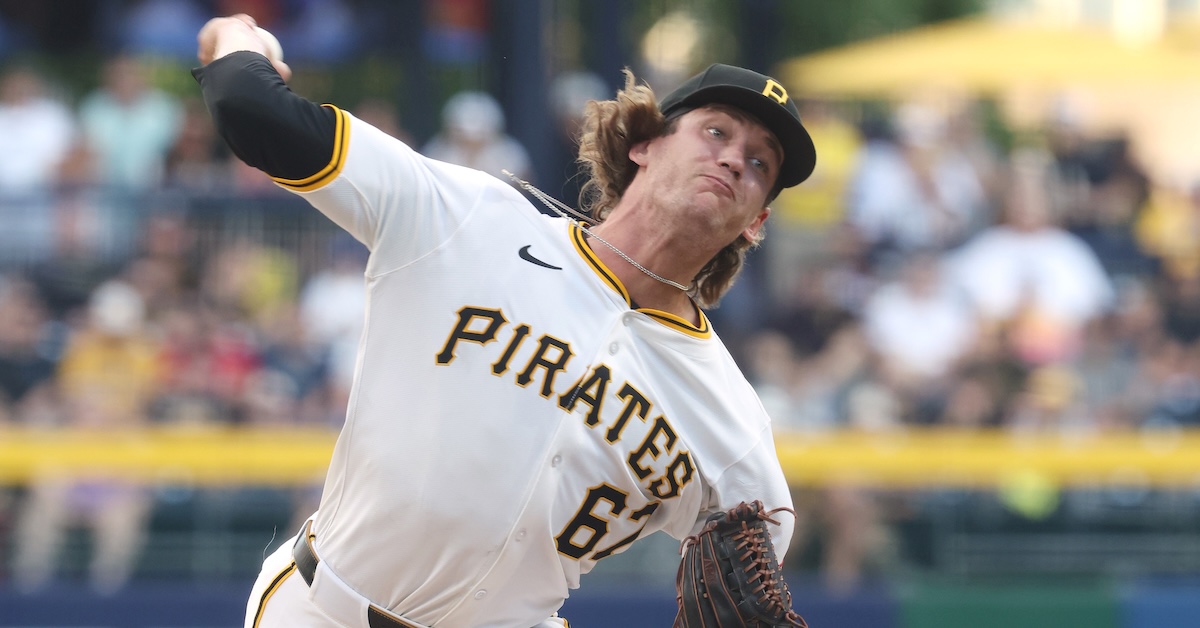
Braxton Ashcraft is aiming to join the Pittsburgh Pirates rotation, hopefully as soon as next season. For now, the 25-year-old right-hander is putting up impressive numbers while being used prudently in his first taste of major league action. Since debuting in late May, Ashcraft has made 23 appearances — all but six of which have come out of the bullpen — while logging a 2.47 ERA and a 2.85 FIP over 58 1/3 innings. Moreover, he’s allowed just 49 hits, only two of which have left the yard.
His previous lack of durability is the reason behind the caution. When our 2025 Pirates Top Prospects list came out in the spring — Ashcraft was no. 2 with a 50 FV — Eric Longenhagen wrote that “injuries are an inescapable aspect of Ashcraft’s profile due to his history and the violent nature of his delivery.” Drafted 51st overall in 2018 out of Waco, Texas’ Robinson High School, the righty entered the year having thrown just 235 professional innings, including a career-high 73 frames a year ago. Counting his time in the minors, he is up to 106 2/3 in the current campaign.
His stuff is clearly plus, and not just because his heater averages 96.9 mph. The best of Ashcraft’s five pitches is his slider, which he’s thrown 32.6% of the time to the tune of a .202 batting average allowed and a 30.7% whiff rate. Delivered at 91.8 mph, it was aptly referred to by our lead prospect analyst as the talented young hurler’s bread and butter.
Ashcraft discussed his repertoire, including the angle that makes his pitches so effective, when the Pirates visited Fenway Park at the end of August.
———
David Laurila: When I talked to him back in February, Bubba Chandler said that you and he are similar in some respects. Do you agree?
Braxton Ashcraft: “In a lot of ways, yes. I think what drives a lot of our success is leveraging counts. His fastball is a lot different than mine in terms of the perception of hitters; his extension is longer than mine, and obviously the velo is a little bit higher. So is the vert. It’s just a different fastball, one that is pretty unique. Read the rest of this entry »
NEW YORK — It’s hard to stay under the radar when you play at Yankee Stadium, but Cody Bellinger is giving it his best shot.
Splitting time between all three outfield positions, the 30-year-old Bellinger is quietly putting up the second-best season of his entire career. With 4.6 WAR entering play Wednesday, he ranks 18th among all position players. Drafted out of high school in 2013, Bellinger debuted with the Dodgers at age 21 in 2017 and immediately looked like a star. He took home Rookie of the Year honors with a four-win campaign, won the MVP in 2019, and then saw his career derailed by a fractured fibula and multiple shoulder dislocations. The Dodgers non-tendered him after he ran a combined 69 wRC+ in 2021 and 2022, and he signed a pillow contract with the Cubs for 2023. He got back on track with a 136 wRC+ and 4.4 WAR, signed a three-year deal to stay in Chicago, and then got traded to New York after he took a step back in 2024. That step back is starting to look like a blip.
This season, Bellinger been the most valuable Yankee not named Aaron Judge. His 129 wRC+ ranks fifth among the team’s regulars, and he’s tied with Austin Wells for the lead with nine fielding runs. Bellinger’s 28 home runs are his most since his 2019 MVP season.
He is having an interesting year at the plate. In some ways, he looks the same as he has for the past three seasons. Deserved Runs Created Plus, a Baseball Prospectus metric that measures deserved performance rather than actual results, had him at 106 in 2023 and 111 in his down 2024 campaign. This season, he’s at 108. In other words, DRC+ thinks Bellinger has performed at pretty much the same level for the past three seasons, despite the dip in his actual performance and his xwOBA last season. That’s the first big piece of news here. DRC+ thought Bellinger’s step back last year was undeserved, and the fact that he’s returned to his 2023 performance level makes that easier to believe. As Dan Szymborski wrote earlier this week, Bellinger has put himself in position to decline his 2026 option and look for a new deal. The idea that, under the hood, he’s been this good for three years in a row makes him that much more attractive a target if he ends up hitting the open market come November. Read the rest of this entry »
Ben Lindbergh and Meg Rowley discuss and speculate about the percentage of major leaguers who’ve been inducted into some hall of fame and banter about Elly De La Cruz’s extended slump, Sean Murphy’s hip-to-be-tear revelation, and the perils of playing through injury, then assess where the line is when publicly shaming fans for ballpark behavior, and a pattern of Tigers executive misconduct (plus a postscript).
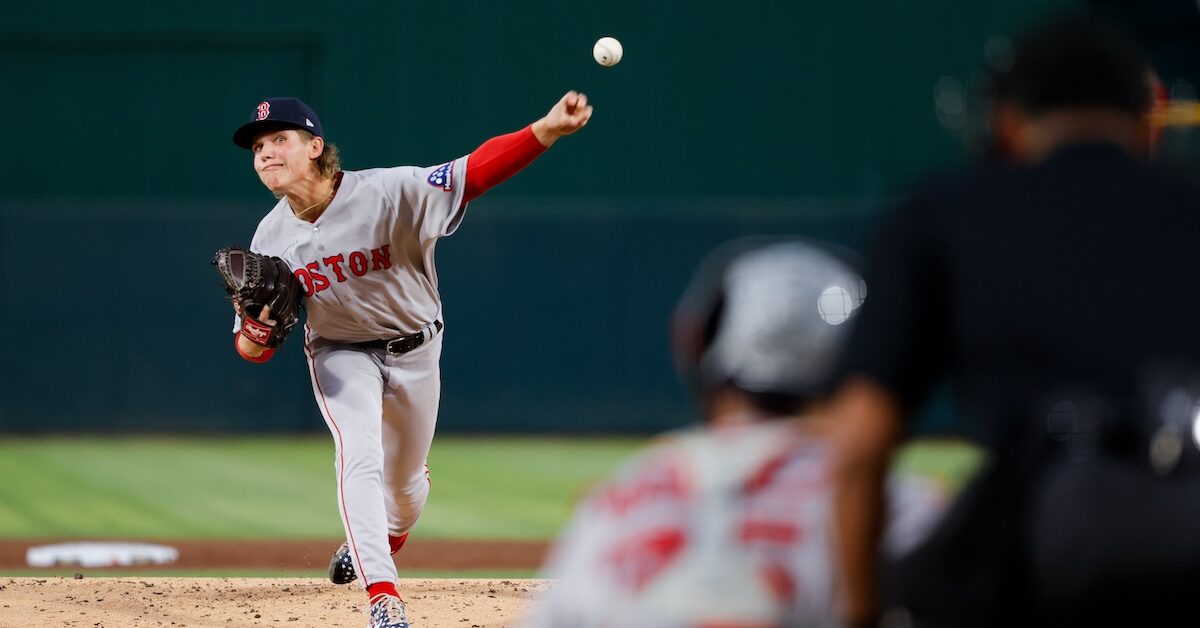
First impressions can prove to be fleeting in baseball, but it’s still better to make a good one than a poor one. And as first impressions go, Boston Red Sox rookie Connelly Early’s was absolutely dynamite. Throwing five innings in his debut, Early whiffed 11 A’s batters, with a single walk as a minor demerit, and exited the game with a 5-0 lead that was never threatened.
So how did he do it? Sometimes rookie pitchers simplify their repertoire somewhat while they’re getting adjusted to the majors, but Early threw five different pitches at least 10 times, and got at least three swings and misses on each of them, totaling 19 for the game. His most hittable pitch on Tuesday, his changeup, still had a respectable 70% contact rate, about league average for changeups (70.5%). And with the exception of his sinker, which he only offered up against lefties, he didn’t aggressively limit his toolset based on the platoon advantage, either. (For more on Early’s stuff, I can’t do better or find a more fitting piece for you to read than David Laurila’s May profile of the southpaw.) Read the rest of this entry »
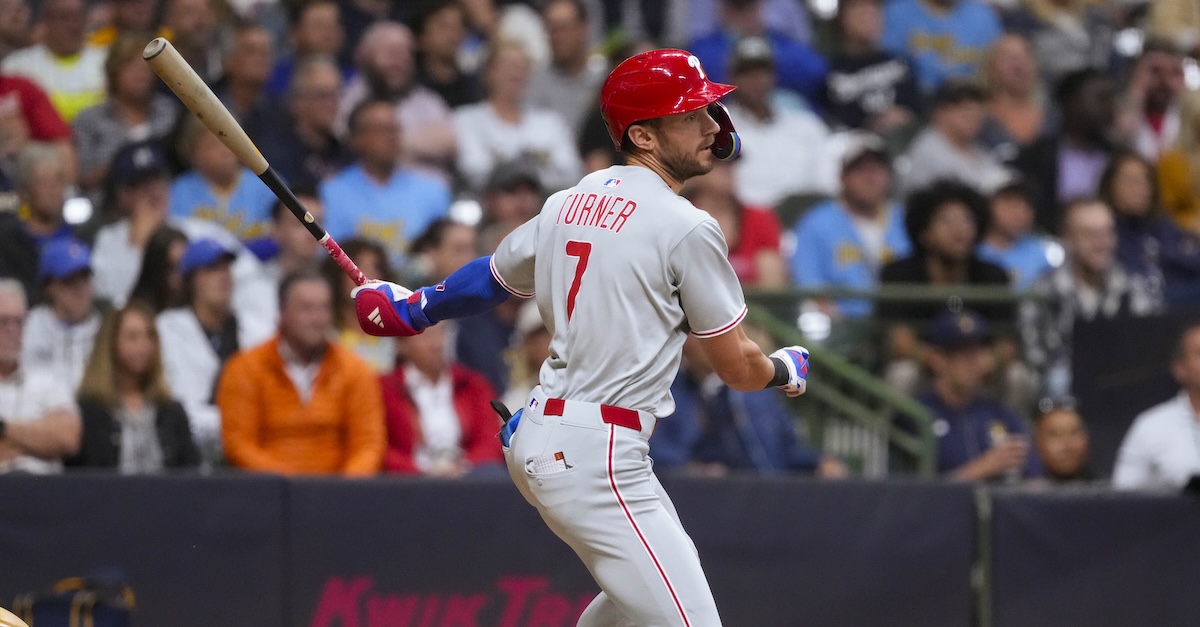
Does anybody want to win the National League batting title? Granted, with all these statheads devaluing batting average and instead offering fancier stats that identify more productive hitters, batting titles ain’t what they used to be. Nonetheless, with less than three weeks to go in the regular season, it bears noting that just one NL qualifier has a batting average of .300 or better, namely Trea Turner — and he just landed on the injured list.
The 32-year-old Turner left Sunday’s game against the Marlins in the top of the seventh inning after running to first base, where he was safe on a throwing error by shortstop Otto Lopez. He felt his right hamstring “grabbing on me,” as he described it afterwards, and was replaced by a pinch-runner. An MRI on Monday showed that he’d suffered a Grade 1 hamstring strain — thankfully not as serious as the Grade 2 left hamstring strain that knocked him out of action for six weeks last season; the Phillies think he could be back after just a 10-day IL stint. Even so, the move came on the same day that the team also placed third baseman Alec Bohm on the IL due to a cyst in his left shoulder; suddenly the Phillies are down half an infield. Luckily for them, they now own an nine-game lead in the NL East.
Thanks in large part to a 4-for-5 night on Friday, Turner is currently hitting .305/.356/.458 (125 wRC+). That’s the highest his batting average has been since June 17 (.308); he was as low as .281 as recently as August 13 but had been on fire over the past four weeks, batting .420/.448/.620 (197 wRC+) since then to overtake Will Smith (who at the time led the NL at .312), Xavier Edwards (.308), Freddie Freeman (.300) and everyone else vying for the title. Turner already has a batting title, having led the NL with a .328 mark in 2021. Read the rest of this entry »
I’m not going to act like Byron Buxton has been healthy all year or anything. He’s already had two IL stints this season for two unrelated injuries, and just this week he missed a game after being hit in the thigh with a pitch. This isn’t a single nagging, career-altering injury; this is a man who just can’t catch a break. Or who can’t catch without breaking, rather.
But this is about as close to a healthy Byron Buxton season as we’re likely to see. The 31-year-old has figured in 109 of Minnesota’s first 144 games and collected 467 plate appearances in those games, putting him on pace to qualify for the batting title for just the second time in 11 big league seasons. And he’s made the most of that extended run of playing time: .271/.332/.562 with 30 dingers and 21 steals. That comes out to a wRC+ of 140 (tied for 10th among qualified hitters) and 4.7 WAR.
For all intents and purposes, this is a full season. Which is not something you can take for granted where Buxton is concerned. Read the rest of this entry »
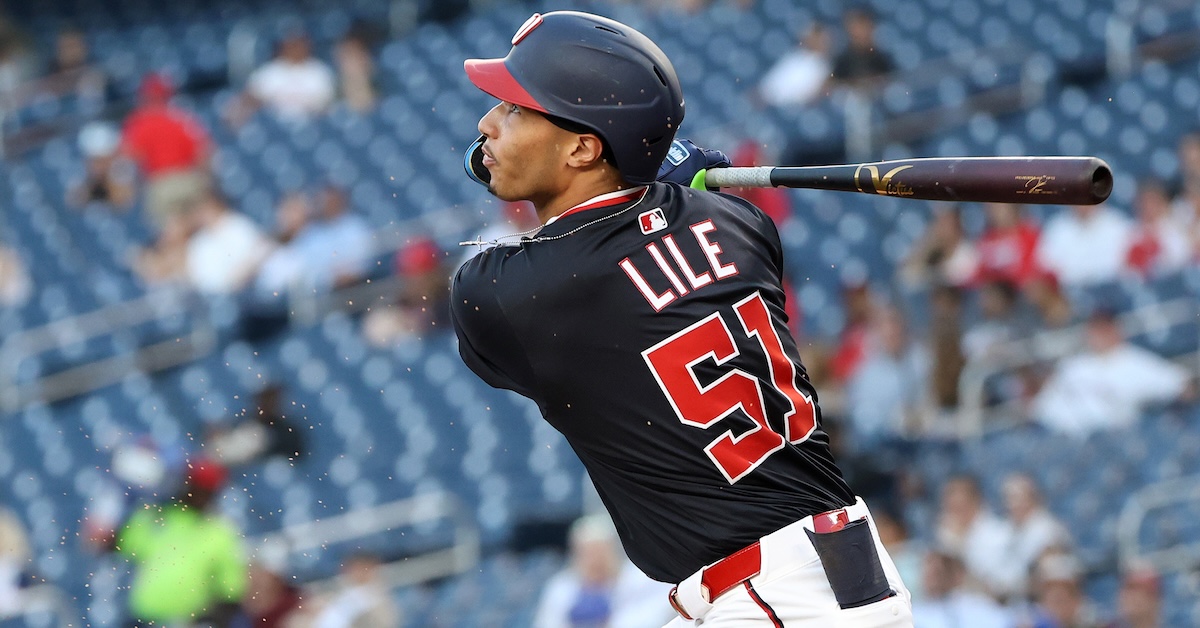
Daylen Lile has been swinging a hot bat. Over his last nine games, the 22-year-old outfielder is 16-for-37 with a double, four triples, and two home runs. Moreover, he’s been one of the top position player rookies in the National League this season. Since debuting with the Washington Nationals in late May (and subsequently receiving a second call-up after a 10-day return to the minors in June), Lile has a 114 wRC+ to go with a .282/.327/.450 slash line over 286 plate appearances. His 74 base knocks include 13 two-baggers, eight three-baggers, and five round-trippers.
How well he’ll perform going forward is a good question. Ranked fifth with a 45 FV when our Nationals list came out in early July, the 2021 second round pick out of Louisville’s Trinity High School was described by Eric Longenhagen as a player whose “most important attributes are his hand-eye coordination and his bat control.” Our lead prospect analyst went to say that he has Lile “graded as a contact-oriented platoon bat.”
The youngster’s left-handed stroke did a lot of damage — albeit not of the fence-clearing variety — down on the farm. In 47 games between Double-A Harrisburg and Triple-A Rochester, Lile slashed .328/.377/.503 with four home runs and a 143 wRC+ over 213 plate appearances. That he’s heated up since getting off to a slow start in the bigs — a 56 wRC+ and a .571 OPS through his first 20 games — isn’t exactly a surprise. Read the rest of this entry »
Every morning, I go to FanGraphs and pull up a few leaderboards. One of my favorites these days shows trailing 30-day plate discipline statistics. Ever since Michael Harris II dug himself a huge hole by swinging at everything and then dug himself out of it by swinging some more, I’ve been checking to see whether he’s reined in his swing-first tendencies. Never fear, he’s still up there hacking — his swing percentage ranks 18th in the majors over the last month — but this isn’t an article about Harris. Here are the top 10 hitters in baseball by swing percentage over the last 30 days:
This generally isn’t a ranking you want to be at the top of. Ezequiel Tovar is on there because he’s never seen a slider he doesn’t like. In the aggregate, this group is hitting horribly over the last month. But there are two exceptions to that statement. Ozzie Albies is having a resurgent stretch, and as you can see from his low swinging strike rate, he’s operating pretty differently from the rest of this group. That’s neat, but Albies also isn’t the focus of today’s article. No, that would be Bryce Harper, who seems to defy everything I know about patience and power.
Sluggers wait for their pitch. I’ve known that for as long as I’ve followed baseball. I grew up on Barry Bonds’ perfect idea of the zone, A-Rod and David Ortiz taking tough pitches off the outside corner, Albert Pujols walking more often than he struck out. And this isn’t some SEAGER issue, either. That metric is about measuring controlled aggression, the ability to swing frequently without bad chases. Corey Seager’s career chase rate is 27.1%. The last time Harper showed that much restraint was 2018. How does he do it?! Read the rest of this entry »


 Dan Szymborski: mesdames et messieurs, bienvenue, nobles FanGraphiers et vénérables sabermétriciens!



 Sponsor Us on Patreon
 Give a Gift Subscription
 Effectively Wild Subreddit
 Effectively Wild Wiki
 Apple Podcasts Feed
 Spotify Feed
 YouTube Playlist
 Facebook Group
 Bluesky Account
 Twitter Account
 Get Our Merch!