Archive for Daily Graphings

Salad Jays: Ontario Upstarts Upset Dodgers in Game 1

Dan Hamilton-Imagn Images

The Blue Jays and Dodgers players arrived at the World Series with wildly different points of view. The Dodgers are the seasoned defending champs with multiple former MVPs and Cy Young Award winners, dealing with the gravity of global expectations. The Blue Jays, though they have a few vets with World Series experience, are mostly a legion of talented upstarts who’ve reached unfamiliar heights. They also bear the weight of a city (and perhaps an entire country) that has waited three decades to return to the World Series. In a raucous Rogers Centre atmosphere in Toronto, the Jays harnessed the energy of that weight and used it to hammer the crap out of the Dodgers in a decisive 11-4 Game 1 victory. Read the rest of this entry »


The Alarming Stillness of Shohei Ohtani

Kiyoshi Mio-Imagn Images

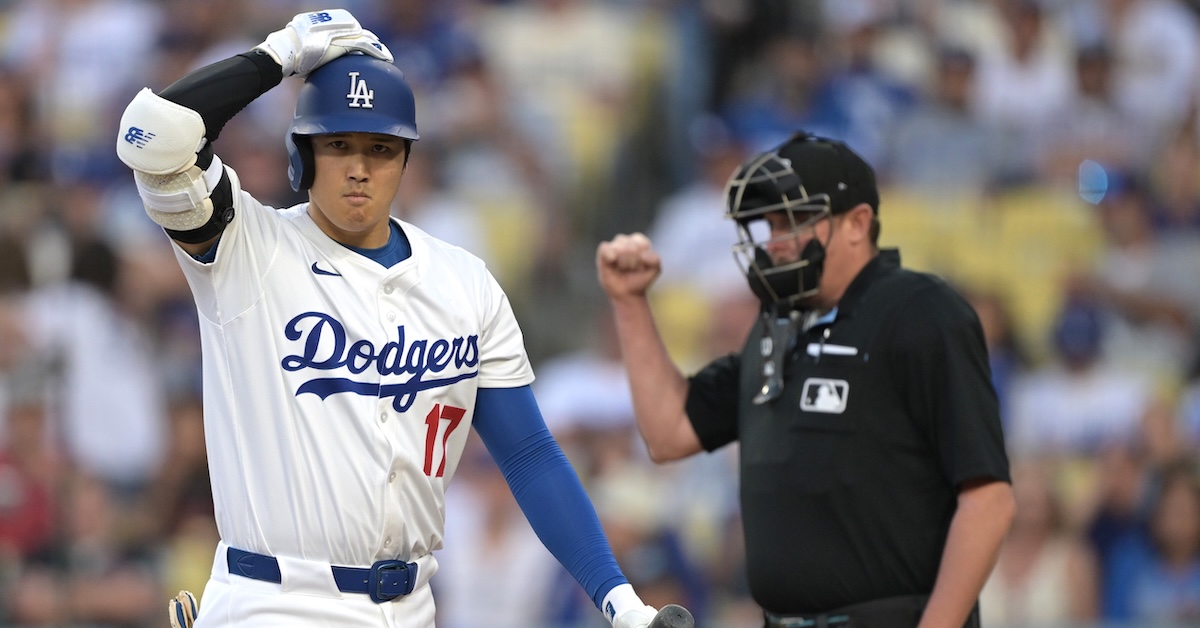
Sometimes Shohei Ohtani pulls his elbows gently to the left. He stands there at the plate still as a statue, the bat way out in front of him and his arms spread wide like they’re wrapped around an invisible trash can lid. Sometimes, every once in a while, he’ll gently rock the whole package – the elbows, the invisible trash can lid, the handle of the bat, his broad shoulders – to the left, back toward the catcher, the bat head dipping to describe a quiet circle in the air. And then he rocks the whole package to the right again, just as gently, toward the pitcher. It’s a matter of an inch or two. It’s the only sign that he’s human.

Once he’s settled into his batting stance, that little reset, rocking back and then forward like he’s absorbing a wave that no one else on the field is attuned enough to feel, is the only movement Ohtani will make. He doesn’t have a bat waggle. He doesn’t flex and unflex his fingers like Max Muncy. He doesn’t flare his back elbow like Bobby Witt Jr. He doesn’t rock his shoulders like Alex Bregman, lean back like Rowdy Tellez, twitch his hips like Juan Soto, fire his back knee toward the pitcher like Marcus Semien, or test the dirt with his front foot like Cal Raleigh. He’s a mountain, unapproachable, indecipherable. Read the rest of this entry »


Does Toronto, or Indeed Humanity, Stand a Chance Against the Dodgers Rotation?

Kirby Lee and Michael McLoone-Imagn Images

You can’t win if you don’t score. The Brewers, who scored exactly one run in each game of their doomed NLCS campaign, learned that the hard way. The Phillies scored eight runs in their single NLDS victory — five of those coming as tack-on runs against mopup relievers — and a total of seven in their three losses.

The Dodgers have a 2.45 ERA this postseason. Among 21st century World Series contestants, that’s tied for the third-best mark with the 2012 Tigers, who had three World Series winners in their rotation. The only pennant winners to allow fewer runs per game were the 2001 Diamondbacks (who had a rather famous 1-2 punch at the top of their rotation) and the 2022 Astros, who threw a combined no-hitter in the World Series. Read the rest of this entry »


World Series Preview 2025: No Dominant Strategies

John E. Sokolowski and Jayne Kamin-Oncea-Imagn Images

This October, the biggest-spending, best-run franchises in baseball have been flexing their muscles. Case in point: The team with the largest TV audience in the game, one with a monopoly on an entire country’s fandom and a huge payroll to match, a team that takes over opposing stadiums on “road trips” — that team is headlining the World Series. There, on the biggest stage in the sport, they’ll take on the Los Angeles Dodgers.

Oh, you thought the Toronto Blue Jays were David facing the Dodgers’ Goliath? Get out of here. The Jays are a Goliath, too. They have a top five payroll, just like the Dodgers. Of the nine hitters, four starters, and three relievers I expect to play the biggest roles for Toronto this series, just four are homegrown. They’ve filled in the gaps with canny additions in free agency and made excellent trades to bolster their roster even further. Their ace and their leadoff hitter were both high-profile free agents. They have literally Max Scherzer, the embodiment of a well-paid veteran.

That’s not to say that Los Angeles is punching up here. The Dodgers’ best players need little introduction. Shohei Ohtani. Mookie Betts. Freddie Freeman. Blake Snell. I could keep writing one-name sentences for quite a while before I ran out of stars to highlight. Sure, all of Canada roots for the Jays, but all of Japan roots for the Dodgers, and Japan is three times as big by population. California is the size of Canada, for that matter, and there are a few Dodgers fans there, too. In fact, the Dodgers are an even bigger Goliath than the Jays, but that doesn’t make Toronto any less of a big-market club. Read the rest of this entry »


A Loss Only Mariners Baseball Could Cure

Steven Bisig-Imagn Images

I am not a Mariners fan. I have never been a Mariners fan. I have no intention of becoming a Mariners fan. But the first major league game I ever attended was, in fact, a Mariners game. Here’s what I remember from that game: It took place on July 30, 1998 in the Kingdome. It lasted 17 innings and stretched into the following day. We were sitting on metal bleachers, pretty high up. I knew that some of the big names on the Mariners that year were Ken Griffey Jr., Alex Rodriguez, Randy Johnson and Jay Buhner. I spent most, if not all, of the game reading a book because I absolutely did not care about baseball. That’s it. I know that isn’t much, so here’s some photo proof that I was actually there:

Me and my brother at a Mariners game on July 30, 1998. Our parents are seated directly behind us. The other people in the photo are family friends.

I’m the nine-year-old girl on the left and the only one not wearing Mariners gear. Again, I have never been a Mariners fan. The kid next to me is Roger, my 13-year-old brother (yes, that oversized manchild was really only 13, I triple-checked the math). He was the reason we were at the game and the reason I could name a whopping four Mariners. Read the rest of this entry »


Arizona Fall League Prospect Stock Check-In

Hudson Leach Photo: Eric Longenhagen

Here in Arizona we are now through two weeks of play in the Fall League, with some schedule alterations (a few days of cancellation and a doubleheader makeup effort Tuesday) caused by the impact of tropical moisture coming up through Mexico’s Pacific Coast. Though roughly 60% of the slate remains, there are already some individual players who have moved the scouting needle either for me, or for the many folks here braving Bell Road and walk-prone pitching to sharpen their club’s understanding of these guys. I’ve pushed a bunch of updates to the 2025 Fall League tab on The Board, and below have a Map Key so you can quickly parse the basics of those updates, as well some scouting notes on the players whose grade or projection has changed.

Trend Column Map Key
You’ll notice the “Trend” column on The Board. There are several (mostly self-explanatory) symbols there to give you an idea as to the way a player has looked. The “Up” arrow indicates someone has played well enough, or looks different enough, for me to have upped their FV grade from prior reporting. It’s possible the upward trend will continue throughout the Fall and that the player’s grade increases yet again during offseason org list work. In the cases where the player is struggling so badly as to have earned a “Down” arrow, I haven’t nerfed their FV grade at this time because, historically, there are lots of great players who struggled in the AFL because of fatigue, indifference, or some other reason independent of their talent.

The target “🎯” signifies either players whom I haven’t seen yet, or players who might be Up arrow guys if they reinforce a good early look with more of the same. At a certain point (like a weekish from now) the games I decide to attend on a given day will be dictated entirely by who is left on my target list. The “New” tag indicates players who weren’t on The Board previously, and the Band-Aid “🩹” designation indicates either players whom I haven’t seen, or those who aren’t playing due to injury. Read the rest of this entry »


The Playoffs Have Featured an Unusually High Number of Bunts

Benny Sieu-Imagn Images

It’s alright. I’ve run the numbers, and you’re not imagining it. People really are bunting more during the playoffs. You really have been screaming “WHY ON EARTH WOULD YOU EVEN THINK ABOUT DROPPING DOWN A BUNT RIGHT NOW?” at your television more often than usual. Your neighbors have noticed. The homeowners association is going to get involved. This is an intervention.

But you’re not wrong. So far, 1.1% of all postseason plate appearances have ended with a bunt. That’s 0.4 percentage points above the regular season mark of 0.7%, an increase of 57%. It’s also the highest postseason bunt rate since 2017. Not only are we seeing more bunts than we did in the regular season, we’re seeing more postseason bunts than we have in years! That 0.4-point gap is the highest we’ve seen since at least 2008.

Read the rest of this entry »


How I Voted for the 2025 Fielding Bible Awards: Outfield, Pitchers, and More

Brad Penner and Eric Canha-Imagn Images

Yesterday, I published the first half of my votes for this year’s Fielding Bible awards, which will be released at 2 PM ET today. This morning, I’m going to cover my ballots for the three outfield positions, as well as the pitchers, multi-positional defenders, defensive player of the year, and defensive team of the year. Update: the awards have been handed out. Winners are denoted below by an asterisk.

If you’re curious about the methodology I used to help guide my voting, you can read about it in yesterday’s article, but here’s a bite-sized refresher: I used a weighted blend of DRS, FRV, and DRP (the three flagship public defensive metrics), with the weights based on how well each metric did on reliability and consistency. I created different weights for catcher, first base, the non-first-base infield positions, and the outfield. That gave me an initial rough order. From there, I used my own expertise, both in terms of deeper statistical dives on individual players and the copious amounts of baseball I watched this year, to assemble my final rankings. I deferred to advanced defensive metrics when the gaps were big, but for close calls, I leaned heavily on my own judgment.

That’s the kind of explanation that I have to put in front of any article outlining my ballot; if you don’t know what I’m looking for, my votes wouldn’t make as much sense. With that out of the way, we can get to the good stuff: the actual players who played the defense I’m writing about. So let’s get right to my last seven ballots — it’s a voluminous set of awards! Read the rest of this entry »


How I Voted for the 2025 Fielding Bible Awards: Infield

Sam Greene/The Enquirer-USA TODAY NETWORK, Peter Aiken and Tim Vizer-Imagn Images

Last year, Mark Simon of Sports Info Solutions asked me to vote on the Fielding Bible awards. If you’re not familiar with them, they’re my preferred defensive award, created by John Dewan and SIS in 2006. They’re a Gold Glove equivalent for the major leagues as a whole, with one award given out per position. Members of a panel made up of a variety of baseball experts vote for five players at each spot; there are also additional awards for best multi-position defender, defensive player of the year, and defensive team of the year. I’m happy to say that Mark was kind enough to ask me to participate again this year. The results will be released tomorrow, October 23, at 2 PM ET. Update: they’ve now been handed out. Winners are denoted below with an asterisk.

Voting for a national award is a prestigious honor, and this particular award carries extra meaning for me. The list of panelists is a who’s who of the writers and commentators who got me into baseball. Peter Gammons is a frequent voter, for goodness sake. Bill James, the godfather of sabermetrics, was an inaugural panel member. The founder of Strat-o-Matic votes! I absolutely wouldn’t be doing this job today if I hadn’t spent whole summers as a kid playing my All-Stars against my dad’s squad in that formative simulation. Voting for this award has been a dream come true.

Last year, I spent some time talking to MLB Chief Data Architect Tom Tango about the proper way to think about the constellation of reputable advanced defensive metrics I had to choose from when assessing players. It’s a veritable acronym soup out there. There’s DRS, FRV, and DRP, as well as legacy and component metrics like UZR, OAA, RDA, and Total Zone. Each of these systems attempts to measure defense quantitatively. All of them have their merits, and all of them do a fairly solid job of what they say on the label, as it were. On the other hand, they don’t always agree. As an example, Zach Neto was either 13 runs above average (DRS), three runs below average (FRV), or roughly average (DRP) in 2025. Confusing!

Neto is hardly the only player to fall into this camp. That’s part of the reason there are so many defensive systems, in fact; if they all said the same thing, there would be no need for this dizzying array of options. Each system has its own methodology, and measures success and failure using its own definitions. A holistic, overarching view of defense requires weighting each of these metrics carefully and then coming to an overall view of each player based on each system’s particular merits. To make matters even more confusing, each “system” is itself multiple systems specialized for individual positions. The first base model and the left field model clearly can’t be the same, and don’t even get me started on catching.

I’ll spare you the nitty gritty of how I handled this difficult puzzle (last year’s version of this article offers a deep dive into my methods if you’re interested), but I created weighted ranking scores for each position based on the relative stability of the metrics and used that to create my initial rankings. From there, I used my own expertise and judgment to move players around from their initial ordering. I tried to have a light touch overall, though. No amount of eye test vibes could overrule the fact that Heliot Ramos grades out as one of the worst defenders in the major leagues (for the record, his defense fails the eye test, too). I considered past defensive value because I know that single-season defensive statistics are noisy, but mostly as a tiebreaker; I’m attempting to vote for the best defenders in the major leagues in 2025, not the best defenders of the last few years.

I think this process did a good job of combining the best information that publicly available defensive systems can produce with a critical, evidence-focused eye on the game. I watch a ton of baseball, and I also spend quite a bit of time thinking about how to measure player skill, and the limits of doing so. I’m just talking my own book here, but I really do believe this is the best way I can determine who played the best defense in baseball this season. So without further ado, let’s look at my infield ballot. Read the rest of this entry »

Kevin McGonigle Talks Hitting

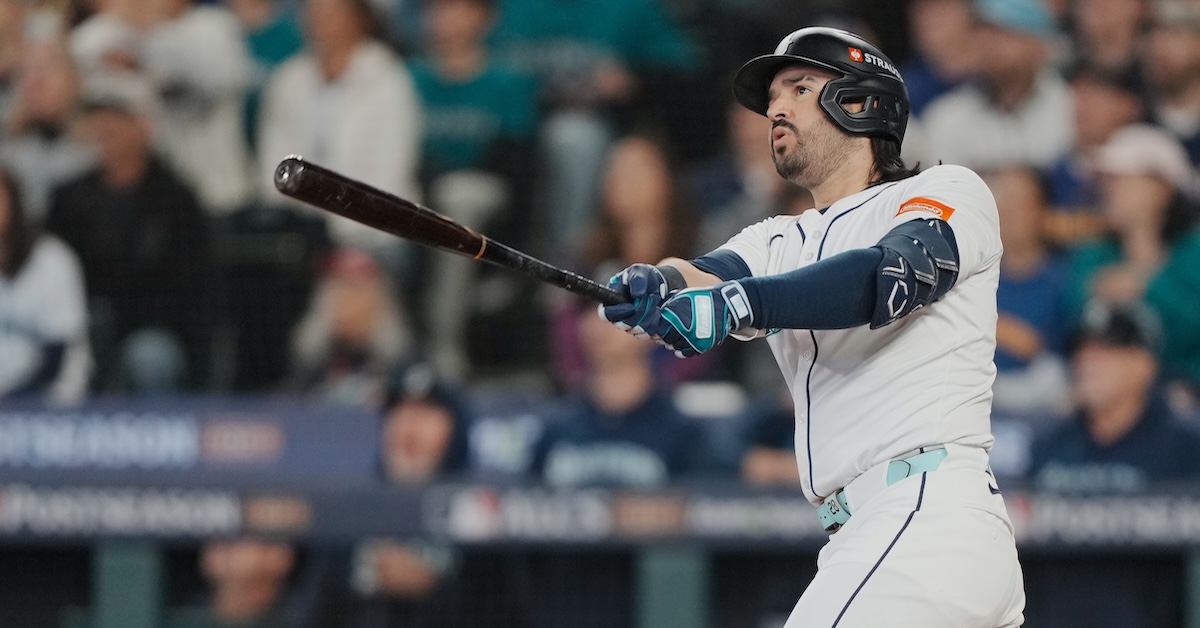
Kevin McGonigle is an elite prospect, and his bat is a big reason why. Playing across three levels in the Detroit Tigers organization — topping out at Double-A — the 21-year-old shortstop/third baseman slashed .305/.408/.583 with 19 home runs and 182 wRC+ over 397 plate appearances in 2025. Ranked third on The Board behind only Konnor Griffin and Jesús Made, McGonigle has been described by Eric Longenhagen as having “real juice in his hands” and a swing that is “geared for launch.” Built to bash baseballs, McGonigle’s left-handed stroke is both compact and lethal.

Currently with the Arizona Fall League’s Scottsdale Scorpions — he’s in the desert primarily to work on his defense — McGonigle has a bright future regardless of where he ends up in the infield. Longenhagen feels that his best fit might be second base. But again, there is juice in his hands. The bat is McGonigle’s carrying tool, and it promises to carry him a long way.

McGonigle sat down to talk hitting prior to a recent game at Scottsdale Stadium.

———

David Laurila: How have you evolved as a hitter? For instance, if I looked at video from the time you signed and compared it now, would I see the same guy?

Kevin McGonigle: “You’d see the same swing. I’m a little bit bigger now, obviously, but the swing hasn’t changed. It’s been the same since I was 10 years old, to be honest with you. That’s the way my body naturally wants to move, and the best way I can explode on a baseball, so I try to keep doing the same thing I’ve done since I was younger.”

Laurila: How does your body naturally move?

McGonigle: “I’ve got the toe tap, and I’m in my legs more than a lot of guys are at the plate. I pretty much see ball, hit ball, and try to… not take the same swing. I feel that you’re going to have a different swing on every pitch. But I try to keep the same toe tap, the same everything.”

Laurila: While you’re continuing to do what comes naturally, you also have talented hitting instructors to work with. How are you balancing that?

McGonigle: “What I like about the Tigers is that they’re not really hands-on unless you have questions. I go to them for little pieces, like routines or drills that I want to do. One big thing for me was bat speed, so they put me on a bat-speed program last offseason. That really helped me with power this year. Bat-to-ball, of course. Gap-to-gap power. I’m trusting in them — the Tigers and all the coordinators — because they’re there to help you get better and better each day.”

Laurila: What is your approach in terms of where you’re looking to hit the ball?

McGonigle: “It depends on who is on the mound. If a good lefty is out there, I’ll think left-center gap and then just react to his offspeed and pull it. Same thing with right-handers. If it’s a guy throwing really hard, like upper-90s, maybe I’ll think right-center. That’s the farthest I’ll go with a heater. Then, changeup, curveball — whatever secondary he throws — pull it down the line. Top hook it in the corner is what I like thinking.

“When I’m on, I’m mostly hitting balls hard in the right-field gap or down the right-field line. That’s even with pitches dotted away. I’ll still be able to get under it and pull it. There does comes a time and place when I want to let the ball travel, though. With two strikes, I try to use all parts of the field.

“I’m also always sitting on fastballs and reacting to offspeed from there. I don’t like sitting on other pitches, really. If it’s a lefty that just spams sweepers, I’ll sit sweeper, but that’s about it. For me, it’s mostly all reaction.”

Laurila: My impression is that you fit into the KISS category — Keep It Simple, Stupid — yet you think about hitting quite a bit. Is that accurate?

McGonigle: “Definitely. I mean, if I’m hitting the ball hard and it’s going right at somebody, there’s nothing you can do about it. So, my main thing is to just find the barrel. That’s it. If you find the barrel, it’s a win. If you don’t, then get him next time.”

Laurila: Coming up from amateur ball and and through different levels of pro ball, you’re basically the same guy, but with more reps under your belt…

McGonigle: “Yeah, just seeing more pitching. In high school, I didn’t really see 95 [mph] really at all. Once I got a feel for that, I had to get used to guys having better offspeed. They like to throw it in leverage counts, and that’s one thing I really needed to work on this year. Last year I got a lot of fastballs to hit, and this year they’re flipping in 3-0 sliders, 3-1 sliders, changeups in 0-0 counts.

“Getting my hack off on 0-0 counts when I get offspeed that is middle-middle, or it’s a get-me-over offspeed… if I swing and miss, so what? I’m down 0-1. But if I put a barrel on it, then it’s a win. I’m more aggressive now than I was last year.

“If he’s a fastball-changeup guy who throws a lot of changeups, I’ll still sit fastball. A lot of times I’m going to look up. The changeup is going to start there, then have a little bottom to it and go to the heart of the plate. I’m kind of tunneling where I want the pitch to start.”

Laurila: Has bat-speed training helped you react better to heaters when you’ve been expecting something offspeed?

McGonigle: “Yeah. I’d say there were a few times this year that I was sitting offspeed, a guy threw a heater down the middle, and I was still was able to hit it hard to left field. Having a quicker bat has definitely helped. I’m able to protect on two-strike counts. If I’m beat on a fastball, I can at least get a bat on it and foul it off, give myself life to hopefully win that two-strike count.”

Laurila: How much do strikeouts matter? That was something Riley Greene struggled with this year, even while putting up good numbers.

McGonigle: “It’s not a great feeling. I mean, Riley Greene is a great baseball player. I’m looking forward to hopefully one day sharing a field with him. He wouldn’t be in the spot he is right now if it wasn’t for the way he plays baseball, and the way he hits. Strikeouts aren’t the best thing in the world, but he also performed in all the different aspects of the game. The whole strikeout thing… I think it is a big deal, but not as big as everyone thinks it is.”

Laurila: Outside of defense, what do the Tigers want you to work on this coming offseason?

McGonigle: “We have exit meetings with our hitting coordinators — mine will be after [the AFL] — and off the top of my head, I don’t know exactly. But the curveball is one pitch that I struggled with this year. I was either under it, or on top of it.”

Laurila: Why was that?

McGonigle: “Some of it was timing, but some of it was swinging at the wrong curveballs. If it’s low, that’s where the pitcher wants it, and the high ones would kind of fool me. A pitcher would go up top with a curveball, and I would clip it back, whereas that’s a pitch you want to hammer. I’m so used to training it down in the zone, where pitchers usually want to get it, but now some guys are trying to get it up top. I need to work on that, on hitting offspeed up top.”

Laurila: Any final thoughts on hitting?

McGonigle: “There’s not a perfect swing. Every swing is going to be different. If it’s a low pitch, if it’s a high pitch, if it’s away… but you see a lot of guys trying to chase that perfect swing. That’s hard to do when you have a guy throwing 99 and it’s running 20 inches, or sinking 20 inches. My thought is just, ‘Go up there and get the bat to the ball.’ Keep it that simple. Don’t try to chase the perfect swing. I want my swing to be adjustable. Simple and adjustable.”

——

Earlier “Talks Hitting” interviews can found through these links: Jo Adell, Jeff Albert, Greg Allen, Nolan Arenado, Aaron Bates, Jacob Berry, Alex Bregman, Bo Bichette, Justice Bigbie, Cavan Biggio, Charlie Blackmon, JJ Bleday, Bobby Bradley, Will Brennan, Jay Bruce, Triston Casas, Matt Chapman, Michael Chavis, Garrett Cooper, Gavin Cross, Jacob Cruz, Nelson Cruz, Paul DeJong, Brenton Del Chiaro, Josh Donaldson, Brendan Donovan, Donnie Ecker, Rick Eckstein, Drew Ferguson, Justin Foscue, Michael Fransoso, Ryan Fuller, Joey Gallo, Paul Goldschmidt, Devlin Granberg, Gino Groover, Matt Hague, Andy Haines, Mitch Haniger, Robert Hassell III, Austin Hays, Nico Hoerner, Jackson Holliday, Spencer Horwitz, Rhys Hoskins, Eric Hosmer, Jacob Hurtubise, Tim Hyers, Walker Jenkins, Connor Joe, Jace Jung, Josh Jung, Jimmy Kerr, Heston Kjerstad, Steven Kwan, Shea Langeliers, Trevor Larnach, Doug Latta, Dillon Lawson, Brooks Lee, Royce Lewis, Evan Longoria, Joey Loperfido, Michael Lorenzen, Mark Loretta, Gavin Lux, Dave Magadan, Trey Mancini, Edgar Martinez, Don Mattingly, Marcelo Mayer, Hunter Mense, Owen Miller, Paul Molitor, Colson Montgomery, Tre’ Morgan, Ryan Mountcastle, Cedric Mullins, Daniel Murphy, Lars Nootbaar, Logan O’Hoppe, Vinnie Pasquantino, Graham Pauley, David Peralta, Luke Raley, Julio Rodríguez, Brent Rooker, Thomas Saggese, Anthony Santander, Drew Saylor, Nolan Schanuel, Marcus Semien, Giancarlo Stanton, Spencer Steer, Trevor Story, Fernando Tatis Jr., James Tibbs III, Spencer Torkelson, Mark Trumbo, Brice Turang, Justin Turner, Trea Turner, Josh VanMeter, Robert Van Scoyoc, Chris Valaika, Zac Veen, Alex Verdugo, Mark Vientos, Matt Vierling, Luke Voit, Anthony Volpe, Joey Votto, Christian Walker, Jared Walsh, Jordan Westburg, Jesse Winker, Bobby Witt Jr. Mike Yastrzemski, Nick Yorke, Kevin Youkilis