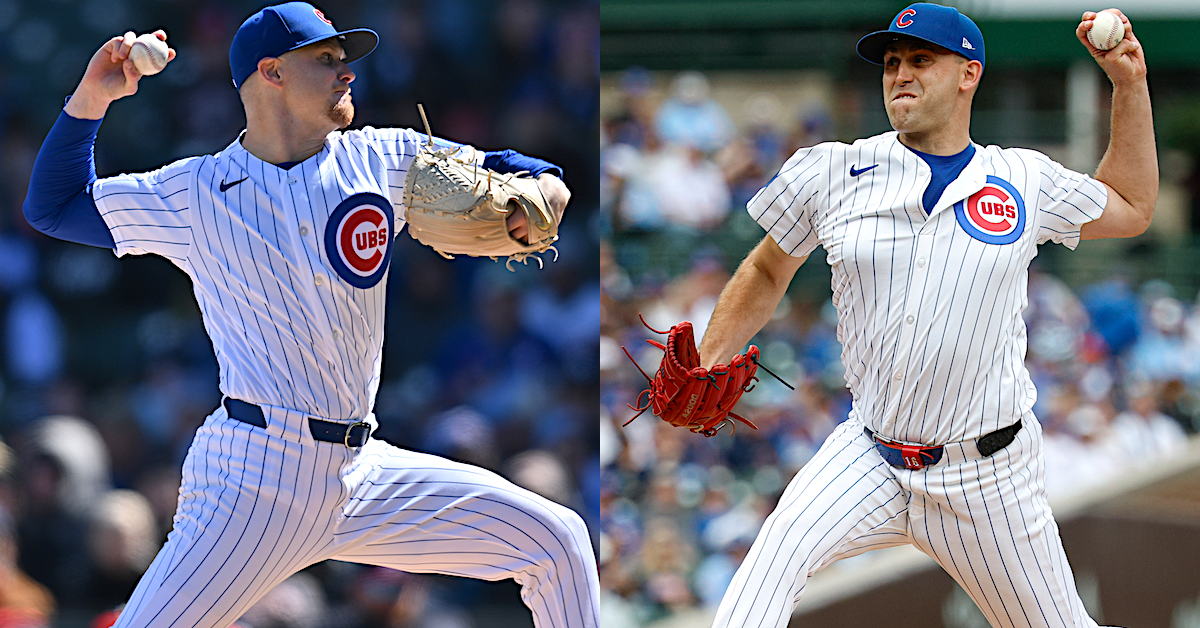
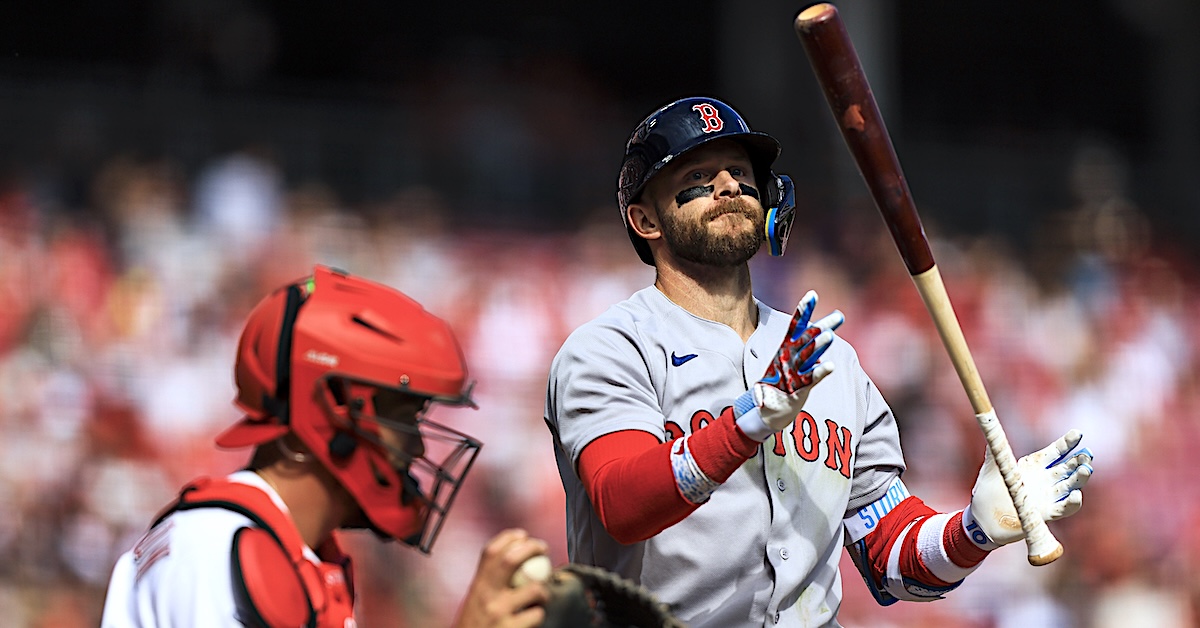
This isn’t how they drew it up on the North Side this winter. The Cubs won 92 games in 2025, and then they made some additions in the winter. The Brewers, meanwhile, subtracted. Chicago had the best playoff odds of any team in the NL Central, whether you’re talking about our odds, PECOTA’s odds, or pretty much any projection system you can name. The Cubs had exciting rookies, battle-tested veterans, and fun vibes. Surely, they’d sail through 2026.
Nearly two weeks into the season, it’s fair to say that things haven’t gone according to plan. There’s the standings, for one thing: They’re in last place in the NL Central. But this early in the year, only four games separate first and last in the division, so that’s not the biggest problem in Wrigleyville. A bigger concern is that Cade Horton and Matthew Boyd, two of Chicago’s top starting pitchers, hit the IL on consecutive days. Seiya Suzuki hasn’t appeared yet this year, though he’s expected back on Friday.
Horton’s injury looks to be the worst of the two. He left last Friday’s start after feeling forearm discomfort, and after getting some scans over the weekend, he’s seeking a second opinion from Dr. Keith Meister. That ominous turn of phrase doesn’t guarantee a long-term injury, of course, but it’s definitely not a good sign. Pitchers don’t generally seek second opinions from famous surgeons unless there’s a decent chance of surgery.
Boyd was supposed to be the safe option in the Cubs rotation. We had him down for the most innings and the most WAR, the staff ace. His bicep strain might not be all that bad; he noted that he could have pitched through the injury if it weren’t so early in the year. But that’s not really the nature of pitcher injuries, in my experience. Sure, sometimes they’re short. But a guaranteed minimum stay doesn’t exist. I think it’s reasonable to be worried about Boyd’s prognosis until he’s back on a major league mound, even though he seems likely to return far sooner than Horton. Read the rest of this entry »
Mark Grant is one of the game’s most entertaining color analysts. Teamed with play-by-play announcer Don Orsillo, the man affectionately known as “Mud” is a big part of why the San Diego Padres TV booth polled as baseball’s best in Awful Announcing’s 2025 local broadcaster rankings. Now in his 11th season alongside Orsillo, Grant first began working Padres games in 1996. His previous partners in the booth include the legendary Dick Enberg.
Grant was a pitcher prior to becoming a broadcaster, toeing the rubber for six teams across the 1984-1993 seasons, including the Padres, with whom he made 126 of his 233 appearances. All told, he went 22-32 with eight saves and a 4.31 ERA over 638 2/3 innings.
How well does he remember his matchups against certain batters he faced? As I’ve done previously with David Cone, Mark Gubicza, and Jeff Montgomery — those pieces can be found here, here, and here — I decided to find out by challenging him to a career quiz. Not only did he oblige, he supplied fun anecdotes along the way.
I began by asking the pitcher-turned-broadcaster which batter he faced the most times. Read the rest of this entry »
Last week, Dan Szymborski looked at how much a team’s fortunes can change in the first month of the season. That old truism – you can’t win the World Series in April, but you can lose it – turns out to, in fact, be true. Dan’s research found that even teams we think are good – those projected to win 90 or more games – had meaningfully worse results after a bad April, even if their actual talent remained the same.
In other words, those early losses really do count. But I like to look at things from a glass-half-full perspective, so my takeaway was that there’s still plenty of time to fix a bad start, because it’s still early in the season. But how to fix it? That’s a trickier question. Luckily, “that’s a tricky question” is just FanGraphs for “that’s a fun thing to write an article about,” so I’ve got answers for you. Read the rest of this entry »
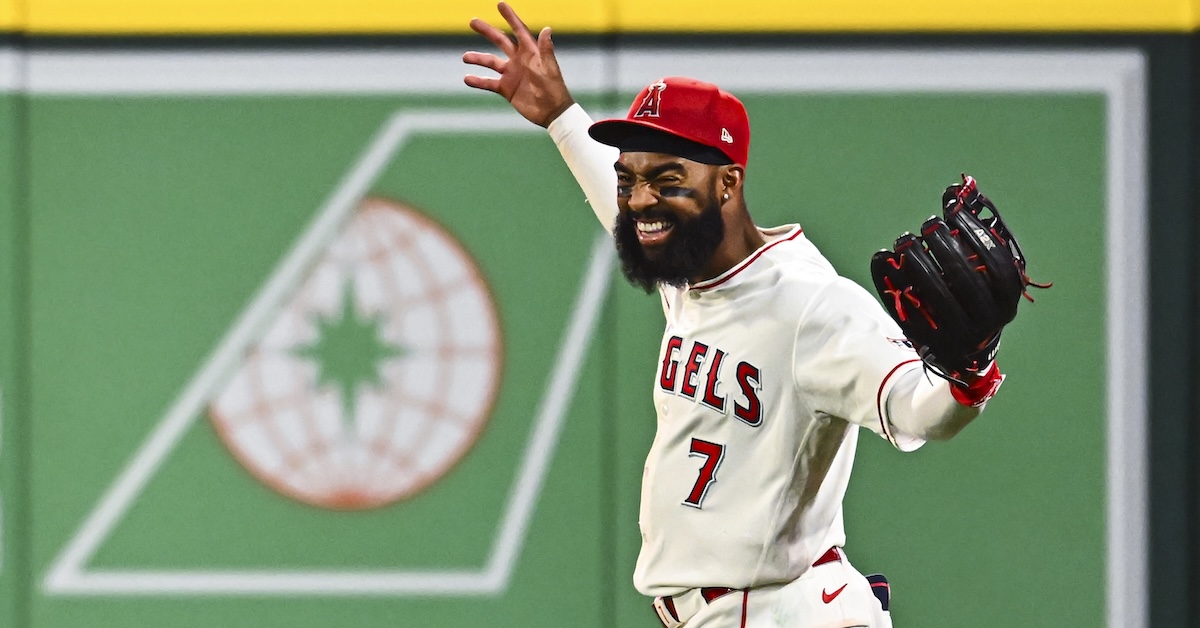
Jo Adell performed a miracle. Let’s turn it into math.
Adell robbed the Mariners of three home runs on Saturday. He got Cal Raleigh in the first inning, Josh Naylor in the eighth, and J.P. Crawford in the ninth. Sports Info Solutions has tracked home run robberies since 2004 and only twice had an outfielder robbed even two home runs in a game — nobody had ever robbed three.
Each catch was crucial. The Angels wound up winning 1-0, with Zach Neto’s leadoff solo shot in the first inning being the only run of the game. That means Adell was thrice the difference in the Angels’ narrow victory.
Win Probability Added doesn’t agree. It suggests Adell overall hurt the Angels’ chances of winning by about 3%. Position players only gain WPA on offense — Adell went 1-for-3 with an irrelevant single — so he didn’t get credit for any of these catches. WPA instead gives all the glory to the pitcher, with the assumption that an out is an out on defense, and the only thing that can be known about an out is who threw the ball (in this case, Jack Kochanowicz, Sam Bachman, and Jordan Romano).
While this assumption makes sense for nearly all plays and scenarios, home run robberies are a bit different. They’re definitive. We know what the outcome was, and we know what the outcome would have been had Adell not intervened.
How much was each catch worth? And how much credit does Adell deserve? Let’s take a look. Read the rest of this entry »
Going into yesterday, Mason Miller had thrown 37 pitches on the season, 19 of them fastballs averaging 101 mph, while another 17 were sliders that elicited a 60.0% whiff rate. There was also one changeup. Delivered to Luis Arraez on a 1-1 count, the ninth-inning offering was wide outside and taken for a ball.
Why did the San Diego Padres closer throw his seldom-used changeup to the three-time batting champ on Wednesday night? Low leverage was certainly a factor; the Friars had scored four times in the bottom of the eighth to turn a 3-1 lead into a far safer 7-1 advantage. It nonetheless represented an outlier for the 27-year-old flamethrower. Over the previous two seasons, only 2.3% of his pitches were changeups.
I asked him about it when the Padres visited Fenway Park on Friday,
“A changeup is a good pitch, but I’m not going to feel comfortable with it if I’m not throwing it,” Miller told me. “I’m picking my spots. There are certain guys it matches up well against. [Arraez] is a guy who isn’t going to swing and miss, so I’m not going to be hunting a strikeout. If I can get softer contact on it… any time you have a guy who isn’t fast and he puts it on the ground, that’s an opportunity for an out.”
Arraez didn’t kill any worms in his matchup with Miller, instead lining a 2-1 fastball to right field for a single. Not that it mattered. The righty proceeded to fan the next three batters, one on a 101.5-mph heater, and two on nasty sliders. While those pitches were pristine, the execution on his lone changeup was another story. Read the rest of this entry »
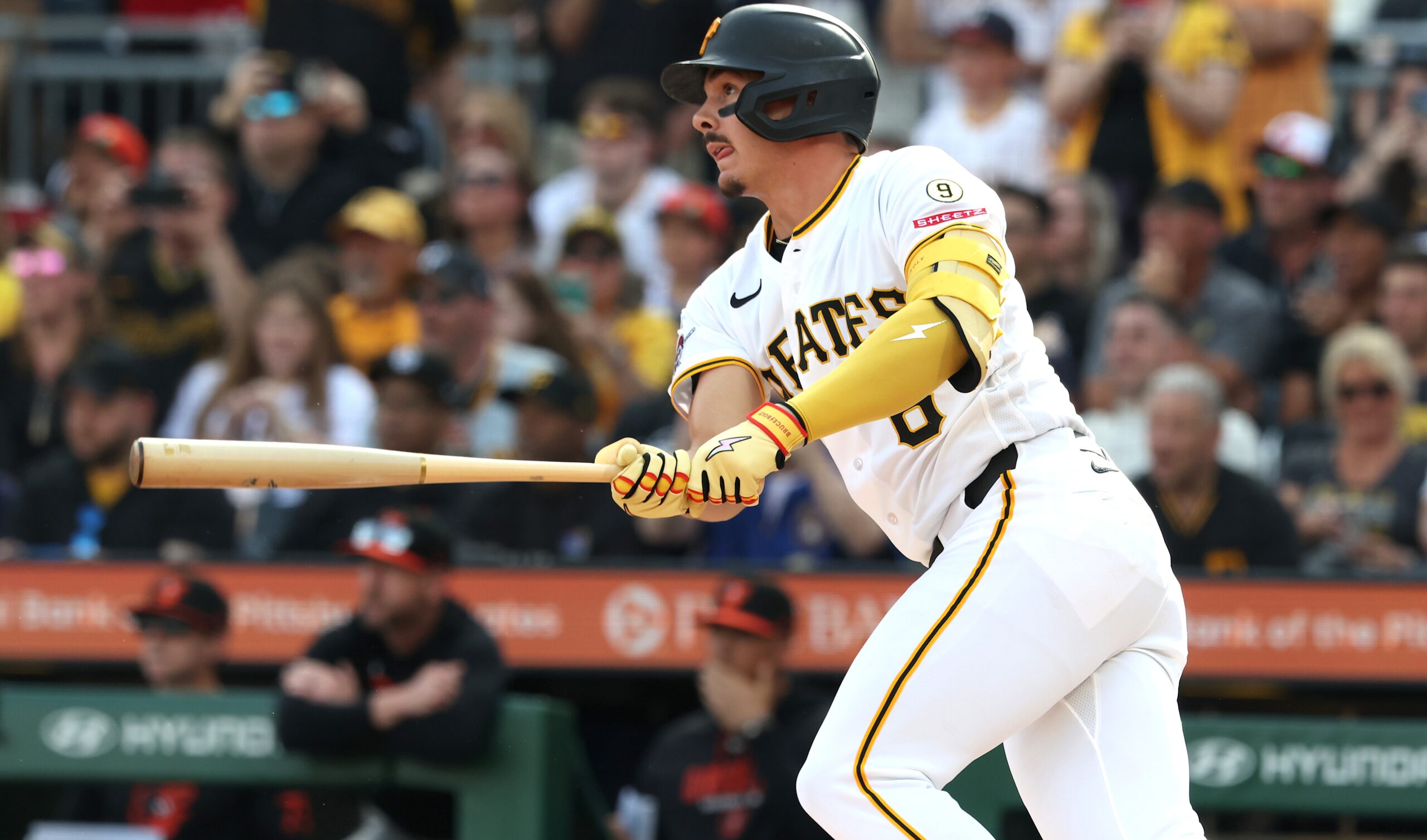
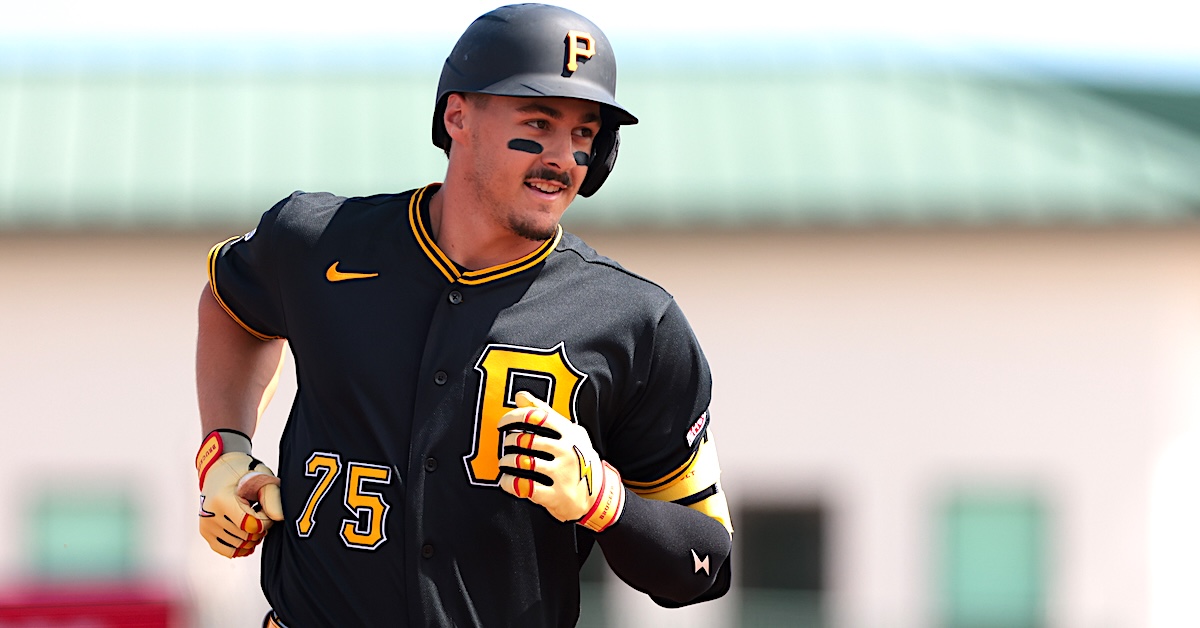
It took all of a week for the Pirates to call up shortstop Konnor Griffin, the top prospect in all of baseball, to make his debut in their home opener Friday afternoon. Batting seventh, Griffin went 1-for-3 with a walk in Pittsburgh’s 5-4 win over the Orioles, with the highlight coming in the second inning. He stepped in with a runner on second and one out against Baltimore right-hander Kyle Bradish. The first pitch was a slider well off the plate that Griffin chased and missed. He took the next pitch, a slider even farther away, for a ball, whiffed at yet another slider low and away for strike two, and barely got a piece of a fourth-straight slider outside the zone to stay alive. Then, finally, he got a pitch to hit, a curveball on the black away. He scorched it into the left-center gap for a double to drive in the first Pirates run of the game. Two pitches later, he showed off his 70-grade speed, blazing around third to score on a single to shallow right field.
If you’re reading this Members only mailbag, you almost certainly know all about Griffin and his tantalizing, franchise-altering potential. Our prospect team described him as a “freaky five-tool player” when they ranked him no. 1 on our preseason Top 100 list and assigned him a 70 FV. He doesn’t turn 20 until the end of this month and immediately raises the floor of this Pirates team significantly, even if he struggles some out of the gate. Michael Baumann wrote about Griffin on Thursday afternoon, and I’d encourage you to read it if you want to learn more about what Griffin brings to the Pirates and why, after just five games at Triple-A, they decided it was the right time for his big league career to begin.
That’s the last you’ll read about Griffin’s debut in this week’s mailbag. Instead, we’ll answer yours questions on the World Series teams with the most and least WAR on their rosters at the time of their Fall Classic, the dropped third strike rule, and players with the same name. But first, I’d like to remind you that this mailbag is exclusive to FanGraphs Members. If you aren’t yet a Member and would like to keep reading, you can sign up for a Membership here. It’s the best way to both experience the site and support our staff, and it comes with a bunch of other great benefits. Also, if you’d like to ask a question for an upcoming mailbag, send me an email at mailbag@fangraphs.com. Read the rest of this entry »
When looking at most April stats, especially the basic ones, I spend a lot of time issuing disclaimers about small sample sizes. After all, any player can do just about anything in 25 or 50 or 100 plate appearances. I’m pretty confident that Joey Wiemer is not going to end the season as the NL MVP, and that Hunter Barco won’t finish the season with the worst WAR in major league history. But conversely, when we’re talking about standings, even if bad/good starts shouldn’t necessarily overconcern us about a player’s future, when it comes to teams, playoffs are determined by wins, which are cumulative numbers with razor-sharp margins. It’s not the end of the world if Cal Raleigh, because of his slow start, finishes with 38 homers instead of his projected 41 (ZiPS DC), but it may doom the Mariners if they underperform their projections by three wins.
The season is just a week old, but there are already sizable impacts in playoff probabilities around the league. To demonstrate this, I ran ZiPS overnight to get the updated playoff odds, so I could compare them to the preseason projections. Six teams have seen their playoff odds change by at least five percentage points. Here’s the full table, as things stand on Friday morning.
It feels incredibly weird to say this but… it’s a good time to be a Pirates fan? Because Konnor Griffin is coming to the majors. He’ll make his major league debut in Pittsburgh’s home opener on Friday.
Griffin was the Pirates’ first-round pick in 2024, ninth overall, and quickly emerged as the no. 1 overall prospect in baseball. A team that’s been as bad as the Pirates, for as long as they’ve been bad, will have some familiarity with the ballyhooed prospect debut, but I’m not sure even they’ve seen anything like this. I was as big a Paul Skenes fan as anyone, and as pumped as I was to see him hit the majors, he’s surpassed even my expectations.
Well, now Skenes is in the majors to stay. So is Bubba Chandler. The Pirates flirted with spending some money this past offseason, and while a 3-3 record is the definition of unremarkable, the Pirates just went on the road and played the Mets and Reds — two of their erstwhile NL playoff rivals — to a draw. The Pirates might be kind of OK. Life hasn’t been this good, genuinely, in more than 10 years.
But Griffin’s debut is the main event. Because as big as the hype around Skenes was, the expectations for Griffin are even greater. Read the rest of this entry »
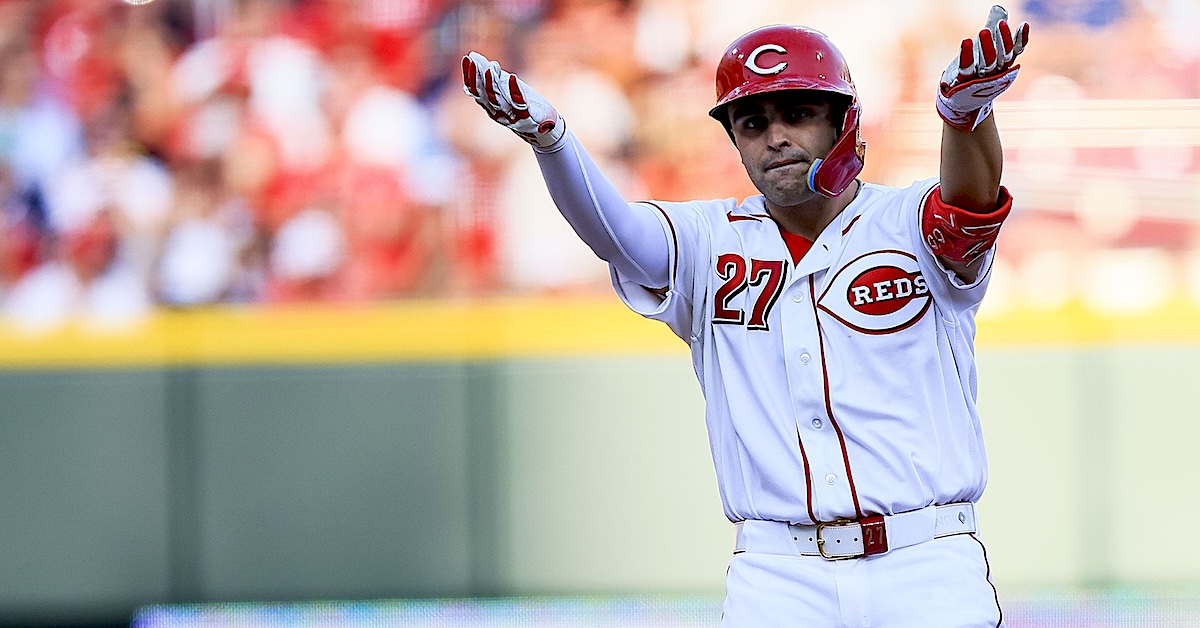
Sal Stewart made a promising showing when the Reds called him up last September, clubbing five home runs in 18 games while helping Cincinnati reach the postseason for the first time since 2020. His 2026 campaign is off to a flying start, as well. Not only did he bank NL Player of the Week honors for the season’s opening week, but his performance underscores the notion — supported by both scouting and statistical projections — that he’s leveled up significantly.
Through the Reds’ first six games, the 22-year-old first baseman has put up video-game numbers, batting .474/.615/.947 (313 wRC+) with two homers in 26 plate appearances. His hot streak began with an eventful Opening Day; while the Reds lost to the Red Sox, 3-0, it was hardly his fault. He went 3-for-4, including a pair of bases-empty doubles, one apiece off starter Garrett Crochet and reliever Garrett Whitlock, as well as a single to right field off Crochet with men on first and second. With third base coach Willie Harris wary of testing two-time Gold Glove winner Wilyer Abreu’s arm, lead runner Matt McLain was held up and ultimately stranded.
Stewart also survived a scare in the fifth inning, when a 110-mph liner off the bat of Roman Anthony hit his left wrist as he tried to backhand the ball. He was shaken up but remained in the game, and reassuringly collected two of his three hits after being drilled. Read the rest of this entry »
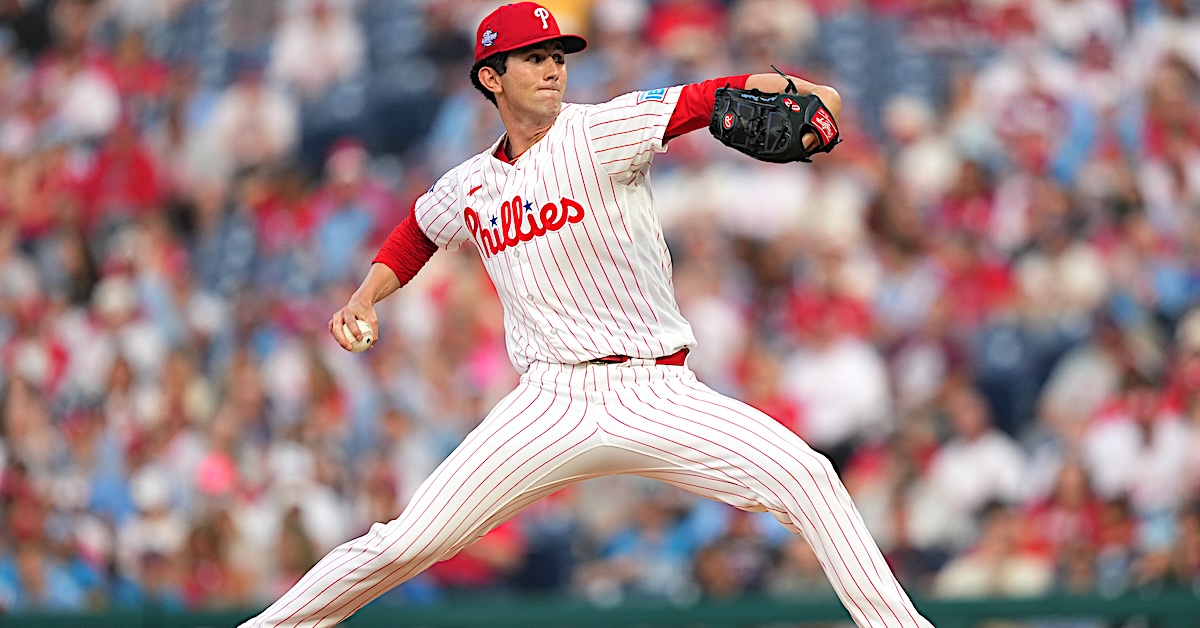
Andrew Painter made his major league debut on Tuesday, as the Phillies were coming off a three-game losing streak. That’s a tough assignment; I know it’s the first week of the season, but that has never stopped Phillies fans — who even in the best of times are always looking for a reason to jump off a bridge — from declaring the team irretrievably cooked.
Not so fast, my friends. Because anyone who’s willing to overreact to a one-game sample in April must be over the moon about Painter.
Painter, who turns 23 next month, was one of the top pitching prospects in the entire sport in the 2022-23 offseason. At age 19, he was promoted to Double-A, where he posted a 2.54 ERA in five starts and struck out 37, while walking just two, in 28 1/3 innings. As 2023 dawned, there was a not-unreasonable expectation that Painter would contribute down the stretch in his age-20 season, perhaps as a bullpen stopper, like a young David Price or Adam Wainwright, or perhaps in the rotation. (Remember, this was before Cristopher Sánchez turned into the world-destroying ace he’s become.)
But Painter’s elbow started barking, and an early hesitation to sending him to get Tommy John surgery led to both 2023 and 2024 being written off. With two years of rust, Painter struggled in 2025, pitching to an ERA over 5.00 across two minor league levels, and the first single-digit K/9 ratio of his professional career. The Phillies pitched well last postseason, but they still could’ve used Painter. He simply hadn’t earned the call-up that he’d seemingly had in the bag since early 2023.
He dropped his arm slot and lost a ton of life off his fastball while returning from Tommy John, but the promise remained. He was no longer the top pitching prospect in baseball, nor the top prospect in the Phillies’ system, but he rated no. 27 overall this past offseason and eighth among pitching prospects, with a 55-FV grade. This is still Philadelphia’s most anticipated rookie pitcher since at least Cole Hamels.
It speaks to the Phillies’ faith in the young right-hander that they did not go out and get anything resembling a like-for-like replacement for the departing Ranger Suarez. With Zack Wheeler on the mend from thoracic outlet syndrome, that left Painter in the big league rotation with no safety net. I genuinely do not know who starting pitcher no. 6 is for the Phillies right now, but I am confronted with the possibility that it might be Bryse Wilson if 40-man roster glut were not a consideration.
So, yeah, there’s a bit of pressure on Painter.
If he was feeling that pressure, you couldn’t tell. Painter, who stands an Ent-like 6-foot-7, strolled serenely to the mound for his first competitive big league action. And as good as the stuff and the results were — don’t worry, I’m getting there — Painter’s composure seemed to impress his teammates most.
But it doesn’t matter how calm a rookie pitcher is if he’s throwing slop and getting shelled. So let’s check Painter’s stuff and results.
Yes, the Nationals’ lineup isn’t that good overall, but it features a few challenging hitters: CJ Abrams, Daylen Lile, and the genuinely capital-D Dangerous James Wood. Joey Wiemer is coming off a run of literally not making an out for 10 straight plate appearances, though it looks like the magic (or quantum ray power) has finally worn off.
The value proposition for Painter is that there’s nothing weird about him. He’s just what an ace looks like. He’s huge, he throws hard, he has a varied arsenal of six pitches… there’s just nothing to talk yourself into on the scouting report.
Painter throws two fastballs, a four-seamer and sinker, both of which sat 94-97 and topped out at 98.7 mph. He hit that figure twice in the first inning, when he was freshest and the adrenaline was surely pumping hardest, but he got back to 98.6 mph in the fourth.
Like a lot of modern starters, Painter has one look for left-handed hitters and another for righties. The platoon advantage works because breaking balls move away from same-handed batters and toward opposite-handed hitters. So pitchers like Painter, who have multiple fastballs and breaking balls, want to work side-to-side against same-handed batters and up-and-down against opposite-handed ones. That means four-seamer, sinker, slider, sweeper against righties, and four-seamer, slider, curveball, changeup against lefties in Painter’s case.
Nationals manager Blake Butera loaded up on the former. With six lefties and two switch-hitters in the lineup, Wiemer was the only right-handed batter Painter faced all evening, so we saw a lot of his four-seamer, slider, curveball, and changeup, and relatively little of his sinker and sweeper.
Painter was kind enough to get at least one strikeout on each pitch from that first group of four, so that you can see all of them in this highlight video.
Painter’s first and last strikeouts came against Wood, and both came from working fastball up, curveball down, to change Wood’s eye level and mess up his timing. He struck out in the fifth inning after taking an 80.6-mph curveball for a strike, and then chasing a 97.2-mph four-seamer up and away.
With the fastball and curveball established, Painter could tunnel his changeup into a middle ground in terms of movement and speed. The scouting report on Painter has “FASTBALL VELOCITY” and “NASTY CURVEBALL” written in all caps, but the changeup is a new weapon, perhaps the only positive development from his forgettable 2025 season in Lehigh Valley.
He was able to paint the bottom left-hand corner of the strike zone with his changeup to get Luis García Jr. looking in the third, and he did it again to Jorbit Vivas in the fourth. Both of those pitches were right on the edge of the zone, but Painter worked there so effectively that the Nats were out of challenges when Vivas tried to summon ABS to bail him out.
And when Painter did allow contact, it was pretty innocuous. He let up 12 balls in play out of 21 batters faced. Only three of those batted balls had an xBA of .100 or higher, and only one reached Baseball Savant’s hard-hit threshold of 95 mph. That was the last pitch Painter threw all night: Abrams ripped it to right for a single, and Phillies manager Rob Thomson, wanting his rookie starter to go out on a positive, pulled the plug.
The damage the Nats did against Painter, such as it was, didn’t do much to discredit the rookie’s effort. Lile seemed to have Painter’s number, reaching twice, but one of those two came on a popup that four different Phillies lost in the lights. As a general rule, when someone tags Jon Bois on social media with “watching baseball,” it doesn’t speak well of what’s depicted.
The state of perpetual garment-rending around the Phillies might be unhelpful, as I mentioned up top, but as debuts go, at home in April against the Nats is a pretty soft assignment for a rookie. Painter aced it, so to speak, but that success only earns him a new set of questions to answer. Can he get it done against deeper lineups? Can he survive a third time through the order? Can he hold his velocity? If so, how far up the rotation can he climb — a question that could become quite relevant given the questions about Wheeler’s health and Aaron Nola’s getting abducted by aliens last year.
But that’s life in the big leagues. The hits just keep on coming. Or, in Painter’s case, maybe they won’t.