The normal flow of a baseball season inevitably includes injuries. The dog days of summer usually come with a star or two on the shelf. It’s a long year, and roster depth matters more and more as the months advance. But sometimes, injuries don’t occur at predictable intervals. Sometimes it’s April 14 and half your roster is on the IL. Just ask the Astros.
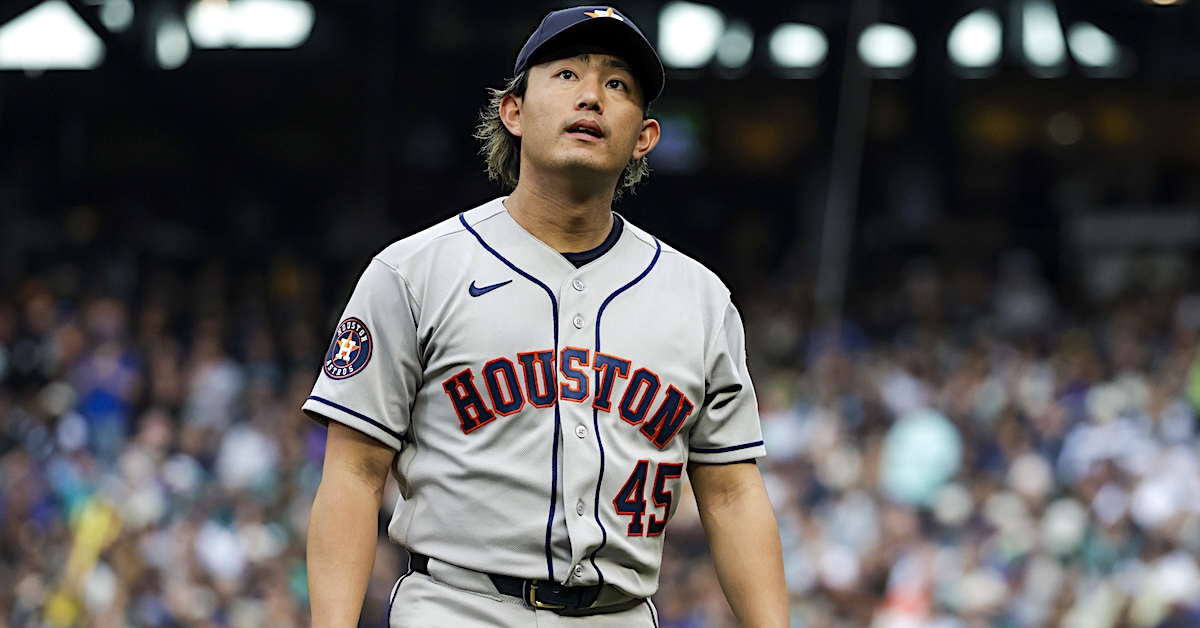
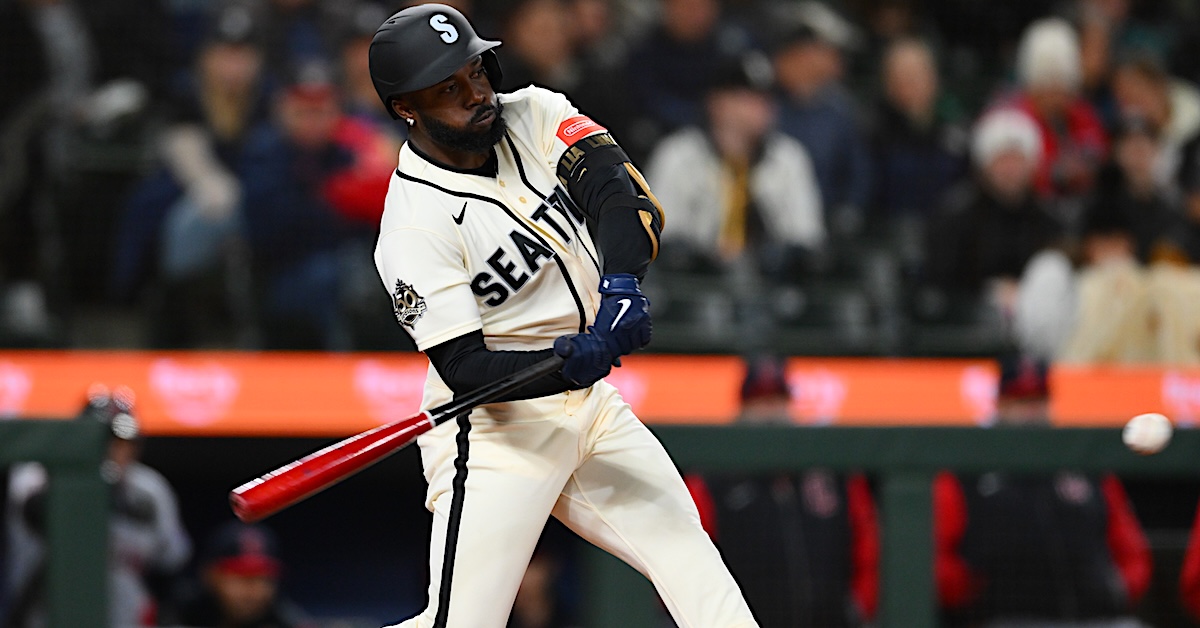
On Monday, Houston placed Tatsuya Imai and Jeremy Peña on the IL. That followed two moves from last Friday, when Cristian Javier and Jake Meyers both hit the IL. Five days before that, staff ace Hunter Brownlanded on the IL himself with a shoulder strain that will keep him from throwing for at least two weeks, and likely prevent him from appearing for far longer than that. And that’s just the in-season injuries. Josh Hader, Zach Dezenzo, Bennett Sousa, and Nate Pearson all started the year on the IL. Brandon Walter, Ronel Blanco, and Hayden Wesneski are still working their way back from elbow injuries sustained in 2025. That’s 12 players on the IL if you’re counting at home, and a number of stars among them.
It’s not like every injury matters the same. Pearson has never appeared for the Astros and has a negative career WAR. Dezenzo is a fifth outfielder. The core missing names for Houston are Brown, Imai, Peña, Hader, Javier, and, to a lesser extent, Meyers. If the Astros can’t replace the production from those five, all of whom are key parts of their roster, 2026 will be a long year. So let’s consider how each affects Houston’s prognosis in isolation, and then consider them all in concert.
Peña’s injury is the one the Astros are best-equipped to deal with. Thanks to last season’s Carlos Correa trade and a quiet offseason, Houston came into this year with an infield logjam. Peña, Correa, Isaac Paredes, and Jose Altuve gave the team four good players for only three spots. None could reliably flex to DH because of the presence of Yordan Alvarez. Altuve spent some time in the outfield last year, even before Correa arrived. Read the rest of this entry »
But a college baseball hotbed it is not. Rider and Penn are nearby, and both schools are frequent pesky no. 4 seeds in the NCAA Tournament. Which is fun, but it’s not too interesting to a national baseball writer who focuses primarily on the major leagues.
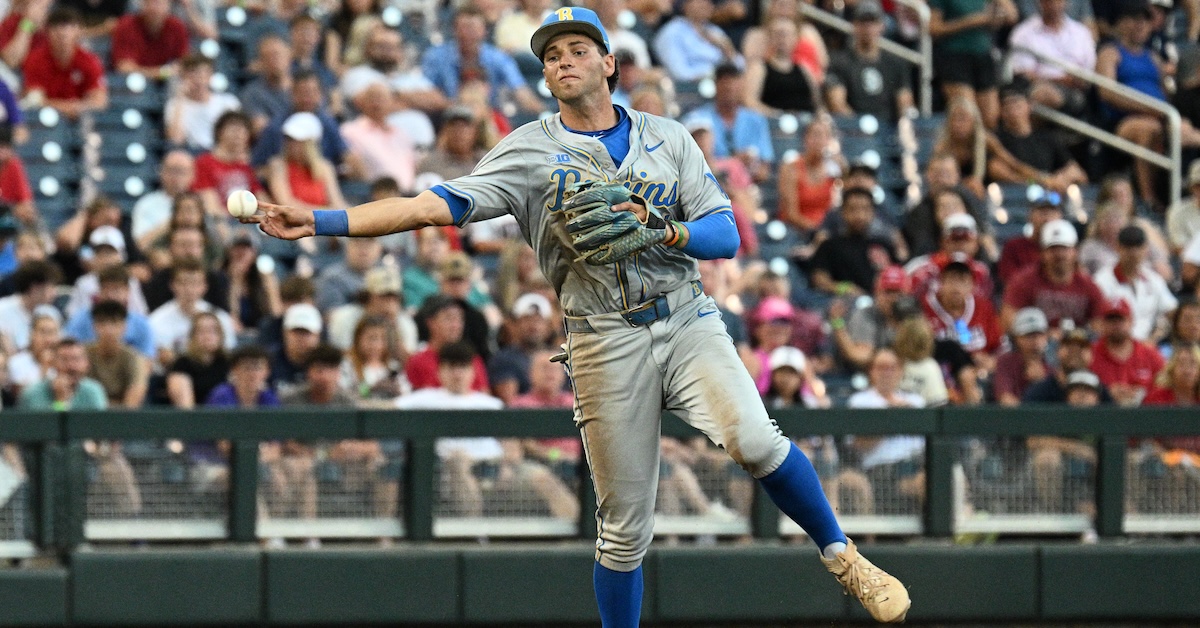
Last weekend was different. Several rounds of Big Ten expansion led to an unusual event: UCLA, the no. 1 team in the country, with presumptive no. 1 overall pick Roch Cholowsky in tow, was obliged to visit Rutgers. I’ve had this series circled on my calendar since last year, and here’s what I learned. Read the rest of this entry »
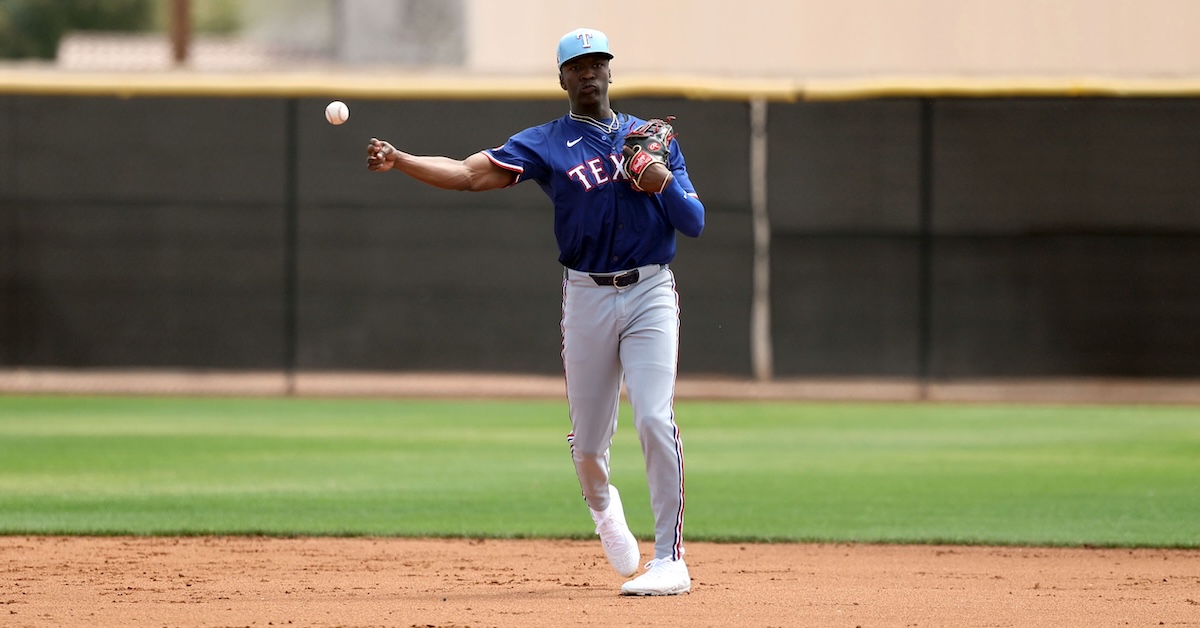
Below is an analysis of the prospects in the farm system of the Texas Rangers. Scouting reports were compiled with information provided by industry sources as well as my own observations. This is the sixth year we’re delineating between two anticipated relief roles, the abbreviations for which you’ll see in the “position” column below: MIRP for multi-inning relief pitchers, and SIRP for single-inning relief pitchers. The ETAs listed generally correspond to the year a player has to be added to the 40-man roster to avoid being made eligible for the Rule 5 draft. Manual adjustments are made where they seem appropriate, but we use that as a rule of thumb.
A quick overview of what FV (Future Value) means can be found here. A much deeper overview can be found here.
All of the ranked prospects below also appear on The Board, a resource the site offers featuring sortable scouting information for every organization. It has more details (and updated TrackMan data from various sources) than this article and integrates every team’s list so readers can compare prospects across farm systems. It can be found here. Read the rest of this entry »
Jacob Misiorowski has a fastball that consistently reaches triple digits, and he augments it with an effective curveball-slider combination. Usage-wise, the 24-year-old Milwaukee Brewers right-hander is throwing his high-octane heater at a 62.3% clip, while his breaking-ball percentages are 16.6 and 17.3 respectively. Given the lethality of those pitches — his xBA is a paltry .168, and his K-rate an MLB-best 41.8% — he has little need for a changeup…
… but there is one in his arsenal. From time to time, he will even show it to a batter. Of the 289 pitches Misiorowski has delivered so far this season, 11 (3.8%) have been changeups. The story behind his only-sporadically-used weapon?
“I’ve had a changeup my whole career,” Misiorowski told me prior to throwing three of them in a 101-pitch start at Fenway Park on Tuesday. “That was one of the first pitches I truly learned. But then as I started throwing harder, I began going away from it, and it obviously got worse and worse the less I threw it. By the time I got drafted [63rd overall in 2022], I basically didn’t have a changeup any more. I had to relearn it, re-figure it out. So, yeah, it’s always been there, but it hasn’t always been there.”
Misiorowski went on to tell me the grip was originally a more conventional four-seam circle, but that he now has his pointer and middle fingers together, and his thumb underneath. He also said that he likes the amount of horizontal he gets on it, which is generally around 18 inches and has been up to 20. When I told him that the movement profile sounds a little like a two-seam sinker, he agreed that it does.
A few more things Misiorowski told me about the pitch are unfortunately lost, due to glitches I’ve recently encountered on my iPhone’s recording app (I mentioned this teeth-gnashing, hopefully-resolved-soon, issue in Monday’s piece on Padres’ broadcaster Mark Grant.) Fortunately, I was able to grab a few minutes with Brewers pitching coach Chris Hook, who made up for the missing words with his own perspective.
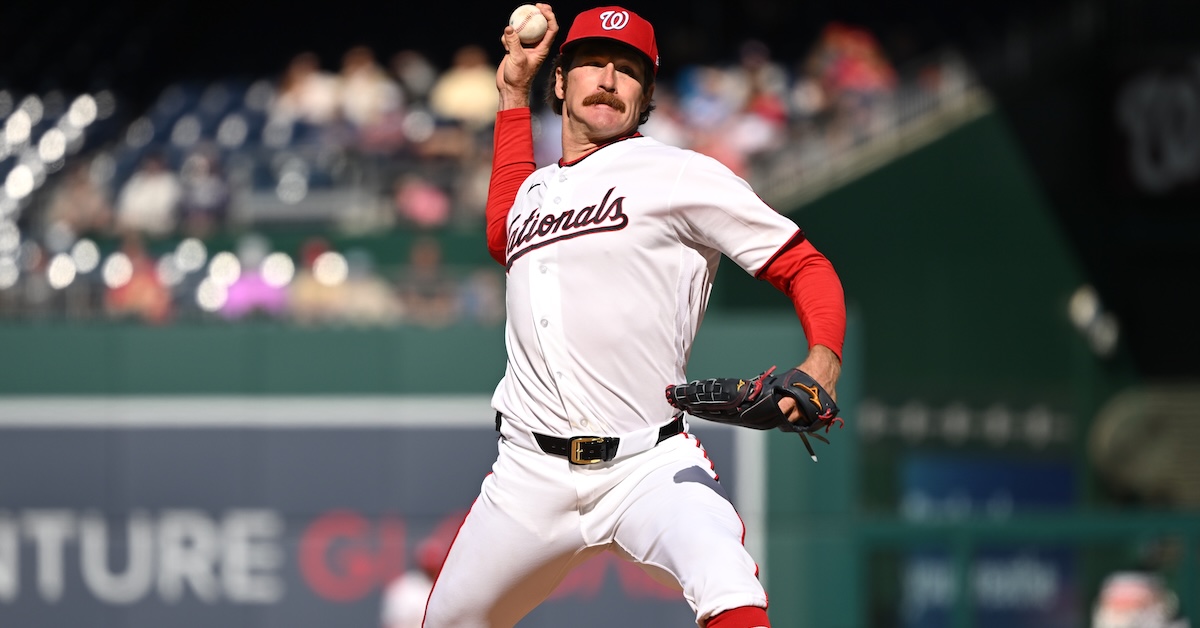
I went to the Nationals-Cardinals game on Wednesday afternoon at Nats Park to check in on the two rebuilding clubs early in the season. Washington has been in a perpetual rebuild for pretty much the entirety of the 2020s, while St. Louis just tore its roster down to the studs this past offseason. And yet, with Chaim Bloom installed as the new president of baseball operations, a deep farm system, and several young position players starting to come into their own, the Cardinals seem to be closer to their next winning season than the Nationals.
That’s certainly how things played out on Wednesday, when the Cards beat the Nats, 6-1, to take two out of three in the series. St. Louis first baseman Alec Burleson, the team’s second-longest tenured position player, went 3-for-4 and knocked in three runs, and second baseman JJ Wetherholt made several slick plays in the field. Wetherholt, who entered this year as the 12th-ranked prospect in baseball, has reached base in all 11 of his starts this year, and he has at least one hit in 10 of them. (He went 0-for-4 with a walk and a run on Wednesday.) The big story, though, was Jordan Walker, who hammered his fifth home run of the season in the fifth inning. It was the 17th time in franchise history that a player has homered five times within his first 12 games to start the season. After two below-replacement-level seasons, it seemed less likely that Walker would ever make good on his former top prospect pedigree, but now he looks like a completely different player. He seems way more confident and is making much better swing decisions; he’s lifting the ball, while walking more and striking out less. Yes, it’s only been 12 games, but the early returns are promising. He enters Friday night’s game against the Red Sox slashing .295/.367/.682 with a 192 wRC+.
I’ll talk more about the Nationals in my answer to the first question below. We’ll also answer your questions about the World Series teams whose players accumulated the most and least WAR by the end of their careers, the potential injuries that would stop the Dodgers from being World Series favorites, and the most successful three-true-outcomes pitchers of all time. But first, I’d like to remind you that this mailbag is exclusive to FanGraphs Members. If you aren’t yet a Member and would like to keep reading, you can sign up for a Membership here. It’s the best way to both experience the site and support our staff, and it comes with a bunch of other great benefits. Also, if you’d like to ask a question for an upcoming mailbag, send me an email at mailbag@fangraphs.com. Read the rest of this entry »
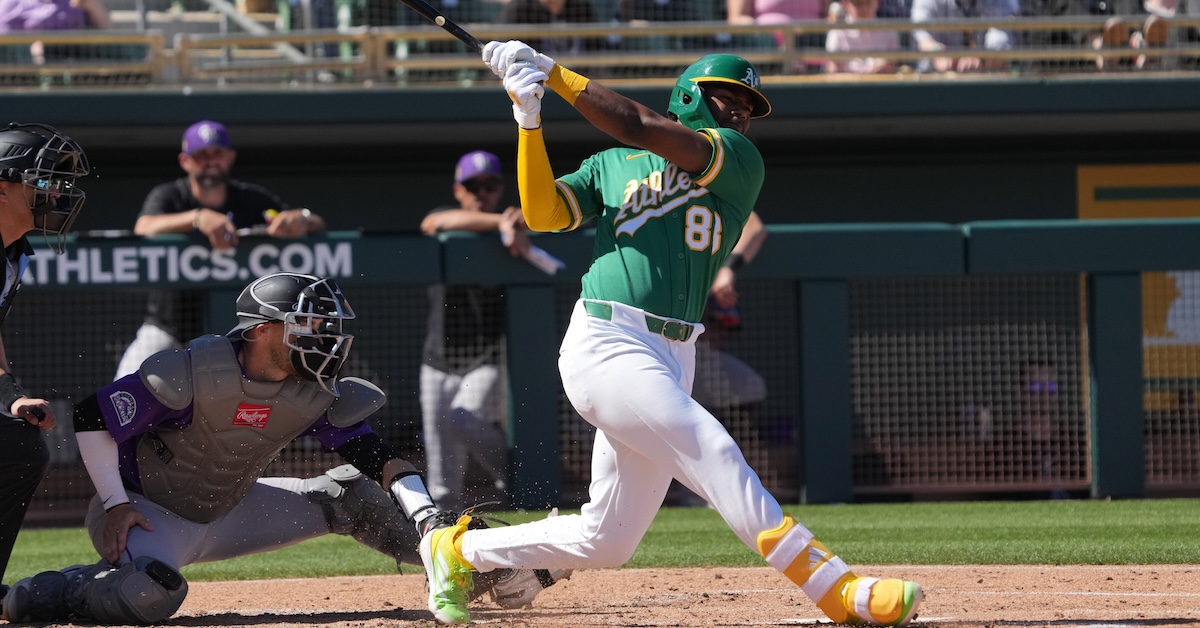
Below is an analysis of the prospects in the farm system of the Athletics. Scouting reports were compiled with information provided by industry sources as well as my own observations. This is the sixth year we’re delineating between two anticipated relief roles, the abbreviations for which you’ll see in the “position” column below: MIRP for multi-inning relief pitchers, and SIRP for single-inning relief pitchers. The ETAs listed generally correspond to the year a player has to be added to the 40-man roster to avoid being made eligible for the Rule 5 draft. Manual adjustments are made where they seem appropriate, but we use that as a rule of thumb.
A quick overview of what FV (Future Value) means can be found here. A much deeper overview can be found here.
All of the ranked prospects below also appear on The Board, a resource the site offers featuring sortable scouting information for every organization. It has more details (and updated TrackMan data from various sources) than this article and integrates every team’s list so readers can compare prospects across farm systems. It can be found here. Read the rest of this entry »
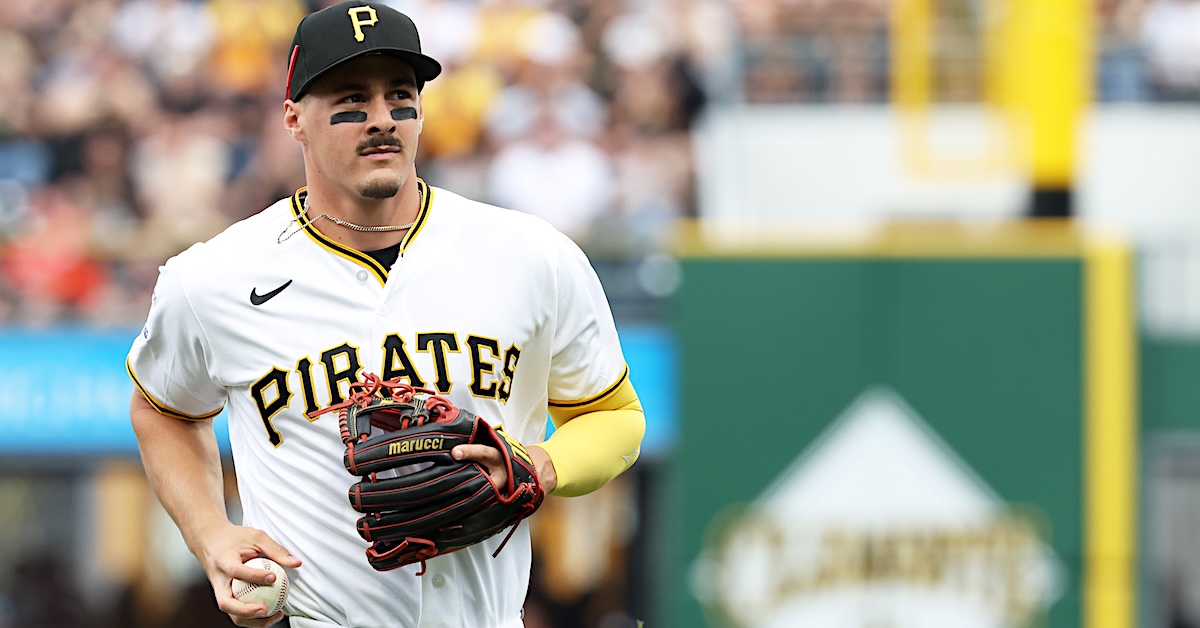
I’m a fan of gallows humor, and I think that fans of the Pirates need to be as well. The Pirates have developed their share of stars over the years, but for fans, there’s always the slight bit of dread that once their young talent starts getting paid commensurate with their production, they’ll be swapping the black-and-gold for Dodger blue or pinstripes. So it’s a good time for Yinzers and the Allegheny-adjacent community, as shortstop Konnor Griffin and the team agreed to a nine-year, $140 million contract that would keep him in town until after the 2034 season.
As contracts go, this is a rather straightforward one. While MVP incentives can bring up the deal by a modest $10 million, to $150 million, that’s just about the only complexity present. There is no deferred money to eat away at the present value of the contract, no option years for the Pirates to lock in at the end, and no opt-out provision that could get Griffin to free agency a year or two early. The deal includes a $12 million signing bonus, which will be doled out over the next three years, certainly helpful to Griffin in that he’ll still get a nice chunk of cash even if the seemingly inevitable lockout drags into the 2027 season.
The Pirates have a real up-and-down history with contracts, so it’s always nice to see them spend on franchise talent rather than spread things around on third-tier free agents. They managed to keep Andrew McCutchen a few years past his free agent eligibility, but for the last 50 years, most of the stars who started out in Pittsburgh became better associated with other teams. Players ranging from Barry Bonds and Bobby Bonilla to Aramis Ramirez and Gerrit Cole, a group that could include Paul Skenes in a few years. Some of the deals the Pirates did sign haunt the dreams of Gen X and millennial Pirates fans (Pat Meares! Kevin Young! Derek Bell!). The Pirates signed Andy Van Slyke and paid him more than the Giants paid Bonds during the latter’s first years in San Francisco.
Griffin was basically everyone’s top-ranked prospect coming into this season, and it’s not hard to see why. He has more tools than can be found at a Florida spring break kegger, and in his first professional season, he terrorized minor league pitchers to the tune of a .333/.415/.527, 165 wRC+ line across three levels, including a 175 wRC+ in his month at Double-A. That would be a drool-worthy performance if he were a 23-year-old first baseman, but he did all of that as a teenage shortstop. He still doesn’t hit the big two-oh for a couple of weeks. Griffin’s one of the few prospects you can plausibly compare to A-Rod at a similar stage in his career without the listener rolling their eyes and saying, “Who, Aurelio?”
A few weeks ago, I did my annual look at contracts I’d like to will into existence, and ZiPS suggested an eight-year, $142 million contract for Griffin. So getting a ninth year is even better!
ZiPS Projection – Konnor Griffin
Year
BA
OBP
SLG
AB
R
H
2B
3B
HR
RBI
BB
SO
SB
OPS+
WAR
2026
.261
.330
.400
532
93
139
23
3
15
83
35
151
30
102
3.6
2027
.265
.335
.418
558
102
148
25
3
18
90
38
149
32
108
4.3
2028
.264
.336
.420
584
109
154
27
2
20
98
42
148
32
108
4.6
2029
.265
.338
.428
601
114
159
28
2
22
105
45
147
32
111
5.0
2030
.265
.341
.434
599
116
159
28
2
23
107
47
142
30
114
5.3
2031
.265
.343
.436
597
117
158
29
2
23
107
49
138
27
115
5.4
2032
.268
.346
.444
597
118
160
29
2
24
109
49
138
27
118
5.6
2033
.268
.346
.444
597
118
160
29
2
24
110
49
138
26
118
5.6
2034
.270
.349
.446
596
118
161
29
2
24
111
50
139
25
119
5.8
That ninth year is pretty darn valuable, and ZiPS would be quite happy to give Griffin $40 million more in order to secure the 2034 projection. ZiPS, like most projection systems, does not generally have fits of irrational exuberance, for the simple fact that it’s well aware about how risky players are. Griffin is not a 5-WAR player yet, so there is risk involved, but that’s true of all players, whether they’re elite prospects or superstars in the middle of their careers. Albert Pujols and Miguel Cabrera were obviously far more “proven” when they signed their biggest deals than Griffin is now, but the Angels and Tigers paid handsomely for that so-called proof, and as should be clear now, there was a lot of downside involved there, too.
A $140 million contract isn’t a mega-deal in the typical baseball sense, but for the Pirates, Griffin’s contract represents the biggest financial commitment they’ve ever made to a player. They’re all-in when it comes to the Konnor Griffin business. Both team and player are now spared things like years of speculation about future trades or service-time games should Griffin struggle in April. Remember the time the Pirates offered Gerrit Cole $538,000, and when he turned it down, they apparently wouldn’t budge past $541,000, and threatened to pay him the league minimum if he refused? Cheap-bush league shenanigans are now out of the question with Griffin, and the focus can be on the actual baseball.
Even if Griffin isn’t immediately a megastar, he makes the Pirates meaningfully better, and they know it. He really did look raw at times in the spring, to the level that sending him down was excusable, even understandable, unlike when the Chicago Cubs in 2015 decided they needed precisely 20 days some additional time to figure out if Kris Bryant was a better option at third base than Mike Olt. Griffin did get five games with the Triple-A Indianapolis Indians, and it certainly looked like, in a small sample size, that he wasn’t really anything new against minor league pitching. But that’s not the point. The Pirates are true NL Central or Wild Card contenders, and they are much better off with Griffin as their starting shortstop, even if it takes him some time to adjust to the majors, than a decent role player like Jared Triolo. (Triolo has since been placed on the injured list with a patellar tendon injury in his right knee.)
With the long-bubbling Griffin contract negotiations finally complete, now the Bucs can worry about the rest of the team, and making the Cubs and Brewers feel uncomfortable for the rest of 2026.
It would border on being grotesquely premature to talk in too-concrete terms about a 19-year-old Griffin and the possibility of him one day having a Hall of Fame plaque in Cooperstown. But at least if such an object should ever come into existence, there’s now a realistic chance that it could have a “P” on the cap. That’s enough to make this a good week for Pirates fans.
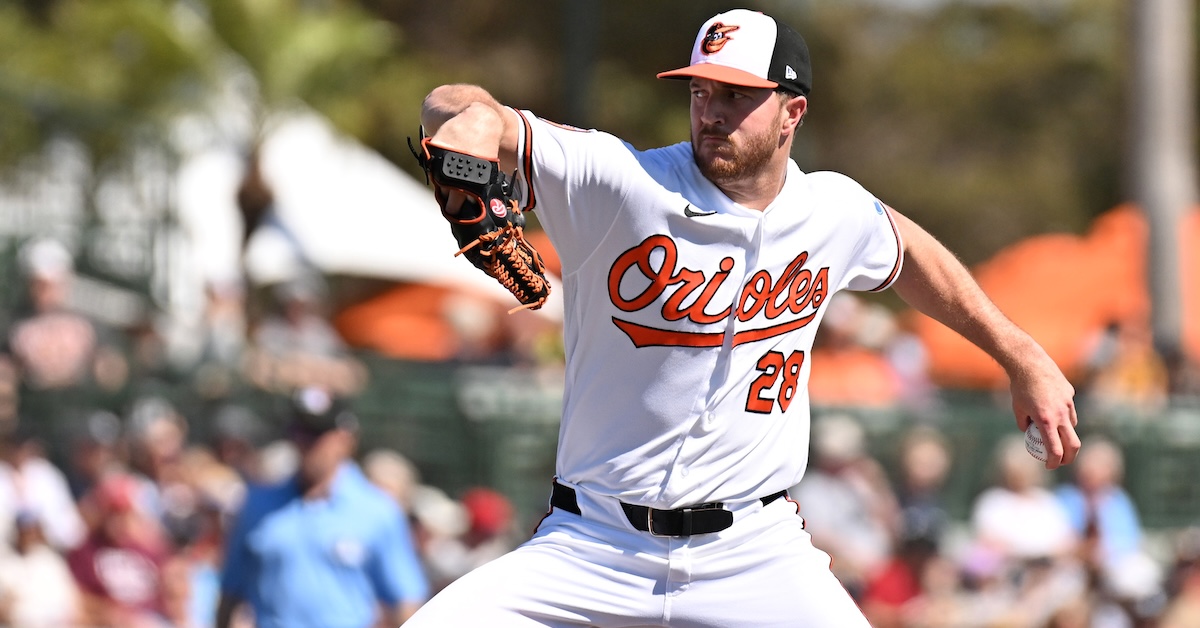
Last week, I did a radio hit in Baltimore to talk about the Orioles’ five-year extension for right-handed starter Shane Baz. As you might expect, I got asked for my general impressions of the Orioles’ rotation, and I gave an answer I did not expect to be controversial: I like Baltimore’s rotation, and I’m quite fond of Trevor Rogers and Kyle Bradish, the top two starting pitchers. That said, the Orioles don’t have a clear no. 1-quality starter, which could end up as a weakness in a playoff series.
“Ace” and its synonyms are fuzzy in meaning, so I’ll define my terms as clearly as I can: I meant that the Orioles don’t have a starting pitcher who can be expected to go up against one of the top pitchers in the league and fight him to a draw for six innings. I’ll give an example from last year’s World Series: I think Yoshinobu Yamamoto is a better pitcher than Kevin Gausman — and sure enough, Yamamoto beat Gausman twice in as many attempts — but the difference isn’t so great that you’d be able to tell over one start.
I got some pushback on social media — some of it quite intense — from Orioles fans who like their chances with Rogers against Tarik Skubal. Every sports fan thinks they’re the center of the universe these days, and accordingly that everything about their team is better than the biased national media will give them credit for. (Except White Sox and Twins fans, who think everything about their team is even worse than the biased national media realizes.) Even if that weren’t true, I would ordinarily never admit to treating randos on X, the Everything App, like an assignment editor. That way lies madness. Read the rest of this entry »
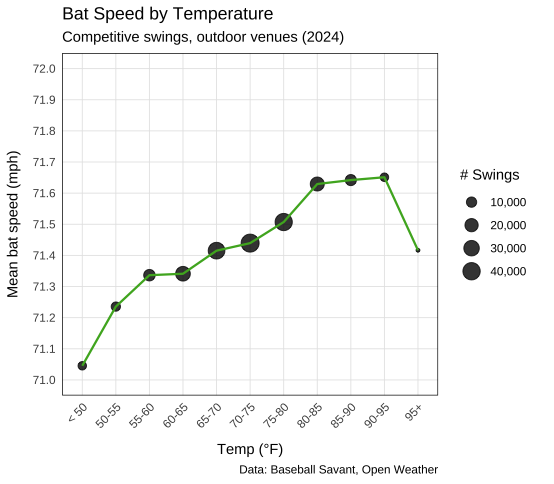
Batters swing slower in the cold, but I’m not sure that it matters.
Bat speed goes down when it’s cold, and it goes up when it’s hot. This is something that’s both literally true and curiously linear. We can see in the plot below that bat speed climbs bit by bit as temperature rises from chilly to toasty:
My first thought is this makes sense. It’s reasonable to assume batters don’t swing as fast when their muscles are stiff and their hands are numb. I’ve been cold before, and yeah, it’s difficult to perform tasks requiring fine motor skills.
My second thought is I’m skeptical. Notice the scale of the plot. All that movement amounts to about 0.6 mph from the coldest games to the warmest games. Lots of things other than temperature could be driving this relationship. Bat speed goes down with velocity. Velocity goes up with relievers. Relievers enter games late. Temperature goes down at night. You can see how this could get tricky.
Mostly, we treat the Los Angeles Angels like the friend whose life is a wreck but there’s nothing you can do about it because they’ll never ask for help and won’t take advice. So you just check in on the AL West standings every so often and feel a combination of pity and helplessness.
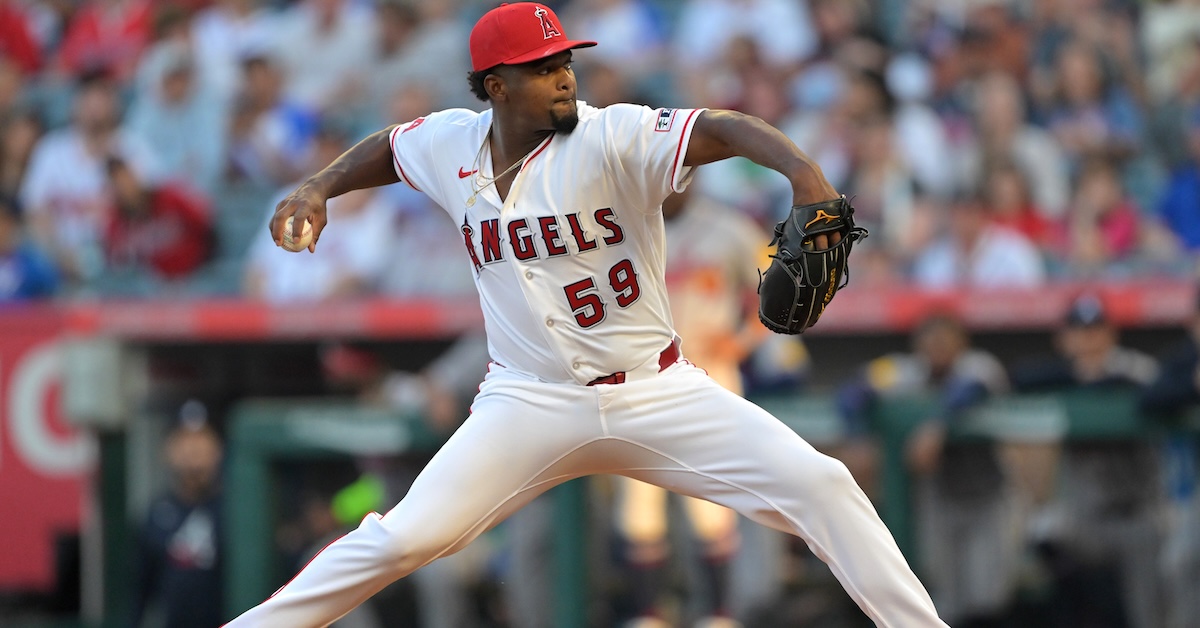
Well, you can take your pity and shove it, because as I write this the Angels are in first place in the division. Tied for first place, at one game over .500, but it still counts. Much as Jo Adell’s three-robbery night on Saturday won fawning headlines, and much as Zach Neto’s four home runs are leading the offense, there is one man driving this train: José Soriano. Read the rest of this entry »