
The Envelope Please: Our 2026 Hall of Fame Crowdsource Ballot Results and a Preview of Election Day
The following article is part of Jay Jaffe’s ongoing look at the candidates on the BBWAA 2026 Hall of Fame ballot. For a detailed introduction to this year’s ballot, and other candidates in the series, use the tool above; an introduction to JAWS can be found here. For a tentative schedule, see here. All WAR figures refer to the Baseball Reference version unless otherwise indicated.
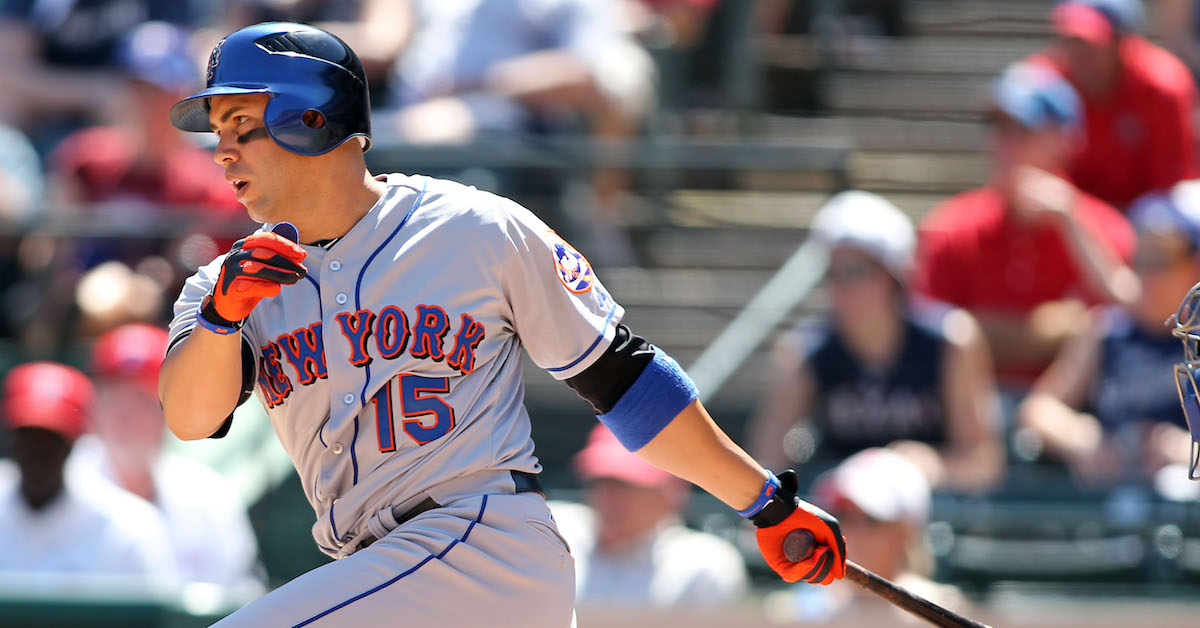
On Tuesday evening, the National Baseball Hall of Fame will announce the results of this year’s BBWAA balloting. In this age of ballot tracking, we have only a mild bit of suspense on our hands, something less than a true cliffhanger. Based on the published ballots in Ryan Thibodaux’s Tracker (which unfortunately has been experiencing outages due to traffic throttling), both Carlos Beltrán and Andruw Jones are likely to be elected, though there’s still a bit of uncertainty for the latter. If the FanGraphs readers who participated in this year’s crowdsource ballot had their way, Beltrán would be the only one who would make the cut.
I’ll take a closer read of the tea leaves based upon the writers’ ballots that have been revealed, but first, let’s consider the readers’ entries. Registered users who participated in our poll were each allowed to submit one ballot with up to 10 candidates by the end of the day on December 31, just like over 400 BBWAA voters did for this year’s actual election — only we ink-stained wretches had to get to a mailbox with a prepaid envelope, where our users voted electronically. For the third year in a row, we had a record level of participation, with a 6.1% increase in votes over last year and a 28.2% increase over two years ago:
| Year | Votes | Per Ballot | FG # | BBWAA # | Honorees* |
|---|---|---|---|---|---|
| 2019 | 1,213 | 9.41 | 7 | 4 | Martinez, Rivera, Mussina, Bonds, Clemens, Halladay, Walker |
| 2020 | 1,440 | 8.37 | 4 | 2 | Jeter, Walker, Bonds, Clemens |
| 2021 | 1,152 | 7.65 | 3 | 0 | Rolen, Bonds, Clemens |
| 2022 | 1,018 | 8.62 | 3 | 1 | Rolen, Bonds, Clemens |
| 2023 | 548 | 7.55 | 3 | 1 | Rolen, Helton, Sheffield |
| 2024 | 1,657 | 7.96 | 2 | 3 | Beltré, Mauer |
| 2025 | 2,001 | 7.92 | 2 | 3 | Suzuki, Sabathia |
| 2026 | 2,124 | 6.57 | 1 | ? | Beltrán |
Befitting a ballot whose crop of first-year candidates is the weakest in a couple of decades, our record-sized crowd actually used fewer slots per ballot than at any time since we began this exercise, and “elected” fewer candidates than ever. When this exercise began with the 2019 ballot (the first one I covered after joining the FanGraphs staff), our crowd was more generous than the BBWAA voters, but that phenomenon was based upon the crowd’s consistent support for Barry Bonds and Roger Clemens, both of whom fell short on the writers’ ballots due to their links to performance-enhancing drugs. In the cycles since they and the also PED-linked Gary Sheffield aged off the ballot, our readers have been less generous than BBWAA voters in terms of the ones reaching 75%, with 2024 honoree Todd Helton not making their cut (though he did the year before) and last year’s honoree, Billy Wagner, falling short as well. This has happened despite the fact that our readers have uniformly used more slots per ballot than the actual voters, 0.96 more in 2024 (the only year the difference has been below 1.0), and 1.15 more than in ’25. If those recent results are any guide, we should expect to see something in the neighborhood of 5.5 names per ballot from the writers, which would be the lowest mark since 2012 (5.1).
In terms of the extremes, just 23.4% of our voters used all 10 slots, surpassing the previous low of 29.6% from 2023; that’s quite a drop from last year’s 41.8% and the high of 59% from 2022. Twenty-three voters (1.1%) cast blank ballots, up from three last year. At the Tracker, four blank ballots have been submitted this year, whereas there were none last year.
As for the crowdsource results, here’s the full rundown, with comparisons to each holdover candidate’s shares in the last two cycles — not just last year, but also 2024:
| Player | YoB | 2024 Crowd | 2025 Crowd | 2026 Crowd | 2024–25 Change |
|---|---|---|---|---|---|
| Carlos Beltrán | 4 | 66.4% | 70.7% | 78.5% | +7.8% |
| Andruw Jones | 9 | 68.0% | 68.1% | 74.3% | +6.2% |
| Chase Utley | 3 | 56.1% | 59.9% | 67.8% | +7.9% |
| Alex Rodriguez | 5 | 60.6% | 61.3% | 62.5% | +1.2% |
| Félix Hernández | 2 | — | 43.3% | 59.1% | +15.8% |
| Manny Ramirez | 10 | 50.3% | 53.1% | 55.5% | +2.4% |
| Bobby Abreu | 7 | 37.7% | 41.9% | 51.3% | +9.4% |
| Andy Pettitte | 8 | 20.2% | 30.3% | 40.1% | +9.8% |
| Cole Hamels | 1 | — | — | 34.2% | — |
| David Wright | 3 | 11.5% | 14.5% | 26.4% | +11.9% |
| Mark Buehrle | 6 | 10.8% | 14.8% | 25.1% | +10.3% |
| Dustin Pedroia | 2 | — | 14.6% | 22.0% | +7.4% |
| Jimmy Rollins | 5 | 8.2% | 13.2% | 19.5% | +6.3% |
| Francisco Rodríguez | 4 | 7.3% | 8.4% | 13.6% | +5.2% |
| Torii Hunter | 6 | 4.9% | 4.2% | 6.6% | +2.4% |
| Omar Vizquel | 9 | 3.6% | 4.5% | 4.6% | +0.1% |
| Shin-Soo Choo | 1 | — | — | 3.3% | — |
| Edwin Encarnación | 1 | — | — | 2.5% | — |
| Ryan Braun | 1 | — | — | 2.2% | — |
| Hunter Pence | 1 | — | — | 1.7% | — |
| Daniel Murphy | 1 | — | — | 1.4% | — |
| Alex Gordon | 1 | — | — | 1.4% | — |
| Matt Kemp | 1 | — | — | 1.3% | — |
| Nick Markakis | 1 | — | — | 0.9% | — |
| Howie Kendrick | 1 | — | — | 0.4% | — |
| Rick Porcello | 1 | — | — | 0.3% | — |
| Gio Gonzalez | 1 | — | — | 0.05% | — |
Every holdover posted a gain from 2025, even if it was minuscule; the same was true last year save for Hunter. Jones missed election from our crowd by just 14 votes; interestingly enough, he was closer in 2023 (74.5%) than in either ’24 or ’25, and the same was true for Beltrán (72.4%). That pattern probably owes something to a sample-size issue, as we had unusually small turnout in 2023 for reasons I can’t fully explain.
Every candidate received at least one vote from our crowd. Gonzalez received just one, 0.047% of the vote, and it wasn’t even from the user who cast an eight-man ballot that included five other one-and-dones (Choo, Encarnación, Gordon, Kemp, and Kendrick) along with Beltrán, Hunter, and Pettitte; it was from a voter who otherwise included only Beltrán. We had 15 different one-man ballots, some of which were rather strange, namely single instances of Abreu, Choo, Gordon, Hamels, and Murphy being the only box checked. Cherrypicking some of the other oddities: a five-man ballot that included three of the big-name players linked to PEDs (A-Rod, Manny and Pettite) plus Hunter and Porcello; a four-man ballot with Markakis joining Beltrán, Jones, and Utley; and a three-man Mets-only ballot that had K-Rod, Murphy, and Wright (but no love for Beltrán). Five other voters matched my eight-man ballot (Abreu, Beltrán, Buehrle, Hamels, Hernández, Jones, Pettitte, Utley), and 42 voters cast the most popular ballot, a 10-man slate that included all of those plus A-Rod and Manny. The next-most popular ballot, with 15 instances, swapped out Wright for Buehrle but kept the other nine from that group. We received 291 different 10-man slates in all, way down from 518 last year but still a dizzying number. Our total of 1,191 unique ballots was much closer to last year’s total of 1,274.
The biggest gainer on our ballot, Hernández, appears poised for the largest gain of any candidate since BBWAA voters returned to annual balloting in 1967. While his share here approximates what was in the Tracker as of 8 AM ET on Tuesday (55.5%), his gain among our readers is much smaller because last year our voters gave him more than double his actual level of support from the writers (20.6%). Buehrle and Pettitte made the third- and fourth-largest gains in our crowd’s vote, which fits in with the trend of voters (including this one) rethinking starting pitching standards. I voted for Hernández last year mainly to make sure he didn’t fall off the ballot the way two-time Cy Young winner Johan Santana did in 2018, and with the debut of Hamels, I reviewed my positions on Pettitte (whom I included as my 10th vote in 2024) and Buehrle, deciding I’d vote for them all and continue what’s become a fascinating discussion.
Turning to the Tracker and where things stand as of 8 AM ET on Tuesday, 10 hours before the results are announced, with 229 ballots (an estimated 54% of the electorate) published:
| Player | 2026 Crowd | 2026 Tracker | Difference |
|---|---|---|---|
| Carlos Beltrán | 78.5% | 89.5% | +11.0% |
| Andruw Jones | 74.3% | 82.5% | +8.2% |
| Chase Utley | 67.8% | 68.1% | +0.3% |
| Andy Pettitte | 40.1% | 56.8% | +16.7% |
| Felíx Hernández | 59.1% | 55.5% | -3.6% |
| Alex Rodriguez | 62.5% | 43.2% | -19.3% |
| Manny Ramirez | 55.5% | 40.6% | -14.9% |
| Bobby Abreu | 51.3% | 38.9% | -12.4% |
| Cole Hamels | 34.2% | 31.0% | -3.2% |
| Dustin Pedroia | 22.0% | 26.2% | +4.2% |
| Jimmy Rollins | 19.5% | 25.8% | +6.3% |
| Mark Buehrle | 25.1% | 23.1% | -2.0% |
| David Wright | 26.4% | 19.7% | -6.7% |
| Omar Vizquel | 4.6% | 12.2% | +7.6% |
| Francisco Rodríguez | 13.6% | 11.4% | -2.2% |
| Torii Hunter | 6.6% | 6.1% | -0.5% |
| Ryan Braun | 2.2% | 2.6% | +0.4% |
| Edwin Encarnación | 2.5% | 0.9% | -1.6% |
| Shin-Soo Choo | 3.3% | 0.4% | -2.8% |
| Nick Markakis | 0.9% | 0.4% | -0.4% |
| Hunter Pence | 1.7% | 0.4% | -1.2% |
| Rick Porcello | 0.3% | 0.4% | +0.2% |
| Gio Gonzalez | 0.05% | 0.0% | +0.0% |
| Alex Gordon | 1.4% | 0.0% | -1.4% |
| Matt Kemp | 1.3% | 0.0% | -1.3% |
| Howie Kendrick | 0.4% | 0.0% | -0.4% |
| Daniel Murphy | 1.4% | 0.0% | -1.4% |
As usual, there’s a high correlation between the voting shares from the two sources; in fact, 18 of the 27 candidates are off by 4.2 percentage points or less in one direction or the other. The largest gaps on the positive side show the writers — or at least the ones who have published their ballots — as being more strongly supportive of the top-polling candidates, which probably owes something to the transparency of the process; after all, nearly all of those voters have attached their names to their selections. The largest positive gap between the writers and our crowd is for Pettitte, while Buehrle, Hamels, and Hernández have received slightly less support from them than from our crowd. For the second year in a row, a couple of candidates whose credentials appeal more to old-school voters than new-school ones — Vizquel (ugh) and Rollins — have the fourth- and fifth-largest gaps between their actual and crowd shares. This tracks, given that the voters tend to be more mainstream than the average FanGraphs reader. Interestingly, the writers have flip-flopped the Pedroia-Wright pair relative to our crowd, favoring the Boston dynamo.
At the other end of the spectrum, the writers are far less supportive than our crowd when it comes to the two PED-linked heavyweights, A-Rod and Manny, both of whom were suspended for violating the game’s drug policy. For presumably different reasons, they’re also far less supportive of Abreu, a stathead favorite. From among both our crowd and the writers, the only first-year candidate fit for next year’s ballot is Hamels, with the twice-suspended Braun (whose first suspension was overturned by an arbitrator) apparently toast.
As for what it all means for Tuesday, historically speaking, until last year, every candidate from 2014 onward who had polled above 80% on the ballots published pre-results was elected that year. Beltrán, who was at 80.5% before the announcement, broke that streak, and because he had the second-largest private vs. public differential (-21.1%, including the ballots published after the results were revealed), it wasn’t particularly close; he missed election by 19 votes, receiving 70.3% overall. The largest private vs. public differential belonged to Jones (-26%), but he was polling around eight points below Beltrán before the announcement, so the suspense wasn’t over whether he’d get in but how well he’d set himself up for this year; he received 66.2% overall.
Both center fielders are in better shape this time around, though as Thibodaux pointed out last year, a few recent candidates with around 83% pre-election cleared the bar by less than three points, namely Larry Walker in 2020 (83.2% pre-election, 76.6% final), David Ortiz in 2022 (83.4%, 77.9%), and Joe Mauer in 2024 (83.4%, 76.1%). In my own quick-and-dirty study of recent Tracker results, I found that from 2022–25, candidates receiving 80% or higher pre-announcement experienced an average drop of 4.8 points; if Jones follows that pattern, he’ll come in at 77.7%. I went back only to 2022 because the writers didn’t elect anybody in 2021 (the highest pre-election mark in the Tracker was Bonds at 73.7%) and because one of the two honorees in 2020 was Derek Jeter, who got 100% pre-election and famously missed unanimity by just one vote. If I recalculate for 2022–25 by excluding Ichiro Suzuki (who experienced the same scenario as Jeter) and Adrian Beltré (99.1% pre-election, 95.1% final), the average drop-off for the seven candidates in the 80-95% band pre-election is 5.5 points. That’s still good news for Jones.
For the final word on Jones’ chances of getting elected, we’re all better off turning to the forecasting work of Jason Sardell, whose probabilistic model has been the most accurate predictive system in the industry for several years running. Sardell groups voters based upon the number of candidates they include on their ballots (“small Hall” and “large Hall” voters) and their electoral stance on PED users, so his model is more sensitive to the way some candidates fall off further than others when it comes to private vs. public ballots. As of this writing, his most recent projection was based upon 223 votes in the Tracker, when Jones was at 83%.
Less than 24 hours to go until the results of this year's Baseball Hall of Fame election are revealed. If trends with public voters hold, we'll be welcoming two new members: Carlos Beltrán and Andruw Jones. My latest projections with 223 ballots in @notmrtibbs.com's Tracker.
— Jason Sardell (@sardell.bsky.social) 2026-01-20T00:44:10.503Z
Even if Jones has lost a few points off those odds, a 90-ish percent chance of being elected isn’t exactly a nail-biter. That said, it’s not automatic either, and so we’ll hang tight and see what’s in the envelope that Hall president Josh Rawich opens this evening. I’ll be back later on Tuesday with my quick take on the results, followed by a candidate-by-candidate breakdown in the coming days.
Brooklyn-based Jay Jaffe is a senior writer for FanGraphs, the author of The Cooperstown Casebook (Thomas Dunne Books, 2017) and the creator of the JAWS (Jaffe WAR Score) metric for Hall of Fame analysis. He founded the Futility Infielder website (2001), was a columnist for Baseball Prospectus (2005-2012) and a contributing writer for Sports Illustrated (2012-2018). He has been a recurring guest on MLB Network and a member of the BBWAA since 2011, and a Hall of Fame voter since 2021. Follow him on BlueSky @jayjaffe.bsky.social.
Jay! I was hoping for one of your fantastic remembrances on Wilbur Wood’s career today! (His was similar enough to King Felix’s that I feel like I can post this here, ha.)
Except for the lefty knuckleball thing
Sure, I’ll bite …
I noted that their careers were similar, not that the pitchers themselves were.
And, really, this is just a surface take and excuse to try to selfishly coax Jay into writing a remembrance on Wood, but …
Wood: 50.0 WAR, 114 ERA +, 2700 (ish) innings pitched, 1.23 WHIP
Hernández: 49.8 WAR, 117 ERA+, 2700 (ish) innings pitched, 1.21 WHIP
A bit busy to pull off a Wood tribute this week! However, if this gets a massive bunch of up-votes, I’ll at least pitch it to Meg for next week, when my schedule is basically frozen tundra.
My upvote did not resolve to diet this year….