
JAWS and the 2026 Hall of Fame Ballot: Rick Porcello
The following article is part of Jay Jaffe’s ongoing look at the candidates on the BBWAA 2026 Hall of Fame ballot. For a detailed introduction to this year’s ballot, and other candidates in the series, use the tool above; an introduction to JAWS can be found here. For a tentative schedule, see here. All WAR figures refer to the Baseball Reference version unless otherwise indicated.
| Pitcher | Career WAR | Peak WAR Adj. | S-JAWS | W-L | SO | ERA | ERA+ |
|---|---|---|---|---|---|---|---|
| Rick Porcello | 18.8 | 18.3 | 18.6 | 150-125 | 1,561 | 4.40 | 99 |
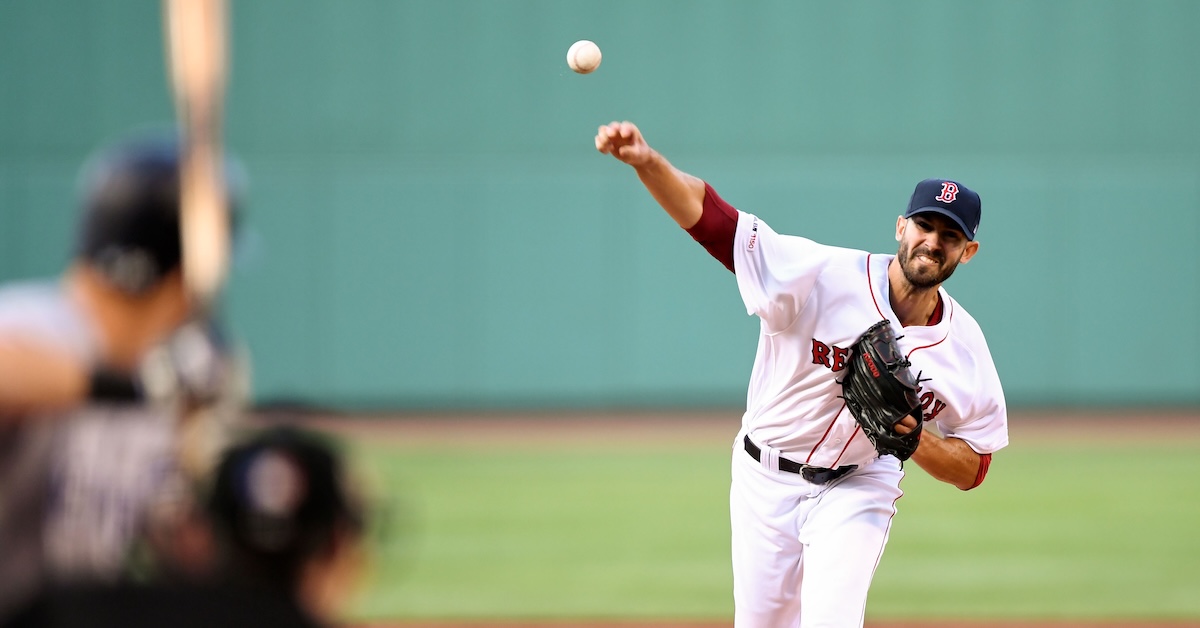
He was a first-round draft pick, and a rotation regular at age 20. By the time he turned 30, he had won both a Cy Young Award and a World Series ring while helping his teams reach the playoffs six times. On the heels of emerging as the best high school pitching prospect in the country, Rick Porcello packed all of that into a 14-season span, with 12 of those seasons spent in the majors with the Tigers, Red Sox, and Mets. He endured a fair share of growing pains and wild performance swings along the way, threw his last pitch at age 31, and didn’t put up numbers that will keep him on the Hall of Fame ballot. But within that comparatively short timespan, Porcello checked a few pretty impressive boxes.
…
Frederick Alfred Porcello III was born on December 27, 1988 in Morristown, New Jersey, the second of three children of Fred and Patricia Porcello. Fred worked as a civil engineer, founding his own firm in 1994. Baseball was in Rick’s bloodlines, as Patricia’s father Sam Dente spent parts of nine seasons in the majors (1947–55) as an infielder with six American League teams; he had his best season (79 OPS+, 1.2 WAR) with Cleveland’s AL pennant-winning 1954 squad, and played in three games in that World Series. Rick’s older brother Zack pitched for Lehigh University and the New Jersey Institute of Technology, and later became an assistant coach at Seton Hall University, while his younger brother Jake was drafted by the Tigers out of high school in the 48th round in 2009, and pitched at NJIT as well.
The Porcello boys grew up in Chester, where Rick played Little League baseball as well as football. “We had two games a week, and with each day that passed I would think: ‘It’s just one day closer to game night,'” he told Morris and Essex Magazine in 2018. While he rooted for the Mets, he admitted to the publication that the Yankees’ Derek Jeter was secretly his favorite player, and also shared fond reminiscences of bass fishing with Jake at a pond in Linden.
Strong both academically — he would eventually become a member of the National Honor Society and the Spanish National Honor Society — and athletically, Porcello enrolled at Seton Hall Prep in West Orange, 45 minutes away. Splitting time between shortstop and the mound, he was touted as a can’t-miss prospect by the time he was 15. As a 6-foot-4, 185-pound junior, he went 6-0 with a 0.30 ERA and 69 strikeouts in 47 innings. As a 6-foot-5 senior with a 93-95 mph fastball, he went 10-0 with a 1.18 ERA and 112 strikeouts in 71 innings, threw a seven-inning perfect game, and led Seton Hall to a 32-1 record, a state championship, and a final no. 2 national ranking. He earned All-American honors and was named the Gatorade National Baseball Player of the Year.
Outlets such as Baseball America and Perfect Game USA considered Porcello and Groton, Connecticut’s Matt Harvey to be the top two high school pitchers in the 2007 draft, though by the end of Porcello’s senior season, BA called him the best high school pitching prospect since Josh Beckett (1999). It was no small feat for pitchers from the Northeast to be considered at that level compared to pitchers from warmer regions with year-round baseball. Porcello and Harvey both signed letters of intent to play for the University of North Carolina.
In its pre-draft report, BA wrote of Porcello’s arsenal, “His fastball sits at 93-95, touching 98. He holds his velocity deep into outings. He throws a tight curveball at 74-76 and a harder, sharp-breaking slider at 80-82. He shows feel for his changeup. He can spot his fastball to both sides of the plate, and mixes his pitches effectively.” The publication expected Porcello to be the first high school pitcher selected, but between his UNC commitment and signability concerns — which scared off the Royals, who instead took Mike Moustakas with the draft’s second pick — he slipped to 27th, where the Tigers, defending AL champions, snapped him up. With Scott Boras representing him, Porcello didn’t agree to terms until 36 hours before the August 15 signing deadline, which was new for that year. His four-year, $7.285 million deal, which included a $3.85 million signing bonus, matched Beckett’s as the largest guaranteed to a high school player.
The protracted negotiations delayed Porcello’s professional debut until 2008, when the 19-year-old righty began his career at High-A Lakeland, going 8-6 with a league-best 2.66 ERA, accompanied by 5.2 strikeouts per nine in 125 innings despite working on a 75-pitch limit. BA ranked him no. 21 on its Top 100 Prospects list in the spring of 2009 (the same ranking as the previous year, before he’d thrown a professional pitch), observing that his heavy, 92-mph sinker emerged as his best pitch, ahead of a four-seamer that could touch 97. “With his sinker and tall, athletic body, Porcello is reminiscent of Roy Halladay. Like the Blue Jays ace, Porcello often keeps the ball on the edges of the plate and down in the zone, and he gets a lot of groundouts,” wrote the publication, which noted that the Tigers requested he shelve his slider in favor of a 12-6 curve that he tended to overthrow, though he improved his command of the pitch during instructional league play.
Porcello’s spring impressed the Tigers, who had gone just 74-88 in 2008 with a shallow rotation. He made the team out of the gate in 2009, joining a rotation that included Justin Verlander, Edwin Jackson, and Armando Galarraga. In his debut on April 9, 2009, he allowed four runs and nine hits in five-plus innings against the Blue Jays while striking out four; he notched his first strikeout by getting Michael Barrett looking at a curve, but served up solo homers to Aaron Hill and Adam Lind. He notched his first win in his next start, on April 19 against the Mariners, throwing seven innings of one-run ball. Roughed up for a 6.23 ERA in April, he went 5-0 with a 1.50 ERA in May. Aided by his contact-oriented approach, the Tigers kept his workload under control, starting him just three times in July and keeping him below 100 pitches until August 28. He finished 14-9 with a 3.96 ERA (114 ERA+) in 170.2 innings, good for a respectable 2.4 WAR and third place in the AL Rookie of the Year voting behind Andrew Bailey and Elvis Andrus.
The pairing of Porcello’s .279 batting average on balls in play (21 points below league average), 4.7 per nine strikeout rate, and 4.77 FIP did raise concerns about the sustainability of his rookie performance, and unfortunately, those weren’t out of line, particularly given the Tigers’ shaky infield defense. His BABIP rose to .308 in 2010, and his ERA to 4.96 (85 ERA+), as he went 10-12 with just 0.2 WAR, and even spent a few weeks back in Triple-A in June and July after his ERA rose above 6.00. Robust run support (5.8 per game) helped him go 14-9 despite a 4.75 ERA and .318 BABIP. The Tigers won the AL Central with a 95-67 record that year, and included the 22-year-old righty in their postseason rotation behind Verlander, Max Scherzer, and Doug Fister. In a soggy Division Series against the Yankees, with rain forcing the suspension of the opener after just 1 1/2 innings, Porcello started Game 4 with the Tigers up two games to one; while he held the Yankees to five hits and one walk over six innings, they turned that into four runs in a 10-1 victory, though Detroit still won the series. Porcello sandwiched a Game 4 start in the ALCS against the Rangers around two relief appearances; he allowed three runs (two earned) in 6 2/3 innings while striking out six, but departed trailing 3-2. The Tigers tied the game in the bottom of the seventh but lost in 11 innings, and lost the series in six games.
By that point, Porcello was struggling against the high expectations that had greeted his arrival; as the Baseball Prospectus 2011 annual put it, “When drafted, the dream was that he might become Justin Verlander, overpowering batters with an upper-90s fastball. When he proved to be more of a worm-killer in the minors, the ideal became Brandon Webb. Now, after two full seasons with a sub-par strikeout rate, is he really just Jon Garland?” In 2012, he went 10-12 (again) with a 4.59 ERA and a league-leading 226 hits allowed due to a .345 BABIP. The 88-win Tigers again won the Central as well as the AL pennant, but Porcello was limited to two low-leverage relief appearances during the postseason, including a perfect seven-pitch eighth inning in Game 1 of the World Series against the Giants, the Tigers’ first loss in a four-game sweep.
Something had to change for Porcello. He had more or less mothballed his curve early in his career after losing his feel for it, but with his slider having been rocked for a .417 batting average and .660 slugging percentage in 2012, he brought back the curve the following spring, and it turned heads. From a 2018 interview with David Laurila:
“The offseason going into 2013, I kind of said, ‘Screw it, I’m going back to throwing my curveball.’ And slowly but surely I got confident with it. I started throwing it in games during spring training. [Manager] Jim Leyland came up to me and said, ‘That’s a pretty good pitch. Where did you learn to throw that?’ I said, ‘I’ve always had a curveball, but you guys didn’t want me to throw it, so I haven’t been throwing it.’ He was like, ‘Well, you better f-ing throw it now, because it’s really f-ing good.’”
After being lit for an 11.08 ERA in his first three starts and one relief appearance in April, Porcello shifted towards the first base side of the rubber, which helped him put up a 3.79 ERA (and 3.31 FIP) the rest of the way while striking out a career-high 7.2 batters per nine. He finished with a 4.32 ERA in 177 innings; his 2.3 WAR exceeded his combined total of 2.2 from 2010–12. He still spent late September and October in the bullpen — batters went 3-for-3 against him in the playoffs — as the Tigers again won the Central and made it as far as Game 6 of the ALCS before bowing to the Red Sox.
Though his strikeout rate dipped back to 5.7 per nine in 2014, the 25-year-old Porcello took a big step forward, thanks in part to an improved infield defense; with Prince Fielder traded to the Rangers for second baseman Ian Kinsler, Miguel Cabrera shifted from third base to first, a net positive even with Nick Castellanos (!) manning the hot corner. Riding a .299 BABIP, Porcello set career bests with a 3.43 ERA and 3.8 WAR in 204.2 innings. He reeled off 25 consecutive scoreless innings starting on June 15, featuring a three-hit shutout of the Rangers on June 26 and then a four-hit shutout of the A’s on July 1 in which he neither struck out nor walked a batter — something that hadn’t been done in a nine-inning shutout since the Orioles’ Jeff Ballard did it 25 years earlier. Porcello added a third shutout on August 20, a three-hitter against the Rays; he led the league that year but never threw another one.
With a trio of Cy Young winners in the rotation in Verlander, Scherzer, and deadline acquisition David Price, Porcello’s breakout season didn’t even get him a Division Series start, as the Tigers were swept by the Orioles, but his stock was soaring, even with just one more year of arbitration eligibility. In December, the Red Sox sent outfielder Yoenis Cespedes, righty Alex Wilson, and lefty prospect Gabe Speier to the Tigers in exchange for Porcello. The day before debuting with his new team, he signed a four-year, $82.5 million extension covering the 2016–19 seasons.
The next day in Philadelphia, Porcello shut out the Phillies for 5 1/3 innings, but surrendered a three-run homer to Jeff Francoeur in the sixth — a portent of things to come, as he yielded 1.3 homers per nine in 2015 while pitching in a much more hitter-friendly ballpark, with his BABIP rocketing to .333. In late July, for the only time in his major league career, he landed on what was then the disabled list due to triceps inflammation. Even with a 3.14 ERA and 2.96 FIP over his final eight starts, his full-season 4.92 ERA matched his career worst, while his 0.5 WAR was his lowest since 2011.
Again, Porcello adjusted. Working higher in — and above — the strike zone with his high-spin four-seamer, he held batters to a .199 AVG and .301 SLG against the pitch in 2016, down from a .272 AV/.450 SLG the year before. He struck out 7.6 per nine, cut his home run rate to 0.9, and enjoyed the benefit of a .269 BABIP; having exceptional defenders behind him such as Mookie Betts, Jackie Bradley Jr., Dustin Pedroia and Travis Shaw didn’t hurt. Not only did Porcello place fifth in the AL with a career-best 3.15 ERA, but thanks to a majors-leading 6.8 runs per game of offensive support, he went 22-4. With the Red Sox winning the AL East, he started against Cleveland in the Division Series opener, but served up three homers and allowed five runs in 4 1/3 innings; Boston lost 5-4, and was swept in the series. Porcello did bring home the AL Cy Young, beating out Verlander (whose 8.0 WAR far exceeded his old teammate’s 4.7) despite receiving fewer first place votes (eight to Verlander’s 14) — a first in AL voting history. Porcello was also named the AL Comeback Player of the Year.
Even having missed more bats than ever — on a per-batter basis, Porcello’s 21.2% strikeout rate in 2016 was a career high — regression again lurked just around the corner, and the juiced baseball didn’t help; he went from allowing one homer off his four-seamer in 2016 to 11 in ’17. With his BABIP also way up and his offensive support way down, he went 11-17 with a 4.65 ERA and -0.4 WAR, leading the AL in losses. The Red Sox won 93 games and the AL East nonetheless, but they didn’t make it past the Astros in the Division Series; Porcello lasted three innings in his only start, a Game 4 loss.
Performance-wise, Porcello found a middle ground in 2018, ramping up the use of his once-forgotten slider and dialing back the use of his four-seamer. He struck out a career-best 8.9 per nine while posting a 4.28 ERA in 191.1 innings, good for 2.5 WAR; with the Red Sox pounding out 5.9 runs per game for him, he went 17-7 on a 108-win powerhouse. In the Division Series against the Yankees — against whom he’d thrown a complete-game one-hitter on August 3 — he allowed one run in five innings in the series-clinching Game 4, notching the only postseason win of his career; his starts in ALCS Game 4 against the Astros (a Boston victory) and World Series Game 3 against the Dodgers (an 18-inning loss) lasted fewer than five innings. The latter was the Red Sox’s only loss of the series; they won their fourth World Series of the millennium.
Like so many other pitchers during a year with record home run rates, Porcello struggled to keep the ball in the park in 2019. Though he made a full complement of 32 starts — his eighth time in 11 seasons with at least 30, including all four under his big contract — he was hammered for a career-worst 5.52 ERA.
It was a down note on which to hit free agency, though Porcello’s durability still appealed to teams. Strong early interest from the Mets trumped interest from the Blue Jays and a reported offer of a three-year deal from some unspecified team. Porcello signed a one-year, $10 million deal with the Mets, but struggled mightily during the pandemic-shortened season; though he made 12 starts totaling 59 innings and got his home run rate back under control, batters peppered him for a .373 BABIP and a 5.64 ERA.
While the Tigers expressed interest in a reunion, Porcello didn’t sign a contract for 2021, or ’22. In December of the latter year, he announced his retirement, telling WEEI’s Rob Bradford that he and one of his brothers had teamed up to build a house — with their own hands — on property their parents owned in Vermont, and that he reconnected with youth baseball, getting involved in the local Little League in Bennington.
“I think COVID lent some perspective on my life. I wanted to be with my family. I wanted to get back into that type of lifestyle and be around them because every year that you’re gone is another year where your parents are getting older, and your brothers are getting older… There was some interest [in a contract to pitch] but I had two horseshit years back to back so not that much interest.”
Most players making the kind of money Porcello made don’t walk away from baseball so young or so easily. Then again, most don’t get to check off the major accomplishments he did. None of the top starters on this ballot — Mark Buehrle, Cole Hamels, Félix Hernández, and Andy Pettitte — can claim both a Cy Young and a World Series ring. Porcello’s got that on them, and that’s pretty cool.
Brooklyn-based Jay Jaffe is a senior writer for FanGraphs, the author of The Cooperstown Casebook (Thomas Dunne Books, 2017) and the creator of the JAWS (Jaffe WAR Score) metric for Hall of Fame analysis. He founded the Futility Infielder website (2001), was a columnist for Baseball Prospectus (2005-2012) and a contributing writer for Sports Illustrated (2012-2018). He has been a recurring guest on MLB Network and a member of the BBWAA since 2011, and a Hall of Fame voter since 2021. Follow him on BlueSky @jayjaffe.bsky.social.
Mostly I remember that the A’s drafted James Simmons instead of him because of money. He was even worse than Scott Hatteberg and Jeremy Brown