
JAWS and the 2026 Hall of Fame Ballot: Matt Kemp
The following article is part of Jay Jaffe’s ongoing look at the candidates on the BBWAA 2026 Hall of Fame ballot. For a detailed introduction to this year’s ballot, and other candidates in the series, use the tool above; an introduction to JAWS can be found here. For a tentative schedule, see here. All WAR figures refer to the Baseball Reference version unless otherwise indicated.
| Player | Pos | Career WAR | Peak WAR | JAWS | H | HR | SB | AVG/OBP/SLG | OPS+ |
|---|---|---|---|---|---|---|---|---|---|
| Matt Kemp | CF | 21.6 | 23.6 | 22.6 | 1,808 | 287 | 184 | .284/.337/.484 | 121 |
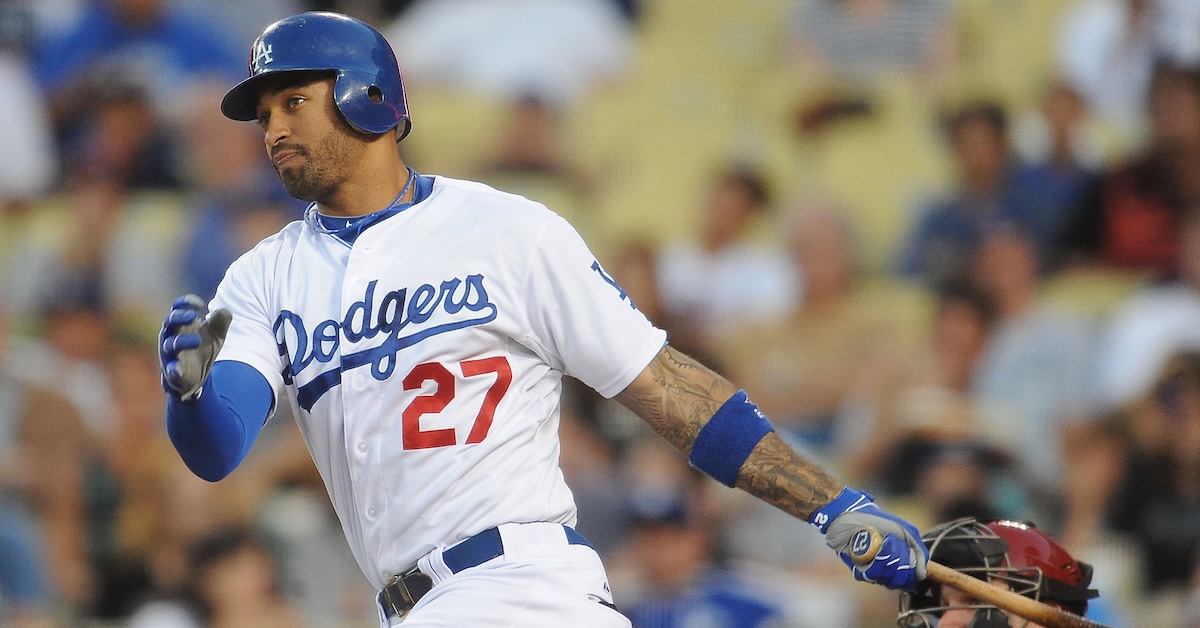
From being called out publicly by his general manager, manager, and third base coach during an historically wretched season one year, to being robbed of an MVP award after falling just short of a 40-homer, 40-steal campaign the next, Matt Kemp was an enigma. Because he focused more on basketball than baseball growing up, his instincts for the sport sometimes lagged behind his physical abilities, but at his best, he was a superstar, and a sight to behold thanks to his speed and power — a combination of traits that earned him the nickname “The Bison.” He made three All-Star teams and won two Gold Gloves (despite subpar metrics), but unfortunately, a series of injuries to his shoulders and legs compromised those abilities. The $160 million contract he signed after that near-MVP 2011 season became a millstone that sent him from team to team during its eight-year run.
…
Matthew Ryan Kemp was born on September 23, 1984 in Midwest City, Oklahoma, the son of Carl Kemp and Judy Henderson. Carl worked as a field manager for Oklahoma Gas and Electric, while Judy worked as a nursing assistant and at a restaurant while pregnant. After Matt was born, she earned her degree and became a registered nurse.
While growing up in Midwest City, a suburb of Oklahoma City, Matt lived with Judy and her mother, a dressmaker named Doris Mukes; his father was an active presence, and he was surrounded by aunts, uncles, and cousins as well. As a child, he played Little League baseball, got hooked on watching the Braves on TBS with one of his cousins, and called Frank Thomas and Ken Griffey Jr. his favorite players. By his own admission, he was chubby as a child, but earned the nickname “The Little Big Hurt” and enjoyed playing the Big Hurt Baseball video game.
For all of that, basketball was Kemp’s first love. At Midwest City High School, he starred as a 6-foot-4 guard on a team with future Duke University star and Boston Celtic Shelden Williams, earning All-City honors and helping his team win back-to-back state titles. Despite scholarship offers from schools such as the University of Oklahoma, Oral Roberts, and Wichita State, Kemp didn’t have the grades to maintain a Division I basketball scholarship.
“He was one of the best basketball players to come through Midwest City,” Rodney Dindy, his high school coach, told The Oklahoman in 2005. “He was a 6-foot-4 guard who could get to the basket. He could score and he was strong… He always had the attitude that he was going to be successful.”
Given Kemp’s size and his college prospects, his father convinced him that baseball provided a better opportunity for success. Solely focused on the diamond as a senior, he earned All-City and All-State honors and “created a buzz among area scouts as the draft approached,” as Baseball America wrote in its 2003 pre-draft evaluation while noting his athleticism and lack of polish: “Kemp has an enthralling speed/power combination. He has few baseball instincts as he’s just learning the game.”
As MLB.com’s Ken Gurnick wrote in 2011, Kemp “showed up on the Dodgers’ radar by accident, according to [scouting director Logan] White, who joined scout Mike Leuzinger at a tournament looking to see a hyped left-handed pitcher who never made it. White, however, liked the right fielder with the ‘baby fat,’ was confident Kemp would make the switch from basketball and signed him for $130,000.”
That bonus came after the Dodgers drafted Kemp in the sixth round in 2003; their first-round pick that year was righty Chad Billingsley. Kemp began his professional career with the Dodgers’ rookie-level Gulf Coast League affiliate, battling homesickness and hitting just .270/.298/.346 in 43 games; his one homer and two steals all occurred during the season’s final game. “The first year, I would get a lot of voice messages — ‘Don’t know about this Matt Kemp kid. Very long swing,'” White told Gurnick.
Kemp started to put it together in 2004, hitting .288/.330/.499 with 17 homers and eight steals at A-level Columbus before a late-season promotion to High-A Vero Beach, where he returned for the 2005 season and hit .306/.349/.569 with 27 homers — 22 in a hitter-friendly home park, with a .749 SLG — and 23 steals in just 109 games. While playing in the Arizona Fall League after that breakout season, he lived with Junior Spivey, then a Nationals infielder and an Oklahoma City native. “We wouldn’t work out for two hours a day, we’d work out for seven or eight hours,” Kemp told the Los Angeles Times’ Steve Henson in 2006. “He told me not to complain about it, just get in there and bust it.” The workouts helped Kemp shed his baby fat; he dropped from 250 pounds to 230, with his body fat decreasing from 18% to 8%.
“Kemp is still more reliant on athleticism than a good approach at the plate, and is particularly vexed by breaking stuff,” wrote Baseball Prospectus in its 2006 annual book; Baseball America ranked him no. 96 on its Top 100 Prospects list that spring, echoing that theme but noting that he did make adjustments over the course of the previous season.
The Dodgers were coming off a 71-91 season and a busy winter, having hired general manager Ned Colletti and manager Grady Little and added free agents such as Rafael Furcal, Nomar Garciaparra, Kenny Lofton, and Bill Mueller. After a 12-14 start in 2006, they called up 24-year-old left fielder Andre Ethier — whom they had acquired from the A’s over the winter — from Triple-A Las Vegas, and a few days later, they brought up 23-year-old catcher Russell Martin as well. The team won 16 of 20 games once the latter debuted, climbing from last in the NL West to second. Kemp, who was off to a strong start at Double-A Jacksonville, joined the suddenly-hot squad, debuting in the majors on May 28 against the Nationals; he went 1-for-4 with an eighth-inning single off reliever Jon Rauch, then the next day went 2-for-3 with a walk, three runs scored and two RBIs against the Braves. On June 1, he clubbed his first homer, a three-run shot off the Phillies’ Gavin Floyd, then added one in each of the next two games, and altogether homered seven times in his first 15 games while batting .378/.420/.867.
Inevitably, however, Kemp cooled off, and when he slugged .286 while striking out 30 times in 83 plate appearances over a four-week stretch that extended just past the All-Star break, the Dodgers demoted him to Triple-A. He returned in September but started just five of the final 28 games, finishing at .253/.289/.448 (85 OPS+) with -0.2 WAR; he went homereless in his final 116 plate appearances. Though the 88-74 Dodgers claimed the Wild Card spot, Kemp wasn’t included on the roster as the Mets swept them out of the Division Series.
With Lofton departing in free agency, the Dodgers had a chance to clear a path for Kemp in center field, but instead signed Juan Pierre to a five-year, $44 million deal. Kemp opened the season shoehorned into a right field job share with Ethier, but in his fifth game, he separated his right shoulder by colliding with the Plexiglas covering the right field scoreboard. The team optioned him to Las Vegas once he was healthy, and he didn’t return until early June. Though he didn’t shake free of the job share, he hit a sizzling .342/.373/.521 (127 OPS+) with 10 homers, 10 steals, and 1.6 WAR in 311 plate appearances. The Dodgers finished just 82-80, however, and as their season slipped away, Jeff Kent criticized the team’s young players as lacking professionalism and being unable to control their emotions. The dour second baseman didn’t name names, but Kemp and first baseman James Loney publicly took umbrage, with Kemp responding, “Having fun is part of the game. If you came up here and you were serious all the time, that’s not fun. Joking with your boys, that’s fun. It helps you relax. You don’t have to think of all the pressures. You think of just having fun. But we’ve been serious when we get between the white lines.”
In the end, the Dodgers fired Little and replaced him with Joe Torre, who had just been let go by the Yankees after winning six pennants and four championships in 12 seasons. Under Torre, Kemp put together a couple of very good seasons in 2008 (.290/.340/.459, 110 OPS+, 18 HR, 35 SB, 3.9 WAR) and ’09 (.297/.352/.490, 127 OPS+, 26 HR, 34 SB, 4.9 WAR) while helping the Dodgers win division titles and advance as far as the NLCS; the Dodgers’ 2008 Division Series victory over the Cubs was their first playoff series win in 20 years. Kemp went just 7-for-28 with three doubles but only one RBI during the 2008 postseason, but he began the ’09 Division Series against the Cardinals by hitting a two-run first-inning homer off Chris Carpenter in a 5-3 win. He hit just .206/.229/.382 that fall, however, with his only other RBIs coming in the Dodgers’ defeats in Games 4 and 5 of the NLCS against the Phillies. After the season, Kemp won his first Gold Glove, albeit with -4 DRS in center field, though his 14 assists led all National League outfielders.
Things began to fall apart for Kemp in 2010, after an offseason in which he signed a two-year, $10.95 million extension and started dating pop star Rihanna — a confluence of events that would lead to speculation about misplaced priorities and a lack of focus, and that didn’t lack for conflict or controversy. He started hot, but Colletti publicly took issue with aspects of his game in late April, telling radio station KABC, “The baserunning’s below average. The defense is below average. Why is it? Because he got a new deal? I can’t tell you.”
Kemp’s offense tailed off in June; after a stretch in which he struck out eight times in 14 plate appearances over a three-game span, Torre benched him for three straight games, openly citing Kemp’s offensive slump. The Los Angeles Times’ Dylan Hernandez soon reported that the benching stemmed from a confrontation between Kemp and bench coach Bob Schaefer over the center fielder’s failure to back up second base on a throwing error by Martin; Kemp countered by complaining that he’d been told to set up too deep to back up the play. Torre only returned Kemp to the lineup after the center fielder approached him to clear the air.
Colletti and Schaefer both had points, as Kemp’s defense in center field in 2010 was off-the-charts dreadful, mainly due to his lack of range and struggles throwing out baserunners. He set a single-season, single-position record with -37 DRS, falling short only of Adam Dunn’s -43 DRS at the two outfield corners and first base from 2009. And while he hit a career-high 28 homers, his .249/.310/.450 (106 OPS+) line was unremarkable, and he set dubious highs in strikeouts (170, a franchise record) and caught stealing (15). In all, his -1.1 WAR was the third-lowest of any NL player with at least 300 plate appearances. The Dodgers finished 80-82, and Torre — who clearly had grown weary of the job of managing — stepped down at season’s end.
“He was 25, a pro athlete in LA with money in his pocket,” wrote Molly Knight for a 2012 feature in ESPN The Magazine. “He hit clubs like the Colony and Drai’s and events at the Playboy Mansion. He was photographed around town as arm candy for Rihanna.” More:
[H]e was the symbol of the Dodgers’ malaise. Third base coach Larry Bowa said, “I wish I had Matt Kemp’s tools because I would be in Cooperstown.” Ned Colletti gave a radio interview in which he questioned Kemp’s effort. Soon rumors swirled that Kemp could be traded.
Kemp felt misunderstood. But if anything, Kemp had allowed himself to be misunderstood, his stoicism forcing everyone to fill in the gaps between the guy they saw sputtering on the field and partying in the limelight.
For his part, Kemp took the criticism in stride. “There’s more there,” he said in response to Bowa’s comments. “I agree. It’s something I need to sit here and think about and then change.”
Kemp regrouped from that bad year by spending the winter training in Arizona, cutting junk food from his diet and losing 15 pounds; his relationship with Rihanna reportedly ended that winter as well. Enthusiastic about playing for new manager Don Mattingly, previously the hitting coach under Torre, mentored by 85-year-old Dodgers legend Don Newcombe, and more focused at every turn, he posted one of the best seasons in Dodgers history, batting .324/.399/.586, while his 39 homers, 115 runs, 126 RBIs, 172 OPS+, and 8.0 WAR all led the NL; he fell one homer shy of becoming just the fifth player with a 40-40 season. He made his first All-Star team and won his second Gold Glove (albeit with -7 DRS), but lost out to Ryan Braun for NL MVP honors — shortly before Braun was suspended 50 games for testing positive for elevated levels of testosterone. Braun successfully appealed the suspension, smearing the sample collector in the process, but the 2013 Biogenesis Clinic bust earned him a suspension that stuck, tarnishing his award and his career.
The Dodgers rewarded Kemp’s brilliant season by signing him to an eight-year, $160 million extension, at the time a record for an NL player and tied for the seventh-largest ever — and a shock given the tight-fistedness of owner Frank McCourt. Unfortunately, injuries prevented Kemp from producing a follow-up that was anywhere near his 2011 level. He was absolutely on fire in early 2012, homering nine times during the Dodgers’ season-opening 12-3 run and hitting .359/.446/.726 through May 13, when he strained his left hamstring while running out a groundball. His trip to what was then the disabled list ended a streak of 399 consecutive games, the longest active one in the majors. It was just a Grade 1 strain, but when he returned to the lineup on May 29, he didn’t even make it through two games before re-aggravating it while scoring from first base on an Ethier double; in the dugout, he broke a bat over his knee in frustration. He missed six weeks — including the All-Star Game, for which he’d been selected — but hit well upon finally returning to the lineup.
Everything changed when Kemp crashed into Coors’ Field’s outfield wall while running full speed in pursuit of a Josh Rutledge fly ball on August 28, pinning his left shoulder in the collision. He actually stayed in the game for two batters before being pulled, and missed just two games before returning to the lineup, but he slumped in September, finishing at .303/.367/.538 (147 OPS+) with 23 homers but just nine steals and 2.8 WAR. His injuries probably cost the Dodgers a playoff spot; the team finished 86-76, two games behind the Cardinals, who claimed the NL’s second Wild Card berth in the first year of the new format. On October 5, Kemp underwent arthroscopic shoulder surgery, with Dr. Neal ElAttrache repairing tears in both his labrum and rotator cuff, damage more extensive than initially expected.
While Kemp opened 2013 in the Dodgers’ lineup, he homered just twice and slugged .335 through late May before going on the DL with a right hamstring strain. He missed nearly four weeks, and played in just 10 games before being sidelined again, this time by irritation in his left acromioclavicular joint. He received a cortisone injection, sat for 15 days, and after going 3-for-4 with a double, a homer, and three RBIs in a game against the Nationals on August 21, sprained his left ankle while making an awkward slide into home plate. He missed another eight weeks, then played 11 games in September before being shut down due to continued swelling in the ankle. The Dodgers, who had thrived with rookie Yasiel Puig playing right field while Ethier slid over to center, left Kemp off their playoff roster; they were ousted by the Cardinals in a six-game NLCS. Kemp’s final numbers for 2013: 73 games played, six homers, nine steals, a .270/.328/.395 (104 OPS+) line, and 0.7 WAR.
After the season, Kemp underwent a pair of surgeries to address arthritic changes in his left shoulder — bone-on-bone — and clean up his left ankle; that procedure reportedly “involved removing several spurs and a loose body, and doing a microfracture on the talus bone.” Despite missing the first five games of the 2014 season as his ankle recovered, he played 150 games and hit a robust .287/.346/.506 (140 OPS+), but his -23 DRS across all three outfield positions limited him to 1.2 WAR, and Mattingly’s juggling of his highly-paid outfielders created distractions in the clubhouse. The Dodgers won the NL West with 94 victories, and while Kemp went 6-for-17 in the Division Series against the Cardinals, with a decisive eighth-inning solo homer off Pat Neshek in Game 2, that proved to be the team’s only win in the series.
A week after the Dodgers were eliminated from the 2014 postseason, the team hired Andrew Friedman as president of baseball operations and bumped Colletti into a senior advisory role. Friedman soon went about radically reshaping the Dodgers’ roster through a flurry of December trades that had so many moving parts and complications that they took several days to complete. In one, they sent Kemp and catcher Tim Federowicz to the Padres — the first significant move of A.J. Preller’s tenure as general manager — in exchange for catcher Yasmani Grandal and pitchers Zach Eflin and Joe Wieland; Eflin was flipped to the Phillies in a deal for Jimmy Rollins. As part of the Kemp trade, the Dodgers agreed to pay $32 million of the $107 million remaining on his contract, an amount that required approval from the commissioner before the deal could be completed; what’s more, Kemp’s physical showed that he had developed arthritis in both hips, though the slugger insisted that he felt fine.
The deal was a shock, but from the Dodgers’ standpoint, it was the right move, as Kemp’s defense and the cumulative effect of his physical issues offset the value of his bat — a reality that the Padres would soon confront. He hit 23 homers in 154 games for San Diego in 2015, and on August 15 became the first player in Padres history to hit for the cycle, but netted just 0.6 WAR while putting up -14 DRS in right field. He hit 35 homers and drove in 108 runs in 156 games in 2016, including 23 homers in 100 games for the Padres, but on July 31, he was traded to the Braves along with $10.5 million in exchange for Héctor Olivera, who was under an 82-game suspension for violating the league’s domestic violence policy and would be released just days later. The deal was all about swapping bad contracts, as Olivera was still owed $28.5 million of the $62.5 million on the six-year deal the Dodgers signed him to in 2015 after he defected from Cuba.
With -16 DRS, Kemp totaled just 0.3 WAR in 2016, but things soon went from bad to worse. A recurrent right hamstring strain limited him to 115 games in 2017, and he hit just .276/.318/.463 (101 OPS+) with 19 homers; with -16 DRS in left field, he set a new career low with -1.3 WAR.
The trail of bad paper attached to Kemp came full circle in December 2017, when he was traded back to the Dodgers along with $4.5 million for Charlie Culberson, Adrián González, Scott Kazmir, and Brandon McCarthy, a group collectively owed over $50 million for 2018; the move helped the Dodgers get under the competitive balance tax threshold. The reigning NL champions already had a logjam in the outfield and were expected to flip Kemp to an AL team that could park him at designated hitter, but Kemp reported to camp having lost a reported 40 pounds, played well during spring training, and cracked the lineup when Justin Turner’s broken wrist opened up time for Enrique Hernández on the infield. Improbably, Kemp was voted into the NL All-Star team’s starting lineup on the strength of a .310/.352/.522 performance with 15 homers; along with Bryce Harper and 34-year-old first-time All-Star Nick Markakis, he was part of a trio so unlikely that I wrote about their separate paths to that point.
Inevitably, Kemp cooled off, losing playing time in the crowded outfield during the second half and finishing at .290/.338/.481 (121 OPS+) with -7 DRS and 1.2 WAR. While the Dodgers returned to the World Series, losing in five games to the Red Sox, Kemp started just five of their 16 postseason games, and all four of his hits, including a solo homer off Chris Sale in the second inning of the World Series opener, occurred in defeats.
For the third straight December and the fourth in a six-year span, Kemp was traded again as part of a salary dump, this time along with $7 million, Puig, Kyle Farmer, and Alex Wood in an exchange with the Reds for Homer Bailey, Jeter Downs, and Josiah Gray, none of whom ever played a game for the Dodgers (though Downs was part of the 2020 Mookie Betts trade and Gray was sent to Washington the following year in the Max Scherzer/Trea Turner deal). Kemp played in just 20 games for Cincinnati before losing another battle with an outfield wall, this time breaking a rib in pursuit of a drive by Wil Myers on April 21 at Petco Park. When he came off the injured list in early May, the Reds released him. The Mets signed him to a minor league deal, but after eight games at Triple-A Syracuse, further discomfort with his ribs sent him to the IL, and the Mets released him on July 12.
The Marlins brought the 35-year-old Kemp to spring training on a minor league deal in 2020, but he struggled before the coronavirus pandemic shut everything down, and drew his release just before camps reopened. When COVID hit the Rockies hard in early July — and when Ian Desmond opted out of playing the season — they signed Kemp to a minor league deal. Once the shortened season began, he shared DH duty but hit just .239/.326/.419 (89 OPS+) with six homers.
A free agent again, Kemp hoped to continue his career, but MLB and the players union’s inability to agree on using the universal designated hitter for 2021 closed some doors. He was one of the biggest names among the many unsigned players with major league experience who joined Team USA for the Olympic qualifier, but went 0-for-4 in his only appearance, missed the cut for the Olympic squad, and never played another competitive game. After joining the Dodgers in an advisory capacity in February 2024, he announced his retirement via an Instagram post on May 1. On August 11, he signed a one-day contract with the team, which held a formal retirement ceremony at Dodger Stadium in his honor.
It’s tempting to wonder how good Kemp could have been if not for the slew of injuries, or at least a situation where he could have DHed regularly late in his career. Instead of Cooperstown, he’s one for the Hall of What Ifs, but at his best, he was something special.
Brooklyn-based Jay Jaffe is a senior writer for FanGraphs, the author of The Cooperstown Casebook (Thomas Dunne Books, 2017) and the creator of the JAWS (Jaffe WAR Score) metric for Hall of Fame analysis. He founded the Futility Infielder website (2001), was a columnist for Baseball Prospectus (2005-2012) and a contributing writer for Sports Illustrated (2012-2018). He has been a recurring guest on MLB Network and a member of the BBWAA since 2011, and a Hall of Fame voter since 2021. Follow him on BlueSky @jayjaffe.bsky.social.
I was at that Braves game mentioned above, his second game ever – I can now see from the box score that he went 2-3 with a walk and a sac fly, and I just remember that this kid I’d never heard of absolutely was all over the field and they could not get him out. I wasn’t remotely surprised that he became a superstar. I’m sorry his decline came as swiftly as it did, and that we didn’t get more years of him at the absolute height of his powers. He really was special.