The regular season has gotten underway and we’ve already seen a few teams get off to some surprising starts. The NL West looks like it’s shaping up to be the most competitive division in baseball. Meanwhile, the Braves inspired Michael Baumann to reference Biblical plagues in the headline of his piece on their woeful first week.
Last year, we revamped our power rankings using a modified Elo rating system. If you’re familiar with chess rankings or FiveThirtyEight’s defunct sports section, you’ll know that Elo is an elegant solution that measures teams’ relative strength and is very reactive to recent performance. To avoid overweighting recent results during the season, we weigh each team’s raw Elo rank using our coin flip playoff odds (specifically, we regress the playoff odds by 50% and weigh those against the raw Elo ranking, increasing in weight as the season progresses to a maximum of 25%). The weighted Elo ranks are then displayed as “Power Score” in the tables below. As the best and worst teams sort themselves out throughout the season, they’ll filter to the top and bottom of the rankings, while the exercise will remain reactive to hot streaks or cold snaps.
First up are the full rankings, presented in a sortable table. Below that, I’ve grouped the teams into tiers with comments on a handful of clubs. You’ll notice that the official ordinal rankings don’t always match the tiers — there are times where I take editorial liberties when grouping teams together — but generally, the ordering is consistent. One thing to note: The playoff odds listed in the tables below are our standard Depth Charts odds, not the coin flip odds that are used in the ranking formula. Read the rest of this entry »
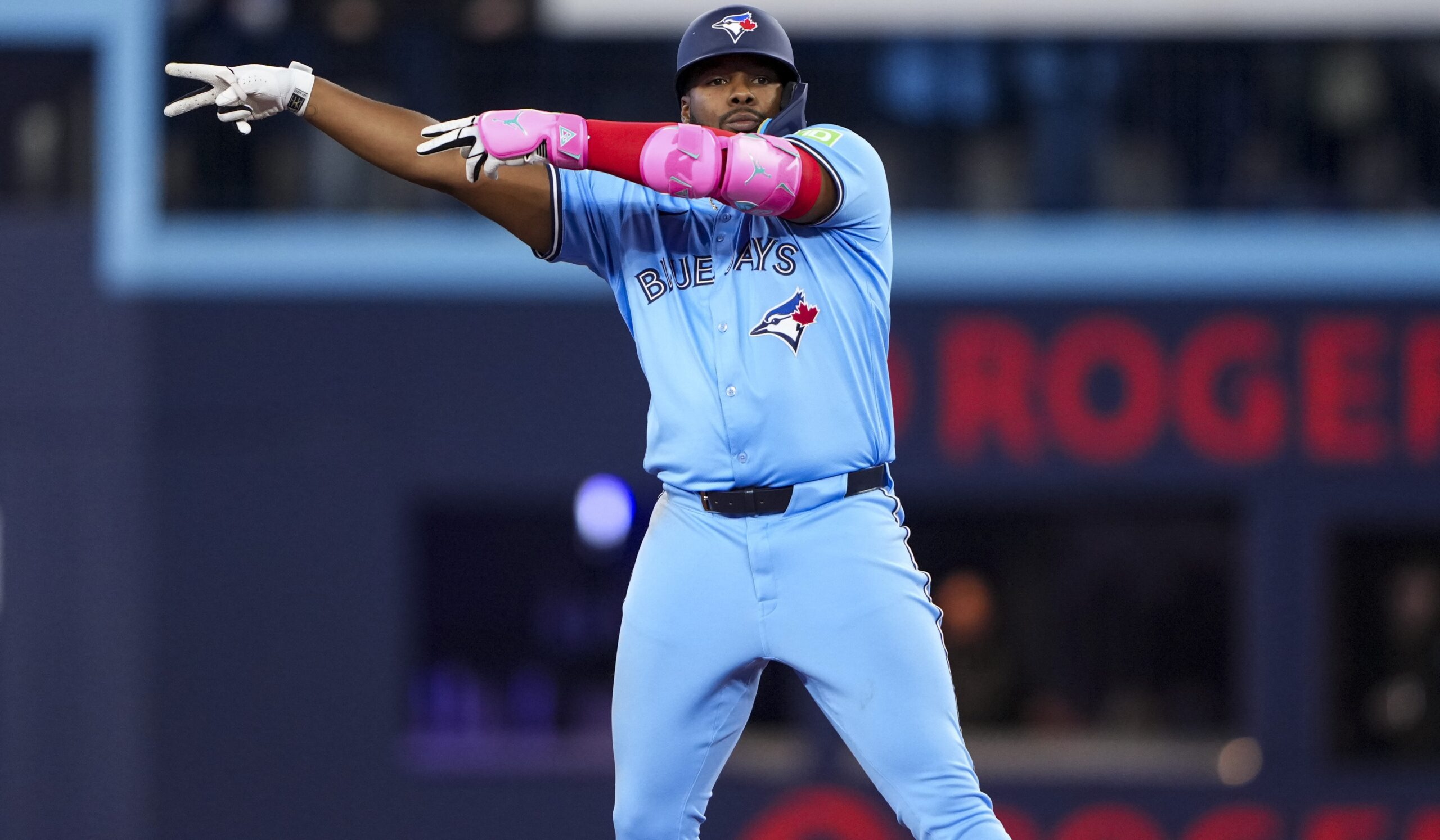
Then he changed his mind. I try to avoid the impulse to tell baseball players what to do with their careers, but I’ll say this: $500 million is a really, really good reason to abandon one’s previous position.
Guerrero’s $500 million contract extension with the Blue Jays starts next year, runs for 14 years, and contains a full no-trade clause but no opt-outs. The intention, then, is to keep Guerrero in Toronto for the rest of his career. Read the rest of this entry »
Dylan Moore saw an ideal opportunity when he signed with the Seattle Mariners as a minor-league free agent in November 2018. Following a solid season split between Double-A and Triple-A in the Milwaukee Brewers organization, Moore had been discussing best scenarios with both his wife and his agent when Jerry Dipoto called. The Seattle GM told him, “Hey, we’ve got a spot you could win out of camp. What do you say?” Moore responded, “Let’s do it.”
Seattle’s Swiss Army Knife made a shrewd decision — as did Dipoto. In seven seasons with the Mariners, Moore has not only played every position besides catcher, he’s been slightly above-average with the bat. In just under 1,700 career plate appearances, the 32-year-old has swatted 54 home runs and logged a 104 wRC+. Moreover, he’s swiped 105 bases, including a team-high 32 last season.
Defensive versatility is arguably his greatest asset. Moore has already seen action at three infield positions this year, and his 2024 ledger includes 15 or more starts at four different positions. More than anything, it’s his ability to play all over the diamond that makes him the longest-tenured current Mariner. Moore understands that as well as anyone.
“I’ve gotten exponentially better since signing with Seattle,” the 2024 utility-position Gold Glove winner told me. “I’ve been really fortunate to have really good coaches, like Bone [renowned infield coach Perry Hill], who are making sure that I’m ready to go at any position. I work hard on my defense. I have a lot of pride in what I do, especially defensively. Versatility is what keeps my value up.”
Moore’s assessment of his offensive contributions stood out in our late-March conversation. Read the rest of this entry »
You may have noticed that this is the Year of the Kick-Change. And you may have noticed that last year was the Year of the Splitter, and the two years before that were the Year(s) of the Cutter, and before those years came the Year of the Sweeper and the Year of the High Four-Seamer. You may have noticed that there have been a lot of Years lately, is what I’m saying. And that’s before we even get into the Summer of the Gyro Slider, the Month of the Death Ball, the Fortnight of the Vulcan Change, the Week of the Slip-Change, and the glorious Day of Rasputin’s Cradle. We seem to be living in some sort of pitch type zodiac calendar and I’d like to talk about why that is. If you’re a regular FanGraphs reader, I may not say any one thing that’s totally new to you, but I think there’s value in putting all the pieces together to give a sense of the way pitching has evolved in recent years.
When I interviewed for this job back in 2022, one of the questions I had to answer was, “What do you think is the story of baseball right now?” My answer was pitch design. It felt like every day we’d learn about some new innovation in training, technology, or biomechanics that allowed pitchers to discover new pitches and refine the ones they already had. Although plenty has happened over the last three years, if you asked me that question again today, I’d probably give you the same answer. Read the rest of this entry »
Like you, I have read roughly a thousand articles about torpedo bats in the last four days. The bats, which look funny to us right now and will look normal to us in a couple months, taper at the end and bulge slightly at the sweet spot. Like so many good ideas, transferring that mass from the end of the bat, where the batter doesn’t want to make contact, to the sweet spot, where they do, is so simple that it teeters back and forth between elegance and silliness. Reasonable people can smack themselves in the forehead and think, “How is it possible that nobody ever thought to do this before?” Reasonable people can also giggle at pictures of big chonky bowling pin bats.
This innovation was possible because the rules around bats are fairly permissive. The rulebook spends one page on bats and nearly three pages on balks. Given that those three pages do almost nothing to clarify what does or does not constitute a balk, one page for bats seems pretty slight. In fact, we can boil the rules down to one quick sentence. As Patrick Dubuque wrote on Monday for Baseball Prospectus, bats must be solid wood, round, shorter than 42 inches, and no wider than 2.61 inches. That’s pretty much it. Not only does that sentence not contain many rules, but those rules also give batters some serious latitude. No one on earth is using a 42-inch bat. That’s 64% as tall as Jose Altuve. Marucci and Louisville Slugger don’t even offer bats that are longer than 34 inches. Babe Ruth’s famously enormous bats topped out at 36 inches. Fungo bats top out at 37, which means they’d be perfectly legal to use in a game, and they’re not barely even half an Altuve. The rulebook might as well say that bats may only be as long as the Mississippi River.
Apparently, no one was approaching the diameter limits either. There’s a good reason for that. If you were to increase the width of the barrel to the maximum 2.61 inches, until recently, you’d also be increasing the entire head of the bat too. You’d end up with a bat that was too heavy, and more specifically, too top-heavy. You’d feel like you were swinging a sledgehammer. That’s way too much mass to add to the bat. Eventually, someone was going to realize that you don’t have to increase the entire head of the bat.
Brad Penner-Imagn Images
Researcher Erica Block found this idea (under the name the “bottle bat”) lurking in the American Journal of Physics all the way back in 1963, but the someone who finally made it happen was physicist Aaron Leanhardt, who taught at the University of Michigan for seven years. He is now the Marlins’ field coordinator and was working in the Yankees’ minor league hitting department when he had the idea. “It wasn’t until now that maybe anyone really thought about this, myself included,” Leanhardt told reporters. “You show up every day, you put the glove on you’re given, swing the bat that you’re given, you put the spikes on that you’re given and you go about your day as best as you can, and every now and then, it takes time to question what you’re doing. Couple of years ago, some of the hitters started questioning what they were doing and I just kind of responded to their questions.”
The answer to those questions is simple enough that the physicist can boil it down to a sentence. “It’s just about making the bat as heavy and as fat as possible in the area where you’re trying to do damage on the baseball,” Leanhardt told The Athletic’s Brendan Kuty. A ballplayer without a physics degree can sum it up too. Wrote Jazz Chisholm Jr. on social media, “you just move the wood from the parts you don’t use to the parts you do!” The parts you don’t use are the reason the torpedo bat works in the first place. As it turns out, you can break a bat down into three distinct parts. The example below uses Cody Bellinger’s traditional CB35 model, made by Louisville Slugger.
No wonder Bellinger ditched this hunk of mostly garbage for a torpedo bat.
The truth is that nothing matters but the barrel. When Statcast first started releasing exit velocity data, we naturally gravitated toward a player’s average exit velocity. However, smart people quickly started focusing on other metrics like maximum EV, 90th or 95th percentile EV, and best speed (which Baseball Savant has since renamed EV50). Those other metrics are useful specifically because they completely ignore weakly hit balls, which were skewing the sample. Here’s Tom Tango’s now classic graph that explains why they set the cutoff for hard-hit balls at 95 mph.
As he put it, that’s where exit velocity starts to matter. If you hit a ball off the end of the bat, you’re going to hit it weakly. If you remove some mass from the end of the bat, you’ll hit it even more weakly, but who cares? There’s hardly any difference between balls hit 80 mph and 60 mph. However, once you get past 90 mph, hitting the ball flush, that graph gets mighty steep. Every extra mile per hour really, really matters.
Leanhardt explained to ESPN’s Jeff Passan that he used the concept of a “wood budget” to think through the idea, getting more wood on the sweet spot without increasing the overall weight of the bat. “Every penny counts. The fact of the matter is you want your barrels to count the most. You want the most bang for your buck there.” Expanding and strengthening the sweet spot by packing it with as much mass and density as possible helps toward that goal. Adjusting the location of the sweet spot so that it’s right where you tend to make the most contact helps toward that goal. Traditional bats have junk in the trunk. Torpedo bats bring the trunk to the junk.
In order to get a better understanding of the forces at play, I reached out to Vivienne Pelletier, a PhD candidate in materials science at Arizona State University and one of the brightest baseball minds in the public sphere. She explained the finer points of collision efficiency and pointed out something really fascinating. Even after super-sizing the sweet spot, its exact center is still not the optimal place to hit the ball. As it rotates, the bat moves faster toward the head, meaning there will always be a spot just past the sweet spot where the fractional increase in velocity will be worth the fractional decrease in mass. “In a real swing the bat is rotating,” Pelletier told me on Bluesky. “Near your hands it moves slowly and at the head it moves fast, there’s this bat speed gradient. The actual max EVs hitters get come above the point of maximum collision efficiency (which we could call the sweet spot) because the bat moves faster up there.” Every bat has a sweet spot, and every batter’s goal should be to just barely miss it.
As it turns out, every batter has their own sweet spot too. I spoke to Andrew Aydt, Driveline Baseball’s assistant director of hitting, to talk about how torpedo bats could be customized. “When I first saw the torpedo bat come out or gain popularity,” he said, “that’s where my mind went with it too, because of Hawk-Eye being in all MLB stadiums now. Teams have very detailed measurements now from bat tracking and tracking the ball. They know exactly where guys are contacting the ball consistently. So I think this is actually a pretty big advantage for teams that have a good R&D department. They can suggest [based on the] overall average [location of contact] where they should beef up the barrel, or adjust the barrel down some or up some.”
Anthony Volpe, who tends to make contact closer to the bat’s label, had his sweet spot moved in that direction, said YES Network broadcaster Michael Kay during the second inning of Saturday’s game. While this should allow Volpe to increase his exit velocity by ensuring that his contact comes closer to the sweet spot, that location also means that his sweet spot will be moving slightly slower because it’s closer to the knob. Then again, the adjustment to the balance of the bat – lowering the moment of inertia, in physics terms – should allow him to swing the bat harder and to have better bat control, offsetting that loss. Pelletier, who has already run some numbers on the potential gains in exit velocity, explained, “The torpedo bat moves the sweet spot down, meaning that it moves somewhere that’s necessarily moving slower. So, even if you make slight gains on max collision efficiency your max EVs decrease as well.” Physics: Sometimes it’s complicated.
For players whose contact tends to come closer to the head of the bat anyway, the news is even more exciting. Adjusting the sweet spot in that direction would allow them both to make more contact at an optimal spot and to increase the bat speed at that spot (though it would also make the bat effectively heavier and worsen bat control some).
On Sunday, Tango posted the scatter plot below. It shows the contact tendencies of every player in baseball, limiting the sample to swings on which the hitter was on time and on target. He split them up into two categories: Those who get tied up (that is, make contact closer to the label) and those who flail (make contact closer to the head). As you might notice, Volpe is not where we’d expect him to be. He’s actually slightly on the flailing side of things. If anything, based on these particular data, his sweet spot should be pushed further toward the head of the bat. However, that doesn’t necessarily mean he’s swinging the wrong torpedo bat. Additional data could’ve been used during Volpe’s bat fitting that supported sliding his barrel toward the label. “I don’t know that necessarily everyone knows about it,” said Yankees manager Aaron Boone in response to a question about whether league-wide offense would increase as more teams adopted torpedo bats. When asked to elaborate, Boone said: “I think there’s just a lot more that goes into it… a lot went into doing that for our individual guys.” Tango highlighted Jhonkensy Noel as a proud member of Team Tied Up who would benefit from moving his sweet spot closer to the handle.
The odd shape is the grabby part of the torpedo bat, but the fanfare of the last week could have a bigger effect, turbocharging the trend toward hyper-customized bats. “The bat is such a unique tool,” Ryan Jeffers told Passan. “You look at the history of the game, and they used to swing telephone poles. Now you try to optimize it, and it feels like some branches are starting to fall for us on the hitting side of things.” Batters have always tinkered, and plenty of trends have swept through the league before. In the early 2000s it was maple bats, and in recent years we’ve seen trends like axe handle bats and hockey puck knobs. Customization has increased steadily. Orioles hitting coach Cody Asche told The Baltimore Banner’s Andy Kostka, “I think if you’re around clubhouses, all 30 teams, you would see a guy or two who’s adopting a bat that is fashioned maybe more specifically for their swing.”
Aydt told me that Driveline started doing bat fittings around four or five years ago. “How much is there to change the bat, or individualize bats to help a player’s performance?” he explained, focusing on the moment of inertia again. “How fast they’re swinging the bat, how hard they’re hitting the ball, consistency. Basically, their collision efficiency (or what we call smash factor), how we can improve that for guys more often, any improvements ball-flight-wise… Since we don’t manufacture bats, it was more finding a good MOI for the guy that we think would help them perform the best. And then recommending bats if they wanted or taking that to their bat manufacturer.” In the last year or two, Driveline has focused less on bat fitting, because bat manufacturers have started doing their own fittings. Aydt mentioned that Marucci has a baseball performance lab for that very purpose. When he saw the torpedo bats take the league by storm, his mind leapt to even more advanced frontiers.
In the coming year or two, we’ll be seeing more torpedo bats specifically, and more bats that are customized to an individual player generally. But they could also be tailored for a specific situation. “I think they could even get more granular than that, having a range of bats made for guys,” Aydt said. “And then depending on that night’s starter or the matchup they’re going to see, they could decide which bat to go with… based off the pitch types they’re seeing, if the hitter misses more at a certain part of the bat based off different pitches or what they’re most likely to see that night. Or if guy has attacked more inside, attacked more outside consistently against that hitter… If they’re going to be facing a ton of velo that night and they’re a guy who doesn’t consistently hit velo well, it could be a good thing to lower that MOI. So that would be moving more of the mass closer to the hands, which is essentially lowering the swing weight. So it’s easier for them to get up to speed quicker, improving the acceleration of the bat to help them catch up to velo.”
Maybe you’re like Rafael Devers and starting the season with a disastrous run of strikeouts because you’re behind on absolutely everything. You’d be a good candidate for a Volpe bat with a lower MOI, helping you get around quicker. Maybe you’re facing a pitcher who loves to attack the outside corner. It might make sense to try a bat with a higher MOI and more mass toward the head. Aydt even raised the possibility of having a two-strike bat. When you fall behind, the bat boy runs out to hand you a bat with a lower MOI so that you can prioritize quickness and barrel control over power.
Eric Hartline-Imagn Images
It’s also possible the torpedo bats will be banned, as one front office source predicted to R.J. Anderson of CBS Sports. If we do see ball boys running out to trade bats every time a hitter falls behind in the count, the league might feel it has to act. It certainly wouldn’t take a particularly dramatic rule change. The rules would just need to specify that no part of the bat may have a diameter bigger than the diameter at a point, say, one inch from the end. It might not even push the bat section of the rulebook past a page.
As with any innovation, buy-in will be a big limiting factor. There will always be old-school baseball men eager to object on principle to any innovation. “When I got jammed, I figured out what I had to do to stop that,” said Angels manager Ron Washington, who ran a lifetime 77 wRC+. “So I didn’t worry about putting more weight in a certain area of the bat.” Current players are much more open to new ideas and technology. Some will be comfortable trying something new, or even following Aydt’s idea and tailoring their bat to the situation at hand. Others will value comfort and consistency. “It is the talk of the game right now,” said Aydt, “but it’s not going to be good for every single hitter.” Said Leanhardt, “Credit to any of the players who were willing to listen to me, because it’s crazy. Listening to me describe it is sometimes even crazier.”
According to The Athletic’s Sam Blum, the Yankees developed torpedo bats in 2022, while the Cubs started working with them last season. Brandon Lockridge was a minor leaguer in the Yankees system at the time and now serves as the small spoon in San Diego’s left field platoon. Lockridge told Blum that when Leanhardt was originally pushing players to try the bats, his pitch wasn’t about exit velocity, but rather about using the bigger barrel to turn some whiffs into foul tips. It’s possible that over the course of 600 plate appearances and 1,000 swings, an extra fraction of an inch could save a player from a third strike or two. However, it’s hard to imagine that this selling point was sexy enough to convince players to try something that looks so different from what they’re used to. Hitters depend on feel. If they’re not comfortable with a bat, no amount of evidence will persuade them to use it.
That’s where the name comes in. You have to imagine it’s more about marketing than anything else. As anyone who’s watched The Hunt For Red October a couple dozen times can tell you, torpedo bats actually look less like torpedoes than traditional bats do, because most torpedoes taper only ever so slightly at the end. What torpedo bats actually resemble is old-timey bombs or pregnant whales.
(Editor’s note: We consulted FanGraphs writer Michael Baumann, who’s seen The Hunt for Red October a couple hundred times, about the torpedo shape issue. His response was very involved and to be honest we started zoning out when he used the word “supercavitating.”)
But as anyone who’s worked for a major league team will tell you, all the evidence in the world won’t help an idea if you can’t sell it to the players and coaches. So while the torpedo bats may have exploded into the public’s consciousness this past weekend, their place in the game owes itself in some degree to Leanhardt’s salesmanship and the open-mindedness of the Yankees, not to mention the bat manufacturers who had to learn how to make them. None of us was there, but I will leave you with a dramatization of Leanhardt’s efforts to get these bats into the hands of the Yankees. I present to you a play in three acts.
ACT ONE
PHYSICIST: Pardon me, young baseball man. Would you be interested in experimenting with our new bowling pin bats? My calculations say that they might help you get more foul tips. [Receives wedgie.]
ACT TWO
PHYSICIST: Hello there, fellow Yankee. Might I be able to persuade you to take a couple whacks with our new juggling club bats? They ever so slightly alter the moment of intertia, and preliminary results indicate that this alteration just might result in an increase in — you know what, I’ll just shove myself into this locker.
ACT THREE
PHYSICIST: Sup, bro. Wanna try this sick-ass torpedo bat? Scientifically proven to make the ball [lowers sunglasses] explode.
First of all, Lance Lynn’s wife has a podcast. It’s called Dymin in the Rough. Good for Lance, falling in love with someone who appreciates a pun in the headline. (I, personally, would’ve gone with Shine On You Crazy Dymin, but they didn’t ask me.)
Second, I’m going to have to come up with a new answer to the question: “Who’s your favorite active ballplayer?” Because as of Tuesday morning, our guy is retired.
“Baseball season is upon us and I’m right here on the couch,” Lynn said. “And that is where I’m going to stay. So there’s the update: I’m officially retiring from baseball, right here, right now.” Read the rest of this entry »
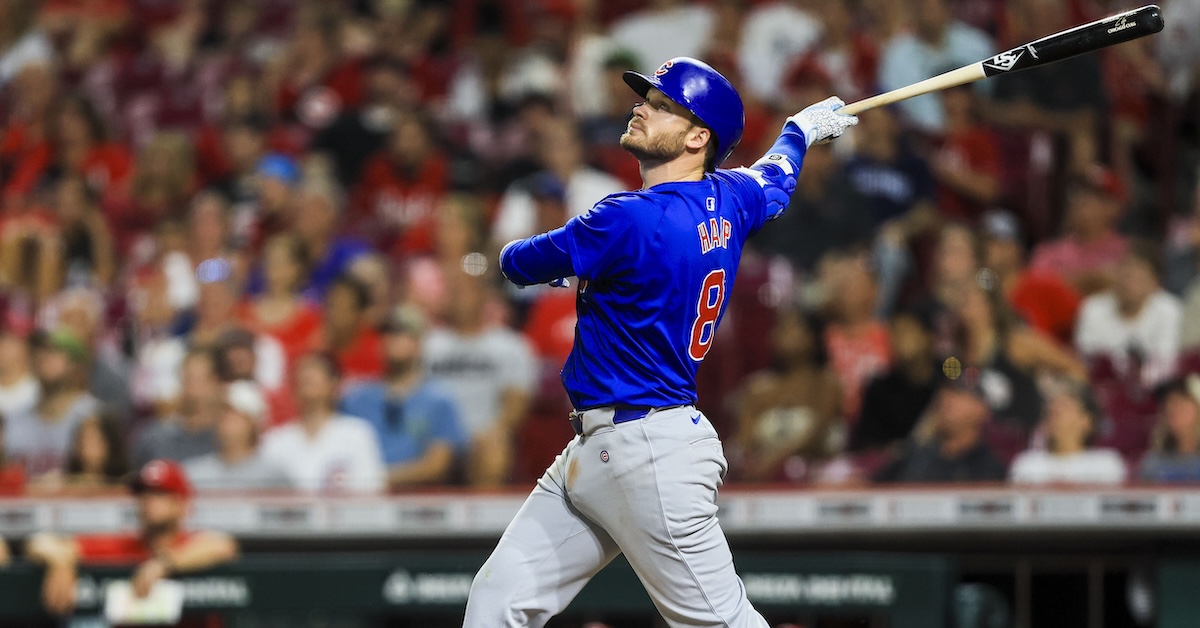
Ian Happ’s defensive future was unclear when the Chicago Cubs made him a first-round pick in the 2015 draft. The sweet-swinging switch-hitter was selected as an outfielder, but he’d also played multiple infield positions during his three years at the University of Cincinnati. That uncertainty — fueled more by versatility than any serious shortcomings with the glove — remained when he was rated the Cubs’ no. 2 prospect in January 2017. While Eric Longenhagen opined that Happ’s most expedient path to the big leagues was as a left fielder, he nonetheless had him on our list as a second baseman. Either way, Happ’s calling card was going to be his bat. As our lead prospect analyst stated, “It profiles wherever he ends up playing.”
What did Happ’s 2017 scouting report look like? Moreover, what does he think of it all these years later? Wanting to find out, I shared some of what Eric wrote and asked Happ to respond to it.
———
“The Cubs drafted him ninth overall in a draft chock full of good college hitters up top despite questions about his ultimate defensive home.”
“There definitely were questions about my defensive home,” Happ said. “I’ve played seven positions in the big leagues, so while I ended up finding a home [in left field], I think it was an asset for me to be able to play a bunch of different spots — especially on those early teams with how many good players we had.
“We needed versatility in that group. We had Addison [Russell] playing shortstop. We had Javy [Báez], [Ben] Zobrist, Tommy La Stella, and myself at second. Kris Bryant was at third and [Anthony] Rizzo at first. In the outfield, we had [Kyle] Schwarber, [Albert] Almora, Jason Heyward, Jon Jay, Zobrist, and myself. We didn’t have a bunch of set positions, so to get in the lineup you had to hit, and you had to be versatile. That’s the way Joe Maddon ran teams over there. Had I been a one-position guy, I don’t know how much I would have played in the big leagues.”
“He’s an above-average straight-line runner with decent range and an above-average arm, but his actions and athleticism are not optimal for the infield.”Read the rest of this entry »
Below is an analysis of the prospects in the farm system of the Toronto Blue Jays. Scouting reports were compiled with information provided by industry sources as well as our own observations. This is the fifth year we’re delineating between two anticipated relief roles, the abbreviations for which you’ll see in the “position” column below: MIRP for multi-inning relief pitchers, and SIRP for single-inning relief pitchers. The ETAs listed generally correspond to the year a player has to be added to the 40-man roster to avoid being made eligible for the Rule 5 draft. Manual adjustments are made where they seem appropriate, but we use that as a rule of thumb.
A quick overview of what FV (Future Value) means can be found here. A much deeper overview can be found here.
All of the ranked prospects below also appear on The Board, a resource the site offers featuring sortable scouting information for every organization. It has more details (and updated TrackMan data from various sources) than this article and integrates every team’s list so readers can compare prospects across farm systems. It can be found here. Read the rest of this entry »
Over the past six weeks, prospects from across the league have participated in spring training activity in Arizona and Florida. Some got into big league games, or participated in the Spring Breakout showcase; others have played in minor league games on the backfields for most of the last month. This spring activity has been enough to move the prospect needle for a handful of players. With the last minor league camps set to break today and extended spring training on the horizon, I’ve touched up my Top 100 list from the offseason to reflect relevant changes that players have made, as well as changes to my own thinking about them.
As you read, there are a couple of things to keep in mind, especially if you’re new to FanGraphs prospect stuff. First, the “Top 100” title is arbitrary SEO nonsense; I rank players as deep as I have them graded as 50 FV prospects or better, and as of this update, that’s 114 guys. Second, remember that Future Value is a value grade. The tools and ultimate potential upside of a player matter a lot, as does the length and consistency of a player’s performance track record and their proximity to the majors. There are players who have talent upside better than their FV grade, but if they’re risky for whatever reason, or if they’re in the low minors, I want to reflect that risk/time element in their grade.
Finally, remember that an actualized “50” is an average everyday player at a given position. Not “average” in the sense that I’m averaging every big leaguer who played that position to create a performance baseline. Rather, “average” here means that the player would fall toward the middle of the pack when we’re talking about the top 30-ish players at their position across a multi-year window. That’s a high bar. Really excellent, tenured players tend to occupy their spot on a big league roster for long periods of time. It’s hard for prospects to crack into that All-Star-caliber group, and even harder to sustain some measure of production for six-plus years of team control. Forty- and 45-grade players are good big leaguers, too, and there are many more of them across the pro baseball talent distribution than there are 50s. Read the rest of this entry »
Baseball analysts and team managers alike love to remind players and fans that Opening Day rosters are just one of many that each team will feature over the course of the season. And while that’s certainly true, the fanfare of making an Opening Day roster is an accomplishment that doesn’t get topped until players are lucky enough to find themselves as one of the 26 names on a postseason ballclub.
While Thursday’s rosters have already proven themselves to be ephemeral (RIP to Nick Gonzales’ ankle), it’s still a good opportunity to take a look back at how the rosters were constructed. Our Active Roster Breakdown will always be up-to-the-minute with the latest moves, if you’d like to peruse that at any point as rosters evolve throughout the season.
How the Players Were Acquired
Team
Homegrown
Free Agent
Trade
Waivers
Rule 5
ARI
10
9
7
–
–
ATH
8
6
7
3
2
ATL
7
8
10
1
–
BAL
8
7
7
4
–
BOS
6
9
8
2
1
CHC
6
11
7
1
1
CHW
8
8
5
4
1
CIN
10
6
9
1
–
CLE
14
5
7
–
–
COL
13
6
5
2
–
DET
12
8
4
2
–
HOU
11
7
7
–
1
KCR
11
7
8
–
–
LAA
10
9
5
1
1
LAD
6
11
9
–
–
MIA
4
3
10
7
2
MIL
5
5
13
1
2
MIN
12
6
8
–
–
NYM
8
7
9
2
–
NYY
9
9
6
2
–
PHI
6
11
8
1
–
PIT
7
7
9
3
–
SDP
3
13
8
1
1
SEA
6
5
12
3
–
SFG
12
8
5
1
–
STL
14
5
5
1
1
TBR
6
2
17
1
–
TEX
6
14
6
–
–
TOR
5
13
7
1
–
WSN
8
9
7
2
–
TOTAL
251
234
235
47
13
“Homegrown” includes draftees, undrafted free agents, and international free agents subject to IFA bonus pools. Homegrown players who re-sign in free agency without joining another team in the interim are still counted as homegrown.
The Guardians’ modus operandi for years has been to build homegrown winners, and it’s unsurprising to see the Cardinals right there with Cleveland in that category considering how little St. Louis did this offseason. Conversely, because Padres president of baseball operations A.J. Preller keeps trading away their homegrown players, there are only three of them on San Diego’s Opening Day roster.
The teams that turn to free agency most are the ones that either have struggled to produce homegrown talent in recent years or, like the Padres, have traded away the top players in their system. Either way, because they lack capable internal options, they rely on the open market to fill out their rosters.
On the flip side, both Florida teams stayed out of the free agent market almost entirely. Nearly two-thirds of the Rays’ Opening Day roster (17 of 26) were acquired via trade. Meanwhile, the Marlins have been aggressive on the waiver wire since Peter Bendix was hired as president of baseball operations after the 2023 season, and the players they’ve claimed are not just non-roster flotsam; Derek Hill and Otto Lopez are in their starting lineup, Connor Gillispie is their no. 2 starter, and Jesus Tinoco is a key setup man.
Age Breakdown
Team
<25
<30
30+
35+
Average
ARI
3
14
12
1
29.6
ATH
5
17
9
1
28.5
ATL
4
13
13
3
29.6
BAL
1
12
14
3
29.9
BOS
2
16
10
2
29.2
CHC
3
13
13
4
30.3
CHW
2
18
8
–
28.5
CIN
1
15
11
1
29.6
CLE
3
20
6
1
28.1
COL
5
15
11
2
28.8
DET
4
20
6
2
28.6
HOU
2
16
10
–
29.2
KCR
1
14
12
2
30.1
LAA
5
15
11
4
29.1
LAD
2
8
18
6
31.5
MIA
3
24
2
–
27.5
MIL
3
18
8
–
28.4
MIN
1
17
9
1
29.3
NYM
1
12
14
2
30.1
NYY
3
13
13
4
30.0
PHI
2
12
14
–
30.2
PIT
2
16
10
2
29.3
SDP
1
13
13
4
30.8
SEA
1
14
12
1
29.2
SFG
2
17
9
1
29.3
STL
5
17
9
2
28.6
TBR
4
22
4
–
27.6
TEX
3
12
14
4
30.7
TOR
–
13
13
4
30.6
WSN
5
18
8
–
27.9
TOTAL
79
464
316
57
29.3
Does it portend badly for the Dodgers that they’re the oldest team in baseball by over nine months? Well, no, they’re the Dodgers. But this list does reflect where a lot of teams are in their contention cycles. The Dodgers are in win-now mode, and while they’ll seemingly be in win-now mode in perpetuity, they’ll be doing that with older players. Even so, an aging roster doesn’t necessarily guarantee a winning one. As things stand, the Blue Jays, who have the fourth-oldest roster in the majors, appear to be nearing the end of their contention window. And that window could slam shut entirely if Vladimir Guerrero Jr. — who, at 26, actually brings their average age down — departs in free agency after the season.
Most of the teams on the other end of the age spectrum are either at the start of rebuilds (Marlins, White Sox) or are making progress but aren’t quite ready to contend yet (Nationals, A’s). Their average ages will get older as their roster gains experience and their window of contention opens. The Rays are always going to be young because they typically trade their homegrown players when they get older and more expensive.
Years of MLB Service
Team
<3
>=3, <6
6+
10+
ARI
9
7
10
2
ATH
17
4
5
–
ATL
10
6
10
3
BAL
9
11
6
1
BOS
15
4
7
2
CHC
8
9
9
2
CHW
16
4
6
1
CIN
10
10
6
–
CLE
17
4
5
2
COL
15
2
9
–
DET
14
5
7
–
HOU
11
10
5
1
KCR
11
7
8
2
LAA
11
5
10
4
LAD
5
5
16
6
MIA
23
2
1
–
MIL
15
8
3
1
MIN
8
11
7
1
NYM
10
6
10
1
NYY
12
4
10
3
PHI
6
8
12
5
PIT
12
7
7
1
SDP
8
9
9
5
SEA
10
8
8
–
SFG
14
5
7
3
STL
14
6
6
2
TBR
17
6
3
–
TEX
10
5
11
5
TOR
9
7
10
3
WSN
13
6
7
–
TOTAL
359
191
230
56
A slightly different way to look at this is by years of MLB service, which generally correlates with age but not always. For example, the Reds are a little bit older than the league-average team, but they opened the season with 20 players who have fewer than six years of service time. That’s because Cincinnati’s roster includes late bloomers Jose Trevino, Sam Moll, and Ian Gibaut.
Sticking with their youth movement, the Marlins’ most experienced players are Sandy Alcantara and Cal Quantrill, who have a combined 12 years and 60 days of MLB service entering the year. That’s a figure topped by 19 individual players on Opening Day rosters.
Lastly, let’s look at the countries where each team’s players were born.
Birth Country
Team
USA
DR
Venezuela
Canada
Cuba
Colombia
Mexico
Curaçao
Aruba
ARI
17
3
4
1
1
–
–
–
–
ATH
19
4
1
–
–
1
1
–
–
ATL
14
5
2
–
2
–
–
2
1
BAL
15
5
1
1
2
–
1
–
–
BOS
20
1
2
–
1
–
–
1
–
CHC
23
–
–
–
–
–
–
–
–
CHW
22
–
2
–
2
–
–
–
–
CIN
24
2
–
–
–
–
–
–
–
CLE
17
5
2
2
–
–
–
–
–
COL
21
2
3
–
–
–
–
–
–
DET
22
1
1
–
1
–
–
–
–
HOU
15
5
2
–
1
–
1
–
–
KCR
20
1
4
–
1
–
–
–
–
LAA
20
1
1
–
2
–
–
1
–
LAD
19
3
1
–
–
–
–
–
–
MIA
17
4
2
2
–
–
1
–
–
MIL
19
5
2
–
–
–
–
–
–
MIN
22
2
1
1
–
–
–
–
–
NYM
18
4
3
–
–
–
–
–
–
NYY
19
2
4
–
–
–
–
–
–
PHI
16
2
4
1
–
–
–
–
–
PIT
22
3
–
–
–
–
–
–
–
SDP
13
3
3
1
3
–
1
–
1
SEA
16
6
1
–
1
1
1
–
–
SFG
20
3
2
–
–
–
–
–
–
STL
24
–
1
–
–
–
–
–
–
TBR
18
3
–
–
1
–
2
–
–
TEX
22
3
–
–
1
–
–
–
–
TOR
20
1
2
1
1
–
1
–
–
WSN
19
3
2
1
1
–
–
–
–
TOTAL
573
82
53
11
21
2
9
4
2
Birth Country
Team
Japan
South Korea
Panama
Honduras
South Africa
Bahamas
Germany
Peru
Australia
ARI
–
–
–
–
–
–
–
–
–
ATH
–
–
–
–
–
–
–
–
–
ATL
–
–
–
–
–
–
–
–
–
BAL
1
–
–
–
–
–
–
–
–
BOS
–
1
–
–
–
–
–
–
–
CHC
2
–
1
–
–
–
–
–
–
CHW
–
–
–
–
–
–
–
–
–
CIN
–
–
–
–
–
–
–
–
–
CLE
–
–
–
–
–
–
–
–
–
COL
–
–
–
–
–
–
–
–
–
DET
1
–
–
–
–
–
–
–
–
HOU
–
–
–
1
1
–
–
–
–
KCR
–
–
–
–
–
–
–
–
–
LAA
1
–
–
–
–
–
–
–
–
LAD
3
–
–
–
–
–
–
–
–
MIA
–
–
–
–
–
–
–
–
–
MIL
–
–
–
–
–
–
–
–
–
MIN
–
–
–
–
–
–
–
–
–
NYM
1
–
–
–
–
–
–
–
–
NYY
–
–
–
–
–
1
–
–
–
PHI
–
–
1
–
–
–
1
1
–
PIT
–
1
–
–
–
–
–
–
–
SDP
1
–
–
–
–
–
–
–
–
SEA
–
–
–
–
–
–
–
–
–
SFG
1
–
–
–
–
–
–
–
–
STL
–
–
1
–
–
–
–
–
–
TBR
–
–
1
–
–
–
–
–
1
TEX
–
–
–
–
–
–
–
–
–
TOR
–
–
–
–
–
–
–
–
–
WSN
–
–
–
–
–
–
–
–
–
TOTAL
11
2
4
1
1
1
1
1
1
Specifically, I’d like to highlight the players from the least-represented countries in the majors.
Baseball truly is a global game, and I hope the game continues to grow internationally so that we can have players from more countries in the years to come.