Jay Biggerstaff, Jordan Godfree and Cary Edmondson – Imagn Images
I don’t want to overstate the value of raw financial power in baseball. The Mets spent more than $320 million on player salaries, not counting luxury tax penalties, and they finished four games over .500. Money can’t buy happiness, or even a spot in the playoffs.
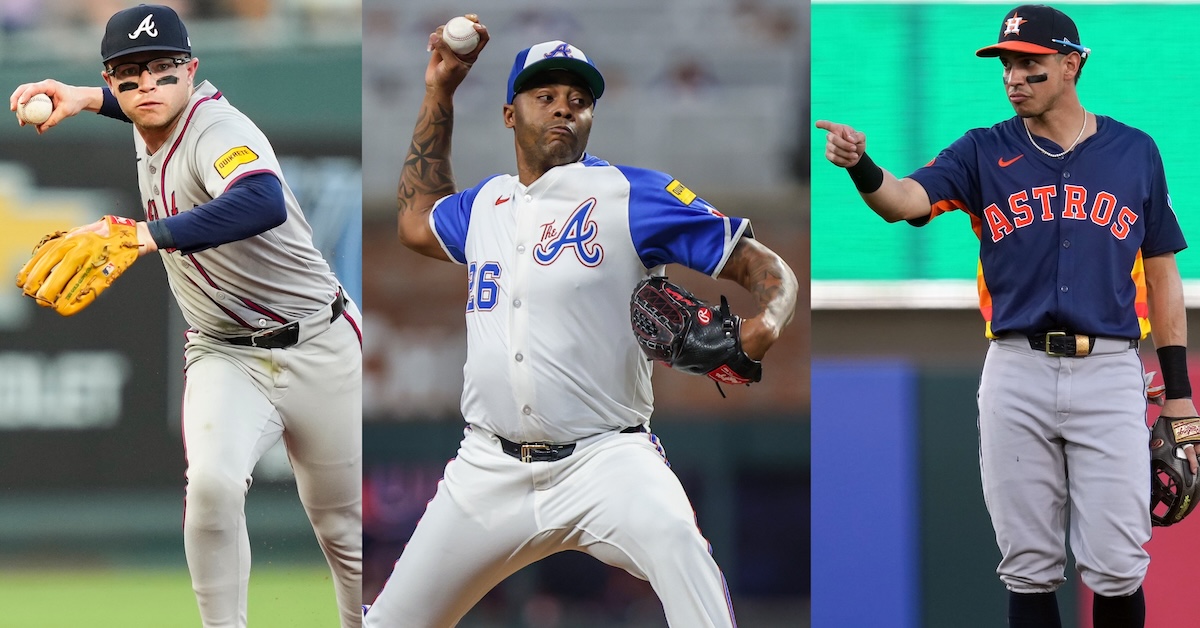
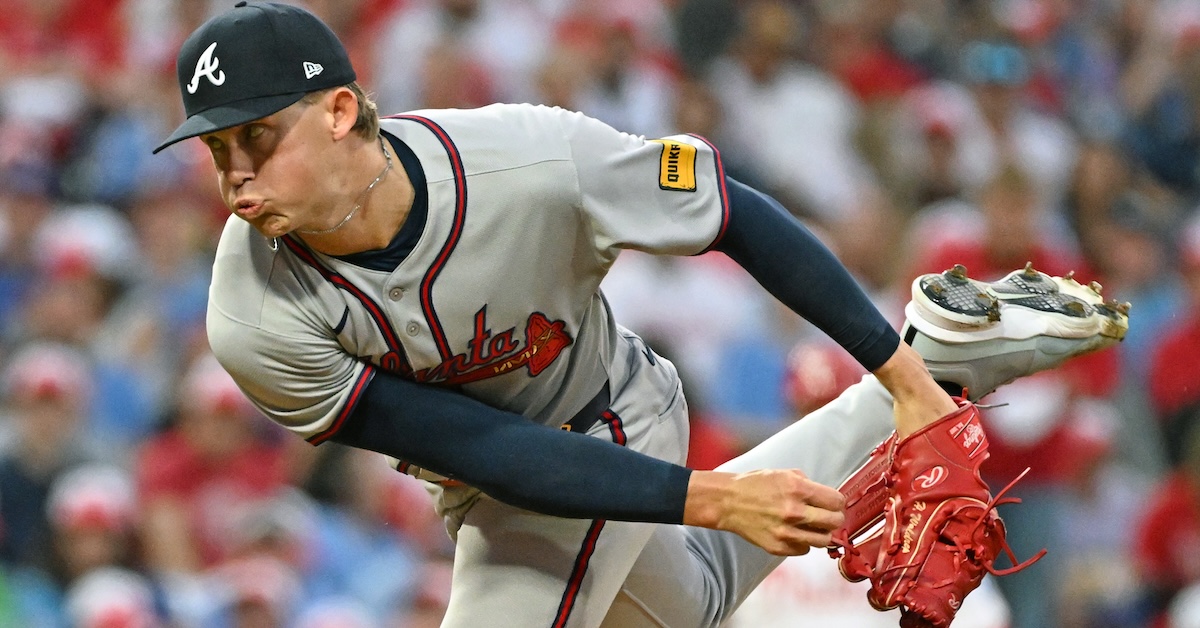
It can, however, buy you a closer and a major upgrade to your bench. So the Braves demonstrated Wednesday, when they re-signed closer Raisel Iglesias for one year at $16 million, and swapped utility infielders with the Astros, sending Nick Allen west in a 1-for-1 trade for Mauricio Dubón.
The Braves went into last season as one of the favorites to win the NL pennant only to tumble to fourth place behind the Marlins (the Marlins!) after befalling a series of farces and calamities that recall A Serious Man. Jurickson Profar got popped for PEDs, Spencer Strider and Ozzie Albies lost their juice, half the roster got hurt, it was a huge mess. Read the rest of this entry »
We’re less than a month from the Winter Meetings and the Rule 5 Draft, which means it’s a good time to evaluate every team’s 40-man roster situation. This is the time of year when teams have one final chance to protect Rule 5 eligible players by placing them on the 40-man. Eligibility is determined by a mix of how long a player has been with their parent organization and how young they were when they signed: Players who signed at 18 or younger must be added to the 40-man within five seasons, while everyone else must be added within four. RosterResource monitors Rule 5 eligibility, if you’re curious to see the lay of the land.
During the season, teams can free up roster space by placing an injured player on the 60-day IL. In the offseason, teams don’t get extra slots for injured players, which tends to put pressure on the back of the roster. The Diamondbacks are a good example of how space can tighten quickly, as they’ve currently got six pitchers battling long-term injuries occupying a spot. You may have noticed a flurry of moves immediately following the World Series, with many teams outrighting players off the 40-man in order to make room for all the guys who were on the IL.
Below, I’ve assessed every National League team’s 40-man roster situation (Eric will sort through the American League tomorrow). Some teams, like the Braves, have plenty of roster space, and thus a lot of flexibility in adding whoever they like. Others, like the Cardinals and Marlins, will face some tough choices as they seek to balance protecting interesting prospects with retaining players already on the roster, as well as finding room for prospective additions via trade or free agency. Some clubs don’t have many impact players to add, while others may need to protect a half-dozen or so guys. I’ve tried to identify which players are most likely to be added, which guys on the 40-man are vulnerable to getting lopped off in a roster crunch, and who could be moved in a deal to free up roster space. Let’s dig in. Read the rest of this entry »
Shortstop is one of the hardest positions on the diamond to fill, especially if you want anything resembling useful offensive production from the position. Nevertheless, it has been one place where help is usually available on the free agent market.
In the four full offseasons that either straddled or succeeded the last lockout, eight different teams have signed a free agent shortstop to a contract worth $140 million or more. This includes the Rangers, who did it twice in the same winter. Read the rest of this entry »
The following article is part of my ongoing look at the candidates on the 2026 Contemporary Baseball Era Committee ballot. Originally written for the 2015 election at SI.com, it has been updated to reflect recent voting results as well as additional research. For a detailed introduction to this year’s ballot, use the navigation tool above. An introduction to JAWS can be found here.
Wherever Gary Sheffield went, he made noise, both with his bat and his voice. For the better part of two decades, he ranked among the game’s most dangerous hitters, a slugger with a keen batting eye and a penchant for contact that belied his quick, violent swing. For even longer than that, he was one of the game’s most outspoken players, unafraid to speak up when he felt he was being wronged and unwilling to endure a situation that wasn’t to his liking. He was a polarizing player, and hardly one for the faint of heart.
At the plate, Sheffield was viscerally impressive like few others. With his bat twitching back and forth like the tail of a tiger waiting to pounce, he was pure menace in the batter’s box. He won a batting title, launched over 500 home runs — he had 14 seasons with at least 20 and eight with at least 30 — and put many a third base coach in peril with some of the most terrifying foul balls anyone has ever seen. For as violent as his swing may have been, it was hardly wild; not until his late 30s did he strike out more than 80 times in a season, and in his prime, he walked far more often than he struck out.
Bill James wrote of Sheffield in the 2019 Bill James Handbook:
“In all the years that I have been with the Red Sox, 16 years now, there has never been a player the Red Sox were more concerned about, as an opponent, than Gary Sheffield. Sheffield was a dynamite hitter and a fierce competitor… When he was in the game, you knew exactly where he was from the first pitch to the last pitch. He conceded nothing; he was looking not only to beat you, but to embarrass you. He was on the highest level.”
Two decades before that, James referred to Sheffield as “an urban legend in his own mind,” referencing the slugger’s penchant for controversy. Sheffield found it before he ever reached the majors through his connection to his uncle, Dwight Gooden. He was drafted and developed by the Brewers, who had no idea how to handle such a volatile player and wound up doing far more harm than good. Small wonder then that from the time he was sent down midway through his rookie season after being accused of faking an injury, he was mistrustful of team management and wanted out. And when he wanted out — of Milwaukee, Los Angeles, or New York — he let everyone know it, and if a bridge had to burn, so be it; it was Festivus every day for Sheffield, who was always willing to air his grievances. Read the rest of this entry »
The following article is part of my ongoing look at the candidates on the 2026 Contemporary Baseball Era Committee ballot. Originally written for the 2013 election at SI.com, it has been expanded and updated. For a detailed introduction to this year’s ballot, use the tool above. An introduction to JAWS can be found here.
It took four position changes — from catcher to first base, then left field, right field, and finally center field — and parts of five major league seasons for the Braves to figure out where the 6-foot-4 Dale Murphy fit. Once they did, they had themselves a franchise centerpiece, a wholesome, milk-drinking superstar whom Sports Illustrated profiled for its July 4, 1983 cover story by proclaiming, “Murphy’s Law is Nice Guys Finish First.”
The title was a reference to the slugger helping the Braves to an NL West title the previous year, their lone playoff appearance during the 1970-90 stretch. “Here’s a guy who doesn’t drink, smoke, chew or cuss,” wrote Steve Wulf. “Here’s a guy who has time for everyone, a guy who’s slow to anger and eager to please, a guy whose agent’s name is Church. His favorite movie is Frank Capra’s It’s a Wonderful Life. He’s a wonderful ballplayer.” Let the record show that Wulf did unearth some dirt on Murphy, noting that he once got a speeding ticket for doing 35 in a 25-mph zone… while running late to speak to a church group.
Murphy won the first of his back-to-back MVP awards in 1982 as well as the first of his five consecutive Gold Gloves, and made his second of seven All-Star teams. He would spend most of the 1980s as one of the game’s best players. Alas, knee problems turned him into a shadow of the player he once was while he was still in his early 30s, and he played his final game in the majors at age 37. Read the rest of this entry »
Hagen Smith has a promising future on the South Side. Drafted fifth overall in 2024 out of the University of Arkansas, the 22-year-old left-hander in the Chicago White Sox system is No. 81 on The Board with a 50 FV. Currently making up lost innings in the Arizona Fall League — he missed six weeks this summer due to elbow soreness — Smith has been described by Eric Longenhagen as possessing “a killer fastball/slider combo.”
The erstwhile Razorback’s go-to breaker — a pitch our lead prospect analyst has assigned a 70 on the scouting scale — isn’t notable solely for its bat-missing attributes.
“No, not at all,” Smith replied when asked if his slider grip is fairly standard. “I actually don’t hold any laces on the ball. My first year of college — it was a start in Omaha — I was warming up in the outfield and just kind of tweaked the grip. That’s what it’s been since then. I really don’t know why it works as well as it does. I mean, it’s a good pitch metrically, but outside of that I guess it just plays well off of my heater. It comes out of the same tunnel, and it also helps that I can throw it slower or harder when I want to.”
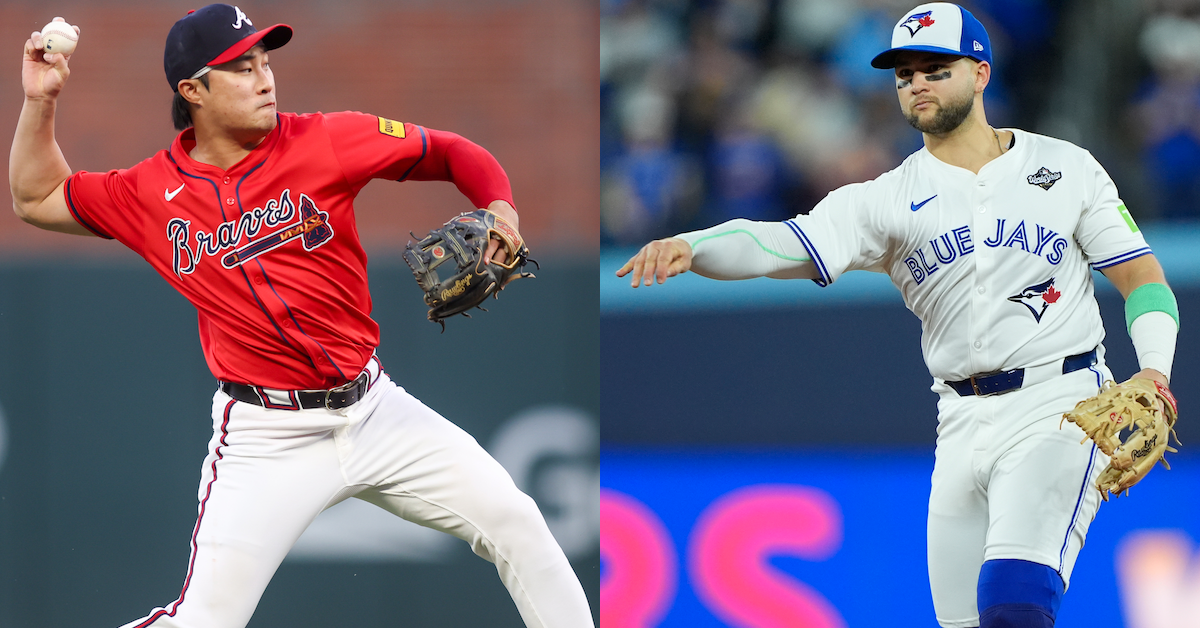
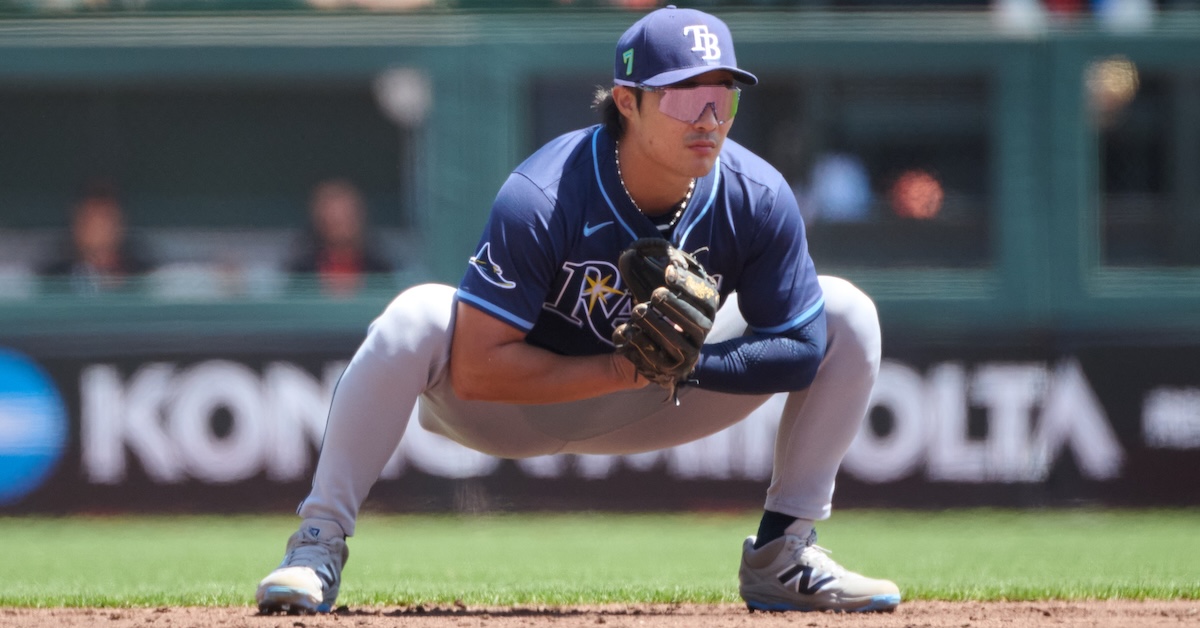
Well, the dream is dead. Throughout the season, I have been tracking Nick Allen’s chances of reopening the Homerless Qualifier Club, the exclusive fraternity of players who make enough plate appearances to qualify for the batting title but fail to hit a single home run. In 2022, Myles Straw became the only entrant since 2012 and just the 19th of the century. Allen has played in 128 of Atlanta’s 139 games, but batting last and frequently giving up his spot in favor of a pinch-hitter has kept him just under the threshold of 3.1 plate appearances per game all season long. The cruel cat-and-mouse game is finally over, though, because the Braves have claimed Ha-Seong Kim from the Rays off waivers. Kim started at shortstop on Tuesday, going 2-for-4. Manager Brian Snitker made it clear that Kim will play there for the remainder of the season.
Kim tore the labrum in his right shoulder on August 18 last year, requiring surgery and putting an unceremonious end to his final season with the Padres. The Rays took a gamble on him knowing that he wouldn’t be available until May at the earliest, signing him on a two-year deal with an opt-out for $13 million this year (with $2 million more in incentives), then $16 million in 2026. If he performed well, Tampa Bay would have him for one season at a big discount, and he’d get a second shot at having a proper platform year. Instead, Kim’s return was delayed until July by hamstring and calf injuries, and lower back issues put him on the IL twice more in the past two months. In all, Kim got into just 24 games with the Rays, making 93 plate appearances and recording a wRC+ of 72, his worst offensive showing since 2021, his first year in the U.S. That made keeping Kim around for the 2026 season too big a risk for the Rays.
All of this is a shame. Kim is a great player, an excellent, versatile defender with a solid bat, and injuries have now robbed him of his second chance to sign a deal that would reflect that excellence. Even if he puts up a fantastic 2026 campaign, he’ll be re-entering free agency after his age-30 season, which isn’t easy for a player whose value is so wrapped up in his glove.
Now, the Braves are the team taking a chance on Kim. Unless he puts up the greatest September in recent memory, he will forego his opt-out and get paid $16 million to anchor the Atlanta infield in 2026. He wouldn’t have to return all the way to the form he showed from 2022 to 2024 – when he ran a 106 wRC+ with 15 DRS and 7 FRV to average 4.0 WAR per 162 games – in order to make that a bargain. Still, he represents a risk. Atlanta is tying itself to a player who has suffered several minor injuries while recovering from a major one, and who hasn’t performed in his limited time with Tampa Bay. On the other hand, that time was so limited that it’s hard to tell where the noise leaves off and the signal starts. Read the rest of this entry »
I don’t think you can do this job for any amount of time without getting attached to particular players. Not even in the sense of having love or affection — certain ballplayers are just interesting to certain writers. For me, that manifests in just checking in with those players once or twice a season to see how they’re doing. Which reminds me, I’m overdue for my next updates on Willy AdamesandTrevor Rogers.
I sometimes preface blogs about such players with the phrase, “Longtime readers might remember…”
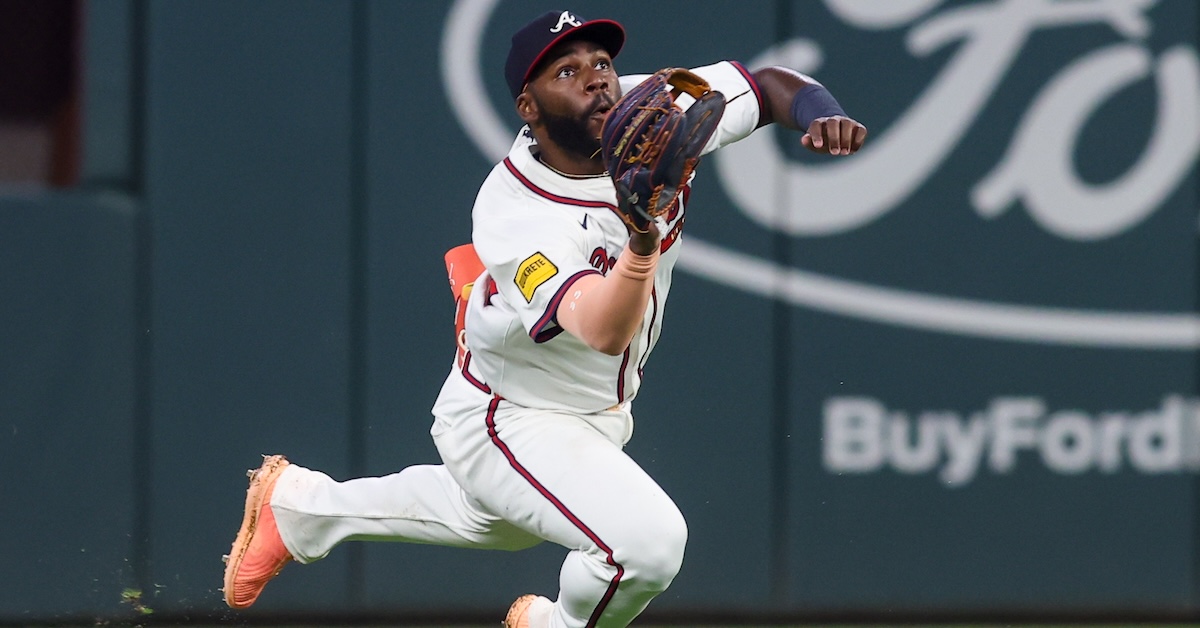
Most of the time, you don’t really have to squeeze your glove when you catch the ball. At least, you don’t have to think about squeezing it. It’s an instinctual thing, and while it’s different if you’re a catcher, the whole point of the glove is to corral the baseball. It was designed just for that. The ball tends to stick in there.
That’s most of the time. Sometimes you really do have to think about squeezing the ball, though. Sometimes there’s geometry involved. I love the geometry.
I love thinking about the angles. How do I position myself so I can catch this throw and apply the tag in one motion? Should I wait on this ball, or should I circle around it so I can charge it and field it on a short hop? At what point do I give up on picking this throw and step back to catch it on the long hop? Read the rest of this entry »
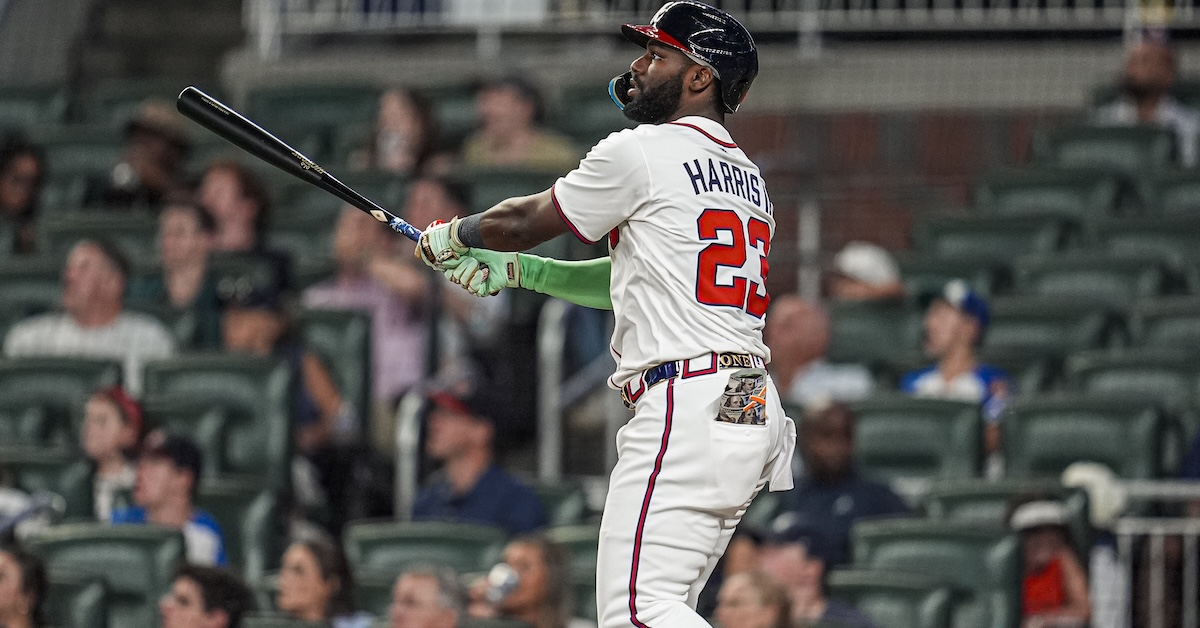
At the All-Star break, Michael Harris II was heading for his worst season as a professional. His solid defensive skills couldn’t make up for his woeful 47 wRC+, a .210/.234/.317 batting line that had neither on-base skills nor power. Between a league-low walk rate and only six homers, Harris had “accumulated” -0.8 WAR, a shockingly low number for the Braves standout. Only two Rockies, Brenton Doyle and Michael Toglia, had worse numbers.
Since the All-Star break, Michael Harris II has been one of the best hitters in baseball. In a mere 30 games, he’s racked up 2.2 WAR thanks almost entirely to his offensive prowess. He’s hitting a bruising .398/.413/.732, good for a 217 wRC+. That power outage? Forgotten. Harris has more home runs since the break (nine) than before it. Only two players in baseball – Nick Kurtz and Shea Langeliers – have a better wRC+ over that time span, or more WAR.
It can be hard to hold two opposing ideas in your head, particularly when those two ideas are “Michael Harris can’t hit” and “Michael Harris is one of the best hitters in baseball.” One purposefully silly way of saying it: Harris has accumulated 158% of his 2025 WAR in the second half of the season. Another wild thing about this ridiculous tear: Between when I filed this piece on Monday afternoon and when it was published on Tuesday, Harris went 4-for-4 with a home run and gained 16 points of wRC+ and 0.3 WAR. For the rest of this article, the numbers I use are updated through the end of play on Sunday.
It’s unquestionably true that almost anything can happen for 100 plate appearances, but this is stretching the limits of “almost anything.” You don’t run a 200 wRC+ for a month on accident. You don’t run a 47 wRC+ for half a season on accident either. I had to investigate. Read the rest of this entry »