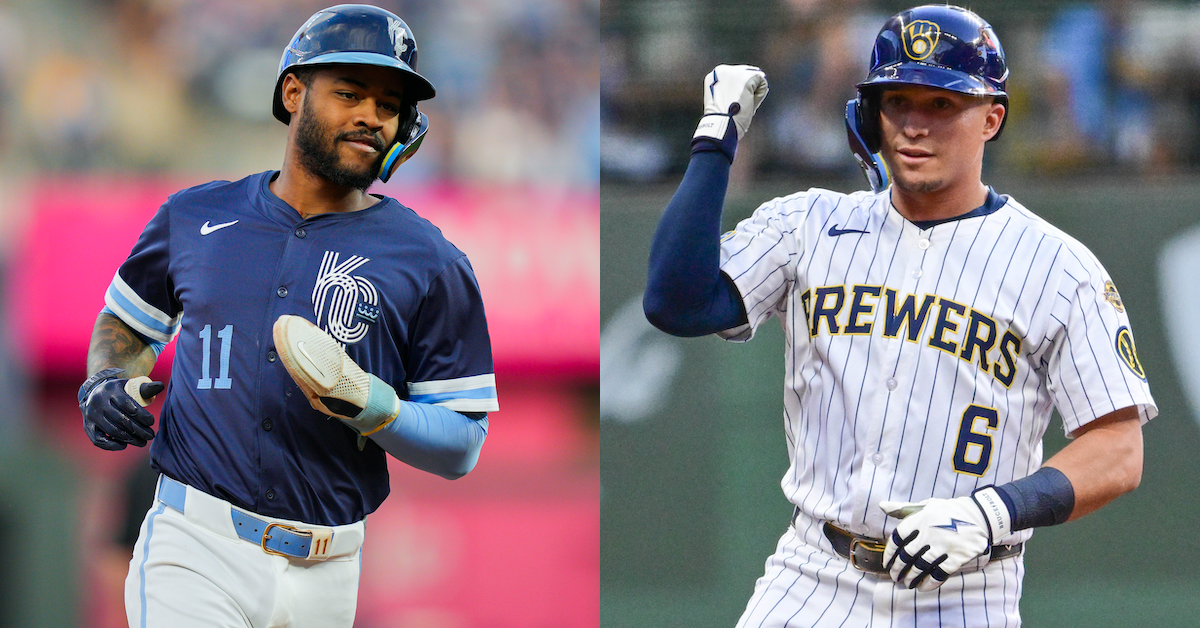
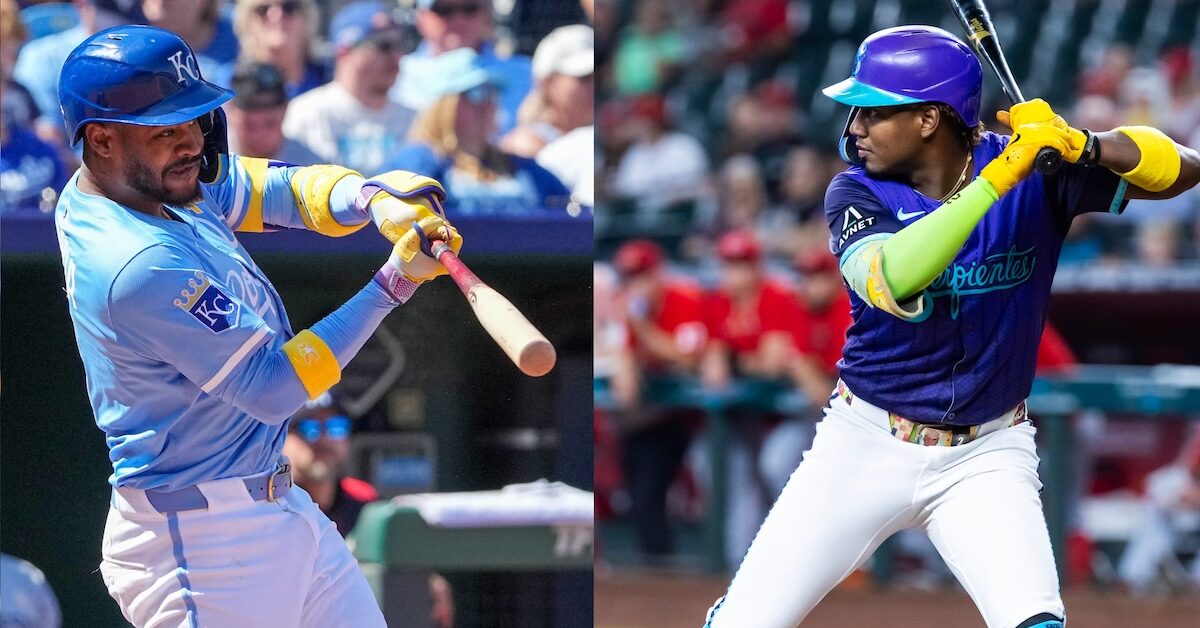
The Royals had themselves a productive weekend. The kind where you re-organize the garage and get your meal prep done for the week before the Sunday Scaries set in. On Friday, news broke that the team was finalizing a deal to extend third baseman Maikel Garcia. The contract spans five years, including all four of Garcia’s arbitration-eligible seasons, with a guaranteed value of $57.5 million that could reach $85 million with options and escalators. He will make $4 million in 2026, $7 million in 2027, $10 million in 2028, $13 million in 2029, and $19 million in 2030, and the team holds a $21 million club option for 2031, with a $3.2 million buyout. Then, following the news of the Garcia signing, ESPN’s Jeff Passanreported on Saturday that the Brewers were sending outfielder Isaac Collins and right-handed reliever Nick Mears to the Royals in exchange for left-handed reliever Angel Zerpa. We’ll get into a more detailed discussion of both moves in a minute, but first let’s put this in the larger context of the Royals as an organization.
A lot of sitcoms have that one oddball character that doesn’t quite fit with the rest of the cast. The person that requires viewers to suspend their disbelief, because in real life, there’s no way the other main characters would associate with this weirdo. Your Phoebes, your Kramers, your Kimmy Gibblers, etc. These characters are a part of the main cast or have regularly recurring roles, and though they frequently find themselves integrated into the show’s primary conflicts, they’re typically situated off to the side doing their own thing. Writers insist on including these characters because they provide interesting narrative texture to group dynamics. In real life, we tend to gravitate toward like-minded people with common interests, which is great for forming meaningful connections but makes for boring TV.
Fortunately, MLB teams behave more like TV characters than real life besties, which makes for better entertainment. And with 30 teams, the league doesn’t limit itself to just one Phoebe. Several squads are singing about fetid felines and boycotting Pottery Barn, and among them we have the Royals. Kansas City has never seemed tempted to jump on the latest trends in roster construction or follow the crowd as it attempts to implement whatever the “new Moneyball” is at any given point in time. No, the Royals tend to stay true to themselves, even if that means zigging while everyone else zags or using unorthodox tactics to make sure everyone in the organization stays focused on baseball. Read the rest of this entry »
How many outfielders does one team need? It really, really depends on who you ask. On Thursday, the Royals and Brewers decided that they needed to add at least one more each to their very differently sized stores. Kansas City signed Lane Thomas to a one-year deal for $5.2 million, with up to another million in incentives, according to Will Sammon of The Athletic and Mark Feinsand of MLB.com, while Milwaukee agreed to a major league deal with Akil Baddoo, the terms of which are not yet known, according to Ken Rosenthal of The Athletic. It’s safe to assume it’s a split contract, as Baddoo still has one minor league option left.
Thomas is by far the bigger addition, but we’re going to start in Milwaukee in order to highlight two very different approaches to building an outfield. Read the rest of this entry »
For the 22nd consecutive season, the ZiPS projection system is unleashing a full set of prognostications. For more information on the ZiPS projections, please consult this year’s introduction, as well as MLB’s glossary entry. The team order is selected by lot, and the next team up is the Milwaukee Brewers.
Batters
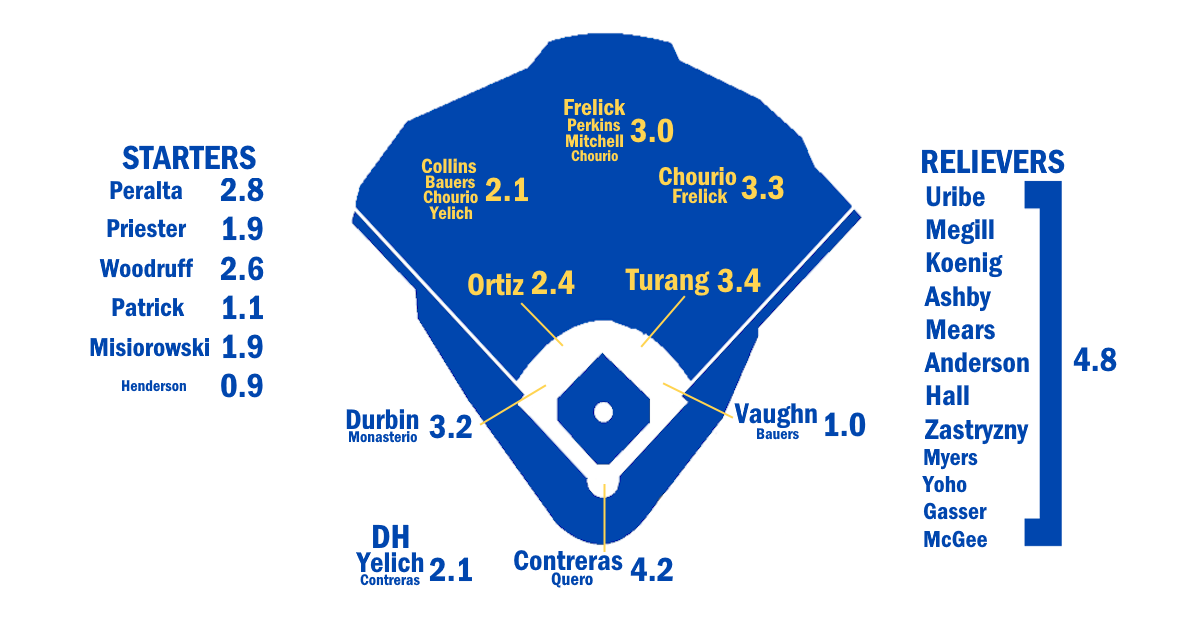
Over the last five or six years, the ZiPS projected standings have tended to underrate the Brewers, but not because of the projections themselves. Instead, this has mostly been because of me. ZiPS is neither systemically high nor low on Brewers players, but I tend to be way too conservative when making depth charts for the simulations in the spring. Typically, when ZiPS spits out a bunch of interesting projections for fringy guys on Milwaukee, I tell myself, “Sure, but no way the Brewers actually gamble and play those guys.” And then, well, they do. So when ZiPS has projected Joey Ortiz to get 2.3 WAR per 600 plate appearances, tabbed Isaac Collins and Caleb Durbin to be roughly league-average starters given full-time play, and liked a whole bunch of random fifth-starter types as relievers, I’ve chickened out and knocked the team down a peg, only for the Brewers turn out to be braver than I thought. So this time around, I’m going to go all in on the interesting guys! And hopefully, this won’t be the year the Brewers get boring.
As for 2025, Milwaukee didn’t get to the World Series, but the team did outlast all but one National League club. For much of the summer, the Brewers were flaming hot, prematurely ending what looked like an interesting NL Central battle with the Cubs, and winning the most games in baseball.
Will they win 97 games again? Probably not. But at the risk of facing the wrath of fans, these Brewers look a lot like one of the good Cardinals teams, in that while they’re not loaded with stars, they’re absolutely rock-solid almost anywhere. At eight of the nine lineup positions, ZiPS projects them at league average or better, usually on the side of “better.” What makes this lineup especially fascinating is that the floor is pretty high because the Brewers generally have pretty respectable plan B options. The outfield is jugglable, and the platoon splits and bat/glove pairs match up really well. ZiPS thinks Andruw Monasterio or Eddys Leonard — recently signed to a minor league deal — are good infield depth, and that Cooper Pratt and quite possibly Jesús Made could be ready surprisingly quickly. (ZiPS thinks Pratt’s 2025 was better than it looked.)
Now, William Contreras would be the hardest player to replace if he were to go down with an injury, but Jeferson Quero gets a pretty decent projection behind the plate. The only starter ZiPS doesn’t really like is Andrew Vaughn, but it’s certainly possible that the projection system isn’t giving him enough juice for being free of the White Sox, who never really appeared to know what to do with him after he didn’t debut to instant stardom. The Brewers won’t have an elite offense, but they ought to have a good one that’s fairly dependable.
Pitchers
The rotation projections aren’t quite as exciting, partially due to the relatively low number of projected innings. But even if there’s no Tarik Skubal or Garrett Crochet at the top, there’s nothing wrong with a starting five of Freddy Peralta, Quinn Priester, Brandon Woodruff, Chad Patrick, and Jacob Misiorowski. ZiPS thinks you could easily slot in basically any of Logan Henderson, Robert Gasser, or Tobias Myers without damaging the rotation. That’s good depth, and I’d normally be skeptical about the Brewers giving much time to Coleman Crow, but as I said up top, I’m switching things up this year and being more open to the possibility that maybe the organization sees the same thing that the projections do.
Milwaukee’s bullpen is the best projected so far this ZiPS season, edging out that of the Phillies. The worst projected ERA (as a reliever) for any of the 12 pitchers with 30 bullpen innings on the current depth chart is Rob Zastr…z…err…something (hey, my last name is Szymborski so I get to make that joke) at 4.19. ZiPS even thinks that a few of the less talked about starting pitching prospects, most notably Tate Kuehner and Tyson Hardin, could finish with an ERA in the threes as full-time relievers. If the Brewers think that’s a possibility, given their history, I wouldn’t be against them.
Like the classic good Cardinals teams, the Brewers could win somewhere between 86 and 94 wins or so, and I wouldn’t bat an eye at any of that. But I also think they have one of the lowest chances of any team to be lousy. Your Toyota Camry may not be flashy, but it’s going to probably still be a usable car in 15 years while your neighbor’s Audi is slowly bankrupting them. This is a good team with a high floor, and I hope this is the year I’m finally smart enough to trust in Milwaukee’s creativity.
Ballpark graphic courtesy Eephus League. Depth charts constructed by way of those listed here. Size of player names is very roughly proportional to Depth Chart playing time. The final team projections may differ considerably from our Depth Chart playing time.
Players are listed with their most recent teams wherever possible. This includes players who are unsigned or have retired, players who will miss 2026 due to injury, and players who were released in 2025. So yes, if you see Joe Schmoe, who quit baseball back in August to form a Ambient Math-Rock Trip-Hop Yacht Metal band that only performs in abandoned malls, he’s still listed here intentionally. ZiPS is assuming a league with an ERA of 4.16.
Hitters are ranked by zWAR, which is to say, WAR values as calculated by me, Dan Szymborski, whose surname is spelled with a z. WAR values might differ slightly from those that appear in the full release of ZiPS. Finally, I will advise anyone against — and might karate chop anyone guilty of — merely adding up WAR totals on a depth chart to produce projected team WAR. It is important to remember that ZiPS is agnostic about playing time, and has no information about, for example, how quickly a team will call up a prospect or what veteran has fallen into disfavor.
As always, incorrect projections are either caused by misinformation, a non-pragmatic reality, or by the skillful sabotage of our friend and former editor. You can, however, still get mad at me on Twitter or on Bluesky. This last is, however, not an actual requirement.
Below is an analysis of the prospects in the farm system of the Milwaukee Brewers. Scouting reports were compiled with information provided by industry sources as well as our own observations. This is the sixth year we’re delineating between two anticipated relief roles, the abbreviations for which you’ll see in the “position” column below: MIRP for multi-inning relief pitchers, and SIRP for single-inning relief pitchers. The ETAs listed generally correspond to the year a player has to be added to the 40-man roster to avoid being made eligible for the Rule 5 draft. Manual adjustments are made where they seem appropriate, but we use that as a rule of thumb.
A quick overview of what FV (Future Value) means can be found here. A much deeper overview can be found here.
All of the ranked prospects below also appear on The Board, a resource the site offers featuring sortable scouting information for every organization. It has more details (and updated TrackMan data from various sources) than this article and integrates every team’s list so readers can compare prospects across farm systems. It can be found here. Read the rest of this entry »
“OK, but what if you could steal first base?” is surely a thought that’s occurred to just about every baseball fan. We’ve all seen players come up who look like absolute studs, except for one thing: They can’t hit. It’s only one skill, but it’s the most important skill for a position player.
I remember having a simply overpowering version of this thought in the press box at Camden Yards during the 2024 ALDS. Maikel Garcia’s tools sizzled and crackled with potential. He’s stolen 37 bases in 39 regular-season attempts. His defense at third base was very good, good enough to play shortstop on a team that had not been built around the best shortstop on the planet. Garcia played 157 regular-season games for the Royals in 2024, and he was about as good a player as you can be with a single-digit home run total and a .281 OBP.
Those two headline numbers do limit one’s potential, unfortunately.
We’re less than a month from the Winter Meetings and the Rule 5 Draft, which means it’s a good time to evaluate every team’s 40-man roster situation. This is the time of year when teams have one final chance to protect Rule 5 eligible players by placing them on the 40-man. Eligibility is determined by a mix of how long a player has been with their parent organization and how young they were when they signed: Players who signed at 18 or younger must be added to the 40-man within five seasons, while everyone else must be added within four. RosterResource monitors Rule 5 eligibility, if you’re curious to see the lay of the land.
During the season, teams can free up roster space by placing an injured player on the 60-day IL. In the offseason, teams don’t get extra slots for injured players, which tends to put pressure on the back of the roster. The Diamondbacks are a good example of how space can tighten quickly, as they’ve currently got six pitchers battling long-term injuries occupying a spot. You may have noticed a flurry of moves immediately following the World Series, with many teams outrighting players off the 40-man in order to make room for all the guys who were on the IL.
Below, I’ve assessed every National League team’s 40-man roster situation (Eric will sort through the American League tomorrow). Some teams, like the Braves, have plenty of roster space, and thus a lot of flexibility in adding whoever they like. Others, like the Cardinals and Marlins, will face some tough choices as they seek to balance protecting interesting prospects with retaining players already on the roster, as well as finding room for prospective additions via trade or free agency. Some clubs don’t have many impact players to add, while others may need to protect a half-dozen or so guys. I’ve tried to identify which players are most likely to be added, which guys on the 40-man are vulnerable to getting lopped off in a roster crunch, and who could be moved in a deal to free up roster space. Let’s dig in. Read the rest of this entry »
The General Managers Meetings are currently taking place in Las Vegas, and as always, FanGraphs is on hand to report on what the executives have to say. We’ll hear from a number of them this week, beginning with a trio of National League execs, Matt Arnold of the Brewers, Paul DePodesta of the Rockies, and Chaim Bloom of the Cardinals.
———
MATT ARNOLD — MILWAUKEE BREWERS
Brewers hitters had both a low strikeout rate and a relatively high walk rate this season; they ranked top five in both metrics. How was that achieved, and to what extent was it a focus?
“I think it was achieved by Murph letting people know, ‘You better put the ball in play and you better not chase,’” Arnold replied, crediting National League Manager of the Year Pat Murphy. “He’s relentless about that. Those are good things that we were able to execute this year, and it’s easier said than done. It starts with the players buying in and Murph enforcing that in the dugout, making sure our guys have that as a focus: the ball-strike, the ball in play. Having those types of skills in your pocket can lead to better at-bats and better outcomes.”
Needless to say, it’s not all Murphy. Milwaukee’s hitting coaches play a role as well.
“It’s a combination of all of them,” Arnold agreed. “Our coaches do a really good job of that. They want our guys to focus on getting a good pitch to hit, and again, while it’s easier said than done, we’ve done a good job of that. We try to focus on it as much as we can in our [minor league system] Marrying your scouting and player development is also super important. We try to communicate it with both of them.”
Jackson Chourio had a perfectly acceptable 20.5% strikeout rate, but also a 5.1% walk rate that ranked lowest on the team. How does he take the next steps to better fit that mold?
“He’s so young, and so athletic, and so talented,” Arnold said of the team’s 21-year-old phenom. “He’s got every ingredient to do it. He’s already doing it at a pretty high level. Whatever he does beyond this is even more special. The sky is the limit for this kid.”
———
PAUL DEPODESTA — COLORADO ROCKIES
Colorado’s new top executive is inheriting a team whose hitters had both a high strikeout rate (second-worst in the majors) and a low slugging percentage (tied for sixth worst). If he had to pick one or the other, which is more in need of improvement?
“I would say it’s not the combo we want,” said DePodesta, stating the obvious. “And it won’t ultimately be one or the other. I said earlier what we want our identity to be, in Colorado especially, but… put it this way: If that’s a dial from one to the other, it’s not necessarily going to be one or the other. We need to find the right combination for us.”
Following up, I asked the well-traveled exec if he has an idea of which direction that combination might trend.
“I do, but I probably won’t share it,” he replied. “For us, it’s how we go about scouting and developing, or even setting up a major league roster. So yeah, ultimately it will be proprietary, what we feel is going to work well for us.”
And then there is the organization’s longest-standing question: What is the best way to pitch effectively in Colorado? Is there an actual answer to be found?
“We’ll find out,” DePodesta said. “I’m encouraged. There have been plenty of successful teams in Colorado. When I was in San Diego in 2007, 2008, 2009, and obviously the teams that Buddy [Black] had in 2017 and 2018, those teams were very successful. There were teams that had winning records on the road.
“My approach, at least as of today, is that I know it’s not impossible,” he added. “It’s been done. Are there things we have to consider that other teams don’t? Probably so. Are there adjustments we’re going to have to make that will look a little different than everybody else? Probably yes, but I’m confident that it’s not impossible. We’re going to figure something out.”
One more follow-up seemed in order. Given the Rockies’ reputation of lagging behind other organizations in terms of analytics, are there maybe things that have been overlooked?
“That I don’t know,” said DePodesta, who has spent the last decade working in the NFL as the chief strategy officer of the Cleveland Browns. “I’m looking forward to diving in deeper to the organization and figuring out all the things they have tried. I have a handful of ideas right now, but I would imagine they’re pretty naïve. Coors Field has been around since 1995 [and] they’ve tried a lot of things. I don’t have to reinvent the wheel. I want to understand what all of those things were and what they felt worked, and what didn’t. I don’t want to try things a second time if they’ve already tried them.”
———
CHAIM BLOOM — ST. LOUIS CARDINALS
Cardinals pitchers didn’t strike out a lot of batters this year; they were second worst in the majors. How much of a concern is that?
“It’s definitely a concern,” replied Bloom, who succeeded John Mozeliak as St. Louis’ president of baseball operations at the conclusion of the regular season. “It’s not the only thing that matters, but it does matter. Having stuff that can beat people in the strike zone, that can miss bats — both in and out of the strike zone — is really important. It’s hard to have an elite staff without being able to do that. It’s not something you want to chase at the expense of throwing strikes — you’re not trying to put people in positions where they can’t succeed, or stay healthy — but it’s super important.”
How close is Liam Doyle to helping out in that respect?
“He’ll tell us that as the season unfolds,” Bloom said of the 21-year-old southpaw whom the Cardinals drafted fifth overall this year out of the University of Tennessee. “We gave him a little taste of [pro ball] at the end; he got his feet wet a little bit. Obviously, a first full season will tell you a lot. A first full season in and of itself is a big developmental step for guys, because they haven’t been asked to pitch that regularly for that long. But he came in and showed everything you want to see. He got after his work. He showed openness, a desire to get better, a willingness to listen. There is obviously some work to do before we can call him a big leaguer, but we’re really happy with the pitcher we got.
“The player will move himself,” added Bloom. “The player tells you where he should be. If you try to force something that’s not there, you usually end up paying a price. You might end up picking the pieces up from that for quite some time. When a player is ready and you give him that opportunity, he can carry it. It’s really just what the game is telling us, letting the player’s performance and his progress on the mound carry the day.”
Balls in play are less of an issue when you have a strong defense, which St. Louis largely had in 2025. Just how strong depends on the numbers you favor. I asked Bloom if he could explain how the Cardinals led all teams in Outs Above Average, yet were well below average in Defensive Runs Saved.
“That is a bigger conversation than one we could have here today,” Bloom said. “There are some differences between those metrics, some differences in [how they] get calculated that might disproportionally help or hurt certain types of players. Sometimes those things… they usually will even out year over year. I’ve seen specific players where that might not be the case, because of certain things that the player does or doesn’t do well that some metrics favor — or don’t — but typically over the course of time, they tend to [even out].”
What does it say about the 2025 Cardinals specifically?
“I’d be hesitant to draw too much of a big picture about specific players or player seasons,” Bloom responded. “If it persists over two or three years, then we can look at it as a trend and see if there is something underlying.”
The following article is part of my ongoing look at the candidates on the 2026 Contemporary Baseball Era Committee ballot. Originally written for the 2015 election at SI.com, it has been updated to reflect recent voting results as well as additional research. For a detailed introduction to this year’s ballot, use the navigation tool above. An introduction to JAWS can be found here.
Wherever Gary Sheffield went, he made noise, both with his bat and his voice. For the better part of two decades, he ranked among the game’s most dangerous hitters, a slugger with a keen batting eye and a penchant for contact that belied his quick, violent swing. For even longer than that, he was one of the game’s most outspoken players, unafraid to speak up when he felt he was being wronged and unwilling to endure a situation that wasn’t to his liking. He was a polarizing player, and hardly one for the faint of heart.
At the plate, Sheffield was viscerally impressive like few others. With his bat twitching back and forth like the tail of a tiger waiting to pounce, he was pure menace in the batter’s box. He won a batting title, launched over 500 home runs — he had 14 seasons with at least 20 and eight with at least 30 — and put many a third base coach in peril with some of the most terrifying foul balls anyone has ever seen. For as violent as his swing may have been, it was hardly wild; not until his late 30s did he strike out more than 80 times in a season, and in his prime, he walked far more often than he struck out.
Bill James wrote of Sheffield in the 2019 Bill James Handbook:
“In all the years that I have been with the Red Sox, 16 years now, there has never been a player the Red Sox were more concerned about, as an opponent, than Gary Sheffield. Sheffield was a dynamite hitter and a fierce competitor… When he was in the game, you knew exactly where he was from the first pitch to the last pitch. He conceded nothing; he was looking not only to beat you, but to embarrass you. He was on the highest level.”
Two decades before that, James referred to Sheffield as “an urban legend in his own mind,” referencing the slugger’s penchant for controversy. Sheffield found it before he ever reached the majors through his connection to his uncle, Dwight Gooden. He was drafted and developed by the Brewers, who had no idea how to handle such a volatile player and wound up doing far more harm than good. Small wonder then that from the time he was sent down midway through his rookie season after being accused of faking an injury, he was mistrustful of team management and wanted out. And when he wanted out — of Milwaukee, Los Angeles, or New York — he let everyone know it, and if a bridge had to burn, so be it; it was Festivus every day for Sheffield, who was always willing to air his grievances. Read the rest of this entry »
I’m going to preface this post with two important caveats. First: Complaining about the fairness of the officiating, in any sport, in any circumstance, is loser behavior. For better or worse, the calls usually even out. And even in the vanishingly rare circumstances where a single call genuinely costs a team a victory, harping on about it isn’t going to change anything.
Second: I’m more lukewarm about the oncoming challenge system, and ABS in general, than a lot of people are. I think the umpires usually do a good job calling balls and strikes, and calling the rulebook zone isn’t going to do much to placate fans who pore over umpire scorecards. They don’t want the rulebook zone; they want their team to get all the calls. Overall, I think it’ll be a positive for the game, I’m just less geeked about it than I was about the pitch clock, for instance.
With all that said, there’s one specific thing I’m looking forward to with the challenge system. It’s going to eliminate my least favorite play in baseball, one we saw with disastrous effect during Game 3 of the World Series, and with any luck for the last time on a major league diamond. Read the rest of this entry »
At last, we’ve got a World Series matchup to wrap our heads around. Representing the American League are the Blue Jays, who are back in the Fall Classic — making it a truly international World Series — for the first time since 1993. They’ll face the Dodgers, who are vying to become the first back-to-back champions since the 1999–2000 Yankees. They’re the first defending champions to repeat as pennant winners since the 2009 Phillies, who lost that World Series to the Yankees. If that matchup feels like a long time ago, consider that it’s been twice as long since the Blue Jays were here.
Though the core of the lineup is largely unchanged, this year’s Dodgers team differs from last year’s in that it has reached the World Series on the strength of its starting pitching rather than in spite of it. Due to a slew of injuries in the rotation last year, manager Dave Roberts resorted to using bullpen games four times to augment a rickety three-man staff consisting of Yoshinobu Yamamoto, Jack Flaherty, and Walker Buehler. Even as those starters (or “starters,” in some cases) put up a 5.25 ERA while averaging just 3.75 innings per turn, the bullpen and offense more than picked up the slack, and the Dodgers took home their second championship of the Roberts era.
This time around, with Flaherty and Buehler elsewhere and Blake Snell, Tyler Glasnow, and Shohei Ohtani joining Yamamoto, Dodgers starters have been absolutely dominant, posting a microscopic 1.40 ERA while averaging 6.43 innings per turn through the first three rounds, helping the team to paper over a shaky bullpen. After Snell utterly dominated the Brewers, holding them to just one hit over eight innings while facing the minimum number of batters in Game 1 of the NLCS, Yamamoto followed with a three-hit, one-run masterpiece — the first complete game in the postseason since the Astros’ Justin Verlander went the distance against the Yankees in Game 2 of the 2017 ALCS. Glasnow, who began the postseason in the bullpen, allowed one run across 5 2/3 innings in Game 3 of the NLCS, while Ohtani backed his 10 strikeouts over six shutout innings in Game 4 with a three-homer game in what for my money stands as the greatest single-game postseason performance in baseball history. Read the rest of this entry »