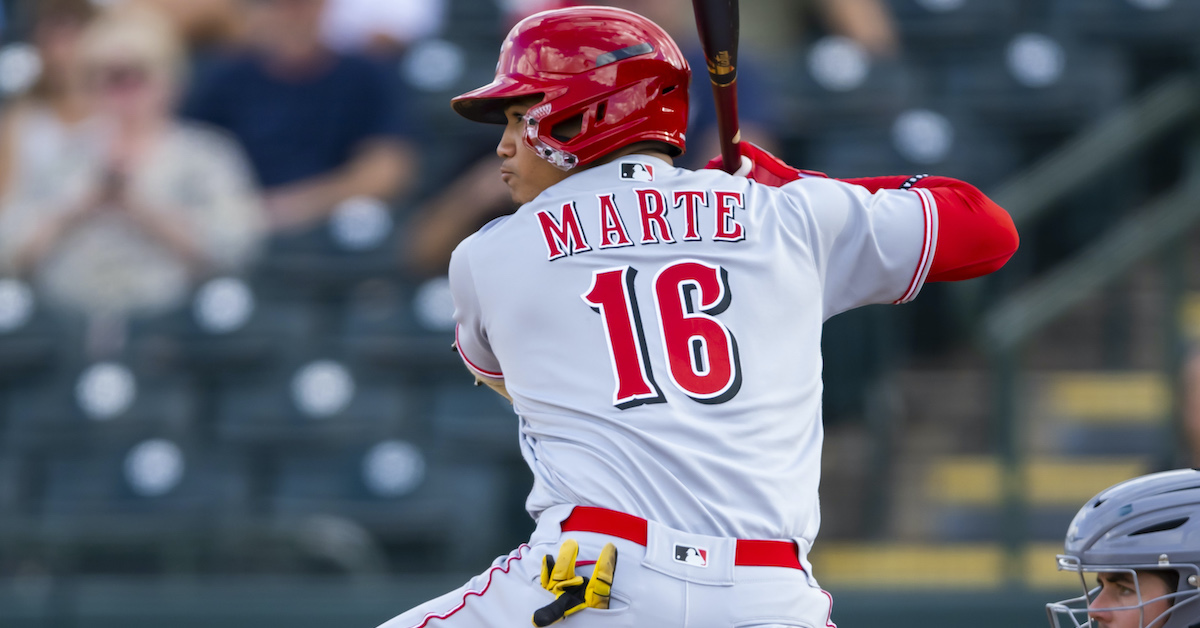
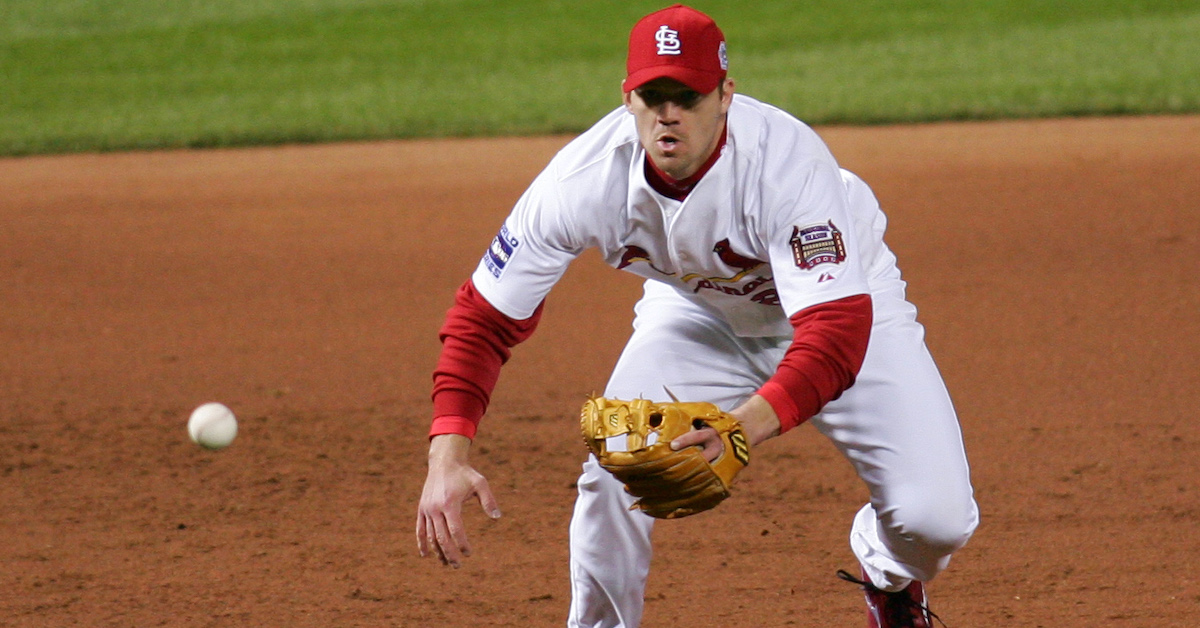
2023 Contemporary Baseball Era Committee Candidates: Barry Bonds, Roger Clemens, and Curt Schilling
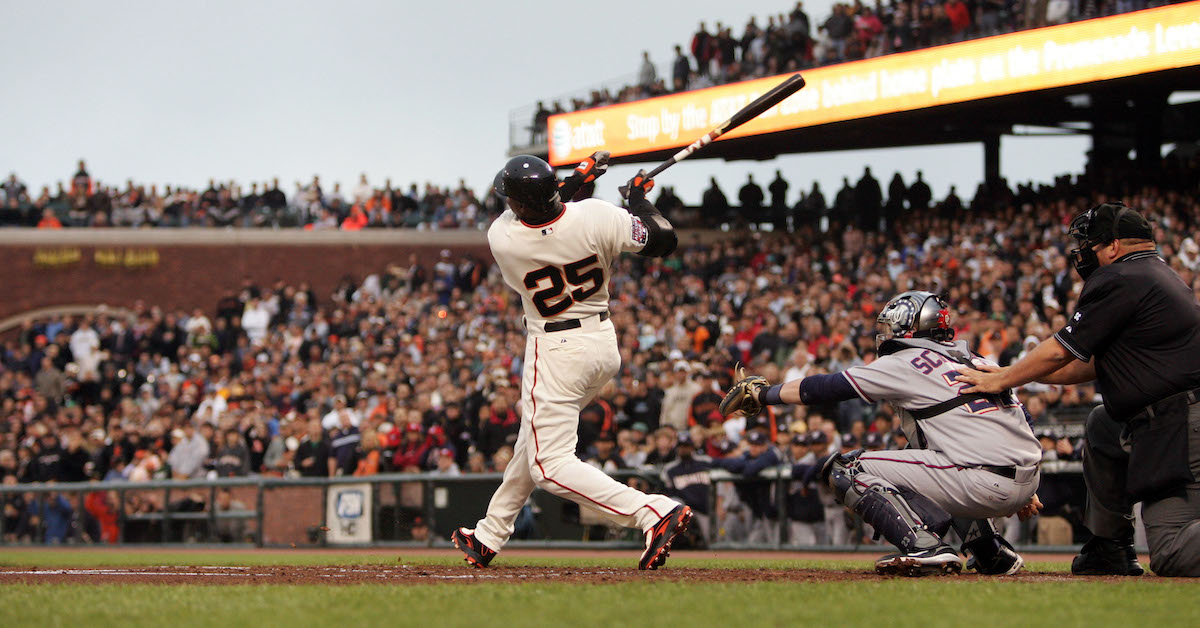
© Phil Carter-USA TODAY Sports

The following article is part of my ongoing look at the candidates on the 2023 Contemporary Baseball Era Committee ballot. For a detailed introduction to this year’s ballot, use the tool above. An introduction to JAWS can be found here.

Content warning: This piece, and the original pieces to which it links, contains details about alleged domestic violence and sexual impropriety. The content may be difficult to read and emotionally upsetting.

The Baseball Writers Association of America may be done with these guys, but the Hall of Fame isn’t… yet. Eleven years ago, one of the most talented classes of first-year candidates landed on the writers’ ballot. From a group that included Barry Bonds, Roger Clemens and Curt Schilling, not to mention Craig Biggio, Kenny Lofton, Mike Piazza, and Sammy Sosa — as well as four holdover candidates subsequently elected by the writers, and three chosen by the Era Committees — the writers elected no one, pitching their first shutout in 17 years. Voting hasn’t been the same since. While Biggio and Piazza were eventually elected by the writers, the quartet of Bonds, Clemens, Schilling, and Sosa were not. Their continued presence on the ballot, and the rancorous debate that surrounded their candidacies, at times gummed up the process, diverting attention away from other compelling candidates and souring many participants and observers on the entire endeavor, if not the institution itself. The politics of glory, indeed.

The polarizing public debate surrounding candidates linked to performance-enhancing drugs — a group that at the time included not just Bonds, Clemens, and Sosa but also Mark McGwire and Rafael Palmeiro — led the Hall’s board of directors to change the rules mid-candidacy by reducing players’ windows of eligibility from 15 years to 10. Where Hall president Jeff Idelson said in 2011 with regards to PED-linked candidates, “[W]e’re happy with the diligence of the voters who have participated, and the chips will fall as they fall,” once it became apparent that Bonds and Clemens were trending towards election, the institution put its thumb on the scale via board member Joe Morgan’s open plea for voters not to consider steroid users. Morgan’s letter conveniently sidestepped the likelihood that some steroid users — and numerous known users of another performance-enhancing drug, amphetamines — had already been elected. Read the rest of this entry »


Nobody Actually Hits Good Pitching

Alex Bregman
John Geliebter-USA TODAY Sports

During Game 3 of the ALCS, Jeff Francoeur noted that 10 of the 12 pitchers who had surrendered postseason home runs to Alex Bregman were All-Stars, eliciting a comment about how Bregman hits well against good pitching. That’s undoubtedly a fun fact, but the notion has been rattling around my brain for the last couple weeks. I’ve definitely heard stories about players who hit good pitching, but I’ve never heard of anyone looking at splits based on the quality of the pitcher on the mound.

The main problem with that idea is a logical one. Break down any batter’s performance into its constituent parts, and you’ve entered a zero sum game. If you’re at your best against great pitchers, that means you’re hitting worse against everyone else. It’s hard for me to imagine that there are many players who fare better against Justin Verlander than they do against, well, anyone on the Nationals.

There could be players who are less bad than average, but if I had my choice of superpowers, I’m not sure that’s the one I’d pick. It would definitely help out in the playoffs, but over the course of the season, batters see a lot more average and poor arms than they do great ones. I’d rather perform well the majority of the time. Read the rest of this entry »


Effectively Wild Episode 1933: Bats, Bets, Ballots, and Blasts

EWFI
Ben Lindbergh and Meg Rowley banter about omissions from their Baseball Twitter draft, a few transactions (including the Kyle Lewis trade, the Gio Urshela trade, and multiple shortstop swaps), the Angels acquiring average players, the Dodgers non-tendering Cody Bellinger, the Phillies extending Dave Dombrowski, the new BBWAA Hall of Fame ballot and Ben’s ballot decision, a series of sports-betting investigations, a college-baseball trailblazer, comeback players of the year, and more, plus Stat Blasts (54:28) about Aaron Judge and intra-team WAR gaps, the most unique players put out, consecutive innings with double plays, and the timing of game-winning runs, a Past Blast (1:04:06) from 1933, and an Angels postscript.

Audio intro: Adrianne Lenker and Buck Meek, “Angels
Audio outro: Mimi Roman, “Never Ramble, Never Gamble, Never Roam

Link to Heyman tweet
Link to Baer tweet
Link to Nightengale tweet
Link to Bautista tweet
Link to Justin Choi on Lewis
Link to Baumann on shortswaps
Link to MLBTR on Dombrowski
Link to MLBTR on Bellinger
Link to Jay on the BBWAA ballot
Link to Jay on the committee ballot
Link to EW on Ben’s ballot last year
Link to NYT sports-betting thread
Link to NYT sports-betting article 1
Link to NYT sports-betting article 2
Link to NYT sports-betting article 3
Link to NYT sports-betting article 4
Link to Olivia Pichardo news
Link to comeback players story
Link to Ryan Nelson’s Twitter
Link to WAR-gap Stat Blast data
Link to putouts Stat Blast data
Link to game-winning-runs data
Link to Rob Mains on comebacks
Link to 1933 story source
Link to SABR on Browns ownership
Link to MLB.com on the Browns
Link to SABR on Jackie in Montreal
Link to Jacob Pomrenke’s website
Link to Jacob Pomrenke on Twitter
Link to MLBTR on the Renfroe trade
Link to tweet about Renfroe and Trout

 Sponsor Us on Patreon
Subscribe to Stathead (Code: WILD20)
 Facebook Group
 Twitter Account
 EW Subreddit
 Effectively Wild Wiki
 iTunes Feed (Please rate and review us!)
 Get Our Merch!
 Email Us: podcast@fangraphs.com


40-Man Deadline Analysis: NL Central

Noelvi Marte
Mark J. Rebilas-USA TODAY Sports

Last Tuesday’s 40-man roster deadline led to the usual squall of transaction activity, with teams turning over portions of their rosters in an effort to make room for the incoming crop of young rookies. Often, teams with an overflow of viable big leaguers will try to get back what they can for some of those players via trade, but because we’re talking about guys straddling the line between major league viability and Triple-A, those trades tend not to be big enough to warrant an entire post.

Over the next few days, we’ll endeavor to cover and analyze the moves made by each team, division by division. Readers can view this as the start of list season, as the players covered in this miniseries tend to be prospects who will get big league time in the next year. We’ll spend more time discussing players who we think need scouting updates or who we haven’t written about in the past. If you want additional detail on some of the more famous names you find below, pop over to The Board for a more thorough report.

The Future Value grades littered throughout these posts may be different than those on the 2022 in-season prospect lists on The Board to reflect our updated opinions and may be subject to change during the offseason. New to our thinking on this subject and wondering what the FVs mean? Here’s a quick rundown. Note that because we’re talking about close-to-the-majors prospects across this entire exercise, the time and risk component is less present here and these FVs are what we think the players are right now. Read the rest of this entry »


What Will the Yankees Do To Help Junior Fernández?

Junior Fernandez
Charles LeClaire-USA TODAY Sports

Another Pirates reliever has been picked up by the Yankees, and his name is Junior Fernández, owner of 54 career innings pitched in the majors with St. Louis and Pittsburgh. This past season, he finished with a 5.79 FIP in 18.2 innings; his career FIP sits at 5.57, so he hasn’t had much success in the league so far. So what exactly do the Yankees see in him?

Like many relievers in the Yankees’ bullpen, Fernández throws high-velocity sinkers and boasts an above-average ground ball rate: 58.9%, a very similar clip as Jonathan Loáisiga. That all sounds very similar to another Yankees pickup from the Pirates: Clay Holmes. But Holmes’ sinker is of the turbo ilk that forces its way down with bowling ball action; this past season, the vertical movement on that pitch was 21% above league average. Fernández’s is much more vertical neutral. In fact, the comparison to Loáisiga is much more appropriate. The table below shows how Fernández’s sinker specs compare to Loáisiga’s:

Sinker Similarities
Name Pitch Measured Spin Axis Extension Vertical Release Horizontal Release VAA HAA
Jonathan Loáisiga Sinker 1:08 6.5 5.6 -1.8 -5.3 0.1
Junior Fernández Sinker 1:21 6.5 6.1 -1.5 -5.7 0.0

The two pitchers have similar extension, release points, and movement profiles. The entry into the zone in terms of horizontal and vertical approach angles isn’t all that far off either. Overall, we’re looking at very similar pitches, and Fernández throws his even harder by about a tick. This alone is a good starting point to explain why the Yankees were interested enough to scoop him up off waivers. Read the rest of this entry »


Pirates Prospect Blake Sabol Has a Plus Bat and Pittsburgh Connections

PNC Park Pittsburgh Pirates
Charles LeClaire-USA TODAY Sports

Blake Sabol has versatility, Pittsburgh ties, and a bat that could be providing thump to the Pirates’ lineup in the not-too-distant future. A left-handed-hitting catcher who also plays the outfield and first base, Sabol, 24, is coming off a season where he slashed .284/.363/.497 with 19 home runs between Double-A Altoona and Triple-A Indianapolis. The seventh-round selection in the 2019 draft has other notable qualities, as well. Along with being a stat nerd, the former University of Southern California Trojan has an engaging personality that promises to make him a fan favorite if he reaches the majors.

Sabol, who is Rule 5 eligible, talked about his multi-faceted game and his connections to the city he hopes to soon play in during his recent stint with the Arizona Fall League’s Surprise Saguaros.

———

David Laurila: I understand that you play multiple positions and have put up some good offensive numbers. How do you see yourself?

Blake Sabol: “Defensively, I kind of consider myself a Swiss Army Knife. I’m primarily a catcher, but I can be in the outfield and have also been taking some ground balls at first base. I’m hoping to be like a three-level player.

“With the bat, I’ve had a couple of good seasons under my belt — I’ve been able to hit for power and have a good OPS — so I feel I can impact the game that way. I think I can help a big league team. Instead of having a guy who is only a catcher, maybe just a backup catcher, I can be playing multiple spots, or even be in the lineup as a DH.”

Laurila: Your goal isn’t to be a starting catcher in the big leagues?

Sabol: “My goal is ultimately to be in the big leagues, anyway, anyhow. I mean, I would love to be a catcher. There’s a lot of value there, and I think I could do it. But ideally, and I’ve talked with Henry Davis about this, even if we’re splitting games behind the plate, I can go in the outfield or be a first baseman. I just want to be in the lineup as much as possible.” Read the rest of this entry »


JAWS and the 2023 Hall of Fame Ballot: Scott Rolen

Scott Rolen
USA TODAY Sports – Jerry Lai

The following article is part of Jay Jaffe’s ongoing look at the candidates on the BBWAA 2023 Hall of Fame ballot. Originally written for the 2018 election at SI.com, it has been updated to reflect recent voting results as well as additional research. For a detailed introduction to this year’s ballot, and other candidates in the series, use the tool above; an introduction to JAWS can be found here. All WAR figures refer to the Baseball-Reference version unless otherwise indicated.

“A hard-charging third baseman” who “could have played shortstop with more range than Cal Ripken.” “A no-nonsense star.” “The perfect baseball player.” Scott Rolen did not lack for praise, particularly in the pages of Sports Illustrated at the height of his career. A masterful, athletic defender with the physical dimensions of a tight end (listed at 6-foot-4, 245 pounds), Rolen played with an all-out intensity, sacrificing his body in the name of stopping balls from getting through the left side of the infield. Many viewed him as the position’s best for his time, and he more than held his own with the bat as well, routinely accompanying his 25–30 homers a year with strong on-base percentages.

There was much to love about Rolen’s game, but particularly in Philadelphia, the city where he began his major league career and the one with a reputation for fraternal fondness, he found no shortage of critics — even in the Phillies organization. Despite winning 1997 NL Rookie of the Year honors and emerging as a foundation-type player, Rolen was blasted publicly by manager Larry Bowa and special assistant to the general manager Dallas Green. While ownership pinched pennies and waited for a new ballpark, fans booed and vilified him. Eventually, Rolen couldn’t wait to skip town, even when offered a deal that could have been worth as much as $140 million. Traded in mid-2002 to the Cardinals, he referred to St. Louis as “baseball heaven,” which only further enraged the Philly faithful.

In St. Louis, Rolen provided the missing piece of the puzzle, helping a team that hadn’t been to the World Series since 1987 make two trips in three years (2004 and ’06), with a championship in the latter. A private, introverted person who shunned endorsement deals, he didn’t have to shoulder the burden of being a franchise savior, but as the toll of his max-effort play caught up to him in the form of chronic shoulder and back woes, he clashed with manager Tony La Russa and again found himself looking for the exit. After a brief detour to Toronto, he landed in Cincinnati, where again he provided the missing piece, helping the Reds return to the postseason for the first time in 15 years. Read the rest of this entry »


Andrew Benintendi and the Thrill of the Chase Zone

© Jay Biggerstaff-USA TODAY Sports

Once you get past Aaron Judge, this offseason’s free agent outfield class gets real thin real fast. Brandon Nimmo is a very good player, but not a power threat, and after him and maybe Mitch Haniger, you get into the Michael ConfortoCody Bellinger zone with alarming speed. “I can fix him” is as risky a conceit in baseball as it is in romance.

Andrew Benintendi sits in a bit of a no-man’s land between Nimmo and the true reclamation projects. There will be a team that misses out on Judge and Nimmo and finds itself with a hole in an outfield corner and about $15 million a year to spend to fill it; Benintendi will likely be the beneficiary of that vacancy when it emerges.

The sales pitch for Benintendi is pretty simple: At 28, he’s hitting the market fairly young and could command a deal as long as four years without including much of his decline, if any. He’s a capable defender in a corner who posted a career-high .373 OBP last year, which for what it’s worth was a hair higher than Nimmo’s, and has had a few monster seasons in the past, including a 20-20 campaign in 2017 and a nearly-5 WAR year the following season.

But there are drawbacks. When he was drafted seventh overall out of Arkansas in 2015, the question about Benintendi was, “How does such a teeny, tiny man hit so many home runs?” Twenty home runs, to be precise, in just 65 games, along with a .717 slugging percentage. That power has never showed up in the majors for Benintedi, whose career high in homers is exactly 20 in 151 games, and what moderate power he once had is going away. Read the rest of this entry »


Looking Back at the 2022 ZiPS Projections

© Charles LeClaire-USA TODAY Sports

Before we get to the 2023 ZiPS projections, there’s still some unfinished work from 2022 to do. Looking at which projections went the most wayward is definitely an exercise that makes me soul cringe a bit, but in any model, being wrong is an important component of eventually being right. Calibration is a long-term project, and while chasing greater accuracy in mean projections isn’t likely to result in any huge bounty — there’s a reason projection systems are so tightly clustered — there’s still improvement to be had in things like calibrating uncertainty and long-term data.

Let’s start with how teams performed versus their projections:

2022 ZiPS Projected Wins vs. Actual Wins
Team ZiPS Real Difference
Baltimore Orioles 64 83 19
Los Angeles Dodgers 93 111 18
Houston Astros 90 106 16
Cleveland Guardians 78 92 14
New York Mets 88 101 13
New York Yankees 88 99 11
Atlanta Braves 90 101 11
Seattle Mariners 85 90 5
St. Louis Cardinals 88 93 5
Philadelphia Phillies 83 87 4
Toronto Blue Jays 88 92 4
Arizona Diamondbacks 71 74 3
San Diego Padres 89 89 0
Milwaukee Brewers 87 86 -1
Tampa Bay Rays 88 86 -2
Colorado Rockies 70 68 -2
Chicago Cubs 77 74 -3
San Francisco Giants 85 81 -4
Kansas City Royals 70 65 -5
Pittsburgh Pirates 68 62 -6
Chicago White Sox 88 81 -7
Detroit Tigers 73 66 -7
Minnesota Twins 86 78 -8
Los Angeles Angels 81 73 -8
Oakland Athletics 68 60 -8
Texas Rangers 77 68 -9
Boston Red Sox 88 78 -10
Cincinnati Reds 74 62 -12
Miami Marlins 82 69 -13
Washington Nationals 76 55 -21

Teams have gotten a bit more polarized in how they’re run in-season. Looking at the in-season ZiPS projections, roster strength has varied much more in recent years than when I started doing this. It wouldn’t be surprising to see the mean absolute error — for an exercise like this, I want to use the simplest tool that gets the point across — creep up over time. That is the case here, as the MAE of 8.3 wins is above the ZiPS historical average of 7.5 (not including 2020). ZiPS underperformed its usual matchup vs. Vegas, only going 17-13 in over/unders as of the date of release (April 6); historically, ZiPS has averaged 19-11. Read the rest of this entry »


Job Posting: Milwaukee Brewers Software Engineering Positions

Brewers Software Engineering Positions

What is Baseball Systems?

  • Baseball Systems is the software backbone of Baseball Operations. We provide data and decision-making tools for analysts, coaches, and front office personnel to help win a World Series.
  • Our department consists of a team of data engineers and a team of software engineers who work across all different aspects of Baseball Operations providing support and tools relevant to each group.
  • We work directly with stakeholders in every department of Baseball Operations to ensure every project we work on drives value to the organization and helps us win more games on the field.
  • We help drive technical innovation to find new ways to solve baseball problems

We are looking for someone who:

  • loves baseball.
  • has created web apps using HTML, CSS and Javascript frameworks
  • has experience developing APIs in C# or other similar languages
  • has worked with relational databases
  • is familiar with Git version control software.

It’s not required, but would be awesome if you:

  • have experience with one of the popular front-end Javascript frameworks. We use Angular.
  • have experience building visualizations, including in D3, Plotly, or other frameworks
  • are familiar with the Software development lifecycle and JIRA or other issue tracking technologies
  • have an interest in sabermetrics and statistical modeling.

What will you do each day?

  • Design and develop new features or maintain existing features in our internal web applications.
  • Squash bugs quickly.
  • Collaborate with Baseball Operations staff to plan new features and ensure requirements are met.
  • Develop walk-throughs for non-technical users to familiarize them with new features.
  • Watch baseball.

Why work for the Brewers?

  • Be a part of a mature development environment with tools that won’t get in your way, including full Atlassian suite of tools, mature CI/CD pipelines, code reviews, and robust pull requests.
  • Work with specific product teams to directly solve stakeholder issues on key baseball problems.
  • Exceptional benefits including:
    • health, vision, and dental coverage at VERY competitive rates.
    • an enhanced 401k where the company contributes even if you don’t!
    • free tickets to baseball games for your friends and family
    • Virtual development opportunities for continued growth
    • Free gym membership for local staff
  • You’ll be working with some of the most innovative people in all of baseball.
  • You are a good teammate and like working with other driven and caring teammates.
  • Your office is in a baseball stadium!

Our Interview Process

  • A 15-20 minute phone call to get to know each other and discuss the position in more detail.
  • A tech screen to give us some insight into how you work.
  • A few small panel interviews (including lunch) to provide opportunities to get to know the team better. You will also meet other members of Baseball Operations you’d be collaborating with.

Please apply at these links

Software Engineer – Scouting: click here.

Software Engineer – High Performance: click here.

The content in this posting was created and provided solely by the Milwaukee Brewers.