FanGraphs Double Feature: Rays and Marlins Trade Potential for Production

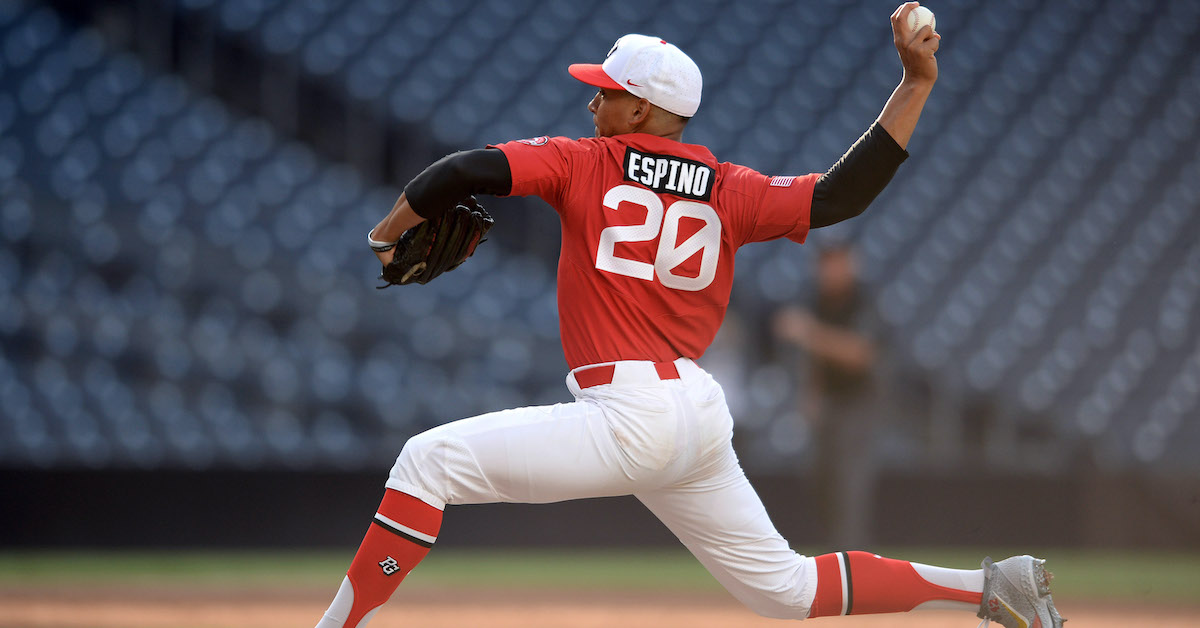
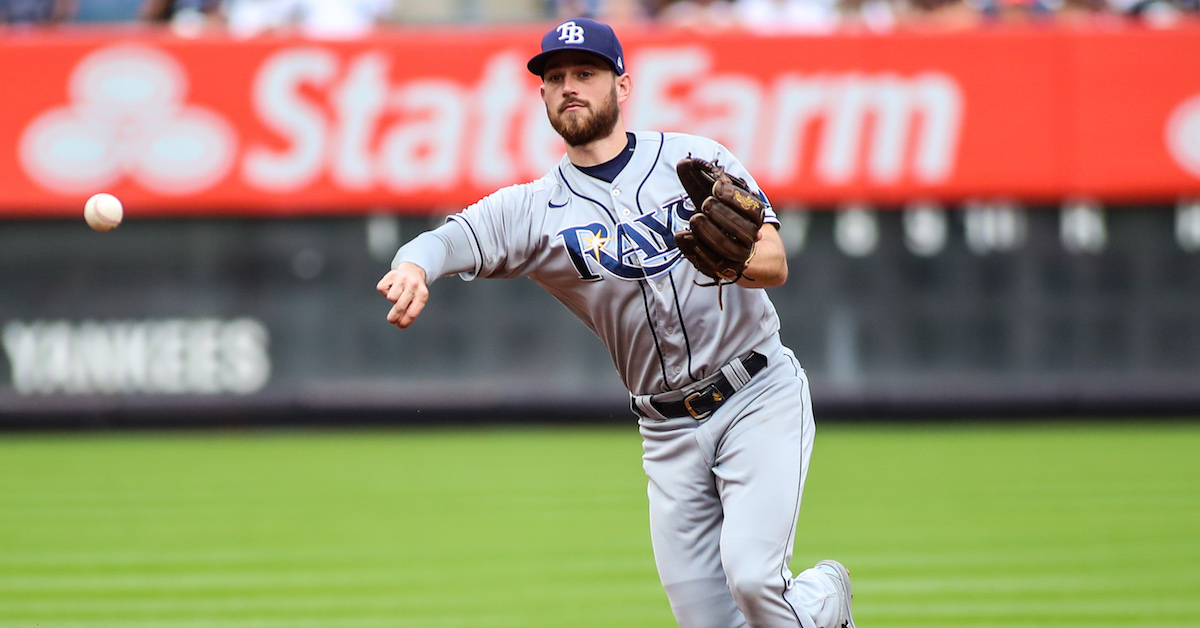
The Rays and Marlins love making trades. They’ve now combined for four trades this year, though this one is the most consequential. The terms are simple: Miami gets Joey Wendle and Tampa Bay gets Kameron Misner. That’s it!

Normally at FanGraphs, we try to tell you why the trade might make sense for both sides, and which way we would lean if we had to choose a winner. If we’re feeling feisty, we might throw in a joke or two, perhaps a Dick Monfort burn if Dan Szymborski is in the driver’s seat. Today, though, the two of us had wildly different views of who won this trade. So without further ado, here are Brendan’s (Marlins) and Ben’s (Rays) thoughts on which side got the best of the other in this very Floridian trade.

Brendan’s Take

Ben probably isn’t the first analyst to pan a deal where Miami sought to improve the big league club, but I can’t find much recent precedent. That the Fighting Jeters beefed up at all seems sufficient cause for celebration. MLB is at its best when teams put their top product on the field, and the Marlins often fail to clear that low threshold. But between the Avisaíl García signing, the Sandy Alcantara extension, the Jacob Stallings trade, and now the Wendle deal, the Marlins have the swagger of… well, not a contender exactly, but at least an upright major league team. Read the rest of this entry »


2022 Early Baseball Era Committee Candidate: Bud Fowler

The following article is part of a series concerning the 2022 Early Baseball Era Committee ballot, covering managers and long-retired players whose candidacies will be voted upon on December 5. For an introduction to the ballot, see here, and for an introduction to JAWS, see here. All WAR figures refer to the Baseball-Reference version unless otherwise indicated.

Bud Fowler

“For the next twenty-five years [after his debut in 1878], Fowler barnstormed around the country, from Massachusetts to Colorado, playing wherever Negro players were permitted. He played in crossroads farm towns and in mining camps, in the pioneer settlements of the West and in the cities of the East. These were the years of growth for the minor leagues, the foundation stones for organized baseball, and Fowler performed in several of them. He was the first of more than sixty Negroes who were in white leagues before the turn of the century, when baseball’s leaders began to think of their structure as Organized Baseball in capital letters and when the long night of total exclusion lowered for the black man.”— Robert Peterson, Only the Ball Was White, 1970

Bud Fowler was Black baseball’s original pioneer, its first acknowledged professional, with a career that’s believed to have spanned from 1878 to 1904. An exceptional hitter, pitcher, and fielder who could play any position (sometimes catcher, but mainly second base), the 5-foot-7, 155-pound righty was believed to be of major league star quality, and is recorded as having hit .308 in over 2,000 at-bats in 10 seasons of organized baseball. Alas, the color of his skin and the prejudice that followed prevented him from ascending to the majors. Playing on integrated teams before the color line was fully entrenched — even captaining some — he traveled a hard road, unable to stay in one place for long before the objections of teammates or opponents forced him to move on, even given his considerable talents; by his own count, he played in 22 different states plus Canada. In the latter stages of his career he became one of the game’s first significant Black promoters, involved in forming leagues and teams.

It is a painful irony that Fowler was raised in Cooperstown but has yet to be recognized with election to the Hall of Fame. Not until 2013, the centennial of his death, was he even honored in his hometown. That year, MLB official historian John Thorn said, “Bud Fowler is of extraordinary importance on a national scale. Many would argue he should be in the Hall of Fame or should have been long ago.” Last year, SABR’s Nineteenth Century Committee voted Fowler as its 2020 Overlooked 19th Century Baseball Legend. Read the rest of this entry »


Some Quiet Moves Were Made, Too: Rounding Up the Reliever Signings

Lots of money flowed ahead of this week’s unofficial lockout deadline, but not all of the moves involved swimming pools of cash. Among the many made were some low-key bullpen additions, usually by contenders, all of which arguably upgraded their respective bullpens. Let’s talk about some of the more interesting ones!

Michael Lorenzen to the Angels

Lorenzen signed a one-year, $6.75 million contract to head to Anaheim, a surprisingly juicy figure for a pitcher with an ERA well in excess of five for the Reds in 2021. As you may have guessed, his peripheral numbers were better. A FIP just over four isn’t going to evoke prime Craig Kimbrel, but it’s a good bit better than the rest of the disasters in Cincy’s bullpen. The drop in strikeout rate was scary, but ZiPS doesn’t think it’s real when looking at the Statcast data, estimating that you ought to have expected him to finish up with 12 more strikeouts than he actually racked up — an impressive number in only 29 innings. Among relievers, that was the second-largest negative deficit, behind only Keynan Middleton of the Mariners. Scouting can also pick up this sort of thing, which is likely one reason the Angels were so willing to drop this amount of money.

The other is that Lorenzen wants to explore being a two-way player more than he got to in recent years. The Angels are apparently happy to grant this wish, given they’re the home of arguably the best (simultaneous) two-way player ever in Shohei Ohtani.

Lorenzen’s .233/.282/.429 line doesn’t scream “spare outfielder,” but one has to remember that his at-bats have been widely scattered, hampering his offensive development. In addition, a healthy chunk of them came as a pinch-hitter, a role in which players hit considerably worse compared to games they start.
Read the rest of this entry »


Cubs and Pirates Snag Top Two Catchers in Ever-Shrinking Market

Within the span of a few hours on Tuesday, the last two free-agent catchers projected to produce over 1 WAR next season came off the market. The Cubs landed Yan Gomes, as reported by Craig Mish of SportsGrid, for two years and $13 million with a $6 million option for a third year and some games played incentives worth up to $1 million per year. The Pirates, on the other hand, quickly filled a hole of their own making after trading Jacob Stallings to the Marlins on Monday afternoon by landing Roberto Pérez, the former Guardians catcher, as reported by ESPN’s Jeff Passan. The deal was later specified to be worth $5 million over one year by the Pittsburgh Post-Gazette’s Jason Mackey.

As discussed by Devan Fink a couple of weeks ago, the catcher market this offseason is particularly dire, and the signing of Pérez and Gomes means that there are essentially no more starting caliber options left at the position. Let’s take a closer look at each player and how they fit with their new team before seeing what further implication these moves might have around the league. Read the rest of this entry »


The Marlins Get Their Backstop

The Marlins have one of the most intriguing starting rotations in baseball. They just signed Sandy Alcantara to a five-year extension after his phenomenal 2021 season. Trevor Rogers just finished second behind Jonathan India in the National League Rookie of the Year voting. Behind those two, Pablo López, Jesús Luzardo, Sixto Sánchez, Elieser Hernandez, Edward Cabrera, and Max Meyer provide tons more talent to dream on. The only thing missing was a catcher to help guide and maximize those young arms.

Ever since J.T. Realmuto was traded away after the 2018 season, the Marlins had been rather aimless behind the plate. In the three seasons since, their catchers have accumulated just 1.3 WAR, the sixth worst mark in baseball over that stretch. In 2021, Jorge Alfaro, Sandy León, and a few other backup catchers combined for -0.1 WAR. Things got so bad with Alfaro that they tried playing him at first base and in the outfield after Miami acquired Alex Jackson at the trade deadline.

On Monday, though, the Marlins got their man: Miami acquired catcher Jacob Stallings from the Pirates in exchange for right-handed pitcher Zach Thompson and two prospects, Kyle Nicolas and Connor Scott. (Alfaro was traded to the Padres a day later for a player to be named later or cash considerations.) Read the rest of this entry »


How Alex Cobb Became a Giant

The Giants won 107 games last season, and their rotation deserves a ton of credit; only the Brewers and Dodgers, two teams expected to thrive off starting pitching, managed to record lower FIPs. But San Francisco took everyone by surprise, winnings games with the likes of Alex Wood, Anthony DeSclafani, and postseason hero Logan Webb. Looking to retain some of last season’s magic, the Giants recently inked new deals with Wood and DeSclafani. Yet Kevin Gausman, their ace, eluded them, ultimately signing a five-year contract with the Blue Jays and leaving an unmistakable hole in their rotation. But while a pitcher like Gausman is irreplaceable, the Giants could find the next big sleeper — another under-the-radar signing just like he was.

And so they’ve arrived at Alex Cobb, signing him to a two-year deal worth $20 million, which includes a club option for 2024. If the Giants are satisfied with his performance, that option will grant him $10 million, and if not, they have the option to buy him out for $2 million.

In hindsight, it makes perfect sense that they decided to pursue Cobb. He’s the exact type of pitcher I think that they have a liking toward, and I wanted to explain why.

Cobb pitched for the Angels in 2021, but the spotlight there was on two-way phenomenon Shohei Ohtani. Still, what he achieved in 93.1 innings is nothing to sneeze at, with career bests in FIP, fastball velocity, and strikeout rate, which might have been masked by a not-as-flattering 3.76 ERA. That surge in strikeout rate is particularly notable; before the 2021 season, Cobb last had one above 20% in 2014 — a whopping seven years ago. You just don’t fluke into something like that.

But even that career-high strikeout rate was still just 24.9%, as Cobb isn’t exactly a bat-missing machine. Actually, none of the Giants’ headlining starters are, either; the only guy in the ’21 rotation with a K/9 above 10 was Gausman. But there’s another appealing aspect of Cobb’s game — a skill the Giants highly covet.
Read the rest of this entry »


His Swing Remade, Tigers Prospect Ryan Kreidler Is Now Dangerous in the Box

Ryan Kreidler isn’t the same hitter that Eric Longenhagen and Kevin Goldstein described when they put together our Detroit Tigers Top Prospects List last spring. The 24-year-old (as of last month) shortstop no longer possesses a “conservative, contact-oriented approach coupled with limited raw power.” Thanks to remaking his mindset and mechanics, Kreidler crushed 22 home runs this season while slashing a solid .270/.349/.454. Making those numbers all the more impressive is that the 2019 fourth-rounder out of UCLA put them up between Double-A Erie and Triple-A Toledo in his first full professional season.

His collegiate and short-season output had been that of a contact-oriented hitter. Kreider went deep 16 times in his three years as a Bruin, and just twice in 257 plate appearances with the New York Penn-League’s Connecticut Tigers in 2019. Dissatisfied with the dismal level of production, he went back to the drawing board.

“I wasn’t hitting the ball in the air very much,” said Kreidler, who according to Longenhagen and Goldstein lacked athleticism in the batter’s box. “I made some changes over [the 2019] offseason, then got a chance to work on them when I was home during COVID.”

The Davis, California native turned to Los Angeles-based hitting instructor Doug Latta for guidance. Read the rest of this entry »

Marlins Begin To Invest in Roster With Alcantara, García Moves

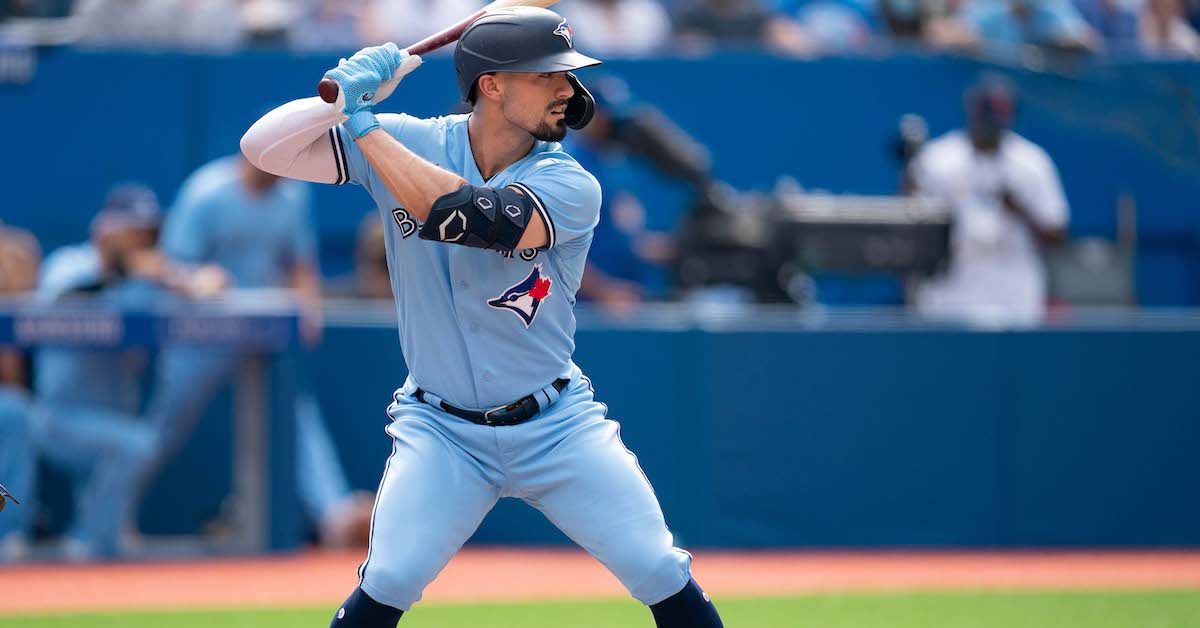
Under General Manager Kim Ng, the Miami Marlins have said a lot of positive things about investing in their roster in order to be a factor in what is becoming a highly competitive National League East. Over the past few days, they’ve begun to put their money where their collective mouth is.

On Tuesday, the club formally announced a five-year, $56 million extension for right-handed starter Sandy Alcantara; the deal, which was initially reported last week, includes a $21 million option for a sixth year, buying out his three arbitration years and as many as three years of free agency. It’s easy to forget that when the Marlins acquired Alcantara from the Cardinals as part of a four-player package received in return for outfielder Marcell Ozuna, he was not seen as the best prospect in the trade (for that matter, neither was right-hander Zac Gallen, who was also acquired in the deal). Instead, the real prize was speedy outfielder Magneuris Sierra. Sierra hasn’t worked out, but the deal has still been very fruitful for Miami.

At the time of the trade, Alcantara was seen by many as a likely future reliever due to his plus-plus arm strength, sloppy command and a shallow arsenal. To the credit of the Marlins pitching group, and more importantly, Alcantara himself, he has turned into a strike thrower, maintained his velocity, and developed a much more effective complement of off-speed pitches. That combination has turned him into one of the better (and more durable) young starters in the game, one who also has several underlying indicators that portend future improvements. Read the rest of this entry »

An MLB Lockout Preview

With Major League Baseball’s current collective bargaining agreement (CBA) set to expire at 11:59 p.m. Eastern tonight, the owners and the Major League Baseball Players Association (MLBPA) are currently meeting in Dallas to exchange various proposals in an attempt to reach a deal. Unfortunately, media reports suggest that no new agreement is imminent, meaning that the sport is facing the very real possibility that it will experience its first work stoppage since the infamous players’ strike of 1994-95.

While it is certainly possible that tonight’s deadline could pass without triggering a labor stoppage — indeed, the two sides can elect to continue to negotiate with the existing CBA governing the sport in the interim — MLB commissioner Rob Manfred seemed to suggest prior to Thanksgiving that the owners will lock out the players if no agreement is reached this evening.

Consequently, this post explores the various options available to the MLBPA should the owners implement a lockout at midnight tonight as anticipated. Along the way, I will borrow from a similar post I wrote back in 2016 during the last CBA negotiations. While that labor-stoppage primer ultimately proved to be unnecessary, barring a miraculous turn of events in the coming hours, it would appear that fans are unlikely to be so lucky this time around. (Meanwhile, for anyone looking to understand the basis for the current dispute between the owners and players, this preview from a couple weeks ago may prove helpful.)

First, some basic legal background. A lockout is a legally sanctioned tool in which management (in this case, team owners) announces that it will refuse to allow its unionized employees (presently, the players) to work until an ongoing labor dispute is resolved. This means that the players will not be paid, or allowed to report to work, until a new CBA has been agreed to. In the interim, there will be no major-league free-agent signings, trades, or games played. A lockout is thus the ownership equivalent of a strike by the players. Read the rest of this entry »


Job Posting: Miami Marlins Baseball Analytics Intern

Job Title: Intern, Baseball Analytics

Department: Baseball Operations
Reports To: Director of Analytics
Location: Miami, Florida
Job Classification: Hourly/Non-Exempt

Position Summary:
The Intern will assist Baseball Operations decision-making through the analysis and facilitation of baseball information. he specific day-to-day responsibilities of this position will vary depending on the baseball calendar, but will revolve around analyzing and troubleshooting baseball data. A competitive candidate will be an excellent communicator and possess an established foundation of analytical skills. The position will report to the Director of Analytics. Read the rest of this entry »