We conclude our rankings of the game’s position players with a deep dive on designated hitters.
Does anyone miss seeing pitchers hit? My guess is that the vast majority of you don’t, and for good reason. Pitchers have become increasingly dominant, which only increases the value of quality hitters, many of whom are utilized at the DH position. Some, like 42-year-old Nelson Cruz, fit the 1973 Orlando Cepeda mold, while others, like Shohei Ohtani… well, there are no others like Shohei Ohtani. If there has ever been a baseball unicorn, the Angels’ two-way superstar is just that.
Not all of players who see time at DH are defensive liabilities. Some clubs are blessed with positional depth and are looking for a way to fit a player into the lineup — Giancarlo Stanton and AJ Pollock are examples — while for others, it’s a matter of safeguarding health. Byron Buxton and Tyler Stephenson stand out in this regard. Read the rest of this entry »
Matt Duffy is in camp with the Kansas City Royals on a minor-league contract, and as is common for veteran players in his situation, he has multiple opt-out clauses. Whether he ends up exercising any of them remains to be seen. The 32-year-old infielder is on the bubble with days left before the start of the regular season, and even if he doesn’t make the Opening Day roster, there is a chance that he would accept a Triple-A assignment with a call-up in mind. All Duffy knows for certain is that he wants to keep playing.
“I’ve kind of made the decision that they are going to have the rip the jersey off of me,” said Duffy, who has battled injuries throughout his seven big-league seasons. “If I were to call it a career at some point in the next five years, I would find myself saying, ‘Man, I wish I’d have played one more year.’ Life post-baseball is going to be so much longer than anything the grind can throw at me. At the end of the day, I really enjoy what this game does for me in terms of pushing me to learn something new.”
Duffy is 12-for-36 on the spring, and he can provide more-than-adequate defense at multiple positions. Assuming he can stay healthy, he can help a big-league team — be it the Royals or someone else — for the foreseeable future. Even so, he knows that the clock is ticking. While many players who are asked about their post-baseball plans deflect the question, Duffy is forthcoming on the subject. Read the rest of this entry »
Before I started at FanGraphs, most of my writing was about the Phillies. When I took this gig, I made a promise that I’d continue to write about my favorite team, joking that this was merely “one more place to gush about Rhys Hoskins.” I must admit, this isn’t how I hoped to fulfill that promise.
On Thursday afternoon, Hoskins was manning first in a Grapefruit League contest against the Tigers. It was a happy day for Philadelphia, with Trea Turner, Kyle Schwarber, and J.T. Realmuto making their return from the World Baseball Classic. The Phillies were fielding what could have been their Opening Day lineup for the very first time. This wasn’t just any old Thursday in March; it was a chance to see how the reigning NL champs planned to defend their title.
Things got off to a promising start when Schwarber doubled and Hoskins drove him home in the bottom of the first. Woefully, the good feelings wouldn’t last for long. The following inning, Austin Meadows hit a high-bouncing grounder along the first-base line, and Hoskins turned to chase it into shallow right field. He nearly made the play, but the ball slipped out of his glove, like a scoop of ice cream falling from the top of the cone. As he moved to retrieve the ball, he took an awkward turn. One step later, and Hoskins was crumpled on the grass in pain:
It was immediately clear that something was wrong. Bailey Falter signaled for help from the dugout as Bryson Stott called for time. Every Phillie on the field came to check on their fallen teammate. Soon, the paramedics would cart him away. Read the rest of this entry »
Yesterday, Dan Szymborski and Michael Baumann previewed left and center field. Now we round out the outfield positions with a look at right field.
Blame Bryce Harper, Juan Soto, Ronald Acuña Jr., and even Aaron Judge. Right field may be home to some of the game’s best hitters and brightest stars, but last year the position fell into a collective offensive funk, in part because some of the aforementioned players either underperformed or spent more time at other positions — or both.
Perhaps that was just the flip side of a 2021 season in which right fielders collectively produced a 109 wRC+, higher than any other position besides first base and the highest of any batch of right fielders since ’17. In 2022, right fielders combined for just a 102 wRC+, the lowest mark within our positional splits, which go back to 2002. They were outhit not only by first basemen (111 wRC+) but by left fielders (106) and third basemen (105) as well; left fielders had last outproduced them in 2006, third basemen in ’16, and not once had both done so in the same season. Seventeen of the 30 teams failed to reach a 100 wRC+ at the position, while nine were below 90. Only 18 players accumulated at least 200 plate appearances at the position while maintaining a 100 wRC+, down from 21 in 2021 and 24 in ’19. Read the rest of this entry »
Earlier today, Dan Szymborski examined the state of left field. Now we turn our attention to those who roam center.
So much of evaluating and utilizing center fielders comes down to what you want. It’s easy to forget sometimes that this is an up-the-middle, premium defensive position, like shortstop and catcher. Even if the defensive demands aren’t quite as extreme, there’s a limited number of ballplayers who can hold their own in center, and a huge premium on those who can play it well. And if you’re looking for players who can field the position competently and hit? Well, that’s an even smaller pool still.
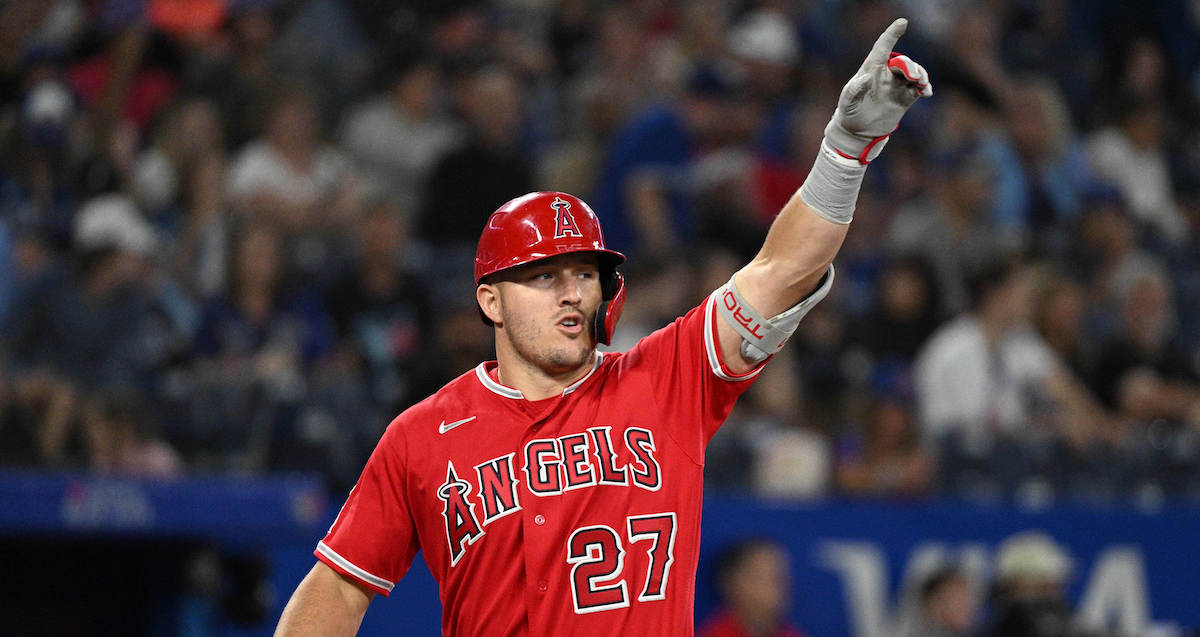
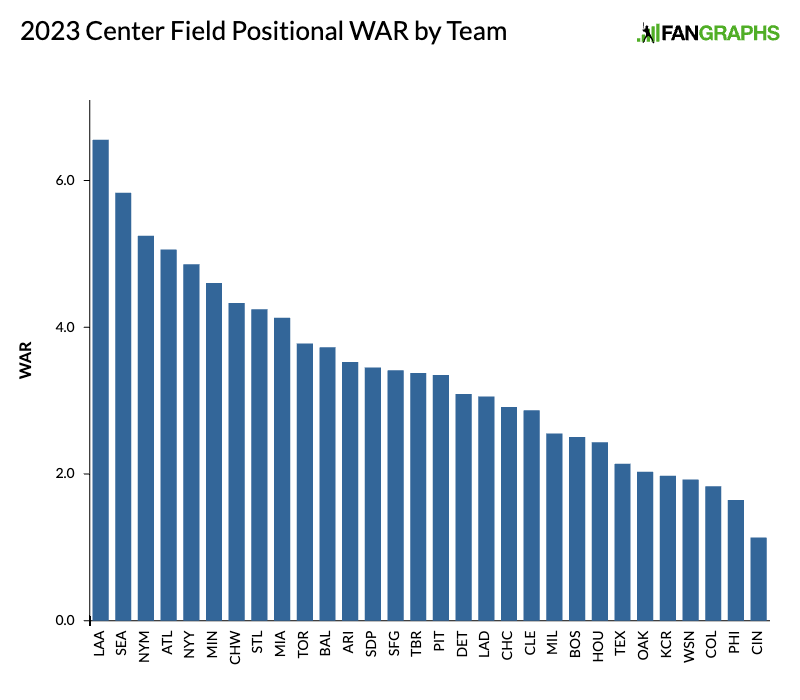
Such scarcity makes the two clear best center fielders in baseball — Mike Trout and Julio Rodríguez — supremely valuable. As interesting as those two superstars are to discuss, most of the other 28 teams are engaged in an even more fascinating puzzle: How to maximize value at this position in the aggregate. For some, that involves building an up-and-coming potential star, like Michael Harris II or Luis Robert Jr., into the best version of himself that he can be. Other teams, like the Brewers and Tigers, are auditioning even less developed players in the hope that they’ll turn into something special. Read the rest of this entry »
You’ve probably seen the jokes. Oh, the Nationals might have traded Juan Soto, but it’s no big deal, because they have Juan Soto’s replacement waiting in the wings. Ooh, intriguing! But of course, it’s mostly a setup to make a crack about how Joey Meneses is on an unsustainable heater — fifteen minutes of fame before an inevitable crash back to just-okayness.
Heck, look at our projections for him this year. Depth Charts pegs him for 602 plate appearances, a 111 wRC+, and 1.5 WAR. That’s not awful or anything, but astute readers will note that Meneses managed 1.5 WAR last season in just 240 plate appearances. From his debut on August 2 through the end of the season, he was 11th in baseball in wRC+. This year, we’re projecting him to be 136th.
That sucks! It really sucks. It’s partially unavoidable, though. We’ve all gotten so used to projections, so used to the fact that how a player does in any given year is only a small part of what we should use to forecast their future, that actual performances largely get lost in the mix. The forecasts are darn good at their jobs in aggregate. It’s easy to listen to what they have to say and tune out that pesky reality that disagrees. Read the rest of this entry »
Yesterday, we wrapped up our analysis of the league’s infielders with third base and shortstop. Today, we shift our attention to the outfield, starting in left.
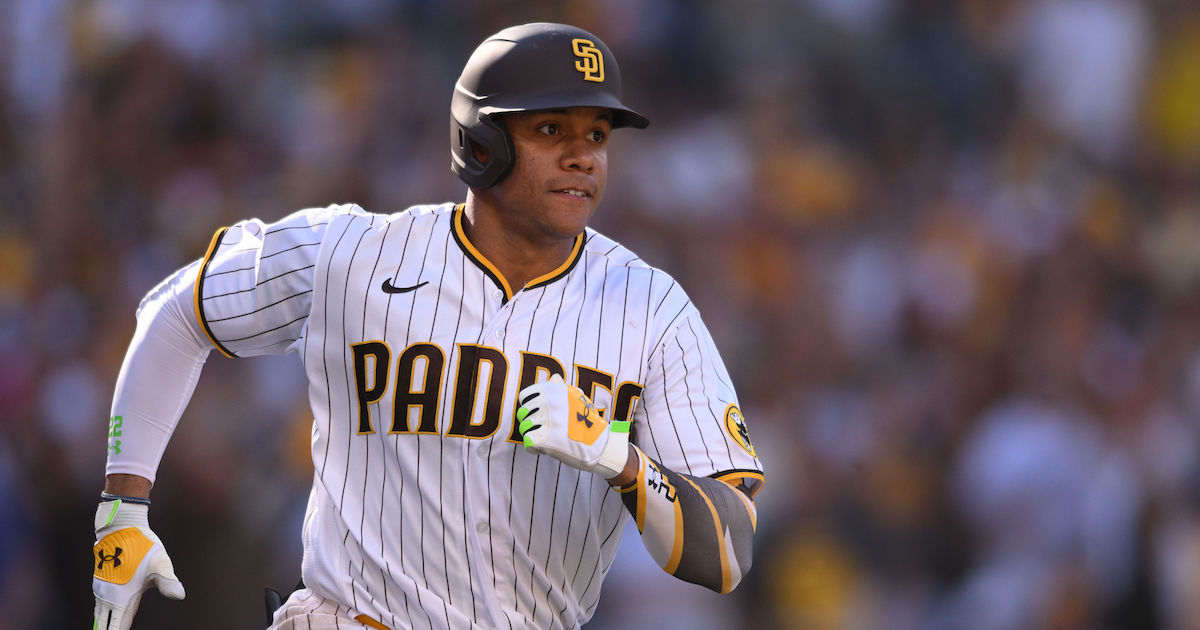
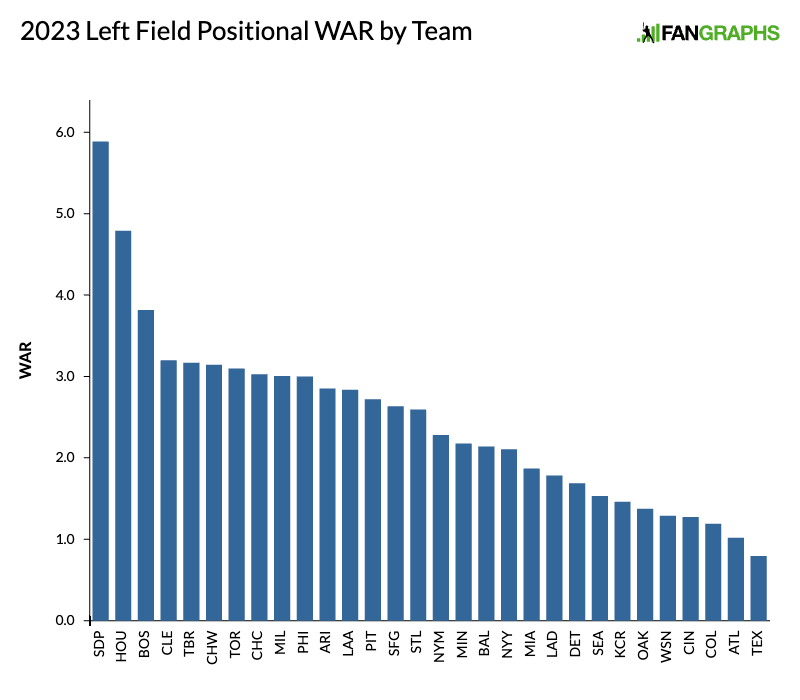
The sabermetric era has resulted in hard times for left field as a position. Teams are more willing than ever to give their best young talent every opportunity to stick at tougher defensive positions, which narrows the pipeline to corner outfield jobs. One-dimensional hitters have gone out of style and big home run totals alone don’t result in hefty contracts on the easy side of the defensive spectrum. Throughout the 1950s and ’60s, with barely half the number of teams, there were regularly six or seven active left fielders who were future Hall of Famers. Harmon Killebrew, Willie McCovey, Billy Williams, Frank Robinson, and Carl Yastrzemski all qualified for the batting title as left fielders in 1963. In contrast, there are basically two superstar left fielders today: Juan Soto and Yordan Alvarez, and the latter doesn’t even exclusively play the position. Read the rest of this entry »
Last October, I wrote a piece about Jarred Kelenic’s small sample success in the final month of the 2022 season. After a rollercoaster start to his career, he had kept pushing along trying to find the version of his swing that would allow him to adjust at different heights of the zone and be formidable against big league breaking balls. For much of 2022, he could hardly make contact against quality breaking balls, but at the end of the season, his swing began to look more connected. It led to slight improvements in breaking ball contact and contact in general against lefties. It was also a positive way to head into the offseason, where he could have more time to explore his swing and find the best version of himself. Since Kelenic was constantly tweaking during the season while jumping between the majors and minors, it was inevitable he would look at least a little different once spring came around.
That was indeed the case on his first day in Peoria, and so far in spring training, the adjustments he made have been paying off. Yes, it’s only spring training, but sometimes if you read in between the lines and try to find sticky characteristics, this month of baseball can be more than just a tuneup. And Kelenic has been nothing short of incredible at the plate. In his 38 Cactus League at-bats, he has 16 hits, eight of which have gone for extra bases all over the field — many of them crushed at over 100 mph. It’s great to see such a dominant performance from a results perspective, but one key piece of his ongoing changes focuses on the mental aspect of hitting: approach and quality at-bats. That piece has a direct influence on his swing mechanics.
In an interview he did with Seattle Sports in the beginning of March, Kelenic talked about being focused on things you can control as a hitter and battling through unfortunate circumstances. He spoke under the context of an at-bat from the day prior, where he thought the umpire missed two calls that put him down 0–2; he flushed those pitches and ended up scorching a line drive over the center field wall. This mental side of hitting is an important step in the quest to becoming a mature hitter. He talked more at length about this mentality in a separate interview with the Seattle Times. Specifically, he has focused on the idea of “winning the pitch” regardless of the count. This keeps a hitter competitive and able to maintain a short-term memory — a necessary skill in baseball. Kelenic has provided several quotes this spring that give us a better idea of how he is approaching the game, and it allows somebody like me, who has been keen to analyze his changes, to follow his story with better prior knowledge. And the changes have been quite interesting, too. Read the rest of this entry »
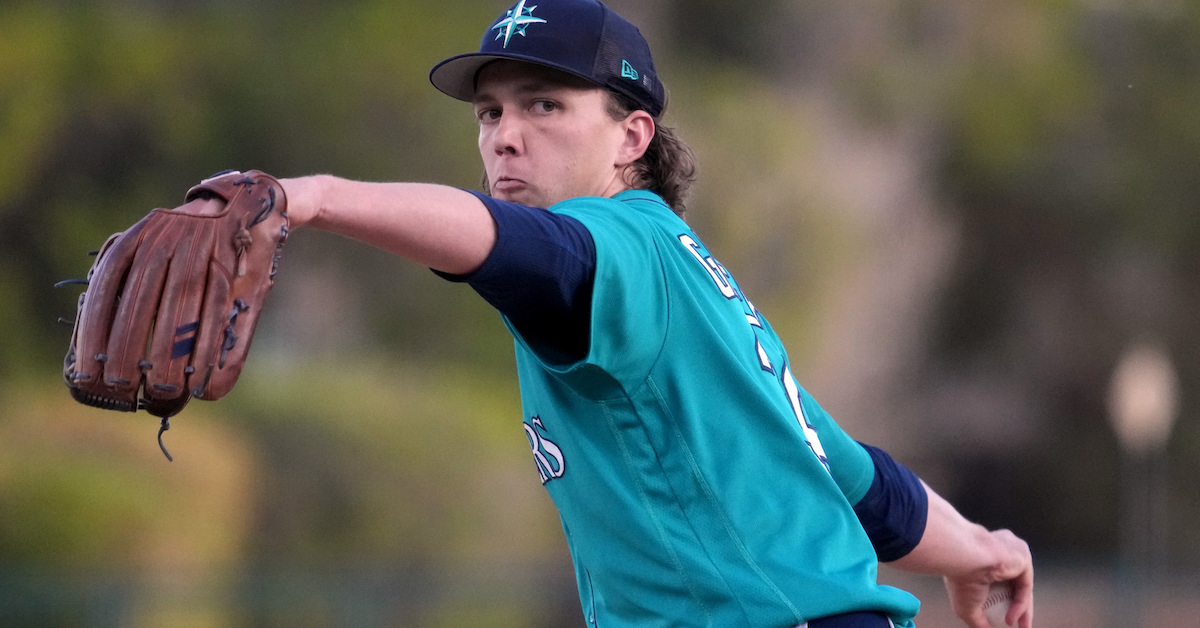
Some pitchers approach their craft by trying to hone their established pitch repertoire to make the most of what they’ve always thrown. Then there’s Logan Gilbert. Rather than stick with the pitches that were the foundation of his success in college and through the minors, he’s consistently tinkered with new grips and new pitches to enhance his arsenal, even after reaching the big leagues. Last year, he revamped each of his secondary offerings in an attempt to gain more consistent effectiveness with them. He hasn’t been afraid to make adjustments on the fly during the season either, all in an effort to maximize his abilities on the mound.
This spring, Gilbert debuted a brand-new splitter to replace his changeup. That older pitch was effective in limited action, but he rarely had a good feel for it, making it an inconsistent offering at best. “I’ve always tried the changeup and just kind of struggled with it, [it] just wasn’t natural for me,” Gilbert said in an interview with Daniel Kramer of MLB.com. “So I’m just trying to find basically a variation of a splitter that I can throw like a fastball.”
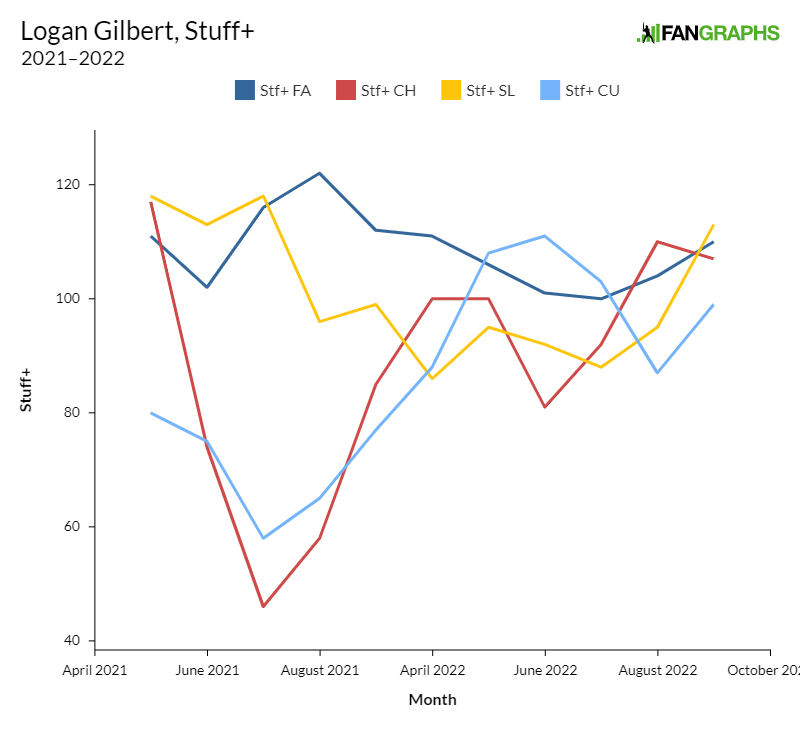
Before we get too deep into his new pitch, I want to go back and look at how Gilbert’s entire repertoire has evolved over the last two years. To do so, I’m going to be using the new Stuff+ leaderboards recently introduced on the site. Stuff+ is a pitch model developed by Eno Sarris and Max Bay that attempts to quantify the quality of a given pitch using only the underlying physical characteristics of said pitch. Stuff+ becomes reliably predictive very quickly — in under 100 pitches — and is extremely sticky year-to-year. That reliability means it’s sensitive to changes in a pitch’s characteristics, making it an excellent tool to evaluate someone like Gilbert.
The one constant for Gilbert has been his fastball, which possesses excellent raw velocity that plays up even higher when you take into account his elite release extension. With above-average ride and good command, his heater has been the backbone of his pitch mix. If anything, he’s leaned on it a little too much early in his career, but only because his secondary offerings have lagged behind. The graph above puts the inconsistency of those pitches in stark relief. His changeup finally found some sure footing last season, even if he couldn’t command it at all. More importantly, his two breaking balls have oscillated in effectiveness, with neither registering above average at the same time. Read the rest of this entry »
By its very definition, the World Baseball Classic is a global baseball tournament; it’s right there in the name after all. It also feels obvious: Japan won the WBC for the third time, led by the best player on the earth, with a lineup and rotation and bullpen full of NPB All-Stars, and did so by beating Team USA and its All-MLB roster. The United States is the sport’s birthplace and the home of its premier professional league, but the game long ago left its borders, and through the WBC, we’ve gotten to see just how strange and great and flat-out joyful it can be around the world.
If you’ve watched the WBC before, you’ve known this, or at least gotten glimpses of it. If this WBC was your entry point into baseball beyond our shores, then you saw it damn near every day — not just through Japan overcoming its competition but through Mexico almost upsetting them on the way to that title, or through the Dominican Republic and Puerto Rico and Venezuela playing with their motors revved all the way up, or through just how many times the United States, with Mookie Betts and Mike Trout and Nolan Arenado (I could literally just list the entire ridiculous lineup), was pushed up against a wall and forced to fight its way free. That they did is a testament not just to the absurd collection of talent assembled on that roster but also to how good the rest of the world now is, and while it’s too early to declare the results of this year’s tournament to be a sea change, it’s also no overreaction to note that the WBC is a genuine competition with multiple viable contenders and not just a slower version of The Dream Team stomping wildly overmatched countries by double digits.
That fact can get lost given the understandably and disproportionately heavy focus that the United States and MLB receive in the history of the sport. Baseball in other countries is framed primarily as “Here’s when Americans introduced the game,” and foreign players are usually assessed on a basis of “When will they come to MLB, and how good will they be?” (We here at FanGraphs are as guilty of the latter as anyone else.) The rest of the world, in the minds of most American fans, exists as a feeder for MLB, and by default, the rest of the world will always be a step behind, producing greatness but never overtaking the United States as the center of the baseball universe.
By virtue of the money it makes and the level of competition, MLB is the peak of the mountain, and no number of WBC wins by Japan or any other country will change that. Tuesday night didn’t provide a sneak peak at our new NPB overlords. But forget about that hierarchy and its demand that the only game that matters is the one that takes place from April to October on one continent, or the blinkered myopia that unless a team is hoisting a World Series trophy at the end, then it was all for nothing. There’s more to baseball than the narrow confines of MLB, and the sport itself will only grow and improve the more America’s place atop the pyramid is challenged — the more that places like Japan and Cuba and Mexico but also Great Britain and Colombia and Taiwan produce star players at any level.
More than anything, that was the message of the WBC: baseball is global, and baseball is better by being global. No culture, society or art has ever been better for being closed off, or for shunning the wider world. Baseball is no different. Diversity breeds innovation, and innovation keeps the game from getting stale. We should celebrate the version of baseball in which America isn’t the unquestioned champion, in which other countries get to see themselves finding the kind of success that this country tends to monopolize when it comes to organized sports. Spread the joy and receive plenty in return; open the world and delight in who walks in the door. Be happy when the competition gets better and stronger and pushes us to do the same.
The 2023 WBC was roaring Dominican and Puerto Rican fans in Miami, sellout crowds in Taipei and Tokyo, unexpected star turns from Czech and Nicaraguan and British players. It was a sign of how far the game has spread and how deep it lies in the DNA of so many disparate places, with no common culture or connectors other than a bat, a ball, and four bases. It was a celebration of all the different ways that fans enjoy the game, and if you ever doubt that, think about the brass bands and ringing chants in the stands backing Japan or the Latin American fans turning LoanDepot Park into a week-long block party or the videos of people around the world, watching in bars or at home in the darkest hours of the night or at dawn or in the middle of the afternoon, tuning into an exhibition in which the only prize was national pride. It was proof that baseball is more than MLB.
You saw that made plain on Tuesday night, when Shohei Ohtani struck out Trout in a moment so laden with symbolism that you could probably build a book around it, or at least a short 30 for 30 episode. (Fittingly and deservingly, it was Ohtani who was named the tournament MVP.) It’s too soon to tell if that at-bat is one of those hinge points in history, around which baseball empires fall and new ones rise and the course of the sport’s existence is inexorably and irretrievably altered. But that moment doesn’t have to be so lofty or ponderous. It can simply be a reflection of a truth that the WBC made crystal clear: Baseball belongs to the world.