Archive for Cubs

Sunday Notes: Colorado Reliever Juan Mejia Has a Brayan Bello Connection

When our 2025 Colorado Rockies Top Prospect list was published last January, a 24-year-old pitcher coming off of an underwhelming season ranked 14th with a 45+ FV. Over 54 innings with the Double-A Hartford Yard Goats, Juan Mejia had logged a 5.00 ERA and an equally-unhealthy 12.3% walk rate. Eric Longenhagen nonetheless remained enamored of his potential. Offering a “relatively bullish projection,” our lead prospect analyst wrote that the righty “is too freaky to slide,” because he possessed “one of the more explosive and athletic deliveries in the minors” as well as a mid-to-high-90s fastball and an “overtly nasty” slider.

Longenhagen’s faith was realized in the youngster’s rookie season. Not only did Mejia make 55 appearances, he put up a 3.96 ERA, a 3.71 FIP, and a 26.1% strikeout rate over 61-and-a-third innings. Among Rockies relievers, only Jimmy Herget took the mound more frequently and tossed more frames.

When I spoke to Mejia at Fenway Park this past summer — Colorado PR staffer Edwin Perez served as an interpreter — I learned that he has a connection with Red Sox right-hander Brayan Bello. Both were signed out of the Dominican Republic in 2017, and they were together, along with other starry-eyed hopefuls, when Mejia first caught the eye of a Rockies scout.

“When I was 16, I was doing a tryout,” recalled Mejia, who hails from Baní, roughly an hour south of Santo Domingo. “I don’t remember how many teams were there, but there were a lot of them. That’s where I met Brayan Bello, who a lot of scouts were there to see. Read the rest of this entry »


Three Executives on Developing the Next Kyle Hendricks

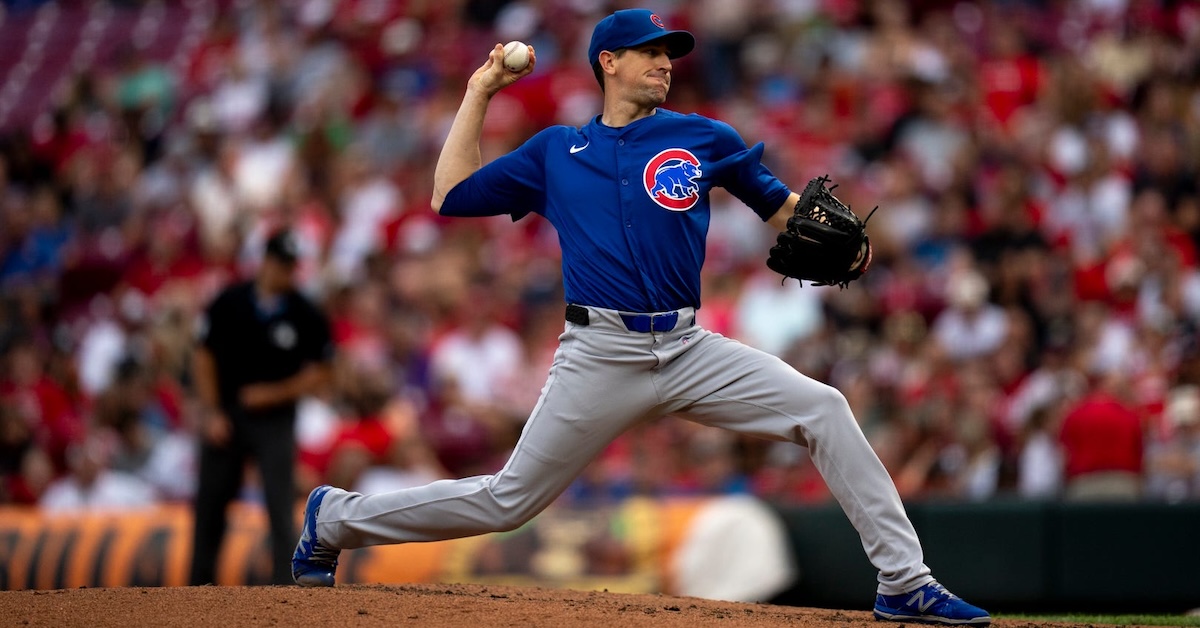
Albert Cesare/The Enquirer/USA TODAY NETWORK

Kyle Hendricks announced his retirement as the GM Meetings were getting underway earlier this week, which presented a good opportunity to get learned perspectives on how “The Professor” pitched effectively at baseball’s highest level despite a fastball that rarely exceeded 90 mph. Moreover, it provided a chance to ask if teams should be trying to develop more pitchers like Hendricks, rather than focusing so heavily on power arms.

Three executives at the just-completed meetings struck me as likely to have especially good insight into those subjects. Here is what they had to say about both the Dartmouth College product, and how difficult it is to develop pitchers who can succeed in the way that he did.

———

JED HOYER — CHICAGO CUBS

Hendricks spent 11 of his 12 seasons with the Chicago Cubs, all with Hoyer serving as the team’s general manager or president of baseball operations. The first question I posed to the longtime exec was this: To what extent can, or should, teams try to develop more pitchers like Hendricks?

“That’s a great question,” replied Hoyer. “I think you’ll wait a long time before you get the next Kyle Hendricks. His command was exceptional. His changeup was exceptional. If you go back and look at his strikeout rates — I don’t know exactly when it fell down a little bit — but I would say that for six, seven years of his career, he wasn’t a power pitcher in terms of strikeout rates, but he wasn’t a finesse pitcher either. Along with not walking guys, he struck guys out. He just did it in a different way. Read the rest of this entry »


2025 National League 40-Man Roster Crunch Analysis

Edwin Arroyo Photo: Angelina Alcantar/News Sentinel/USA TODAY NETWORK via Imagn Images

We’re less than a month from the Winter Meetings and the Rule 5 Draft, which means it’s a good time to evaluate every team’s 40-man roster situation. This is the time of year when teams have one final chance to protect Rule 5 eligible players by placing them on the 40-man. Eligibility is determined by a mix of how long a player has been with their parent organization and how young they were when they signed: Players who signed at 18 or younger must be added to the 40-man within five seasons, while everyone else must be added within four. RosterResource monitors Rule 5 eligibility, if you’re curious to see the lay of the land.

During the season, teams can free up roster space by placing an injured player on the 60-day IL. In the offseason, teams don’t get extra slots for injured players, which tends to put pressure on the back of the roster. The Diamondbacks are a good example of how space can tighten quickly, as they’ve currently got six pitchers battling long-term injuries occupying a spot. You may have noticed a flurry of moves immediately following the World Series, with many teams outrighting players off the 40-man in order to make room for all the guys who were on the IL.

Below, I’ve assessed every National League team’s 40-man roster situation (Eric will sort through the American League tomorrow). Some teams, like the Braves, have plenty of roster space, and thus a lot of flexibility in adding whoever they like. Others, like the Cardinals and Marlins, will face some tough choices as they seek to balance protecting interesting prospects with retaining players already on the roster, as well as finding room for prospective additions via trade or free agency. Some clubs don’t have many impact players to add, while others may need to protect a half-dozen or so guys. I’ve tried to identify which players are most likely to be added, which guys on the 40-man are vulnerable to getting lopped off in a roster crunch, and who could be moved in a deal to free up roster space. Let’s dig in. Read the rest of this entry »


Shota Imanaga Has the Chance To Do the Funniest Thing Ever

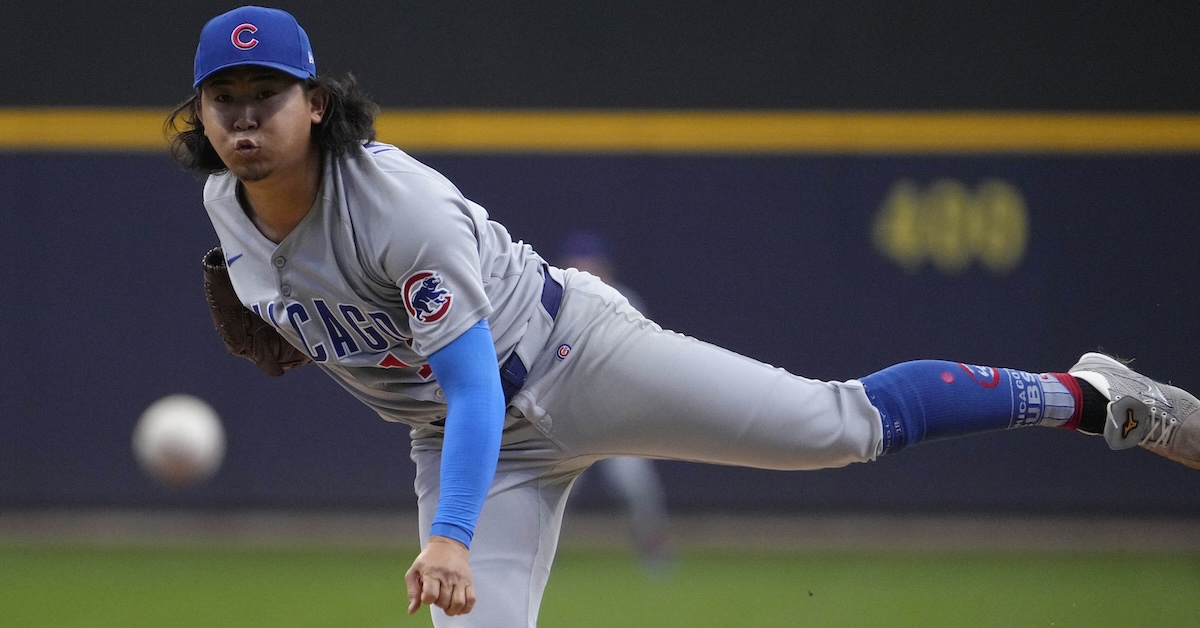
Michael McLoone-Imagn Images

I love a complicated contract. I love any excuse to use the word byzantine really, so once we’re into stair-step incentive clauses, cascading conditional extensions, and the finer points of Major League Baseball’s collective bargaining agreement, I’m having the most convoluted kind of fun imaginable. Today, I’m going to take you step by step through the complex world of Shota Imanaga’s current contract situation. As you likely know, the Cubs offered him a qualifying offer on Thursday. All we’re going to do here is break down as simply as we can how he got to that point and what it means. We’re not going to leave anything out. To be clear, Imanaga’s contract situation isn’t anywhere near the most complex one, but even so, it’s dizzying. We’re going to lose ourselves in the minutia. For fun.

I also love the logistics. I love following a chain of what happens when and why so precisely that you can’t help but be overwhelmed by the absurdity of the situation. And even before you dive in, free agent contracts are inherently absurd. They’re iron-clad agreements negotiated within the framework of an already-negotiated-to-within-an-inch-of-its-life CBA. They’re insured, and in recent years their conditionality has exploded to the point where they contain as many branches as a choose-your-own-adventure novel. But in the end, they just boil down to figuring out how much somebody’s going to get paid at their job. They just happen to be agreements about how much the most obscenely wealthy people in the entire world are going to pay people who are about to become generationally wealthy. Almost no one involved will ever have to worry about money for the rest of their lives. The people who really need the elaborate safeguards in the CBA and uniform player contracts are the ones who don’t make millions of dollars. But this is still a job; a high-pressure, high-stakes job negotiated between bitter rivals, and one side has a history of financial malfeasance that dates back to the 19th century. Of course, lawyers have to be involved. Everything needs to be spelled out, and my goodness is it spelled out.

The details in the CBA are there for very good reasons, but they’re mind-bogglingly specific. The title on the PDF calls it the basic agreement, and like any basic document, it’s 426 pages long. I just scrolled to a random page in the middle, and the topic at hand was who exactly gets photocopies of team financial documents so that the players can determine whether the owners are actually following the rules of the basic agreement. We’re 209 pages in, and we’re still talking about the logistics of the document itself.

One section stipulates what happens if a player gets called up for the National Guard. Another explains that all visiting clubhouses must contain a hydroculator. The last page is a full-page table that establishes an agreed-upon figure for how long it takes to fly from every city in the league to every other city in the league. Did you have a blast watching the swing-off that decided this year’s All-Star Game? Well, its format was codified in the CBA, which brings to the mind’s eye two teams of lawyers, red-eyed, ties loosed and collars mangled, monologuing 12 Angry Men-style in a conference room strewn with stale donuts and half-empty coffee cups about whether each player really needs unlimited pitches for their three swings when 10 pitches should really be enough to cover it.

Here’s a good-faith offer: I will personally bake a batch of cookies and mail them to the first FanGraphs reader who reaches out to me with some sort of honest-to-goodness proof that they’ve read the entire CBA. (Cookie variety of your choosing, but please be aware that my macaron game is rusty.)

So let’s get into this one contract. How hard could it be? Read the rest of this entry »


The Long and Short of It: A Look at This Year’s Postseason Starting Pitching

Michael McLoone-Imagn Images

At last, we’ve got a World Series matchup to wrap our heads around. Representing the American League are the Blue Jays, who are back in the Fall Classic — making it a truly international World Series — for the first time since 1993. They’ll face the Dodgers, who are vying to become the first back-to-back champions since the 1999–2000 Yankees. They’re the first defending champions to repeat as pennant winners since the 2009 Phillies, who lost that World Series to the Yankees. If that matchup feels like a long time ago, consider that it’s been twice as long since the Blue Jays were here.

Though the core of the lineup is largely unchanged, this year’s Dodgers team differs from last year’s in that it has reached the World Series on the strength of its starting pitching rather than in spite of it. Due to a slew of injuries in the rotation last year, manager Dave Roberts resorted to using bullpen games four times to augment a rickety three-man staff consisting of Yoshinobu Yamamoto, Jack Flaherty, and Walker Buehler. Even as those starters (or “starters,” in some cases) put up a 5.25 ERA while averaging just 3.75 innings per turn, the bullpen and offense more than picked up the slack, and the Dodgers took home their second championship of the Roberts era.

This time around, with Flaherty and Buehler elsewhere and Blake Snell, Tyler Glasnow, and Shohei Ohtani joining Yamamoto, Dodgers starters have been absolutely dominant, posting a microscopic 1.40 ERA while averaging 6.43 innings per turn through the first three rounds, helping the team to paper over a shaky bullpen. After Snell utterly dominated the Brewers, holding them to just one hit over eight innings while facing the minimum number of batters in Game 1 of the NLCS, Yamamoto followed with a three-hit, one-run masterpiece — the first complete game in the postseason since the Astros’ Justin Verlander went the distance against the Yankees in Game 2 of the 2017 ALCS. Glasnow, who began the postseason in the bullpen, allowed one run across 5 2/3 innings in Game 3 of the NLCS, while Ohtani backed his 10 strikeouts over six shutout innings in Game 4 with a three-homer game in what for my money stands as the greatest single-game postseason performance in baseball history. Read the rest of this entry »


Job Posting: Chicago Cubs – Data Scientist

Data Scientist – Baseball Analytics / Baseball Sciences

DEPARTMENT: R&D – Baseball Analytics / Baseball Sciences
ORGANIZATION: Chicago Cubs
REPORTS TO: Assistant Director, Baseball Analytics / Director, Baseball Sciences
LOCATION(S): Chicago, IL / Mesa, AZ / Remote
FLSA STATUS: Exempt
COMPENSATION: $65,000 – $115,000 USD

BEING PART OF THE TEAM
Our business is a team sport that began on a field with baseballs and bats and has evolved into one of the most recognizable brands in sports and entertainment through Cubs baseball and live events. Our success is driven by our people, who work to create and inspire change in an engaging, collaborative and inclusive environment. As a team, we continue to build a culture on and off the field that delivers unforgettable experiences for one another, our fans and community. In support of that effort, we expect associates to work primarily in our office. Are you ready to be part of it?

OUR STORY
THE CHICAGO CUBS FRANCHISE The Chicago Cubs franchise, a charter member of Major League Baseball’s National League since 1876, has won the National League pennant 17 times and was the first team to win back-to-back World Series titles in the 1907 and 1908 seasons. In 2016, the Chicago Cubs made history again when the team won its first World Series in 108 years, ending the longest championship drought in North American sports. Known for its ivy-covered outfield walls, hand-operated scoreboard and famous Marquee, iconic Wrigley Field has been the home of the Chicago Cubs since 1916 and is the second oldest ballpark in Major League Baseball. In 2009, the Ricketts family assumed ownership of the Chicago Cubs and established three main goals for the organization: Win the World Series, Preserve and Improve Wrigley Field, and Be a Good Neighbor.

HOW YOU’LL CONTRIBUTE
The Chicago Cubs are seeking Data Scientists to join our Baseball Analytics and Baseball Sciences groups in the Baseball Operations’ Research and Development department. These roles will focus on building models and applications that support baseball decision-making in the front office. Data Scientists will work closely with the rest of the R&D team to design and implement data processing pipelines, develop analytical methods that deepen our understanding and application of data, and deliver insights that inform decision-making across the organization. The ideal candidate will bring strong technical and analytical skills, with the ability to translate complex findings into actionable recommendations.

Data Scientists will specialize with a particular application in mind. Some potential examples:

  • Pitching Analysis
  • Position Player Analysis
  • Major League Strategy
  • Amateur Evaluation
  • International Amateur Evaluation
  • Professional Evaluation
  • Quality Assurance, Validation, and Model Explainability
  • AI Innovation

THE DAY-TO-DAY:

  • Create data modeling pipelines that maintain up-to-date estimates of relevant baseball metrics
  • Conduct quantitative research that establishes new insights for a domain specialization
  • Collaborate with stakeholders to prioritize research and integrate the use of quantitative models in our decision-making processes
  • Research, develop, and test methods and models for the purpose of player assessment, development, acquisition, and in-game strategy
  • Support the implementation of new technologies and initiatives into existing analytical frameworks
  • Effectively communicate findings through written reports, presentations, and visualizations
  • Work with Baseball Systems team to integrate new statistical analyses, models, and data visualizations into Cubs web applications
  • Build processes that identify, diagnose, and resolve data quality and model drift issues
  • Handle data and analysis requests from the coaching staff and other departments within Baseball Operations

WHAT YOU’LL BRING:

  • Proficiency with SQL, and at least one programming language commonly used in data analysis (e.g., Julia, MATLAB, Python, R)
  • Strong foundation in statistical modeling, machine learning, and data visualization
  • Strong organizational and problem-solving skills, with attention to detail

WHAT SETS YOU APART:

  • Advanced degree and/or comparable work experience in a quantitative discipline
  • Excellent written and verbal communication skills, with the ability to explain technical concepts to non-technical audiences
  • Demonstrated ability to work collaboratively within a team setting
  • Prior experience/knowledge of baseball analytics and technologies

TOTAL REWARDS:

  • On-site parking
  • Transit benefits
  • Paid time off: Personal, Sick, Vacation Time, Office Holidays & Winter Break
  • Flexible work arrangement
  • Casual work attire environment
  • Complimentary Meal & beverage plan
  • Cubs home game & spring training  game ticket allotment
  • Access to campus wide Wrigley Field events & pre-sales
  • 401K Plan Employee Contribution & Employer Match 
  • Benefit Plans: Medical, Dental, Vision & Life Insurance
  • Health & Wellness engagement & programming
  • Variety of associate special events, volunteer opportunities and partnership discounts
  • Tuition Reimbursement
  • Free access to EV charging stations (Chicago-based)
  • Free subscription to Marquee Sports Network (Chicago-based)

* This job posting includes the anticipated compensation, which reflects the hourly rate or salary range the Chicago Cubs and its affiliates are considering for this role in the specified location(s) as of the posting date. Where anticipated compensation is a salary range, the actual base salary offered within that range will be reflective of the candidate’s skills and experience.

The Chicago Cubs and its affiliates embrace diversity and are committed to building a team that represents all communities. We hold ourselves accountable to include new and different voices in our organization. Everyone is welcome here, and we celebrate what makes each of us unique.

Response Expectations:
Due to the overwhelming number of applications we receive, we unfortunately may not be able to respond in person to each applicant. However, we can assure you that you will receive an email confirmation when you apply as well as additional email notifications whether you are selected to move forward for the position or not. Please note, we keep all resumes on file and will contact you should we wish to schedule an interview with you.

The Chicago Cubs and its affiliates are an Equal Opportunity Employer committed to inclusion and employing a diverse workforce. All applicants will receive consideration without regard to race, color, religion, sex, national origin, age, sexual orientation, gender identity, gender expression, veteran status, disability, or other legally protected characteristics.

To Apply
To apply, please follow this link.

The content in this posting was created and provided solely by the Chicago Cubs.


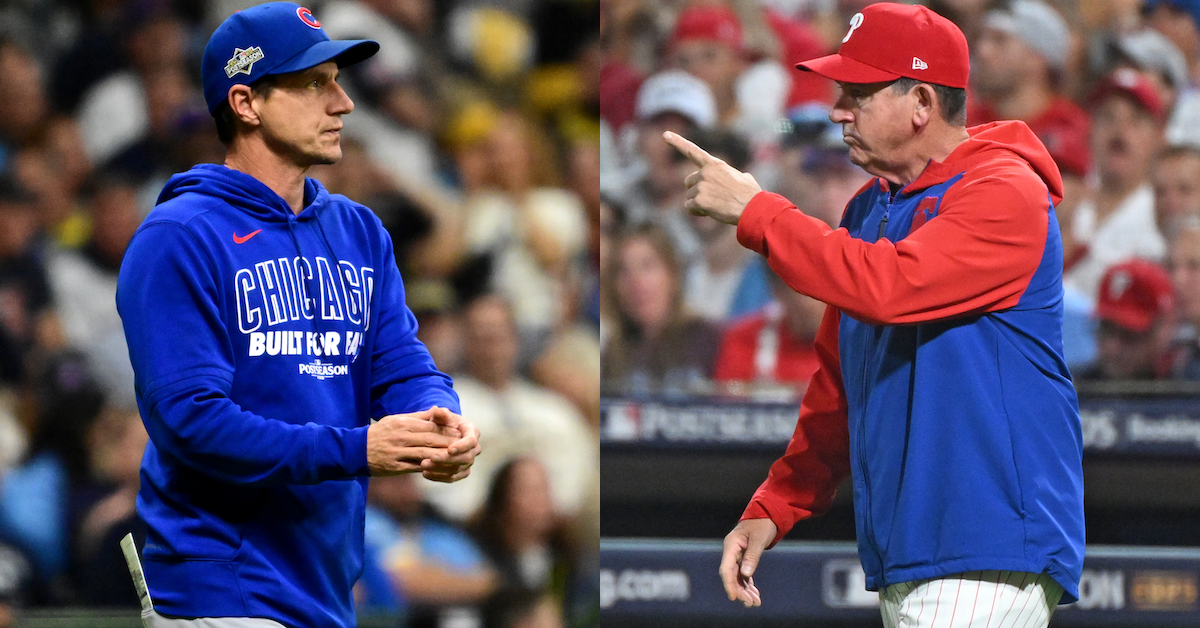
Postseason Managerial Report Cards: Craig Counsell and Rob Thomson

Benny Sieu and Eric Hartline-Imagn Images

This postseason, I’m continuing my use of a new format for our managerial report cards. In the past, I went through every game from every manager, whether they played 22 games en route to winning the World Series or got swept out of the Wild Card round. To be honest, I hated writing those brief blurbs. No one is all that interested in the manager who ran out the same lineup twice, or saw his starters get trounced and used his best relievers anyway because the series was so short. This year, I’m skipping the first round, and grading only the managers who survived until at least the best-of-five series. Earlier this week, I graded Aaron Boone and A.J. Hinch. Today, we’ll continue with the two managers who lost in the National League Divisional Series, Craig Counsell and Rob Thomson.

My goal is to evaluate each manager in terms of process, not results. If you bring in your best pitcher to face their best hitter in a huge spot, that’s a good decision regardless of the outcome. Try a triple steal with the bases loaded only to have the other team make four throwing errors to score three runs? I’m probably going to call that a blunder even though it worked out. Managers do plenty of other things — getting team buy-in for new strategies or unconventional bullpen usage behind closed doors is a skill I find particularly valuable — but as I have no insight into how that’s accomplished or how each manager differs, I can’t exactly assign grades for it.

I’m also purposefully avoiding vague qualitative concerns like “trusting your veterans because they’ve been there before.” Playoff coverage lovingly focuses on clutch plays by proven performers, but Cam Schlittler and Michael Busch were also great this October. Forget trusting your veterans; the playoffs are about trusting your best players. Cristopher Sánchez is important because he’s great, not because of the number of playoff series he’s appeared in. There’s nothing inherently good about having been around a long time; when I’m evaluating decisions, “but he’s a veteran” just doesn’t enter my thought process.

I’m always looking for new analytical wrinkles in critiquing managerial decisions. For instance, I’ve increasingly come to view pitching decisions as a tradeoff between protecting your best relievers from overexposure and minimizing your starters’ weakest matchups, which means that I’m grading managers on multiple axes in every game. I think that almost no pitching decision is a no-brainer these days; there are just too many competing priorities to make anything totally obvious. That means I’m going to be less certain in my evaluation of pitching than of hitting, but I’ll try to make my confidence level clear in each case. Let’s get to it. Read the rest of this entry »


Brewers Best Cubs in Game 5 Bullpen Battle to Advance to NLCS

Mark Hoffman/Milwaukee Journal Sentinel/USA TODAY NETWORK via Imagn Images

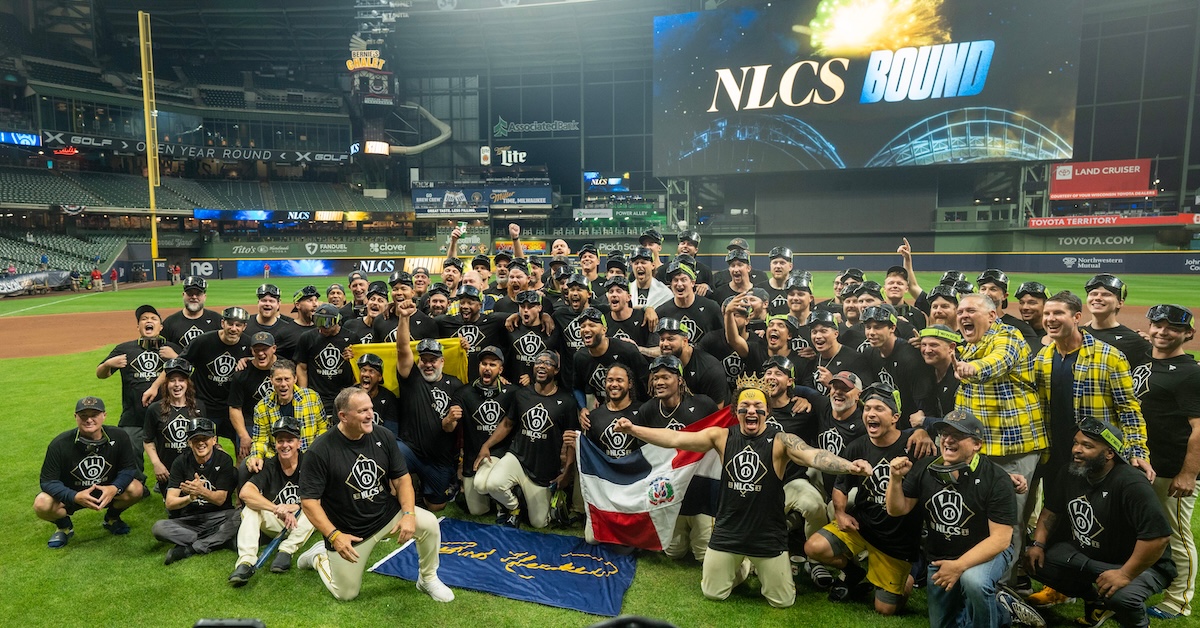
The house always wins. In the National League Divisional Series between the Brewers and the Cubs, the home team won every game. Game 5, in which both teams ran out of trusted starters and turned to their bullpens, ended up being the lowest scoring game of the series. The scoring was limited to four solo home runs, and although the Cubs hit 57 more homers than the Brewers during the regular season and two more during this NLDS, the Brewers powered up when it counted. With home runs from William Contreras, Andrew Vaughn, and Brice Turang, they beat the Cubs, 3-1, and will host the Dodgers in Game 1 of the National League Championship Series on Monday.

Just as they’d done during the regular season, the two teams came as close as they possibly could to splitting the series. The Cubs took the regular season series, 7-6, and the Brewers have now taken the Divisional Series, 3-2, leaving the teams tied at nine. The Cubs will return to Chicago and ponder how to improve a roster that now has a massive, Kyle Tucker-shaped hole in the outfield. The Brewers are headed to the Championship Series for the fourth time in franchise history and the first time since 2018, when they lost to the Dodgers. After seven years, they’ll have the chance for revenge.

Although bullpen games involve plenty of mixing and matching, the early plans seemed pretty well scripted. Milwaukee came out of the gate with the big guns, hoping Trevor Megill could be the first pitcher of the entire series to hold the Cubs scoreless in the first inning, before Pat Murphy looked to Jacob Misiorowski for four. After that, the Brewers had the rest of their bullpen ready to match up, thanks to an off day on Friday. “The pitching guys, myself and Matt Arnold, we just sat in a room and just talked about the possibilities and considered a ton of factors,” said Murphy in the pregame press conference. “But we settled on Megill. He’s going to pitch tonight, regardless.” Read the rest of this entry »


The Bear Up There: Cubs Blank Brewers, Force Game 5

David Banks-Imagn Images

Jeez, I thought the Cubs were dead. These guys got torched both games in Milwaukee, then nearly contrived to blow Game 3 after jumping out to a 4-1 first-inning lead.

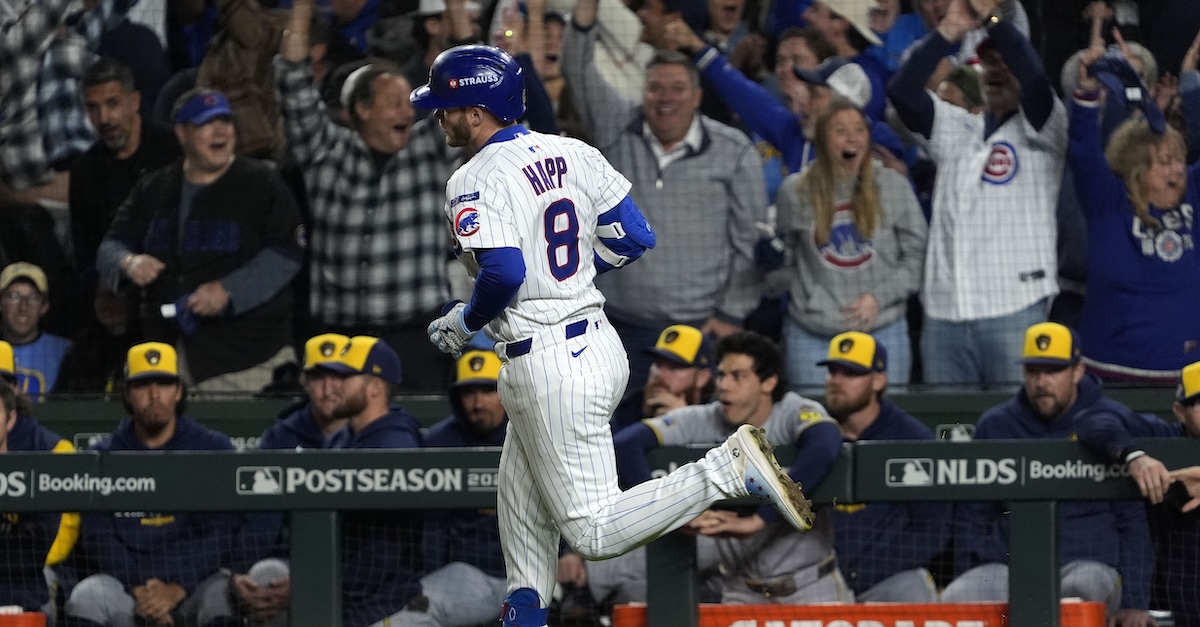
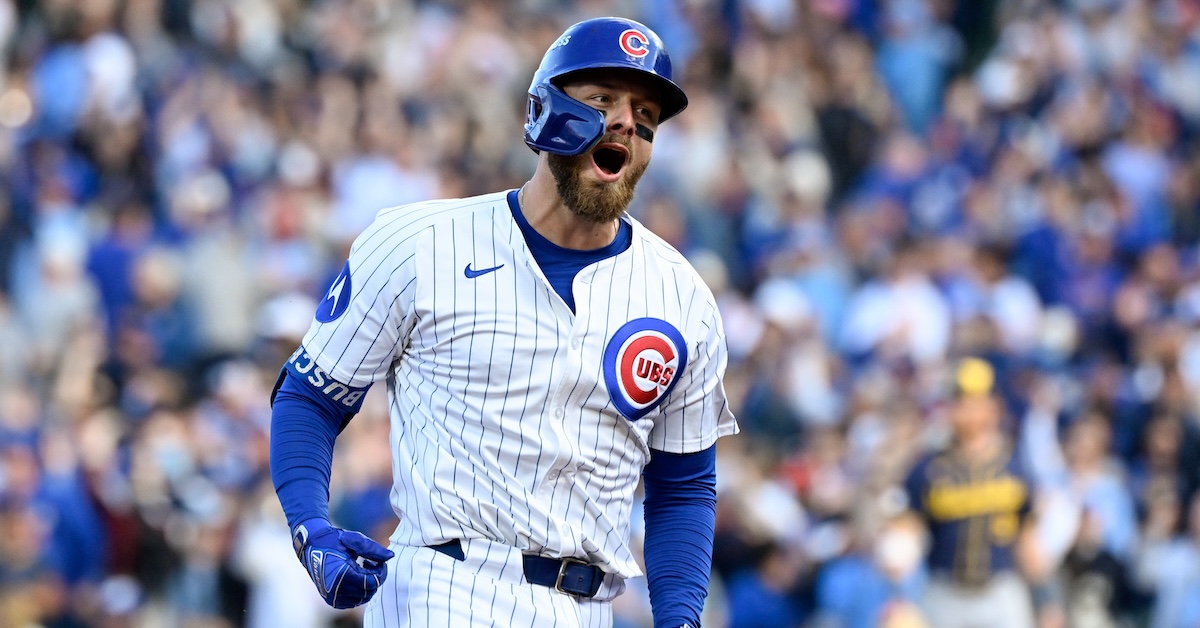
Game 4 started much the same way for Chicago, with a three-run first-inning homer by Ian Happ, only this time they didn’t let up. Matthew Boyd slung breaking balls around Milwaukee bats for 4 2/3 scoreless innings, and rather than rest on their first-inning output, as they did in Game 3, the Cubs put up a late-inning picket fence to stretch the final score to a serene 6-0. A decisive Game 5 in Milwaukee awaits. Read the rest of this entry »


The Cubs Stay Alive With NLDS Game 3 Victory

Matt Marton-Imagn Images

The Cubs stayed alive in the National League Division Series on Wednesday, narrowly beating the Brewers in a 4-3 Game 3 squeaker. Neither starting pitcher went long, with both teams needing to go relatively deep into their bullpens to finish out the contest; a combined 10 relievers were used.

Carlos Zambrano threw out the ceremonial first pitch, 13 years after his final game in the majors — Big Z’s former teammate, Rich Hill, appeared for the Royals in 2025 and is older than him — but things got off to an inauspicious start for the Cubs after that, as a lazy curve from starter Jameson Taillon was far less lazily lashed down the first base line into right field for a Christian Yelich double. After a Jackson Chourio groundout, Taillon lost the strike zone a bit, walking Brice Turang to put runners on first and second for William Contreras. Contreras hit an infield single to load the bases. Of course, that’s burying the lede a bit, but you couldn’t see that I was making the air quotes gesture with my fingers while I was writing that sentence. The “infield single” was anything but; it was a popup on the infield that Michael Busch lost in the sun while his sunglasses remained unused on his cap. Both Carson Kelly and Nico Hoerner ran over, but they weren’t in time to salvage the play. Dansby Swanson ran over as well, which became a problem when Kelly picked up the ball but had nobody to actually throw to for an attempted forceout of Turang. Read the rest of this entry »