Archive for Teams

Chris Stewart on His Catching Career and Hanging up the Spikes

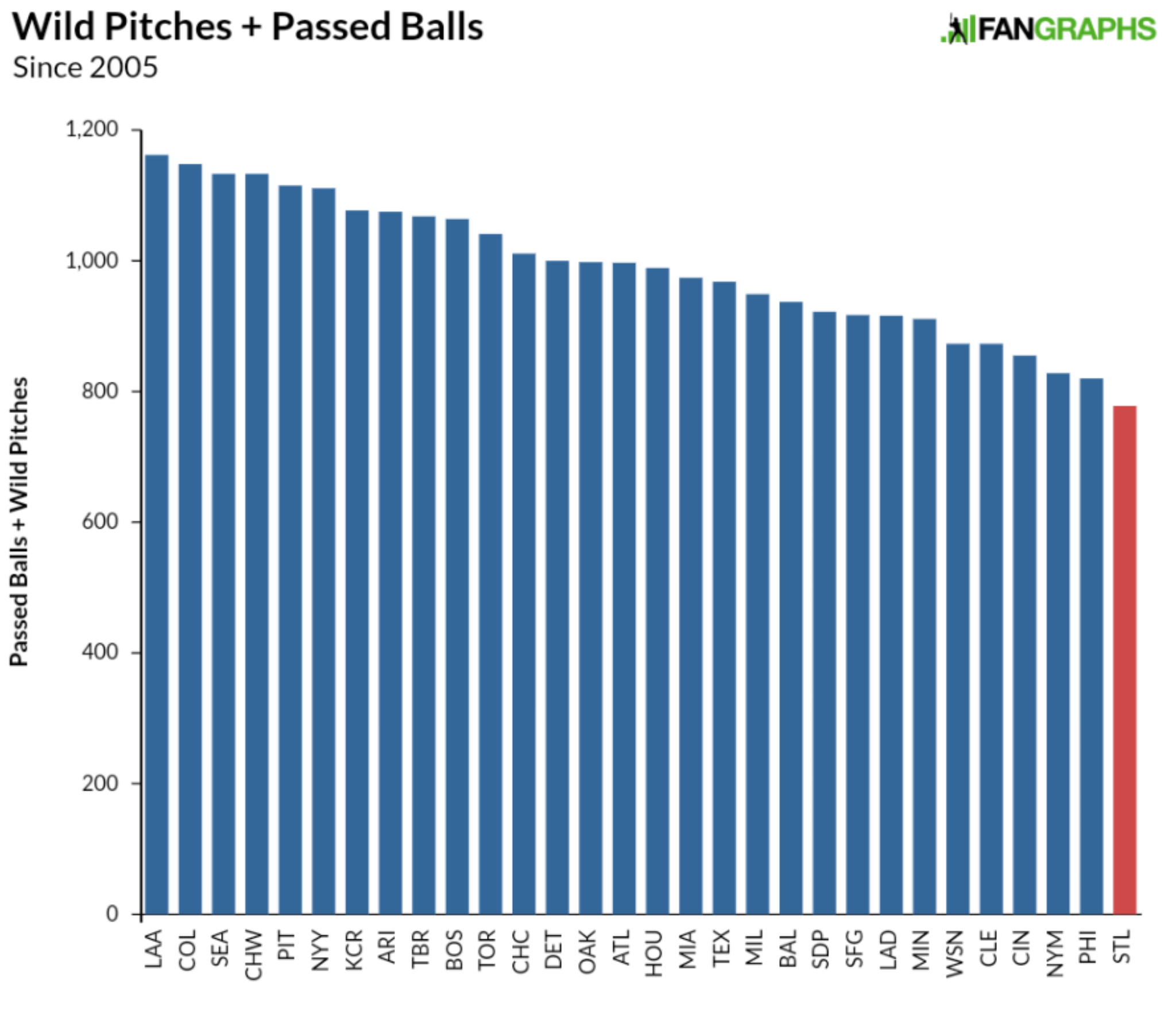
Chris Stewart was never supposed to be a catcher.

In 1999, Stewart was slated to be his Moreno Valley, CA high school’s starting shortstop as a junior. But after the starting catcher quit the baseball team to join cheerleading, and the backup missed months with appendicitis, Stewart was thrust into the role.

“The coach, with no catchers left, comes up to me and says, ‘Hey, do you want to catch?’” Stewart recalls. “I tell him, ‘No. Why would I want all the bumps and bruises and bad knees? This sounds like a ridiculous idea.’ He’s like, ‘Well, you’re all we have left, so you’re catching.’” Read the rest of this entry »


Jimmie Sherfy and a Fair Chance

Bucky Jacobsen represents one of the rarest flavors of big leaguer: the rookie who succeeded and yet never got a second chance. An old 28 when he debuted in 2004, Jacobsen hit .275/.335/.500 in 42 games. His beefy build, bald head, and big bat made him a hero in Seattle; to this day you’ll occasionally see “Jacobsen” jerseys around the ballpark.

But those 42 games constituted the entirety of his career. A knee injury ended his season prematurely and recovery from surgery sidelined him for most of 2005. The Mariners released him that summer and he was out of the game completely two years later.

Such a quick rise and fall was naturally disorienting. In a recent Corey Brock profile at The Athletic, Jacobsen described the nagging feeling that he’d unjustly lost something: “To have success in the big leagues and then not be allowed to continue that? That felt unfair.”

We all know what it’s like to fall just short of our dreams; the Triple-A veteran who plateaus at the highest level is an easy guy to empathize with. But there’s something just as sad about the guys who get their chance, succeed, and fade away, like the dream itself never mattered.

***

When you’re on the fringes of a big league roster, you develop a few peculiar rooting interests. You certainly want to play — you need to play, need to show why you deserve your spot on the team. But, if you’re a reliever of a certain stripe, some outings are more dangerous than others. You can call it the Goldilocks Theory of a big league audition.

If you’re the last man in the bullpen, you don’t really want to see the starter struggle. If the starter struggles, then the team needs someone to soak up innings. That person will be you, and in 2019, the inning sponge tends to get wrung out in Triple-A. Read the rest of this entry »


Zack Wheeler’s Injury Is Latest Dent in Mets’ Deadline Plans

Adding injury to the ongoing insult that is their 2019 season, the Mets have placed Zack Wheeler on the 10-day injured list due to what the team described as shoulder fatigue and what the pitcher himself defined as impingement. The 29-year-old righty’s condition has been described by sources as “not a serious concern,” and the timing still leaves open the possibility that the pending free agent could return before the July 31 trade deadline and demonstrate his fitness for potential suitors. Nonetheless, the news puts a significant dent in whatever plans the Mets may have to retool amid a season gone awry.

Back in January, after signing free agents Jed Lowrie, Wilson Ramos, and Jeurys Familia, as well as trading for Robinson Cano and Edwin Diaz, rookie general manager Brodie Van Wagenen boldly told reporters, “I look forward to showing people that we’re a team to be reckoned with. Let’s not be shy on wanting to be the best and I fully expect us to be competitive, to be a winning team. Our goal is to win a championship and it starts with the division. So come get us.” Last Friday, with the Mets 40-50 as they began the second half — fourth in the NL East, 13.5 games out of first place, and second-to-last in the Wild Card race at seven games out — Van Wagenen conceded, “They came and got us.”

Ouch. As the trade deadline approaches — and this year, there’s only one deadline, with no August waiver period during which teams can buy time for injured players to heal — it’s time for Van Wagenen to break up this non-dynasty. In a market light in frontline starting pitching, Wheeler figured to be an attractive rental option due to his combination of performance (more on which momentarily) and price (he’s making just $5.975 million). He’s drawn attention from the Braves, Brewers, Red Sox, Yankees, and probably other teams as well. Read the rest of this entry »


Royals, Cubs Swap Role Players

The Chicago Cubs and Kansas City Royals completed a trade Monday evening, with the Royals sending starting catcher Martin Maldonado to Chicago in return for swingman Mike Montgomery.

While Montgomery was never part of the team’s stable of frontline talent, he’s been a useful role player for the Cubs since being picked up from Seattle in the Dan Vogelbach trade. Since that 2016 swap, Montgomery has put up a 3.68 ERA across 38 starts and 81 relief appearances for the Cubs. The idea of having a pitcher in a long-term role as a swingman/spot-starter is something largely dead in 2019 baseball, so Montgomery was a bit of throwback in this sense. He filled in admirably with a 3.69 ERA as a starter in 2018 with Yu Darvish injured and Tyler Chatwood issuing more walks than a corrupt local judge.

2019 has been a struggle for Montgomery, with shoulder and finger injuries limiting his availability and moderate control issues hampering his effectiveness. Montgomery is still likely a useful player over the long haul and isn’t a free agent until after the 2021 season, but the Cubs are quite rightly taking “now” as a priority over “later.” That Montgomery is the player heading to Kansas City is also fueled by the fact that Montgomery requested a trade this season. From a career standpoint, it makes sense for Montgomery to get an opportunity to start full-time; a starting pitcher is going to do better in free agency no matter how the CBA changes between now and the end of 2021.

If for nothing else, Montgomery will always possess a unique place in Cubs history as the pitcher who threw the final pitch of the 2016 World Series.

And in the “now,” the Cubs had other priorities. Catching has been a strength for the team, but Willson Contreras heading to the injured list with a foot issue creating some unwanted uncertainty at the position. Without Contreras, the Cubs only had a single healthy catcher on the 40-man roster in Victor Caratini. This close to the trade deadline, with no guarantee that Contreras would be back after the minimum IL stay, so the Cubs were put into a position where they couldn’t wait and see how his recovery goes. Remember, July 31 is now the trade deadline in Major League Baseball starting this year, which means that the Cubs can’t count on picking up a cheap catcher in mid-August if something unexpected happens in Contreras’s recovery. Read the rest of this entry »


You May Wish to Reconsider Nick Pivetta

In 2018, Nick Pivetta struck out 27.1% of the 694 batters he faced. That’s not as impressive a figure as it would have been 10 years ago, but it was still the 14th-best such figure in the game last year, and caused me to write a piece last November called “You May Wish to Consider Nick Pivetta” in which I implored you, the FanGraphs reader, to consider Nick Pivetta. It’s been eight months since that piece was published, and Pivetta has faced 295 more batters. It’s time to re-consider Nick Pivetta, and see whether his performance has rewarded your close scrutiny.

The reason I’m writing about this now is not because the answer to that question is yes — it is, in fact, emphatically no, in the sense that Pivetta’s performance this season has mostly been bad and has occasionally been awful — but because Pivetta strikes me as representative of a type. In particular, Pivetta strikes me as representative of a player who shows us just enough to dream on, just enough to see signs of a breakout, that we read into those signs and give them more credit than they perhaps deserve. Nick Pivetta strikes me as representative of our optimism as observers.

So let’s talk about Pivetta — what made us dream, and what’s happened to that dream as this 2019 season has worn on. (All stats are through July 13.) Pivetta’s stand-out pitch is his curveball, a massive breaker that spins (2872 rpm, fifth in the majors this year), dips (7.2 inches of horizontal movement, 14th), and dives (-9.7 inches of vertical movement, ninth) with the very best of its kind. That’s the pitch that Pivetta learned to use differently against righties and lefties in 2018, much to his credit, taking an offering that had been predictably in the bottom left corner of the zone regardless of count or opponent and putting it in on right-handers’ hands (even when behind in the count), and down and in to lefties. Here’s what that looked like:

Read the rest of this entry »


Jose Leclerc, Evan Marshall, and Tony Watson Discuss Their Atypical Changeups

Pitchers learn and develop different pitches, and they do so at varying stages of their lives. It might be a curveball in high school, a cutter in college, or a changeup in A-ball. Sometimes the addition or refinement is a natural progression — graduating from Pitching 101 to advanced course work — and often it’s a matter of necessity. In order to get hitters out as the quality of competition improves, a pitcher needs to optimize his repertoire.

In this installment of the series, we’ll hear from three pitchers — Jose Leclerc, Evan Marshall, and Tony Watson — on how they learned and developed their changeups.

———

Jose Leclerc, Texas Rangers

“I was around 10 years old when I started throwing it — 10 or 12 — and I thought it was a regular changeup. When I was playing Little League, nobody told me that it wasn’t really a changeup. I just kept throwing it, kept throwing it, and when I signed my contract with the Rangers, the pitching coach told me, ‘That’s not a changeup.’ I said, ‘That’s how I hold my changeup.’ He said, ‘No, that’s a slider.’ But I kept throwing it, kept throwing it, and it was good.

Jose Leclerc’s changeup grip.

“It’s a changeup grip, but I throw it like a football and it moves kind of like a slider. I don’t know why. I’ve tried to show it to my compañeros — to my teammates — and they can’t do it. Sam Dyson; he asked me to show it to him. A few others did, as well. Some of them could kind of throw it, but they couldn’t command it like I do.

“I throw it the same now as when I was a kid. Everything is the same. It is better, though. I throw harder now, so there’s more movement. But what it is … I call it a cut-change. It’s just something natural that I have. I don’t how I do it. For real.” Read the rest of this entry »


The Rays and Rangers Swap Prospects

We all know factors beyond talent — be it contract length or value, a team’s competitive window, or a player’s social fit within the org, among others — have an impact on how trades balance and are agreed upon. Just being mindful that these factors exist, and that we’re not always privy to them, can help us to square what we perceive to be a context-free gap in the talents exchanged. But can we bridge what is, based on our evaluations, a sizable gap in this weekend’s Rangers and Rays prospect-for-prospect trade?

Rangers get:

2B Nick Solak, 50 FV, No. 93 overall prospect

Rays get:

RHP Peter Fairbanks, 40 FV

This deal looks very good for Texas in a vacuum based on our evaluations. Kiley and I both think Solak, who is a career .290/.382/.453 hitter in the minors and has raked since his freshman year at Louisville, is going to be an average everyday second baseman, while Fairbanks is a 25-year-old reliever who has had two Tommy John surgeries, a demographic we rarely rank at all. Read the rest of this entry »


Andrew Cashner and Theoretical Home Run Shenanigans

The Boston Red Sox and the Baltimore Orioles completed a trade over the weekend, with Baltimore sending pitcher Andrew Cashner to Boston in return for center fielder Elio Prado and third baseman Noelberth Romero.

At 28-65, the Orioles appear likely to be eliminated from the playoff race sometime in August. Andrew Cashner is a free agent at the end of the season, and even if Baltimore had a less implausible shot at the playoffs, it makes a lot of sense to get something in return for the right-hander while the getting is good. In this case, the getting is two very deep dives into the Red Sox organization. Prado and Romero are both 17 year-olds out of Venezuela. Neither player is anywhere near the top of the prospect radar at this point. To grab a couple of lottery picks, the Orioles agreed to pay half of Cashner’s salary to the Red Sox, a figure just a bit under $2 million. If either prospect works out, it won’t be a new experience for Cashner, who has been swapped for Anthony Rizzo and Luis Castillo in previous trades.

Cashner has had a decent season on paper, but the Orioles’ return suggests that there is a good deal of skepticism surrounding his 3.83 ERA and 4.25 FIP. The bump in Cashner’s peripherals in 2019 is at least enough for ZiPS to think of him as a one-win player. That’s par for the course for a fifth starter, and it just so happens that’s exactly what the Red Sox were in the market for. It isn’t something that will show up well in playoff projections, but remember that teams can no longer pick up major league-caliber fourth and fifth starter types in August, which means that teams ought to take more care to prepare for emergencies now. And pitchers famously have lots of emergencies. Brian Johnson is currently out due to an intestinal issue, and given that he’s been out for weeks, it seems to be something a good bit more serious than overindulging in spicy chili. He has thrown a couple of bullpens, but his trip to the IL creates some uncertainty, which isn’t a good state of being for a contending team. And Cashner is likely a safer below-average pitcher than Hector Velazquez. Read the rest of this entry »


A’s Make Homer Bailey an Unexpected Deadline Upgrade

Homer Bailey woke up Sunday morning expecting to start a game between two teams going nowhere, but instead discovered that he would be joining a playoff chase. Kansas City shipped the righty to the Oakland A’s in exchange for 23-year-old shortstop Kevin Merrell.

Bailey, 33, has been a cromulent arm for KC this season, with a 4.80 ERA and 4.47 FIP in 90 innings. His 1.1 WAR is his best figure since 2014, while his 8.10 K/9 is his best mark since 2013.

Merrell, the 33rd overall pick back in 2017, ranked 20th on Eric and Kiley’s list of Oakland’s top farmhands before the season. Speed is Merrell’s calling card, but his 80-grade wheels haven’t had much chance to shine this year in Double-A, as he’s sporting a meager .246/.292/.339 line in 82 games.

Oakland will be Bailey’s fourth organization in the last eight months. After a 12-year stint with the Reds, he was shipped to the Dodgers in a seven-player swap that sent Yasiel Puig, Matt Kemp, Alex Wood and Kyle Farmer to Cincinnati in return for prospects Jeter Downs and Josiah Gray. Bailey’s inclusion in the deal was motivated entirely by finances, however, as the $22.45 million he was owed in 2019 was a close match with the $21.75 million owed to Kemp; the structure of Bailey’s contract made it more luxury tax-friendly to the Dodgers. One day after the trade was completed, Bailey was released by Los Angeles, and in February, he signed a minor league contract with the Royals.

While he rarely lived up to his billing as a top prospect, Bailey was a pretty good starter early in the decade, when he accrued 6.3 WAR from 2012-13 while throwing more than 200 innings each year. The Reds rewarded Bailey, then 27, with a six-year, $105 million contract extension. Twenty-three starts into what appeared to be another good season in 2014, he was shut down with an arm injury. He underwent Tommy John surgery, made just a combined eight starts from 2015-16, and in parts of four seasons following his injury, held a 6.25 ERA and 5.13 FIP in 231.2 innings.

It isn’t difficult to see why two playoff aspirants didn’t have room for Bailey. Just seven months later, however, another win-now team was willing to part with a top-20 prospect to add him to their rotation. What changed?

Well, for one, it’s always been somewhat difficult to differentiate between Good Bailey and Bad Bailey. His average fastball velocity in 2012 was 93.2 mph. In 2018, it was 93.0 mph. His chase rate in 2013 was 34.5%. In 2018, it was 33.0%. His swinging strike rate, pitch usage, and ground ball rates were consistent as well. And yet he’d gone from a solid No. 2 starter to nearly unemployed.

Bailey’s numbers in many of those areas haven’t changed much this season, either. His average four-seamer is 92.8 mph. His chase rate is just a couple ticks lower than last season. His groundball rate is up three points, and his swinging strike rate has climbed modestly as well.

There is, however, one big difference in Bailey’s repertoire. His career fastball percentage sits around 60%. In years after his surgery, it was 55%. This year, it’s down to 49.3%. His slider percentage, 17% a year ago, is down more than four points. Those missing fastballs and sliders have turned into splitters:

Bailey’s thrown his splitter on 27.3% of his offerings in 2019, more than eight points higher than any other season of his career. It’s a great pitch for him to lean on: According to Statcast, opponents have just a .195 xBA .250 xSLG against the split, and their actual numbers aren’t exceeding those estimates by much. Of the five pitches Bailey has used in 2019, three of them have an xwOBA above .350. Finding a pitch as reliable as the splitter has been vital for him, and as he’s thrown it more, he’s been more effective. In his last five starts, he’s thrown 29 innings and posted a 2.48 ERA.

That was good enough for Oakland to add him to its starting rotation. The A’s have weathered Frankie Montas’ suspension well, but they still need rotation help. Montas had a 2.70 ERA and 2.9 WAR in 90 innings before receiving an 80-game suspension on June 21. Since then, Oakland starters have accumulated 1.7 WAR, good for seventh-best in baseball, though their 4.85 xFIP suggests they’ve been a bit fortunate.

Mike Fiers, Brett Anderson and Chris Bassitt have been serviceable starters, but all three are outperforming their FIPs by a wide gap. Tanner Anderson and Daniel Mengden are passable options, but the rotation is clearly Oakland’s weakest part of the roster. Critically, Oakland’s internal prospective reinforcements all have question marks. Jharel Cotton and Sean Manaea are on track to rejoin the team in August, but they’re both returning from serious injuries: Manaea hasn’t pitched this year and Cotton has been out since 2017. The two top pitching prospects in the organization in A.J. Puk and Jesus Luzardo, meanwhile, have thrown only a handful of innings this season, and probably aren’t realistic options to contribute down the stretch. The A’s need an arm or two, and they got a cheap one in Bailey.

Because the Dodgers are paying $22.45 million in salary owed to Bailey for the 2019 season, Oakland is on the hook for just the remaining $250,000. As far as prospect cost, a top-20 prospect isn’t nothing, but Merrell has a long road ahead of him. As Eric and Kiley wrote back in March, a move to the outfield is likely in his future, and there isn’t much power at all in his bat. His speed makes him interesting, but he’ll need to take a big step forward to profile as a regular.

That’s all that it cost to bring Bailey to Oakland, an organization that has done well with similarly beleaguered pitchers recently. Last June, they signed Edwin Jackson — a pitcher who hadn’t posted an ERA under 5.00 since 2015 — and watched him spin 92 innings of 3.33 ERA ball the rest of the year. They also coaxed 110 splendid innings out of Trevor Cahill’s oft-injured and sporadically-effective right arm. The A’s have been a good home for pitchers who once seemed over the hill, and perhaps Bailey will continue the pattern. Just seven months ago, he was a cast-off. But in Kansas City, he showed he wasn’t done. Now, in Oakland, he can show how much more he has left.


Sunday Notes: Robert Stock Stimulates His Nervous System (And Hits Triple Digits)

Robert Stock is following a breakthrough season with a rocky season. Last year, the right-hander broke into the big leagues at age 28, and logged a 2.50 ERA in 32 appearances out of the Padres’ bullpen. This year he’s spent the bulk of his time with San Diego’s Triple-A affiliate, and scuffled in his smattering of opportunities in The Show. Currently on the IL with a bicep strain, Stock has a 10.13 ERA in 10-and-two-thirds innings of work.

There’s more to the Robert Stock story than his late-bloomer status and overall pitching prowess. When I talked to the former Los Angeles-area prep at Petco Park recently, I learned that he’s a converted catcher with an unorthodox workout routine.

“I use a training system called EVO UltraFit,” Stock told me. “It involves electrodes, and obscure ways of lifting weights. You’re doing things like jumping off of stuff, and catching things that are falling.”

Watching an ESPN feature on a former NFL safety was the catalyst. Learning that Adam Archuleta “found success through this weird training system,” he decided to try it himself. Just 13 years old at the time, Stock traveled to Arizona, “where the guru is,” and proceeded to adopt the program. He’s been a disciple ever since.

An electrodes apparatus was charging at Stock’s locker as we spoke. Read the rest of this entry »