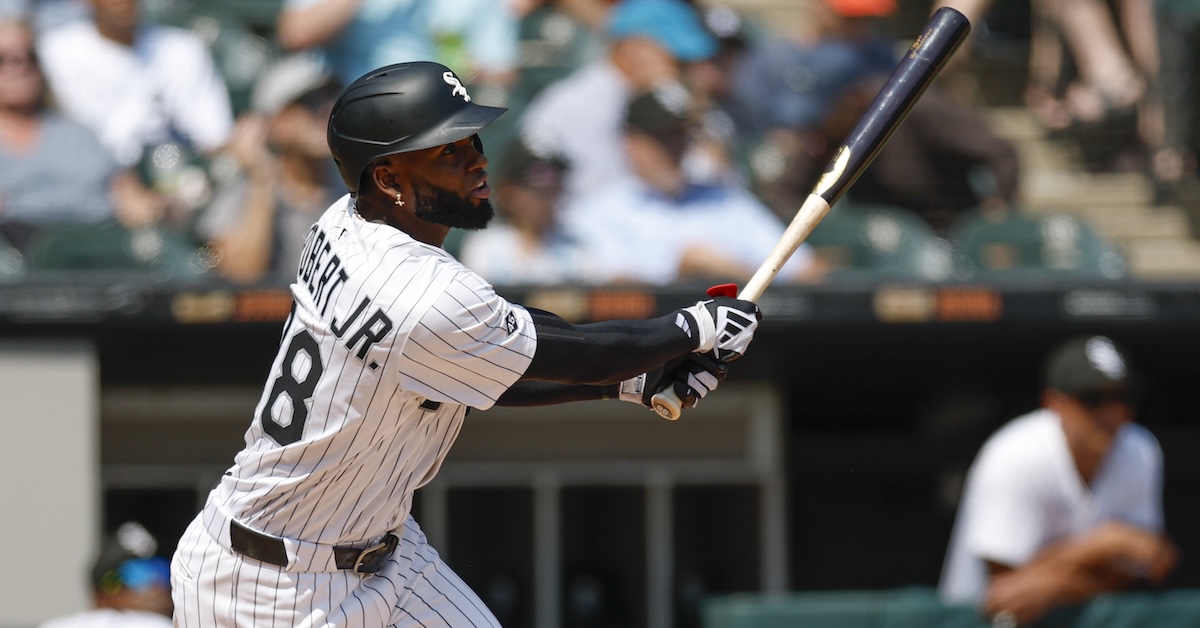
Daylen Lile was one of the top rookie performers in the senior circuit this season. The 22-year-old outfielder debuted with Washington Nationals in late May and went on to slash .299/.347/.498 with a 132 wRC+ over 351 plate appearances. Displaying a combination of speed and power, Lile legged out 11 triples and left the yard eight times. A ninth home run on his ledger was an inside-the-parker.
When I talked to him in September, I learned that Lile and Nationals teammate James Wood were doing a lot of drill work together in the batting cage. Left on the cutting room floor from our conversation— the ensuing feature can be found here — was what he told me about the work itself. Like most good hitters, Lile is diligent about his routine.
“Your preparation matters, because what happens there translates to the game,” he said. “Mechanically, I still have the same swing I had [when entering pro ball in 2021], although I have changed a few things. I started getting my foot down early to see pitches longer, and now I’m doing a toe-tap for more rhythm, getting synced with the pitcher.”
And then there is the routine itself. Lile has been doing his “movement-prep stuff,” since coming back from UCL surgery, which cost him the 2022 season. Getting his body loose and keeping it that way throughout a long season is an integral part of his process. As you might expect, the work he does in the batting cage is every bit as important. Read the rest of this entry »
Happy first Saturday of the offseason, everyone. To celebrate the occasion, you get two mailbag columns this week! The first ran on Monday and wrapped up a thrilling World Series. In today’s edition, we’ll move on from the Fall Classic and answer your questions about several teams that finished in last place this season. We’ll also cover small-market teams and some of the structures that are in place to encourage them to spend more on their rosters.
The first question we’ll answer today is about a player we’ve featured before in this column. In fact, some are calling him the Patron Saint of the Mailbag, an honor second only to his status as the worst major league player ever.
But before we continue, I’d like to remind you all that this mailbag is exclusive to FanGraphs Members. If you aren’t yet a Member and would like to keep reading, you can sign up for a Membership here. It’s the best way to both experience the site and support our staff, and it comes with a bunch of other great benefits. Also, if you’d like to ask a question for an upcoming mailbag, send me an email at mailbag@fangraphs.com. Read the rest of this entry »
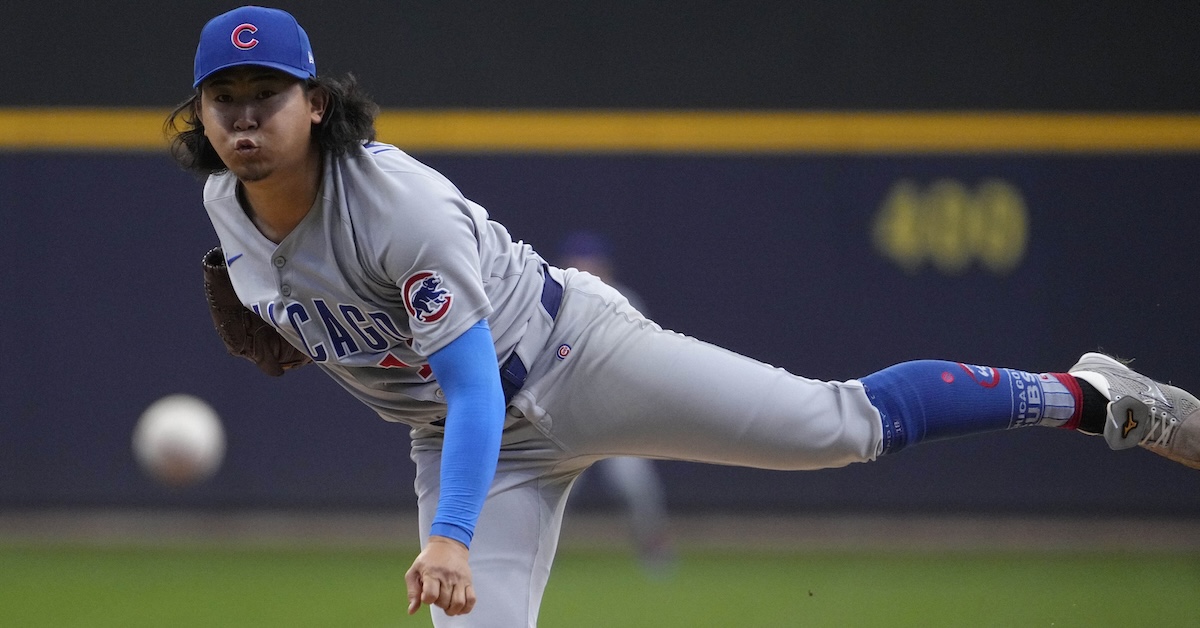
I love a complicated contract. I love any excuse to use the word byzantine really, so once we’re into stair-step incentive clauses, cascading conditional extensions, and the finer points of Major League Baseball’s collective bargaining agreement, I’m having the most convoluted kind of fun imaginable. Today, I’m going to take you step by step through the complex world of Shota Imanaga’s current contract situation. As you likely know, the Cubs offered him a qualifying offer on Thursday. All we’re going to do here is break down as simply as we can how he got to that point and what it means. We’re not going to leave anything out. To be clear, Imanaga’s contract situation isn’t anywhere near the most complex one, but even so, it’s dizzying. We’re going to lose ourselves in the minutia. For fun.
I also love the logistics. I love following a chain of what happens when and why so precisely that you can’t help but be overwhelmed by the absurdity of the situation. And even before you dive in, free agent contracts are inherently absurd. They’re iron-clad agreements negotiated within the framework of an already-negotiated-to-within-an-inch-of-its-life CBA. They’re insured, and in recent years their conditionality has exploded to the point where they contain as many branches as a choose-your-own-adventure novel. But in the end, they just boil down to figuring out how much somebody’s going to get paid at their job. They just happen to be agreements about how much the most obscenely wealthy people in the entire world are going to pay people who are about to become generationally wealthy. Almost no one involved will ever have to worry about money for the rest of their lives. The people who really need the elaborate safeguards in the CBA and uniform player contracts are the ones who don’t make millions of dollars. But this is still a job; a high-pressure, high-stakes job negotiated between bitter rivals, and one side has a history of financial malfeasance that dates back to the 19th century. Of course, lawyers have to be involved. Everything needs to be spelled out, and my goodness is it spelled out.
The details in the CBA are there for very good reasons, but they’re mind-bogglingly specific. The title on the PDF calls it the basic agreement, and like any basic document, it’s 426 pages long. I just scrolled to a random page in the middle, and the topic at hand was who exactly gets photocopies of team financial documents so that the players can determine whether the owners are actually following the rules of the basic agreement. We’re 209 pages in, and we’re still talking about the logistics of the document itself.
One section stipulates what happens if a player gets called up for the National Guard. Another explains that all visiting clubhouses must contain a hydroculator. The last page is a full-page table that establishes an agreed-upon figure for how long it takes to fly from every city in the league to every other city in the league. Did you have a blast watching the swing-off that decided this year’s All-Star Game? Well, its format was codified in the CBA, which brings to the mind’s eye two teams of lawyers, red-eyed, ties loosed and collars mangled, monologuing 12 Angry Men-style in a conference room strewn with stale donuts and half-empty coffee cups about whether each player really needs unlimited pitches for their three swings when 10 pitches should really be enough to cover it.
Here’s a good-faith offer: I will personally bake a batch of cookies and mail them to the first FanGraphs reader who reaches out to me with some sort of honest-to-goodness proof that they’ve read the entire CBA. (Cookie variety of your choosing, but please be aware that my macaron game is rusty.)
The following article is part of my ongoing look at the candidates on the 2026 Contemporary Baseball Era Committee ballot. Originally written for the 2013 election at SI.com, it has been expanded and updated. For a detailed introduction to this year’s ballot, use the tool above. An introduction to JAWS can be found here.
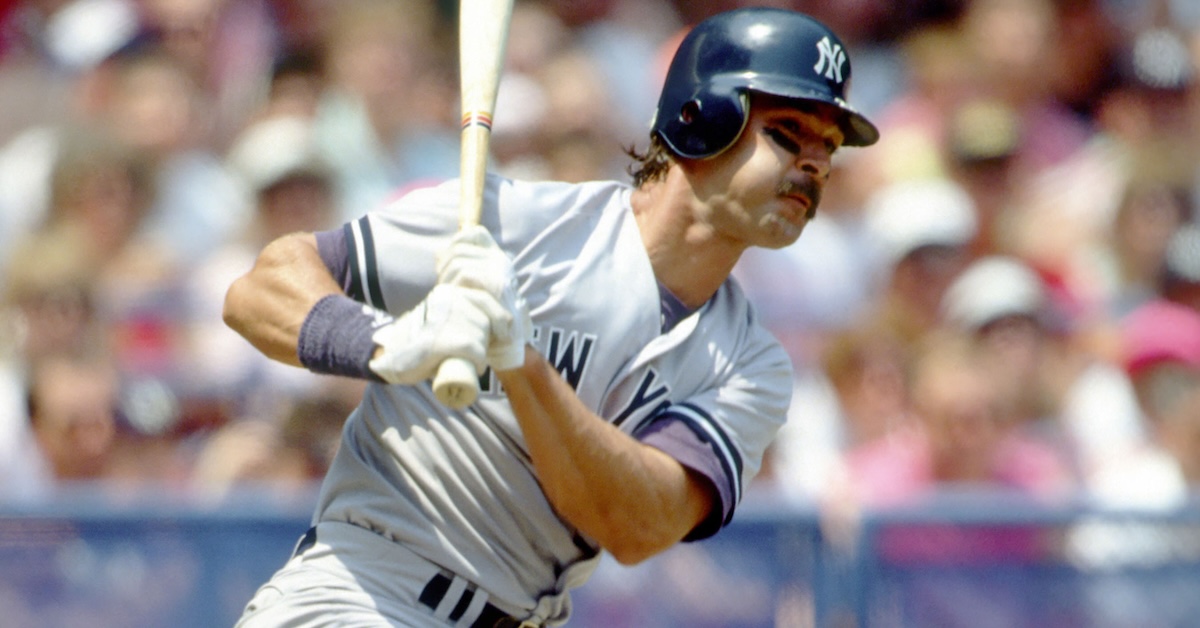
Don Mattingly was the golden child of the Great Yankees Dark Age. He debuted in September 1982, the year after the team finished a stretch of four World Series appearances in six seasons, and retired in 1995 after finally reaching the postseason — a year too early for the franchise’s run of six pennants and four titles in eight years under Joe Torre.
A lefty-swinging first baseman with a sweet stroke, “Donnie Baseball” was both an outstanding hitter and a slick fielder at his peak. He made six straight All-Star teams from 1984 to ’89 and won a batting title, an MVP award, and nine Gold Gloves. Along the way, he battled with owner George Steinbrenner even while becoming the standard bearer of the pinstripes, the team captain, and something of a cultural icon. Alas, a back injury sapped his power, not only shortening his peak, but also bringing his career to a premature end at age 34. At its root, the problem was that Mattingly was so driven to succeed that he overworked himself in the batting cage.
“Donnie was one of the hardest workers I had ever seen and played with. He would go in the cage before batting practice and take batting practice. And after batting practice was over, he’d take batting practice,” former teammate Ron Guidry said for a 2022 MLB Network documentary, Donnie Baseball (for which this scribe was also interviewed).
“I should have learned quicker to not to beat my body up, and if I did less, I could perform better,” said Mattingly for the same documentary. Read the rest of this entry »
Most major league baseball organizations think more or less the same way. They vary on tactics and strategy, in competency, in resources, and in culture, but for the most part everyone agrees on how to win a baseball game. This leads to some groupthink and a lot of same-y executive hires.
The Giants have bucked the trend, turning back the clock to hand the reins to an ex-player who’s long on cultural cachet and short on expertise. He, in turn, made a delightfully unorthodox choice for field manager. I look forward to seeing if these iconoclasts can hold their own.
Not to be outdone, the Colorado Rockies have gone even further off the board for their new head of baseball operations, as they are reportedly nearing a deal to hire Paul DePodesta for the position. I’ll be as blunt as I can be: It’s one of the weirdest executive hires in decades, from an organization that’s at least a full step behind its rivals to start. With all the best will in the world, unless DePodesta’s appointment heralds a complete change in organizational structure and philosophy, it is almost certainly doomed to fail. Read the rest of this entry »
The following article is part of my ongoing look at the candidates on the 2026 Contemporary Baseball Era Committee ballot. Originally written for the 2013 election at SI.com, it has been expanded and updated. For a detailed introduction to this year’s ballot, use the tool above. An introduction to JAWS can be found here.
It took four position changes — from catcher to first base, then left field, right field, and finally center field — and parts of five major league seasons for the Braves to figure out where the 6-foot-4 Dale Murphy fit. Once they did, they had themselves a franchise centerpiece, a wholesome, milk-drinking superstar whom Sports Illustrated profiled for its July 4, 1983 cover story by proclaiming, “Murphy’s Law is Nice Guys Finish First.”
The title was a reference to the slugger helping the Braves to an NL West title the previous year, their lone playoff appearance during the 1970-90 stretch. “Here’s a guy who doesn’t drink, smoke, chew or cuss,” wrote Steve Wulf. “Here’s a guy who has time for everyone, a guy who’s slow to anger and eager to please, a guy whose agent’s name is Church. His favorite movie is Frank Capra’s It’s a Wonderful Life. He’s a wonderful ballplayer.” Let the record show that Wulf did unearth some dirt on Murphy, noting that he once got a speeding ticket for doing 35 in a 25-mph zone… while running late to speak to a church group.
Murphy won the first of his back-to-back MVP awards in 1982 as well as the first of his five consecutive Gold Gloves, and made his second of seven All-Star teams. He would spend most of the 1980s as one of the game’s best players. Alas, knee problems turned him into a shadow of the player he once was while he was still in his early 30s, and he played his final game in the majors at age 37. Read the rest of this entry »
If you’ve been assiduously following the managerial report card series, you’ve no doubt been waiting for this one. I apologize for keeping you in suspense. I’ve been dragooned into service here because Ben Clemens, the normal custodian of this series, is also an inveterate overachiever and saddled himself with the Top 50 Free Agent list at the same time. Even he is only one man.
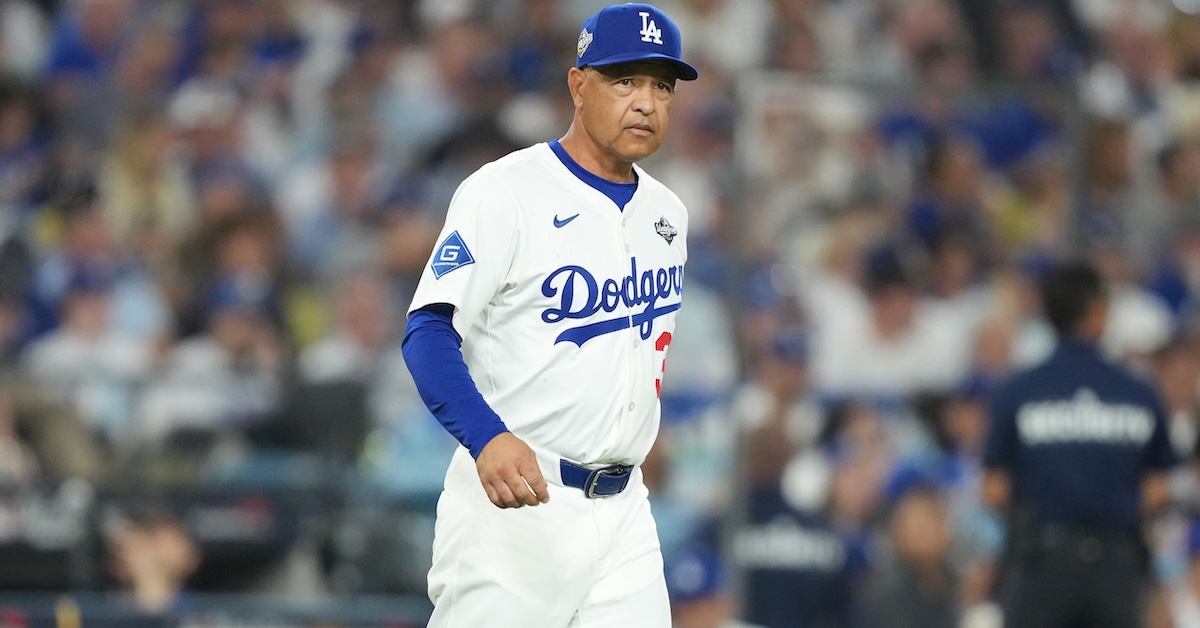
Why the five-day delay on this final installment in the series? Well, this being my first time writing a managerial report card, I wanted to do right by Ben and his creation. But also, the guy I was tasked with grading — Dodgers manager Dave Roberts — managed a lot, man. There’s just so much to unpack. Read the rest of this entry »
GREG WOHLFORD/ERIE TIMES-NEWS-USA TODAY NETWORK via Imagn Images
Max Anderson is making a name for himself in the desert. The Arizona Fall League’s hottest hitter is slashing a stand-up-and-take-notice .488/.650/.902 over 60 plate appearances with the Scottsdale Scorpions. Hitter-friendly circuit? Absolutely, but Anderson’s numbers are nonetheless impressive. The Detroit Tigers prospect has been scorching baseballs.
His regular-season numbers suggest that his AFL output isn’t wholly surprising. Playing against a higher level of competition, the 23-year-old infielder left the yard 19 times while putting up a 135 wRC+ between Double-A Erie and Triple-A Toledo. A .350/.400/.604 hitter at the University of Nebraska, the erstwhile Cornhusker has gone on to log a 120 wRC+ since being drafted 45th overall by Detroit in 2023.
Less impressive has been the youngster’s 6.7% walk rate as a professional. As Eric Longenhagen and James Fegan wrote back in March, “‘I like to swing, it’s not a secret,’ is both a favorite old José Abreu quote and the operating ethos of Anderson.” In terms of aggressiveness, that hasn’t really changed.
Our lead prospect analyst has seen a lot of him in the AFL, and he provided an updated report on the 40+ FV prospect earlier this week. Read the rest of this entry »
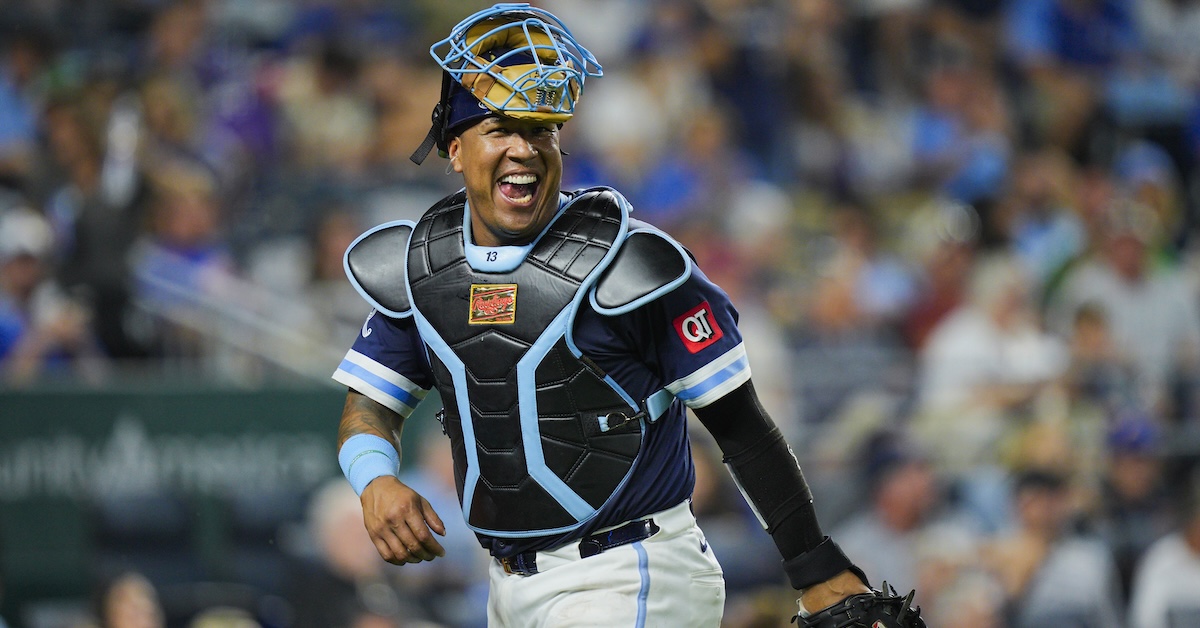
Just think how wrong it would’ve felt. Two years from now, watching Salvador Perez, who signed with the Royals as a 16-year-old in 2006, squatting behind the plate in Miami blue. Salvador Perez, who put the “everyday” in “Kansas City Royals everyday catcher” starting in 2012, launching dingers through the thin mountain air in Rockies purple. It’s enough to make you cry, but luckily, this dystopian future has been avoided. According to Anne Rogers of MLB.com, the 35-year-old backstop has signed an two-year extension that will keep in him in Royals Blue through the 2027 season. It’s better this way. The deal is for $25 million, with some deferrals and a $7 million signing bonus.
To be clear, Perez wasn’t at risk of leaving anytime soon. His previous four-year, $82 million deal that started in 2022 had a $13.5 million option for 2026, and general manager J.J. Picollo told reporters in September that the catcher would be returning one way or another. Anthony Franco of MLB Trade Rumors explained the reasons for the deal: “While the specific salary structure and deferrals have yet to be reported, it stands to reason [the Royals will] negotiate a lower ’26 salary than the option value while giving Perez the security of the second guaranteed year.” So it’s the classic extension trade-off. The Royals get a discount and Perez gets an extra year of job security. It also allows him to avoid free agency amid whatever shenanigans occur when the collective bargaining agreement expires after the 2026 season.
That extra year is a big one in terms of increasing the likelihood that Perez retires as a lifelong Royal. One day in the not-too-distant future, we’ll endure a knock-down-drag-out battle about Perez’s worthiness for enshrinement in the Hall of Fame, and we’ll be lucky to live through it. In the meantime, he’s improved his shot at wading into the fray wielding single-team bona fides. As for why the Royals would feel the need to get out in front of things and lock down the age-37 season of a catcher who has exceeded 0.8 WAR just once in the past four years, well, it makes more sense than you think. Read the rest of this entry »
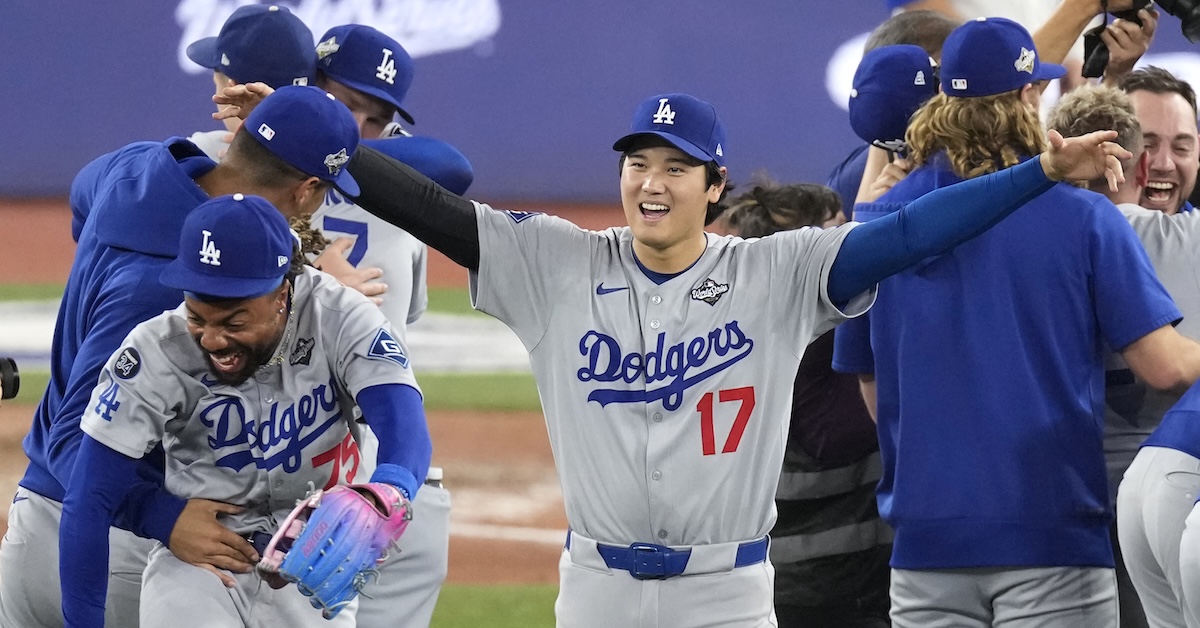
At the end of perhaps the most thrilling back-and-forth Game 7 in World Series history, with one out in the bottom of the 11th inning and the tying run on third base, Alejandro Kirk hit a chopper to shortstop. Mookie Betts raced over to second base to force out Addison Barger, and while running through the bag, fired a perfect strike into the outstretched glove of Freddie Freeman. The Dodgers’ second game-ending double play in as many nights didn’t just clinch the 2025 World Series, it made them the first team to win back-to-back championships since the 1999–2000 Yankees.
Dating back to their days in Brooklyn, the Dodgers have won nine championships, but this is the first time they’ve done so in consecutive seasons. Twice before, they had returned to the World Series as reigning champions only to lose, first to the Yankees in 1956 and then to the Orioles in ’66. Neither of those attempts to repeat involved surviving multiple playoff rounds before that. This time, the 93-win Dodgers went 13-4 in the postseason, first sweeping the 83-win Reds in the Wild Card Series and then defeating three of the four teams that finished with more wins: the 96-win Phillies (3-1 in the Division Series), 97-win Brewers (4-0 in the League Championship Series), and finally the 94-win Blue Jays (who themselves dispatched the 94-win Yankees in the Division Series). Despite being outpitched, outhit, and outscored in the World Series, the Dodgers outlasted the AL champions, with two of their four wins coming in extra innings, the last of those by deploying three of their four series starters in relief and by pulling off three of the 12 most impactful plays ever in terms of Championship Win Probability Added, namely Miguel Rojas’ game-tying home run in the top of the ninth (12th, +34.9% cWPA), Will Smith’s go-ahead solo shot in the top of the 11th inning (fifth, 41% cWPA), and Betts’ double play (fourth, +46.2% cWPA).
Once upon a time, winning back-to-back titles wasn’t uncommon. From 1903 through 2000 — a span of 96 World Series (none in 1904 or ’94) — 10 teams won two in a row, two won three in a row, one won four in a row, and one won five in a row. That’s 14 teams who won at least two World Series in a row (not double-counting any of them), and 21 times in which the World Series winner was the same as the year before. Here’s a breakdown, divided into (roughly) 20-year increments that fortunately don’t split up any back-to-back championships: