Welcome to another edition of Five Things I Liked (Or Didn’t Like) In Baseball This Week. This column isn’t running every week this year, which means the title is more of a suggestion than a rule. There are some plays from last week, some plays from this week, and future editions will probably break that convention even a little more. I can’t imagine that’s all that big of a deal. After all, “I Liked” is a bigger part of why I enjoy writing this series than “This Week.” So sit back, relax, and check out some of the most delightful baseball happenings of the second half of April. And of course, thanks again to Zach Lowe of The Ringer, the progenitor of the “X Things I Liked This Week” format and my inspiration for this column.
1. Inevitability
If you tune into a baseball broadcast with a runner on third base and less than two outs, you’re liable to hear a discussion of an “undefendable play.” That play is some variation on a safety squeeze: The batter bunts, the runner gets down the line as far as he can safely and waits to see where the bunt is headed before committing, and the defense has very little hope of making a tag play in time. Batters have attempted 24 of these bunts in 2026, and defenders have only retired the lead runner four times. Safety squeezes were equally hard to stop in 2025, this hilarious double play notwithstanding. But maybe they’re even better than those success rates would imply. Maybe there’s some kind of supernatural force that makes safety squeezes work. How else do you explain this nonsense?
Taylor Walls is the most prolific safety squeeze bunter in baseball, and he tried it in extras against the Pirates last week:
A question popped into my head as I edited Ryan Blake’s column on the Nationals Friday morning. In the piece, shortly after noting that James Wood ranked third in the majors with a 170 wRC+, Ryan mentioned that Wood’s teammate, CJ Abrams, was sixth with a mark of 168. Upon reading this, I pulled up our leaderboards to see if the Nationals were the only team to have two players in the top 10. Turns out that, yes, they are. I thought about that for all of two seconds before something else caught my eye. Just below Abrams on the list was Mike Trout, who also had a 168 wRC+. This prompted me to wonder: Can Trout return to form? Can he both stay healthy and produce this year?
I’m hardly the only one who spent the bulk of the 2020s dreaming on a fully healthy season from Trout, just as I’m not alone in having abandoned that hope as the injuries piled up. But after watching him blast home run after home run last week from the Yankee Stadium pressbox, I felt the pull of the past encroach upon the present, and perhaps against my better judgment, I started dreaming again. He sure looked as healthy as ever as his broad body barreled up baseballs and roamed center field. The best way to describe the way Trout moves — really, the way he has always moved — is that he lumbers and boulders; for all of his natural athleticism and breathtaking blend of speed and strength, he does not glide gracefully. I put that dream of a Trout renaissance on ice when the Angels left town, only for it to come back a week later. This time, though, I considered whether, at 34, he still has one more MVP season in him. He entered this weekend slashing .239/.417/.557 with eight home runs, and has posted 1.2 WAR in 25 games. He’s walking more than he’s striking out, and he’s already stolen four bases. His BABIP is a mere .228, 111 points below his career mark, so we should expect his batting average to see some positive regression. (Even if we know batting average isn’t all that indicative of player performance, it still matters for MVP voters.) His .483 xwOBA is second in the majors and 62 points above his wOBA. His defense has been below average so far, but if Trout keeps hitting like this, his glove won’t matter much for his MVP case. The narrative would certainly be in his favor.
I just answered two of my own questions from Friday in this mailbag, so I guess it’s time to get to yours. What if the Astros blow it all up? How might the Pirates benefit from a Houston fire sale? Why don’t teams develop bench players to be knuckleballers? What the heck was Austin Warren doing in the game with the bases loaded in the Mets’ 12th straight loss? We answer all these questions and more in this week’s mailbag. Plus, Jay Jaffe remembers Garret Anderson. But first, I’d like to remind you that this mailbag is exclusive to FanGraphs Members. If you aren’t yet a Member and would like to keep reading, you can sign up for a Membership here. It’s the best way to both experience the site and support our staff, and it comes with a bunch of other great benefits. Also, if you’d like to ask a question for an upcoming mailbag, send me an email at mailbag@fangraphs.com. Read the rest of this entry »
On Wednesday, the Detroit Tigers signed rookie shortstopKevin McGonigle to an eight-year, $150 million contract extension, keeping him under team control through 2034. When McGonigle was going through the draft process, quite a few observers — including me — saw a heady, left-handed-hitting second baseman with average size but a polished, punchy bat, noted that he is from Delaware County, Pennsylvania, and thought, “Maybe he’ll be the next Chase Utley.”
As big as the hype around McGonigle has become, that’s still a lofty comp. Utley played 16 years in the majors, made six All-Star teams, produced 61.5 WAR (including five straight seven-win seasons), and appeared in three World Series, winning one. If McGonigle ends up doing all that, I think everyone walks away happy. But after just 17 major league games, McGonigle guaranteed that he would out-earn his childhood hero, who pocketed a mere $125.6 million across his decorated career. Read the rest of this entry »
Three weeks into the 2026 season, I find myself looking around the league and being astonished by how right I was about everything I thought was going to happen. I’m already on the board in the Effectively Wild predictions game with Artemis II taking off before the first 117-mph batted ball, and my off-the-wall prediction that Mickey Moniak would lead all no. 1 picks in home runs is somehow on track. This despite Moniak starting the season on the IL.
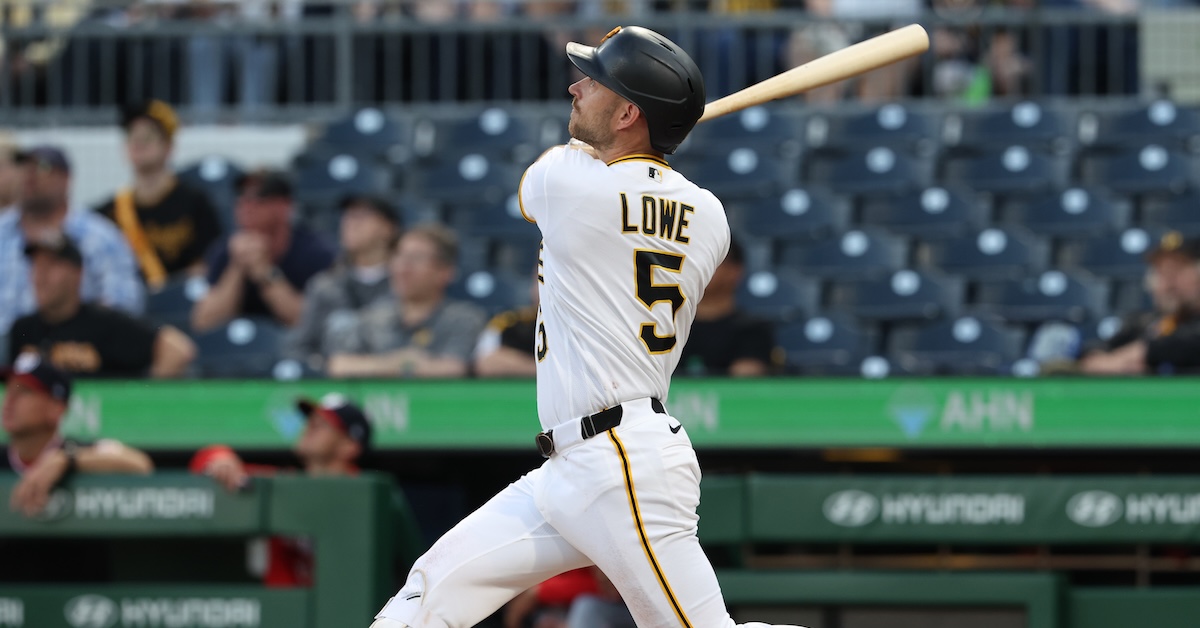
If I’m going to get all my victory laps in this season, I’d better start now, beginning with Brandon Lowe being a great pickup for the Pirates.
Lowe wasted no time endearing himself to the Yinzer crowd, as he went deep twice on Opening Day. Lowe’s total of dingers has since swollen to seven. That’s good for second in the league behind Jordan Walker, which tells you how early in the season it is. But Aaron Judge, Yordan Alvarez, and Sal Stewart (speaking of guys who started hot) are also part of that second-place tie. It still takes a certain quality of hitter to go deep so many times so early in the year.
I always thought Lowe was an inspired get for the Pirates, especially since they paid so little to acquire him. It was a three-team deal with the Rays and Astros, which brought Lowe, Jake Mangum, and Mason Montgomery to Pittsburgh from Tampa Bay, with Mike Burrows going to Houston. I don’t want to spend too much relitigating this trade, but Lowe’s gotten off to a hot start as Pittsburgh’s starting second baseman.
Montgomery has been used as a high-leverage reliever, where he currently has a 42.5% strikeout rate and a 5.40 ERA, so maybe we should let those marbles settle for a minute before passing judgment. Mangum is a weird player (I wrote about why last year) who was way better than I expected as a rookie; he’ll never hit for power, but he’s probably fine as a fourth outfielder and pinch-runner. That’s not a bad haul for a starer the Pirates weren’t going to use anyway.
I’ve been a big fan of Lowe’s since his days at the University of Maryland, where he shared an infield with LaMonte Wade Jr. and future big league reliever Jose Cuas, but I’ll be the first to admit he’s a limited player. He strikes out a lot; 27.1% for his career, and 26.9% in 2025. When the Rays traded Lowe, he’d played enough to qualify for the batting title just once in four years, and his walk rate had been on the decline two years running.
Lowe is not a very good defensive second baseman, and that criticism has gone from a nag to a blaring alarm as he’s hit his 30s. And despite terrific power numbers, he’s merely an OK on-base guy (.314 OBP from 2022 through 2025) who doesn’t actually hit the ball especially hard.
All that said, the real reason the Rays got rid of him for cheap was his $11.5 million salary. (Say what you will about Lowe’s limitations, he’s at least as good as Gavin Lux and better than Richie Palacios and Taylor Walls.) That’s a lot for Tampa Bay, and it would’ve been a lot for the Pirates under normal circumstances, but for an up-the-middle guy who would probably hit 20 to 30 home runs and post about 2 WAR in a full season, that’s not much at all. The fact that the Pirates — usually the sport’s most miserly franchise — would make such a move was profoundly encouraging.
Because the Pirates have already completed the two hardest steps toward building a contender: They have the best pitcher in the National League in Paul Skenes, and by all appearances, they have a superstar shortstop in the making in Konnor Griffin. But they sucked at a bunch of different positions, including second base.
Actually, second base itself was pretty bad last year; only first base and DH produced fewer total WAR league-wide than second base. Second basemen also tied with center field for the lowest league-wide wRC+ by defensive position. (The weakest offensive position is supposed to be catcher, but I’m assuming Cal Raleigh screwed up the curve by himself.)
Even by that low bar, the Pirates’ second basemen failed to cover themselves in glory in 2025: 1.3 WAR (20th out of 30 teams) and a wRC+ of 80 (23rd out of 30). Lowe beats those figures in his sleep. If he strikes out a lot, you live with it. If he’s a terrible defender at second, well, you’ve got Ryan O’Hearn in the outfield—Lowe is the least of your worries.
As much as I loved this trade for Pittsburgh, I did not foresee that after 16 games, Lowe would be hitting .250/.375/.633. His 1.0 WAR is three tenths of a win from what all Pirates second basemen produced on the aggregate last year. His .383 ISO wouldn’t just be a career high for him, it would be a career high for Judge.
Lowe is currently running a .211 BABIP; he’s a fly ball hitter, traditionally, and therefore not a big BABIP guy. Even so, that figure would usually portend better batted ball luck down the line. Statcast data, as you might expect, shows the opposite. Lowe is currently outstripping his xSLG by more than 160 points, and his EV90 of 103.5 mph is merely 127th out of 189 qualified hitters at the moment. His bat speed is also down from previous years, which I mention not to ring alarm bells but merely to point out that he hasn’t unlocked some hitherto undiscovered fast-twitch ability.
Lowe does two things really, really well. First: He kills fastballs. Last year, he hit .278 and slugged .564 off four-seamers; he was one spot above James Wood on the leaderboard for wOBA on four-seamers, and 13th in the whole league in run value created.
Lowe has seen 73 four-seamers in 2026. He swung at 28 of those and put seven of them in play, including three that landed in the seats. Lowe has seen 42 fastballs of all kinds in Statcast’s heart zone. He’s slugging 1.133 on those pitches, 15th out of 336 batters who have seen 50 or more fastballs so far this season. Here’s one:
Look, you can’t throw 92 middle-middle to any decent hitter in this league, but Lowe is better at dispatching those than most. That’s thanks to his second special ability: Over Lowe’s career, 23.1% of his batted balls have been pulled and in the air; the league average over that time is 16.7%. This is where damage gets done. Pull-side line drives turn into doubles and triples, pull-side fly balls turn into home runs.
Statcast’s expected stats (e.g. xSLG) take into account launch angle and exit velo but not batted ball direction. Over a big enough sample, that evens out, but the fact that Lowe’s in-air pull rate is 26.7% right now gives us some insight into how he’s hit seven home runs in three weeks with lackluster exit velo numbers.
All seven of Lowe’s home runs this season have come to the pull side, as did 19 of his 31 dingers last year and 111 of his 164 career major league home runs. PNC Park is a good spot for him then; it’s only 320 feet out to the right field foul pole, which is the fifth-shortest right field porch in the league.
The venue’s famous 21-foot right field fence might cost Lowe the odd wallscraper, but what we’re looking at here is basically a mirror image of the Crawford Boxes in Daikin Park in Houston; it’s 315 feet out to left field there, with a 19-foot wall. You know who plays there: Mr. In-Air Pull Rate himself, Isaac Paredes. Last year, Paredes had a 14th-percentile hard-hit rate, and his EV90 was 224th out of 277 batters with 300 or more plate appearances. This is not a guy with a ton of pop.
Nevertheless, Paredes hit 20 home runs in 438 plate appearances. Half of those 20 home runs came at home and to the pull side. I don’t think Lowe is going to rip off 45 wallscrapers, buoyed by the proximity of the right field wall. But he won’t have to in order to be an asset to a Pirates team that needs all the pop it can get, whatever form it takes.
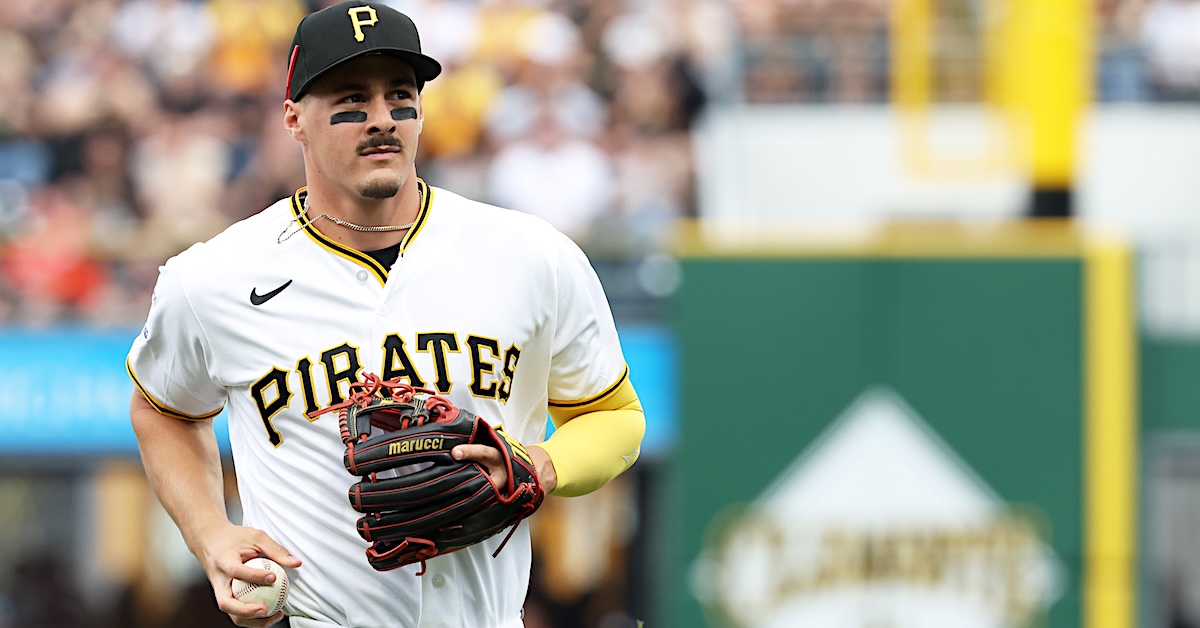
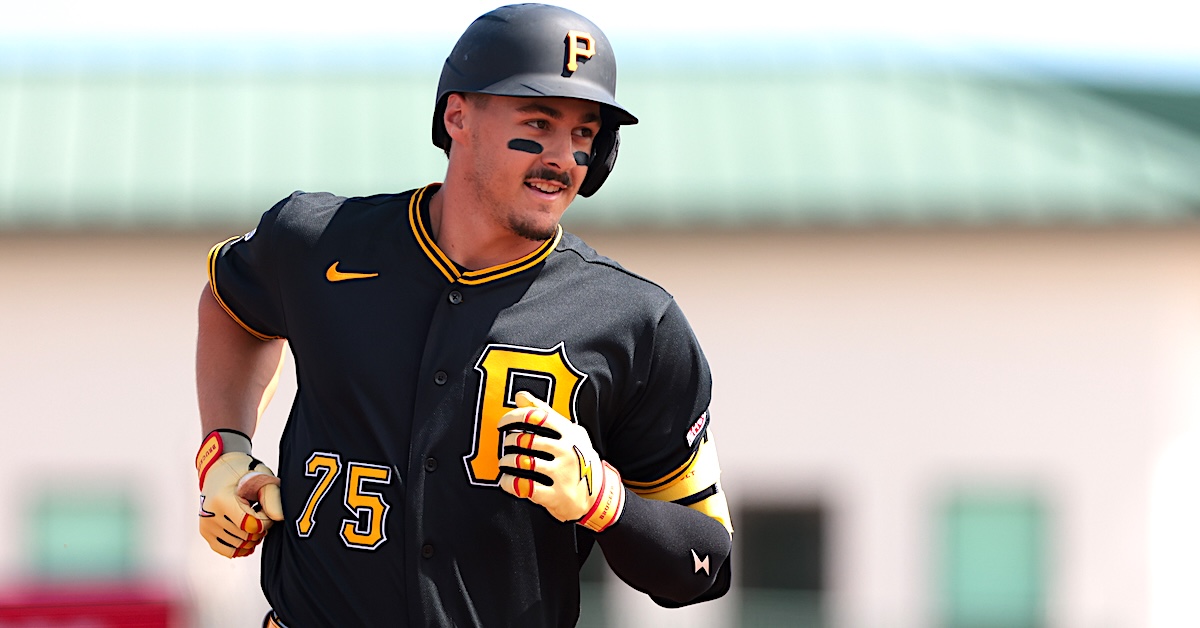
I’m a fan of gallows humor, and I think that fans of the Pirates need to be as well. The Pirates have developed their share of stars over the years, but for fans, there’s always the slight bit of dread that once their young talent starts getting paid commensurate with their production, they’ll be swapping the black-and-gold for Dodger blue or pinstripes. So it’s a good time for Yinzers and the Allegheny-adjacent community, as shortstop Konnor Griffin and the team agreed to a nine-year, $140 million contract that would keep him in town until after the 2034 season.
As contracts go, this is a rather straightforward one. While MVP incentives can bring up the deal by a modest $10 million, to $150 million, that’s just about the only complexity present. There is no deferred money to eat away at the present value of the contract, no option years for the Pirates to lock in at the end, and no opt-out provision that could get Griffin to free agency a year or two early. The deal includes a $12 million signing bonus, which will be doled out over the next three years, certainly helpful to Griffin in that he’ll still get a nice chunk of cash even if the seemingly inevitable lockout drags into the 2027 season.
The Pirates have a real up-and-down history with contracts, so it’s always nice to see them spend on franchise talent rather than spread things around on third-tier free agents. They managed to keep Andrew McCutchen a few years past his free agent eligibility, but for the last 50 years, most of the stars who started out in Pittsburgh became better associated with other teams. Players ranging from Barry Bonds and Bobby Bonilla to Aramis Ramirez and Gerrit Cole, a group that could include Paul Skenes in a few years. Some of the deals the Pirates did sign haunt the dreams of Gen X and millennial Pirates fans (Pat Meares! Kevin Young! Derek Bell!). The Pirates signed Andy Van Slyke and paid him more than the Giants paid Bonds during the latter’s first years in San Francisco.
Griffin was basically everyone’s top-ranked prospect coming into this season, and it’s not hard to see why. He has more tools than can be found at a Florida spring break kegger, and in his first professional season, he terrorized minor league pitchers to the tune of a .333/.415/.527, 165 wRC+ line across three levels, including a 175 wRC+ in his month at Double-A. That would be a drool-worthy performance if he were a 23-year-old first baseman, but he did all of that as a teenage shortstop. He still doesn’t hit the big two-oh for a couple of weeks. Griffin’s one of the few prospects you can plausibly compare to A-Rod at a similar stage in his career without the listener rolling their eyes and saying, “Who, Aurelio?”
A few weeks ago, I did my annual look at contracts I’d like to will into existence, and ZiPS suggested an eight-year, $142 million contract for Griffin. So getting a ninth year is even better!
ZiPS Projection – Konnor Griffin
Year
BA
OBP
SLG
AB
R
H
2B
3B
HR
RBI
BB
SO
SB
OPS+
WAR
2026
.261
.330
.400
532
93
139
23
3
15
83
35
151
30
102
3.6
2027
.265
.335
.418
558
102
148
25
3
18
90
38
149
32
108
4.3
2028
.264
.336
.420
584
109
154
27
2
20
98
42
148
32
108
4.6
2029
.265
.338
.428
601
114
159
28
2
22
105
45
147
32
111
5.0
2030
.265
.341
.434
599
116
159
28
2
23
107
47
142
30
114
5.3
2031
.265
.343
.436
597
117
158
29
2
23
107
49
138
27
115
5.4
2032
.268
.346
.444
597
118
160
29
2
24
109
49
138
27
118
5.6
2033
.268
.346
.444
597
118
160
29
2
24
110
49
138
26
118
5.6
2034
.270
.349
.446
596
118
161
29
2
24
111
50
139
25
119
5.8
That ninth year is pretty darn valuable, and ZiPS would be quite happy to give Griffin $40 million more in order to secure the 2034 projection. ZiPS, like most projection systems, does not generally have fits of irrational exuberance, for the simple fact that it’s well aware about how risky players are. Griffin is not a 5-WAR player yet, so there is risk involved, but that’s true of all players, whether they’re elite prospects or superstars in the middle of their careers. Albert Pujols and Miguel Cabrera were obviously far more “proven” when they signed their biggest deals than Griffin is now, but the Angels and Tigers paid handsomely for that so-called proof, and as should be clear now, there was a lot of downside involved there, too.
A $140 million contract isn’t a mega-deal in the typical baseball sense, but for the Pirates, Griffin’s contract represents the biggest financial commitment they’ve ever made to a player. They’re all-in when it comes to the Konnor Griffin business. Both team and player are now spared things like years of speculation about future trades or service-time games should Griffin struggle in April. Remember the time the Pirates offered Gerrit Cole $538,000, and when he turned it down, they apparently wouldn’t budge past $541,000, and threatened to pay him the league minimum if he refused? Cheap-bush league shenanigans are now out of the question with Griffin, and the focus can be on the actual baseball.
Even if Griffin isn’t immediately a megastar, he makes the Pirates meaningfully better, and they know it. He really did look raw at times in the spring, to the level that sending him down was excusable, even understandable, unlike when the Chicago Cubs in 2015 decided they needed precisely 20 days some additional time to figure out if Kris Bryant was a better option at third base than Mike Olt. Griffin did get five games with the Triple-A Indianapolis Indians, and it certainly looked like, in a small sample size, that he wasn’t really anything new against minor league pitching. But that’s not the point. The Pirates are true NL Central or Wild Card contenders, and they are much better off with Griffin as their starting shortstop, even if it takes him some time to adjust to the majors, than a decent role player like Jared Triolo. (Triolo has since been placed on the injured list with a patellar tendon injury in his right knee.)
With the long-bubbling Griffin contract negotiations finally complete, now the Bucs can worry about the rest of the team, and making the Cubs and Brewers feel uncomfortable for the rest of 2026.
It would border on being grotesquely premature to talk in too-concrete terms about a 19-year-old Griffin and the possibility of him one day having a Hall of Fame plaque in Cooperstown. But at least if such an object should ever come into existence, there’s now a realistic chance that it could have a “P” on the cap. That’s enough to make this a good week for Pirates fans.
It feels incredibly weird to say this but… it’s a good time to be a Pirates fan? Because Konnor Griffin is coming to the majors. He’ll make his major league debut in Pittsburgh’s home opener on Friday.
Griffin was the Pirates’ first-round pick in 2024, ninth overall, and quickly emerged as the no. 1 overall prospect in baseball. A team that’s been as bad as the Pirates, for as long as they’ve been bad, will have some familiarity with the ballyhooed prospect debut, but I’m not sure even they’ve seen anything like this. I was as big a Paul Skenes fan as anyone, and as pumped as I was to see him hit the majors, he’s surpassed even my expectations.
Well, now Skenes is in the majors to stay. So is Bubba Chandler. The Pirates flirted with spending some money this past offseason, and while a 3-3 record is the definition of unremarkable, the Pirates just went on the road and played the Mets and Reds — two of their erstwhile NL playoff rivals — to a draw. The Pirates might be kind of OK. Life hasn’t been this good, genuinely, in more than 10 years.
But Griffin’s debut is the main event. Because as big as the hype around Skenes was, the expectations for Griffin are even greater. Read the rest of this entry »
Frank Bowen IV/The Enquirer-USA TODAY NETWORK via Imagn Images
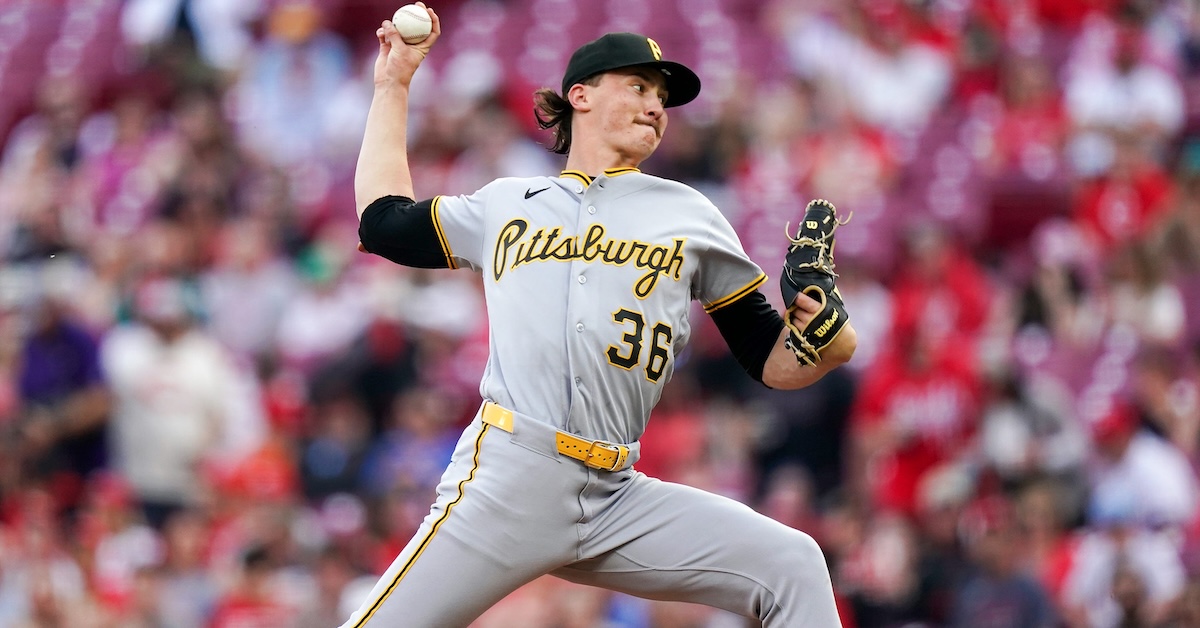
In Bubba Chandler’s first start of the 2026 season, he didn’t allow a single hit. Oh yeah, and he struck out more than 30% of the batters he faced. Spectacular! Just, um, don’t look over at the walk column. Oh, you did? Yeah, fine, he walked more than 30% of the batters he faced, too. Oh, and he allowed a run, and didn’t get out of the fifth inning. To understand what Chandler was up to, and what it might mean for the rest of his year, we’ll have to dig a little deeper.
Chandler leaned heavily on his fastball to start his year, as many pitchers do in their first appearance of the season. He breezed through the first inning with 11 straight fastballs, eclipsing 100 mph on the radar gun four times and essentially daring the Reds to hit it. TJ Friedl waved feebly at 100 above the zone. Matt McLain did the same. Chandler’s fastball is dynamite, particularly when he’s locating it high. It explodes upwards, and some offseason tweaks have it moving less arm side than before, making it even harder to square up.
I could watch a montage of Chandler overpowering Reds hitters all day. In fact, you can too:
You can see how difficult it is to track Chandler’s fastball by watching the check swings. The pitch that Jose Trevino, the last batter in that loop, offered at was more than a foot above the zone. The combination of velo, movement, and Chandler’s loping delivery means that hitters have a lot of trouble figuring out where the ball is going. Read the rest of this entry »
In general, the Pirates’ first series of the year could’ve gone better. What everyone’s going to remember from this past weekend is the worst start of Paul Skenes’ career — probably of his entire life. But it could’ve been worse. Winning one of three at Citi Field against the Mets is probably going to end up looking like even par for one of the tougher assignments in the National League, especially with one of those losses coming in extra innings.
Brandon Lowe hit three home runs. Even Skenes’ awful opening inning was only made possible by some horrendous defense and ridiculous batted-ball luck. And Carmen Mlodzinski struck out the side against the top of the Mets’ order on Sunday. Twice. Read the rest of this entry »
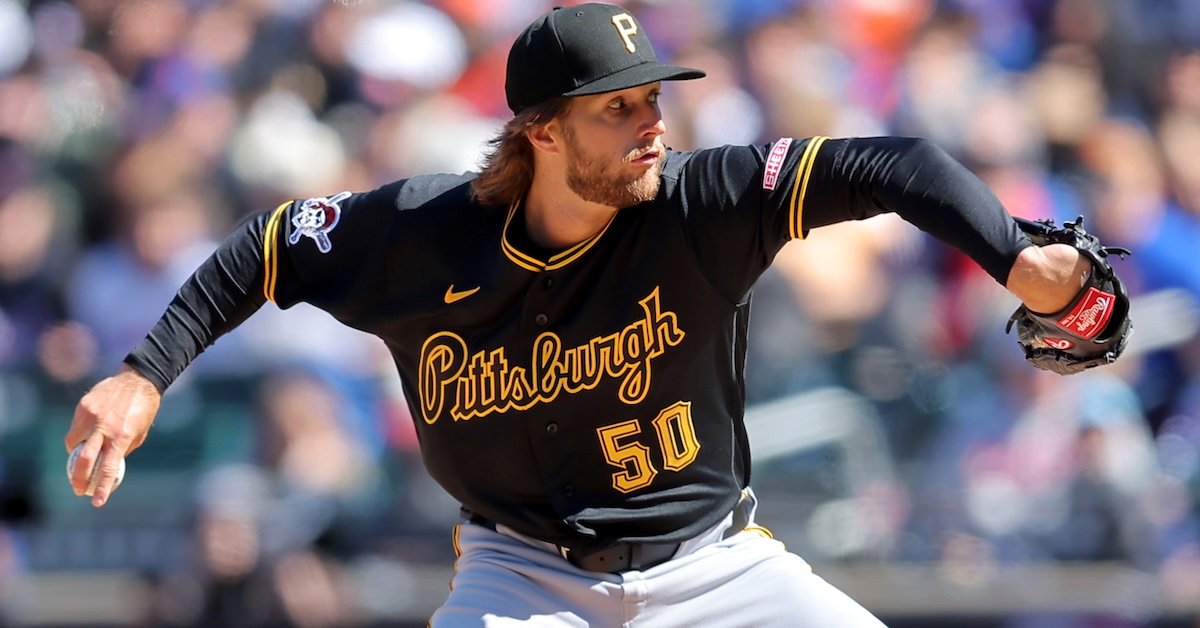
In their Opening Day game against the Mets at Citi Field, the Pirates jumped out to a two-run lead two batters into the game. Their next three batters struck out, but they had National League Cy Young winner Paul Skenes starting for them. It was the first time in his career that Skenes, who entered the game with a 1.96 ERA, took the mound in the first inning with a lead of two or more runs. Heck, it was just the fourth time in his 56 career starts (29 on the road) that he’d thrown his first pitch with any lead at all. Maybe this year would be different after all.
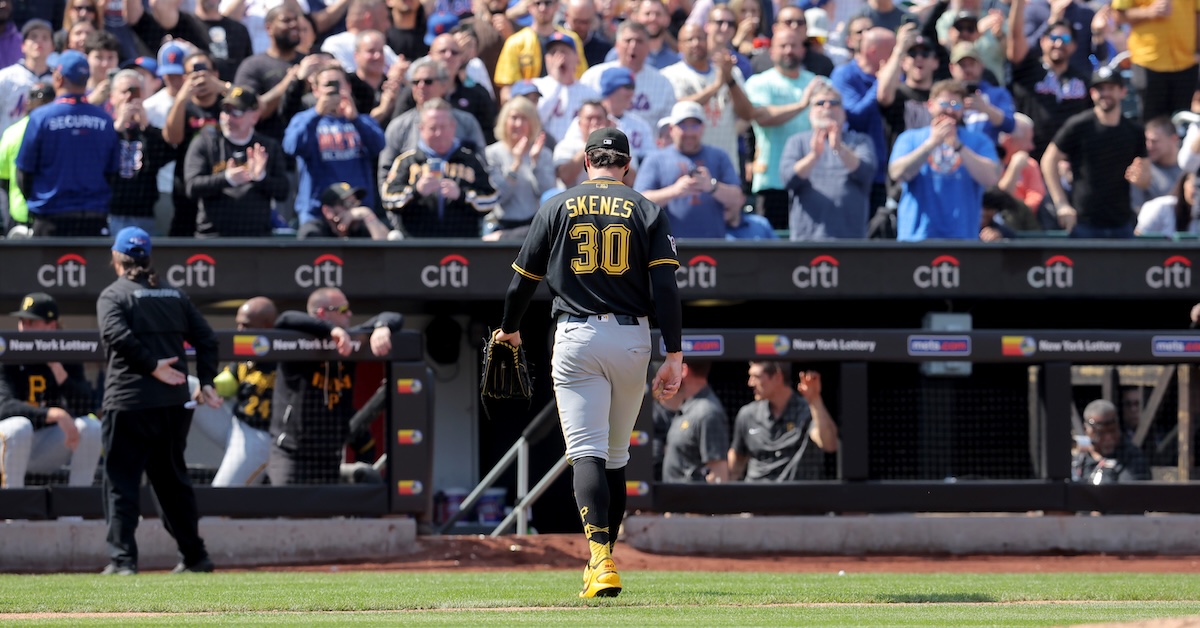
It’s too early to say anything about this year, but this sure was a different game. Just not in the way the Pirates had hoped. For the first time in his career, Skenes did not make it through the first inning. When manager Don Kelly went to the bullpen with two outs in the inning, his ace had thrown 37 pitches, recorded just two outs and allowed five runs. He struck out just one batter, walked two, and hit one with a pitch. The impromptu bullpen game ended about two and a half hours later in an 11-7 Mets win. Read the rest of this entry »
Sam Navarro, Eakin Howard, Rafael Suanes-Imagn Images
Dean Kremer has been a staple of the Orioles rotation in recent years. Even while missing significant time due to injuries in a couple of seasons, he’s made more starts than any other Baltimore pitcher since the beginning of 2022, a span that encompasses both the division-winning Orioles from ’23 and last year’s basement dwellers. Yet this past weekend, Kremer was optioned to the team’s minor league camp, the odd man out in a rotation battle. He’s not the only familiar name among those slated to start the season in the minors due to such decisions.
Opening Day is full of fanfare and so often freighted with meaning, but it’s still just one day on the baseball calendar; the decisions regarding who gets to be there (and who doesn’t) don’t actually define the season. Still, unless they’re recalled to replace injured players — which is hardly out of the question — optioned position players need to remain in the minors for 10 days and pitchers for 15 days, counting from March 25 (Opening Day for the Giants and Yankees). In other words, they’ll be eligible to return on April 4 or April 9. Beyond that, circumstances change as the season progresses, and rosters are in a constant state of flux.
Kremer stands out because he’s fully established himself in the majors, while the other high-profile decisions I’ve highlighted below involve players who are or were recently considered top prospects. They’re all headed to Triple-A, and I expect them to stay past the aforementioned dates, but they’re notable because they’re still expected to play substantial roles in 2026. The players are listed alphabetically. Read the rest of this entry »