Archive for Rangers

A Roundup of Recent Injuries Among the AL Contenders: The Appendix Appendix

Gary A. Vasquez, Jerome Miron, and Charles LeClaire – Imagn Images

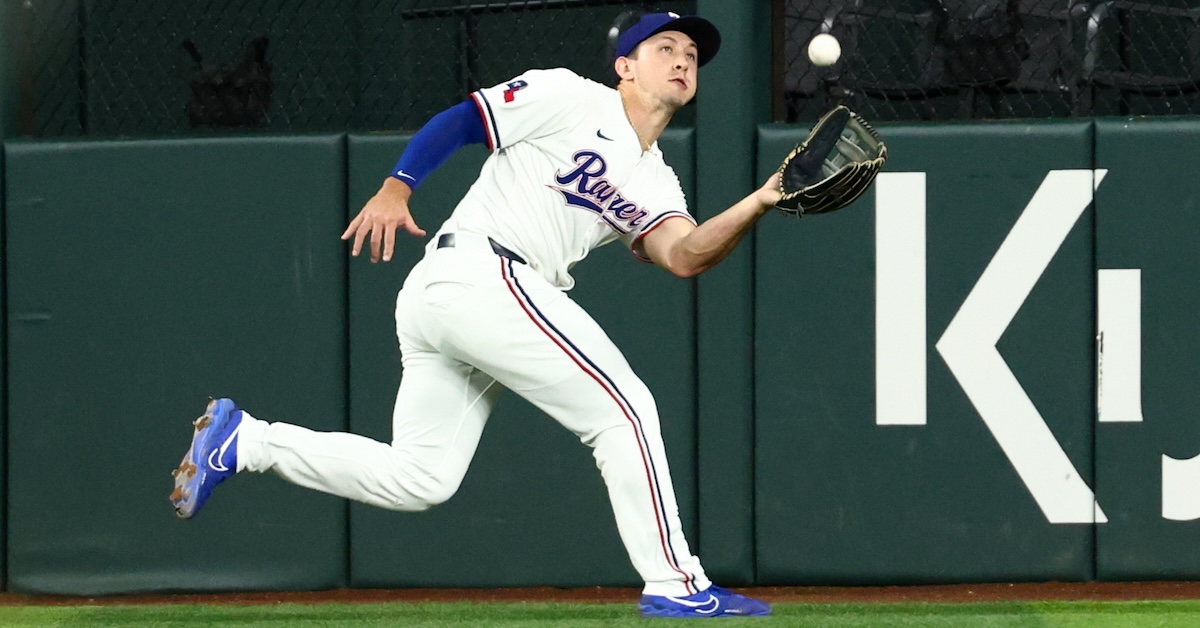
The Rangers really can’t catch a break. Just after I wrote about Nathan Eovaldi’s sneaky great season, the 35-year-old righty briefly took over the official AL ERA lead. Before he could make another start, however, the Rangers announced that Eovaldi would likely miss the remainder of the season due to a rotator cuff strain. As if losing their most effective starting pitcher wasn’t enough, the Rangers also announced on Thursday that Corey Seager, their top hitter, had undergone an appendectomy, putting the rest of his season in doubt.

With his seven-inning, nine-strikeout, one-run effort against the Guardians last Friday, Eovaldi lowered his ERA to 1.73 in 130 innings, exactly enough to qualify based on the Rangers’ 130 games to that point. With that, he snuck ahead of Tarik Skubal (2.32), Hunter Brown (2.36) and Garrett Crochet (2.46) on the AL leaderboard, completing a game of catch-up caused primarily by his missing nearly all of June due to posterior elbow inflammation. Unfortunately, post-start soreness led Eovaldi to shut down his regularly scheduled bullpen session and get an MRI, which revealed a rotator cuff strain.

The 31-year-old Seager has hit .271/.373/.487 for a team-high 136 wRC+; his 21 homers and 3.9 WAR are also tops on the Rangers. He already made two trips to the injured list in April and May for a recurrent right hamstring strain and so has played just 102 games, that after being limited to 123 last year by a sports hernia and 119 in 2023 due to a left hamstring strain and a right thumb sprain. He’s been replaced on the roster by infielder Dylan Moore, who was recently released by the Mariners, but the likely replacement for him in the lineup is superutilityman Josh Smith, who has hit .256/.333/.378 (101 wRC+) while playing every position besides pitcher and catcher. Read the rest of this entry »


Broken Foot Lands Marcus Semien on the IL

Gary A. Vasquez-Imagn Images

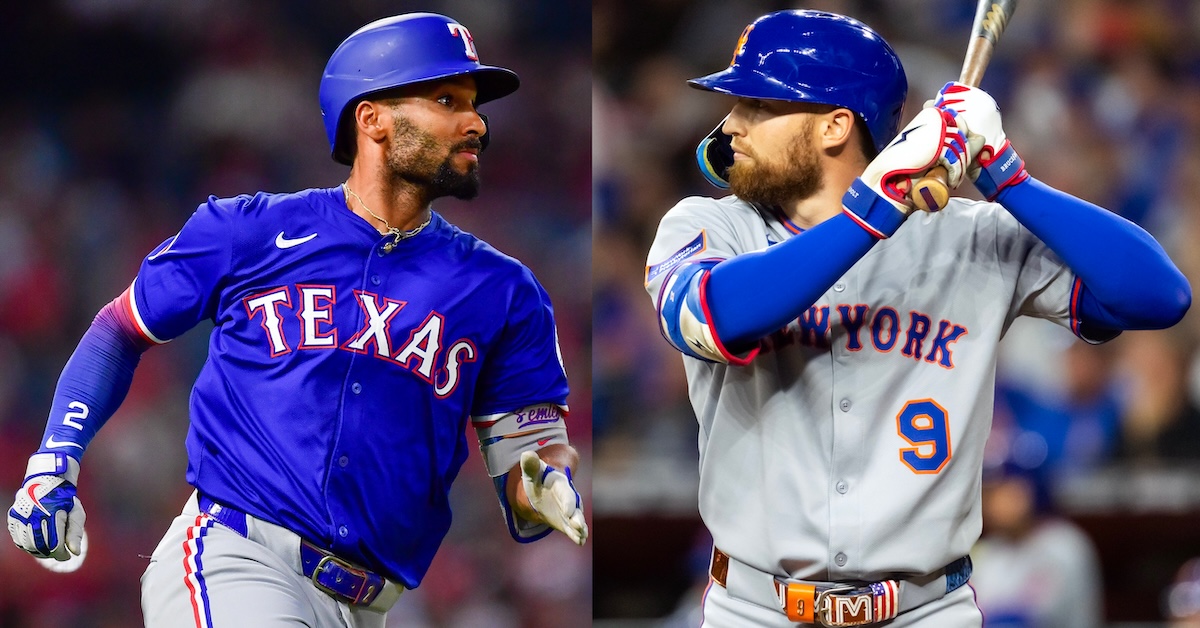
The Texas Rangers placed second baseman Marcus Semien on the injured list with a broken left foot over the weekend, retroactive to Thursday’s games. The result of a foul ball hitting the top of his foot, Semien was initially diagnosed with a contusion, but after getting multiple additional opinions, that diagnosis was revised to a fracture of the third metatarsal and a Lisfranc sprain. Semien, who turns 35 next month and whose last injury that merited an IL stint was a wrist contusion back in 2017, is having one of his weaker offensive seasons, with a .230/.305/.364 triple slash line, but thanks to his still-solid glove, he’s still amassed 2.1 WAR. The injury likely ends Semien’s regular season, and given where Texas is in the standings, probably his 2025.

I can’t think of many good times to break your foot. Just speaking for myself, I might consider a broken foot preferable to, say, going to a wedding I really don’t want to attend. But Semien is a professional athlete, not an introverted middle-aged baseball analyst who writes from home surrounded by computers and cats, and his team is on the brink. Texas is coming off a sweep of the Cleveland Guardians, but those three wins only got the team back to the .500 mark, with a 9-13 record for August. Read the rest of this entry »


Jacob deGrom Is a Litmus Test for Hall of Fame Voters

Kevin Jairaj-Imagn Images

Earlier this week, my colleague Jay Jaffe touched a bit on Jacob deGrom and his Hall of Fame case. Since the world can always use more sentences describing how awesome deGrom is, and because I’m fascinated by how his Hall of Fame case will look to voters sometime in the mid-2030s, I decided to dig a little more into his future candidacy and reasonable expectations for what the end of his career can add to his record. I also wanted to explore what deGrom’s case means for 2010s/2020s Hall of Fame starting pitcher representation more broadly.

This has been a concern of mine for a while, and I talked a bit about it last year in the context of Chris Sale’s marvelous comeback season. This piece has stuck with me as it was one of those rare articles in which the act of writing it changed my opinion somewhat. At the start, my thought process was “with a less than 50% chance of finishing with 200 wins, Sale probably won’t be in the Hall of Fame, and may be too borderline for even me.” But then I projected the rest of the league, and for the first time ever in ZiPS, not a single pitcher who hadn’t already passed 200 wins was projected to have a 50% chance of reaching that milestone. So, perhaps Sale should get to Cooperstown even if he falls short of that threshold, because if the writers don’t vote for him on the grounds that he didn’t get to 200 wins, how could we justifiably elect any future starting pitcher?

Active Pitchers with 100 Career Wins
As of June 2024
Player W Debut
1 Justin Verlander 260 2005
2 Max Scherzer 214 2008
3 Clayton Kershaw 210 2008
4 Gerrit Cole 145 2013
5 Johnny Cueto 144 2008
6 Lance Lynn 138 2011
7 Charlie Morton 133 2008
8 Chris Sale 128 2010
9 Carlos Carrasco 109 2009
10 Kyle Gibson 108 2013
11 Wade Miley 108 2011
12 Yu Darvish 107 2012
13 Sonny Gray 105 2013
14 Dallas Keuchel 103 2012

When I wrote last year’s piece, there were only 11 pitchers between 100 and 200 wins, a shockingly tiny number. And of those 11, only one is in a better position to win 200 games now than he was then: Sonny Gray, who has added 12 wins and is having a fairly typical season by his standards. As far as the other 10 are concerned… Gerrit Cole is out until well into 2026 due to elbow surgery, and Sale has missed a bunch of time this year from injuries. Lance Lynn and Kyle Gibson have both since retired, Johnny Cueto has all but officially done the same, and Carlos Carrasco and Dallas Keuchel are in the minors and, for the purposes of this exercise, might as well be retired. Wade Miley has one win this season and is currently out with forearm pain in his comeback from Tommy John surgery. Yu Darvish, who didn’t make his season debut until July, has moved only two wins closer to 200 in his age-38 season. As a Baltimore native, I’m not psychologically prepared to talk about Charlie Morton’s progress.

The good news is eight new pitchers have joined the 100-win club this season, but none of them look to be on a path to 200 wins right now.

New 100-Win Pitchers, Since June 2024
Pitcher Wins Debut Age ZiPS Projected Final Wins
Jose Quintana 112 2012 36 134
Kevin Gausman 110 2013 34 148
Patrick Corbin 109 2012 35 128
Michael Wacha 109 2013 34 146
José Berríos 108 2016 31 144
Aaron Nola 105 2015 32 152
Kyle Hendricks 103 2014 35 119
Nathan Eovaldi 102 2011 35 136

Of these eight, only Nola projects with a 50% chance to get to even 150 wins. While it’s theoretically possible for most of the eight to get to 200 wins, it would require an unusually robust late-career surge. During the Wild Card era, only 10 pitchers have amassed 90 wins after their age-34 season, and almost all of them were in the early part of the era; pitcher workloads have continued to drop, and starting pitchers get fewer decisions than ever.

ZiPS projects only four other pitchers to have a 50% shot at reaching 150 wins: Tarik Skubal, Garrett Crochet, George Kirby, and Paul Skenes.

Rewind ZiPS a decade, and it gave 17 active pitchers a 50% chance to win 200 games. Nine eventually did hit that milestone, and Cueto, the only member of the other eight who is still technically active, isn’t going to do it.

So, let’s run the ZiPS projections for the remainder of deGrom’s contract with the Rangers, beginning in 2026 and running through 2028 — assuming Texas picks up his club option for that season. ZiPS was really worried about his health entering the season, for very obvious reasons, and while he just missed his most recent scheduled start due to shoulder fatigue, the injury is not believed to be a long-term issue. His projected workloads in future seasons have increased now that he’s stayed mostly healthy in 2025.

ZiPS Projection – Jacob deGrom
Year W L ERA G GS IP H ER HR BB SO ERA+ WAR
2026 8 5 3.50 26 26 138.7 117 54 19 31 149 116 2.7
2027 7 6 3.81 25 25 132.3 120 56 20 32 135 107 2.0
2028 6 6 4.20 23 23 122.0 117 57 20 32 119 97 1.4

Give deGrom the 21 projected wins for 2026-28 and a couple September wins this year, and that gets him to 123 for his career. In his piece, Jay brought up Sandy Koufax while discussing deGrom, and I think it’s an apt comparison.

Sandy Koufax vs. Jacob deGrom
Pitcher W L IP K ERA ERA+ WAR
Sandy Koufax (1961-1966) 129 47 1632.7 1713 2.19 156 46.3
Sandy Koufax (Career) 165 87 2324.3 2396 2.69 131 54.5
Jacob deGrom (Proj. Career) 117 80 1928.3 2253 2.82 141 52.8

Koufax’s peak was more concentrated and more impactful in individual seasons than deGrom’s, but as I said about Johan Santana when he was on the Hall of Fame ballot, if your best years are being mentioned in conversation with those of Koufax, you must have been a dynamite pitcher. To me, from a pure dominance perspective, Peak deGrom isn’t that far behind Peak Koufax; certainly, the gap isn’t wide enough to keep deGrom out of Cooperstown considering pretty much everyone views Koufax as a no-doubt, inner-circle Hall of Famer.

Of course, it’s an inauspicious sign for deGrom that I’m using Santana as the other not-quite-Koufax comp, given that Santana went one-and-done on the ballot. But I’m hopeful that time is on deGrom’s side here. Santana was knocked off the ballot in the 2018 election, and the demographics of BBWAA members who stick around long enough to earn a Hall of Fame vote have changed a lot over the last decade. In fact, the BBWAA didn’t open up membership to internet-based writers — a group that tends to be more versed in analytics — until after the 2007 season, and many of these stathead members couldn’t vote when Santana was eligible. That will be different by the time deGrom hits the ballot in roughly eight or so years.

By then, it’ll be nearly 20 years of writers seeing starter workloads change, and maybe voters will have figured out how to account for the fact that the role of a starting pitcher is very different in the 2020s than it was in the 1990s, let alone in the days of Old Hoss Radbourn. The trio of former Cy Young winners in their 40s — Justin Verlander, Max Scherzer, and Zack Greinke — will likely be in Cooperstown by the time deGrom hits the ballot. Clayton Kershaw is only three months older than deGrom, but considering the Dodgers icon debuted six years earlier, it feels all but guaranteed that he will be the first of the two to retire, meaning he will also enter the Hall before deGrom becomes eligible. If that happens, Kershaw will be the last of his kind to be voted in by the writers, setting the stage for a new standard for starters to make it to Cooperstown. That is, unless Kershaw is to be the last-to-debut Hall of Fame starting pitcher.

I can’t imagine that will be the case, but it is true that over the next decade, the BBWAA has some interesting philosophical questions to answer about the nature of starting pitcher greatness. I’m not sure what those answers will be, but I do know that deGrom will be instrumental in determining them.


Nathan Eovaldi’s Sneaky-Great Season

Nick Turchiaro-Imagn Images

Nathan Eovaldi is flying under the radar. Unless you’re particularly attuned to the Rangers’ battle to get back to .500 — they’re 63-65 after a recent 1-8 skid — or doing more than a casual perusal of our leaderboards, you might miss that the 35-year-old righty is carrying a 1.76 ERA into the final third of August. A bout of elbow inflammation that sidelined him for a month has left him just short qualifying for the American League lead, but even so, he’s in the midst of one of the best seasons of his career.

It’s an unlikely, out-of-nowhere season, at that. Eovaldi has e(o)volved a great deal since he debuted with the Dodgers in 2011, but even in the second, more successful leg of his career — the years since his 2017 Tommy John surgery (his second), during which he’s won a pair of World Series rings and made two All-Star teams — he’s never posted a full-season ERA lower than 3.63 (2023 with the Rangers) or an ERA- lower than 82 (2021 with the Red Sox). From 2018–24, he put up a 3.94 ERA (91 ERA-) for the Rays, Red Sox, and Rangers, including a 3.80 mark for Texas last year, which was right at the park-adjusted league average (100 ERA-). That recent work led the Rangers to re-sign him to a three-year, $75 million deal this past winter.

Eovaldi has been on this particular run for a while. After his six-inning, two-run effort against the Red Sox on Opening Day, the highest his ERA has been at any point (setting aside in-game fluctuations) was 2.64, on April 19. Beginning with his next start on April 25 against the Giants and running through his turn on August 5 again the Yankees, he put up an 0.90 ERA and a 2.16 FIP while allowing just 52 hits in 80.1 innings. That stretch probably would have garnered more attention had he not departed his May 27 start after two innings due to what was initially described as right triceps fatigue and later diagnosed as posterior elbow inflammation. He didn’t pitch in the majors again until June 27, when he allowed three runs in three innings against the Mariners, the only time during that 3 1/2-month span in which he allowed more than one run. Read the rest of this entry »


Notes On More Pitching Rehabbers

Nick Turchiaro-Imagn Images

Beginning last Thursday and continuing through the weekend, several key rehabbers made appearances in the upper levels of the minor leagues. A few might have a meaningful impact on playoff races, while others are scuffling. I dish on eight pitchers below. Read the rest of this entry »


Winners and Losers From the 2025 Trade Deadline

Katie Stratman, Orlando Ramirez, Steven Bisig-Imagn Images

Now that the deadline dust has settled – or at least, started to settle – it’s time to start making sense of it. The Padres, Twins, and Orioles were everywhere. Top relievers flew off the board. Both New York teams spent all day adding. But who did well? Who did poorly? Who was so frenetic that they probably belong in both categories more than once? I tried to sort things out a little bit. This isn’t an exhaustive list. There were 36 trades on deadline day, a new record, and more than a dozen before it. Nearly every team changed its trajectory at least a little, and this is just a brief look into the chaos. Here are the trends that most stood out to me.

Winner: Teams Trading Top Pitchers
This year’s crop of rental players was lighter than usual, but deadline activity didn’t slow. Instead, it simply spilled over into relievers under contract for a while. Mason Miller, Jhoan Duran, Griffin Jax, and David Bednar are under contract for a combined nine more years after 2025. That drove the prospect price up on all four. Having long-term control of relievers might be less valuable than at other positions, but it’s still valuable.

Most of the best prospects who swapped teams at the deadline were involved in a trade for top pitching. Leo De Vries, the consensus best player of the 2024 international signing period, was the big name here, but both the Phillies and Yankees offered up multiple good minor leaguers in exchange for Duran and Bednar. Taj Bradley, whom the Twins got back for Jax, is a former top prospect who won’t be a free agent until 2030. Read the rest of this entry »


Rangers Stock Up on Pitching With Merrill Kelly and a Pair of Relievers

Charles LeClaire-Imagn Images

On June 30, the Rangers lost to fall to 41-44, 10th place in the American League. Then they turned it on. Since the calendar flipped to July, they’ve gone 16-8 and rocketed into the playoff picture. They’re tied with the Mariners for the last AL Wild Card spot. With their sights now set on thriving in October, they needed to reinforce a pitching staff that has been quite good up top but got shakier as you went down the depth chart, and the Diamondbacks were happy to oblige. As Ken Rosenthal first reported, the Rangers are getting Merrill Kelly in exchange for Kohl Drake, Mitch Bratt, and David Hagaman. They also acquired Danny Coulombe and Phil Maton in separate deals to shore up the middle of their bullpen.

Texas has a famous starting rotation. The two stars, Jacob deGrom and Nathan Eovaldi, need no introduction. Second on the team in innings, slightly ahead of Eovaldi? That’d be World Series winner Patrick Corbin, famous both for his high highs and low lows. The back of the rotation? Jack Leiter and Kumar Rocker, famous college teammates before they were famous prospect teammates. But Leiter and Rocker have been flat this year, and Corbin was bad enough for long enough that I’d be a little scared of counting on him. Tyler Mahle, another celebrated Rangers starter, has been out since June. Jon Gray is headed for free agency and has perhaps been banished to the bullpen for the remainder of 2025. And it’s not like deGrom has been the paragon of health over the last few years.

Kelly lengthens the playoff-ready portion of Texas’s rotation immediately. His career 3.74 ERA and 3.97 FIP are accurate representations of his work, as are his 22% strikeout rate and 7.4% walk rate. In other words, he’s a perfect mid-rotation arm, better than average (he’s managed a 3.22 ERA and 3.53 FIP this season) but squarely short of an ace. He’s 36 and a free agent after this year, which limits his return somewhat, but he’s a dependable playoff starter and thus a very desirable deadline target. Read the rest of this entry »


Various Relievers Get Traded To Various Clubs in Various Combinations

Jerome Miron and Jeff Curry-Imagn Images

It’s a big deadline for relief pitchers, even for teams that aren’t operating in the Mason Miller or Jhoan Duran tier. The Orioles bullpen continues to get picked over like a charcuterie board: Andrew Kittredge is Chicago-bound, with the Cubs sending Wilfri De La Cruz the other way.

The Tigers beefed up their bullpen by picking up Paul Sewald from the Guardians in exchange for a player to be named later or cash. A few hours later, Detroit sent minor league pitchers Josh Randall and R.J. Sales to Washington for Kyle Finnegan and added Codi Heuer from Texas for minor league depth. Finally, the Dodgers are bringing Brock Stewart back from Minnesota, with James Outman going in the other direction.

Let’s take those in order. Read the rest of this entry »


Tyler Mahle Addresses His 2018 FanGraphs Scouting Report

Kevin Jairaj-Imagn Images

Tyler Mahle was 23 years old and had 20 big league innings under his belt when our 2018 Cincinnati Reds Top Prospects list was published in January of that year. A seventh-round pick out of an Orange County high school five years earlier, Mahle was ranked fourth in the system, with Eric Longenhagen assigning him a 50 FV.

Mahle has gone on to have an injury-marred career. Most notably, he underwent Tommy John surgery in May 2023, less than a year after he’d been dealt from the Reds to the Minnesota Twins in exchange for Christian Encarnacion-Strand, Spencer Steer, and Steve Hajjar at the trade deadline.

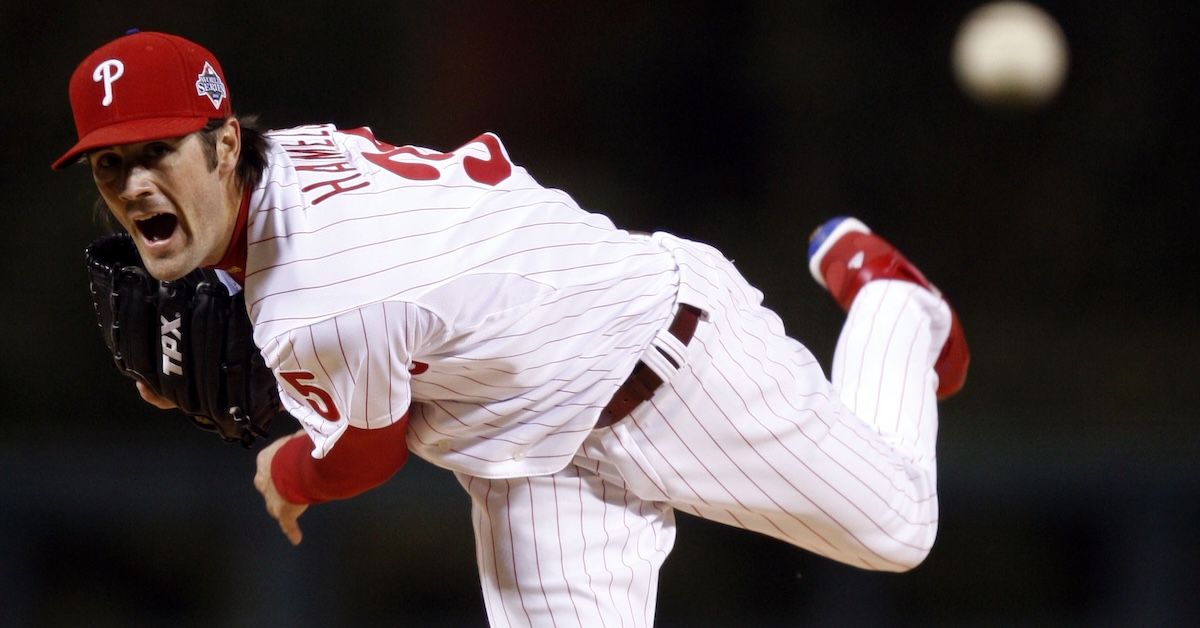
When healthy, the 30-year-old right-hander has been a quality pitcher more often than not. In 2021, he made 33 starts for Cincinnati and went 13-6 with a 3.75 ERA and a 3.80 FIP over 180 innings. Moreover, Mahle was on track for an even better season when he went on the shelf seven weeks ago with what has since been diagnosed as a right rotator cuff strain. In 14 starts comprising 77 innings with the Texas Rangers, Mahle had a record of 6-3 to go with a 2.34 ERA and a 3.37 FIP. His status for the remainder of the current campaign is unclear.

What did Mahle’s 2018 FanGraphs scouting report look like? Moreover, what does he think about it all these years later? Before he went on the injured list, I shared some of what Eric wrote and asked Mahle to respond to it.

———

“After 24 hyper-efficient starts at Double and Triple-A, Mahle finally got a four-start cup of coffee in Cincinnati at the end of the season. His ability to locate was not on display in the big leagues, but it’s what got Mahle there.”

“Not great,” Mahle said of his four starts in 2017. “I was wild. My first two or three starts, I’d thrown something like 50 pitches by time I got through two innings. So yeah, not very efficient. But I got through it. Then I got off to a decent start the next year, in 2018, but pitched kind of hurt toward the end of that season.”

“He has above-average fastball command despite a somewhat noisy delivery; it should tighten another half-grade as Mahle hits his peak.”

“Hmm… yeah, my delivery back then was super stiff,” he said. “I held my glove up high and it stayed there until I broke my hands. Looking back, my delivery was, again, super stiff. A lot has changed there.

“Honestly, I don’t remember exactly,” Mahle said when asked when he made the adjustment. “It must have been with [Reds pitching coach Derek Johnson]. We kind of took away some movement in the hands. Instead of going from up high to down low, we started going from the belt to make it a little simpler.”

“His stuff is middling, spearheaded by a slightly above-average fastball/slider combination out of which Mahle squeezes every ounce of juice due to his ability to locate.”

“I was pitching with pretty much all fastballs at that time,” the righty recalled. “My slider was super inconsistent. I didn’t have a splitter like I have now. I basically just relied on the fastball.”

“He adds and subtracts from his fastball, exhibiting velocities anywhere from 88 to 95, touching 96 regularly, and maxing out at 98.”

“Yeah, but not so much anymore,” Mahle admitted. “I kind of live low 90s now and will top around 95. But relying so much on my fastball back then, I had to try to overpower guys with it. I had to try to throw it hard.”

“While Mahle’s change doesn’t have terrific movement, his ability to manipulate pitch speed without noticeable arm deceleration helps make it a viable third offering.”

“Yep. I mean, that was me,” Mahle said. “I didn’t have much of a changeup, so I had to try to place it in the zone, or wherever I was trying to get it. Like my slider, it was just super inconsistent. The arm speed… I actually feel like I probably did have to change it, based on what I was throwing. I maybe telegraphed a lot back then. Now I can throw everything with pretty much the same arm speed.”

“His stuff isn’t overwhelming, but his command should allow him to survive as an average big league starter.”

“That’s how I’ve gotten by,” the nine-year veteran acknowledged. “My command, still now… like, my fastball isn’t an overpowering pitch velo-wise, but I locate it. I also get some good ride on it. Back then, I didn’t know that. I just knew that it did well up in the zone. But yeah, I kind of lived off the location of my pitches.

“I understand everything a lot more now,” Mahle added. “I know why it works well up in the zone, and what the separation is on each pitch, and why they’re doing what they’re doing. Compared to now, back then I was pretty much just throwing.”

——

Previous “Old Scouting Reports Revisited” interviews can be found through these links: Shane Baz, Cody Bellinger, Matthew Boyd, Dylan Cease, Matt Chapman, Erick Fedde, Kyle Freeland, Max Fried, Lucas Giolito, Randal Grichuk, Ian Happ, Jeff Hoffman, Tanner Houck, Matthew Liberatore, Sean Newcomb, Bailey Ober, Matt Olson, Austin Riley, Joe Ryan, Max Scherzer, Marcus Semien.


The 2025 Replacement-Level Killers: Designated Hitter

Troy Taormina and Kamil Krzaczynski-Imagn Images

At last we reach the end of my annual series spotlighting the weakest positions on contending clubs. While still focusing upon teams that meet that loose definition of contenders (a .500 record or Playoff Odds around 10%), I’ve also incorporated our Depth Charts’ rest-of-season WAR projections into the equation for an additional perspective. Sometimes that may suggest that the team will clear the bar by a significant margin, but even so, I’ve included them here because the team’s performance is worth a look.

At the other positions in this series, I have used about 0.6 WAR or less thus far — which prorates to 1.0 WAR over a full season — as my cutoff, but for the designated hitters, I’ve limited the list to the teams below zero, both to keep the length manageable and to account for the general spread of value. In the fourth full season of the universal DH, 0.6 WAR represents the median, with 10 teams below zero, 11 between zero and 1.0, and eight with 1.0 or more, with only four of those eight reaching 2.0. By comparison, at this time last year, half the teams in the majors were at 0.0 WAR or less. DHs as a group have hit .239/.322/.422 for a 108 wRC+ this season, the last of which matches 2024’s final figure.

It does appear that an increasing number of teams are investing more playing time in a single DH. From 2022 (the first full-length season with the universal DH) to ’24, the number of players reaching 450 plate appearances in the DH role increased from three to four to seven; this year, we’re on pace for 10. That said, many of the teams on this list are the ones that haven’t found that special someone to take the lion’s share of the plate appearances.

2025 Replacement-Level Killers: Designated Hitter
Team AVG OBP SLG wRC+ Bat BsR WAR ROS WAR Tot WAR
Rangers .160 .241 .265 44 -25.0 -0.1 -2.5 0.6 -1.9
Royals .207 .273 .333 65 -16.0 -2.8 -1.7 0.2 -1.5
Padres .207 .273 .300 66 -15.0 -2.3 -1.7 0.4 -1.3
Reds .221 .303 .409 94 -2.8 -1.4 -0.2 0.3 0.1
Giants .226 .318 .343 91 -4.3 -3.6 -0.6 0.9 0.3
Astros .228 .288 .383 83 -7.9 -0.8 -0.7 1.1 0.4

Read the rest of this entry »