The KBO Appears to Be De-Juicing Its Baseballs

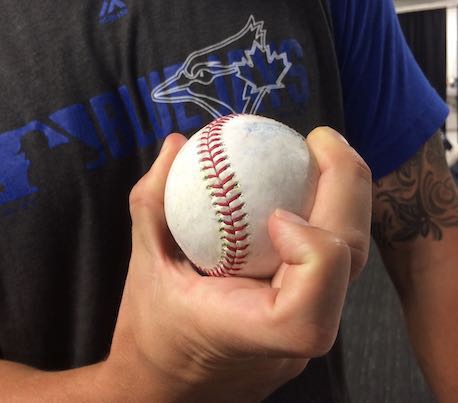
The 2019 KBO baseballs (Photo: Sung Min Kim)

Last year, Rob Arthur and Tim Dix of FiveThirtyEight helped to reveal to the masses that the core of the major league baseball had changed, reducing the air drag and resulting in the ball traveling farther in the air. Ever since then, the ball has been a recurring topic of conversation, including here at FanGraphs. The subject got a re-boot earlier this month when Arthur, writing for Baseball Prospectus, concluded that there’s less drag on the batted balls hit in the 2019 season, which has led to more speculation that the league has “juiced” the ball.

While it is fun to see more dingers and harder hit batted balls, there’s something to be said about how the league may or may not have deliberately manipulated the ball to make it happen. It’s fun to see players like Aaron Judge have a 50-homer season in his rookie campaign or to watch Giancarlo Stanton flirt with a 60-homer mark on the way to earning an MVP award, but fans may question how “authentic” those feats are compared to the pre-juiced ball days, though it’s worth noting that the liveliness of the ball has changed throughout baseball’s history.

Here in Korea, there’s been an opposite trend. Prior to the start of the 2019 season, it was reported that the Korean Baseball Organization (KBO) would decrease the coefficient of restitution (COR) value in their baseball. To put it in layman’s terms, the higher the COR number is, the further the ball travels from the impact of the bat. Last year, the KBO allowed baseball COR values between .4134 and .4374. To put that in contrast, Nippon Professional Baseball (NPB) in Japan allows it to be between .4034 and .4234; MLB allows between .3860 and .4005. The KBO decided to lower it to the NPB’s Mizuno baseball level of between .4034 and .4234. There’s a reason for such a change. If you’ve followed the KBO for awhile, you know that the league has been quite hitter-friendly for the past few years. Here’s how hitters fared in the three seasons prior to 2019:

2016-18 KBO Offensive Numbers
BA OBP SLG OPS wOBA BABIP
2016 .290 .364 .437 .801 .359 .331
2017 .286 .353 .438 .791 0.348 0.327
2018 .286 .353 .450 .803 .349 .329
SOURCE: Statiz

To give you an idea how hitter-friendly an environment it was, MLB hitters slashed .248/.318/.409 overall in 2018. The recent baseball change is not the first time the KBO has attempted to curb its high-offense environment. In 2017, they increased the length of the strike zone, which I wrote about during my residency last year. It had an effect, but not really a lasting one. The umpires struggled to maintain consistency with the zone and the hitters adjusted well enough to keep up the league’s high-offense reputation. Read the rest of this entry »


Injuries Cause Yankee Gloom, Don’t Spell Yankee Doom

On April 20th, 1977, Billy Martin, then in his first of approximately 176 stints as the Yankees’ manager, pulled a lineup out of his hat. Literally. In order to shake up a team that started the year 2-8 and was suffering the bouts of media drama notable for the team during this era, Martin set the batting order by putting the names of the starters on paper and selecting them from a hat. The team’s usual cleanup hitter, Chris Chambliss, hit 8th, meaning that the lie we tell to little kids about how the No. 8 spot is the “second cleanup hitter” was actually true for possibly the first time in human history. Whether coincidental or not, the Yankees won six games straight with only a couple minor changes to this pseudo-random lineup before the team returned to a more traditionally configured one.

The Yankee lineup on Sunday looked quite a lot like this lineup, but taken one step farther to even make the names random. Of course, this wasn’t due to any homage to the late, great Martin, but a necessity fueled by injuries to, well, nearly everybody. You might be excused if you thought someone goofed and you were looking at one of the team’s Grapefruit League lineups from this spring.

Narrator: You were not.

Only a single player in the lineup, Luke Voit, was both present and playing the position envisioned when the Yankees put together their roster (Gleyber Torres was healthy, but was given an off-day). Four players didn’t even start the season, just over three weeks old, on the 25-man roster, and a fifth, Mike Tauchman, was only acquired a week before Opening Day.

Naturally, the lineup, which would have shocked people a month ago, scored seven runs, eventually winning in ten innings. We’ll have to wait until the Yankees next play the Royals in late May to see if they broke some unwritten rule about crushing pitchers with their B-squad that apparently requires hitting people with baseballs. Read the rest of this entry »


Meg Rowley FanGraphs Chat – 4/23/19

2:00
Meg Rowley: Hello all, and welcome to the chat. We’ll get started in just a second here.

2:02
Gene: I’m very bored in Economics. Will the Mets pitching be fine?

2:02
Meg Rowley: Hmmm maybe?

2:03
henryv: Best former Seattle baseball team name: Pilots, Hustlers, Yannigans, Clamdiggers, Siwashes, Chinooks, or Turks?

2:03
Meg Rowley: Clamdiggers or Chinooks imo.

2:03
CamdenWarehouse: I was happy to hear you are on the right side of the almond/soy/etc milk vs. juice debate

Read the rest of this entry »


Mock Draft 1.0: The Top Ten

The June draft order, slot values, and total pool amounts are here on the site for your reference, and our ever-updating draft rankings on THE BOARD now have 314 names for this draft class, which means it’s time for our first 2019 top 10 mock draft. I think you know how this goes, but I’ll reiterate: I’m projecting what I think will happen after consulting with dozens of industry sources, not ranking these players on talent, as THE BOARD does that.

1. Orioles – Adley Rutschman, C, Oregon State
Rutschman still has a good lead here. It sounds like he had a shoulder injury in high school from football contact, but he hasn’t missed any time in college and clubs have mostly decided that even a worst case scenario for this issue still makes him the best prospect in the draft. There’s chatter Baltimore has made calls to explore backup options/bulk approach like new GM Mike Elias did while running the draft in Houston, but that’s seen as a long shot at this point. It’s also worth noting Baltimore’s history of whacking players’ medicals, but it’s unclear if the regime change alters that propensity.

2. Royals – Bobby Witt, Jr., SS, Coleyville Heritage HS (TX)
Two weeks ago, I mentioned that the early buzz was that Andrew Vaughn had the lead for this pick. Late last spring, GM Dayton Moore saw amateur games for the first time in awhile and Kansas City’s first 11 selections were college picks. This came on the heels of four of their previous six first round picks coming from the prep ranks, with their draft philosophy leaning that way as a whole.

It seemed like a philosophical shift at the beginning of a rebuild, but I’ve talked to about four times as many sources on this topic in the last two weeks as I did before, and almost everyone since then is insistent that Witt is the pick here. Vaughn and possibly Hunter Bishop have been mentioned as backup plans, but the top three picks are thought to be pretty locked in at this juncture, with a couple scouting directors guessing it’s about 90% certain to go the way I’ve outlined here.

3. White Sox – Andrew Vaughn, 1B, Cal
With a recent run in the past three drafts of safer-skewing, college hitters in Chicago’s top three round picks (Nick Madrigal, Steele Walker, Jake Burger, Gavin Sheets, Luis Gonzalez, Zack Collins, Alex Call), and a rebuild reaching the critical stages, a quick-to-the-majors prospect makes the most sense here. With Jose Abreu on the downside of his career, Vaughn even fills a need: exactly what the White Sox are looking for here. Nick Lodolo sounds like the most likely backup option if Vaughn and Rutschman go first and second. GM Rick Hahn has seen C.J. Abrams this spring and some teams think the Sox would take Witt if he slides, but none of those alternate scenarios seem likely, with almost everyone in the industry saying Chicago wants a collegiate player here and covet Vaughn.

4. Marlins – C.J. Abrams, SS, Blessed Trinity HS (GA)
This is where things start to get a little tricky. After NHSI, where new scouting director D.J. Svihlik and VP Gary Denbo were locked in on Abrams and seemingly uninterested in Riley Greene on an adjacent field, industry rumors intensified that Abrams was the preference. Earlier in the spring, most believed there was a preference for a college player here, with Lodolo the most common connection. Svihlik used to be on staff at Vanderbilt and some think J.J. Bleday also makes sense here. I’ll go with Abrams for now, but it’s pretty close between these three options and I get the impression this decision is far from made, anyway. Denbo has also seen Witt a few times.

5. Tigers – Riley Greene, RF, Hagerty HS (FL)
The Tigers have been all over Greene all spring, and one of their scouts has a child that goes to Greene’s high school. He’s struggled a bit lately (his swing was too big when I saw him a few weeks ago and he performed just okay at NHSI) but was a strong performer all summer, so most don’t consider it a long-term concern. There isn’t much consensus on whom else Detroit would consider here as another option, though Witt has been mentioned in the event he slides. Power arms and SEC performers are historically the Tigers’ type, so Bleday and his nation-leading 20 homers also makes some sense, but Greene appears to be their preference and he’s almost certain to be available.

6. Padres – Nick Lodolo, LHP, TCU
The Padres has been heavy on Bleday and Lodolo, appearing to lean to college both because that’s what’s here and because it fits their new competitive window. Bishop just got a long look from the decision makers and appears also to be entering their mix, but is believed to be more of a third option at this point. Given GM A.J. Preller’s past decisions, this would also appear to be a spot where a sliding Witt or Abrams could get snapped up. Kentucky lefty Zack Thompson also seems to be in the mix.

7. Reds – J.J. Bleday, RF, Vanderbilt
It sounds like the Reds are on Greene, Abrams, and Lodolo, who are all gone in this scenario. Bleday (video) is the consensus best guy on the board and sources have indicated the preference here is college, with last year’s pick of Jonathan India serving as a template for new scouting director Brad Meador. Cincy still needs pitching and seems the most aggressive on junior college righty Jackson Rutledge, though he fits more as an overslot second pick than underslot first pick.

8. Rangers – Alek Manoah, RHP, West Virginia
Texas is the toughest club to peg in this mock. It sounds like they aren’t excited about what they think will be available to them, and clubs picking around here also don’t have much feel for where Texas leans. This appears to be the floor for Abrams and Witt if they slide, but they’re unlikely to get here. Manoah and Bishop both make sense, but the most common rumor is that the Rangers go below slot for a pitcher to set up an overslot choice with their second pick. Manoah is perceived to be an easier sign than some other options with a cleaner medical than late-rising Kentucky LHP Zack Thompson.

9. Braves – Hunter Bishop, LF, Arizona State
This pick is compensation for not signing Carter Stewart last year, and he projects to go much later this year, so the Braves appear to have come out ahead in the exchange. This pick also isn’t protected if Atlanta doesn’t sign whoever they take, so a tough sign likely isn’t an option. It appears Atlanta would take Abrams or Witt if they get here, and they’ve been scouting Lodolo, Bleday, and Bishop as primary options, with a good chance one of them gets to this pick. It’s unclear if the other prospects on the board at this point excite them, in the event that Texas takes Bishop and all the players Atlanta has been tied to are off the board.

10. Giants – Bryson Stott, SS, UNLV
This weekend, the Giants sent in their heavy hitters to see Missouri RF Kameron Misner at Georgia (his swing still needs some work). He may have the most upside on the board, but he hasn’t been good in SEC play and lacks a summer track record to fall back on. Stott could be another Brandon Crawford, though it’s unclear how the new regime will make high-profile decisions like these. The rumor is that this is another pick that will go college, and likely a college hitter, with new Giants GM Farhan Zaidi having prized versatility and defensive value when building the Dodgers.

Kentucky LHP Zack Thompson has been closing hard lately (while Lodolo has just been okay the last few weeks), so he could jump into the top 10, but some clubs are concerned about his elbow long-term, so that keeps him just out of this projection. Washington prep CF Corbin Carroll is the other prospect who has been mentioned at more than a few top 10 slots, but more as another player in the mix than a primary target. With picks 6-10 leaning college, and three prep bats in the top five, he slides just out of this projection, but could easily jump in future versions. The next two college bats (North Carolina 1B Michael Busch (vide0) and Texas Tech 3B Josh Jung) would also figure to go quickly if we had continued this exercise, but unfortunately, the information gets much spottier at this juncture of the draft.


Christian Yelich Is Raising His Game

It would not have been a surprise if Christian Yelich had leveled off after coming out of Baseball Nowhere (a.k.a. Miami), joining the Brewers, and winning the NL MVP award. He may yet do that, because nobody makes baseball look so easy for very long. Thus far this season, however, the 27-year-old slugger appears to be improving in several areas, and despite Monday night’s 0-for-4 against the Cardinals — just the third time in 24 games that he had failed to get on base this year — he’s been as hot as any hitter in baseball, batting .337/.439/.820 with a 210 wRC+.

Yelich began his 2019 season with an Opening Day home run off the Cardinals’ Miles Mikolas, and proceeded to go yard again in each of the next three games, thus joining Willie Mays (1971), Mark McGwire (1998), Nelson Cruz (2011), Chris Davis (2013), and Trevor Story (2016) as the only players to homer in each of his team’s first four games. After a relatively quiet 12-game stretch in which he homered just once, he broke out with a three-homer game against the Cardinals on April 15, the first hat trick of his career. Thus began an eight-homers-in-six-games binge that, if not for a bit of highway robbery by the Dodgers’ Cody Bellinger on Sunday, would have been nine homers in seven games.

Even with his two-game drought, Yelich’s 13 homers in his team’s first 24 games put him in select company. Read the rest of this entry »


Robbie Erlin, Tommy Hottovy, and Marcus Stroman Expound on Curveballs

Pitchers learn and develop different pitches, and they do so at varying stages of their lives. It might be a curveball in high school, a cutter in college, or a changeup in A-ball. Sometimes the addition or refinement is a natural progression — graduating from Pitching 101 to advanced course work — and often it’s a matter of necessity. In order to get hitters out as the quality of competition improves, a pitcher needs to optimize his repertoire.

In this installment of the series, we’ll hear from three pitchers — Robbie Erlin, Tommy Hottovy, and Marcus Stroman — on how they learned and developed their curveballs.

———

Robbie Erlin, San Diego Padres

“I started throwing my curve when I was nine. Everybody frowns upon that — throwing one that young — but I never had any problems. Basically, my dad put me on one knee and taught me. It was almost like casting a fishing reel. What that does is… when you throw a curveball, you want your elbow to come up a little bit. If your elbow is coming down to throw the curveball, you get exposed. That’s when it’s dangerous [health-wise].

“My dad pitched in high school — he was a righty — and he told me that’s how he was taught. So yeah, he put me on his knee and said, ‘Just flip it to me. Just work on spin. We’re not throwing it hard.’ Eventually I got the feel of it. I started throwing it in games — flipping it out in games — but only once in awhile. Not too much as a kid. Read the rest of this entry »


Effectively Wild Episode 1366: The Cooperstown Crossover

EWFI
Ben Lindbergh and Sam Miller banter about the numbers behind the Yankees’ historic injury stack, an inspired piece of pitch-framing by Francisco Cervelli, Ramon Laureano as a human highlight machine, how often hitters would (and should) swing if they knew every pitch would be in the strike zone but still be called a ball, and the hitters they’re paying particular attention to, then discuss how Christian Yelich elevated himself onto a Hall of Fame trajectory, how the Marlins’ latest round of trades looks in retrospect, the Brewers’ WAR without Yelich, how every new breakout burnishes the greatness of Mike Trout, and the fastest and slowest runners of the season so far (plus an update on the Royals’ base-stealing).

Audio intro: Ben Folds Five, "Missing the War"
Audio outro: MGMT, "Someone’s Missing"

Link to list of most players on the IL
Link to list of most WAR on the IL
Link to Yankees injury timetables
Link to video of Cervelli frame
Link to Jeff on Molina frames
Link to video of Laureano play
Link to FanGraphs Guts! page
Link to MLB.tv GameChanger
Link to Ben on GameChanger
Link to Ben on Harper’s hot streak
Link to Sam on Hall of Fame probabilities
Link to Sam on Yelich
Link to preorder The MVP Machine

 iTunes Feed (Please rate and review us!)
 Sponsor Us on Patreon
 Facebook Group
 Effectively Wild Wiki
 Twitter Account
 Get Our Merch!
 Email Us: podcast@fangraphs.com


Who Framed Victor Caratini?

It’s still April, so it may be premature to talk about the year’s most extreme events. If a home run was hit on a high pitch, there will likely be a higher pitch that gets hit for a home run later on. Think an umpire called a perfect pitch a ball? We’ve got plenty more time for an even better pitch to be missed. However, I think we may have already seen the best pitch frame of the year.

I don’t mean the pitch furthest outside the strike zone that gets called a strike — there’s still plenty of time for that to change. I’m talking about full dedication to the craft of pitch framing. Francisco Cervelli sold a pitch against the Cubs not just with his glove and his positioning, but with his whole being. You’ll probably see worse pitches sold for strikes this year. Heck, you might see Cervelli get more egregious calls than this. You won’t see better framing, though — I can pretty much guarantee it. Read the rest of this entry »


What Clayton Kershaw Still Has

As players decline, we tend to focus on what they have lost since their primes. Whether it is velocity, speed, or power, what is newly absent is typically most notable. This is particularly true for once-great, Hall of Fame-type players like Clayton Kershaw. The Dodgers’ ace is one of the greatest pitchers of all time, but the last few seasons have seen his fastball velocity dip considerably, which has negatively affected his numbers. I noted late last season that Kershaw was no longer a fastball pitcher, and instead used his slider as his dominant pitch. This spring, some focus switched to his changeup, and how Kershaw might need something new to combat what he has lost. So far this season, Kershaw has been effective by going to his strengths and using hitter tendencies to his advantage.

Through two starts, Clayton Kershaw has pitched 13 innings, struck out 13 batters, walked four, and given up two homers and four runs total. If we assume that Kershaw will give up homers at a slightly lesser rate but keep the same strikeout and walk numbers, he’d be one of the best 10 or 20 starting pitchers the rest of the season. While we obviously can’t say he will do that, we can look at what he’s done so far and see what has made him successful this season compared to years past. While we won’t focus on Kershaw’s fastball, we can’t escape it entirely. Here’s the graph I used last year showing how Kershaw’s slider usage overtook his fastball.

That trend has held up so far this season, with Kershaw throwing one more slider than fastball in his first two games. That fastball has averaged just over 90 mph, several ticks slower than his prime. It’s a fine fastball, but the velocity is below-average. To get batters out, Kershaw has been forced to go away from his fastball and to his offspeed offerings. This is particularly true when Kershaw is ahead. The graph below shows Kershaw’s fastball usage when ahead in the count since 2011. Read the rest of this entry »


Daily Prospect Notes: 4/22/19

These are notes on prospects from lead prospect analyst Eric Longenhagen. Read previous installments here.

Yordan Alvarez, 1B, Houston Astros
Level: Triple-A   Age: 21   Org Rank: 7   FV: 50
Line: 2-for-4, HR, 2B

Notes
It’s important that we look at Triple-A statistical performances (especially in the PCL) in a different light given what is transpiring with the baseball itself, but we can still appreciate Alvarez’s blistering start with that in mind. After a little over two weeks, he’s slugging .870; nine of his 17 hits have been home runs, and he has one more walk than strikeout thus far. He’s played eight games in left field, five at DH, two at first base, and one in right field. Most all of Houston’s big league hitters are mashing right now (Tyler White is hitting lefties, at least), so there’s not an obvious short-term path to big league playing time here. If anyone goes down though, perhaps Alvarez will get the call instead of a struggling Kyle Tucker. Read the rest of this entry »