Most major league baseball organizations think more or less the same way. They vary on tactics and strategy, in competency, in resources, and in culture, but for the most part everyone agrees on how to win a baseball game. This leads to some groupthink and a lot of same-y executive hires.
The Giants have bucked the trend, turning back the clock to hand the reins to an ex-player who’s long on cultural cachet and short on expertise. He, in turn, made a delightfully unorthodox choice for field manager. I look forward to seeing if these iconoclasts can hold their own.
Not to be outdone, the Colorado Rockies have gone even further off the board for their new head of baseball operations, as they are reportedly nearing a deal to hire Paul DePodesta for the position. I’ll be as blunt as I can be: It’s one of the weirdest executive hires in decades, from an organization that’s at least a full step behind its rivals to start. With all the best will in the world, unless DePodesta’s appointment heralds a complete change in organizational structure and philosophy, it is almost certainly doomed to fail. Read the rest of this entry »
Ben and Meg banter about the Rockies reportedly hiring Paul DePodesta as their new head of baseball operations, another managerial hiring, MLB’s World Series ratings bonanza, the resurgence of the splitter, the Royals extending Salvador Perez, and more. Then (44:30) they bring on Ben Clemens to discuss his ranking of this offseason’s top 50 free agents, the strengths and weaknesses of the class as a whole, some notable free agents from Kyle Tucker on down, players he’s high/low on, and how the specter of a future work stoppage might affect this hot stove season.
We’ve got the very latest version of the FanGraphs Mug now available for sale.
Drink your coffee every morning knowing that you have the newest and possibly best mug that we’ve ever sold, and that your purchase helped support FanGraphs!
The following article is part of my ongoing look at the candidates on the 2026 Contemporary Baseball Era Committee ballot. Originally written for the 2013 election at SI.com, it has been expanded and updated. For a detailed introduction to this year’s ballot, use the tool above. An introduction to JAWS can be found here.
It took four position changes — from catcher to first base, then left field, right field, and finally center field — and parts of five major league seasons for the Braves to figure out where the 6-foot-4 Dale Murphy fit. Once they did, they had themselves a franchise centerpiece, a wholesome, milk-drinking superstar whom Sports Illustrated profiled for its July 4, 1983 cover story by proclaiming, “Murphy’s Law is Nice Guys Finish First.”
The title was a reference to the slugger helping the Braves to an NL West title the previous year, their lone playoff appearance during the 1970-90 stretch. “Here’s a guy who doesn’t drink, smoke, chew or cuss,” wrote Steve Wulf. “Here’s a guy who has time for everyone, a guy who’s slow to anger and eager to please, a guy whose agent’s name is Church. His favorite movie is Frank Capra’s It’s a Wonderful Life. He’s a wonderful ballplayer.” Let the record show that Wulf did unearth some dirt on Murphy, noting that he once got a speeding ticket for doing 35 in a 25-mph zone… while running late to speak to a church group.
Murphy won the first of his back-to-back MVP awards in 1982 as well as the first of his five consecutive Gold Gloves, and made his second of seven All-Star teams. He would spend most of the 1980s as one of the game’s best players. Alas, knee problems turned him into a shadow of the player he once was while he was still in his early 30s, and he played his final game in the majors at age 37. Read the rest of this entry »
If you’ve been assiduously following the managerial report card series, you’ve no doubt been waiting for this one. I apologize for keeping you in suspense. I’ve been dragooned into service here because Ben Clemens, the normal custodian of this series, is also an inveterate overachiever and saddled himself with the Top 50 Free Agent list at the same time. Even he is only one man.
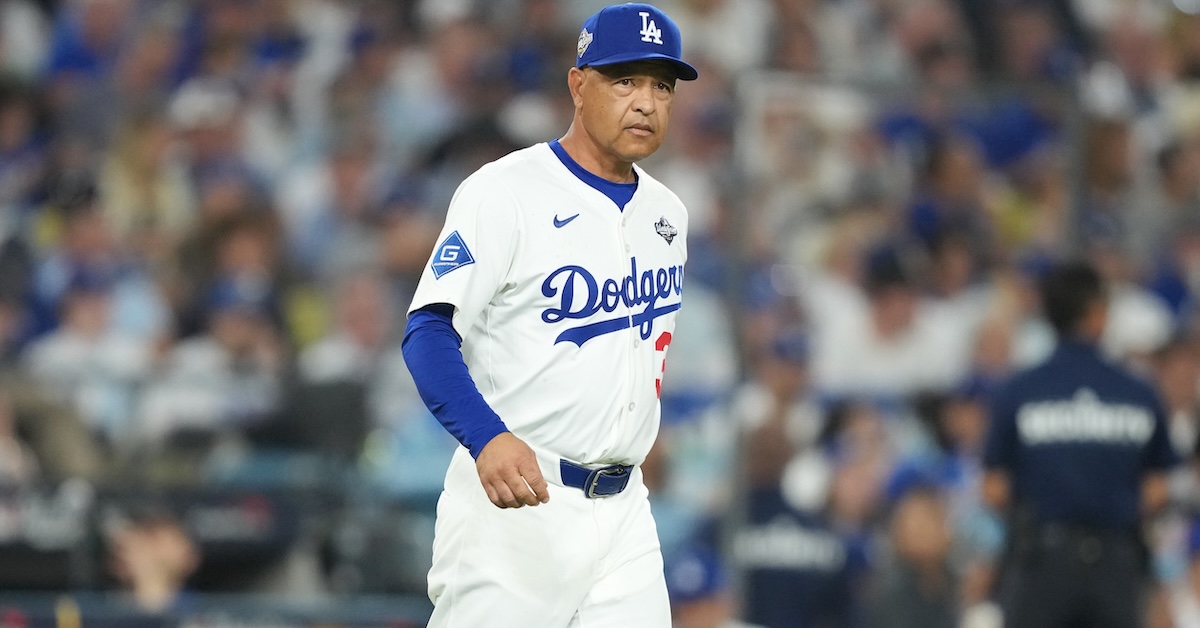
Why the five-day delay on this final installment in the series? Well, this being my first time writing a managerial report card, I wanted to do right by Ben and his creation. But also, the guy I was tasked with grading — Dodgers manager Dave Roberts — managed a lot, man. There’s just so much to unpack. Read the rest of this entry »
GREG WOHLFORD/ERIE TIMES-NEWS-USA TODAY NETWORK via Imagn Images
Max Anderson is making a name for himself in the desert. The Arizona Fall League’s hottest hitter is slashing a stand-up-and-take-notice .488/.650/.902 over 60 plate appearances with the Scottsdale Scorpions. Hitter-friendly circuit? Absolutely, but Anderson’s numbers are nonetheless impressive. The Detroit Tigers prospect has been scorching baseballs.
His regular-season numbers suggest that his AFL output isn’t wholly surprising. Playing against a higher level of competition, the 23-year-old infielder left the yard 19 times while putting up a 135 wRC+ between Double-A Erie and Triple-A Toledo. A .350/.400/.604 hitter at the University of Nebraska, the erstwhile Cornhusker has gone on to log a 120 wRC+ since being drafted 45th overall by Detroit in 2023.
Less impressive has been the youngster’s 6.7% walk rate as a professional. As Eric Longenhagen and James Fegan wrote back in March, “‘I like to swing, it’s not a secret,’ is both a favorite old José Abreu quote and the operating ethos of Anderson.” In terms of aggressiveness, that hasn’t really changed.
Our lead prospect analyst has seen a lot of him in the AFL, and he provided an updated report on the 40+ FV prospect earlier this week. Read the rest of this entry »
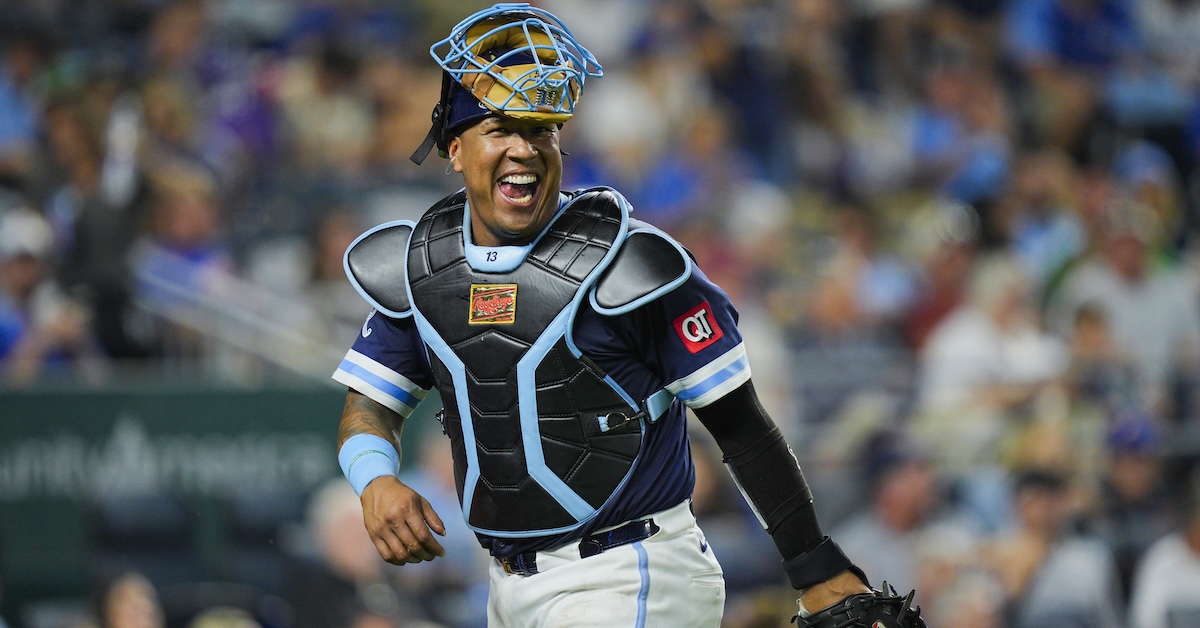
Just think how wrong it would’ve felt. Two years from now, watching Salvador Perez, who signed with the Royals as a 16-year-old in 2006, squatting behind the plate in Miami blue. Salvador Perez, who put the “everyday” in “Kansas City Royals everyday catcher” starting in 2012, launching dingers through the thin mountain air in Rockies purple. It’s enough to make you cry, but luckily, this dystopian future has been avoided. According to Anne Rogers of MLB.com, the 35-year-old backstop has signed an two-year extension that will keep in him in Royals Blue through the 2027 season. It’s better this way. The deal is for $25 million, with some deferrals and a $7 million signing bonus.
To be clear, Perez wasn’t at risk of leaving anytime soon. His previous four-year, $82 million deal that started in 2022 had a $13.5 million option for 2026, and general manager J.J. Picollo told reporters in September that the catcher would be returning one way or another. Anthony Franco of MLB Trade Rumors explained the reasons for the deal: “While the specific salary structure and deferrals have yet to be reported, it stands to reason [the Royals will] negotiate a lower ’26 salary than the option value while giving Perez the security of the second guaranteed year.” So it’s the classic extension trade-off. The Royals get a discount and Perez gets an extra year of job security. It also allows him to avoid free agency amid whatever shenanigans occur when the collective bargaining agreement expires after the 2026 season.
That extra year is a big one in terms of increasing the likelihood that Perez retires as a lifelong Royal. One day in the not-too-distant future, we’ll endure a knock-down-drag-out battle about Perez’s worthiness for enshrinement in the Hall of Fame, and we’ll be lucky to live through it. In the meantime, he’s improved his shot at wading into the fray wielding single-team bona fides. As for why the Royals would feel the need to get out in front of things and lock down the age-37 season of a catcher who has exceeded 0.8 WAR just once in the past four years, well, it makes more sense than you think. Read the rest of this entry »
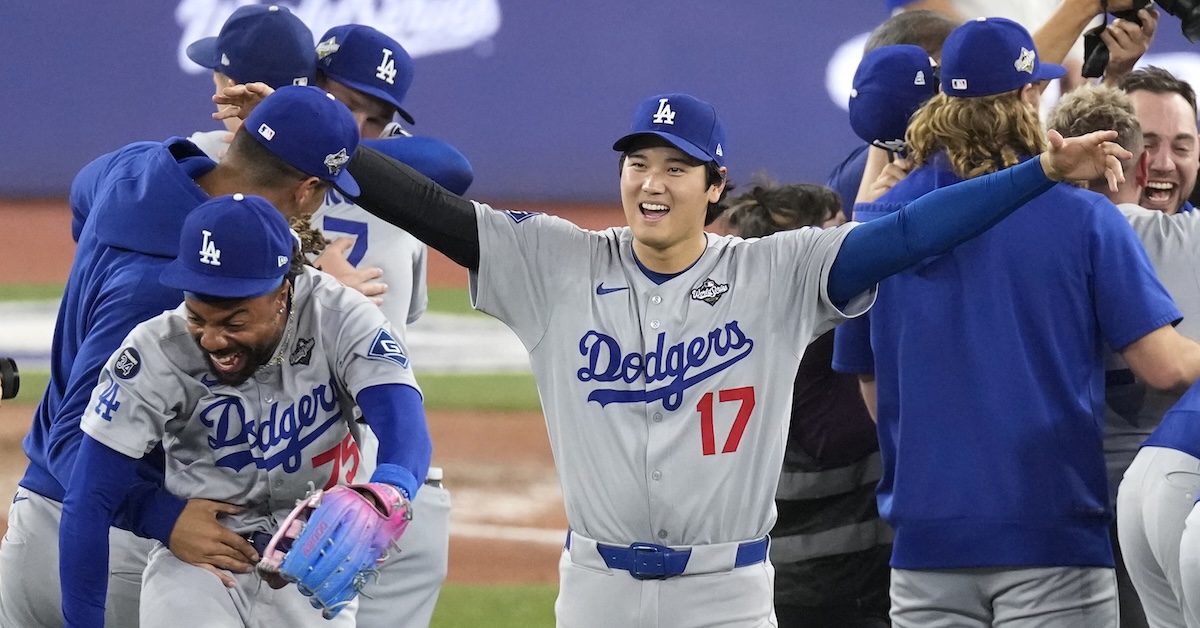
At the end of perhaps the most thrilling back-and-forth Game 7 in World Series history, with one out in the bottom of the 11th inning and the tying run on third base, Alejandro Kirk hit a chopper to shortstop. Mookie Betts raced over to second base to force out Addison Barger, and while running through the bag, fired a perfect strike into the outstretched glove of Freddie Freeman. The Dodgers’ second game-ending double play in as many nights didn’t just clinch the 2025 World Series, it made them the first team to win back-to-back championships since the 1999–2000 Yankees.
Dating back to their days in Brooklyn, the Dodgers have won nine championships, but this is the first time they’ve done so in consecutive seasons. Twice before, they had returned to the World Series as reigning champions only to lose, first to the Yankees in 1956 and then to the Orioles in ’66. Neither of those attempts to repeat involved surviving multiple playoff rounds before that. This time, the 93-win Dodgers went 13-4 in the postseason, first sweeping the 83-win Reds in the Wild Card Series and then defeating three of the four teams that finished with more wins: the 96-win Phillies (3-1 in the Division Series), 97-win Brewers (4-0 in the League Championship Series), and finally the 94-win Blue Jays (who themselves dispatched the 94-win Yankees in the Division Series). Despite being outpitched, outhit, and outscored in the World Series, the Dodgers outlasted the AL champions, with two of their four wins coming in extra innings, the last of those by deploying three of their four series starters in relief and by pulling off three of the 12 most impactful plays ever in terms of Championship Win Probability Added, namely Miguel Rojas’ game-tying home run in the top of the ninth (12th, +34.9% cWPA), Will Smith’s go-ahead solo shot in the top of the 11th inning (fifth, 41% cWPA), and Betts’ double play (fourth, +46.2% cWPA).
Once upon a time, winning back-to-back titles wasn’t uncommon. From 1903 through 2000 — a span of 96 World Series (none in 1904 or ’94) — 10 teams won two in a row, two won three in a row, one won four in a row, and one won five in a row. That’s 14 teams who won at least two World Series in a row (not double-counting any of them), and 21 times in which the World Series winner was the same as the year before. Here’s a breakdown, divided into (roughly) 20-year increments that fortunately don’t split up any back-to-back championships:



 Sponsor Us on Patreon
 Give a Gift Subscription
 Effectively Wild Subreddit
 Effectively Wild Wiki
 Apple Podcasts Feed
 Spotify Feed
 YouTube Playlist
 Facebook Group
 Bluesky Account
 Twitter Account
 Get Our Merch!