The following article is part of Jay Jaffe’s ongoing look at the candidates on the BBWAA 2026 Hall of Fame ballot. For a detailed introduction to this year’s ballot, and other candidates in the series, use the tool above; an introduction to JAWS can be found here. For a tentative schedule and a chance to fill out a Hall of Fame ballot for our crowdsourcing project, see here. All WAR figures refer to the Baseball Reference version unless otherwise indicated.
The third and final multi-candidate pairing of this series is by far the heaviest, covering two candidates who have both been connected to multiple incidents of domestic violence. Read the rest of this entry »
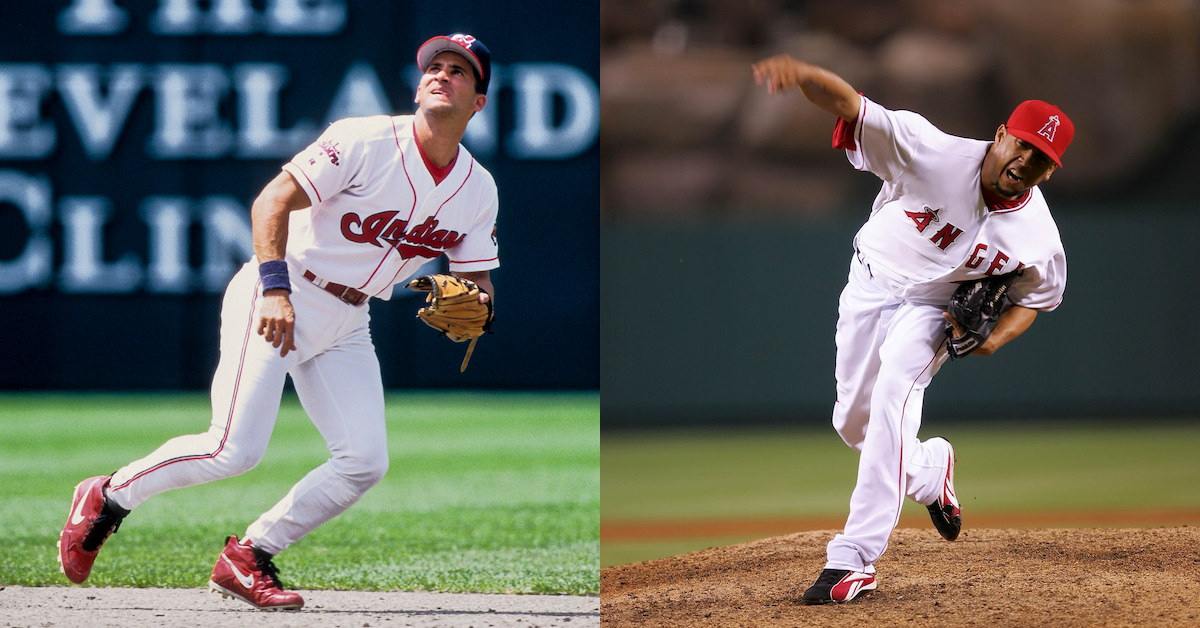
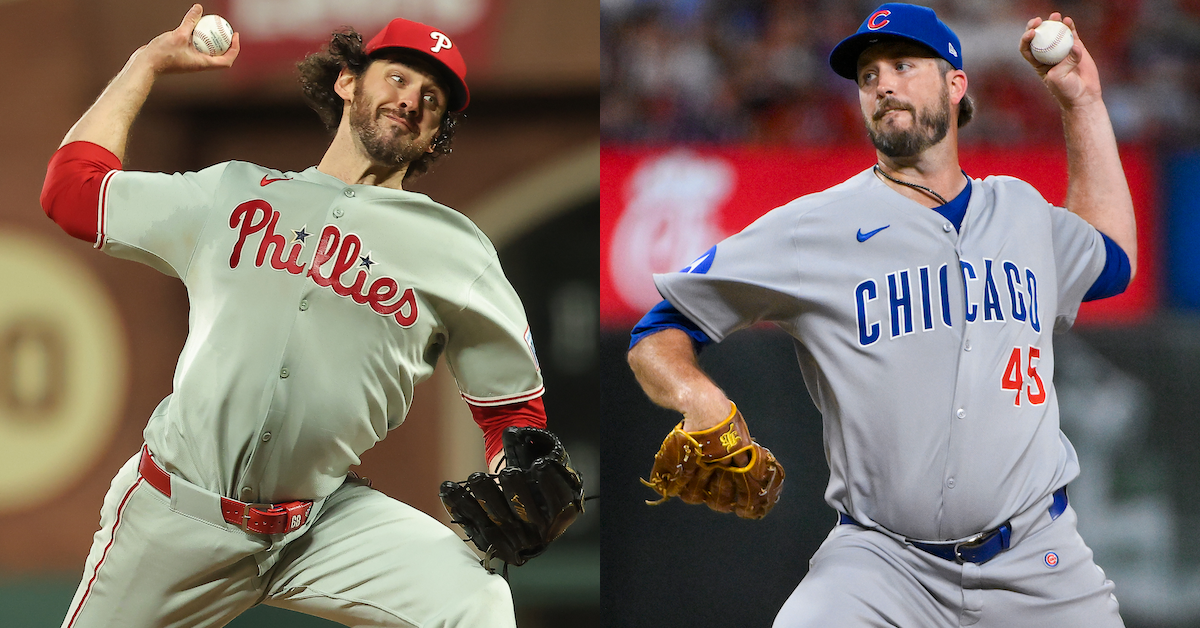
Bob Dylan can’t get no relief, but the Los Angeles Angels don’t have that problem. They just signed two veteran pitchers, Drew Pomeranz and Jordan Romano, to one-year deals worth $4 million and $2 million, respectively.
I’m starting to get worried that the Angels are becoming orthodox. For most of this decade, there have been two teams — the Angels and Rockies — that you could count on to be truly iconoclastic. The other 28 clubs differed from each other mostly due to flavor of ownership: How many resources their boss was willing to commit to the cause, and what time pressure, if any, was being placed on the executives to win. (It’s probably more like 27 other teams now, with the Buster Posey Era underway in San Francisco, though that’s another story.)
But for the most part, the way you run a baseball team is you hire some business school goon, give him a budget and a list of goals, and let him cook. He then goes out and hires as many quants and biomechanics experts as he can, and let the chips fall where they may. Read the rest of this entry »
The following article is part of Jay Jaffe’s ongoing look at the candidates on the BBWAA 2026 Hall of Fame ballot. For a detailed introduction to this year’s ballot, and other candidates in the series, use the tool above; an introduction to JAWS can be found here. For a tentative schedule and a chance to fill out a Hall of Fame ballot for our crowdsourcing project, see here. All WAR figures refer to the Baseball Reference version unless otherwise indicated.
For the past several election cycles, as a means of completing my coverage of the major candidates before the December 31 voting deadline, I’ve grouped together some candidates into a single overview, inviting readers wishing to (re)familiarize themselves with the specifics of their cases to check out older profiles that don’t require a full re-working because very little has changed, even with regards to their voting shares. This year, I’m adding Bobby Abreu — a candidate for whom I’ve voted five times thus far and intend to include again — to a pair I’ve yet to include on my ballots.
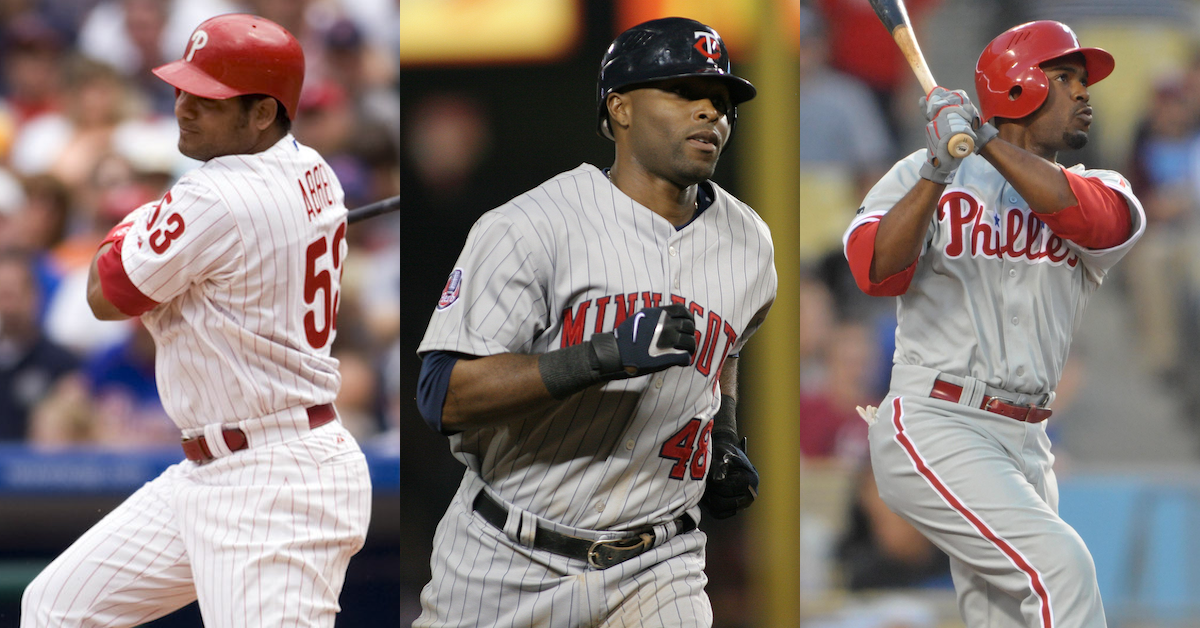
Before Joe Mauer began starring for the Twins, there was Torii Hunter. Before Chase Utley began starring for the Phillies, they had Abreu and Jimmy Rollins. Hunter, a rangy, acrobatic center fielder who eventually won nine Gold Gloves and made five All-Star teams, debuted with Minnesota in 1997 and emerged as a star in 2001, the same year the Twins chose Mauer with the number one pick of the draft. The pair would play together from 2004 to ’07, making the playoffs twice before Hunter departed in free agency. Abreu, a five-tool player with dazzling speed, a sweet left-handed stroke, power, and outstanding plate discipline, quickly blossomed upon being traded to the Phillies in November 1997. But even while hitting at least 20 homers, stealing at least 20 bases, and batting above .300, recognition largely eluded him until he made All-Star teams in 2004 and ’05. Rollins, a compact shortstop who carried himself with a swagger, debuted in 2001 and made two All-Star teams before he and Utley began an 11-year run (2004–14) as the Phillies’ regular double play combination. By the time the pair of middle infielders helped Philadelphia to five NL East titles, two pennants, and a championship — with Rollins winning NL MVP honors in 2007 and taking home four Gold Gloves — Abreu was gone, traded to the Yankees in mid-2006.
All three players enjoyed lengthy and impressive careers, racking up over 2,400 hits apiece with substantial home run and stolen base totals. From a Hall of Fame perspective, Rollins and Hunter have credentials that appeal more to traditionally minded voters than to statheads — particularly their Gold Gloves — while Abreu, despite half a dozen .300 seasons and eight with at least 100 RBI, was a stathead favorite. Regardless, they’ve all spent years languishing on the ballot. Hunter debuted with 9.5% in 2021 but has yet to match that since, scraping by in 2025 with just 5.1%; one fewer vote and he’d have been bumped off the ballot. Rollins debuted with 9.4% in 2022 and has gained roughly two or three points in each cycle since, with 18% in ’25. Abreu barely made the cut with just 5.5% in his 2020 debut, and since then has alternated small gains and losses; he received 19.5% in 2025. Read the rest of this entry »
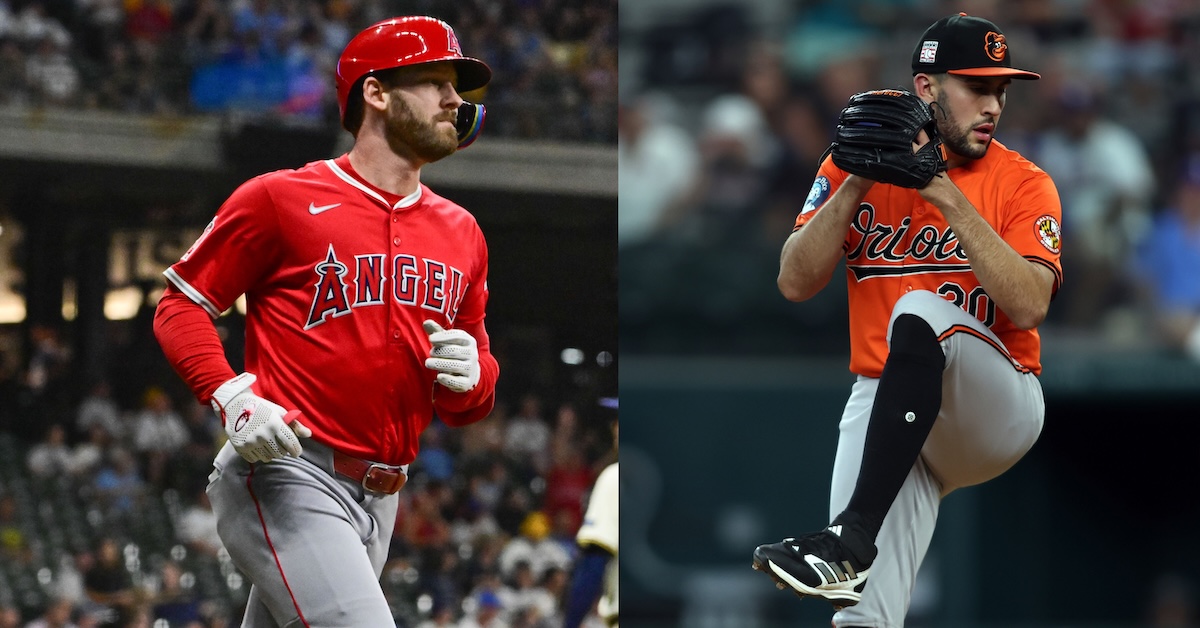
November is supposed to be a sleepy time of the offseason, with qualifying offers and 40-man roster shenanigans the main points of interest. This year has had a few fun surprises, though. First, Josh Naylor returned to the Mariners on a five-year deal, a surprise less in terms of destination than timing – these sorts of contracts normally wait until December. Now, we have a bona fide challenge trade: The Orioles are sending Grayson Rodriguez to the Angels in exchange for Taylor Ward.
Rodriguez, one of the top pitching prospects in baseball a few years ago, is also one of the toughest players in the majors to evaluate. The potential is there. He has multiple putaway secondaries, a lively fastball he can command to multiple parts of the zone, and he’s athletic enough that his command has trended upwards from fringe to average, with the kind of trajectory that makes you expect more to come. If you’re looking for an ace, you’re probably looking for someone whose skills roughly look like this.
On the other hand, unavailability is the worst ability, to twist the tired old saying ever so slightly. Rodriguez has struggled to stay on the field in his time in the majors, and that’s putting it lightly. He missed a good chunk of 2022, his last minor league season, with a lat strain. He then missed half of 2024 with two different shoulder injuries, while another lat strain and bone spurs in his elbow cost him the entirety of the 2025 season. At this point, three of his last four seasons have been severely curtailed by major injuries, including recurring shoulder problems. Read the rest of this entry »
Angel Genao Photo: Lisa Scalfaro/USA TODAY NETWORK via Imagn Images
One of my favorite annual exercises is a quick and dirty assessment of every team’s 40-man roster situation. Which prospects need to be added to their club’s 40-man by next Tuesday’s deadline to be protected from the Rule 5 Draft? Which veterans are in danger of being non-tendered because of their projected arbitration salary? And which players aren’t good enough to make their current org’s active roster, but would see the field for a different club and therefore have some trade value? These are the questions I’m attempting to answer with a piece like this. Most teams add and subtract a handful of players to their roster every offseason — some just one or two, others as many as 10. My aim with this exercise is to attempt to project what each team’s roster will look like when the deadline to add players arrives on Tuesday, or at least give you an idea of the names I think are likely to be on the table for decision-makers to consider.
This project is completed by using the RosterResource Depth Charts to examine current 40-man occupancy and roster makeup, and then weigh the young, unrostered prospects who are Rule 5 eligible in December against the least keepable current big leaguers in the org to create a bubble for each roster. The bigger and more talented the bubble, the more imperative it is for a team to make a couple of trades to do something with their talent overage rather than watch it walk out the door for nothing in the Rule 5.
Below you’ll see each team’s current 40-man count, the players I view as locks to be rostered, the fringe players currently on the roster whose spots feel tenuous, and the more marginal prospects who have an argument to be added but aren’t guaranteed. I only included full sections for the teams that have an obvious crunch or churn, with a paragraph of notes addressing the clubs with less intricate roster situations at the bottom. I have the players listed from left to right in the order I prefer them, so the left-most names are the players I’d keep, and right-most names are the guys I’d be more likely to cut. I’ve italicized the names of the players who I believe fall below the cut line. As a reminder, players who signed at age 18 or younger must be added to the 40-man within five seasons to be protected from the Rule 5, while those signed at age 19 or older must be added within four. Brendan Gawlowski examined the National League yesterday, so be sure to check that out too. Let’s get to it. Read the rest of this entry »
The following article is part of my ongoing look at the candidates on the 2026 Contemporary Baseball Era Committee ballot. For a detailed introduction to this year’s ballot, use the navigation tool above. An introduction to JAWS can be found here.
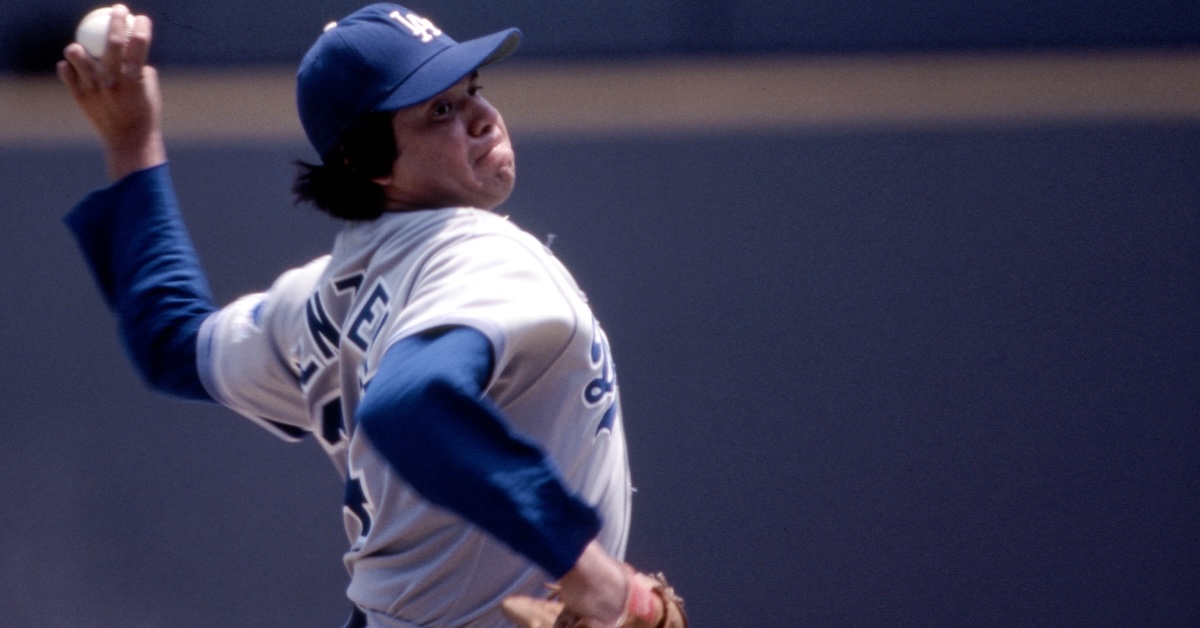
Though he won the Rookie of the Year award, a Cy Young, and a World Series all in his first full season while beginning a six-year streak of All-Star selections — the first of those as the game’s starter — Fernando Valenzuela wasn’t just a star pitcher. He was an international icon, the centerpiece of a cultural phenomenon, and a beloved global ambassador who brought generations of Mexican American and Latino fans to baseball while helping to heal the wounds caused by the building of Dodger Stadium, the very ballpark in which he starred.
“Roberto Clemente is ‘The Great One,’ but culturally, Fernando Valenzuela has been more significant in terms of bringing a fan base that didn’t exist in baseball,” José de Jesus Ortiz, the first Latino president of the BBWAA, told author Erik Sherman for Daybreak at Chavez Ravine, a 2023 biography of Valenzuela. Sherman himself described the pitcher as “like a composite of the Beatles — only in Dodger blue. His appeal was universal.”
After excelling in a relief role during a September 1980 cup of coffee with the Dodgers — as a 19-year-old in the heat of a playoff race, no less — Valenzuela took the world by storm the following spring. Pressed into service as the Opening Day starter, he threw a five-hit shutout, then reeled off four more shutouts and six more complete games within his first eight starts, a span during which he posted a 0.50 ERA. Despite speaking barely a word of English, the portly portsider (listed at 5-foot-11 and 180 pounds, but generally presumed to be at least 20 pounds heavier) charmed the baseball world with his bashful smile while bedeviling hitters with impeccable command of his screwball, delivered following a high leg kick and a skyward gaze at the peak of his windup.
Happy first Saturday of the offseason, everyone. To celebrate the occasion, you get two mailbag columns this week! The first ran on Monday and wrapped up a thrilling World Series. In today’s edition, we’ll move on from the Fall Classic and answer your questions about several teams that finished in last place this season. We’ll also cover small-market teams and some of the structures that are in place to encourage them to spend more on their rosters.
The first question we’ll answer today is about a player we’ve featured before in this column. In fact, some are calling him the Patron Saint of the Mailbag, an honor second only to his status as the worst major league player ever.
But before we continue, I’d like to remind you all that this mailbag is exclusive to FanGraphs Members. If you aren’t yet a Member and would like to keep reading, you can sign up for a Membership here. It’s the best way to both experience the site and support our staff, and it comes with a bunch of other great benefits. Also, if you’d like to ask a question for an upcoming mailbag, send me an email at mailbag@fangraphs.com. Read the rest of this entry »
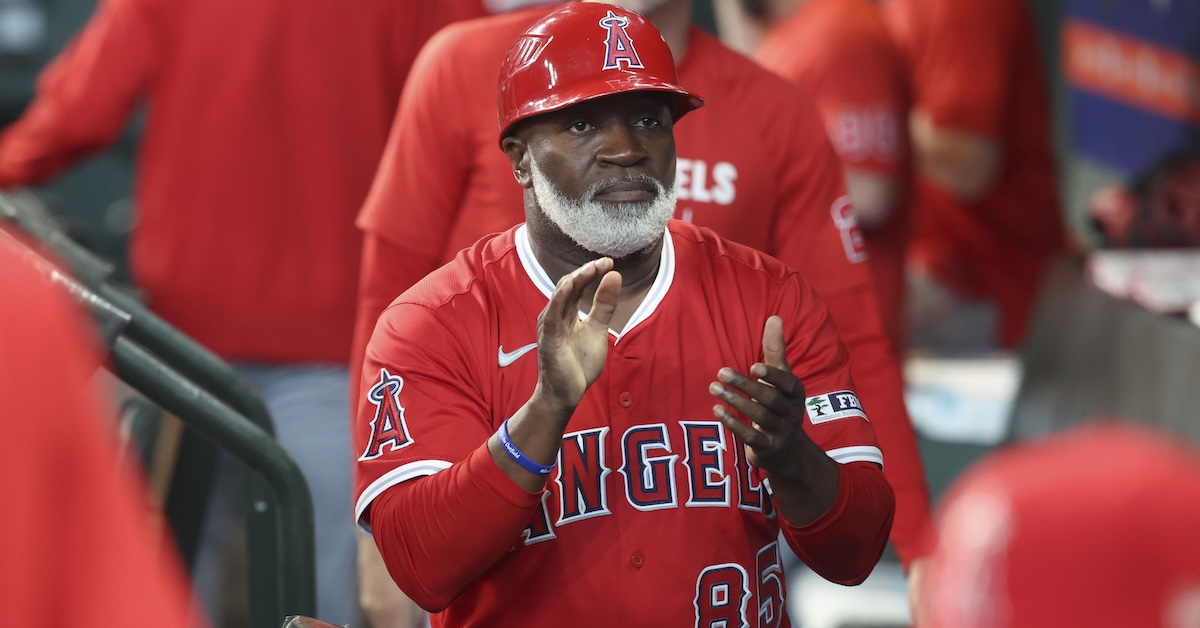
Eric Young Sr. played for several well-respected managers while suiting up for seven major league teams across the 1992-2006 seasons. He’s since coached under a handful of others. His past two seasons were with the Los Angeles Angels, although that tenure has possibly come to an end. Ron Washington is no longer at the helm in Anaheim due to health reasons, and it is not yet known who newly named manager Kurt Suzuki will have on his coaching staff. At age 58 and with a wealth of knowledge gleaned from three-plus decades in the game — his resumé includes working as a broadcast analyst — Young is facing an uncertain future.
I had both his future and his past in mind when I sat down with him this summer. Young has the requisite experience and communication skills required to lead a big league team of his own, so I was interested in what he’s learned from the managers he’s played for and worked alongside throughout the years. Here is our conversation, lightly edited for clarity.
———
David Laurila: You played for a number of managers. What commonalities did the best of them share?
Eric Young Sr.: “From my point of view, they were leaders. They were also calm leaders, especially in difficult times. Each manager had a different, and a special, characteristic that I was able to observe. You had your quiet ones. You had your more vibrant ones. I could go through each of the managers I had and tell you something about them that stands out, and that people can relate to.”
Charles LeClaire, Jayne Kamin, Kim Klement Neitzel, and Jerome Miron – Imagn Images
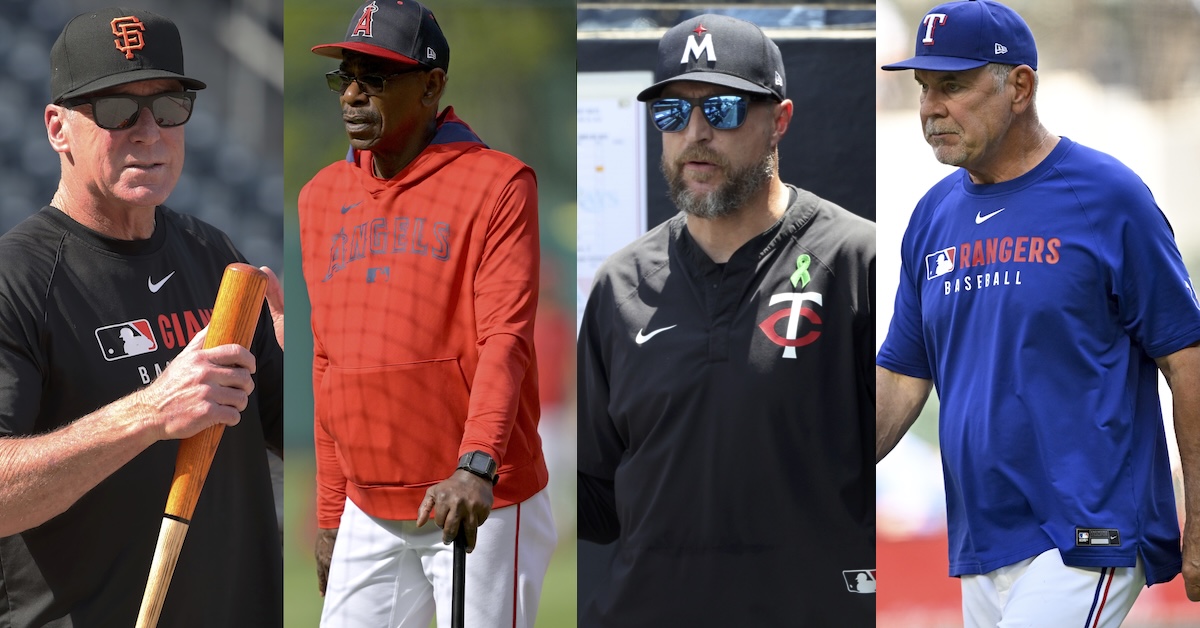
This week, the baseball world turns its attention to the first round of the playoffs. It’s what we’ve spent the past six months waiting for. Nevertheless, the past 48 hours or so have brought a flurry of news events involving people and teams that (cue sad trombone sound effect) will not be taking part. Since the season ended on Sunday, seven teams made announcements about managers who were on the hot seat and/or wobbly chair:
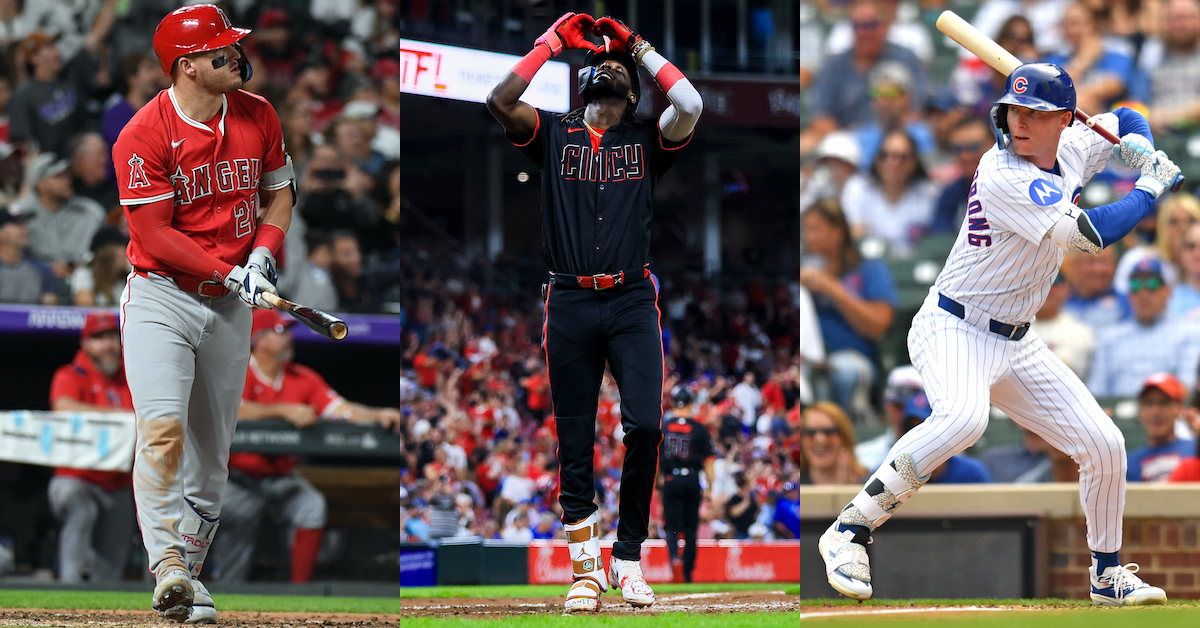
Christopher Hanewinckel, Katie Stratman, Patrick Gorski-Imagn Images
By the time the first half of the season ended, Pete Crow-Armstrong appeared to be a lock to join the 30-home run, 30-stolen base club. Elected to start the All-Star Game in center field for the NL in his first full major league season, the 23-year-old phenom had already totaled 25 homers and 27 steals. Things have not come easily since then, however; with one week to go in the regular season, Crow-Armstrong is stuck on 29 home runs, though he does have 35 stolen bases.
It was a fruitful weekend for joining the 30/30 club, with Jazz Chisholm Jr. doing so on Friday, José Ramírez on Saturday, and Corbin Carroll on Sunday; the three of them joined — improbably enough — Juan Soto. This is the fifth season in which four players have attained the dual milestones, and the second in three years, aided by the rules changes that have accompanied the introduction of the pitch clock. Any one of Crow-Armstrong, Julio Rodríguez (who has 31 home runs and 28 stolen bases), Francisco Lindor (28 HR, 31 SB), or Randy Arozarena (27 HR, 28 SB) reaching their needed thresholds would set a major league record.
Although Crow-Armstrong didn’t start against the Reds on Sunday, he came off the bench and had two chances to join the party. He flied out in one and, with the tying run at second base and two outs in the ninth, struck out looking at a borderline four-seamer to end the game. Read the rest of this entry »