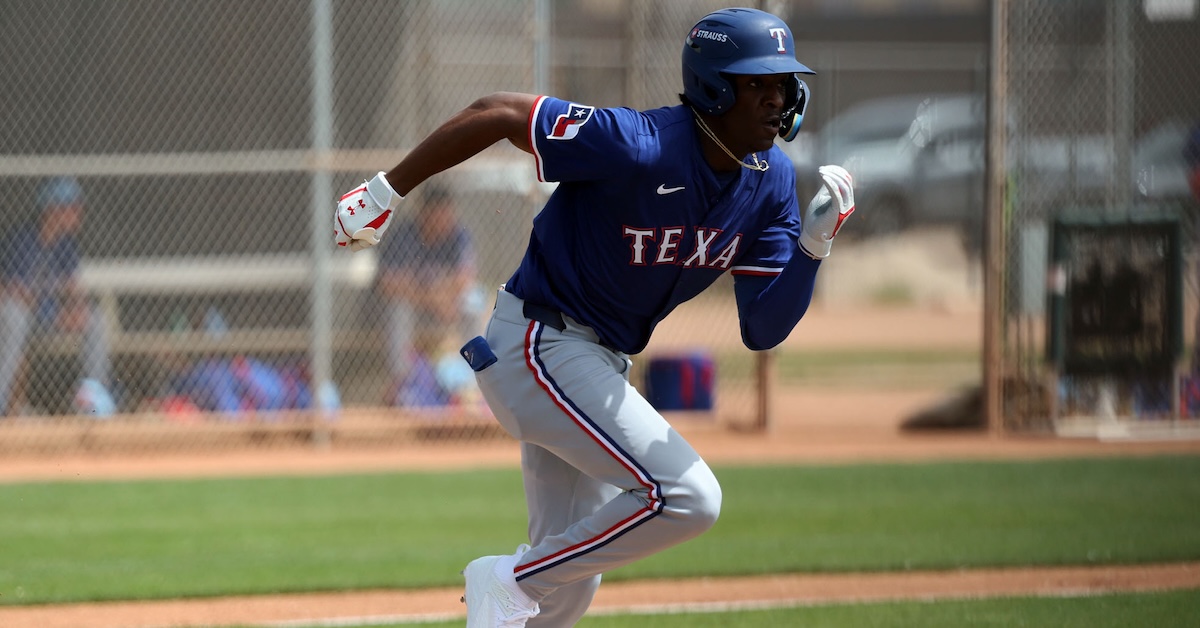
I came into this week with a ton of trade deadline hype built up in my brain just waiting to spill onto the page the first time I had a deal to analyze. I had some clever turns of phrase, some bon mots (or “annoying puns,” if you’re not into it), and next week, you’ll surely get to hear those. But they’re staying in the proverbial writer’s quiver today, because the trade I’m analyzing is more of a mystery than a blockbuster. The trade in question: the Rangers acquired Logan O’Hoppe and Chase Silseth from the Angels in exchange for Low-A infielder Angel Arredondo, as Jeff Passan first reported.
The Rangers have lurched into the AL West lead in recent weeks, turning aside the equally-scuffling A’s and Mariners while trying to hold off the surging (surging to a .500 record, to be fair) Astros. They have one of the worst catching situations in the majors – the 0.2 WAR their catchers have accrued is 27th in baseball. So surely, that’s the play here, I innocently thought as I saw this trade cross the tape. But that was a red herring, the first twist in a deal full of them.
O’Hoppe was a catching prospect of some note, a late-round Philadelphia draft pick in 2018 who ascended to Top 100 prospect status and then got swapped straight up for Brandon Marsh in 2022. He hit well enough to cover up some defensive shortcomings in his first few seasons of injury-interrupted work, but then he posted a 72 wRC+ in 2025, dragging his total contributions below replacement level. He’s hitting .209/.271/.295 this year, good for a 59 wRC+, and is below replacement level again. In fact, the Angels have accrued negative WAR at catcher, so they’re hardly where the Rangers should be looking for improvement. And indeed, as I tried to puzzle through how much of an upgrade O’Hoppe would even be, the Rangers rendered my thinking moot: They optioned O’Hoppe to Triple-A. Read the rest of this entry »
Baseball Learner: Crazy baseball rule change question. ESPN ran an article about the rise of hit batters relative to the past. The next day Curtis Mead broke his wrist on an errant pitch. What if hit batters got two bases? Do you think pitchers would be more careful? How about combining that with 3 ball walks? I think it would juice offense and balls in play by making pitchers have to aim more.
12:04
Dan Szymborski: Seems a little too niche to be worth such a major change?
12:04
Dan Szymborski: And in that, you also greatly incentivize a player to try and get hit very strongly
Will Middlebrooks didn’t have an especially accomplished career. Hampered by injuries, the slugging third baseman saw action in just 347 big league games — the bulk of them with the Boston Red Sox — before hanging up his spikes shortly after his 29th birthday. But there were memorable moments along the way, and he has good stories to go with them. Now a broadcast analyst for the Red Sox, Middlebrooks shared several of them in the latest installment of our Challenging Career Quiz series.
I began by asking which pitcher he faced the most times.
“I had the most success against Mark Buehrle, and it could have been him,” replied Middlebrooks, who logged 262 hits, including 43 home runs, while playing from 2012-2017. “I know I faced him a lot. Was it Buerhle?”
Nope. Middlebrooks stood in the box against the longtime Chicago White Sox southpaw 19 times, going 8-for-18 with a pair of doubles and a hit-by-pitch, but it’s another hurler who has the honor. Asking Middlebrooks if he had any other guesses prompted a good exchange. Read the rest of this entry »
The Nationals have been one of my favorite teams to watch this season. Their offense has been spectacular, the best in the majors in multiple statistical categories. They’re scoring 5.48 runs per game, which easily paces the league. Even better for my viewing purposes, they rarely play a dull game. That’s because their pitching staff allows nearly as many runs as their offense scores. They’ve allowed the third-most runs in the majors this year, an ugly 5.21 per game.
This combination of amazing hitting and questionable pitching has given the Nationals their best shot at making the playoffs since they won the World Series in 2019. It also makes their goals at the trade deadline simple: Get more pitching. But before the Nats decide who to acquire, they need to figure out who to replace. That means the question I’ve been wondering in recent months is also surely of great interest to the DC decision-makers. That question: Is Cade Cavalli this good?
The majority of the Washington rotation is easy for me to evaluate. Foster Griffin? Pretty good! He came back from a three-year stint with the Yomiuri Giants this winter, and the six-pitch mix he developed there has served him well. Nothing he throws will wow you, but he has good command of it all and uses everything well. Sure, he’s not as good as his 2.76 ERA, but pretty much every other ERA estimator has him in the mid-to-high threes. The Nats, again, are allowing more than five runs a game. He’s an outlier relative to the rest of the pitching staff. Read the rest of this entry »
The Yankees have been limping along since losing Aaron Judge to a stress fracture in his right first rib in early June, and they’ve been without Giancarlo Stanton for even longer due to a right calf strain. Now their lineup has suffered another major blow, as Cody Bellinger sustained a Grade 2 left hamstring strain on Saturday and landed on the injured list, a loss that ought to affect how the Yankees approach the August 3 trade deadline.
The 31-year-old Bellinger injured himself during Saturday’s game against the Phillies. While hustling his way into a double on a two-out eighth-inning hit to left-center field off Jonathan Bowlan, he appeared to slow up a bit before sliding into second. He ended up advancing no further, and when the Yankees took the field for the bottom of the eighth, Max Schuemann replaced him in left field.
Bellinger was spotted doing light agility drills on Sunday, but once it was clear to him that he wouldn’t be ready to return within a few days, he suggested an IL stint made sense because he didn’t want his teammates to play while down a man. “I just feel like I won’t be able to put on the cleats for the next four days, at least,” he said on Sunday. “So being short a man for that long, they’ll get a full roster up here and give the guys as much opportunity as they can.” Read the rest of this entry »
As August 3 draws closer, we’re continuing to update the farm systems of some of the clubs we expect to be buyers at the trade deadline. These teams are both contending for a playoff berth and in clear need of a significant upgrade, the kind that will likely require parting with a top farmhand or two. Today, we’re evaluating the Texas Rangers. The new list accounts for the graduations of Gavin Collyer and Robby Ahlstrom, includes the team’s new draftees, and reflects some of the biggest developments down in the minors this season.
It hasn’t been a great year for most of the upper-level pitchers on our offseason Rangers list, but there are a couple arrow-up hitters in the mid-minors and some very intriguing talent blossoming on the complexes. It’s a farm in flux, packed with eye-of-the-beholder players, which makes this a particularly interesting org for prospect heads to monitor at the deadline.
The Situation
Aging, banged up, and barely playing .500 ball, the Rangers nonetheless find themselves atop the AL West. Though they’re two games up on the Astros and 2.5 up on the Mariners, our Playoff odds only very recently tilted their divisional chances above pre-season favorite Seattle’s. Right now, we estimate that they’re about a 50/50 shot to win the division, and their chances of reaching the playoffs at all are up around 67%. That isn’t normally the résumé of a big deadline buyer, particularly since this isn’t a case of a talented squad weathering an unexpected rough patch: Coming into the year, we pegged the Rangers as a .500 team.
And yet, there’s a strong case to make that Texas should act aggressively because this era of Rangers baseball is drawing to a close. Corey Seager is 32, recovering from an abdominal injury, and showing signs of decline amidst the worst year of his career. Brandon Nimmo is 33. Jacob deGrom is 38 and Nathan Eovaldi is 36. Josh Jung feels young and vaguely prospect-ey still, but he’s actually 28 and his injury history is nearly as checkered as Seager’s. MacKenzie Gore is only around for one more year. This core will never be better than it is right now.
Needs: Starting Pitcher, Bullpen Depth, Catcher
There are two kinds of players you can trade for at the deadline: guys who can help you get to October, and guys who can help you win in October. While the latter are the better, more desirable players in practically every circumstance, they’re also rarer and more difficult to obtain. Conveniently for Texas, players in the former category would do quite a bit of good here.
This is perhaps clearest when evaluating the Rangers rotation. Even the 2026 versions of deGrom, Eovaldi, and Gore are compelling playoff starters. Texas would obviously benefit from a luxury addition like Reid Detmers, but what the club really needs is a better fifth starter than Cal Quantrill. There aren’t many internal candidates on the horizon: Jack Leiter is recovering from ankle surgery and theoretically should be available later this summer, but that shouldn’t reassure anybody. Cody Bradford is on the mend, but he’s still working in fairly short stints in his rehab assignment. Winston Santos and David Davalillo, good options on paper at the outset of the year, do not seem ready to contribute meaningfully. Even the generic no. 4/5 starters on the market look like a real upgrade.
A similar sentiment applies in the bullpen. Jacob Latz has been great as a closer — the Rangers won’t be desperate to find this year’s version of Jhoan Duran or Mason Miller — but it’s hard to imagine them making a run through October with Peyton Gray and Jakob Junis as their top setup men. Even if you mostly trust those guys, there’s precious little depth behind them. As a unit, Texas’ bullpen is 15th in FIP, 27th in groundball rate, and 26th in strikeout rate. Those last two in particular look like a dicey combo in the playoffs.
The Rangers are also in the unenviable position of needing to find a catcher midseason. This didn’t look like a glaring weakness until very recently, but Danny Jansen hurt his elbow and is considering undergoing season-ending surgery, while Kyle Higashioka is also out indefinitely with a flexor strain. We don’t know if the Rockies would seriously consider moving Hunter Goodman, but Texas, arguably more than any team, should be kicking the tires in Denver. The same applies to Ryan Jeffers and really anything resembling an everyday catcher not nailed down on other clubs.
The Rangers’ needs are otherwise less acute on this side of the ball. There isn’t a replacement out there that offers more than what a healthy Seager and Jung can provide, and so the front office is mostly left to cross its fingers and hope they return as the most potent versions of themselves. Squint and you can see an average regular or better everywhere else.
State of the Farm
The arrow is down a little here relative to the offseason. The Rangers had five prospects on our February Top 100 list, and a baker’s dozen received a 40+ FV grade or better, but the pitchers in that tier haven’t progressed much. Caden Scarborough deserves a lot of grace for his uneven 2026 season — it feels wrong to fret much about a guy’s fastball velocity when he’s returning from cancer treatment — and he held his place on our midseason update. But while the rest of the crew — Davalillo, Santos, Jose Corniell, Leandro Lopez, and Marc Church — all looked poised to contribute this year, they’ve combined to throw all of six innings in Arlington.
The reasons why read like a failure to launch manual. Davalillo’s control fell completely apart in Triple-A, and he’s sprinkled in a lot of 91s and 92s on the gun in recent outings, a combination troubling enough that we dropped him from the Top 100. Santos fell off the list as well, in large part because he’s not getting results. He’s long been a personal favorite, and I still like his athleticism, arm strength, and changeup. At some point, though, you have to get hitters out, and it was untenable to keep a pitcher with a high-minors ERA north of 6.00 in that kind of orbit. Corniell’s stuff, which looked crisp in his return from injury last year, has backed up and he’s again on the IL. Lopez started giving up homers for the first time in his career this spring, and he too is on the shelf. Church’s grade was an aggressive projection on a reliever with good stuff; he’s continued to battle injuries and the strike zone, and was outrighted off of the 40-man earlier this year.
Meanwhile, the two hitters who ranked above the 40+ FV tier this offseason have also missed a lot of time. Sebastian Walcott has only played in 10 games this year, though he recently made his triumphant return from a UCL tear a little ahead of schedule, and has wasted no time reminding us why he’s one of the game’s best prospects. Paxton Kling has been out since mid-June with a wrist injury; before getting hurt, he’d put up decent surface-level numbers, albeit with more swing and miss and less power growth than I’d anticipated. There’s enough uncertainty here to slide him.
The positive energy in this system is mostly coming from the kids. Yolfran Castillo remains a stand out, as he’s hitting in Low-A and looks like an above-average defensive shortstop. His measurable power is up only slightly year over year, but he’s making a ton of contact and, more importantly, he has one of the most projectable frames in the low minors. His teammate, Paulino Santana, remains on the 40+ track, as he’s managed to hit for power in Low-A while slightly improving some of his scary contact metrics. He’s also physically projectable and could grow into real thump.
Arguably the two most interesting players in the system spent the summer in Surprise. The two-way guys both had productive years and, delightfully, we’re not much closer to seeing where on the field Seong-Jun Kim fits best long-term. He looks like a no. 4 pitching prospect, sitting 92-96 with impressive command for his age, particularly for a guy splitting his attention. On the other side of the ball, he still projects as a contact hitter and long-term fit at shortstop. I remain skeptical that he has the physicality to pull off double duty over the long haul, but for the time being, the game hasn’t told him to pick a lane just yet.
Josh Owens, meanwhile, has the physicality but might not have the contact skill. The power is legit, but he’s whiffing 35% of the time on the complex, and precious few hitters have missed that often at that level and gone on to have any kind of career. His fastball/slider mix looks pretty darn good on the mound, though, and it’s starting to look like that’s where his future lies. I’m already itching to see what kind of strides he can make as a pitcher — he isn’t yet throwing a change in games — if or when that becomes his full-time job.
The ACL club had a couple of other pleasant developments. Jay McQueen, a 20th-round, $280,000 flier out of a Mississippi high school in the 2025 draft, joins the list. While raw at the plate, McQueen has average power, he made a viable amount of contact on the complex and he showed some ability to move the bat head up and down. He’s a high-variance fourth outfielder prospect. Jacob Johnson gets some of the longest tail on a two-seamer I’ve encountered, and he pairs it with a slider that flashes above average. While he’ll need a beat to harness his fastball, he’s already got uncommonly good feel for locating the bender. After sneaking onto the main section of the offseason list, his arrow is up a little bit as well; like McQueen, he was recently promoted to Low-A Hickory.
For those who really like a sleeper, there’s Breyner Figuereo. He signed with the Cubs as an outfielder in the 2025 international class but was released after one season. The Rangers signed him, put him on the mound, and now he’s touching 98 with good feel for spin from the left side down in the DSL. He’s been aggressively fast-tracked onto the main section.
In the mid-minors, a couple of honorable mention bats have taken big steps forward. I’ve worn a hole in my shoe kicking myself for not listing Rafe Perich on the main section this spring. I liked him on the backfields in March of 2025, but lost my nerve after he posted pedestrian numbers as an older player in Low-A. He’s gone nuts at two levels in 2026, and his age (he’s 24) no longer looks so scary now that he’s giving Texas League arms a rough ride. A switch-hitter with plus raw power, he’s hit 10 homers in 44 games since a midseason promotion, with a barely a dip in his ability to make contact. We gave him a look as we built our recent Top 100 update and didn’t quite see a fit there, in part because he’s no more than a fringy defender at third, where he has a long, slow release and tends to scatter his throws. Still, if he can offer power off the bench and fill in at a couple of spots, that’s a big win for the Rangers amateur and dev groups.
Hector Osorio also slots in. He’s a hitterish outfielder who has suddenly bashed 21 homers out of nowhere. While I think some of the league and ball contexts explain a good deal of the power surge, you still have to pull the fly balls, which Osorio is proving that he can do.
Texas prioritized intriguing, risk/reward players in the draft. They also spent big early: Their first three draftees received bonuses north of $2 million, and then only one other guy in the entire class signed for more than $200,000. Gio Rojas was the best high school pitcher in the class and a potential no. 2/3 starter, though his delivery is more violent than you normally see out of a high school pitcher. Connor Comeau, who had committed to Texas A&M, has big lefty power projection, but less promising feel for contact. Brody Bumila is hurt and will have elbow surgery in Texas after his signs. He’s a spring pop-up arm with triple digit heat, freakish size, a precocious changeup, and a breaking ball that needs some pitch design love; we’ll see if this is the right org for him. Hudson Calhoun is a walk-prone reliever with a bat-missing fastball; he tucks in at the very end of the updated list.
A couple of other minor notes: Aidan Curry goes from the bottom of the 40 FV tier to near the top, as he’s throwing more strikes while working deeper into games in Double-A. Rotation mate Dalton Pence climbs with him. I was a little too bearish on the lefty’s command projection and chances to start in the spring, and in any case he alleviated some of the concerns I had about the moving parts in his delivery by making his motion more fluid and compact. If his slider continues to play like a plus pitch (I’m a little skeptical), Texas will really have something here.
Finally, a quick word on three recent early-round picks. AJ Russell, Malcolm Moore, and Dylan Dreiling are all holding steady. Russell looks ever more like a reliever, as he’s still heavily reliant on his fastball and prone to missing badly even with that pitch; he also hasn’t yet completed the fourth inning in any of his starts. Dreiling’s surface numbers have jumped considerably at Double-A this year, but once you adjust for context and take a look under the hood, he’s still tracking like a fourth outfielder. Moore, meanwhile, has struggled since a midseason promotion to Frisco, where his chase and strikeout rates have climbed markedly. Here are the players graded as 40 FVs and above on the updated list:
The team’s full list, complete with scouting reports and tool grades, can be found on The Board.
It’s rare, though not necessarily tricky, to find a backstop midseason. Contending teams don’t like to do it, as they’d understandably prefer not to have their starting catcher acquaint himself with a brand new pitching staff in the heat of a pennant race. The Rangers have to do that anyway, though, so they might as well see if they can find an everyday regular for the job. Clubs with catching to spare — Colorado, Minnesota, Miami, and perhaps Washington spring to mind — would presumably love to pry away Castillo or Scarborough, and may be able to make it work if they throw in some pitching to sweeten the deal. If not, Santos and Davalillo look like intriguing change-of-scenery candidates.
Among the prospective secondary pieces, the arrow-up arms in Frisco look attractive. Curry and Pence each have a chance to start and runway for growth (perhaps a little more velo as he fills out in Curry’s case, a better change in Pence’s). For the more adventurous sorts, McQueen and Figuereo have impact traits and enough risk to keep the price point fairly low.
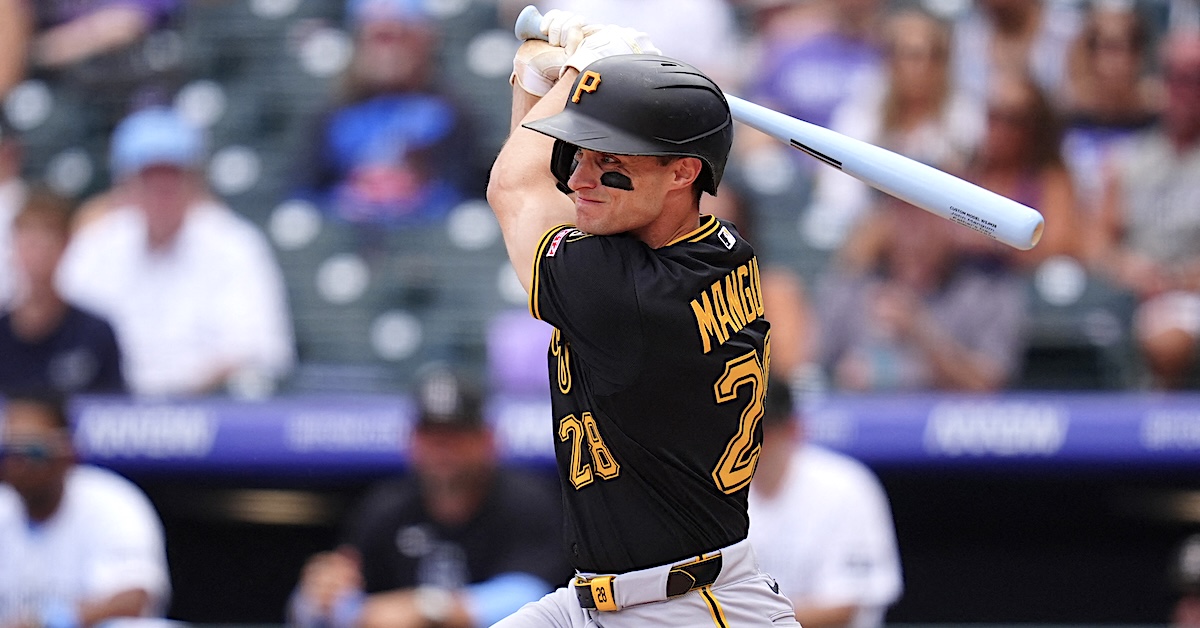
Not counting RotoGraphs posts, Jake Mangum has been a featured player in three articles on this site since the start of last season. In two of those — one each by myself and David Laurila — the phrase “Old School” appears in the headline.
I wouldn’t put too much stock in headlines, especially my own, but in this case it tells you everything you need to know.
Mangum, a legend at Mississippi State, has a style of play that firmly rebukes generations of baseball wisdom. That’s why I wrote about him last April; if you hate hitters who strike out too much and look to hit doubles and home runs instead of dinking drop shots behind the infield, Mangum is your man. Read the rest of this entry »
Company Overview
At the Miami Marlins, we make waves — on and off the field.
We’re built for sustainable success thanks to our commitment to be great teammates, bold innovators, and thinking long-term. These three pillars guide us in championing a winning culture across the organization. The work we do doesn’t just impact our team — it reaches fans and communities across South Florida.
Position Summary
As the Director of Baseball Applications, you will oversee the strategy, development, maintenance, and optimization of applications and infrastructure that power the entire Baseball Operations department. This role requires managing software development efforts, ensuring seamless integration of baseball technologies, and driving innovation in baseball applications. You will collaborate with stakeholders across Baseball Operations to enhance decision-making through cutting-edge tools and systems. Strong leadership, technical expertise, and strategic thinking are essential for success in this position.
Essential Functions
Lead the strategy, design, and implementation of applications that support baseball operations, research & development, scouting, and player development.
Oversee the architecture and development of web-based and mobile applications used across Baseball Operations.
Manage a team of product managers, product designers, and engineers, fostering a culture of collaboration and technical excellence.
Work closely with analysts, coaches, and front-office personnel to identify and fulfill software needs.
Oversee best practices for software development, deployment, and version control.
Stay ahead of industry trends, evaluating and integrating emerging technologies to improve baseball applications.
Develop organizational goals and key performance indicators (KPIs) to measure the effectiveness and usability of baseball applications.
Manage project timelines, resources, and budgets to align with organizational goals.
Our Values
We Are Great Teammates
Supports and encourages colleagues.
Provides and receives feedback without judgement or ego.
Holds one another to a high standard.
Provides help and encouragement proactively.
Assumes positive intentions from others.
Looks for ways to help make their teammates better.
We Are Innovators
Embraces a growth mindset.
Challenges conventional wisdom.
Unafraid to fail.
Pushes boundaries and doesn’t accept impossible.
Asks why and asks why not.
We Think Long-Term
Asks: what can I do today that will pay off a year from now.
Eschews instant gratification for bigger benefits in the future.
Always trying to think three steps ahead.
Skill Requirements
Extensive experience in full-stack software development, including modern web frameworks and mobile application development.
Strong proficiency in programming languages such as Python, JavaScript, React, TypeScript, or similar.
Experience with cloud platforms (AWS, Google Cloud) and modern application DevOps practices.
Knowledge of database management systems, APIs, and microservices architecture.
Experience leading software development teams and managing technical projects.
Strong understanding of UI/UX design principles and application usability.
Ability to collaborate with cross-functional teams and translate stakeholder needs into technical solutions.
Passion for baseball and familiarity with baseball operations, analytics, and scouting systems is a plus.
Education & Experience Guidelines
Bachelor’s degree in Computer Science, Software Engineering, or a related field required; Master’s degree preferred.
Minimum of 5+ years of experience in software engineering, application development, or a related field.
At least 3 years of experience in a leadership or managerial role overseeing software teams.
Proven experience in developing and maintaining large-scale applications in a fast-paced environment.
Experience leading and building internal-facing applications is a plus.
Prior experience in a Baseball front office is a plus.
Work Environment
Ability to work evenings, weekends, and holidays as needed.
Availability to travel occasionally for industry conferences or organizational needs.
Ability to sit/stand for extended periods and work in an office environment.
We are an equal opportunity employer and all qualified applicants will receive consideration for employment without regard to race, color, religion, national origin, sex, sexual orientation, age, disability, gender identity, marital or veteran status, or any other protected class.
Job Questions
Describe a software product or platform that you led from concept through production. What was your role, who were the primary stakeholders, and what was the outcome? (250 words max.)
Briefly describe the technology stack your team has worked with over the past three years (e.g., cloud platforms, databases, programming languages, CI/CD, DevOps). Which areas were you personally responsible for leading? (250 words max.)
Why are you interested in leading the Baseball Applications team for the Miami Marlins? What unique perspective or experience would you bring to this role? (250 words max.)
Description
The Los Angeles Dodgers currently have a job opportunity for a Product Designer. Following you will find a brief description of the job and application process. For additional information, please contact TalentRelations@ladodgers.com.
Title: Product Designer Department: Baseball Operations – Product Development Status: Full-Time/Non-Union Pay Rate: $135,000 – $150,000/annual* FLSA: Exempt Reports to: Director, Baseball Product Development Location: Los Angeles, California
*Compensation rates vary based on job-related factors, including experience, job skills, education, and training.
Job Summary
The Baseball Research and Development team of the Los Angeles Dodgers is dedicated to building software applications and platforms that support analysis, scouting, player evaluation, and player development.
The Product Designer works across research, analysis, visual design, and project coordination to support feature‑level product work. In this role, you will create high‑fidelity prototypes, build and document new design system components, and produce design materials such as personas and user summaries. You will meet with technical users to gather feedback, evaluate the ease of use of internal tools, and suggest practical improvements. You will also help maintain organized records of use cases and research findings so the team can make informed decisions. This role will share design decisions, take part in design meetings, and help keep projects on track by following the team’s established processes. You will also contribute to improving how the team approaches research, design, and testing. As part of your growth, you may review candidate portfolios and participate in interviews as needed.
This position offers the unique opportunity to leverage design to increase the impact of baseball analytics, where the results of your work are visible on and off the field.
Essential Duties/Responsibilities:
UI & Visual Design
Create high-fidelity prototypes associated with feature-level problems
Develop and document new design system components with usage guidelines for our Research and Development teams
UX & Analysis
Build strategic outputs (e.g. user personas) and connect product outcomes to the overall product vision
Present design rational and user research insights to cross-functional stakeholders
Discovery & Research
Conduct user research with technical users on well-scoped problems, e.g. collecting feedback on high-fidelity prototypes
Support the development and maintenance of systems that document use cases and user research insights
Ideation & Exploration
Apply organizational and industry best practices to find multiple solutions to feature-level problems
Assess the usability of internal products and recommend improvement plans
Project Management
Ensure team projects follow established project management processes and support consistent adoption across the team
Contribute to cross-functional design meetings and ensure that projects are completed on time
Team Contribution and Growth
Contribute to the refinement of user research, design, and testing processes
Observe and reflect on how others influence the work of those around them
Review resumes/design portfolios, and participate in interviews as instructed
Education/Experience:
Bachelor’s degree in related field, with 3+ years of product design experience
Experience contributing throughout the design process on shipped products
Basic Requirements/Qualifications:
Ability to demonstrate successful design processes on shipped products, with clear examples of user research informing design decisions
Expertise in Figma with proficiency with project management and agile collaboration tools
Excellent reasoning and creative thinking skills
Ability to train and onboard colleagues on existing processes
Ability to communicate design decisions clearly to technical and non-technical stakeholders and synthesize diverse feedback into solutions
Working knowledge of baseball’s off-field rules and enthusiasm in contributing for the front office
Familiarity with how data flows through systems and how technical architecture affects user experience design
LOS ANGELES DODGERS LLC is an equal opportunity employer.
LOS ANGELES DODGERS LLC is firmly committed to providing equal opportunity for all qualified applicants from every race, creed, and background. LOS ANGELES DODGERS LLC is also firmly committed to complying with all applicable laws and governmental regulations at the state and local levels which prohibit discrimination.
LOS ANGELES DODGERS LLC considers all applicants without regard to national origin, race, color, religion, age, sex, sexual orientation, disability, military status, citizenship status, pregnancy or related medical conditions, marital status, ancestry-ethnicity, or any other characteristic protected by applicable state or federal civil rights law. The Immigration Reform and Control Act requires that LOS ANGELES DODGERS LLC obtain documentation from every individual who is employed, which verifies their identity and authorizes their right to work in the United States.
LOS ANGELES DODGERS LLC is committed to the full inclusion of all qualified individuals. As part of this commitment, LOS ANGELES DODGERS LLC will ensure that persons with disabilities are provided reasonable accommodations for the hiring process. If reasonable accommodation is needed, please contact TalentRelations@ladodgers.com.
Description
The Los Angeles Dodgers currently have a job opportunity for a Junior Product Designer. Following you will find a brief description of the job and application process. For additional information, please contact TalentRelations@ladodgers.com.
Title: Junior Product Designer Department: Baseball Operations – Product Development Status: Full-Time/Non-Union Pay Rate: $48.00 – $52.88/hour* FLSA: Non-Exempt Reports to: Director, Baseball Product Development Location: Los Angeles, California
*Compensation rates vary based on job-related factors, including experience, job skills, education, and training.
Job Summary
The Baseball Research and Development team of the Los Angeles Dodgers is dedicated to building software applications and platforms that support analysis, scouting, player evaluation, and player development.
The Junior Product Designer supports the creation of high-quality user experiences by contributing to UI design, UX analysis, and research. In this role, you will develop high-fidelity prototypes, tactical design deliverables, and apply existing design system standards while identifying opportunities for improvement. You’ll reference established user research, document findings, using current templates, and participate in usability testing to help uncover and communicate issues. As an early-career designer, you’ll focus on learning team processes, observing peer practices, and growing your design craft. This role may also participate in recruiting activities as needed.
This position offers the unique opportunity to leverage design to increase the impact of baseball analytics, where the results of your work are visible on and off the field.
Essential Duties/Responsibilities:
UI & Visual Design
Create high-fidelity prototypes associated with function-level problems
Utilize existing design system documentation and identify possible improvements
UX & Analysis
Develop tactical deliverables (e.g. user flows) as instructed
Present design decisions to immediate peers
Discovery & Research
Reference existing user research when scoping problems with product & engineering
Use current research templates to document user findings
Ideation & Exploration
Apply organizational and industry best practices to solve function-level problems
Test internal products and create documentation for any usability issues discovered
Project Management
Attend cross-functional design meetings and conduct design reviews as instructed
Follow established project management processes and utilize team collaboration tools consistently
Team Contribution and Growth
Learn and follow team processes for user research, design, and testing
Observe & reflect on team/peer practices
Attend recruiting events as instructed
Education/Experience:
Bachelor’s degree in related field, or equivalent industry experience
Limited experience contributing to shipped products
Basic Requirements/Qualifications:
Ability to demonstrate foundational design skills including user research, wireframing, prototyping, and visual design for data-driven applications
Proficiency in Figma
Excellent attention to detail and critical thinking skills
Ability to take direction and collaborate effectively with a team
Willingness to ask questions and seek clarification when requirements are unclear or ambiguous
Working knowledge of on-field rules and enthusiasm for baseball
Eagerness to learn technical concepts and how technical constraints influence design possibilities
LOS ANGELES DODGERS LLC is an equal opportunity employer.
LOS ANGELES DODGERS LLC is firmly committed to providing equal opportunity for all qualified applicants from every race, creed, and background. LOS ANGELES DODGERS LLC is also firmly committed to complying with all applicable laws and governmental regulations at the state and local levels which prohibit discrimination.
LOS ANGELES DODGERS LLC considers all applicants without regard to national origin, race, color, religion, age, sex, sexual orientation, disability, military status, citizenship status, pregnancy or related medical conditions, marital status, ancestry-ethnicity, or any other characteristic protected by applicable state or federal civil rights law. The Immigration Reform and Control Act requires that LOS ANGELES DODGERS LLC obtain documentation from every individual who is employed, which verifies their identity and authorizes their right to work in the United States.
LOS ANGELES DODGERS LLC is committed to the full inclusion of all qualified individuals. As part of this commitment, LOS ANGELES DODGERS LLC will ensure that persons with disabilities are provided reasonable accommodations for the hiring process. If reasonable accommodation is needed, please contact TalentRelations@ladodgers.com.
COOPERSTOWN, NY — “I took pride in playing second base, a position that keeps you in every play and demands toughness, but my bat was always my ticket,” said Jeff Kent during his Hall of Fame induction speech on Sunday. “I learned a long time ago from Tommy Lasorda, one of the best motivators in the game, a simple truth that I lived by my whole career: The money lies in the RBIs.”
Kent’s philosophy cut straight to the heart of a decades-long culture war within baseball, one that helps to explain why the slugging second baseman spent 10 years on the writers’ ballot without coming close to the necessary 75% needed for election, but sailed in on his first appearance on the Contemporary Baseball Era Committee last December. Hardly the darling of statheads — he ranks 22nd in JAWS at his position, for example, and only twice ranked among his league’s top 10 in Baseball Reference WAR — his prickly persona sometimes rubbed teammates and media the wrong way, but his candidacy resonated for Era Committee voters. Chockfull of executives and Hall of Fame players, the handpicked panel was more familiar with old-school measures and more inclined to reward his reputation for being free of performance-enhancing drugs, in contrast to statistically superior longtime teammate and fellow Era Committee candidate Barry Bonds, who was not elected. “Most home runs by a second baseman” played better than “most home runs all-time” thanks to the absence of a theoretical asterisk.
Along with Carlos Beltrán and Andruw Jones, Kent was inducted in front of an estimated crowd of 12,000 on a sunny Sunday afternoon at the Clark Sports Center. Including this year’s three inductees, a record 60 living Hall of Famers were onstage, but their audience was comparatively sparse, well short of the estimated 30,000 who showed up last year for the inductions of Ichiro Suzuki, CC Sabathia, Billy Wagner, and the late Dick Allen and Dave Parker.
All weekend long, comparisons between last year’s Induction Weekend and this one were inescapable and inevitable. Throngs of colorfully outfitted fans of the Mariners, Yankees, Astros, Phillies, and Pirates filled the streets of Cooperstown in 2025, the town was abuzz, and thanks to the timely new Yakyu Baseball exhibit — dedicated to the interchange between American and Japanese baseball — the Hall itself was packed with visitors. While a sizable contingent of Puerto Rican fans turned out for Beltrán, the streets were scarcely populated and decidedly less colorful this year. The Hall had new displays devoted to Tom Seaver memorabilia and the 50th anniversary of Rick Monday’s rescue of an American flag that was about to be set ablaze at Dodger Stadium, but this year brought no new marquee exhibit, and the Clark Sports Center field had a lot more visible, unoccupied grass.
Photo by Jay Jaffe
Chalk that up to the particularities and peculiarities of this year’s class. Few Hall of Famers in any year have the international appeal of the iconic Suzuki, who came within one vote of unanimous election and addressed the omission with grace and humor in his speech. And whether they were first-year, 10th-year, or Era Committee honorees, each of the other four Class of 2025 members took unique roads to Cooperstown. They or surviving family members told gripping stories of the obstacles they surmounted.
By contrast, this year’s class of inductees lacked such universal appeal and didn’t capture fans’ imagination in the same way — at least not enough to plan a weekend trip to Cooperstown during high season. Some of the obstacles they surmounted to get elected owed to conduct that made them polarizing figures, even if it wasn’t viewed as disqualifying. Far from immortality, Beltrán, Jones, and Kent proved themselves all too human during their playing careers. Most notably, Beltrán, a nine-time All-Star, three-time Gold Glove winner, and one of just eight players with at least 300 home runs and 300 stolen bases, was the only player identified by name in commissioner Rob Manfred’s 2019 report on the Astros’ illegal electronic sign-stealing efforts. That exposure cost Beltrán his post as the manager of the Mets before he could even fill out a lineup card. Even as the ninth-ranked center fielder in JAWS, he wasn’t elected until his fourth ballot.
Jones reached the majors as a teenager, and went on to win 10 Gold Gloves while bopping 434 home runs and helping the Braves to 10 straight playoff appearances during his career. He ranks 11th in JAWS among center fielders, but declined rapidly in his 30s due to lax conditioning; done after his age-35 season, he finished with just 1,933 hits, fewer than any other post-1960 player elected by the writers. He disappeared from the majors after being arrested on a domestic battery charge in December 2012. (He pleaded guilty to a lesser disorderly conduct charge.) He received just 7.3% of the vote in his first ballot appearance in 2018, and needed nine years to gain entry from the writers.
Kent, a five-time All-Star and former MVP, didn’t do anything that rose to the level of either classmate’s transgressions, but in March 2002 he broke a bone in his left wrist, which he initially claimed happened while washing his truck. It soon surfaced through eyewitness accounts that he had crashed doing wheelies while riding his motorcycle, in violation of his contract. As scandals go, it was comparatively quaint; the incident became the butt of jokes, but the Giants showed leniency. Kent wound up missing just four games and turned in a season to rival his MVP-winning one from two years earlier while helping the Giants reach their first World Series since 1989.
Beyond that, during his 18-year career with the Blue Jays, Mets, Cleveland, the Giants, Astros, and Dodgers, Kent could be off-putting. “I had a habit of running my mouth,” he said in his speech regarding his early years with the Mets. At the tail end of his career, he also openly criticized what he perceived to be a lack of professionalism from his young Dodgers teammates. By his own account, he had more physical confrontations with Bonds than just the famous dugout blowup in 2002, though even in the aftermath of that incident he claimed, “We have a good relationship. We have a working relationship that I think works well on the field… I think if you guys [the media] try to create a dysfunctional relationship, that’s a farce too, because that’s not true.”
In a refreshing development, the now-58-year-old Kent has not shied from publicly displaying his emotions and his gratitude in connection with his election. That willingness to break character made his the most interesting speech of Sunday. “I’ll try not to cry now, but it’s coming, no doubt,” he said as he began his speech. A minute later, he was struggling to retain his composure as he recounted the story of his father, a Southern California police officer, promising to buy him a pickup truck if he earned a college scholarship — one he still has in his garage “as a reminder that some of the simplest things can change the entire direction of your life.”
“Standing on this stage reminds me why different people come and connect to this game,” he continued. “For some it’s a shared passion, a time spent with family and friends, for others it’s an opportunity. For me it was just a simple plan of a college education and a better way of life for my family.”
During a post-induction media session, the San Francisco Standard’s John Shea identified five times since the announcement of his election at which Kent has cried publicly. Kent didn’t dispute the count or the characterization of his softer side. “I don’t think I’m mad as much as I used to be,” he said. “You know, when you play this game, you have to play with a little hatred — I use that word lightly. People call it cockiness, or arrogance, or confidence. They call it so much, but you have to play this game with a chip on the shoulder.”
“I’m not mad any more, maybe that’s why,” he continued. “I’m a deflector, and I think I’ve deflected so much that now I have to reason with it and appreciate it,” he said, referring to the publicity and plaudits coming his way since being elected, and experiencing all of that in front of his family, from whom he spared that chip-on-the-shoulder attitude.
Kent did mention Bonds once in his speech, calling him “one of the most talented players this game has ever seen” without delving into the two stars’ conflicts. Nonetheless, his frequent repetition of phrases like “playing the game the right way” couldn’t be read as anything other than veiled references to the PED-linked players who overshadowed him during his career and on ballots, particularly when he spoke of the late Ryne Sandberg, who was a vocal critic of such players and who served on the 2023 Era Committee that rejected Bonds.
Back to the RBIs. Kent singled out former Mets teammate Eddie Murray’s counseling him that the key to staying cool in bases-loaded situations was to focus on getting the runner home from third base. “That lesson of keeping things simple stayed with me forever,” he said. Kent drove in 100 or more runs eight times during a high-offense era, in part because he hit behind Bonds as the slugger set records for bases on balls, intentional and otherwise. Yet, Kent only ranked among his league’s top 10 in a slash stat five times — twice apiece in batting average and slugging percentage, and once in on-base percentage. He was a prolific home run hitter for a middle infielder, clubbing 377 total and 351 as a second baseman, but his modest on-base percentages and subpar defensive metrics limited his value. Still, while his JAWS is below 13 of the other 20 enshrined second basemen, he’s third out of 10 among those elected by committees.
The 49-year-old Jones followed Kent by beginning with a nod to the giants at his position. “I feel like a rookie today surrounded by all these amazing Hall of Famers behind me,” he said. “There are so many guys here that I loved to watch play, and I’m happy to be here with them today. I never got to see Willie Mays play, so Ken Griffey [Jr.] was my guy. I wanted to be like him. For me and Carlos to join Griffey, Willie, and these other great center fielders in the Hall of Fame, it’s hard to put into words.”
“You can go 0-for-4 and still impact the game by taking away singles and extra-base hits. I worked hard on my routes and a preparation. I wanted to be the best center fielder,” said Jones.
The first player from the tiny island of Curaçao to be elected to the Hall of Fame paid tribute to Hensley Meulens, the first Curaçao native to reach the majors, and listed more than a dozen of the countrymen who have followed, including current major leaguers Ozzie Albies, Kenley Jansen, and Ceddanne Rafaela. He spoke of his father, Henry Jones, a legendary amateur player who caught and played center field for Curaçao’s national team in the 1960s and ’70s, and who passed away 10 years ago:
“He showed me how to work hard and play for what it takes to become a successful baseball player and a great person. Because he played center field, I wanted to be a center fielder, and he passed down every bit of knowledge [of] the game to me, like how to read balls off the bat. He hit me fly balls from foul pole to foul pole every time in Curaçao so I could track balls down, because the ocean breeze made tracking balls very difficult on the island.”
Jones also paid tribute to the other seven Hall of Famers from the 1990s and 2000s Braves teams on which he starred, namely manager Bobby Cox, general manager John Schuerholz, Greg Maddux, Tom Glavine, John Smoltz, Fred McGriff, and “my brother from another mother,” Chipper Jones, who debuted on the 2018 ballot alongside Andruw and “pushed for me, for my induction, for many years.”
While Chipper was one of four players elected on that 2018 ballot, Andruw nearly lost his eligibility; his 7.3% share now stands as the lowest of any player elected by the writers since the five-year waiting period was instituted in 1954. “A lot of my friends that follow the percentages closer than I did were like, ‘Hey, you’re barely hanging there,’” said Jones in his post-induction media session. “I was just happy to hang in there, [happy] that the writers kept me on the ballot. Getting in after nine years — I didn’t say I had to be the first ballot, I didn’t say I had to be the sixth year, the seventh year, or the last year, or get voted in by the Veterans Committee. I’m in the Hall of Fame now, so that’s all that matters.”
Like Jones, the 49-year-old Beltrán felt as though he were back at the beginning of his career on Sunday, opening his speech by saying, “This is the closest thing to my first at-bat in the big leagues, where I felt excited to be here but at the same time I felt very nervous. These guys really make me nervous,” he said, gesturing to the Hall of Famers behind him.
While Beltrán did not directly address the sign-stealing scandal during Sunday’s speech, it wasn’t far out of mind, particularly as the text on his plaque mentioned his “20-year career that ended in 2017 as World Series champion.” He thanked commissioner Manfred in his speech, as well as the voters: “To the Baseball Writers’ Association of America, I want to say thank you for making me a Hall of Famer… And for those that didn’t [vote for me] — that saw things different — I want to say also thank you. I appreciate your perspective. If baseball has really taught me something, I want to say is that I hope in life, we continue to measure ourselves by the same standard we have used to measure others.”
Beltrán did address the sign-stealing scheme earlier in the week during a Zoom session with reporters, saying, “[T]he fact that I’m the only player mentioned — I don’t know, it’s kind of weird. Sometimes it still gives me a bad taste in my mouth.” Later, he added, “I know that as a team we got together to do what we did, but I’ve got to tell you that this was not like one player’s idea.”
In that session, Beltrán added that after seeing Houston general manager Jeff Luhnow, manager A.J. Hinch, and bench coach-turned-Boston-manager Alex Cora lose their jobs, he knew he couldn’t last as Mets manager. “I feel like [Manfred] mentioning Carlos Beltrán in the report, that was my suspension.”
With Carlos Mendoza recently fired, Beltrán may yet get his shot to manage the Mets, for whom he’s currently a special assistant to president of baseball operations David Stearns. Within his speech, he explained his choice to wear a Mets cap on his plaque:
“Every organization shapes your career. New York shaped my life. It was here where I experienced my greatest success and some of my greatest challenges. Playing for the Mets made me a better man and a better leader. Many of the most meaningful relationships that I was able to build in my career, I did it wearing a Mets uniform. So the Mets cap, what it represents to me is growth and it represents a place where I became the best version of myself.”
Elsewhere in his speech, Beltrán saluted his fellow Puerto Rican Hall of Famers, as well as his mentors, such as Royals legend George Brett (“who taught me that greatness is built long before anybody is watching”), Astros teammates Jeff Bagwell and Craig Biggio, who taught him the importance of playing with pain, and Giants legends Mays and Willie McCovey, with whom he would talk baseball as often as possible during his two months with San Francisco in 2011. As Puerto Rican flags waved, he delivered substantial passages of his speech in Spanish, harkening to his influential role in mandating the presence of translators in every major league clubhouse.
Induction Weekend’s festivities weren’t confined to Sunday. Friday evening featured a cocktail party to celebrate this year’s winner of the BBWAA Career Excellence Award, Paul Hoynes, the beat reporter for the Cleveland Plain Dealer since 1983. The party takes place on the back porch of the Hotel Otesaga, where new and returning Hall of Famers and their immediate families stay for the weekend — and where entry to everyone else is by invitation only, with signs explicitly warning, “NO AUTOGRAPHS.” The porch opens up onto a breathtaking vista starring Lake Otsego, a view that never gets old.
Photo by Jay Jaffe
Saturday’s Hall of Fame Awards Presentation, conducted at the Glimmerglass Festival Theater about eight miles outside of Cooperstown, honored Hoynes as well as broadcaster Joe Buck, the recipient of the Ford C. Frick Award; Monday, for the golden anniversary of his notable rescue effort; and Bill White, winner of the Buck O’Neil Award. The last of those, which is presented no more than once every three years, honors “an individual whose extraordinary efforts enhanced baseball’s positive impact on society, broadened the game’s appeal, and whose character, integrity and dignity are comparable to the qualities exhibited by O’Neil.”
The choice of White for that honor was particularly resonant, at least to this scribe. Though he was an eight-time All-Star and seven-time Gold Glove winner at first base during his 13-year playing career, White didn’t accrue the kind of numbers that themselves typically drive election. He did start for the Cardinals’ 1964 World Series winners, and while with that organization, he made an impact by speaking on the record about the shoddy treatment of the team’s Black players, including Curt Flood and Bob Gibson, as well as himself. His exposure to those players’ not being invited to a St. Petersburg Chamber of Commerce’s “Salute to Baseball” breakfast held in a segregated hotel led the Cardinals to press for integrated lodging for spring training, a trend that spread to other teams training in segregated Florida.
White followed his impressive career with pioneering roles as a broadcaster and executive. In 1971, he began an 18-year run calling Yankees games and working for national networks, one that made him the first full-time Black play-by-play broadcaster in any sport. After retiring from broadcasting, he spent five years (1989–94) as president of the National League, making him the first Black person to assume such a post and the highest-ranking Black executive in any sport at the time. As a candidate for election on the 2024 Contemporary Baseball Era Committee for Managers/Executives/Umpires ballot, he fell two votes short.
“This award is meaningful, because when I grew up, I never imagined a life in baseball,” White said in a prerecorded video accepting his award. “Baseball was a way to earn money for medical school. But signing a contract with the New York Giants put me on a different path. Rooming with Willie Mays helped me become a better baseball player. I played with and against some of the greats of the game. Some of the best years of my life were as a broadcast partner with ‘Scooter,’ Phil Rizzuto. We had a lot of fun, and I couldn’t have asked for a better partner. I was so happy to see him elected to the Hall of Fame. And finally, the years I spent as president of the National League and on the Hall of Fame board were amazing. During my time at the National League, we added a couple of new teams and I helped contribute to the game’s growth, and I want to thank the board for this honor.”
During Saturday night’s cocktail party in the Hall of Fame plaque gallery — the highlight of my Induction Weekend every year, an event that’s like watching a childhood baseball card collection come to life — I summoned the courage to introduce myself to the 92-year-old White, who was holding court in the Hall’s lobby. After congratulating him, I expressed my hope he still might be elected to the Hall proper. He thanked me and said words to the effect that he was more than satisfied with this honor. “I used to run this place, you know,” he said, referring to his presence on the board of directors starting in 2000.
Somehow, his dealing with that less-than-perfect outcome felt like a metaphor for the entire weekend. This year’s induction festivities may not have been everybody’s favorite celebration or celebrants, but it wasn’t hard to find something to take from each of their roads to Cooperstown.



 Dan Szymborski