Archive for Daily Graphings

Who To Root for in the World Baseball Classic: Pool B
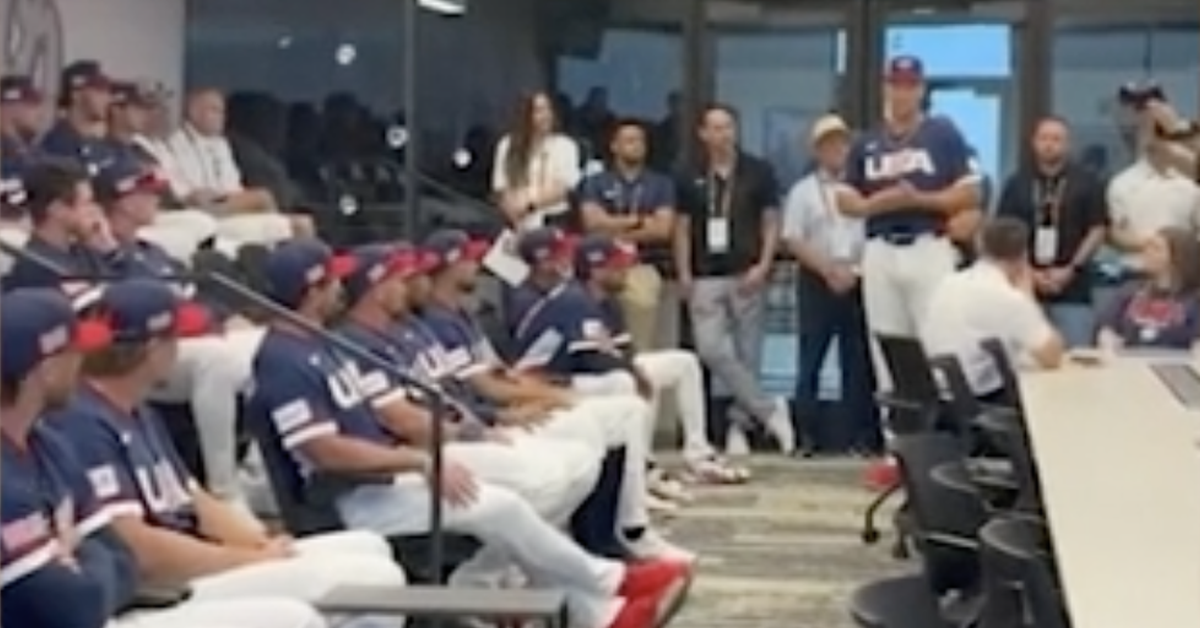
A conference room in the greater Pheonix area. Team USA, in full uniform, sits reclined in two rows of seats stretching away from the camera on the left. On the right, in front of a glass wall so that everybody has to squint at him, stands Aaron Judge, hands clasped, giving the speech of his life.
MLB

The World Baseball Classic is officially back! We’re been running preview content for the last two weeks, but now that the tournament is actually underway, you’ve got to pick a team to root for. You may even have to pick one team from each of the four pools. To help you choose a your favorite, I’ll be offering a reason to cheer for each of the 20 teams in the field. This is our last installment. Click the links below to read the previous entries:

Pool BPool CPool D

Brazil

Brazil is the clear underdog of Pool B. The team has got a tough road ahead of it, and its roster doesn’t feature a single major leaguer. What it does have, though, is pedigree. If you’ve watched Field of Dreams enough times to believe that baseball is the game of fathers and sons, then this is the team for you. Brazil boasts Joseph Contreras (the son of José Contreras), Lucas Ramirez (the son of Manny Ramirez), and Dante Bichette Jr. (you’ll never guess who his dad is). Also, in its final qualifier, Brazil defeated Germany, hanging a loss on pitcher Jaden Agassi, son of tennis legends Andre Agassi and Steffi Graf.

Now 33, Bichette was a first-round pick of the Yankees back in 2011. He last played affiliated ball in 2019, and he’s now training youth ballplayers in Los Angeles. He may have another gear when suiting up for Brazil. He batted .375 in the qualifiers, and back in the 2016 WBC, he went 4-for-10 in three games with a double, a triple, and two walks.

Ramirez is just 19. The Angels drafted him in the 17th round in 2024. Last year, he earned a promotion to High-A after running a 115 wRC+ in the complex league. He may not be the second coming of his father just yet, but he did have a 12% walk rate in the complex, too. Despite his youth, he batted .385 in the qualifiers.

Contreras is the most exciting son on the team. The 17-year-old right-hander is the youngest player in the entire tournament. He’s a high-school senior who’s committed to Vanderbilt, though that commitment may well get tested. He’s already listed at 6-foot-4, just like his dad, and he’s a serious prospect. “He has legitimate first-round upside,” wrote Mark Chiarelli of Baseball America, which ranked Contreras 34th in its preseason draft rankings. He can touch 98 mph with his fastball, which sits 92-96. He also throws a vulcan-grip forkball and a mid-80s slider that Chiarelli said “flashes plus.” Contreras didn’t play in the qualifiers last year, because, uh, he was 16. Next year, he’ll be old enough to vote, but Friday night, he may well be facing off against Aaron Judge.

Great Britain

How times have changed. Three years ago, the story for Great Britain was all about Harry Ford, the 20-year-old catching phenom with the big bat. He’d hit. 455 with three home runs in three games during the qualifiers. Then, in the actual WBC, fresh off batting .413 in the Arizona Fall League, he batted .308 with two homers and a double in four games.

Today, a fair bit of Ford’s prospect shine has faded. He’s still just 23, plenty young for a catcher, but he was blocked by Cal Raleigh in Seattle, so he was traded to the Nationals during the offseason. But let’s not forget that he’s likely to become Washington’s primary catcher, and he’s still the 74th-ranked prospect in the game, with 50 future values across every tool category. He’s athletic, he’s got a great approach at the plate, and he’s improved his receiving enough that he should be an average defender. He’s about to sink or swim in the majors.

Ford could absolutely be the star of this team again, but he’s got more company this year. Joining him are major leaguers like Tristan Beck, Trayce Thompson, and Nate Eaton (who should really be pitching in this tournament, if you ask me), along with a host of minor leaguers. The 38-year-old Vance Worley is back for one last ride, nine years removed from his final major league appearance. But Great Britain also has a genuine star in Jazz Chisholm Jr. The Bahamian Bomber is fresh off a 2025 season in which he set career highs with 31 home runs and 4.4 WAR. This could be his team now.

Italy

Maybe this is because I just wrote a whole article about Jac Caglianone, but the obvious reason to root for Team Italy is because it’s fun to walk around your house pronouncing all the names the way you imagine an actual Italian speaker would pronounce them. Will I be cheering as hard as I can for Gordon Graceffo? You bet I will.

Team Italy has a solid roster with enough major league regulars to fill out a whole lineup. But I’m still in it for the big boys. You know who I mean: Caglianone and his fellow Royal Vinnie Pasquantino, the 6-foot-3 Italian Nightmare himself. The 6-foot-4 Caglianone already has some nicknames – Cags, Jachtani, JacHammer, and the Vacuum, according to Baseball Reference – and for that matter, Jac is a nickname, too. But I think we can agree that we haven’t found a winner yet, and we definitely haven’t found one that makes the most of his Italian heritage.

For now, we’ll just call him the Italian Daymare. Is it derivative? Very much so. Is it terrible? Yes, it’s that, too. But do the math here. The Pasquatch (man, that guy has a lot of good nicknames) haunts you during the evening hours. The Cagsquatch (just go with it) haunts you during the daytime. It’s 24 hours of terror. You’ve got nowhere to hide. When will you get your precious restorative sleep? Every time you close your eyes you see two hulking lefties with plus bat speed sending flaming fragments of a baseball over the right field wall. Together, they’re a listed 495 pounds of panic (or 225 kilos, if you’re in Italy).

Mexico

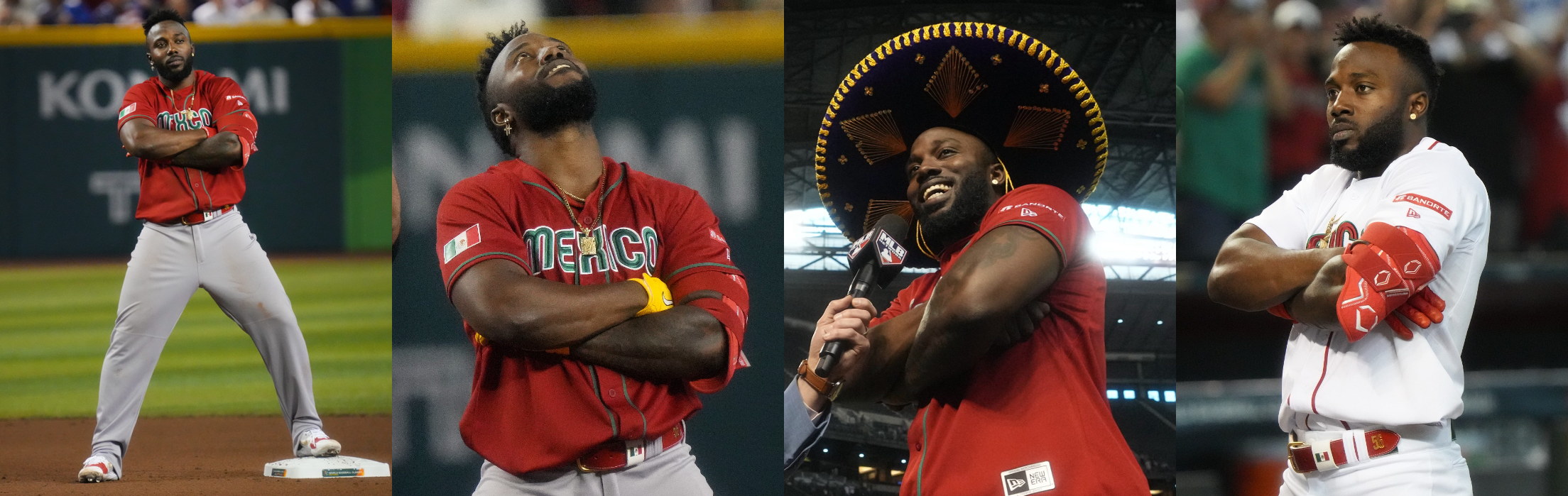
Look, as long as Randy Arozarena is playing for Team Mexico, Randy Arozarena is the reason to be excited about Team Mexico. The Cuba native has always come up huge under the bright lights, and he takes playing for his adopted country very seriously. He has a career 162 wRC+ in the playoffs, and in the 2023 WBC, he batted .450 with nine RBI in just six games. You might also recall that he crossed his arms kind of a lot.

Arozarena is by no means the only fun player on the team. Andrés Muñoz’s cat is a social media star, and Team Mexico leads the WBC in players named Nacho. More importantly, it also leads in diminutive players who have entertaining running styles.
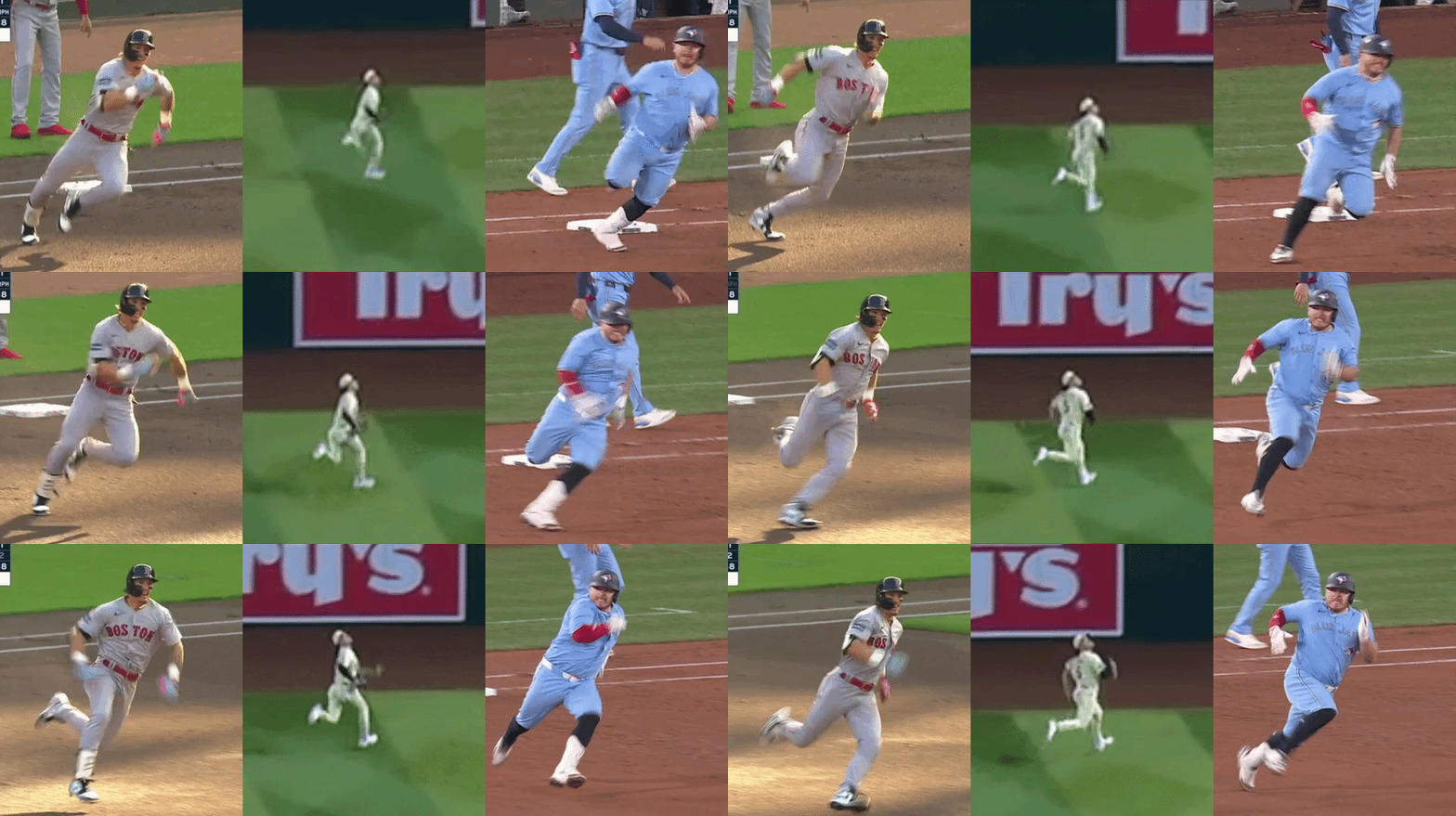
Alek Thomas is 5-foot-9, and his short legs seem to churn up the outfield grass when he tracks down a ball in the gap. The 6-foot Jarren Duran always plays at 100%, and his bandy-legged gait and full-body tilt when he turns a corner have earned him the nickname, “The Lizard.” It’s a joy to watch the 5-foot-8 Alejandro Kirk motor around the bases. As a bonus, both Duran and Kirk have severe cases of karate chop hands when they run. Still, none of them does this.
United States

Aaron Judge has taken some heat for the lackluster speech he gave to his teammates earlier this week, but not all of this was Judge’s fault. First, it wasn’t his idea. Tarik Skubal and Paul Skenes pushed him to make the address in spite of his legendary ability to speak to the media without saying anything at all. Second, even if the speech had been a bit more substantive and delivered with a modicum of intonation, the setting wasn’t exactly conducive to rousing oratory. Everything about it felt artificial. The team was in full uniforms, plus sneakers. Judge was addressing his teammates in some sort of conference room with a wall of officials and reporters behind him and a cameraman snapping away. He wasn’t even standing in front of the team. He was off to the side of the room, and studies have proven that it’s physically impossible to be whipped into a frenzy while developing a crick in your neck.
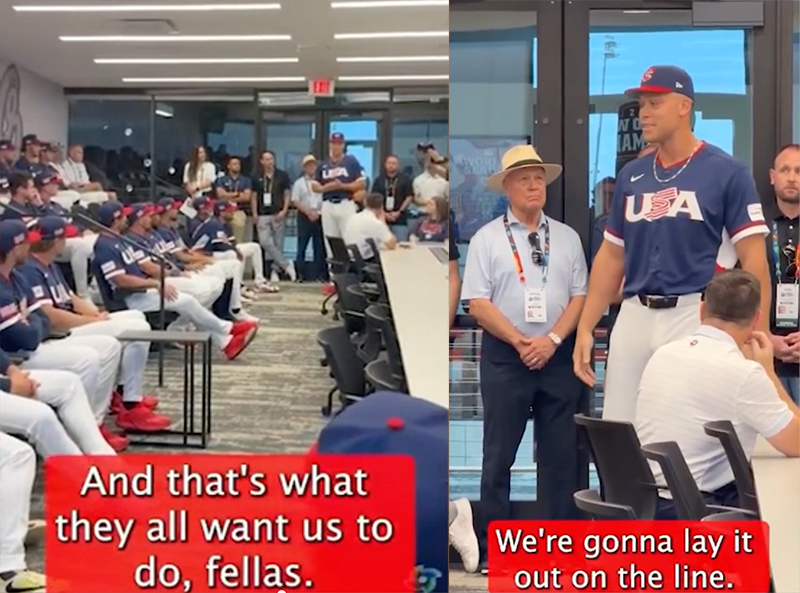
More important than the context, though, is that people are misinterpreting the content. Here’s Judge’s grand finale:

So sacrifice for your family at home, you’re sacrificing for your country, and you’re sacrificing for the brothers in the trenches with you every single day. And that’s one thing I want us to do, fellas. I want to die on that field with you. We’re down, we’re beat up a little bit, man? Lean into each other, man. We’re going to lay it all on the line. And if we do that, we’re bringing the gold home.

Critics have interpreted Judge’s words as a military analogy, which would have been both crass and colossally tone deaf considering what the United States military is doing at this very moment. They’ve wondered what exactly these superstars are sacrificing, aside from a couple weeks of spring training. They’ve wondered whether the winner of the WBC now gets gold medals, too, or whether Judge just spent too much time watching the Olympics.

The critics have it wrong. Judge wasn’t channeling Henry V. That was just a metaphor and a clever bit of double entendre. He was actually talking strategy. Team USA is going to sacrifice its way through this tournament. Since it seems to have gone over so many heads already, let me lay out the Cliff’s Notes for you:

So sacrifice [bunt] for your family at home, you’re sacrificing [flies] for your country, and you’re sacrificing [more bunts] for the brothers in the trenches [fancy word for dugout] with you every single day. And that’s one thing I want us to do, fellas. I want [our bunts] to die on that field with you. We’re down, we’re beat up a little bit, man? Lean into [inside pitches and get hit], man. We’re going to lay it all [our bodies, and also all the bunts] on the line. And if we do that [hit and run], we’re bringing the gold [still unclear] home.

Get it now? Judge and his comrades-in-bats are going to lay bunts on the line. They’re going to safety squeeze and suicide squeeze. They’re going to give away outs like nobody’s business. Manager Mark DeRosa assembled a monster lineup of power hitting superstars as a colossal fake out. They’re going to small ball their way to… some sort of gold something. And even though Judge announced it in a speech, the world will never see it coming.

Who To Root for in the World Baseball Classic? Pool A

Jim Rassol-Imagn Images

The World Baseball Classic is officially back! We’re been running preview content for the last two weeks, but now that the tournament is actually underway, you’ve got to pick a team to root for. You may even have to pick one team from each of the four pools. To help you choose a your favorite, I’ll be offering a reason to cheer for each of the 20 teams in the field. We started with Pool C and Pool D yesterday. Pool B will run later today.

Canada

The big reason to root for Canada is that this might finally be the year the team breaks through and makes it to the knockout round. With Puerto Rico at the top, Pool A is by no means a cakewalk, but the second spot doesn’t have a hands-down favorite. Baseball America’s power rankings have Canada ranked seventh in the tournament, with Cuba ninth, Colombia 14th, and Panama 16th. Canada’s outfield is going to be really fun. Let’s break it down.

Right Field: When healthy, Tyler O’Neill is a human mountain who hits majestic dingers. (When not healthy, he’s still a human mountain, just without the dingers.) O’Neill had an ugly 2025 season, getting into just 54 games for the Orioles (due to not healthy) and running a wRC+ of 93. However, the underlying numbers weren’t bad at all. He posted a paltry .218 BABIP and a robust .360 xwOBA, the second-highest mark of his career. The small sample size is messing with us here. O’Neill is just one year removed from a 2024 season in which he launched 31 home runs with a 133 wRC+, and he’s raked in spring training. He also batted .615 in the 2023 WBC. Watch out.

Center Field: O’Neill was once a plus defender, but age and injuries have slowed him down, and his numbers in recent years aren’t great. Luckily, Denzel Clarke can cover for him. Denzel Clarke can cover everything. The A’s center fielder has a weak bat, but you could make a strong argument that he was the best defensive outfielder in baseball last year. According to Statcast, his 11 fielding runs ranked 30th among all outfielders, even though his 383 2/3 innings played ranked 123rd. On a per-inning basis, no one could touch him.

Left Field: We’ve got more power in the corners. Marlins prospect Owen Caissie just came in at 62 on our Top 100 Prospects list. Last year with the Cubs, he struck out a whopping 41% of the time in his brief major league debut, but he also launched 22 homers in 99 games at Triple-A Iowa. The 23-year-old Caissie is going to make loud contact or whiff big. Either way, it’ll be fun to watch. Should we finish with some gratuitous Denzel Clarke highlights? Of course we should.

Colombia

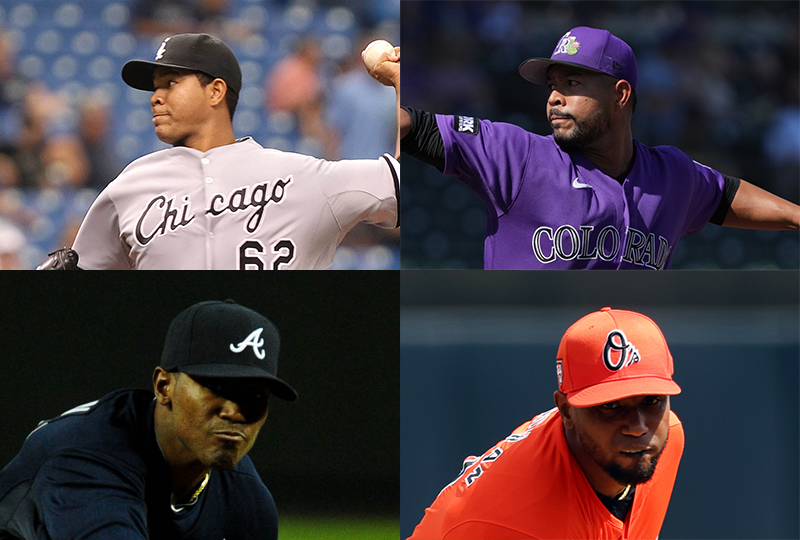
If you want to root for the team that’s most likely to have a pitcher take a deep breath and say, “I’m getting too old for this sh*t,” then Colombia is your squad. The team features the starting pitching duo of Jose Quintana and Julio Teheran. The 37-year-old Quintana made his major league debut in 2012, and he’ll be suiting up for the Rockies this season. Teheran is a mere 35, but he debuted for the Braves in 2011 at the tender age of 20. He spent 2025 in the Mexican League and is currently a free agent. If he pitches well, he could earn one last ride. Together, Quintana and Teheran have played for 11 different major league teams and made more than 600 major league starts. Their backs must be killing them.

Neither pitcher appeared in the 2023 WBC, but both pitched brilliantly in 2017, giving up one run apiece in their respective starts. Teheran won his, but Quintana earned a no-decision as Colombia went on to lose in extra innings. This team also has a real shot here. Colombia will definitely be relying on experience more than youth – I didn’t even mention the 38-year-old Donovan Solano – but Pool A is pretty wide open, and the team allowed just one run during its three-game qualifiers. How time flies.


Clockwise fom top left: Rick Scuteri, Kim Klement, Matt Kartozian, Kim Klement Neitzel-Imagn Images

Cuba

Once again, it’s all about the arms. Cuba is without several prominent major leaguers, but the roster may well have enough pitching to make it work anyway. We have to start with the 30-year-old Livan Moinelo, who plays in Japan for the SoftBank Hawks. The southpaw debuted in Japan in 2018, and he looked fine in his first season. Then he turned into one of the best pitchers in the league. Pitching in relief, he ran a 1.32 ERA and a 1.80 FIP from 2019 to 2023. That’s five years, and his ERA never rose above 1.69! In 2023, he put up a 0.98 ERA despite an elbow issue and a hip injury that required surgery after the season. Naturally, at that point, SoftBank decided to turn him into a starter. Risky move with a guy who’s coming off surgery and just put up a sub-one ERA, right? Don’t worry. Over the past two years as a starter, Moinelo is 23-8 with a combined ERA of 1.67. He’s fun to watch, too. He’s listed at just 5-foot-10 and 154 pounds. He features a four-pitch mix with a big, loopy curveball he’s not afraid to locate in the strike zone and a sneaky mid-90s fastball that seems to jump out of his hand.

If that’s not enough, can I interest you in Raidel Martínez, who spent the first 10 years of his career with the Chunichi Dragons and is now with the Yomiuri Giants? Martínez is in some ways the opposite of Moinelo. He’s a lanky right-handed closer with a career 1.99 ERA in NPB. The last time he ran an ERA above 2.00 was 2021. In 2023, he allowed just two runs in 48 appearances. He posted a 0.39 ERA. Over the past two years, he has a combined 89 saves. Maybe he should try starting.

Last, you might be familiar with Yariel Rodríguez, who put up a 3.08 ERA across 66 appearances for the Blue Jays last year. Thanks to an ugly walk rate, his peripherals weren’t as rosy, and he got lit up in the playoffs. Still his fastball touches the upper 90s.

Panama

On Wednesday, MLB.com published an article titled “World Baseball Classic partners with more than 150 brands from around the world.” Did you know that there was an entity called World Baseball Classic, Inc.? I’m betting you didn’t, because nothing kills the romance of a big worldwide sporting event like contemplating the filthy lucre that makes the whole thing run. And yet, right there on MLB.com, nestled among stories about thrilling prospects and grizzled managers and sibling connections, is a press release trumpeting the triumph of corporate synergy that is the WBC. What does this have to do with Panama? Well, I’m writing up different reasons to root for 20 different teams, and I figured with 150 different corporate partners around the world, at least one of them deserved to be rooted for. So I just picked one.

Congratulations, Panama. Sure, we will be cheering for old friends like Christian Bethancourt and Rubén Tejada and exciting prospects like Enrique Bradfield Jr., but mostly we will be cheering for your jersey sponsor, Caja de Ahorros, which is a bank.

Let’s go Caja de Ahorros! Who wants a checking account? Loans for everybody! Panama means business.

Puerto Rico

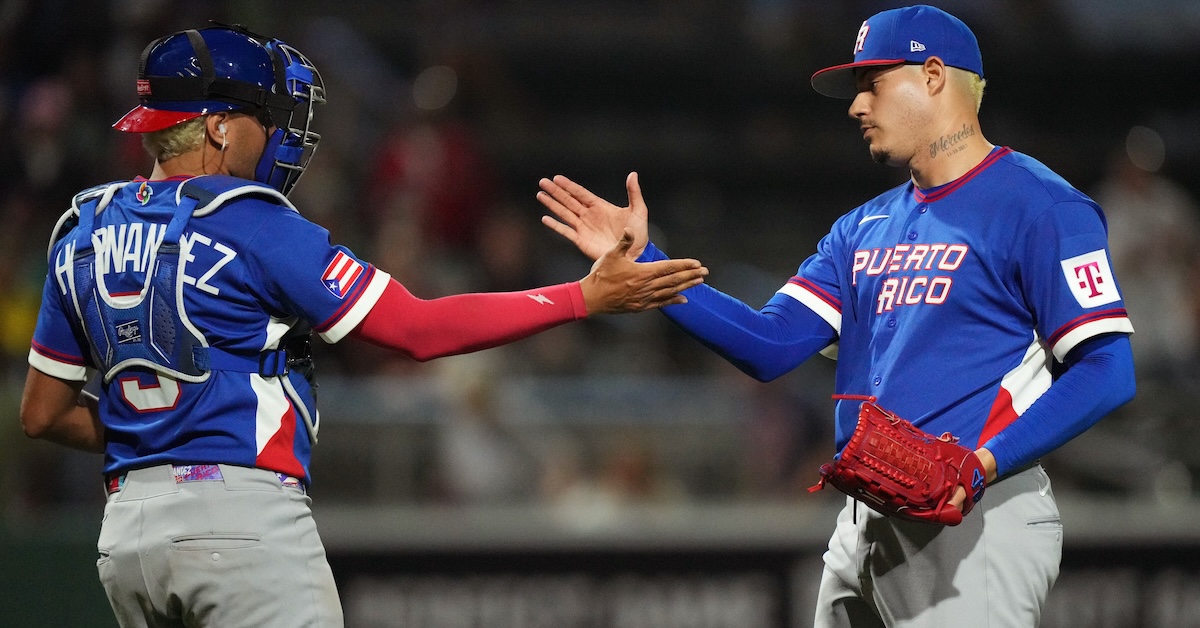
Puerto Rico has one of the better rosters in the tournament, but it’s hard to talk about this team without talking about what might have been. The insurance providers for the WBC refused to insure at least eight different Puerto Rican players, including stars Carlos Correa, José Berríos, Victor Caratini, and Francisco Lindor, citing an increased injury risk. One imagines that the actuaries at the insurance companies threw a small, sad breakroom party with soda and mini cupcakes when they found out that Lindor had injured himself anyway. That all this happened right before the tournament started added insult to injury, and the team considered pulling out altogether. It’s not all that often that you get to combine two truly rewarding passions: rooting for a baseball team and heaping scorn on insurance companies, so you should really grab this opportunity while you can.

If you’re looking for a more positive reason to cheer for Puerto Rico, look no further than the catcher position. Without Caratini, Team Puerto Rico is running out 39-year-old Martín Maldonado and 35-year-old Christian Vázquez. These two share more than just a position, an advanced age, and a place of birth. They’re both no-bat catchers who don’t grade out well according to the advanced defensive metrics. They’re still playing regularly because wherever they go, their team believes they’re bringing the intangibles. It’s Nichols’ Law of Catcher Defense in action at a global scale, and Maldonado and Vázquez are playing their trade under manager Yadier Molina. Can vibes-based catching take Puerto Rico to a championship? Maybe, but only if you believe hard enough.


Waste Not, Walk Not: Tyler Rogers Has A Plan

Jonathan Dyer-Imagn Images

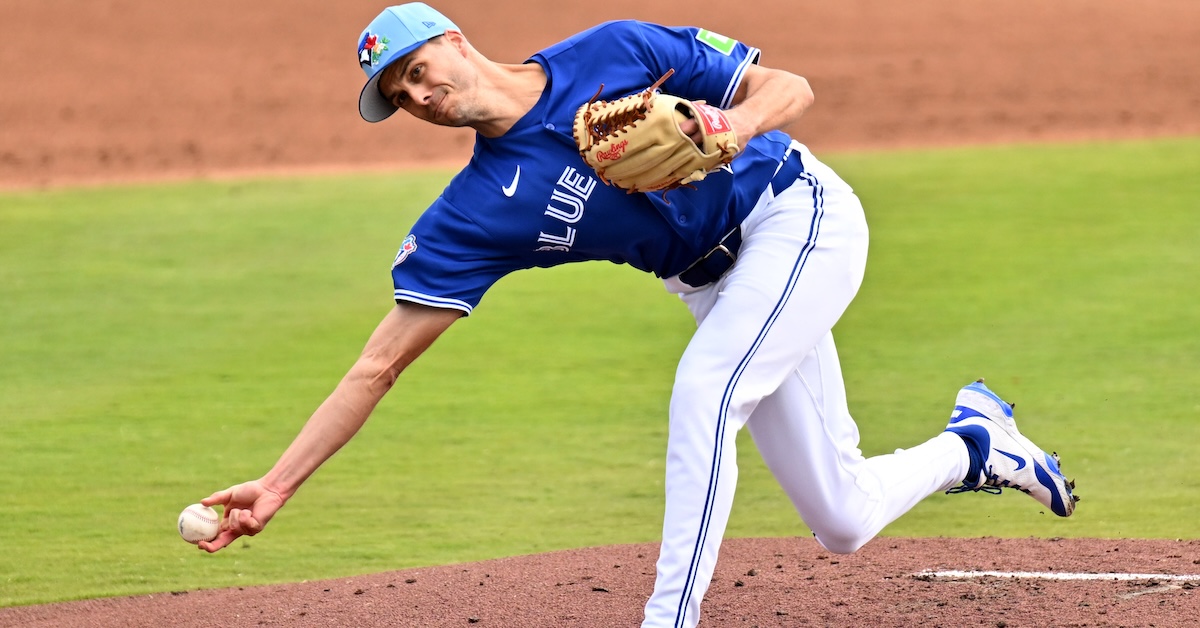
Tyler Rogers makes me happy that I’m a baseball analyst. Not in the same way that Shohei Ohtani does, of course. Not in the same way that Tarik Skubal does, or Bobby Witt Jr., or any other number of superstars. Those guys are great because they do the obviously good baseball things, like running fast and throwing hard and hitting balls far. Rogers looks like an accountant who was hurriedly inserted into the game as a last resort. He also just threw 77 1/3 innings with a 1.98 ERA last season. His career ERA is 2.76 over eight seasons. I don’t know about you, but something about that tickles me endlessly.

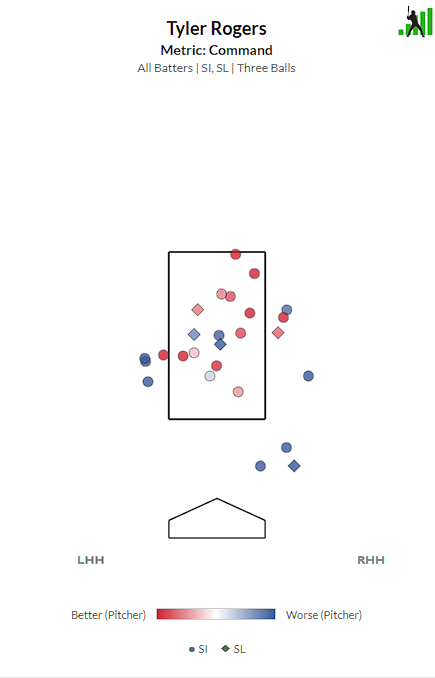
Rogers’ superpower is his command. Last year, he walked only seven batters, a 2.3% rate. But that command can be hard to pin down. For instance, take a look at the 26 pitches Rogers threw in three-ball counts:

As you can see from the overlaid PitchingBot command grades, these locations are nothing special. There are too many crushable cookies, too many non-competitive pitches, and not enough action on the fringes of the strike zone. It’s a 42 command grade all in, nothing to write home about. In fact, Rogers walked more batters than league average per three-ball pitches thrown (in a tiny sample, to be clear). When batters got to this point in the count against him, they had a decent chance of reaching first for free. How, then, did he post the second-lowest walk rate in the majors?

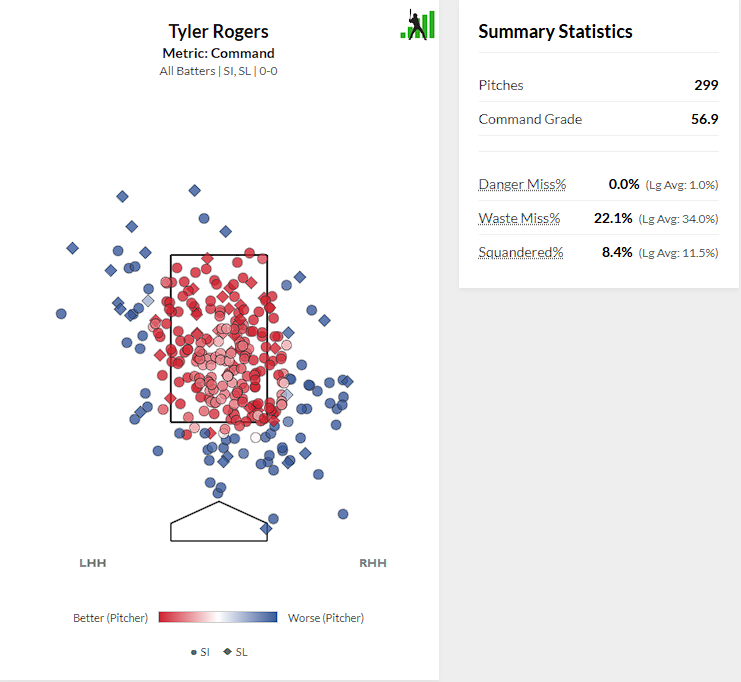
To understand that, we’ll have to rewind the count. Walks require three things: a three-ball count, a pitch outside the strike zone, and no swing from the batter. Rogers cuts things off with item number one. Look at how he started batters last year:


Read the rest of this entry »


I Hope He’s Not Broke-i Sasaki

Joe Camporeale-Imagn Images

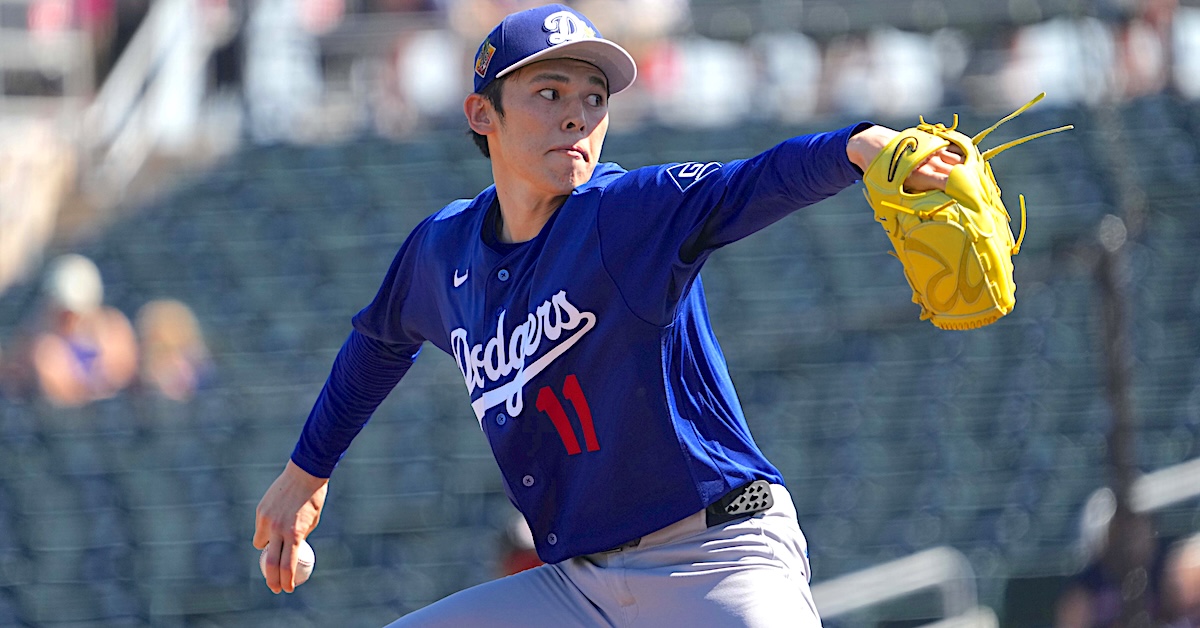
You should never worry about spring training results; it’s a small sample against uneven competition, in which the outcome of the game is irrelevant. But it’s not going great for Roki Sasaki. In two Cactus League starts, the Dodgers’ 24-year-old right-hander has allowed half of the 20 batters he’s faced to reach. His ERA is 18.90, and no matter the context, you never want to see a pitcher with a post-Civil War ERA.

For people doing the Chicken Little act about the Dodgers signing every big free agent, Sasaki — not Yoshinobu Yamamoto, Shohei Ohtani, or Kyle Tucker — is the guy who should’ve been scariest. The Dodgers signed a 23-year-old NPB ace even though, by dint of his youth, money was not an issue. If the Dodgers could land Sasaki, perhaps their dominance would become self-perpetuating. Read the rest of this entry »


Angels Top Prospect Tyler Bremner Has a 70-Grade Changeup

Brett Davis-Imagn Images

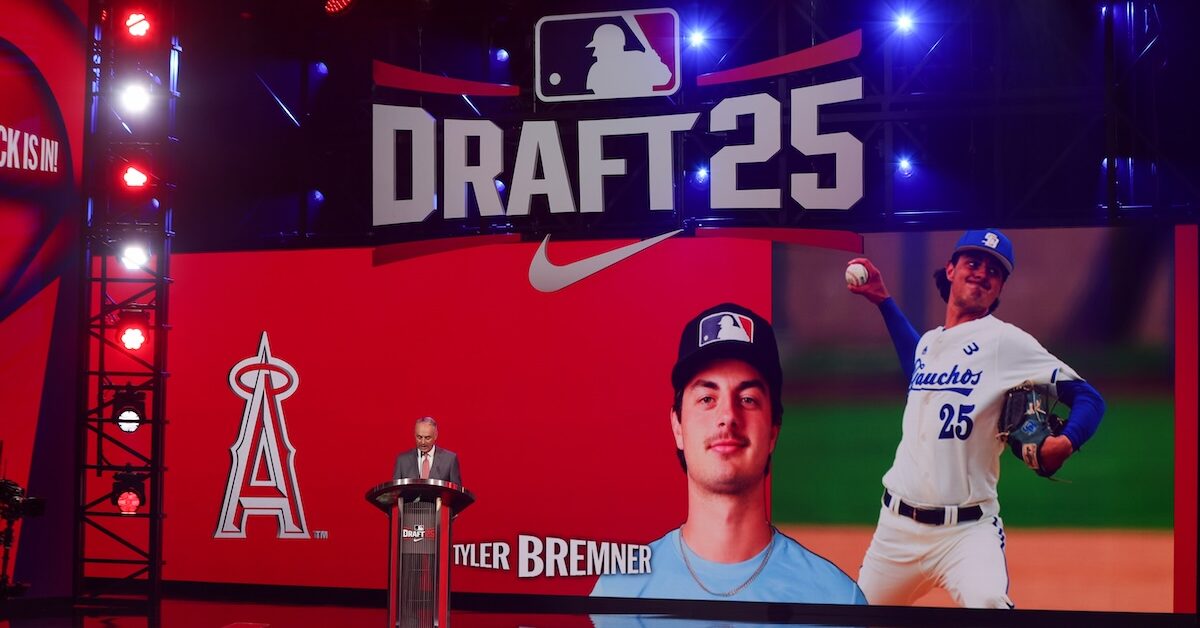
Tyler Bremner is the top prospect in what is widely viewed as a below-average Los Angeles Angels system. Drafted second overall last summer out of UC Santa Barbara, the 21-year-old right-hander is anything but below average — and that is especially true when it comes to his signature offering. Bremner boasts one of the best changeups of any prospect, in any organization. Factor in a fastball that sits mid-90s and touches 98, and you can see why my colleague Brendan Gawlowski referred to Bremner as “the draft’s most big league-ready player.”

Premium strike-throwing is another of Bremner’s attributes. As Gawlowski pointed out in his January write-up, the 6-foot-2, 195-pound San Diego native not only averaged fewer than 2.5 walks per nine innings across three collegiate seasons, he also “missed a ton of bats.” His draft-year strikeout rate was a heady 35.8%.

Bremner discussed his high-spin changeup, his sometimes-sinking four-seamer, and what he’s been learning in big league camp, prior to a recent game at Tempe Diablo Stadium.

———

David Laurila: I’ve read that you have a 70-grade changeup. What can you tell me about it?

Tyler Bremner: “I’ve kind of had the same grip since high school. I wouldn’t say it’s the most conventional grip. It’s a circle change, but I’m sliding down from the two-seam, so my middle and ring fingers are both on the horseshoe. I also like to tuck my pinky under it. That’s maybe a little unconventional, I guess. Not many people tuck their pinky like that.

“The grip is one thing, but there is also how you throw it. I’ve been blessed with being able to pronate the ball pretty well. For me, it’s not about trying to kill spin. I’m basically making it spin hard the other way, so I get that diving action. My arm speed also helps make it look like a heater. At the end of the day, you can have a changeup that moves a lot, but if it comes out in a way that hitters can pick it up — they can see the circle, or the spin is different than the fastball — then it’s not going to be as effective as one that isn’t as nasty. A changeup plays well if it is deceptive off the heater, so I’m really just trying to keep the arm speed and make it look like a fastball.”

Laurila: How much does your changeup spin? Read the rest of this entry »


Kevin McGonigle’s Time Isn’t Soon — It’s Now

Junfu Han/USA TODAY NETWORK via Imagn Images

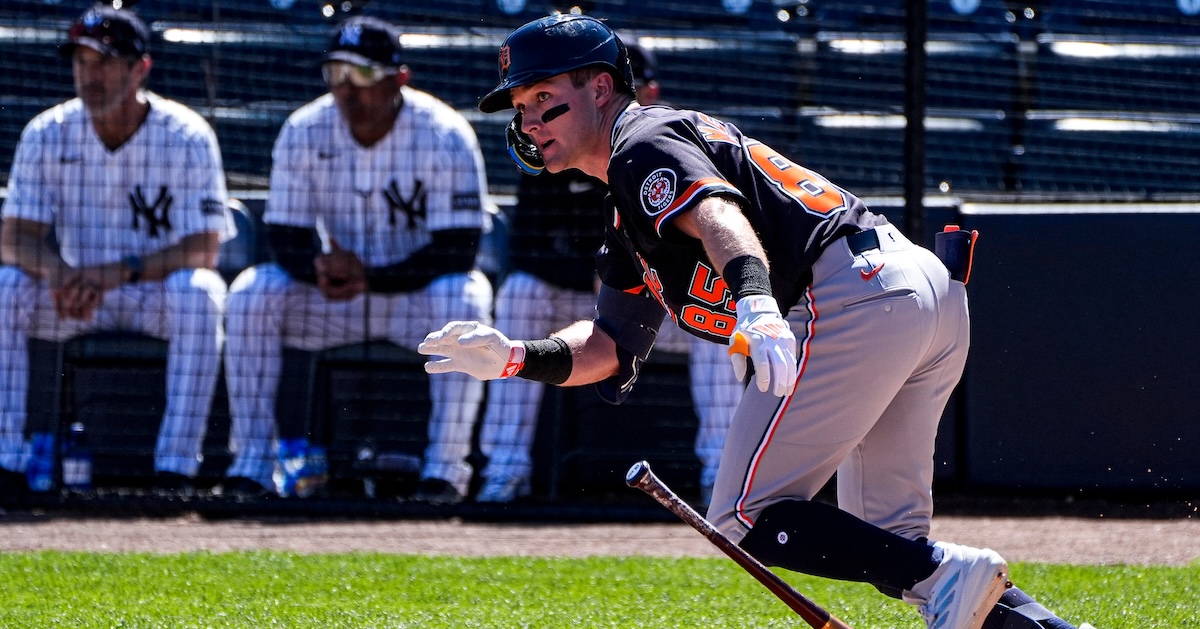
After the signing of Framber Valdez served as an exclamation point on what had been a fairly quiet offseason, the Detroit Tigers have established themselves as the preseason favorites in the AL Central. With a generally deep lineup and a solid rotation further buttressed by what is likely Justin Verlander’s swan song, you have to like Detroit’s chances, even if you think that the Royals or Guardians could prove to be a bigger threat than Vegas currently does.

But as someone who has now spent decades feeding data into a cold, impersonal machine and watching it spit out projections, I know about as well as anyone that the future is horribly uncertain. Predictions are not destiny, and a team with a 75% chance of making the playoffs still has a one-in-four shot of watching them on TV. Over the next few weeks, the Tigers need to answer as many questions about their team as possible, and one of the biggest is whether their top prospect, Kevin McGonigle, will start the season in Detroit or Toledo. And if the Tigers are truly in win-now mode, McGonigle being in the Opening Day lineup is the absolutely correct move to make.

That the Tigers have made “now” into their most important timeframe isn’t an assertion that I’m just pulling out of nothingness. With the negotiating gap between Tarik Skubal and Detroit on an extension reportedly in the range of $250 million, retaining Skubal’s services for 2026 only makes sense if you’re going for it. If their goal is simply to try to quietly cruise into the playoffs with 86 wins, then they might as well have traded Skubal to a team that is willing to go all-in, and hoped that they’ll do fine with the impressive players they’re likely to get in return. Read the rest of this entry »


Doubling Down: Jurickson Profar Draws a Second PED Suspension, and Johan Rojas (Likely) a First

Tim Heitman and Kyle Ross-Imagn Images

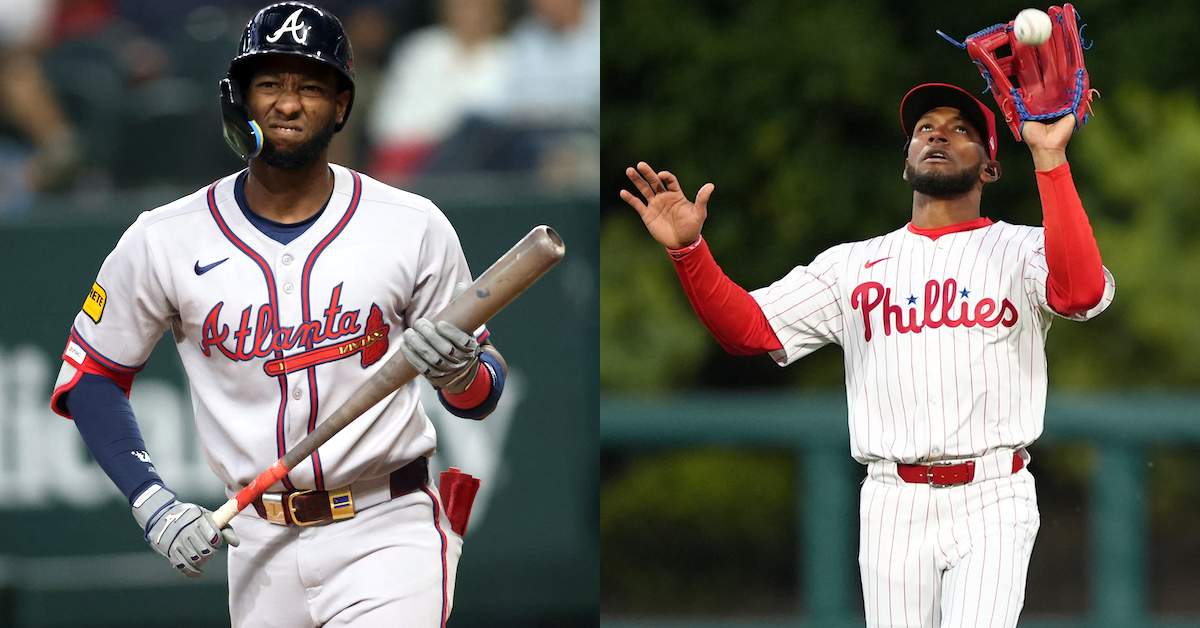
In 2024, 11 years after he was the consensus no. 1 prospect in the game, Jurickson Profar finally broke out, setting career highs in home runs (24), wRC+ (139) and WAR (4.3), making his first All-Star team, and helping the Padres to an NL Wild Card berth. He cashed in that winter; after never making more than $7.75 million in a season, Profar signed a three-year, $42 million deal with the Braves. Four games into his tenure with his new team, however, he drew an 80-game suspension for violating the Joint Drug Agreement. While he was productive upon returning and figured prominently in the plans of a team expected to contend for the NL East title this season, on Tuesday, the 33-year-old outfielder drew a second PED suspension, this one for the entire 2026 season.

Profar wasn’t the only player reported to be facing a PED suspension on Tuesday, or even the only NL East outfielder who had run afoul of the game’s drug policy. According to multiple sources, the Phillies’ Johan Rojas has an 80-game suspension looming for a first-time offense. While MLB officially announced Profar’s suspension in a press release sent at 6:47 p.m. ET on Tuesday — over six hours after ESPN’s Jeff Passan first broke the news — Rojas’ is not yet official.

Both players are reportedly appealing their suspensions. An hour after Passan’s tweet, The Athletic’s Ken Rosenthal reported that the Major League Baseball Players Association is filing a grievance on Profar’s behalf. It’s not clear yet on what grounds the union is challenging the suspension, but such a case would be heard by MLB’s independent arbitrator, Martin F. Scheinman. Later that afternoon, The Athletic’s Charlotte Varnes and Matt Gelb reported that Rojas is appealing his suspension, as well. He is starting in center field and batting seventh in Philadelphia’s exhibition game on Wednesday against Team Canada. Read the rest of this entry »


Hey FanGraphs, Your Math Isn’t Mathing… Or Is It?

Denis Poroy and Cary Edmondson-Imagn Images

If you spend some time poking around the nooks and crannies of FanGraphs, you’ll eventually encounter one weird thing. Go to our Depth Charts Team WAR Totals page, and you’ll see all 30 teams arranged by the amount of WAR we project them to accrue this season. Go to our Projected Standings page, and you’ll see the winning percentage we expect for each team. Sometimes, those two pages seem to be displaying the exact same information. Sometimes, they don’t quite line up.

Take right now, for instance. We project the Padres for 40.8 WAR, the Giants for 38.7 WAR, and the Diamondbacks for 38.2 WAR. Look at the projected standings, however, and we have the Padres down for a .490 winning percentage, the Giants at .504, and the Diamondbacks at .501. That doesn’t feel right. Shouldn’t the team with the most projected WAR also project for the best record? Well, buckle up, because to explain how this works, we’re going to have to do some math.

We’ll break this one down into two parts. First, what does a team WAR projection mean? Most basically, it’s the sum of each player on that team’s WAR projection, but we’ll have to get more specific than that. Our projection systems can spit out a WAR, but that’s not their real output. They project actual on-field baseball results. Manny Machado’s Depth Charts projection is for 644 plate appearances, 28 doubles, 26 homers, 127 strikeouts, and so on. The WAR part of it gets calculated after the fact. Read the rest of this entry »


Royals Sign Starling Marte To One-Year Deal

Brad Mills-Imagn Images

After 14 seasons in the majors, Starling Marte has signed with the Royals on a one-year contract for $2 million. The 37-year-old Marte brings a proven bat to an outfield that should look at least a little bit different than it has in recent years. Between one-year deals for Marte and Lane Thomas and trades for Isaac Collins and Kameron Misner, Kansas City has now added more than an entire outfield to its roster, even though the team has two returning incumbents in Kyle Isbel and Jac Caglianone.

Marte’s career is maybe too easy to overlook; after being a core member of three Pirates playoff teams during his first three full seasons, both he and his team faded into obscurity until he was traded three times between the start of 2020 and the end of July 2021. Then, for the past four years, he was a role player on a star-studded Mets roster. For that reason, let’s make sure we appreciate just how great he’s been. He has a career wRC+ of 115, 361 stolen bases, and 35.9 WAR to his name. He’s had eight different seasons of at least 3.0 WAR and earned a couple of Gold Gloves, a couple of All-Star nods, and even an MVP vote. You might be surprised to learn that JAWS ranks him 46th among left fielders. He’s not in Hall of Fame territory, but he’s a lot closer than you might think. Read the rest of this entry »


Let’s Make Hasty Judgments About Mark DeRosa’s Lineup

Mark J. Rebilas-Imagn Images

On Tuesday, Team USA played its first tuneup game before the World Baseball Classic, thrashing the Giants 15-1 in a scheduled 10-inning exhibition. This came on the heels of Monday’s announcement lining up the American rotation for pool play in the WBC.

The WBC is a bit unusual for an international best-on-best sporting tournament in that it takes place during the preseason, rather than during a dedicated break (as in Olympic ice hockey or the 2022 FIFA World Cup) or the offseason. Therefore, the best active managers and coaches for each country are unavailable to coach in the tournament, as they would be in hockey and soccer.

For the first four tournaments, USA Baseball got around this by hiring either unemployed or recently retired managers — Buck Martinez, Davey Johnson, Joe Torre, and Jim Leyland. Highly successful and well-respected managers, in the latter three cases. For 2023, they went with Mark DeRosa. Read the rest of this entry »