Rob Schumacher/The Republic-USA TODAY NETWORK via Imagn Images
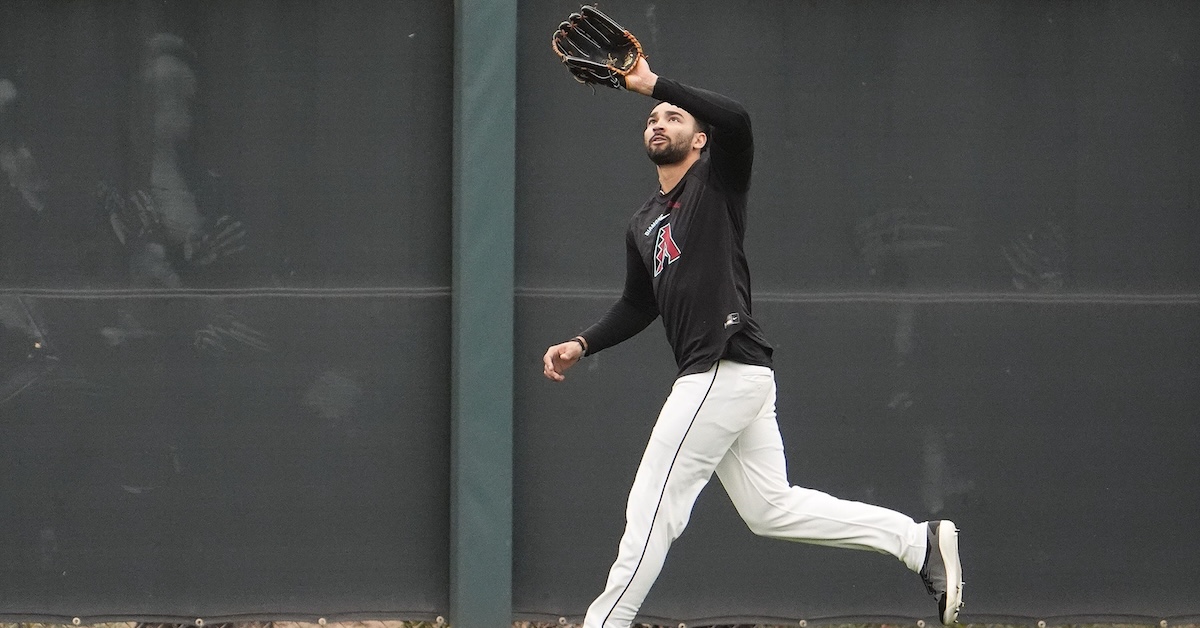
Time waits for no man, except Jordan Lawlar, who’s been on the cusp of major league stardom for about four years.
The skinny on Lawlar as a prospect — where he topped out at a 60-FV grade in 2024 and 2025 — is that he carries the potential for plus power and plus shortstop defense with a plus-plus run tool. That’s a lot of pluses for an up-the-middle position, which is why the Diamondbacks spent a top-10 pick on him out of high school in 2021.
He played well enough to make Arizona’s playoff roster on the run to the 2023 NL pennant (though he didn’t play much, going 0-for-2 with a walk), and the two full seasons since have seen Lawlar’s path blocked both by his own injuries and the emergence of Geraldo Perdomo as a bona fide star. Read the rest of this entry »
What are teams paying for a win in free agency? Earlier this month, I answered a FanGraphs Weekly Mailbag question about that very issue, outlining a rule I’ve been using in formulating my contract predictions. I left my explanation loose and vague because it was one of four questions in a mailbag, but to give you the general gist, I think about free agent salaries on a graduated scale, with role players being paid less per win above replacement than superstars. Today, I’d like to back up my argument with a bit more mathematical rigor.
One of the benefits of writing for FanGraphs is that smart baseball thinkers read the site. I woke up last Monday to a direct message from Tom Tango, MLB’s chief data architect. Tango had a few suggestions for further research, a method for adjusting past years of data for current payroll situations, and even a link to a discussion of the cost of a win with Sean Smith. Smith, better known as Rally Monkey, is the creator of Baseball Reference’s calculation of WAR – when you see rWAR, that actually stands for Rally WAR, not Reference WAR. In other words, I got help from some heavy hitters.
With Smith’s excellent article on free agency as a guide, I built my own methodology for examining the deals that free agents receive and turning them into a mathematical rule. I took every starting pitcher and position player (relievers are weird and should be modeled differently due to leverage concerns) and noted their projected WAR in the subsequent season, as well as the length and terms of their contract. I excluded players who signed minor league deals, were projected for negative WAR, or whose contract details were undisclosed. To give you a sense, applying this approach to the 2025-26 offseason leaves us with 89 players, from Kyle Tucker all the way down to Jorge Mateo. Read the rest of this entry »
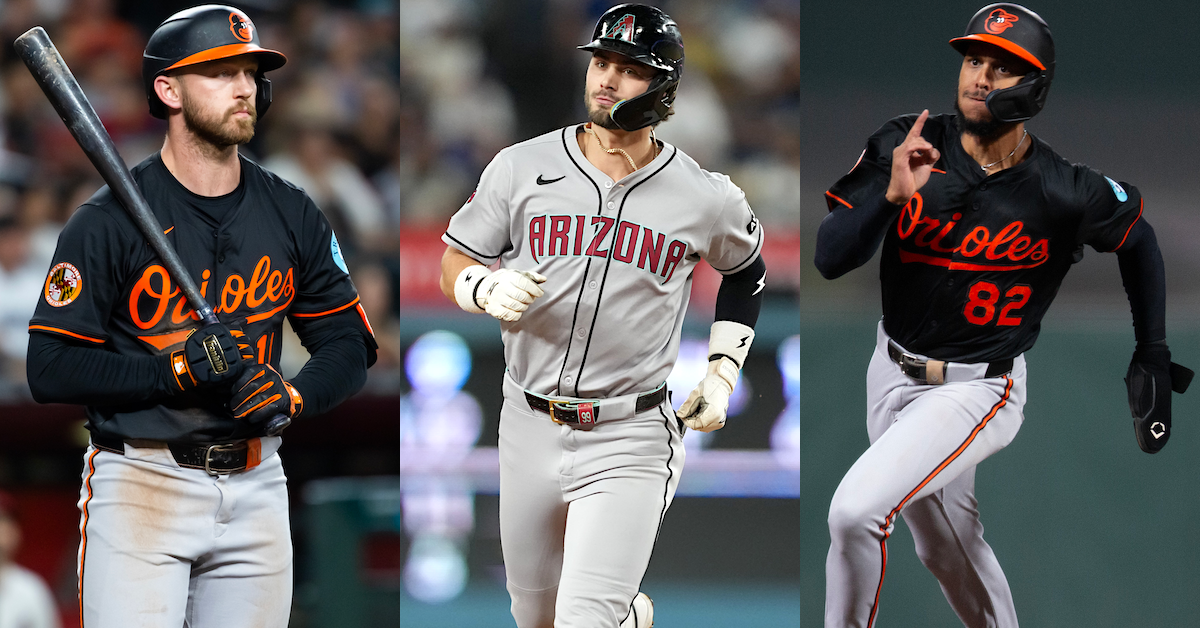
For the second time since the opening of spring training, the Baltimore Orioles lost one of their starting infielders to injury. On Friday, Baltimore announced that third baseman Jordan Westburg would miss significant time due to a partially torn UCL in his throwing elbow. Westburg received a platelet-rich plasma injection, commonly used for soft tissue and joint injuries, and will be out at least until the end of April, according to team president Mike Elias.
Jordan Westburg has a partial UCL tear in his right elbow and will be getting a PRP injection today, per Orioles POBO/GM Mike Elias.
Westburg will be out for all of April. Timeline TBD after that.
While there’s never an ideal time for an injury, the Orioles were already without second baseman Jackson Holliday, out with a broken hamate bone in his right hand. That puts half of their infield out of commission for Opening Day. Before Holliday and Westburg went down, there had been some turnover among the role players in Baltimore’s infield, adding to the uncertainty of what these injuries will mean for the team this spring and beyond. Read the rest of this entry »
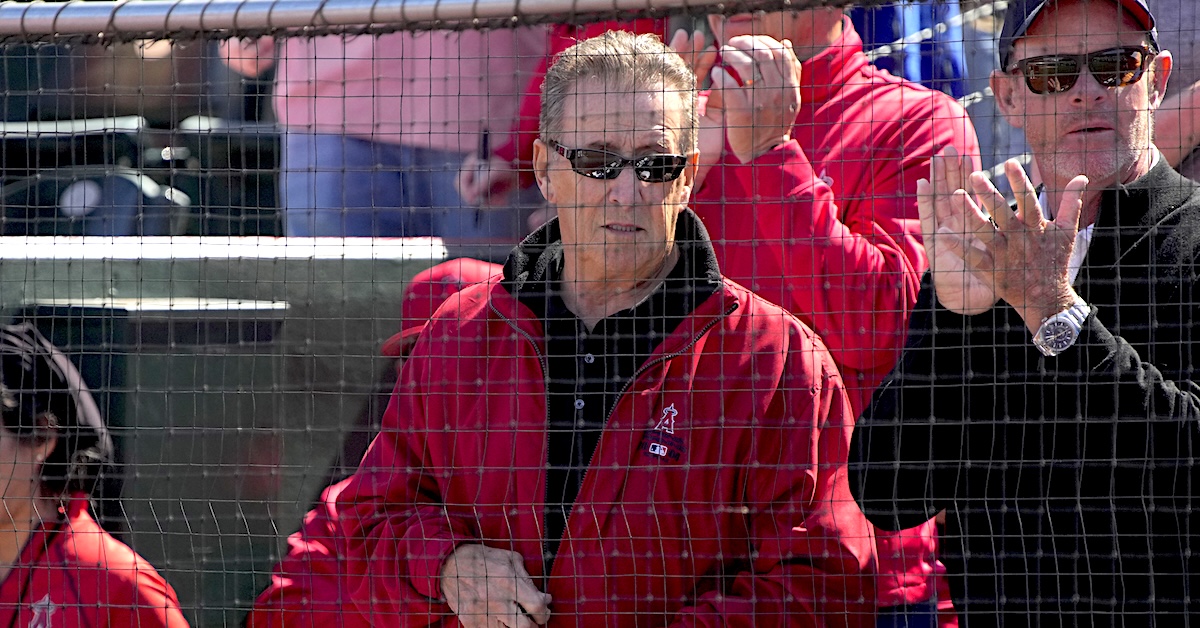
Last week, after Angels owner Arte Moreno finished his annual state of the team discussion with reporters, Jeff Fletcher of the Orange County Register and Rhett Bollinger of MLB.com published several quotes from the conversation. Between settling with Tyler Skaggs’ family over the wrongful death suit, not having a television partner for the upcoming season, and cutting payroll after eight straight losing seasons, there was a lot to cover. Several of Moreno’s quotes raised eyebrows, but the one that caught the most headlines concerned his description of a fan survey. He was simply trying to explain that he is focused on making sure the fan experience is a good one, but it came out very wrong.
“The number one thing fans want is affordability,” Moreno said. “They want affordability. They want safety, and they want a good experience when they come to the ballpark. Believe it or not, winning is not in their top five… The moms want to be able to afford to bring the kids. Moms make about 80% of the decisions. They want to be able to bring their kids and be affordable and they want safety and they want to have a good experience, so they get all the entertainment stuff or whatever. The purists, you know, it’s just straight winning.”
It wasn’t exactly inspiring to hear the owner of a baseball team come dangerously close to accusing fans of zealotry for just wanting their team to finish above .500 for the first time since 2015. After avoiding local media for years, Moreno started giving these spring training state of the team appearances in 2023. His answers are not always well received, and time tends not to do them any favors. In 2023, Moreno said, “You can’t start losing $50 to $100 million a year and keep the business,” then two years later, he said the team was doing just that, claiming it would “probably lose $50 million to $60 million, minimum.” In 2023, he said, “I always look at the fans. What are we doing to make sure the fans have a great experience and the fans are proud of the team that we put on the field?” Now he says winning is not even a top-five priority for the fans. Read the rest of this entry »
Two weeks ago, Sunday Notes led with David Cone following in Mark Gubicza’s footsteps. Just as his fellow pitcher-turned-broadcaster had done, Cone tackled a challenging career quiz, augmenting his answers — some of them correct, others amiss — with entertaining anecdotes about batters he faced along the way. Today we’ll hear from another 1980s-1990s hurler who is now a broadcast analyst: Jeff Montgomery, who played with Gubicza in Kansas City, is the Royals’ franchise leader in both appearances (686) and saves 304).
I began by asking the 64-year-old Wellston, Ohio native which batter he faced the most times.
“I’m going to say either Chili Davis or Kirby Puckett,” guessed Montgomery, naming a pair of players who narrowly missed being the correct answer. Upon being informed that it was neither of the two, the erstwhile closer pondered for several seconds, only to throw up his hands. “You got me,” he admitted. “Who was it?”
I told Montgomery that it was Paul Molitor, whom he faced 30 times, allowing just seven hits, all of them singles.
“Oh, Molly. There you go,” responded Montgomery, “Molly was the type of hitter who was never going to be easy. He had the ability to really wait on pitches. He was basically bat-to-ball, and his bat-to-ball skills were incredible. There were honestly times when I thought the pitch was in the catcher’s mitt, and the next thing I knew I was watching our right fielder chasing the ball down the line. Molly’s bat was that fast.
“I think I did pretty well against him,“ Montgomery added. “But I do remember one game in the Metrodome. We were in extra innings, it was a bases-loaded situation, and I had him 0-2. I’d thrown Molly a couple of sliders away, and decided to come in with a fastball. He leaned into it for a walk-off hit-by-pitch.” Read the rest of this entry »
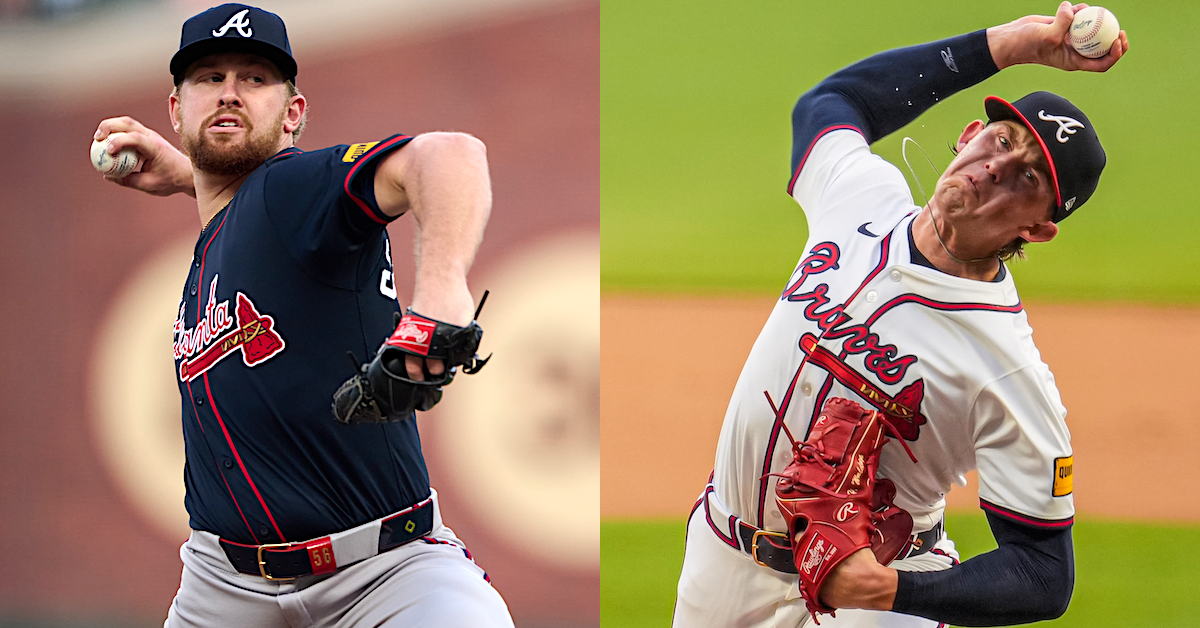
The Atlanta Braves opened spring training with the hopes of getting a healthier season out of their starting rotation this year. While it took a lot of things going wrong to drop the Braves to a 76-86 record in 2025, their worst record since 2017, the myriad injuries suffered by the starting pitching played an outsized role in their misfortune. Unfortunately, the Braves didn’t even get to the first exhibition game before the news broke that two of their starting pitchers, Spencer Schwellenbach and Hurston Waldrep, would have to undergo elbow surgery, with no estimated timeline for their returns.
If there’s a silver lining to manager Walt Weiss’s uncertainty about whether either Schwellenbach or Waldrep would pitch this year, it’s that neither surgery is of the Tommy John flavor, which would pretty much guarantee that both would miss the entire season. Instead, both surgeries are to remove loose bodies from their throwing elbows; Schwellenbach had his procedure on Wednesday, while Waldrep’s is scheduled for Monday. Yes, removing loose bodies sounds like the job description of a bouncer at a hot nightclub, but in this case it refers to the removal of small fragments of bone and cartilage present in the joint.
Regardless, both pitchers are bound to be out for an extended period of time, and their absences will surely be felt in Atlanta. Waldrep was solid for the Braves in 2025, putting up a 3.21 FIP in nine starts, and Schwellenbach looked well on target for a 4-WAR season before an elbow fracture ended his season in late June. Read the rest of this entry »
On Wednesday, catcher Mitch Garver agreed to a minor league deal to remain with the Mariners in 2026. He reported to camp for a physical on Thursday, and should he make the major league roster, he’ll earn a prorated $2.55 million for any time he spends with the big club. Because of his veteran status, Garver will have the ability to opt out and look for a job elsewhere, in late March, on May 1, or June 1 if he remains in the minors. We don’t often devote entire articles to minor league deals, but I wanted to highlight this one, because the 35-year-old Garver has had such an interesting career and such a dramatic turnaround over the past two years.
A bit over two years ago, Garver signed a very different contract with Seattle. It was a two-year deal for $24 million, nearly five times as much per year as his new one. He was coming off a 2023 season in which he launched 19 home runs and finished with a 142 wRC+ despite an April knee sprain that knocked him out for more than two months. It was just the 18th time this century a catcher that had put up such a good offensive line over at least 300 plate appearances, and it wasn’t even Garver’s best season. He debuted at age 26 in 2017, and over the first seven years of his career, he ran a 124 wRC+. If you go to our leaderboards and rank catchers through their age-32 seasons, that mark ties him with Hall of Famer Gary Carter and Mickey Tettleton for 32nd all-time (just behind his teammate Cal Raleigh’s 126).
That’s not to say that Garver was on pace to be one of the best catchers ever. Thanks to a wide variety of injuries, he’d only reached 80 games played in a season three times. And because of both the injuries and his very poor defense, he’d spent more than 40% of his time at first base or DH. Despite being one of the best hitting catchers in the game, he had just 8.3 WAR to his name. Still, the bat was so undeniable that he became the first non-pitcher Jerry Dipoto had ever signed to a multi-year contract while leading the Mariners. The move carried risk, but that risk was about whether Garver would stay healthy, about whether his bat would play up enough if, as expected, he spent the vast majority of his time as a DH. Read the rest of this entry »
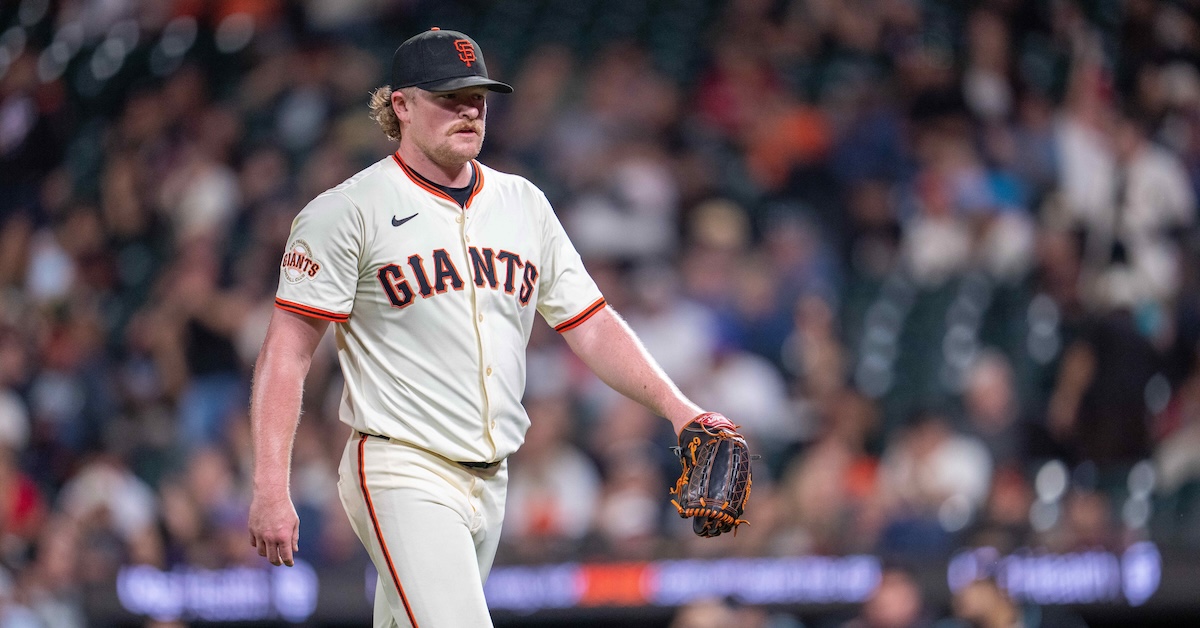
I’ve been playing around with the new FanGraphs Lab tools a lot recently. At first, it was bug testing, but it pretty quickly turned into fun. One minute, you’re making sure that sliders show up correctly. Next minute, you’re wondering about Logan Webb’s backwards slider. See, Webb throws a big-bending sweeper instead of a gyro slider, but it doesn’t behave at all how you’d expect: It’s good against lefties and bad against righties.
In 2025, Webb put up 5.5 WAR, a career-high mark and his fifth straight season of four or more wins. He used his sweeper a lot to get there. Webb was one of the most frequent right-on-left sweeper users in the majors, and also one of the best. Measured by run value added per 100 pitches, he was 11th in baseball among all righties who threw even 100 such sweepers – and he threw 400 of them. He was 15th in whiff rate for good measure. He was as effective as Paul Skenes was in this situation while going to the pitch three times as often.
But while he was lights out with the pitch against lefties, it fared quite poorly against righties. He was below average, and by a lot. Ninety-one pitchers threw 100 or more right-right sweepers; Webb finished 75th in run value added (or lost, in this case) per 100 pitches. While the league gets about 25% more whiffs with the platoon advantage, his whiff rate with his sweeper was the same against righties and lefties. This all sounds very strange. But when I dug into it, I got some answers. Read the rest of this entry »
I’m of the opinion that you usually don’t learn much from watching spring training. It’s glorified practice, with inconsistent quality of competition even before you consider the fact that some guys are going all-out while others are working on a specific issue rather than trying to win the game. This is especially true for position players who came into camp with at least an inside track on a starting job. It’s why I pay more attention to college baseball during February and March. Hell, the new season of Love Is Blind is out and I need to catch up so I can see if there are any ex-college ballplayers in the cast.
This winter, I’ve really gotten into the Olympic spirit. It turns out that cheering for wholesome, fresh-faced athletes who represent the idea of the United States is a decent balm for the psychic wounds inflicted by watching the actual United States speed-run a collapse into kleptocratic authoritarianism. Also, I’m already a Peacock subscriber because I love Parks & Recreation. So I’m watching the curling. I’m watching the hockey. I’m watching the long-track speed skating and the short-track speed skating, even though short-track speed skating is basically just a cross between demolition derby and cockfighting. And if you told me two weeks ago how much cross-country skiing I would be watching this week, I would have asked you whether I was about to suffer some sort of brain injury.
The one sport I haven’t watched much of is figure skating. I wish I could watch it more often, but unfortunately, I suffer from a debilitating sequin allergy. I can make it through a short routine with nothing more than some acute rhinitis, but after even a few seconds of exposure to Tara Lapinski and Johnny Weir, I have to sit on a whole case of EpiPens. Still, one night last week, I pregamed with a dangerous amount of Benadryl and Allegra (or as the kids call it, Ballegradyl) and watched the ice dancing with my charming wife. Like so many people across the globe, we came away with a newfound appreciation for Twizzles. The Twizzle is the most difficult maneuver in ice dancing. It involves collecting a great deal of speed and then spinning across the ice on one skate, close to your partner, in perfect synchronization. Here’s the greatest Twizzle sequence ever performed, according to a YouTube user who is an owl.
In this article, we will capitalize the word Twizzle, partly out of respect for the extremely capricious linguistic conventions of the International Skating Union rulebook, but mostly because it’s fun. A Level 4 Twizzle, the highest degree of Twizzle, involves two sets of at least four rotations. In the second set, you have to rotate in the opposite direction and on a different edge of your skate.
During your Twizzles, you also have to include at least 4 Additional Features from 3 different Groups (I told you the capitalization was wild). Those additional features are movements that make Twizzling more difficult, such as continuous arm movement (Group A, upper body), holding the blade of your skate (Group B, skating leg and free leg), or starting your Twizzle with a Dance Jump (Group C, pattern, entry, exit). Was that enough to set your head to Twizzling? Maybe it would help to watch a quick instructional video with a voiceover that sounds like it was recorded in a particularly narrow crawlspace:
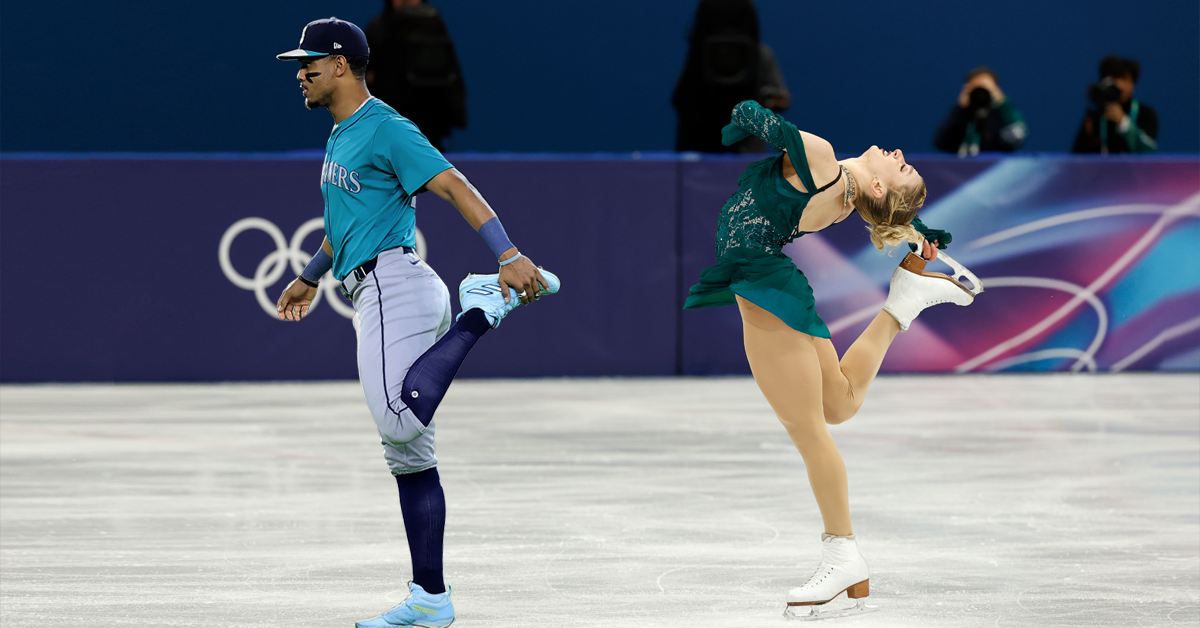
So that’s Twizzling. What’s it got to do with baseball? Sadly, not as much as one might hope. The competitors do boast bulging quadriceps, and they do move gracefully across a pristine surface while wearing shoes that have knives attached to the bottoms, and they do put all of their effort into generating maximum rotational energy, but as it’s rare to see baseball players spin more than once, and it’s even rarer to see them start those spins with a Dance Jump. The closest baseball equivalent to a Twizzle is when the center fielder chases down a ball in the gap and then has to fire the ball back in to the infield. Because all their momentum is pushing them toward their glove side and away from the infield, the only way they can get anything on the throw is to use that momentum to execute a neat little spin. It’s sort of the baseball equivalent of the gravity assist.
I’ve always been fascinated by this particular move. I still remember the first time I ever saw it. I was a junior in high school, and during batting practice before a game, this enormous guy from Strasburg just did it as nonchalantly as you’d scoop up a routine grounder at first. I was flabbergasted. His name was Joe Bauserman. Later that night, I would throw him a fastball that just missed the corner low and outside, and he would reach out and swat it over the right field fence, which is not generally a thing that happens when you’re a junior in high school. A couple years after that, he’d get drafted by the Pirates and spend a few months playing alongside Andrew McCutchen. I like to think they still keep in touch.
I usually play in the infield, so I’ve only had one occasion to try the Baseball Twizzle. I was playing in an adult league in Queens, and somebody smoked a line drive into the right field gap with a runner on third. I lit after it and made one of my better running catches, then swung around to fire the ball home. But I didn’t Twizzle. I wasn’t an outfielder, and, unlike Andrew McCutchen, I’d forgotten all about Joe Bauserman. Instead of turning away from the infield and executing a full spin, I fought against momentum and turned toward the infield. It was a mistake. I was no match for the momentum, which slammed me backwards into the ground. Luckily, our pitcher was a doctor, and he declared me concussion-free (though I do recall that for the next few days, I experienced an unusual urge to watch cross-country skiing).
In the interest of international cooperation, we’re going to award medals to the best Twizzlers in the major leagues. I spent much of Wednesday watching clips of center fielders making plays in the gaps and taking note of all the Twizzles I could find. We’re now going to count down the top three Twizzlers. To maintain the spirit of the ice dancing at the actual Olympics, the judging will meander from opaque to capricious to arbitrary to downright corrupt. (As such, should any big league center fielder want to move into medal contention, hit me up on Venmo and we’ll work something out.) I will say, however, that I did not intend to recognize players from three different countries, or that all three are participating in the World Baseball Classic. That honestly was a pure case of Olympic serendipity. Here we go. Get yourself a big old dose of Ballegardyl and let’s hand out some Twizzling medals. (Editor’s Note: Do not under any circumstances take Ballegradyl. We’re still writing settlement checks for the Percoviagranax debacle.)
The first medal goes to South Korea’s Jung Hoo Lee, an excellent showing for a player in his first full season here in the states. Lee is about to represent South Korea in the World Baseball Classic, so keep an eye out for Twizzles in Pool C. Still, Lee reached the podium more due to quantity than quality, which is why he’s down here with a bronze. He just barely beat out Rockies fly-chaser Brenton Doyle, whose Twizzles were smoother, but less frequent. Lee’s Twizzles were often lackadaisical, and he rarely included Additional Features – would it kill the guy to lift his cleat over his head every once in a while? – but the judges appreciated that he sometimes seemed to go out of his way to execute a twirl. He just needs to string together a couple in a row and he’ll be in business.
Pete Crow-Armstrong is a fitting recipient for a silver medal here. Like Lee, he’s about to represent his home country in the World Baseball Classic, when he mans center field for Team USA in Pool B. More importantly, he’s is one of the best defenders in baseball. As with so much of his game, PCA’s Twizzles erupt in a frothy blend of ebullientpuppy-dog energy and athletic grace. It’s worth noting that he overcame a slight hurdle to get here. Lefties get fewer chances to Twizzle than righties, because when they’re moving toward their glove side, they’re moving toward third base, so a spin isn’t always required for that particular throw. That didn’t stop Crow-Armstrong, who executed multiple Twizzles to third, and even Twizzled out of a dive once, an Additional Feature that won over even the cynical (and definitely corrupt) French judge.
Our gold medal Twizzler is representing the Dominican Republic in the WBC. Julio Rodríguez’s Twizzles aren’t always as flashy as Crow-Armstrong’s, but no player Twizzled more than J-Rod. His Twizzles weren’t just an affectation, either. Rodríguez always Twizzled with purpose. He broke down his steps. He pivoted hard. He came up firing. He sent the ball toward the base on a hop to make sure that he never overthrew anybody. All of this results in Twizzles so fundamentally sound that they brought a tear to the eye of even the curmudgeonly Ukrainian judge, and let me tell you, that guy has seen some stuff.
Rodríguez’s Twizzles kept runners from advancing multiple times. He often looked like a twirling ballet dancer, whipping his head around to locate his target as quickly as possible in order to ensure an accurate throw. On one play, he was just backing up the right fielder. It didn’t look like there was much chance the ball would even get to him, but not only was he ready, he was ready to execute a textbook Twizzle, and it might have even been scored a Level 2 Twizzle if he’d just Dance Jumped into it.
Congratulations to all of our medalists, and please join us tomorrow as we break down which ballplayers would be best at doubles luge.