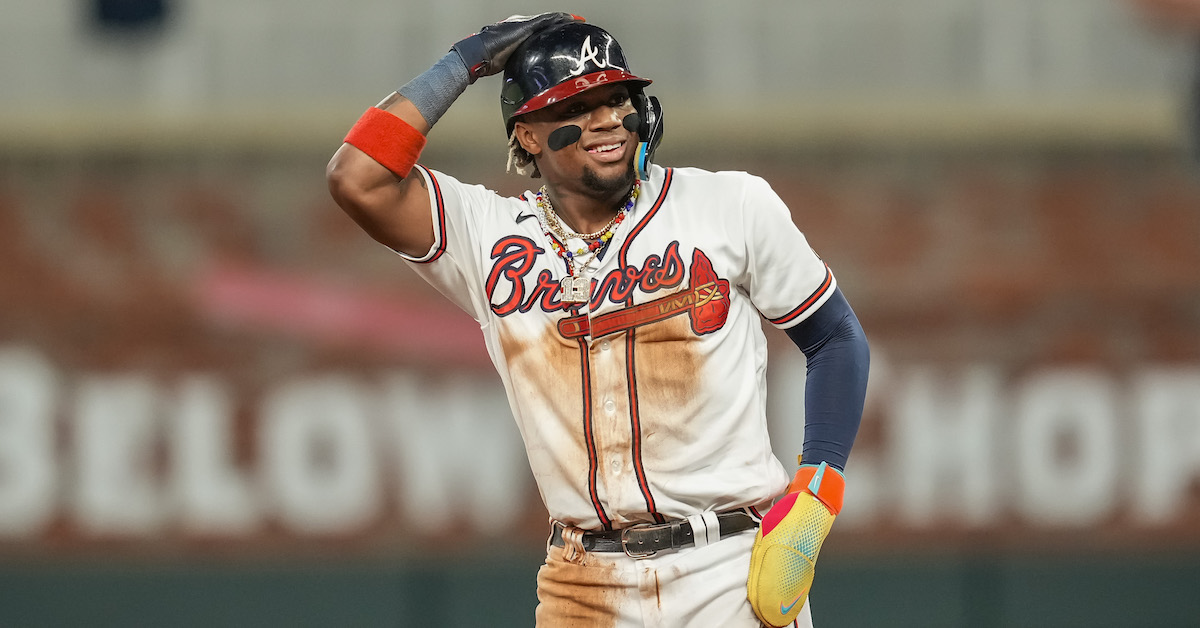
Earlier today, Michael Baumann gave an accounting of the league’s shortstops. Now we turn our attention to the third basemen.
Welcome to the ultimate tweener position. Like shortstop, the hot corner was a glove-first position in the early days of baseball, but it has evolved to the point where it’s hard to be competitive if you don’t offer something with both the glove and the bat. This kind of hybridization has probably hurt third basemen in their quest for legendary status. Baseball’s classic ways of evaluating talent — Triple Crown stats and Gold Gloves/defensive reputation — tend to diminish well-rounded players without a single standout skill to point to, creating a very high bar for third basemen to get attention. Measures like WAR can remedy this problem by putting one estimate on a player’s total contribution, but even with an increased focus on WAR-type measures, eight of the top 20 third basemen by Jay Jaffe’s JAWS who are eligible for the Hall of Fame (and who are without PED whispers) aren’t enshrined in Cooperstown. Contrast that with first base, where only on player in the top 20 isn’t in the Hall (Keith Hernandez). Hitting a bit worse than first basemen and fielding a bit worse than shortstops aren’t great plaudits for your sizzle reel. Read the rest of this entry »
Yesterday, Jay Jaffe and Ben Clemens examined the state of first and second base. Today, we wrap up the infield positions, starting with a look at the league’s shortstops.
Shortstop is an incredibly important position. A team that can find someone to field it competently and put up significant offensive numbers can profit substantially. You’d think it’d be difficult to find a player who can do both. And yet, out of the 30 shortstop situations around the league, there are only a handful of real stinkers. Everyone else has a recent blockbuster free agent, or an emerging top prospect, or at the very least a solid starter. Teams know the value of a good two-way shortstop, so when they find one, they treasure him: Of the top nine teams in this ranking, seven have a starting shortstop who’s currently on a contract worth more than $150 million. Read the rest of this entry »
Earlier today, Jay Jaffe covered the league’s first basemen. Now, Ben Clemens examines the state of the keystone.
As has been the case for quite a while now, second base feels like the island of misfit toys. Players who don’t quite fit at other spots on the diamond end up playing second. Shortstop who can’t quite field enough? Try second. Corner infielder whose bat doesn’t quite equal your competition? Maybe you can field a little, give it a shot. Good athlete without the range for center field? Sure, why not, second might work out.
That leads to a lot of different styles at one position. There are the classic little guys who do a little bit of everything – think Jose Altuve and Andrés Giménez. There are bigger shortstop types who nonetheless look mostly like the middle infielders of a generation ago, just slightly larger – think Marcus Semien, Xander Bogaerts, or Matt McLain. Then you get into the boppers. Nolan Gorman truly doesn’t look most people’s mental image of a second baseman. Colt Keith and Edouard Julien don’t either. They’re all beneficiaries of the new way teams are thinking about second base.
One knock-on effect is that second base has a high floor and a low ceiling. Teams almost never have their very best player at second; if your best player is a transcendent defender, they’ll probably play shortstop, and if they’re an imposing hitter, they’ll probably end up in a corner. On the other hand, second now draws from a huge pipeline, which means more competent players get on the field instead of languishing as a backup somewhere else. Take out one or two of those converted second base types who have become popular of late, and the position would look much thinner towards the bottom.
That also means that second base is well aligned with a team’s overall talent level. If you’re a good team, you probably have someone good to throw at second. If you’re not, you don’t. Only two teams in the bottom 10 of these rankings have even a 30% chance of making the playoffs. No other position is so universally strong across the contenders. So I hope you enjoy your team’s second base play this year – increasingly, it’s a great way of figuring out if you’ll enjoy their play in general.
Semien might be the game’s quietest star, but make no mistake: He’s a star. He was the best second baseman in baseball by a mile last year, with his 6.3 WAR lapping the field by a full two wins. He plays a ludicrous amount; in the past five 162-game seasons, he’s averaged 730 plate appearances and 161.2 games played. He’s a true everyday player, and one of the best defensive second basemen in the game in addition to being well above average at every aspect of hitting.
With that kind of inhuman consistency penciled in, the Rangers back Semien up with a whole lot of nothing. Why would they do anything else? This is the kind of player you can construct a lineup around – or perhaps I should say construct a lineup behind, because every one of his 753 plate appearances in 2023 came in the leadoff spot.
Every team in baseball would jump at the chance to plug Semien into their lineup, but only the Rangers actually got to – and in a year where he was comfortably their best player and they made the playoffs by the slimmest of margins en route to a championship, no less. This season figures to be more of the same.
Giménez regressed in every imaginable way last year. His power went way down, he walked less frequently, and his BABIP declined by 64 points. By all accounts, it was a disaster of a season, except that his baseline was so high that he still put up 3.6 WAR thanks to a league average batting line and sterling defense. That’s the best way to think of Giménez’s game – he’s not an elite hitter all the time, but even when he’s not hitting well, he’s so good at everything else that he’s still great.
In 2024, we project him to finish with an offensive line roughly halfway between his last two seasons. He has enough power to slug 15-20 homers, enough bat control to strike out less frequently than average, and enough speed to churn out infield singles. He doesn’t walk very often, which means he’s prone to prolonged hot and cold streaks depending on how the ball is bouncing. But that kind of offense works out better than average in the long run, and everything else that Giménez does well means that “better than average” is a great outcome indeed. José Ramírez might be Cleveland’s superstar right now, but Giménez isn’t far from taking the baton.
One quick note: Should Giménez miss time or end up playing shortstop (he has the defensive chops), any of roughly 17 billion middle infield prospects will cover second for the Guardians. Your guess is as good as ours as to which one, which you can see in our playing time estimates up above.
Does it seem weird to you that Torres is projected for more WAR than he’s ever compiled in a single season? It definitely seems weird to me, but after digging into the numbers, I can see it. The reason for that projection is that he very nearly had a career year in 2023, only for defense and baserunning to let him down. We project him to regress towards the mean in both categories in 2024 while maintaining most of his offensive gains (more walks, fewer strikeouts, same power).
It’s difficult to improve in as many categories as Torres did last year all at once. He upped his walk rate from below average into the double digits. He went from striking out 22.6% of the time to 14.6%. He did all that while still clobbering 25 homers, the best mark of his career aside from the Year of the Rabbit (Ball) in 2019. It would hardly be shocking to see him out-hit the two guys in front of him on this list; the raw talent has always been there and he’s tapping into it more than ever.
The risks, as they often are with the Yankees, are health and consistency. Torres has only eclipsed 600 plate appearances twice in five full big league seasons. He’s dealt with a number of nagging injuries in the past three years. The Bombers really need him to pan out – the depth chart behind him is speculative at best. Torres’s median projection is nice indeed, but risks abound.
Surely this can’t continue forever, right? Altuve is about to turn 34, and he missed a ton of time due to injury last year, so you might expect him to slow down. Instead, he had one of the best offensive seasons of his career. If he were to run that campaign back over a full season, he’d top these rankings this year – but at some point, the party can’t possibly keep going.
Altuve ran a .348 BABIP last year, one of the highest marks of his career, despite declining footspeed and hitting a ton of pop ups. He chased more often while swinging less frequently at good pitches. He made less contact and also took more called strikes. You could make the case that our projections aren’t taking all the warning signs seriously enough.
On the other hand, Altuve’s career is essentially a series of warning signs that haven’t come true. He’s too small. He can’t hit for power. He won’t age well. He’s a product of the offensive environment. None of those forecasted declines have actually happened, though, so what’s one more year of defying the odds? The Astros sure hope it’s that easy, because Dubón is absolutely not the answer in a full-time role.
Hoerner is coming off of two straight 4-WAR seasons, and he’s doing it with his glove and his legs. He has a 104 wRC+ over that time period, but he’s sixth in the majors in baserunning and sixth in defensive value (excluding catchers). That’s how the Cubs ended up fifth in these rankings despite a wOBA that matches 13th-place Minnesota.
Hoerner is an excellent shortstop playing out of position, so I don’t think the defensive value is likely to wane. I’m less optimistic about his baserunning, but our projections already bake in meaningful regression there. I’d be surprised if Hoerner tops 10 homers in 2024, but I think he’ll be one of the most valuable second basemen in baseball anyway thanks to a combination of defense and contact skills. Not every excellent player gets there with gaudy counting numbers.
The odds of this playing time projection working out exactly are quite low. Hoerner might get hurt, or he might end up covering innings at shortstop. The Cubs have plenty of depth, though. Busch, Morel, and Madrigal all project meaningfully above replacement level. Mastrobuoni is a nice utility infielder. It might not immediately look like it, but Chicago is set up for success in the middle infield.
The best two fielding seasons of Bogaerts’ career, per Statcast, came in 2022 and 2023 at shortstop. The only problem is, those seasons were just a hair above average, while Ha-Seong Kim showed off elite defense when given the chance. That means the spot that X is marking is now second base, and I have some real questions about how it will all work out.
Few of those questions come on the offensive side of the ball. Bogaerts could fall out of bed and post an offensive line 20% above league average while making himself coffee. He has plus power, makes good contact, and doesn’t get himself out. Some of the power he displayed at his peak was undoubtedly Fenway-aided, but even in San Diego, he looks like a 20-homer guy with enviable strikeout and walk numbers.
The problem is that I have no idea how Bogaerts will handle second. In theory, he should be great; he’s been improving on defense for years and now gets an easier position. But not everyone makes those transitions smoothly, and he doesn’t hit well enough to be a star if he’s a below-average defender at the keystone. My base case is that he’ll look just fine out there, but it’s not a lock.
Should injuries or defensive hiccups change this arrangement, the Padres have a ton of backup plans. Cronenworth is a sterling defender who is comically miscast at first. Rosario played a lot of second and short in the minors. Merrill is currently trying his hand in the outfield, but he’s an infielder by training. Bogaerts might be the worst defensive option out of the bunch – but where else are you going to play him?
I don’t have groundbreaking insights for every team’s second base situation. The Diamondbacks, in particular, leave me without a lot to say. Have you heard of Marte? Of course you have. He’s been good for years and just led his team to the World Series. Can you imagine what it looks like when he’s good? Of course you can. You just saw it in October, and for all of last year really.
Do we think anything will be different this year? Nah. We think Marte will hit for power and average. We think he’ll handle second base adequately; sticking with one position instead of pinballing around the field has been good for his defense. We think he’ll be good for 630 PA – debatable given that 2023 is the first year he’s surpassed that mark, but hey, he surpassed it in 2023! He’s good in a classic way, a bunch of plus skills adding up to a plus-plus player. If he’s healthy, not much will change in 2024. If he’s not, none of the options below him on the depth chart will be able to make up for his production. Sometimes it’s as simple as that.
Albies is a modern marvel. His game doesn’t look like it should work. He’s so small, and yet he takes gargantuan hacks. His approach at the plate could charitably be described as voracious. He’s technically a switch-hitter, but he boasts a career 145 wRC+ against lefties and a 98 against righties. Things really shouldn’t work for him as well as they do.
As you can probably tell from both my description and Atlanta’s place on this list, however, things do work well for Albies. His game relies on him being a complete outlier when it comes to reaction time and power generation, and he’s absolutely both of those things. You can pretty much bank on 3-4 WAR in a healthy Albies season, one way or another.
That suits the Braves just fine. Albies doesn’t have to be their best player. According to our Depth Charts, in fact, he’s their sixth-best guy. That’s the kind of team building that has the Braves head and shoulders above their division and annually challenging for 100 wins. The depth behind him is surprisingly good, to boot: Guillorme and Fletcher both play defense well enough that even with lackluster bats, they’re reasonable second options should Albies miss time.
If you’re tired of reading “this little guy does a lot of things well” in this article, the Rays have you covered. Lowe doesn’t fit that profile despite being fairly short of stature himself. He’s good at one thing above all: hitting dingers. He’s at the plate trying to launch the ball, and if it costs him some BABIP or some strikeouts, so be it. He’s acceptable, but no more than that, on defense. He doesn’t steal a ton of bases. But dingers! They’re so valuable! The whole package works as long as he can keep hitting them.
His aggressive approach means he chases too many bad pitches, but he makes up for it by pouncing on fastballs and hanging breaking balls over the heart of the plate. He’s not one of the Rays’ crop of pull-enabled hitters with below-average power who make it work anyway; he has elite exit velocities and barrel rates, and makes the most of them by gearing his swing for fly balls.
As you’d expect from a lefty slugger, Lowe has performed much worse against southpaws in his career, which is where the deep Tampa Bay bench comes in. Rosario is a lefty-killer who looked adept at second in a brief audition last year. Walls, who is still recovering from offseason hip labrum surgery, can cover any infield spot. Mead is more of a third baseman, but he can play second in a pinch. This is the kind of depth you expect from the Rays.
This one is pretty much guesswork. The Dodgers had the best second base situation in the majors before they announced that Betts was moving to shortstop full-time after Lux had a spate of throwing issues in his spring training audition there. They’re still more or less the same team regardless of which way they line up their middle infielders, but taking one of the best hitters of the 21st century from 600 plate appearances down to 150 is a great way to move down the second base power rankings specifically.
You know what you’re getting with Betts – even in an extremely part-time role, he gives the position a 1.3 WAR boost – but Lux is still a mystery. Despite breaking into the bigs in 2019, he’s only racked up 1,003 PA in the majors thanks to a checkered injury history. He looked solid offensively and defensively in 2022 before missing all of last year, but that’s a short track record for someone who’s theoretically a key part of the offense.
In fact, Lux might be the highest-variance piece of the Dodgers’ roster. If he’s All-Star caliber, the offense will be deep and resilient to injury. If he’s average or below, his playing time is going to vanish quickly, in favor of either Betts or Taylor. In my opinion, this is the most volatile second base projection out of any team in baseball.
I think this is too low for the Reds, but I also think that India’s playing time at second is going to wither away to zero as the year goes on unless someone gets hurt. McLain is the best young player you may not know much about. He’s been overshadowed on his own team by Elly De La Cruz, and he slipped on Rookie of the Year ballots thanks to an injury-abbreviated season, but he’s a plus defensive shortstop who should excel at second and is a great hitter to boot. We’re projecting him as the best player on the Reds by a good margin, in fact.
Why doesn’t he have more of a grip on playing time at second base? For two reasons. First, he’s going to play some shortstop to back up De La Cruz. Second, the team really wants to find somewhere to put India, who looked like he had one foot out the door when the team signed Jeimer Candelario this winter but miraculously stayed put. India’s best defensive position is DH, but the Reds have a cavalcade of hitters they’re planning to rotate through there. That forces India into the field, and second is the natural place to put him. Things will get even more complicated when Noelvi Marte returns from his PED suspension, but the path of least resistance is for McLain to end up as an everyday starter and for the rest of the options to find someplace else to play.
Gorman is a prototypical corner infielder, with middling footspeed and huge power. The Cardinals employ Paul Goldschmidt and Nolan Arenado, though, so he’s been ticketed for second base since the low minors. He broke out last year despite a 31.9% strikeout rate and sketchy defense. You can get away with a lot when you crack 27 bombs in 119 games of playing time. He’ll likely be bad at a lot of things again in 2024 and put up a good season anyway, because hitting the ball over the wall comes so naturally.
Gorman will get plenty of time at DH thanks to his indifferent defense, and the team likes to give him rest against tough lefties, which means their brigade of multi-position defenders will play a lot of second as well. Donovan put up an equivalent offensive season to Gorman in an extremely different way, and might be a better defender. Edman has an elite glove, though he’s playing a lot of outfield these days. Saggese has looked like a revelation this spring, potentially forcing himself into the team’s plans. Heck, we even have Brandon Crawford down for a few games, despite exactly zero professional innings at the position.
Every one of those options except Saggese has an above-average projection, which means it might not matter exactly who plays second for the Cardinals. They’ll probably end up around this spot in the rankings no matter how they divvy up playing time.
If you like Joey Votto but think he swings a little too often for your liking, you’re going to love what Eddie Jewels brings to the table. If you throw him something outside the strike zone, he’s not swinging. No one swung less frequently at balls in 2023 than Julien. Of course, he’s liable to watch strikes go by, too, and his big swing, geared for maximum damage, means that even his discerning eye can’t stop him from running up ugly strikeout totals. But a 30% strikeout rate is more palatable when accompanied by 15% walks and a heaping helping of homers.
Without some contact improvement, Julien’s offensive potential is fairly capped; there’s only so much you can do to offset all those strikeouts. That’s more or less why he plays second base; he wouldn’t be a star-level first baseman, so the team is hoping he can be a star-level second baseman with defensive improvement. If Julien improves offensively while continuing to scuffle in the field, I think he’ll end up at first soon. But as long as he’s not an overpowering offensive force, the Twins will continue to throw him in the middle infield and hope he can hang.
He probably can! And Farmer is a good defensive option for later in games or for when Julien DHs. There’s even some prospect juice here; Lee looks just about ready for The Show. A lot of the time, though, the Twins are going to live with bad defense and too many strikeouts, because everything else Julien does is just that good.
Ooh, shiny! The best prospect in baseball gets a lackluster projection, but as you can imagine, the error bars here are considerable. ZiPS and Steamer are understandably restrained in their guesses for rookies because plenty of them struggle in their first bite at the major league apple. Holliday certainly looks like a stud, but that doesn’t mean he’ll be a top hitter right away, even if his long-term prognosis is blindingly bright.
Luckily for the O’s, they have a nice contingency plan. Westburg might be too good of a hitter to profile as a utility infielder long-term, but in 2024, he’ll rotate between second and third depending on which of the team’s other precocious youngsters click immediately. We actually project second, third, and short to all be time-shares for the O’s, with Holliday, Westburg, and Gunnar Henderson shuttling around the three spots. Urías fits into the mix as well, though likely with the least playing time out of the four.
The top farm system in baseball could complicate matters; Coby Mayo needs somewhere to play too, and that might be third base. That puts a squeeze on second indirectly. In my mind, though, Westburg is a great bet for above-average production, and Holliday is going to get a full season of playing time even if he starts slow. It’s a tough puzzle to solve, but also a rewarding one; there aren’t many wrong answers here.
If you like Stott for his offense, you’re doing it wrong. He’s something of a cult hero in Philly for his ability to foul off an unending stream of two-strike pitches, but 40-grade power and pitch recognition mean that he was only average offensively in 2023 despite an elevated BABIP. You can defend the plate as much as you want; if you swing too often at balls without doing damage on strikes, the ceiling is low.
That said, Stott is still a very good major leaguer because of his glove. He was among the best defensive second basemen after moving over from short last year. His arm strength was the sole blemish in his defensive profile, and that’s mitigated now that he’s playing closer to first. What’s left is a beautiful combination of acceleration, reflexes, and sure hands that lets him range shockingly far in both directions, making spectacular and routine plays alike.
Without more offense, which I find unlikely, Stott isn’t a perennial All-Star. But he’s an excellent everyday regular, and the Phillies seem content to let him run with the job – wisely, in my opinion. Merrifield is a nice utility option, but his offensive game is sub-Stottian and his defense isn’t in the same stratosphere. We think that most of his playing time will come in the outfield, leaving second in Stott’s capable hands.
Polanco is a bankable commodity at second base, the first time the Mariners have had that since Robinson Canó’s heyday. He hits a ton for a second baseman. He’s always had sneaky power, and he’s started working deeper counts in recent years hunting pitches to drive, which has bumped up his walk and strikeout numbers in equal measure. Second basemen who are 10% above average offensively don’t grow on trees.
That said, there are two red flags here that push the Mariners down the list. First, Polanco’s defense has slipped. He used to be a shortstop, but he was a poor one and that was years ago. He has the worst defensive projection among full-time second basemen, in fact. That eats into the good things he’s doing on offense.
The other issue is durability. Polanco has missed significant time in each of the past two seasons. The Mariners don’t have a lot behind him. Moore is a nice multi-position backup who would be miscast as a starter. Rojas is already a platoon starter at third, so he won’t be available that often. Bliss is probably still a year off. In summary, the base case for Seattle looks acceptable, but the downside risks are tremendous.
This is the ranking I disagree with the most. Grissom has the kind of game that feels tailor-made for Fenway, and I also think that having a consistent position and playing time will help with his defensive shortcomings. He showed plus power in the minors and makes a lot of aerial contact, two skills that will combine to produce a ton of wall-ball doubles and lofted homers. It’s not just a Fenway skill, either; Tropicana Field suits his swing well, though hopefully he’ll get some days off when the Sox visit Baltimore and its left field power trap.
I think that the biggest legit question with Grissom is whether he can actually play second, but ZiPS’s defensive forecast thinks he’ll do passably well there, which is good enough for me. Or maybe I’m being a little unfair to our projections, because there’s one more important question: how soon he’ll be healthy. He’s going to miss Opening Day, which is why we have Valdez getting a substantial amount of run. Valdez is a solid utility infielder, but he’s not a first-division starter in the same way that I think Grissom is. The options behind him are break-glass-in-case-of-emergency, nothing more. This is the Grissom show, for better or worse.
Feast your eyes on Oakland’s best projected position (well, other than the starting rotation). Gelof tore up Triple-A and then kept it going in the majors last year, playing at a 6-WAR pace. Obviously, we’ve baked in a good amount of regression, but it’s hard for me to see anything other than a good big league regular when I’m looking through his numbers.
Does he get on base enough? Not really; it’s hard to when you’re a fly ball guy with strikeout issues. But he looks like a perennial 15-20 homer type, even in the cavernous Coliseum, and the early returns on his defense are solid. An average second base defender with power isn’t any great shakes – Oakland is only 18th on this list, after all – but the A’s are desperately short of quality major leaguers, so in that sense Gelof is an outlier.
Of note, the options after him on the depth chart are bad — like, catastrophically bad. I’m an unrepentant Abraham Toro fan and even I wouldn’t want to play him at second base, and that’s the good option. The A’s aren’t going to be contending for the playoffs or anything, but even from a low floor, there’s a sizable falloff here if Gelof gets hurt.
What a delightfully uncertain forecast. Any of the top six options could feasibly win this job on a full-time basis, though I think the base case of using second base for whichever multi-position hitters aren’t playing somewhere else that day makes sense. It also makes sense to me that Schneider and Biggio are the two players most likely to seize the job. Schneider cooled off enough last year that the job isn’t obviously his, while Biggio has never quite been able to stick at one position as a starter. The most likely situation is that they share the role; they’re natural platoon partners without obvious other places to play. They both moonlight as outfield backups, but the Jays have a packed outfield already.
This situation won’t get any easier if Justin Turner plays more third base than originally expected. That’s what has Espinal entering the second base equation. He’s a solid defender who would normally have a short-side platoon role, only Schneider’s emergence has made that role less useful. That doesn’t even get into Clement and Martinez, interesting prospects both, though I think that Martinez’s performance was uneven enough that he won’t enter into the equation unless he goes on a tear to start the season.
And we’re not even done! Kiner-Falefa is another hitter in the Espinal mold, glove over bat with the ability to play all over the place. He’s also going to play third base and the outfield, so he won’t have much time at second base, but it’s going to be a veritable logjam. The good news is that this position is comically immune to injury. The bad news is that John Schneider is going to be spending a lot of time telling guys that they can’t play second today.
Arraez ranking 20th feels low given his electric 2023 season, but remember, these are team rankings, and we think Arraez is going to spend roughly half his time at second, with the rest split between first base and DH. There’s also the pesky matter of WAR not loving him; despite chasing a .400 batting average for most of the year, he was only 31% above average with the bat and gave away a lot of that value in the field and on the basepaths.
That said, if you’re looking for upsides here, they’re easy to see. Arraez hit for more power in September, and he did it the easy way: by swinging harder. His actual results were excellent. His xStat results were also excellent — like, best full month of his career excellent. There’s a chance that Arraez is in the middle of turning into a more complete hitter, and he was already a good hitter in contact-only mode.
Ideally, the Marlins would find somewhere else to stash him to hide his defensive limitations, which brings the backup brigade into play. Between Bruján, Berti, Gordon, and Edwards, I think the Marlins will turn up one interesting bat capable of playing second. I have no idea which one of them it will be, though.
Meet the previous Luis Arraez, same as the current Arraez. McNeil built a career on looping line drives over the infield, but everything went wrong in 2023. He’s never made particularly loud contact, but that got worse last year, and without a raft of doubles or 2019-aided homers to bail him out, his offensive game was just empty average. At his peak, he delivered four seasons with a wRC+ between 130 and 145, but I don’t think there’s much chance he repeats those lofty numbers. That’s not to say he’s a bad hitter – “empty average” is still useful if you’re running a .350 OBP – but short of a late-career bat speed boost, I can’t see that repeating.
The good news is that McNeil is still an above-average player thanks to acceptable, albeit unconventional, defense. The Mets of recent years have dealt with roster holes that undermined the contributions of stars, but McNeil is a nice supporting piece these days. The lack of depth is worrisome, though; Wendle was atrocious last year, and he’s the only reasonable substitute when McNeil gets rest or plays somewhere else, either an outfield corner or DH. In other words, we might be one muscle tweak away from the same old Mets, and McNeil missed most of spring with a bicep injury, so things aren’t exactly starting out on a promising note.
Wondering why Estrada and the Giants place so low on the list despite his 3.9 WAR 2023? I can offer a fairly simple explanation: We don’t believe in his defense. After four straight years of average defense, he turned in an absolutely dominant 2023 – if you believe OAA, that is. If you believe DRS, he was still just average. His offensive game didn’t break out, either; he rode a .331 BABIP to an average overall line, and he still strikes out way too frequently for someone with his modest walk rate and power production. That puts a lot of pressure on his defense, and like I said, that’s up in the air.
One interesting subplot here: In recent years, the Giants have done a ton of platooning and positional shuffling. Estrada played shortstop and even moonlighted in the outfield last year. If the Giants believe in his defense, they probably won’t do that again, because none of the options behind him are great defenders. Bob Melvin also seems like less of a serial tinkerer than Gabe Kapler, which argues in favor of leaving Estrada in one place. I think that’s a smart decision; I’ve never liked shuffling players just to shuffle them, and flexing Estrada elsewhere on the field probably only makes sense if he’s covering shortstop to get Flores’ bat in the lineup. Other than that specific configuration, I would put him out there every day and let the chips fall where they may.
Keith signed a long-term contract this offseason and the Tigers didn’t have anyone blocking him, so the path of least resistance is for him to end up in the majors right away to see if he can hang. He’s a fearsome hitter already; he checks pretty much every box, with excellent raw power, good contact numbers, and an advanced sense of the strike zone. That doesn’t mean he’ll excel immediately, because prospects are volatile, but this combination of tools and performance bodes well.
The big question with Keith is defense. He’s struggled at both third and second and might be an outfielder long-term. The Tigers will give him every chance to succeed in the infield, but it’s possible that he just can’t hack it. The team clearly understood that, though; they’ve stacked their roster with other options at the keystone. Three utility infielders back him up, with Ibáñez the most interesting in my eyes. If nothing else, he’ll probably spell Keith against tough lefties and sub in defensively. Sure, 23rd in the majors sounds bad, but I like the way this team is set up going forward. They might project for 23rd this year, but the trend is clearly upward.
Rengifo’s skill set has always been an enigma to me. He doesn’t hit the ball particularly hard, or make an outrageous amount of contact. He’s not a line drive specialist, or one of those guys who walks 15% of the time no matter what. He doesn’t strike out very often, but that’s basically it. He’s a below-average defender at multiple positions. It might seem like I’m not painting a pretty picture, and well, I’m not. This is what some of the bottom situations in baseball look like for second base: not unplayable by any means, but below average considering what other squads are bringing to the table at the position.
If you’re looking for a clear place where WAR isn’t working well, second base might be it. This is a “league average” projection, and yet 24th in baseball. It’s pretty clear that teams can manufacture average players at second base more easily than at other positions.
That mini-rant aside, maybe the Angels won’t end up this bad. Our projections like Drury less than Rengifo, but he’s been raking for two straight years. His offense is boom-or-bust – he strikes out a ton and rarely walks – but he has 30-homer power, which makes up for a lot of sins. He might be their best option at second – and potentially at a few other spots.
That offensive projection for Turang should scare you. You can’t be a major league regular if you hit like that, unless you’re delivering Andrelton Simmons levels of defense. Turang can pick it, no doubt, but he’s likely not even as good of a defender as Ortiz, who is breathing down his neck for playing time. Ortiz’s newfound power gives models and analysts hope that he’ll break out of the slap-hitting archetype and into the good-hit/great-field role instead, though that’s still an open question given his limited major league experience.
The way I read this situation is that the Brewers think both players are in their long-term plans, but haven’t decided where each will play. They could both handle shortstop, and one likely will when Willy Adames leaves in free agency. That will result in some awkward playing time crunches in the short run, but Milwaukee is always playing for tomorrow as well as today. If Turang replicates his 2023 batting line (.218/.285/.300), though, he might fall out of that picture by year’s end.
Massey was a trendy sleeper pick last season, but he never woke up. The Royals brought in some retreads to push him on the depth chart, but Frazier looked pretty cooked in Baltimore last year and Hampson is already 29 and 1,500 plate appearances into a lackluster (70 wRC+) career, though things went better than that last year. That makes me think that Kansas City is behaving rationally given its position in the standings and is giving Massey every possible chance to establish himself in the bigs.
It’s hardly out of the question that this plan could work out. Massey has legit power and his contact skills took a step forward in 2023. He’s capable defensively, too; he’s the kind of gamble the Royals should be taking. Even if they’re wrong in this particular instance, they’ll win in the long run. I don’t always like the way the Royals run things, but the way they’re handling Massey makes a lot of sense to me.
Sigh. Rodgers had huge promise as a prospect, with a hit/power combination that jumped off the page. He’s a good reminder that things don’t always pan out, even for seemingly high-floor prospects, and that the Rockies have been unlucky in addition to being unskilled in roster construction. But like Fox Mulder, I want to believe. Rodgers still makes loud contact, and he’s not lost at the plate by any means, but for whatever reason, he’s yet to put together even a reasonable offensive season.
The most likely culprit is injury. Rodgers has been hurt a lot in his career, rarely managing an entire season without a stop on the IL. That can make it tough to get into rhythm, though obviously I’m just guessing here. Whatever the cause, Rodgers is fast approaching free agency (!) and still hasn’t quite established himself. The only reason he’s penciled in for so much playing time is that the other options are no great shakes either. Amador is probably the future here, either at second base or short, but he’s still a year away, so Rodgers will get one last shot at the job.
García is stuck on the ground, and it’s holding back an otherwise promising offensive game. He has good raw power and outstanding bat control, but he’s wasting that power by hitting grounders at a huge rate. To make matters worse, he’s not doing as much as you’d expect when he does get the ball in the air. He sprays the ball to all fields, but he’s not barreling it up often enough to take advantage of that approach. When he gets into one, it really goes, but there are simply too many lazy fly balls to center and grounders to second in his batted ball mix.
He’ll get plenty of chances to fix that fatal flaw, because the Nats are desperately thin at the position. Lipscomb is a third baseman who has been roughly average offensively in the minors. Alu is a similar player, though he’s already had a cup of coffee in the majors. Vargas is 32 and has a career 75 wRC+; he’s not part of the long-term solution. Nuñez’s status is uncertain; if he doesn’t make the Opening Day roster, he’ll return to the Marlins as a Rule 5 pick. That said, he doesn’t look like he’s ready to face big league pitching. In other words: García is by far the best option here.
This ranking feels too harsh to me, and I think I can explain why. This seems like the kind of situation that will work out better than the projections thanks to volatility. The error bars on all four primary options are huge. Gonzales raked in Triple-A last year, albeit with worrisome contact issues. Peguero has barely played above Double-A. Triolo looked interesting in the majors last year; I don’t think he’ll repeat his .440 BABIP, but I also don’t think he deserved a 30.1% strikeout rate, so maybe that’ll balance out. Bae was an intriguing prospect who struggled in his first year of big league action, and our two models rate him wildly differently: Steamer sees a 91 wRC+ in 2024, ZiPS a 75 wRC+.
Without getting into the specifics too much, one of these guys is probably better than their projection. That guy will probably take the job from the others, because no one here has a firm incumbent’s grip on it. I’m not sure who it’ll be – I’d take Gonzales if you held a gun to my head, but please don’t hold a gun to my head – but I like Pittsburgh’s chances of finding at least one useful second baseman in this group.
Yeesh. The White Sox never managed to get value from second base even when they were good, and things are trending straight down right now. None of these guys are even close to average offensively; I’m not even sure this crew would be good hitters in Triple-A, with the possible exception of Lopez. Simply put, this is what the early stages of a rebuild look like.
I’ll give the White Sox credit for one thing, though: If you’re going to completely punt a position, you might as well put a good defender out there to help your pitchers. I haven’t seen proof of this, but I’ll always believe that playing in front of a porous defense early on messes with pitchers’ careers. Lopez is one of the best defensive second basemen in baseball, period. He might not drive in a ton of runs, but he’s going to ease a lot of minds, and for a team in Chicago’s position, that’s a great idea in my book.
Yesterday, Meg Rowley introduced this year’s rankings, while Kyle Kishimoto examined the state of the league’s catchers. Today, we turn our attention to first and second basemen.
Two years ago, shortly after the lockout ended, the reigning champion Braves made what felt like a cold-blooded decision, trading for A’s first baseman Matt Olson and then signing him to an eight-year, $168 million extension, effectively closing the door on free agent Freddie Freeman’s 12-year run with the team. Still smarting, Freeman turned around and signed a six-year, $162 million deal with the Dodgers. While the latter still had some hurt feelings to vent, these days it feels as though the sequence worked out for the best for both players and both teams. The pair tops our Positional Power Rankings, just as they did in 2021, in fact, with Freeman, who’s coming off his first 200-hit season and his fifth top-five finish in the NL MVP voting, claiming the top ranking for the third year out of four and Olson climbing after bashing 54 homers. Read the rest of this entry »
It was closer than a lot of us thought it’d be, but Blake Snell has found a job before the Second Coming. The reigning Cy Young winner, left unemployed past St. Patrick’s Day by the merciless vicissitudes of the market, has come to terms with the San Francisco Giants on a two-year, $62 million contract with an opt-out after the 2024 season. Snell’s compensation includes a $17 million signing bonus, payable in January 2026, and a $15 million base salary in 2024.
Snell’s agent, Scott Boras, ran out the usual playbook — leave it late, hold the line, appeal directly to ownership. Boras has gotten more players nine-figure contracts than most agents have in their email contacts, and this is how he does it. And at the risk of being a huge bummer about Snell getting a top-10 AAV ever for a pitcher, the plan seems to have backfired. Read the rest of this entry »
Earlier today, Meg Rowley introduced this year’s positional power rankings. As a quick refresher, all 30 teams are ranked based on the projected WAR from our Depth Charts. Our staff then endeavors to provide you with some illuminating commentary to put those rankings in context. We begin this year’s series at catcher.
2023 was a big year for our understanding of catcher defense, as Baseball Savant launched new Statcast-based metrics to quantify the value of catcher throwing and blocking, adding to their existing framing data. While evaluators already had a general feel for which catchers could keep the ball in front of them and which ones had cannon arms (and while prior work had been done on the subject at Baseball Prospectus, among other places), Statcast’s new numbers furthered our ability to compare each dimension of catcher defense in terms of its relative importance. We learned that Sean Murphyprevented 16 runners from advancing via a wild pitch or passed ball, and saw how Shea Langeliers‘ elite arm accuracy might make future base stealers think twice before running on him. Read the rest of this entry »
Welcome to the 2024 positional power rankings! As is tradition, over the next week and a half, we’ll be ranking every team by position as we inch closer to Opening Day next Thursday. This is always something of a funny exercise. You read FanGraphs regularly, after all — a fact for which we are very grateful — and are well-versed in the various signings and trades that occurred over the offseason. You know that Shohei Ohtani is now a Dodger, just as you’re aware that Juan Soto is a Yankee and Dylan Cease a very recent Padre. And yet, you’re still keen to know more about the game and what it might look like between now and October. The positional power rankings are our answer to that impulse.
This post serves as an explainer for our approach to the rankings. If you’re new to the exercise, I hope it helps to clarify how they are compiled and what you might expect from them. If you’re a FanGraphs stalwart, I hope it is a useful reminder of what we’re up to. If you have a bit of time, you’ll find the introduction to last year’s series here. You can use the navigation widget at the top of that post to get a sense of where things stood before Opening Day 2023, a spring that saw a host of rule changes take the league by storm.
Unlike a lot of sites’ season previews, we don’t arrange ours by team or division. That is a perfectly good way to organize a season preview, but we see a few advantages to the way we do it. First, ranking teams by position allows us to cover a team’s roster from top to bottom. Stars, everyday contributors, and role players alike receive some amount of examination, and those players (and the teams they play for) are placed in their proper league-wide context. By doing it this way, you can more easily see how teams stack up against each other, get a sense of the overall strength of a position across baseball, and spot places where a well-constructed platoon may end up having a bigger impact than an everyday regular who is good rather than great. We think all of that context helps to create a richer understanding of the state of the game and a clearer picture of the season ahead. Read the rest of this entry »
Orion Kerkering enjoyed a meteoric rise to the big leagues last year. The 2022 fifth-round draft pick began the campaign in Low-A Clearwater, and when
October rolled around he was taking the mound for the Philadelphia Phillies in the postseason. His numbers along the way were eye-catching. Pitching out of the bullpen at four minor-league levels, the University of South Florida product logged a 1.51 ERA and a 38.9% strikeout rate over 53-and-two-thirds innings. Called up in late September, he proceeded to fan six batters and allow one run in three appearances comprising the same number of innings.
That Kerkering was then entrusted to take the ball in the playoffs was a testament to his talent — a big part of which is a bat-missing offering even more impressive than his 98.6-mph fastball.
“That’s hard for me to do,” Kerkering replied when asked to describe his signature pitch. “I call it a slider and everyone says it’s one of the best ones out there. To that, I’m kind of, ‘OK, whatever. That’s fine.’ I just trust it as much as I can.”
The 22-year-old right-hander started throwing a slider as a Venice, Florida prep. Velocity-wise, it was 78-81 mph early on, and from there it got “faster and faster” to where it is now a crisp 86-87. The shape is basically the same — “with maybe a little more movement” — as is the grip.
“It’s kind of like how you teach a 12-year-old a curveball,” he said of the grip. “But instead of spinning on top of it, I spin on the 1:20-2:00 o’clock axis. If you think of [Clayton] Kershaw’s curveball, it will spin and then drop. Mine is the same way. It has the gyro spin, then it takes off.” Read the rest of this entry »
Earlier this week, in the second installment of this ongoing series, I started picking apart the language used to describe baseball swings. But given how many elements make up a player’s swing, and therefore how much terminology exists to describe the subtle (and not so subtle) differences between them, I could only fit so much into that post before I had to cut myself off.
I’m skipping the preamble this time, so if you’re not quite sure what you’ve stumbled into with this primer, you can catch up with the first and second editions of this series, and meet me back here when you’re ready. I will, however, reiterate that the point of this is not to identify “good” or “bad” elements of baseball mechanics, but rather to define these terms as descriptive tools, as opposed to value-based judgements. And just like in my last post, I’m focusing on big leaguers for this one, thanks to the availability of side views of their swings, which are featured in MLB broadcasts, but missing from most MiLB game feeds.
Now, as promised, I’ll pick up exactly where I left off.
Short Swing vs. Long Swing
In Hitting, Part One, I dug into players’ loads, i.e. where a player’s hands come set before he starts his forward motion toward an incoming pitch. When a swing is described as being either “long” or “short” to the ball, that is referring to how quickly and directly a player can get the barrel of his bat to the ball. There’s some debate as to whether the length we’re describing is a measure of time, or of distance, but in either case, a “short” swing is one where a player’s bat moves directly to the ball, while a “long” swing is one where the bat’s path is less direct.
Typically, being short to the ball is favored, in the same way that a pitcher’s repeatable delivery is often more favorable than a violent one (see Pitching, Part One, for more on that). Of course, there are many exceptions to that rule, but generally, being short to the ball is considered a good thing. This is largely due to the fact that the simplicity of a short swing is often seen as more reliable and sustainable, particularly as a player is still developing in the minor leagues. A short swing allows a player to wait longer before deciding whether to swing at a given offering, which can be valuable by way of pitch selection, and for a minor leaguer who hasn’t yet faced advanced pitching, that bodes well for how he’ll fair as opposing pitchers’ velocities increase and their command becomes more precise.
Short swings come in many flavors. Here are some examples:
Yordan Alvarez’s simple load and short bat path allow him to attack pitches and get the sweet spot of his bat to the ball quickly. He guides the knob of his bat directly to where the pitch is coming at him, and the barrel of his bat quickly follows the same route.
Kwan is short to the ball, but his swing differs from Alvarez’s cut. Whereas the appeal of Alvarez’s being short to the ball allows him to apply his upper body strength to pitches throughout the strike zone, Kwan’s swing is more about simply getting his bat on the ball, even if he’s not trying to send it out of the park. As such, a side-by-side look at their respective swings shows similarly short bat paths, but by the time they’re making contact, their postures are very different, illustrating the difference between a power swing and a contact swing (more on that later).
Sometimes, adding length to a swing is valuable. For example, Fernando Tatis Jr.’s deep load, and Junior Caminero’s bat wrap (both featured in my previous entry), create a longer distance for their bats to travel, but are also contributors to those players’ bat speed and power production.
In Schneider’s case, his long swing isn’t due to a particularly deep load or a bat wrap. His bat simply takes a longer route to the strike zone from his load to his point of contact.
A side-by-side comparison with Alvarez’s direct bat path makes this easier to see. Switching back to a front view of their respective swings (the camera movement in Schneider’s side view makes for a nauseating side by side), keep an eye on the heads of their respective bats. You’ll first see the swing all the way through, then with a few freeze frames thrown in to illustrate the moments when their bat paths differ the most, with Schneider’s dipping down behind him, rather than making a straight line to the ball.
Thus far, Schneider has used his long swing to optimize his launch angle, despite his middling average exit velocity. Because he raked during his first taste of the majors last year, albeit in just 35 games (141 plate appearances), it is acceptable for him to maintain his current mechanics (weirdos welcome!), but if he encounters timing issues in the future, he may have to adjust to shorten his swing.
Adjusting swing length can make a huge impact on a player’s ability to consistently get to his power in a game. After a headline-making 2020 season, Bohm’s power dipped significantly the following year. This may have been due to his swing becoming too long.
Here’s a look at his swing in 2020:
And here’s what it looked like in 2021:
And to make it even clearer, here’s a side by side, first all the way through, and then with some handy freeze frames:
These camera angles are slightly different, so I can’t overlay these videos to make my point, but you can see that his 2021 swing starts earlier, and begins with his back elbow dipping, and his bat head looping back toward the catcher, whereas in 2020, his hands and bat moved directly to the ball. As of 2023, his power was back, as was his short swing.
Power vs. Contact Swing
As I hinted above, in the Alvarez-Kwan comparison, players will often develop swings that are geared specifically toward either power or contact. The reasons why players do this are relatively self explanatory, and based on body type, speed, positional profile, or countless other attributes that may make a player more valuable if he focuses on either power or contact, rather than both.
Schwarber generates power with a stable, balanced lower half, with his weight evenly distributed, if not slightly shifted toward his back foot. He uses his strong hands and arms to generate bat speed without sacrificing that stable base. Schwarber’s swing has always been geared for power, though he has simplified it in significant ways since he came up with the Cubs.
Schwarber’s old swing included a much noisier load, an obvious hitch (or trigger), and a more pronounced leg kick. The leg kick, in particular, caused Schwarber to shift his weight during his swing, whereas his current mechanics finish with his weight distributed in more or less the same way as before he starts his swing, allowing for an even stronger and more stable base. In other words, while it’s always been a power swing, the simplifications he’s made over the years have enhanced the power-driven aspects of it.
Arraez is MLB’s current king of contact. Dating back to his debut in 2019, he’s never finished a season with a contact rate below 90%. He’s short to the ball, and adjusts the barrel of his bat to pitches throughout the strike zone. In contrast to Schwarber, Arraez’s lower half is less stable, with his back foot rarely staying planted, and he lets his arms extend as he makes contact with the ball, essentially allowing the weight of the bat, combined with basic physics, to do more of the heavy lifting, when it comes to power generation (or lack thereof).
He doesn’t hike his back elbow up like Schwarber does, and he’s not clubbing the ball with his upper body, so when he makes contact, he doesn’t focus on activating the muscles in his arms to drive the ball a great distance, opting instead to throw his hands toward the ball, and simply spray line drives to whatever part of the field makes the most sense, based on the pitch’s location. (He led the majors in line drive percentage in 2023.) In slow motion, you can see that the impact of the ball on the bat causes his arms to wobble in a noodly kind of way, which you’ll rarely see from a pure power hitter like Schwarber, whose arms stay bent and flexing as he makes contact.
That’ll do it for this installment, but I’ll be back soon with yet another batch of hitting terminology, and after that we’ll get back to the pitching side of things. Stay tuned!
You truly cannot make this stuff up. Back in December, the Padres were involved in the biggest trade of the offseason, sending Juan Soto to the Yankees in return for a heaping helping of pitching prospects. It’s the kind of trade you make when you’ve missed out on your goal, a classic attempt to turn a bad situation into an OK one. When you trade one of the best handful of players in baseball for some dudes most people outside of New York have never heard of, it’s fairly easy to guess your team’s trajectory.
But, uh, don’t tell A.J. Preller that. On Wednesday, the Padres made their second blockbuster of the winter, this one headed in the opposite direction: They acquired Dylan Cease from the Chicago White Sox in exchange for Drew Thorpe, Jairo Iriarte, Samuel Zavala, and Steven Wilson, as Mark Feinsand first reported.
This is wild stuff. It’s so hard to get a player like Soto on your team; if you have him, and you’re trying to make the playoffs, there’s almost never a good reason to move him. If you do move him, you’re probably rebuilding, though, not turning around and using one of those same prospects you got in the first deal to add a new star. The Padres, man. Read the rest of this entry »