Archive for Mets

JAWS and the 2026 Hall of Fame Ballot: David Wright

Brad Mills-USA TODAY Sports

The following article is part of Jay Jaffe’s ongoing look at the candidates on the BBWAA 2026 Hall of Fame ballot. For a detailed introduction to this year’s ballot, and other candidates in the series, use the tool above; an introduction to JAWS can be found here. For a tentative schedule and a chance to fill out a Hall of Fame ballot for our crowdsourcing project, see here. All WAR figures refer to the Baseball Reference version unless otherwise indicated.

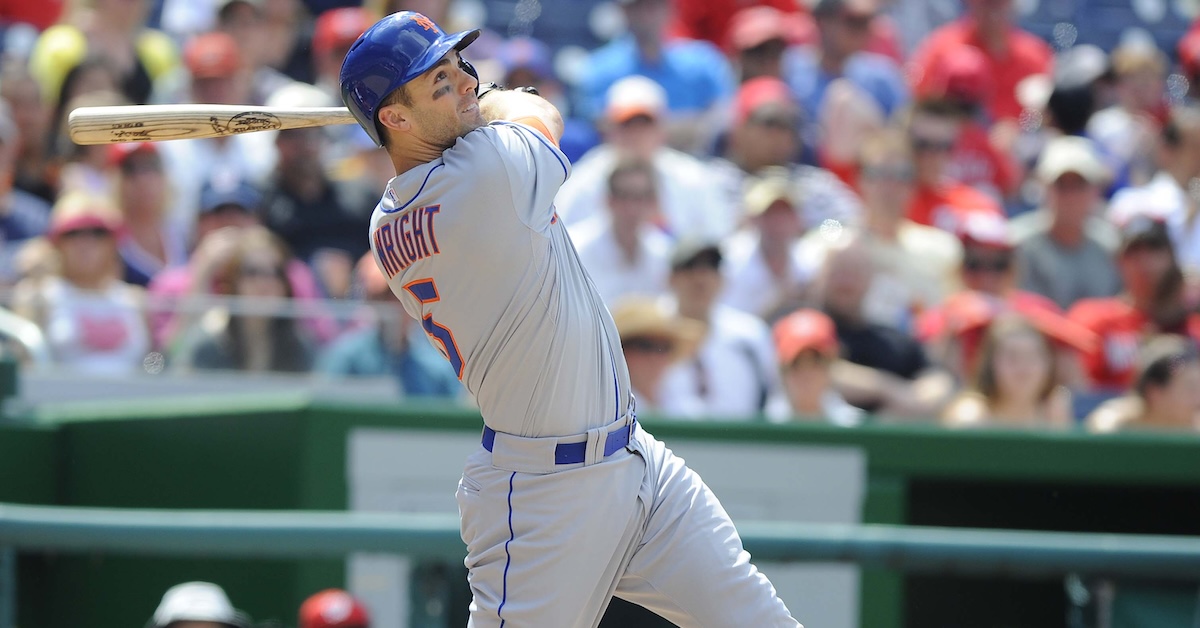
David Wright is the greatest position player in Mets history, a face-of-the-franchise player who holds the team leads in plate appearances, hits, runs, RBI, total bases, walks, and WAR. A first-round pick out of high school in 2001, the Virginia native spent his entire career with the team, making seven All-Star teams, winning two Gold Gloves, and helping the club to a pair of playoff appearances, including its 2015 pennant.

Though he was surrounded by dysfunction in Queens under the late stages of the Wilpon family’s ownership — the financial tight-fistedness in the wake of the owners’ involvement in the Madoff scandal, the endless micromanagement of injuries, the tone-deaf approach when it came to public relations — Wright stood apart from all of that. Charismatic, exceptionally talented on both sides of the ball, with an off-the-charts work ethic, he was the Mets’ answer to Derek Jeter, an icon who avoided scandal, almost invariably said the right thing, and never did anything to embarrass himself or the franchise. Small wonder that he was named team captain in the spring of 2013, and even acquired the nickname “Captain America” while playing for Team USA in that year’s World Baseball Classic. Read the rest of this entry »


We Tried Tracker: Winter Meetings Schwarblonso Edition

Mitch Stringer-Imagn Images, Jayne Kamin-Oncea-Imagn Images

ORLANDO — Congratulations, everybody. We made it. It’s now Thursday, and the Winter Meetings have officially concluded. It’s time to reflect on the state of effort in Major League Baseball, and I am pleased to report that it is strong. At this time last year, we had seen 22 We Trieds (though a few more would be added retroactively due to a rule clarification). As of now, we’re sitting at 24, so let’s take a moment to congratulate all the agents, the anonymous sources, and the reporters who took us this far. As always, I invite you to peruse this vast bounty on the official We Tried Tracker.

Before we break down the last couple days, I should start with an important update on the most recent entry of this series. When news broke that the Giants asked for Tatsuya Imai’s medicals even though they didn’t plan on pursuing him, I gave it an intentionally cumbersome moniker: We’re Not Even Going To Try, So Don’t Bother Getting Your Hopes Up. This was a classic defense mechanism. I went with the big, long name to deflect from the fact that I couldn’t come up with a clever, pithy one. But the right name came to me this week. In the future, such a move will be known as a Pre-Tried. I have spoken.

Since that last update, Bob Nightengale took a new angle on this exercise, packaging the news that the Reds “were hoping to sign” Devin Williams with the news that they had actually re-signed Emilio Pagán. It’s a brilliant maneuver. You sign a lesser player while also announcing that you were also thinking even bigger. We Trieds are all about partial credit, but here are the Reds, breaking out the razzle dazzle and running an end-around in a bid for double credit!

This strategy is also something of a double-edged sword, though. Some fans might give the Reds the double credit they want, but it’s also easy to take the information in the other direction. The Reds held onto a good reliever, Reds fans! Let’s celebrate! Oh, also, they only got him because they tried and failed to get an even better reliever? Do you still want to celebrate? Try pulling that move with a child. Take them to an ice cream shop and get them a kid’s cone. Once they’ve given it a big lick and smiled their adorable little smile, lean over and say, “You know, I was hoping to get you a giant ice cream sundae, but you’ll have to settle for this little one because the New York Mets ordered it first.” Read the rest of this entry »


Peter, Out: Orioles Swipe Alonso From Mets

Wendell Cruz-Imagn Images

After a somnambulant first day of the Winter Meetings, one of the buzzier rumors involved free agent first baseman Pete Alonso getting in his car, driving up I-4 from his home in Tampa to Orlando, and pitching himself in person to the Red Sox and Orioles.

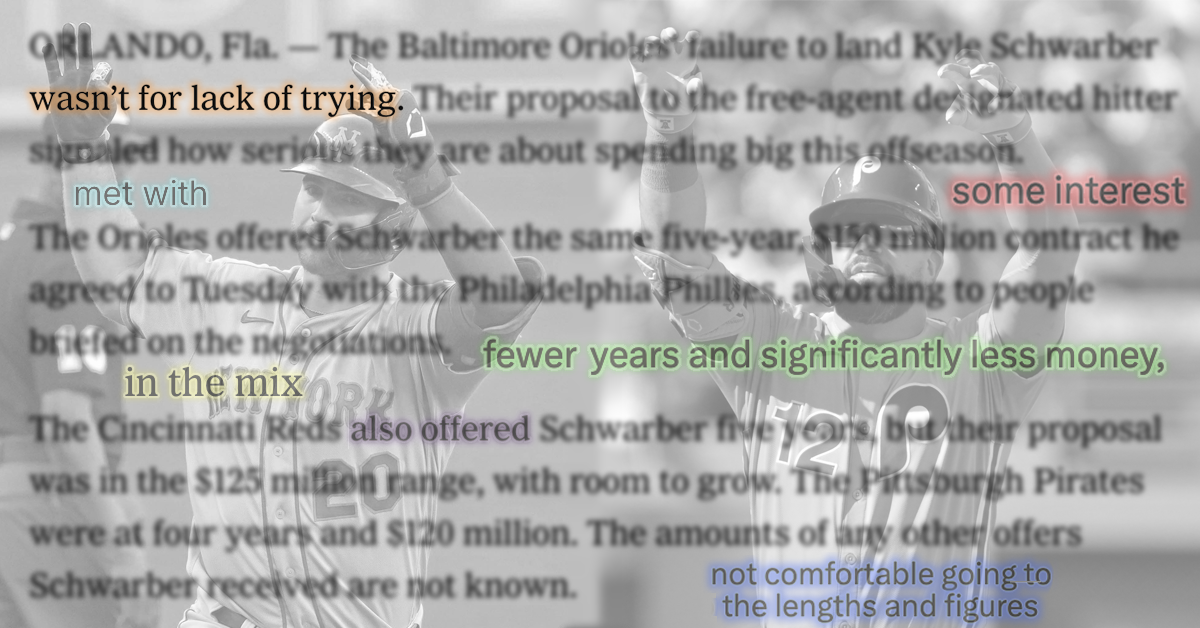
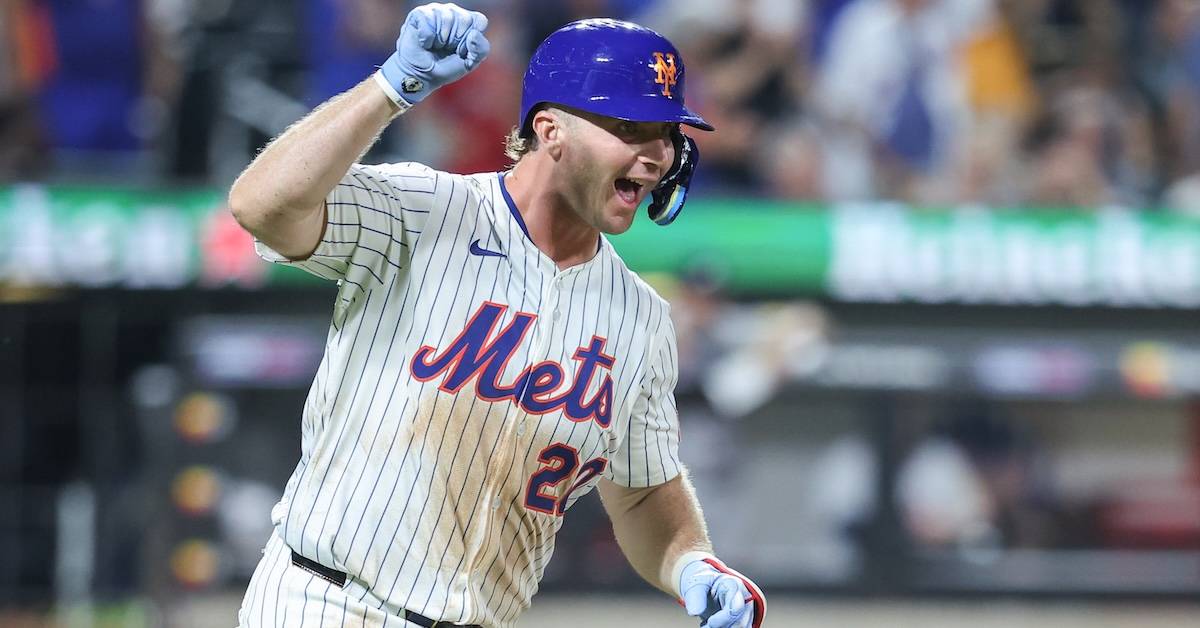
Apparently, those meetings went well. The drive from New York to Baltimore mostly takes place on expensive toll roads, but Alonso now has an extra $155 million to put on his EZ Pass account. Big Pete, the Polar Bear, the face of the Mets’ franchise, is bound for Baltimore on a five-year contract. Read the rest of this entry »


A Changeup Is Gonna Come to Queens

Brad Penner-Imagn Images

Devin Williams, the lights-out reliever with the M. Night Shyamalan changeup, has agreed to a three-year deal with the Mets. A two-time All-Star, Williams earned NL Rookie of the Year honors in 2020 and scored a down-ballot MVP vote as recently as 2023. Even after a disastrous 2025 season kicked his career ERA all the way up from 1.83 to 2.45, he still has a career ERA of – you guessed it – 2.45. Here’s my first piece of analysis: That’s so good, you guys! Assuming he won’t keep running a 55% strand rate from here on out, the Mets just signed up for three years of one of the best relievers in baseball; meanwhile, Williams just signed up for a quick ride from the Bronx to Flushing, but it’s important to note that the ride is always going to be longer than Google Maps predicts, because the odds of actually catching an express 7 train rather than the local are vanishingly small.

Let’s start with the terms of the deal and the credit for who reported which parts of those terms, and then we’ll take a nap and perform some more light analysis. Cool? Cool. Read the rest of this entry »


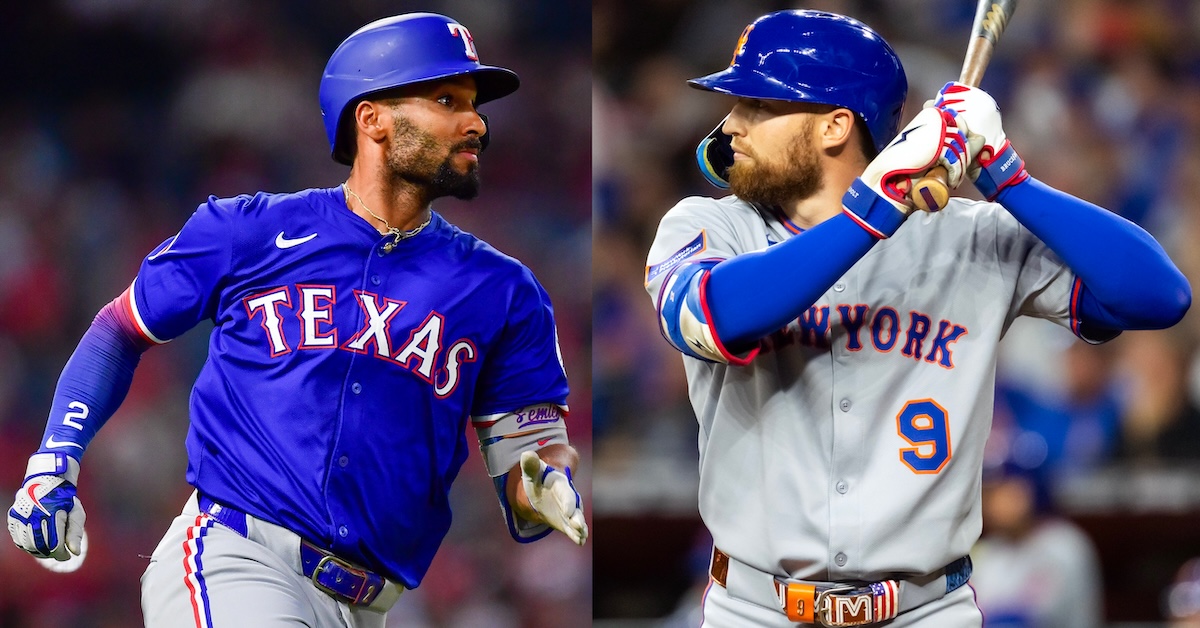
The Mets Made a Trade for Marcus Semien; Texas Is Bringing Brandon Nimmo In

Gary A. Vasquez and Mark J. Rebilas, Imagn Images

The New York Mets are trading outfielder Brandon Nimmo to the Texas Rangers in exchange for infielder Marcus Semien, ESPN’s Jeff Passan reported Sunday night. You don’t often see one-for-one trades involving two players with a combined 66.9 career WAR in their past, but this deal was made possible by the combined $173.5 million owed Nimmo and Semien in the future.

The Mets and Rangers are both top-10 payroll teams and recidivist whales in the free agent market (with the caveat that the Mets are somewhat more top-payroll than the Rangers are), so this is not a straight-up salary dump. Indeed, only a trivial amount of money — $5 million moving from New York to Texas, according to Jon Heyman — is changing hands. That greases the skids, but it’s only about 5% of what Nimmo’s owed, and less than 3% of the total remaining value of the contracts being moved.

Semien and Nimmo have both been excellent players in the recent past, as reflected in their compensation. Semien is on a seven-year, $175 million contract he signed with the Rangers before the 2022 season; Nimmo had a .385 career OBP, and was coming off a 5.5 WAR season, when he signed with the Mets a year later for $162 million over eight years. Read the rest of this entry »


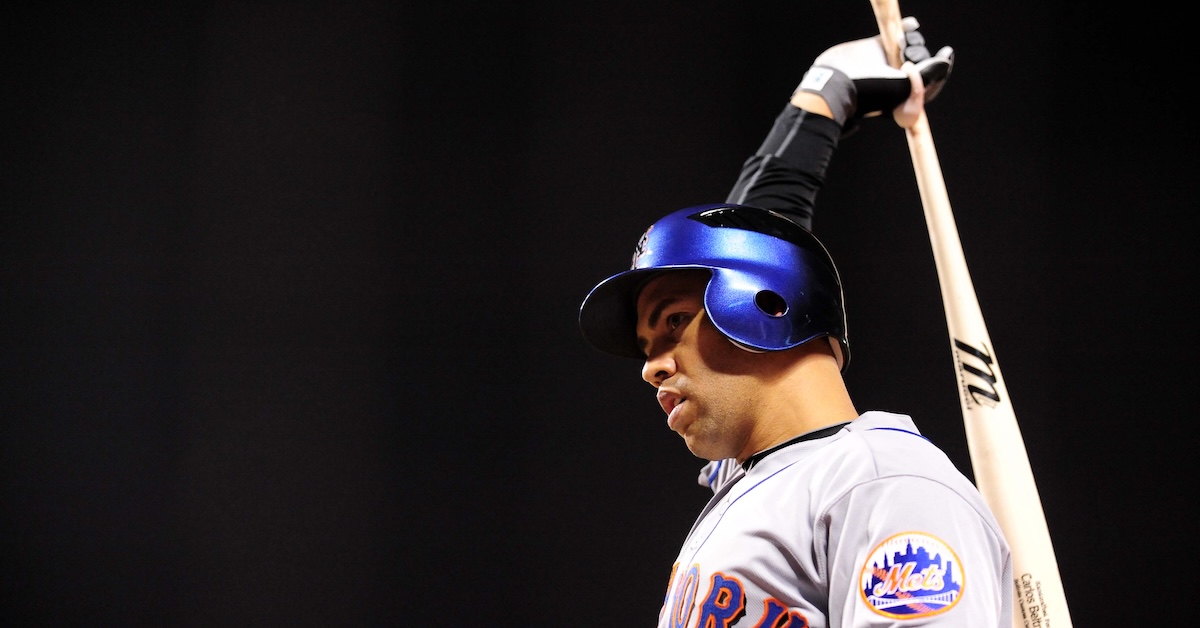
JAWS and the 2026 Hall of Fame Ballot: Carlos Beltrán

Kyle Terada-USA TODAY Sports

The following article is part of Jay Jaffe’s ongoing look at the candidates on the BBWAA 2026 Hall of Fame ballot. For a detailed introduction to this year’s ballot, and other candidates in the series, use the navigation tool above; an introduction to JAWS can be found here. For a tentative schedule, and a chance to fill out a Hall of Fame ballot for our crowdsourcing project, see here. All WAR figures refer to the Baseball-Reference version unless otherwise indicated.

Carlos Beltrán was the quintessential five-tool player, a switch-hitting center fielder who harnessed his physical talents and became a superstar. Aided by a high baseball IQ that was essentially his sixth tool, he spent 20 seasons in the majors, making nine All-Star teams, winning three Gold Gloves, and helping five different franchises reach the playoffs, where he put together some of the most dominant stretches in postseason history. At the end of his career, he helped the Astros win a championship.

Drafted out of Puerto Rico by the Royals, Beltrán didn’t truly thrive until he was traded away. He spent the heart of his career in New York, first with the Mets — on what was at the time the largest free-agent contract in team history — and later the Yankees. He endured his ups and downs in the Big Apple and elsewhere, including his share of injuries. Had he not missed substantial portions of three seasons, he might well have reached 3,000 hits, but even as it is, he put up impressive, Cooperstown-caliber career numbers. Not only is he one of just eight players with 300 home runs and 300 stolen bases, but he also owns the highest stolen base success rate (86.4%) of any player with at least 200 attempts.

Alas, two years after Beltrán’s career ended, he was identified as the player at the center of the biggest baseball scandal in a generation: the Astros’ illegal use of video replay to steal opponents’ signs in 2017 and ’18. He was “the godfather of the whole program” in the words of Tom Koch-Weser, the team’s director of advance information, and the only player identified in commissioner Rob Manfred’s January 2020 report. But between that report and additional reporting by the Wall Street Journal, it seems apparent that the whole roster, as well as higher-ups including bench coach Alex Cora, manager A.J. Hinch, and general manager Jeff Luhnow, was well aware of the system and didn’t stop him or his co-conspirators. In that light, it’s worth wondering about the easy narrative that has left Beltrán holding the bag; Hinch hardly had to break stride in getting another managerial job once his suspension ended, and Cora was rehired as Red Sox manager after he served his suspension. While Beltrán was not disciplined by the league, the fallout cost him his job as manager of the Mets before he could even oversee a game, and he has yet to get another opportunity. Read the rest of this entry »


Job Posting: New York Mets – Associate, International Analyst

Associate, International Analyst

Summary:
The New York Mets Associate International Analyst is responsible for supporting the organization of international amateur data and conducting analysis to support evaluation of a constantly evolving talent pool.

Essential Duties & Responsibilities:

  • Evaluate a high volume of players utilizing a mix of data, video, and in-person scouting and make acquisition recommendations
  • Work to optimize scouting schedules and data collection coverage
  • Support continued education of the scouting group as new tools and data sources are introduced
  • Perform thorough research analysis on the international market to support leadership in decision making
  • Assist the International group in coordinating logistics and administrative tasks for scouts and players
  • Collaborate with Player Development staff on player plans that align with the International group’s evaluations
  • Coordinate with Performance groups in adding new information sources into the evaluation process
  • Construct models and tools that drive strategic decision making
  • Perform ad hoc requests from Baseball Analytics and International Scouting in line with these job responsibilities

Qualifications:

  • Knowledge of baseball technology, including but not limited to Blast Motion, TrackMan, Hawk-Eye, and force plates
  • Strong verbal and written communication skills
  • Interest in collaboration and working within and across teams
  • Demonstrated ability to manage multiple projects simultaneously and execute tasks under time constraints
  • Interest in public baseball research
  • Fluency in Spanish is a strong plus
  • Experience in R, Python, or similar programming languages, and proficiency in SQL
  • Statistical modeling experience is a plus
  • Must be able to travel internationally
  • Must be able to work unconventional hours

At the Mets, we offer Fixed-Term, full-time employees a comprehensive range of benefits and perks designed to support your well-being and professional growth. Join us at the Mets and experience a workplace that values your growth, well-being, and contributions. Here’s what you can expect:

Health Benefits
We offer comprehensive health benefits for employees and their eligible dependents, effective on your first day—no waiting period required. We offer a variety of medical, dental, and vision options to ensure optimal coverage for you and your family.

Additionally, we provide access to our Employee Assistance Program (EAP) for you and members of your household. This program offers confidential, no-cost support for mental, physical, and financial health.

Retirement
Plan for your future with the Mets 401(k) Savings Plan, which includes a match on your contributions (pre-tax and Roth options).

Commuting Program
Save on your commute with the Mets pre-tax commuter benefit plan, which provides tax savings on the cost of traveling to and from our offices.

Other Offerings
As a Mets employee, enjoy exclusive perks, including:

  • Special pricing from selected corporate partners.
  • Game day tickets at Citi Field.
  • Discounts at the Mets Team Store.
  • Gym discounts through Wellhub.

Travel, hotel, and more discounts through Plum Benefits.

The above information is intended to describe the general nature, type, and level of work to be performed. The information is not intended to be an exhaustive or complete list of all responsibilities, duties, and skills required for this position. Nothing in this job description restricts management’s right to assign or reassign duties and responsibilities to this job at any time. The individual selected may perform other related duties as assigned or requested.

The New York Mets value the unique qualities individuals with various backgrounds and experiences can offer the organization. Our continued success depends heavily on the quality of our workforce. The Organization is committed to providing employees with the opportunity to develop to their fullest potential.

Hourly Rate: $20-$25

For technical reasons, we strongly advise to not use an .edu email address when applying. Thank you very much

To Apply
To apply, please follow this link.

The content in this posting was created and provided solely by the New York Mets.


2025 National League 40-Man Roster Crunch Analysis

Edwin Arroyo Photo: Angelina Alcantar/News Sentinel/USA TODAY NETWORK via Imagn Images

We’re less than a month from the Winter Meetings and the Rule 5 Draft, which means it’s a good time to evaluate every team’s 40-man roster situation. This is the time of year when teams have one final chance to protect Rule 5 eligible players by placing them on the 40-man. Eligibility is determined by a mix of how long a player has been with their parent organization and how young they were when they signed: Players who signed at 18 or younger must be added to the 40-man within five seasons, while everyone else must be added within four. RosterResource monitors Rule 5 eligibility, if you’re curious to see the lay of the land.

During the season, teams can free up roster space by placing an injured player on the 60-day IL. In the offseason, teams don’t get extra slots for injured players, which tends to put pressure on the back of the roster. The Diamondbacks are a good example of how space can tighten quickly, as they’ve currently got six pitchers battling long-term injuries occupying a spot. You may have noticed a flurry of moves immediately following the World Series, with many teams outrighting players off the 40-man in order to make room for all the guys who were on the IL.

Below, I’ve assessed every National League team’s 40-man roster situation (Eric will sort through the American League tomorrow). Some teams, like the Braves, have plenty of roster space, and thus a lot of flexibility in adding whoever they like. Others, like the Cardinals and Marlins, will face some tough choices as they seek to balance protecting interesting prospects with retaining players already on the roster, as well as finding room for prospective additions via trade or free agency. Some clubs don’t have many impact players to add, while others may need to protect a half-dozen or so guys. I’ve tried to identify which players are most likely to be added, which guys on the 40-man are vulnerable to getting lopped off in a roster crunch, and who could be moved in a deal to free up roster space. Let’s dig in. Read the rest of this entry »


2026 Contemporary Baseball Era Committee Candidate: Gary Sheffield

RVR Photos-USA TODAY Sports

The following article is part of my ongoing look at the candidates on the 2026 Contemporary Baseball Era Committee ballot. Originally written for the 2015 election at SI.com, it has been updated to reflect recent voting results as well as additional research. For a detailed introduction to this year’s ballot, use the navigation tool above. An introduction to JAWS can be found here.

Wherever Gary Sheffield went, he made noise, both with his bat and his voice. For the better part of two decades, he ranked among the game’s most dangerous hitters, a slugger with a keen batting eye and a penchant for contact that belied his quick, violent swing. For even longer than that, he was one of the game’s most outspoken players, unafraid to speak up when he felt he was being wronged and unwilling to endure a situation that wasn’t to his liking. He was a polarizing player, and hardly one for the faint of heart.

At the plate, Sheffield was viscerally impressive like few others. With his bat twitching back and forth like the tail of a tiger waiting to pounce, he was pure menace in the batter’s box. He won a batting title, launched over 500 home runs — he had 14 seasons with at least 20 and eight with at least 30 — and put many a third base coach in peril with some of the most terrifying foul balls anyone has ever seen. For as violent as his swing may have been, it was hardly wild; not until his late 30s did he strike out more than 80 times in a season, and in his prime, he walked far more often than he struck out.

Bill James wrote of Sheffield in the 2019 Bill James Handbook:

“In all the years that I have been with the Red Sox, 16 years now, there has never been a player the Red Sox were more concerned about, as an opponent, than Gary Sheffield. Sheffield was a dynamite hitter and a fierce competitor… When he was in the game, you knew exactly where he was from the first pitch to the last pitch. He conceded nothing; he was looking not only to beat you, but to embarrass you. He was on the highest level.”

Two decades before that, James referred to Sheffield as “an urban legend in his own mind,” referencing the slugger’s penchant for controversy. Sheffield found it before he ever reached the majors through his connection to his uncle, Dwight Gooden. He was drafted and developed by the Brewers, who had no idea how to handle such a volatile player and wound up doing far more harm than good. Small wonder then that from the time he was sent down midway through his rookie season after being accused of faking an injury, he was mistrustful of team management and wanted out. And when he wanted out — of Milwaukee, Los Angeles, or New York — he let everyone know it, and if a bridge had to burn, so be it; it was Festivus every day for Sheffield, who was always willing to air his grievances. Read the rest of this entry »


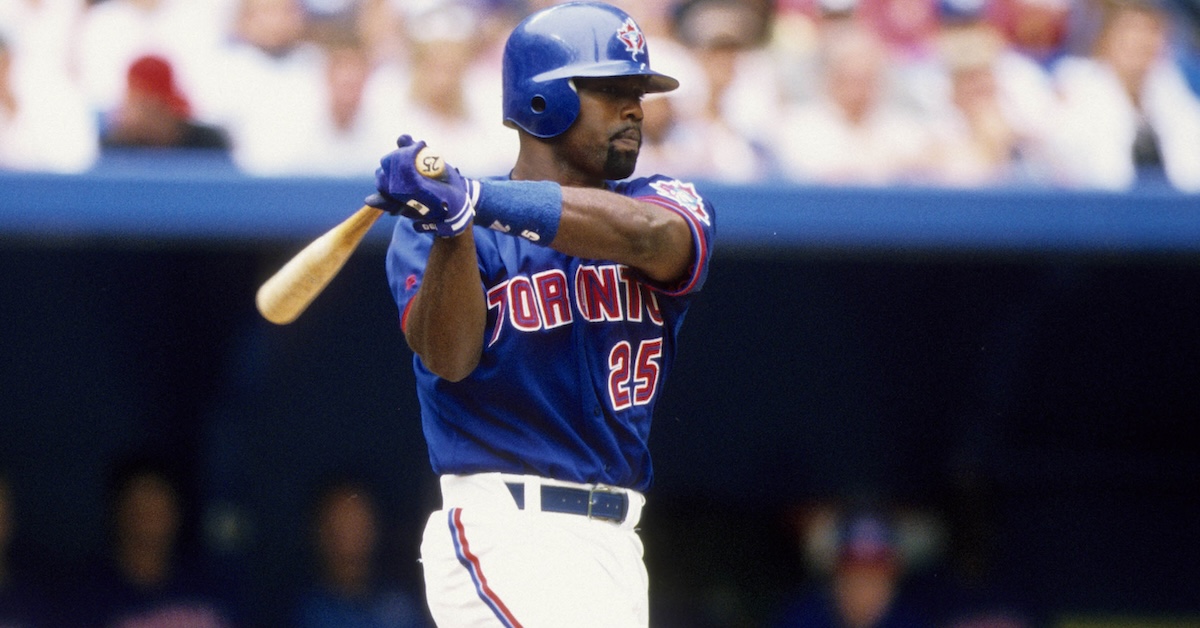
2026 Contemporary Baseball Era Committee Candidate: Carlos Delgado

RVR Photos-Imagn Images

The following article is part of my ongoing look at the candidates on the 2026 Contemporary Baseball Era Committee ballot. Originally written for the 2015 election at SI.com, it has been expanded and updated. For a detailed introduction to this year’s ballot, use the tool above. An introduction to JAWS can be found here.

Though blessed with as much talent to crush a baseball as nearly anyone in his era, Carlos Delgado had a hard time getting the attention that his performance might have merited. Almost certainly, that owed something to the record numbers of balls flying out of the park during his heyday, with a proliferation of 30- or 40-homer seasons. That he spent the bulk of his prime in Toronto, arriving just after the Blue Jays’ back-to-back world championships but unable to aid in replicating that accomplishment, didn’t help either; not until late in his career would he reach the postseason.

Beyond that, Delgado didn’t fit the mold of what the public has come to expect from professional athletes. The controversies in which he was engulfed weren’t the garden-variety ones of so many other jocks — money, respect, performance-enhancing drugs, off-field lifestyle. No, they were bigger. In an age when most athletes shirk political stances because they can narrow their public appeal and impact their personal brands, Delgado was unafraid to protest against what he felt was wrong, even if his stance was unpopular. He spoke out against the United States Navy using part of his native Puerto Rico for bombing practice, and publicly opposed the war in Iraq. He took a stand by taking a seat (to borrow a headline from The New York Times), refusing to go through the motions during the post-9/11 ritual of “God Bless America” — an action that prefigured San Francisco 49ers quarterback Colin Kaepernick’s kneeling during the national anthem to protest police brutality against people of color in 2016. Delgado was the conscientious slugger.

Deglado’s outspokenness and activism stemmed from his admiration for Hall of Famer and Puerto Rican hero Roberto Clemente. He died six months after Delgado was born, but his legacy of humanitarianism and fighting for social justice left a deep impression on Delgado. He wore Clemente’s no. 21 briefly with the Blue Jays and later with the Mets, and thanks to his charitable endeavors — which included raising money for homeless, underprivileged and handicapped Puerto Rican children, and sponsoring college scholarships through his Extra Bases Foundation, Delgado won the 2006 Roberto Clemente Award. Read the rest of this entry »