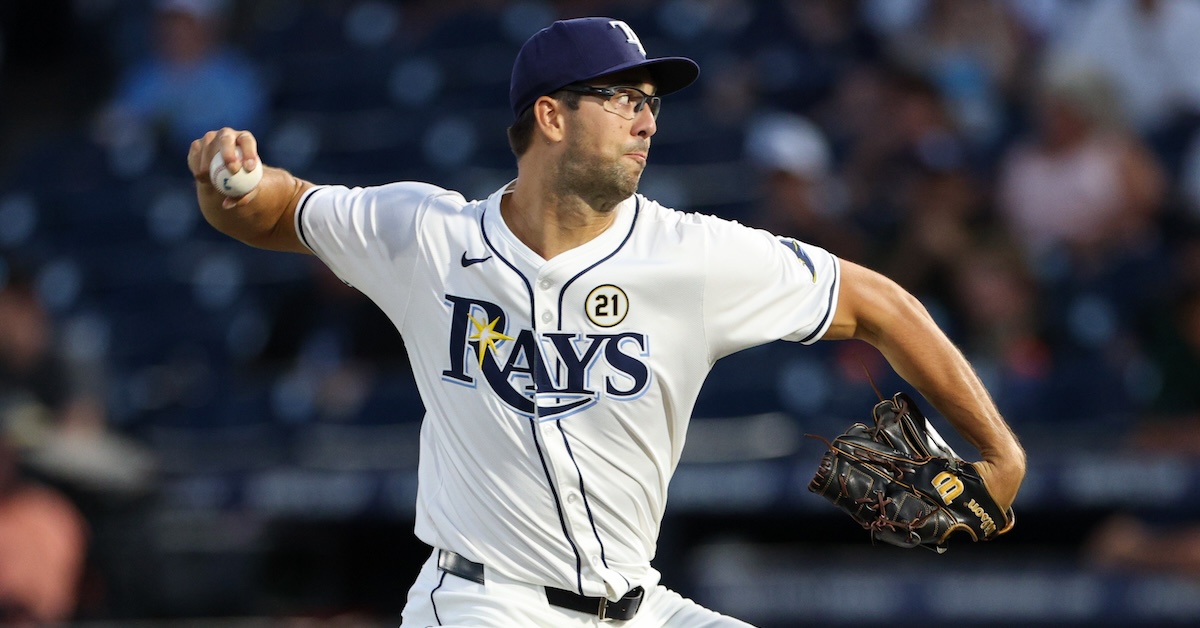
Tanner Scott and the Ideal Zone Rate

Let’s start with a thought experiment, then we’ll get to the guy in the picture up there. Say you’ve got an unhittable fastball. Every time an opposing batter swings at it, they miss. With such a pitch, you’d want to hit the strike zone every time. Only good things can happen in the strike zone. Either the batter takes and you earn a called strike, or they swing and you earn a swinging strike. Outside the zone, you’d run the risk of throwing a ball because the batter lays off it.
Now, say you’ve got an extremely hittable fastball. Not only does it never generate a whiff, but every time the batter swings at it, they also hit a home run. You’d never want to throw that pitch in the zone. You wouldn’t want to throw it much at all. Maybe you’d use it as a waste pitch to change the batter’s eye level, just every once in a while, and so far outside the zone that they wouldn’t even think about swinging at it. But that’s it.
Those are extreme examples, but my point is to introduce the concept of an ideal zone rate. Every pitcher (and every pitch) in baseball lives somewhere between those two extremes. Some pitchers should live in the zone and some should avoid it. All sorts of factors inform that ideal zone rate: how likely the pitch is to earn a whiff, how likely it is to earn a chase, how hard it tends to gets hit, whether it tends to gets hit in the air or on the ground, how it interacts with the rest of your repertoire, how it performs in different locations, how well you’re able to locate it, how confident you feel in it, the count, batter, situation, and so on, and so on.
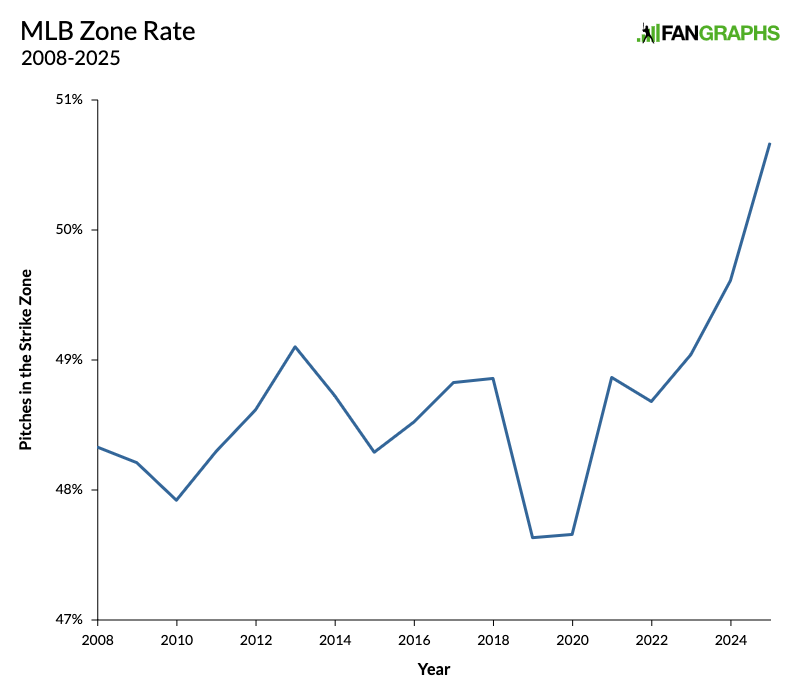
Lately, the calculus has shifted somewhat. The zone rate has been rising because pitchers have been instructed to aim down the middle and trust in their stuff. In 2024, 49.6% of all pitches were in the strike zone and 26.5% were specifically in the heart zone (the area at least one baseball’s width from the edge of the zone). Both of those numbers were the highest rates we’d seen since the start of the pitch tracking era in 2008, and both of those numbers were surpassed in 2025, when for the first time ever, more pitches hit the strike zone than missed it. Across baseball, the ideal zone rate has increased.


 Sponsor Us on Patreon
 Give a Gift Subscription
 Effectively Wild Subreddit
 Effectively Wild Wiki
 Apple Podcasts Feed
 Spotify Feed
 YouTube Playlist
 Facebook Group
 Bluesky Account
 Twitter Account
 Get Our Merch!
 Jay Jaffe