Jay Jaffe: Good afternoon, folks, and welcome to my first chat of 2026! I’ll get this going momentarily (having a chat with a reporter about Hall of Fame stuff)
12:04
Jay Jaffe: OK, I’m back! Happy New Year to you all.
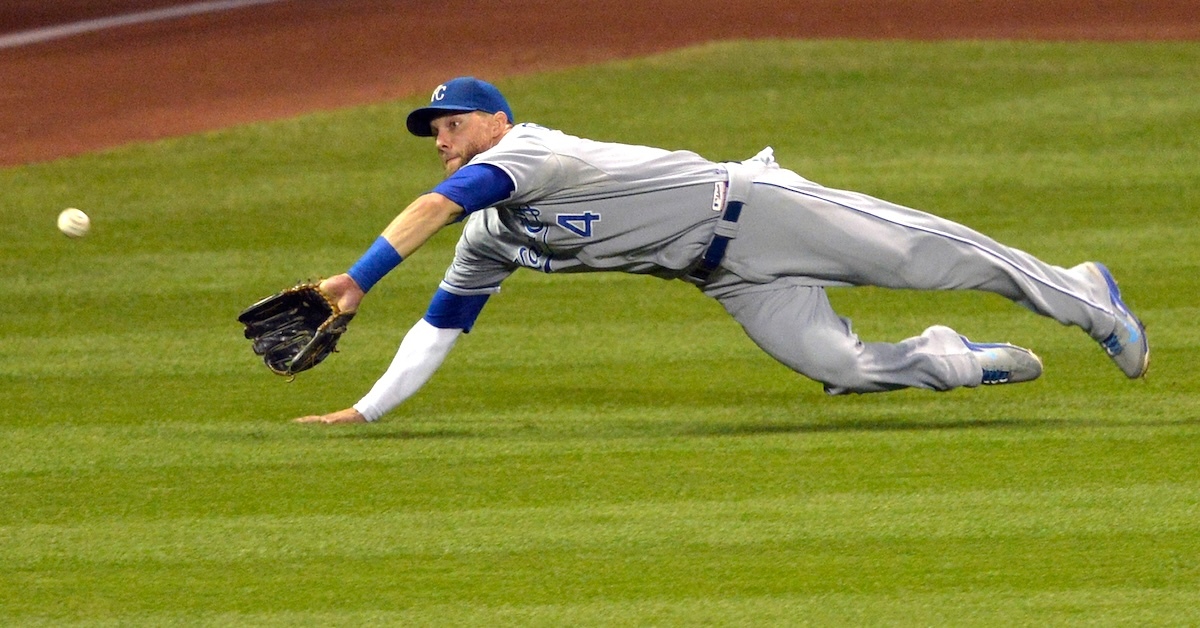
Jay Jaffe: I did include a couple of one-and-dones in the pre-holiday coverage, namely Alex Gordon and Edwin Encarnación, but I gave their careers longer treatments. Likewise for the next profile, Shin-Soo Choo.
The following article is part of Jay Jaffe’s ongoing look at the candidates on the BBWAA 2026 Hall of Fame ballot. For a detailed introduction to this year’s ballot, and other candidates in the series, use the tool above; an introduction to JAWS can be found here. For a tentative schedule, see here. All WAR figures refer to the Baseball Reference version unless otherwise indicated.
2026 BBWAA Candidate: Hunter Pence
Player
Pos
Career WAR
Peak WAR
JAWS
H
HR
SB
AVG/OBP/SLG
OPS+
Hunter Pence
RF
30.9
26.2
28.6
1,791
244
120
.279/.334/.461
114
Source: Baseball-Reference
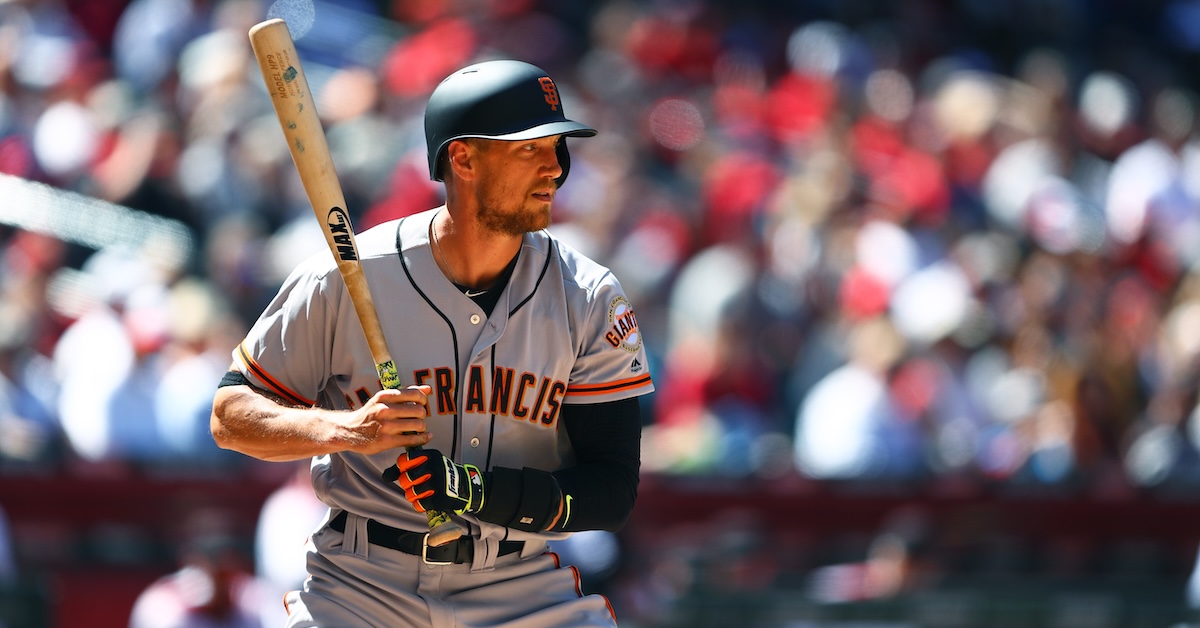
The great Vin Scully often describedHunter Pence as “all elbows and kneecaps,” and if you never understood the meaning of that colorful phrase, one look at the gangly 6-foot-4 right fielder, with his unorthodox swing, gait, and throwing mechanics, would explain a whole lot. Amplified by his high socks and what more thanone writertermed his “bug-eyed intensity,” Pence’s on-field style was anything but textbook. As it turns out, there was a reason for that: In 2013, he was diagnosed with a condition called Scheuermann’s Disease, which caused his vertebrae to grow at different rates, deprived him of flexibility in his thoracic spine, and led him to find ways to compensate. Despite that significant disadvantage, Pence carved out an impressive 14-year major league career, making four All-Star teams and helping the Giants win the 2012 and ’14 World Series. Read the rest of this entry »
The following article is part of Jay Jaffe’s ongoing look at the candidates on the BBWAA 2026 Hall of Fame ballot. For a detailed introduction to this year’s ballot, and other candidates in the series, use the tool above; an introduction to JAWS can be found here. For a tentative schedule and a chance to fill out a Hall of Fame ballot for our crowdsourcing project, see here. All WAR figures refer to the Baseball-Reference version unless otherwise indicated.
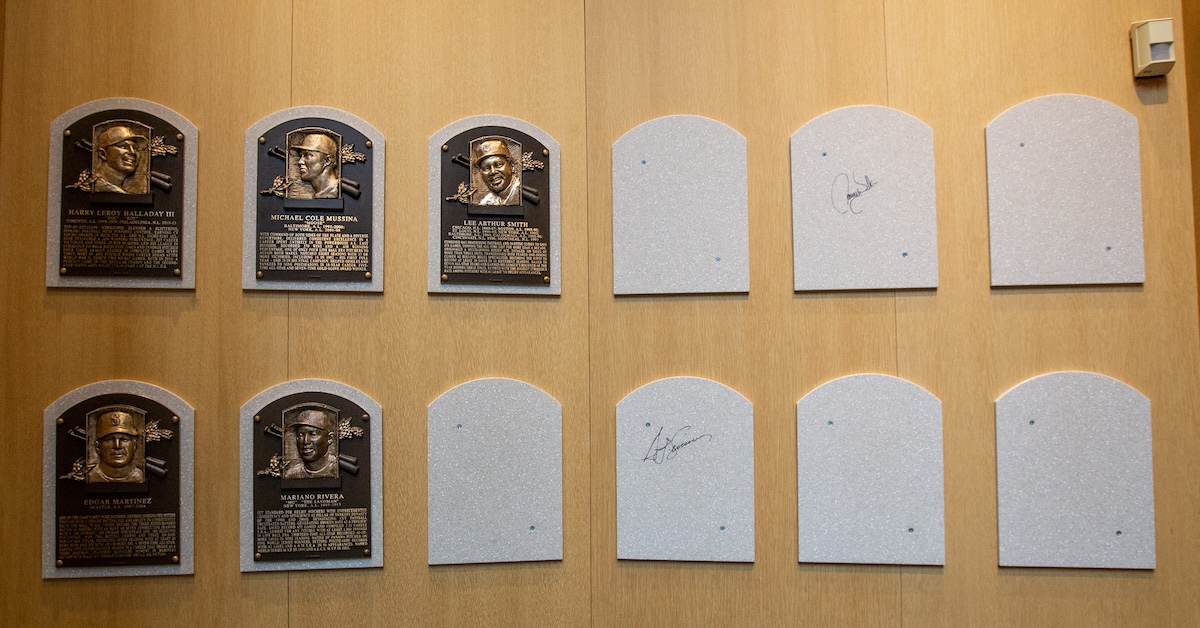
There’s no getting around the fact that the 2026 BBWAA Hall of Fame is a lean one. With three candidates elected by the writers in both 2024 and ’25 — following a mini-drought in which just two were elected over the previous three years — the top newcomers didn’t linger, while some long-lasting holdovers were finally elected. That left the cupboard comparatively bare, and when it came to restocking, the best of this year’s first-year candidates bowed out after their age-36 seasons without accumulating massive career totals.
Given all that, I suspected even before I received my favorite piece of annual mail that I wouldn’t max out my ballot by voting for 10 candidates. I only got to 10 in each of the past two years by using my last spot to include a pitcher whose S-JAWS is short of the standard but who offers other compelling reasons for inclusion. For the 2024 ballot, I tabbed Andy Pettitte due in part to his massive postseason contributions, while for ’25 I selected Félix Hernández due to his stellar early-career run and a concern that he could slip off the ballot without a longer discussion, à la two-time Cy Young winner Johan Santana on the 2018 ballot.
Both choices were a reaction to the dearth of starting pitchers elected in recent years and the reality that such a trend isn’t likely to change. BBWAA voters have elected just three starters born in 1969 or later, namely Pedro Martinez (1971), Roy Halladay (1977) and CC Sabathia (1980). While Zack Greinke, Clayton Kershaw, Max Scherzer, and Justin Verlander will likely join them someday, the industry’s trend towards smaller workloads — coupled with the greater injury risk that comes with chasing higher velocities and spin rates — has made the familiar milestones that virtually guarantee election even more remote. Voters need to rethink their standards for starters, and I believe that discussion is well served by keeping the candidacies of those on the ballot alive for further deliberation. With five of the 10 players I voted for last year not carrying over (Sabathia, Ichiro Suzuki, and Billy Wagner were elected, while Russell Martin and Brian McCann fell short of 5%), I suspected I’d be able to fit both Hernández and Pettitte as well as newcomer Cole Hamels and holdover Mark Buehrle.
I had all that in mind as I worked through this year’s top 19 candidates in my series over the past six weeks (I’ve still got eight one-and-done stragglers to cover in early January, none of whom were in serious consideration for space on my ballot). This is my sixth year with an actual ballot, but even with the heightened scrutiny that comes with it, filling one out remains a privilege and still feels like a novelty in the context of 25 years of analyzing Hall of Fame elections, and 23 of doing so while armed with the system that became JAWS (the official 20th anniversary of the metric’s introduction was in January 2024). Read the rest of this entry »
The following article is part of Jay Jaffe’s ongoing look at the candidates on the BBWAA 2026 Hall of Fame ballot. For a detailed introduction to this year’s ballot, and other candidates in the series, use the tool above; an introduction to JAWS can be found here. For a tentative schedule and a chance to fill out a Hall of Fame ballot for our crowdsourcing project, see here. All WAR figures refer to the Baseball Reference version unless otherwise indicated.
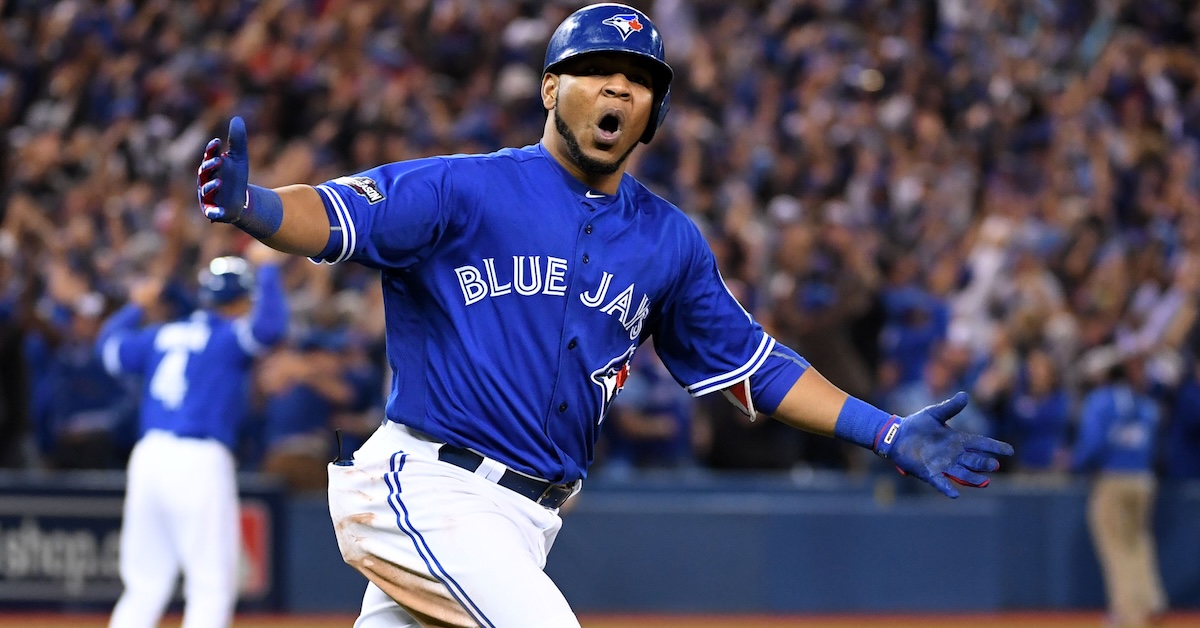
Though he was athletic enough to be drafted as a shortstop, Edwin Encarnación never found much success in the field. Through his first seven seasons with the Reds and Blue Jays, his defensive miscues offset generally solid offense, so much so that he earned the derisive nickname “E5” (as in error, third base). But as with his late-blooming teammate in Toronto, José Bautista, when adjustments to Encarnación’s swing unlocked his in-game power, he became a force to be reckoned with.
Surrendering his third baseman’s mitt and splitting time between first base and designated hitter definitely helped. From 2012–19, Encarnación hit a major league-high 297 homers, with at least 32 in every season, and a high of 42, set in ’12 and matched in ’16. He never led the league, but placed among the AL’s top five four times, and within the top 10 in three other seasons. Among players with at least 2,500 plate appearances in that span, his 138 OPS+ ranks 10th.
The one-two punch of Bautista and Encarnación kept the Blue Jays entertaining through some lean years, and with the arrivals of third baseman Josh Donaldson and catcher Russell Martin in 2015, the team reached the playoffs for the first time since winning back-to-back World Series in 1992–93. Toronto did it again the next year, punctuated by Encarnación’s three-run walk-off homer off the Orioles’ Ubaldo Jiménez to win the 2016 AL Wild Card Game. Read the rest of this entry »
Jay Jaffe: Good afternoon, folks, and welcome to my final chat of 2025! Very shortly my profile of Edwin Encarnación will go live on the site, my last of this calendar year but not of this cycle; I’ve got a bunch of one-and-done guys to cover in January. My Hall of Fame ballot explainer will go live a week from today, and will be in the mail the same day.
12:05
Jay Jaffe: In case you’re scoring at home, that’s four new profiles thus far (Cole Hamels, Ryan Braun, Alex Gordon, and Encarnación), eight holdover profiles, and three multi-candidate roundups. You can see the schedule here — with a link to our Crowdsource Ballot, if you haven’t already partaken (https://blogs.fangraphs.com/a-2026-hall-of-fame-ballot-of-your-own-and…) — or follow the links atop each post to get to the ones you missed.
12:05
Jay Jaffe: and now, on with the show.
12:06
John T.: In your Fernando Valenzuela Era Committee piece you mentioned electing more pioneers to the HOF. In that spirit, would you support electing more people with outsize influences on the game, even in unconventional ways—I’ve long thought that Dr. Frank Jobe should be in the HOF for the role he’s played in baseball history. What do you think?
12:08
Jay Jaffe: I think once we establish this as a viable route into the Hall, Jobe would definitely be one worth considering. I do find it remarkable that only two pitchers with TJs have been elected (John Smoltz and Billy Wagner), but that speaks more to the general dearth of pitchers elected over the past few decades than anything else.
12:08
Guest: If you had to pick a fifth starter for the Padres (and I’m praying for a trade or free agent signing to fill the fourth starter spot) would it JP Sears or Randy Vasquez and why? Red is absent on both of their Statcast pages…
The following article is part of Jay Jaffe’s ongoing look at the candidates on the BBWAA 2026 Hall of Fame ballot. For a detailed introduction to this year’s ballot, and other candidates in the series, use the tool above; an introduction to JAWS can be found here. For a tentative schedule and a chance to fill out a Hall of Fame ballot for our crowdsourcing project, see here. All WAR figures refer to the Baseball Reference version unless otherwise indicated.
The third and final multi-candidate pairing of this series is by far the heaviest, covering two candidates who have both been connected to multiple incidents of domestic violence. Read the rest of this entry »
The following article is part of Jay Jaffe’s ongoing look at the candidates on the BBWAA 2026 Hall of Fame ballot. For a detailed introduction to this year’s ballot, and other candidates in the series, use the tool above; an introduction to JAWS can be found here. For a tentative schedule and a chance to fill out a Hall of Fame ballot for our crowdsourcing project, see here. All WAR figures refer to the Baseball Reference version unless otherwise indicated.
Alex Gordon spent nearly a decade and a half embodying the ups and downs of the 21st-century Kansas City Royals. His 14-year career began with unreasonably high hopes and then typical growing pains before culminating in one of the more unlikely championships in recent memory, followed by a steep decline.
After dominating at both the high school and college levels in Lincoln, Nebraska, Gordon was drafted as a third baseman by the Royals with the second pick in 2005, and touted as the Next George Brett, a nearly impossible bar to live up to in any era, let alone one in which his team was a perpetual doormat in need of a savior. He hadn’t even played a major league game before Brett himself claimed to be flattered by the comparisons. In the spring of 2007, as Gordon worked to make the jump from Double-A to the majors, the Hall of Fame third baseman with three batting titles, 3,154 career hits, and a rock-solid claim as the best player in franchise history told a reporter, “I take it as a compliment. When I watch him play, he makes the game look pretty easy. When I played the game, I knew how hard it was. He’s better than I was at (23). Much better.” Read the rest of this entry »
The following article is part of Jay Jaffe’s ongoing look at the candidates on the BBWAA 2026 Hall of Fame ballot. For a detailed introduction to this year’s ballot, and other candidates in the series, use the tool above; an introduction to JAWS can be found here. For a tentative schedule and a chance to fill out a Hall of Fame ballot for our crowdsourcing project, see here. All WAR figures refer to the Baseball Reference version unless otherwise indicated.
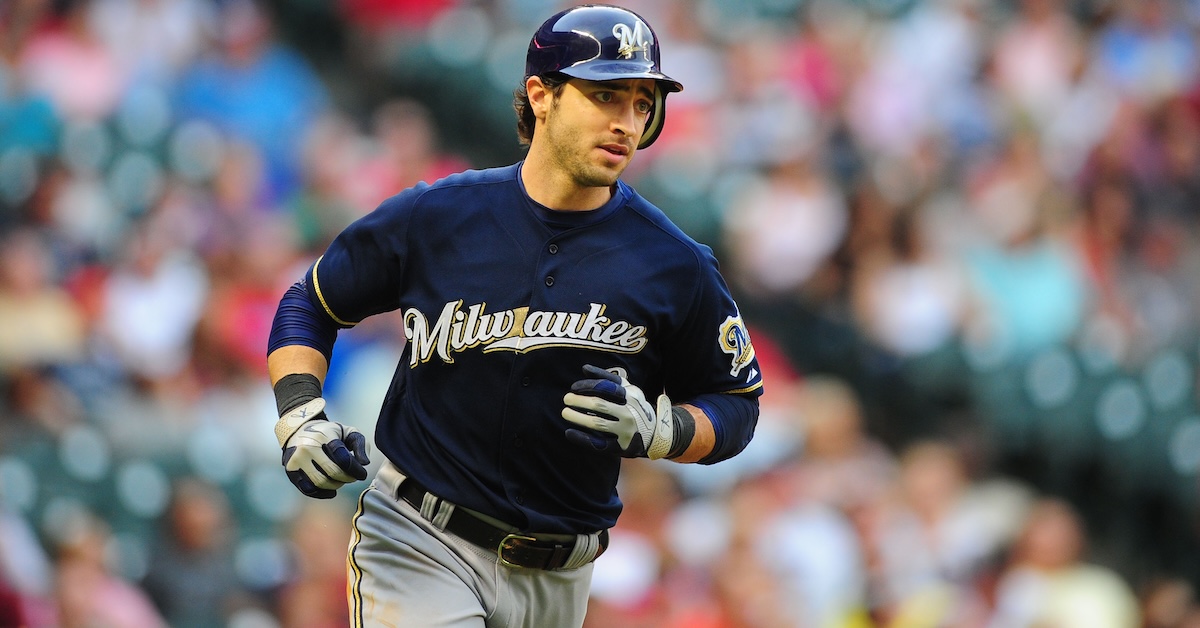
Along with Prince Fielder, who debuted in mid-2005 and joined the lineup as a regular the following season, Ryan Braun was a transformative figure in the history of the Brewers. Including its one-off season as the Seattle Pilots, the franchise made the playoffs just twice in its first 38 campaigns, back in 1981 and ’82. With Braun — the club’s first-round pick in 2005 — bopping 34 homers in just 113 games en route to NL Rookie of the Year honors in ’07, the Brewers finished above .500 for the first time in 15 years, and the next year, with Braun moving from third base (where he was terrible) to left field and making his first of six All-Star teams, they made the playoffs as the National League Wild Card. They would go on to qualify for the playoffs four more times during Braun’s career, with division titles and trips to the National League Championship Series in 2011 and ’18, though they fell just short of trips to the World Series.
Braun won NL MVP honors in 2011 and went on a memorable October run before the Brewers were eliminated, then led the league in home runs while finishing as runner-up in the voting the following year. He accumulated at least 30 homers and 30 steals in both seasons, but by that point, the legitimacy of those accomplishments was in question. In December 2011, less than a month after he beat out Matt Kemp for MVP, Major League Baseball suspended him for 50 games for testing positive for elevated levels of testosterone, later discovered to be synthetic; the sample had been taken after the Brewers’ first postseason game. With a spokesman citing “highly unusual circumstances,” “Ryan’s complete innocence,” “impeccable character and no previous history” of violations, Braun challenged the suspension. In February 2012, an arbitration panel overturned it due to a technicality involving the delay between when he submitted his sample and when the collector, a man named Dino Laurenzi Jr., sent it to the lab.
Both that reversal and Braun’s following actions — smearing Laurenzi both publicly and privately, even alleging that the collector was anti-Semitic (Braun’s father is Jewish, and Braun publicly embraced his Jewish heritage) — are without parallel in MLB’s long steroid saga. What’s more, Braun’s indignation and proclamations of innocence turned out to be a total sham; in 2013, he was discovered to have received PEDs through the Biogenesis Clinic, and earned a 65-game suspension. Thereafter, he publicly apologized, made amends with Laurenzi, and did his best to rehabilitate his image and demonstrate solid citizenship by continuing his involvement in several charitable organizations; he even earned multiple nominations for the Roberto Clemente Award. While he continued to play a supporting role on some very good Brewers teams (and some not-so-good ones), age and injuries limited his availability and effectiveness. Read the rest of this entry »
The following article is part of Jay Jaffe’s ongoing look at the candidates on the BBWAA 2026 Hall of Fame ballot. For a detailed introduction to this year’s ballot, and other candidates in the series, use the tool above; an introduction to JAWS can be found here. For a tentative schedule and a chance to fill out a Hall of Fame ballot for our crowdsourcing project, see here. All WAR figures refer to the Baseball Reference version unless otherwise indicated.
For the past several election cycles, as a means of completing my coverage of the major candidates before the December 31 voting deadline, I’ve grouped together some candidates into a single overview, inviting readers wishing to (re)familiarize themselves with the specifics of their cases to check out older profiles that don’t require a full re-working because very little has changed, even with regards to their voting shares. This year, I’m adding Bobby Abreu — a candidate for whom I’ve voted five times thus far and intend to include again — to a pair I’ve yet to include on my ballots.
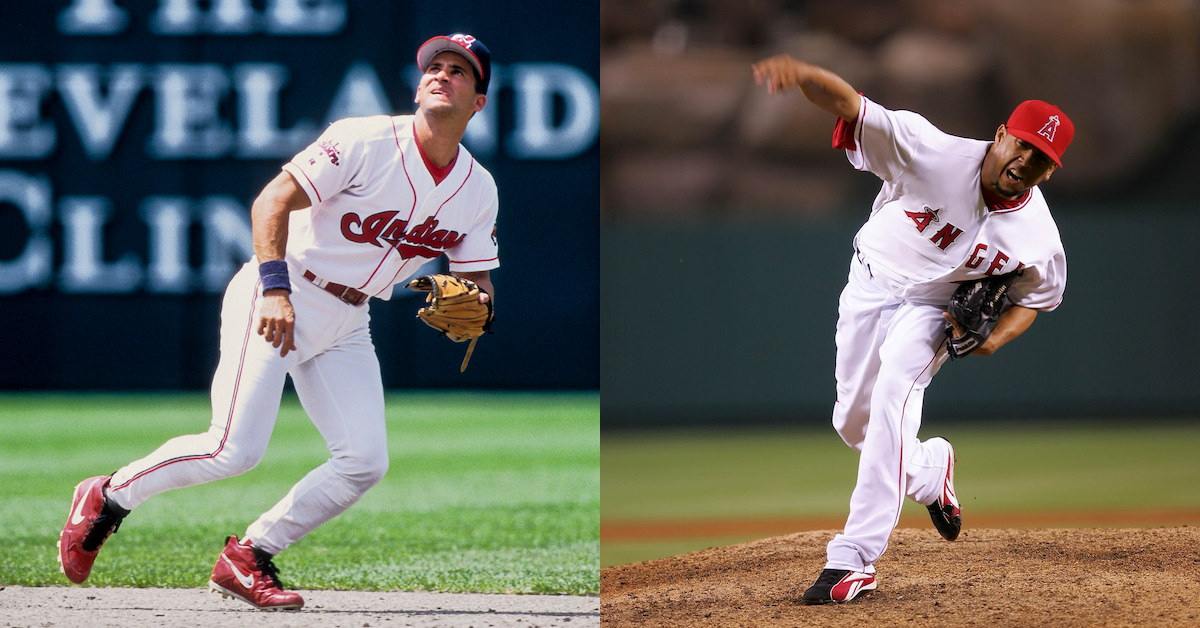
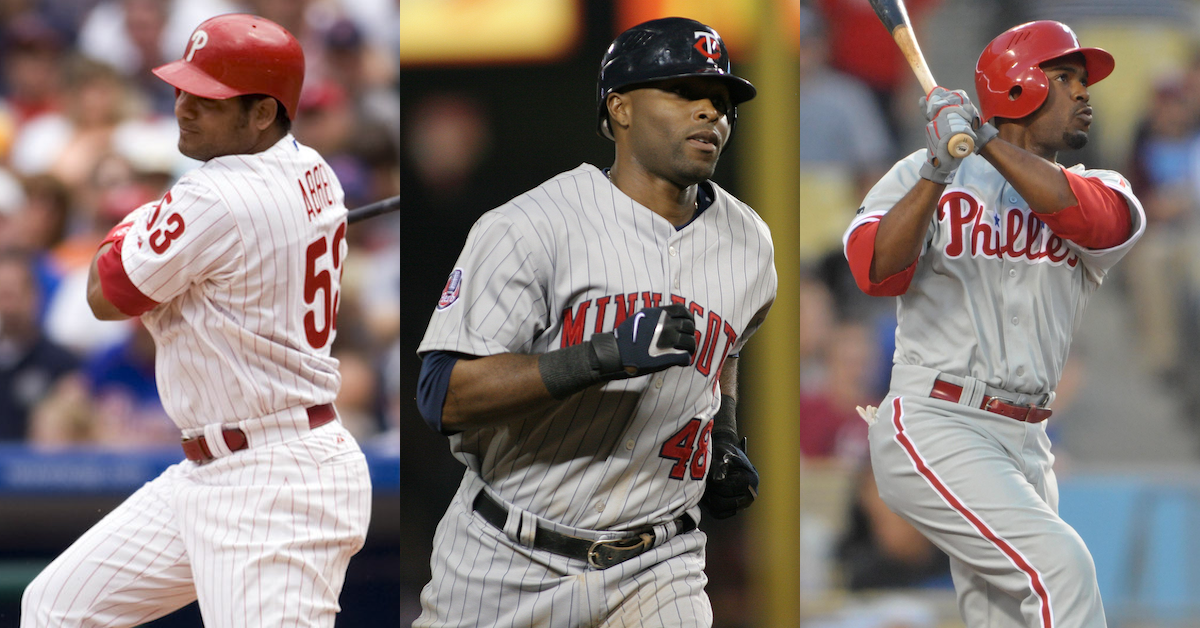
Before Joe Mauer began starring for the Twins, there was Torii Hunter. Before Chase Utley began starring for the Phillies, they had Abreu and Jimmy Rollins. Hunter, a rangy, acrobatic center fielder who eventually won nine Gold Gloves and made five All-Star teams, debuted with Minnesota in 1997 and emerged as a star in 2001, the same year the Twins chose Mauer with the number one pick of the draft. The pair would play together from 2004 to ’07, making the playoffs twice before Hunter departed in free agency. Abreu, a five-tool player with dazzling speed, a sweet left-handed stroke, power, and outstanding plate discipline, quickly blossomed upon being traded to the Phillies in November 1997. But even while hitting at least 20 homers, stealing at least 20 bases, and batting above .300, recognition largely eluded him until he made All-Star teams in 2004 and ’05. Rollins, a compact shortstop who carried himself with a swagger, debuted in 2001 and made two All-Star teams before he and Utley began an 11-year run (2004–14) as the Phillies’ regular double play combination. By the time the pair of middle infielders helped Philadelphia to five NL East titles, two pennants, and a championship — with Rollins winning NL MVP honors in 2007 and taking home four Gold Gloves — Abreu was gone, traded to the Yankees in mid-2006.
All three players enjoyed lengthy and impressive careers, racking up over 2,400 hits apiece with substantial home run and stolen base totals. From a Hall of Fame perspective, Rollins and Hunter have credentials that appeal more to traditionally minded voters than to statheads — particularly their Gold Gloves — while Abreu, despite half a dozen .300 seasons and eight with at least 100 RBI, was a stathead favorite. Regardless, they’ve all spent years languishing on the ballot. Hunter debuted with 9.5% in 2021 but has yet to match that since, scraping by in 2025 with just 5.1%; one fewer vote and he’d have been bumped off the ballot. Rollins debuted with 9.4% in 2022 and has gained roughly two or three points in each cycle since, with 18% in ’25. Abreu barely made the cut with just 5.5% in his 2020 debut, and since then has alternated small gains and losses; he received 19.5% in 2025. Read the rest of this entry »
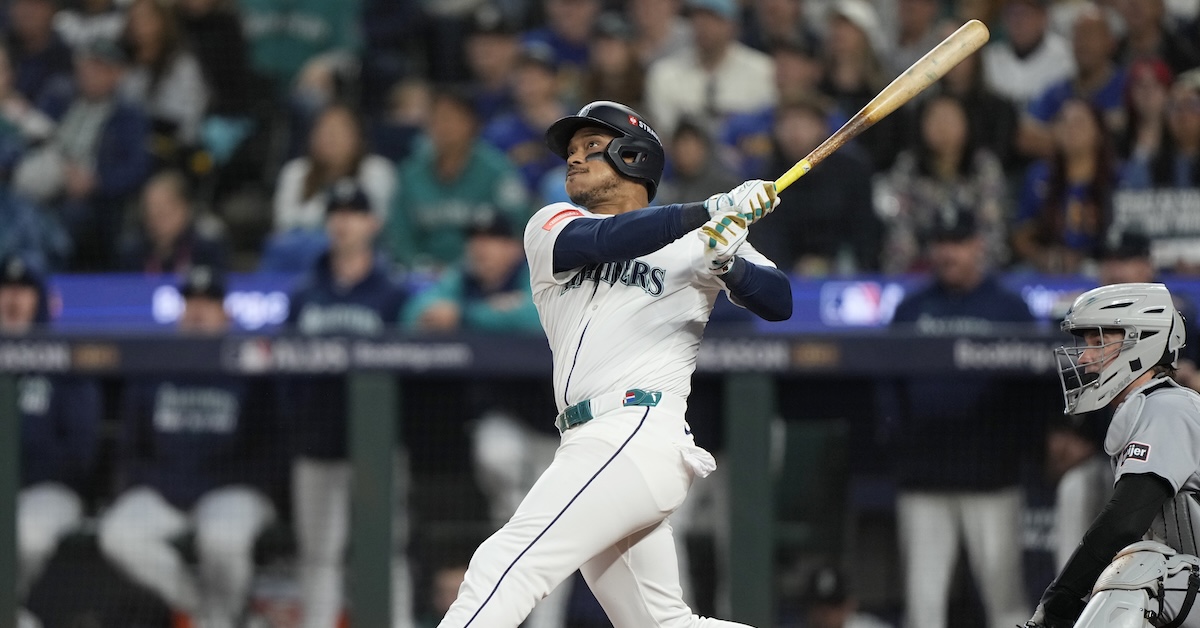
The remaking of the Mets continues apace. After losing fan favorites Edwin Díaz and Pete Alonso to other teams in free agency last week, the Mets took a step towards replacing the latter by signing switch-hitting infielder Jorge Polanco to a two-year, $40 million deal on Saturday. Though he has almost no experience at first base, the Mets believe he can learn the position well enough for it to be his primary position.
The 32-year-old Polanco probably isn’t the first player anyone thought of as an Alonso replacement, particularly given the bigger-ticket free agents out there and the Mets’ spending power, but he’s coming off a strong season at the plate (.265/.326/.495/, 132 wRC+ with 26 homers) for the Mariners as well as a memorable October. Though he hit just .208/.269/.417 (95 wRC+) in 52 plate appearances during the postseason, his two homers off the Tigers’ Tarik Skubal powered Seattle to a 3-2 win in Game 2 of the Division Series, and his bases-loaded single off Tommy Kahnle in the 15th inning of Game 5 gave the team its first postseason series victory in 24 years. In the ALCS opener against the Blue Jays, he drove in the Mariners’ last two runs with RBI singles in their 3-1 win, then hit a three-run homer off Louis Varland that gave Seattle the lead for good in Game 2. Alas, he went just 2-for-17 the rest of the way as the Mariners fell to the Blue Jays in seven games.
Polanco, who spent the past two seasons with the Mariners and before that parts of 10 seasons with the Twins, has played mainly second base and shortstop during his major league career, though he hasn’t played the latter position since 2022, and the defensive metrics attest that it’s not a good idea anymore. Even at second base, his metrics have descended into the red, to the point that he was primarily a designated hitter last season following an October 2024 surgery to repair his left patellar tendon. He accumulated -2 DRS and -3 FRV in just 287.1 innings at second in 2024, and -1 DRS and -8 FRV in 925.1 innings there the year before. Read the rest of this entry »

 Jay Jaffe: Good afternoon, folks, and welcome to my first chat of 2026! I’ll get this going momentarily (having a chat with a reporter about Hall of Fame stuff)