Eric Canha, Mark J. Rebilas, and Brad Penner-Imagn Images
Three years ago, Chris Sale appeared to be pretty close to the end of the line. After missing the abbreviated 2020 season due to Tommy John surgery, he made just 11 starts totaling 48 1/3 innings in 2021–22 while battling further injuries, including a stress fracture of a rib and fractures of his left pinky and right wrist. When he was sidelined by yet another stress fracture — this one in his scapula — in June 2023, he missed 10 weeks, and his ERA ballooned to 4.88 after returning to make half a dozen starts. It was fair to think the 34-year-old lefty’s most productive days were behind him, as his wiry 6-foot-6 frame could no longer withstand the rigors of regular duty.
Lo and behold, Sale made a strong showing over his final three starts of 2023, capturing the attention of the Braves, who traded infielder Vaughn Grissom to the Red Sox in a straight-up exchange in December 2023 and soon restructured his contract. Sale rewarded Atlanta’s faith by winning both the pitching Triple Crown (with 18 wins, a 2.38 ERA, and 225 strikeouts) and the Cy Young award that had long eluded him. Though he was limited to 20 starts last year by a fractured rib, he has continued to dominate; this year, the 37-year-old southpaw ranks second in the NL in ERA (2.20), FIP (2.26), and strikeout rate (30.6%) behind Cy Young favorite Jacob Misiorowski, as well as third in FanGraphs WAR (4.9) behind The Miz and Cristopher Sánchez. And while he’s “only” sixth in Baseball Reference WAR (4.5), Sale’s run with the Braves has pushed his S-JAWS past 2025 Hall of Fame inductee CC Sabathia (50.8). Sale won’t catch any of the big four from this era — Justin Verlander, Clayton Kershaw, Zack Greinke, and Max Scherzer, the last of whom may be the only one active after this season — but he’s the only other active or recently retired starter with an S-JAWS above 45.0. As voters scramble to recalibrate their Hall of Fame standards for starting pitchers in an age of diminished workloads, Sale has likely punched his ticket to Cooperstown.
It hasn’t been a great season for veterans vying to shore up their Hall of Fame credentials, as I noted on Monday, with injuries sidelining hopefuls such as Carlos Correa, Francisco Lindor, José Ramírez, Juan Soto, and Giancarlo Stanton, and age seemingly catching up to Jose Altuve, Manny Machado, and others. Yet Sale isn’t alone among mid-career players who have advanced their causes. What follows here is a partial position-by-position roundup of some others whose odds of earning a spot Cooperstown have improved this season, at least by my reckoning. Not every position is covered, and at some positions, the top candidates wound up in the previous installment because their chances have taken a hit. I’ve included each player’s JAWS standing, his 2026 WAR (Baseball Reference’s version unless otherwise indicated), and his ZiPS rest-of-season projection. Read the rest of this entry »
Last year, though he missed the first two and a half months of this season due to bilateral epicondylitis, Giancarlo Stanton bashed 24 homers in 77 games while hitting for a 158 wRC+ and 1.8 bWAR. Despite its half-season nature, the campaign was his strongest since 2021, and it appeared as though he had enough momentum to reach 500 home runs and, quite likely, secure a spot in the Hall of Fame. Unfortunately, Stanton has once again been unable to stay on the field. After straining his right calf in late April and then reinjuring it while rehabbing in mid-June, he suffered a moderate-grade left calf strain last week, one that may very well prevent him from playing again this season.
Manager Aaron Boone said on Saturday that Stanton strained his left calf while running the bases earlier in the week. He didn’t offer a timetable for the slugger’s return, but conceded, “We’re at a point in the calendar where it gets challenging… You all know how bad he wants to be on that field and contributing to a championship… Hopefully we just continue working to get him right and healthy.”
The 36-year-old Stanton has played in just 24 games this season, batting .256/.302/.422 (103 wRC+) with just three homers in 96 plate appearances. Those three homers boosted his career total to 456, the most of any active player, but they’ve run critical time off of his clock, so to speak. By colleague Dan Szymborski’s ZiPS-driven estimate, Stanton had a 71% chance of reaching 500 homers coming into the season, but per Dan’s hot-off-the-presses estimate, those odds are down to 51%, and to these eyes that still feels high. Stanton’s MVP award, two home run titles, five All-Star appearances, postseason performance (.254/.322/.605 with 18 homers) and otherworldly Statcast numbers might be enough to overcome a slight shortage in JAWS, but with just 47.0 career WAR (the Baseball Reference version, which is true for all of the figures cited here unless otherwise indicated), 35.4 peak WAR, and 41.2 JAWS, he’s just 37th among right fielders, 14.8 points below the standard. I don’t think that’s going to cut it. Read the rest of this entry »
COOPERSTOWN, NY — “I took pride in playing second base, a position that keeps you in every play and demands toughness, but my bat was always my ticket,” said Jeff Kent during his Hall of Fame induction speech on Sunday. “I learned a long time ago from Tommy Lasorda, one of the best motivators in the game, a simple truth that I lived by my whole career: The money lies in the RBIs.”
Kent’s philosophy cut straight to the heart of a decades-long culture war within baseball, one that helps to explain why the slugging second baseman spent 10 years on the writers’ ballot without coming close to the necessary 75% needed for election, but sailed in on his first appearance on the Contemporary Baseball Era Committee last December. Hardly the darling of statheads — he ranks 22nd in JAWS at his position, for example, and only twice ranked among his league’s top 10 in Baseball Reference WAR — his prickly persona sometimes rubbed teammates and media the wrong way, but his candidacy resonated for Era Committee voters. Chockfull of executives and Hall of Fame players, the handpicked panel was more familiar with old-school measures and more inclined to reward his reputation for being free of performance-enhancing drugs, in contrast to statistically superior longtime teammate and fellow Era Committee candidate Barry Bonds, who was not elected. “Most home runs by a second baseman” played better than “most home runs all-time” thanks to the absence of a theoretical asterisk.
Along with Carlos Beltrán and Andruw Jones, Kent was inducted in front of an estimated crowd of 12,000 on a sunny Sunday afternoon at the Clark Sports Center. Including this year’s three inductees, a record 60 living Hall of Famers were onstage, but their audience was comparatively sparse, well short of the estimated 30,000 who showed up last year for the inductions of Ichiro Suzuki, CC Sabathia, Billy Wagner, and the late Dick Allen and Dave Parker.
All weekend long, comparisons between last year’s Induction Weekend and this one were inescapable and inevitable. Throngs of colorfully outfitted fans of the Mariners, Yankees, Astros, Phillies, and Pirates filled the streets of Cooperstown in 2025, the town was abuzz, and thanks to the timely new Yakyu Baseball exhibit — dedicated to the interchange between American and Japanese baseball — the Hall itself was packed with visitors. While a sizable contingent of Puerto Rican fans turned out for Beltrán, the streets were scarcely populated and decidedly less colorful this year. The Hall had new displays devoted to Tom Seaver memorabilia and the 50th anniversary of Rick Monday’s rescue of an American flag that was about to be set ablaze at Dodger Stadium, but this year brought no new marquee exhibit, and the Clark Sports Center field had a lot more visible, unoccupied grass.
Photo by Jay Jaffe
Chalk that up to the particularities and peculiarities of this year’s class. Few Hall of Famers in any year have the international appeal of the iconic Suzuki, who came within one vote of unanimous election and addressed the omission with grace and humor in his speech. And whether they were first-year, 10th-year, or Era Committee honorees, each of the other four Class of 2025 members took unique roads to Cooperstown. They or surviving family members told gripping stories of the obstacles they surmounted.
By contrast, this year’s class of inductees lacked such universal appeal and didn’t capture fans’ imagination in the same way — at least not enough to plan a weekend trip to Cooperstown during high season. Some of the obstacles they surmounted to get elected owed to conduct that made them polarizing figures, even if it wasn’t viewed as disqualifying. Far from immortality, Beltrán, Jones, and Kent proved themselves all too human during their playing careers. Most notably, Beltrán, a nine-time All-Star, three-time Gold Glove winner, and one of just eight players with at least 300 home runs and 300 stolen bases, was the only player identified by name in commissioner Rob Manfred’s 2019 report on the Astros’ illegal electronic sign-stealing efforts. That exposure cost Beltrán his post as the manager of the Mets before he could even fill out a lineup card. Even as the ninth-ranked center fielder in JAWS, he wasn’t elected until his fourth ballot.
Jones reached the majors as a teenager, and went on to win 10 Gold Gloves while bopping 434 home runs and helping the Braves to 10 straight playoff appearances during his career. He ranks 11th in JAWS among center fielders, but declined rapidly in his 30s due to lax conditioning; done after his age-35 season, he finished with just 1,933 hits, fewer than any other post-1960 player elected by the writers. He disappeared from the majors after being arrested on a domestic battery charge in December 2012. (He pleaded guilty to a lesser disorderly conduct charge.) He received just 7.3% of the vote in his first ballot appearance in 2018, and needed nine years to gain entry from the writers.
Kent, a five-time All-Star and former MVP, didn’t do anything that rose to the level of either classmate’s transgressions, but in March 2002 he broke a bone in his left wrist, which he initially claimed happened while washing his truck. It soon surfaced through eyewitness accounts that he had crashed doing wheelies while riding his motorcycle, in violation of his contract. As scandals go, it was comparatively quaint; the incident became the butt of jokes, but the Giants showed leniency. Kent wound up missing just four games and turned in a season to rival his MVP-winning one from two years earlier while helping the Giants reach their first World Series since 1989.
Beyond that, during his 18-year career with the Blue Jays, Mets, Cleveland, the Giants, Astros, and Dodgers, Kent could be off-putting. “I had a habit of running my mouth,” he said in his speech regarding his early years with the Mets. At the tail end of his career, he also openly criticized what he perceived to be a lack of professionalism from his young Dodgers teammates. By his own account, he had more physical confrontations with Bonds than just the famous dugout blowup in 2002, though even in the aftermath of that incident he claimed, “We have a good relationship. We have a working relationship that I think works well on the field… I think if you guys [the media] try to create a dysfunctional relationship, that’s a farce too, because that’s not true.”
In a refreshing development, the now-58-year-old Kent has not shied from publicly displaying his emotions and his gratitude in connection with his election. That willingness to break character made his the most interesting speech of Sunday. “I’ll try not to cry now, but it’s coming, no doubt,” he said as he began his speech. A minute later, he was struggling to retain his composure as he recounted the story of his father, a Southern California police officer, promising to buy him a pickup truck if he earned a college scholarship — one he still has in his garage “as a reminder that some of the simplest things can change the entire direction of your life.”
“Standing on this stage reminds me why different people come and connect to this game,” he continued. “For some it’s a shared passion, a time spent with family and friends, for others it’s an opportunity. For me it was just a simple plan of a college education and a better way of life for my family.”
During a post-induction media session, the San Francisco Standard’s John Shea identified five times since the announcement of his election at which Kent has cried publicly. Kent didn’t dispute the count or the characterization of his softer side. “I don’t think I’m mad as much as I used to be,” he said. “You know, when you play this game, you have to play with a little hatred — I use that word lightly. People call it cockiness, or arrogance, or confidence. They call it so much, but you have to play this game with a chip on the shoulder.”
“I’m not mad any more, maybe that’s why,” he continued. “I’m a deflector, and I think I’ve deflected so much that now I have to reason with it and appreciate it,” he said, referring to the publicity and plaudits coming his way since being elected, and experiencing all of that in front of his family, from whom he spared that chip-on-the-shoulder attitude.
Kent did mention Bonds once in his speech, calling him “one of the most talented players this game has ever seen” without delving into the two stars’ conflicts. Nonetheless, his frequent repetition of phrases like “playing the game the right way” couldn’t be read as anything other than veiled references to the PED-linked players who overshadowed him during his career and on ballots, particularly when he spoke of the late Ryne Sandberg, who was a vocal critic of such players and who served on the 2023 Era Committee that rejected Bonds.
Back to the RBIs. Kent singled out former Mets teammate Eddie Murray’s counseling him that the key to staying cool in bases-loaded situations was to focus on getting the runner home from third base. “That lesson of keeping things simple stayed with me forever,” he said. Kent drove in 100 or more runs eight times during a high-offense era, in part because he hit behind Bonds as the slugger set records for bases on balls, intentional and otherwise. Yet, Kent only ranked among his league’s top 10 in a slash stat five times — twice apiece in batting average and slugging percentage, and once in on-base percentage. He was a prolific home run hitter for a middle infielder, clubbing 377 total and 351 as a second baseman, but his modest on-base percentages and subpar defensive metrics limited his value. Still, while his JAWS is below 13 of the other 20 enshrined second basemen, he’s third out of 10 among those elected by committees.
The 49-year-old Jones followed Kent by beginning with a nod to the giants at his position. “I feel like a rookie today surrounded by all these amazing Hall of Famers behind me,” he said. “There are so many guys here that I loved to watch play, and I’m happy to be here with them today. I never got to see Willie Mays play, so Ken Griffey [Jr.] was my guy. I wanted to be like him. For me and Carlos to join Griffey, Willie, and these other great center fielders in the Hall of Fame, it’s hard to put into words.”
“You can go 0-for-4 and still impact the game by taking away singles and extra-base hits. I worked hard on my routes and a preparation. I wanted to be the best center fielder,” said Jones.
The first player from the tiny island of Curaçao to be elected to the Hall of Fame paid tribute to Hensley Meulens, the first Curaçao native to reach the majors, and listed more than a dozen of the countrymen who have followed, including current major leaguers Ozzie Albies, Kenley Jansen, and Ceddanne Rafaela. He spoke of his father, Henry Jones, a legendary amateur player who caught and played center field for Curaçao’s national team in the 1960s and ’70s, and who passed away 10 years ago:
“He showed me how to work hard and play for what it takes to become a successful baseball player and a great person. Because he played center field, I wanted to be a center fielder, and he passed down every bit of knowledge [of] the game to me, like how to read balls off the bat. He hit me fly balls from foul pole to foul pole every time in Curaçao so I could track balls down, because the ocean breeze made tracking balls very difficult on the island.”
Jones also paid tribute to the other seven Hall of Famers from the 1990s and 2000s Braves teams on which he starred, namely manager Bobby Cox, general manager John Schuerholz, Greg Maddux, Tom Glavine, John Smoltz, Fred McGriff, and “my brother from another mother,” Chipper Jones, who debuted on the 2018 ballot alongside Andruw and “pushed for me, for my induction, for many years.”
While Chipper was one of four players elected on that 2018 ballot, Andruw nearly lost his eligibility; his 7.3% share now stands as the lowest of any player elected by the writers since the five-year waiting period was instituted in 1954. “A lot of my friends that follow the percentages closer than I did were like, ‘Hey, you’re barely hanging there,’” said Jones in his post-induction media session. “I was just happy to hang in there, [happy] that the writers kept me on the ballot. Getting in after nine years — I didn’t say I had to be the first ballot, I didn’t say I had to be the sixth year, the seventh year, or the last year, or get voted in by the Veterans Committee. I’m in the Hall of Fame now, so that’s all that matters.”
Like Jones, the 49-year-old Beltrán felt as though he were back at the beginning of his career on Sunday, opening his speech by saying, “This is the closest thing to my first at-bat in the big leagues, where I felt excited to be here but at the same time I felt very nervous. These guys really make me nervous,” he said, gesturing to the Hall of Famers behind him.
While Beltrán did not directly address the sign-stealing scandal during Sunday’s speech, it wasn’t far out of mind, particularly as the text on his plaque mentioned his “20-year career that ended in 2017 as World Series champion.” He thanked commissioner Manfred in his speech, as well as the voters: “To the Baseball Writers’ Association of America, I want to say thank you for making me a Hall of Famer… And for those that didn’t [vote for me] — that saw things different — I want to say also thank you. I appreciate your perspective. If baseball has really taught me something, I want to say is that I hope in life, we continue to measure ourselves by the same standard we have used to measure others.”
Beltrán did address the sign-stealing scheme earlier in the week during a Zoom session with reporters, saying, “[T]he fact that I’m the only player mentioned — I don’t know, it’s kind of weird. Sometimes it still gives me a bad taste in my mouth.” Later, he added, “I know that as a team we got together to do what we did, but I’ve got to tell you that this was not like one player’s idea.”
In that session, Beltrán added that after seeing Houston general manager Jeff Luhnow, manager A.J. Hinch, and bench coach-turned-Boston-manager Alex Cora lose their jobs, he knew he couldn’t last as Mets manager. “I feel like [Manfred] mentioning Carlos Beltrán in the report, that was my suspension.”
With Carlos Mendoza recently fired, Beltrán may yet get his shot to manage the Mets, for whom he’s currently a special assistant to president of baseball operations David Stearns. Within his speech, he explained his choice to wear a Mets cap on his plaque:
“Every organization shapes your career. New York shaped my life. It was here where I experienced my greatest success and some of my greatest challenges. Playing for the Mets made me a better man and a better leader. Many of the most meaningful relationships that I was able to build in my career, I did it wearing a Mets uniform. So the Mets cap, what it represents to me is growth and it represents a place where I became the best version of myself.”
Elsewhere in his speech, Beltrán saluted his fellow Puerto Rican Hall of Famers, as well as his mentors, such as Royals legend George Brett (“who taught me that greatness is built long before anybody is watching”), Astros teammates Jeff Bagwell and Craig Biggio, who taught him the importance of playing with pain, and Giants legends Mays and Willie McCovey, with whom he would talk baseball as often as possible during his two months with San Francisco in 2011. As Puerto Rican flags waved, he delivered substantial passages of his speech in Spanish, harkening to his influential role in mandating the presence of translators in every major league clubhouse.
Induction Weekend’s festivities weren’t confined to Sunday. Friday evening featured a cocktail party to celebrate this year’s winner of the BBWAA Career Excellence Award, Paul Hoynes, the beat reporter for the Cleveland Plain Dealer since 1983. The party takes place on the back porch of the Hotel Otesaga, where new and returning Hall of Famers and their immediate families stay for the weekend — and where entry to everyone else is by invitation only, with signs explicitly warning, “NO AUTOGRAPHS.” The porch opens up onto a breathtaking vista starring Lake Otsego, a view that never gets old.
Photo by Jay Jaffe
Saturday’s Hall of Fame Awards Presentation, conducted at the Glimmerglass Festival Theater about eight miles outside of Cooperstown, honored Hoynes as well as broadcaster Joe Buck, the recipient of the Ford C. Frick Award; Monday, for the golden anniversary of his notable rescue effort; and Bill White, winner of the Buck O’Neil Award. The last of those, which is presented no more than once every three years, honors “an individual whose extraordinary efforts enhanced baseball’s positive impact on society, broadened the game’s appeal, and whose character, integrity and dignity are comparable to the qualities exhibited by O’Neil.”
The choice of White for that honor was particularly resonant, at least to this scribe. Though he was an eight-time All-Star and seven-time Gold Glove winner at first base during his 13-year playing career, White didn’t accrue the kind of numbers that themselves typically drive election. He did start for the Cardinals’ 1964 World Series winners, and while with that organization, he made an impact by speaking on the record about the shoddy treatment of the team’s Black players, including Curt Flood and Bob Gibson, as well as himself. His exposure to those players’ not being invited to a St. Petersburg Chamber of Commerce’s “Salute to Baseball” breakfast held in a segregated hotel led the Cardinals to press for integrated lodging for spring training, a trend that spread to other teams training in segregated Florida.
White followed his impressive career with pioneering roles as a broadcaster and executive. In 1971, he began an 18-year run calling Yankees games and working for national networks, one that made him the first full-time Black play-by-play broadcaster in any sport. After retiring from broadcasting, he spent five years (1989–94) as president of the National League, making him the first Black person to assume such a post and the highest-ranking Black executive in any sport at the time. As a candidate for election on the 2024 Contemporary Baseball Era Committee for Managers/Executives/Umpires ballot, he fell two votes short.
“This award is meaningful, because when I grew up, I never imagined a life in baseball,” White said in a prerecorded video accepting his award. “Baseball was a way to earn money for medical school. But signing a contract with the New York Giants put me on a different path. Rooming with Willie Mays helped me become a better baseball player. I played with and against some of the greats of the game. Some of the best years of my life were as a broadcast partner with ‘Scooter,’ Phil Rizzuto. We had a lot of fun, and I couldn’t have asked for a better partner. I was so happy to see him elected to the Hall of Fame. And finally, the years I spent as president of the National League and on the Hall of Fame board were amazing. During my time at the National League, we added a couple of new teams and I helped contribute to the game’s growth, and I want to thank the board for this honor.”
During Saturday night’s cocktail party in the Hall of Fame plaque gallery — the highlight of my Induction Weekend every year, an event that’s like watching a childhood baseball card collection come to life — I summoned the courage to introduce myself to the 92-year-old White, who was holding court in the Hall’s lobby. After congratulating him, I expressed my hope he still might be elected to the Hall proper. He thanked me and said words to the effect that he was more than satisfied with this honor. “I used to run this place, you know,” he said, referring to his presence on the board of directors starting in 2000.
Somehow, his dealing with that less-than-perfect outcome felt like a metaphor for the entire weekend. This year’s induction festivities may not have been everybody’s favorite celebration or celebrants, but it wasn’t hard to find something to take from each of their roads to Cooperstown.
The following article is part of Jay Jaffe’s ongoing look at the candidates on the BBWAA 2026 Hall of Fame ballot. For a detailed introduction to this year’s ballot, and other candidates in the series, use the tool above; an introduction to JAWS can be found here. For a tentative schedule, see here. All WAR figures refer to the Baseball Reference version unless otherwise indicated.
Last week, BBWAA voters electedCarlos Beltrán and Andruw Jones to the Hall of Fame — and in doing so, they once again foiled my chances at a perfect five-year projection of upcoming elections. Not that I had any real expectation of running the table given my spotty track record regarding this endeavor, but while a year ago I correctly projected that Beltrán, who received 70.3% on the 2025 ballot, would make it this year, I was somewhat surprised that Jones, who received 66.2% last time — leaving him with what has typically been roughly coin-toss odds of reaching 75% the next year — made it as well.
If I’ve learned anything from 14 years of doing these five-year outlooks, dating back to the wrap-up of my 2014 election coverage at SI.com, it’s humility, because there are far more ways to be wrong in this endeavor than to be right; when a candidate gets elected more quickly than I expect, or lags relative to my expectations, it creates a ripple effect. The presence of a high-share holdover means less space for and less attention paid to the mid-ballot holdovers, so clearing one from the ballot can have ramifications that won’t be felt for a few years; likewise, a more rapid election than predicted can accelerate other candidates’ timelines. What’s more, the Hall can change the rules for election without warning, and candidates can do unforeseen things that compromise their chances.
The first time I tried this was so long ago that candidates still had 15 years of eligibility instead of 10, so I could afford to project Tim Raines for election in 2018, his 11th year of eligibility. The Hall’s unilateral decision to truncate candidacies to 10 years would come just months later, though thankfully voters accelerated their acceptance of Raines, who was elected in 2017. Both the eligibility shortening and Hall vice chairman Joe Morgan’s open letter pleading with voters not to elect candidates linked to performance-enhancing drugs changed the landscape in ways I couldn’t foresee. Meanwhile, Ichiro Suzuki made a two-game comeback that bumped his eligibility back a year, Curt Schilling found increasingly elaborate ways to offend voters, Omar Vizquel became the subject of multiple allegations of domestic violence against his wife and sexual harassment of an autistic batboy, and Beltrán lost a shot at first-year election because of his involvement in the Astros’ illegal sign-stealing scheme. My Magic 8 Ball didn’t see any of that coming. Read the rest of this entry »
The following article is part of Jay Jaffe’s ongoing look at the candidates on the BBWAA 2026 Hall of Fame ballot. For a detailed introduction to this year’s ballot, and other candidates in the series, use the tool above; an introduction to JAWS can be found here. For a tentative schedule, see here. All WAR figures refer to the Baseball Reference version unless otherwise indicated.
The 2026 Hall of Fame election is history, with a pair of center fielders who were born one day apart, fourth-year candidate Carlos Beltrán (born April 24, 1977) and ninth-year candidate Andruw Jones (born April 23, 1977), elected by the Baseball Writers Association of America. This is the fourth time two players from the same position besides pitcher were elected by the writers in the same year. Right fielders Harry Heilmann and Paul Waner were the first pair in 1952, followed by right fielders Henry Aaron and Frank Robinson in ’82, with left fielders Rickey Henderson and Jim Rice elected in 2009. That’s some impressive company!
Beltrán and Jones will be inducted into the Hall along with Contemporary Baseball honoreeJeff Kent on July 26, 2026, on the grounds of the Clark Sports Center in Cooperstown, New York. There’s no official word yet on which caps the players will be wearing on their plaques — the Hall has the final word — but odds are they’ll be the ones that you expect. Said Beltrán, who’s currently a special assistant for the Mets, “There’s no doubt that the Mets are a big part of my identity.” Kent has expressed his desire to wear a Giants cap, and Jones is almost certain to wear a Braves cap.
As usual, beyond the topline results, there’s plenty to digest from Tuesday’s returns. So as promised, here’s my candidate-by-candidate breakdown of the entire slate of 27 candidates, 13 of whom will return to the ballot next year. Note that references to percentages in Ryan Thibodaux’s indispensable Tracker may distinguish between what was logged at the time of the announcement at 6 p.m. ET on Tuesday (245 total ballots) and what’s in there as of Thursday at 9 a.m. ET (254 total ballots) Read the rest of this entry »
The following article is part of Jay Jaffe’s ongoing look at the candidates on the BBWAA 2026 Hall of Fame ballot. For a detailed introduction to this year’s ballot, and other candidates in the series, use the tool above; an introduction to JAWS can be found here. For a tentative schedule, see here. All WAR figures refer to the Baseball Reference version unless otherwise indicated.
When it comes to center fielders and the Hall of Fame, BBWAA voters have been a particularly picky lot. It’s all too easy to say, “This guy was no Ty Cobb,” or “This guy was no Willie Mays.” Who can live up to standards like that? Until Tuesday, just nine center fielders had been elected by the writers, fewer than any other position, but when Josh Rawitch announced the results of the 2026 balloting, two more joined them: fourth-year candidate Carlos Beltrán and ninth-year candidate Andruw Jones.
Beltrán, a five-tool player with 2,725 career hits, 312 stolen bases and the no. 9 ranking among center fielders in JAWS, received 84.2% of the vote, up from 70.3% last year. He had to overcome some initial resistance to his candidacy owing to his involvement in the Astros’ illegal sign-stealing scandal at the end of his career while helping the Astros win the 2017 World Series. Commissioner Rob Manfred’s 2020 report placed him at the center of Houston’s scheme, and it cost him his job as Mets skipper before he could manage a single game. Despite his transgression, he received 46.5% of the vote in his 2023 ballot debut, and followed with three straight years of double-digit gains. Read the rest of this entry »
The following article is part of Jay Jaffe’s ongoing look at the candidates on the BBWAA 2026 Hall of Fame ballot. For a detailed introduction to this year’s ballot, and other candidates in the series, use the tool above; an introduction to JAWS can be found here. For a tentative schedule, see here. All WAR figures refer to the Baseball Reference version unless otherwise indicated.
On Tuesday evening, the National Baseball Hall of Fame will announce the results of this year’s BBWAA balloting. In this age of ballot tracking, we have only a mild bit of suspense on our hands, something less than a true cliffhanger. Based on the published ballots in Ryan Thibodaux’s Tracker (which unfortunately has been experiencing outages due to traffic throttling), both Carlos Beltrán and Andruw Jones are likely to be elected, though there’s still a bit of uncertainty for the latter. If the FanGraphs readers who participated in this year’s crowdsource ballot had their way, Beltrán would be the only one who would make the cut. Read the rest of this entry »
The following article is part of Jay Jaffe’s ongoing look at the candidates on the BBWAA 2026 Hall of Fame ballot. For a detailed introduction to this year’s ballot, and other candidates in the series, use the tool above; an introduction to JAWS can be found here. For a tentative schedule, see here. All WAR figures refer to the Baseball Reference version unless otherwise indicated.
2026 BBWAA Candidate: Nick Markakis
Player
Pos
Career WAR
Peak WAR
JAWS
H
HR
SB
AVG/OBP/SLG
OPS+
Nick Markakis
RF
33.7
24.6
29.2
2,388
189
66
.288/.357/.423
109
Source: Baseball-Reference
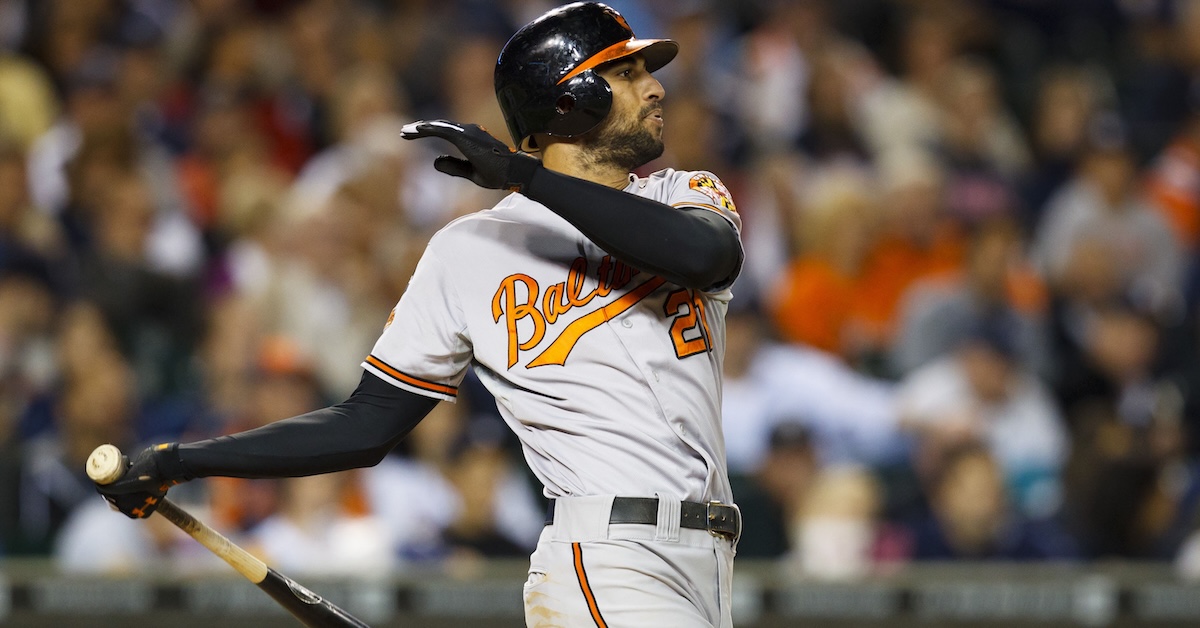
Early in his career, Nick Markakis appeared to be a star in the making. In his second and third seasons in the majors (2007 and ’08), the former first-round pick topped 40 doubles, 20 homers, and a .300 batting average while slugging nearly .500. He led the AL in WAR in 2008, his age-24 campaign — not that anyone was aware of it at the time, which helps to explain his omission from that year’s AL All-Star team.
It would take another decade before Markakis finally became an All-Star, and during that stretch, his performances leveled off. He became better known for his durability, his defense (he won three Gold Gloves), and above all, the example he set for younger players while enduring lean years both in Baltimore and Atlanta. He stuck around long enough to help both teams’ rebuilding efforts come to fruition with playoff appearances, racking up so many hits that he generated discussion regarding his potential Hall-worthiness if he persisted long enough to reach the magic 3,000-hit milestone.
Markakis’ retirement after his age-36 season rendered that question moot. He didn’t generate a Hall-caliber résumé or gaudy statistics during his 15-year career, but he received considerable praise for his impact on his teammates. From Braves manager Brian Snitker, who managed him from 2016–20:
“One of the most consistent, professional pros that I’ve ever been around. I’m glad I had the honor to manage him in his last years, because he’s a special player… How consistent he was, how professional he was, the way he played the game, how he grinded every at-bat. He never took a pitch off. And to see what he did late in his career, winning that Gold Glove, and the stabilizing force that he was for our club while I was here. You don’t appreciate a guy like Nick until you manage him. What a great career he had.”
The following article is part of Jay Jaffe’s ongoing look at the candidates on the BBWAA 2026 Hall of Fame ballot. For a detailed introduction to this year’s ballot, and other candidates in the series, use the tool above; an introduction to JAWS can be found here. For a tentative schedule, see here. All WAR figures refer to the Baseball Reference version unless otherwise indicated.
2026 BBWAA Candidate: Daniel Murphy
Player
Pos
Career WAR
Peak WAR
JAWS
H
HR
SB
AVG/OBP/SLG
OPS+
Daniel Murphy
2B
20.8
18.7
19.7
1,572
138
68
.296/.341/.455
113
Source: Baseball-Reference
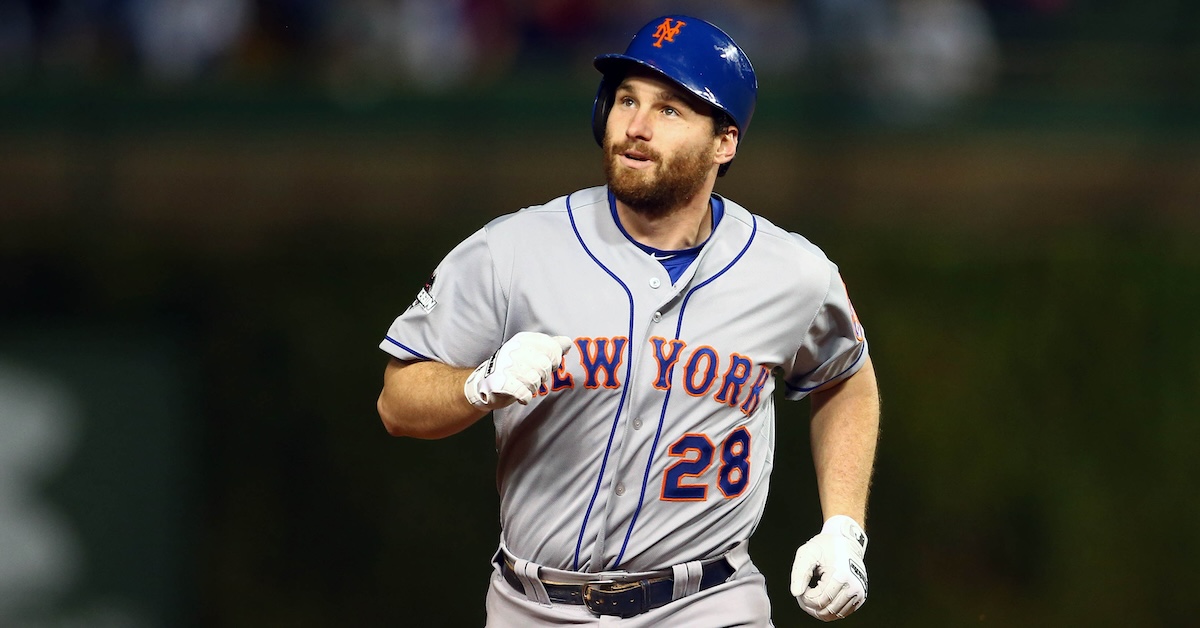
Daniel Murphy was not a home run hitter. Over the course of a 12-year major league career that was interrupted by knee injuries, he reached double digits in just seven seasons, topping 20 homers just twice. Like Howie Kendrick — another Jacksonville-born second baseman debuting on this Hall of Fame ballot, one who even played on the same team as Murphy in 2017–18 — the lefty-swinging, righty-throwing Murphy was known for his exceptional bat-to-ball ability. And like Kendrick, he went on a memorable, power-driven October run and won NLCS MVP honors. In 2015, he set a record by homering in six straight postseason games, carrying the Mets to their first pennant in 15 years. While it didn’t culminate in a championship, it earned him an indelible spot in postseason history; without that run, he probably wouldn’t even be on this ballot.
…
Daniel Thomas Murphy was born on April 1, 1985 in Jacksonville, Florida, the oldest of three children of Tom and Sharon Murphy. Tom taught kindergarten while Sharon sold insurance (in one amusing anecdote, an 11-year-old Murphy declared he wanted to be “an insurance person” for his school yearbook). Younger brother Jonathan (b. 1990) was a 19th-round pick by the Twins in 2012 and spent three seasons as an outfielder in their minor league system. Read the rest of this entry »
The following article is part of Jay Jaffe’s ongoing look at the candidates on the BBWAA 2026 Hall of Fame ballot. For a detailed introduction to this year’s ballot, and other candidates in the series, use the tool above; an introduction to JAWS can be found here. For a tentative schedule, see here. All WAR figures refer to the Baseball Reference version unless otherwise indicated.
2026 BBWAA Candidate: Howie Kendrick
Player
Pos
Career WAR
Peak WAR
JAWS
H
HR
SB
AVG/OBP/SLG
OPS+
Howie Kendrick
2B
35.0
25.6
30.3
1,747
127
126
.294/.337/.430
109
Source: Baseball-Reference
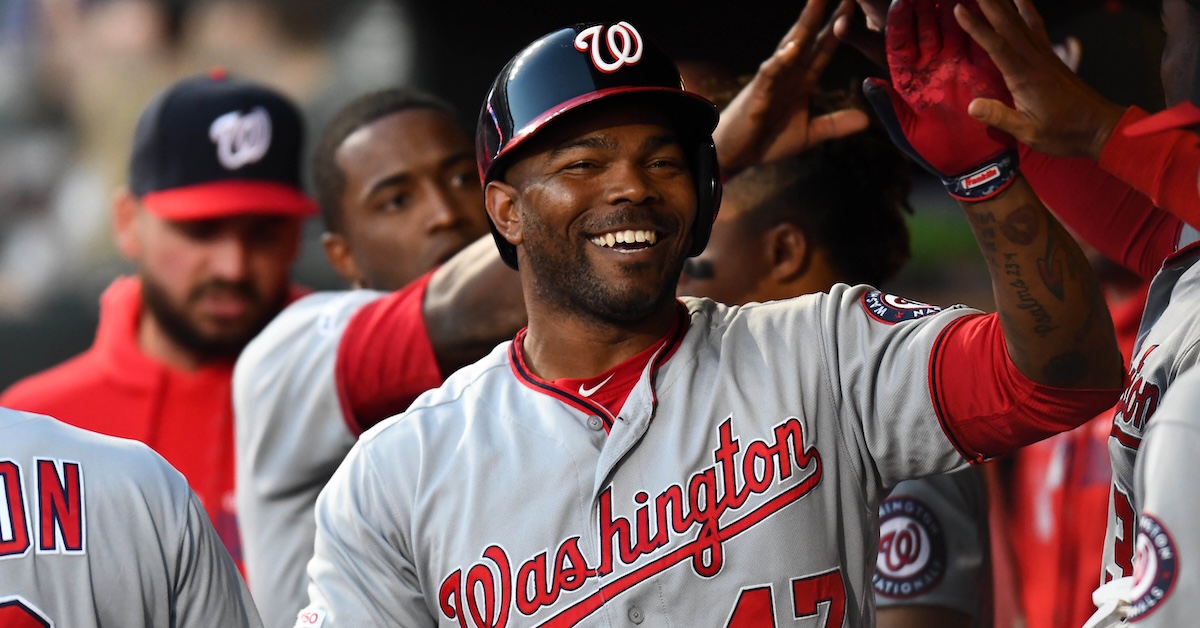
In their backyard baseball fantasies and daydreams, what kid hasn’t imagined hitting a late-inning home run to win a playoff game, or even Game 7 of the World Series? Howie Kendrick lived that dream not once but twice during the 2019 postseason, capped by a homer that sent the Washington Nationals on their way to their first championship in franchise history. What’s more, his October run (which also included NLCS MVP honors) topped off a storybook rise from humble beginnings that included a complicated family situation growing up and an amateur career that took place in almost complete obscurity.
“The more I learned about him, he starts telling me about how no schools wanted him, how it was really hard to stay confident,” former Angels teammate Torii Hunter, who mentored Kendrick upon joining the Angels in 2008, recalled in ’19. “I just kept thinking: This guy could have really fallen through the cracks.”
What put Kendrick on the map was his legendary bat-to-ball ability. Though he never won the major league batting title that was expected of him while hitting for a .358 average during his time in the minors, he carved out an impressive 14-year career, earning All-Star honors and helping his teams make the playoffs eight times.
…
Howard Joseph Kendrick III was born on July 12, 1983 in Jacksonville, Florida. He never knew his father, and because his mother, Belinda Kendrick, was a staff sergeant serving overseas in the United States Army, he and his two sisters grew up in the care of his maternal grandmother, Ruth Woods, in Callahan, Florida, a two-stoplight town of less than 1,000 people near the Georgia border. All 12 of Woods’ children, and their children, lived in the area as well. Read the rest of this entry »