Archive for Talks Hitting

Mike Trout Talks Hitting

Justine Willard-Imagn Images

Mike Trout has been one of the best hitters of his generation, if not one of the best in baseball annals. Now 35 years old and in his 16th major league season — all with the Los Angeles Angels — the pride of Millville, New Jersey has left the yard 424 times while logging a 163 wRC+ over 7,765 plate appearances. A 12-time All-Star and three-time MVP, he has been awarded nine Silver Sluggers.

When Trout arrives in Cooperstown — already with 90.2 WAR, enshrinement is basically a fait accompli — he will do so as a slugger who embraced a relatively straightforward approach. Much like his longtime contemporary Bryce Harper, who was featured in our Talks Hitting series back in May, Trout is steadfastly old school in the batter’s box. It’s hard to argue with the results. While no longer in his prime — not even legends can defeat Father Time — he is undeniably an all-time great.

Trout sat down to talk hitting prior to Tuesday’s game at Fenway Park.

———

David Laurila: How much have you changed as a hitter since signing your first professional contract?

Mike Trout: “I’m pretty much the same guy. I try to keep it that way. If you look at when I was younger — high school to early in pro ball — it’s pretty much the same now. I mean, there have been tweaks here and there. It might look a little different, but I feel like I’m the same hitter.”

Laurila: Can you elaborate on “might look a little different?”

Trout: “Subtle differences in my setup. The main thing is my contact points, and you probably wouldn’t see much difference there, but the setup is what gets you to that spot. That’s what I’m working on during the times I’m trying to figure stuff out.”

Laurila: Is that basically a feel thing? Read the rest of this entry »


Jake Burger Talks Hitting

Raymond Carlin III-Imagn Images

Jake Burger has grown into a solid big league slugger. Now 30 years old and in his fourth full major league season — and his second with the Texas Rangers — the 6-foot, 230-pound first baseman has logged a 107 wRC+ and gone deep 102 times since earning regular playing time in 2023. Hitting primarily out of the four and five holes in the Rangers’ lineup, Burger currently has 23 home runs and a team-best 78 RBIs to go with a .234/.297/.421 line.

His approach is slugger-ish, yet in many ways nuanced. While he primarily goes up to the plate looking to bash, Burger is more than just a turn-and-burn guy. Placing pitchers in buckets and embracing a calm mindset, the erstwhile Missouri State University Bear has a plan every time he settles into the right-handed batter’s box.

Burger sat down for the 126th installment of our Talks Hitting series when the Rangers visited Chicago to take on the White Sox last week.

———

David Laurila: What have you learned about hitting over the years?

Jake Burger: “More than anything, it’s about your mentality in the box. It’s about who can be almost bored, in a sense. If you’re trying to live up to a name, or a situation, you’re going to be less bored than the pitcher. When you can control your emotions a little bit and be almost bored in the box, you’re going to control situations better. You’re going to calm your mind a little bit.” Read the rest of this entry »


Pete Alonso Talks Hitting

Ray Seebeck-Imagn Images

Pete Alonso is known as a slugger, and for good reason. Now in his eighth major league season — and first with the Baltimore Orioles — the 31-year-old first baseman has 285 home runs and a .511 slugging percentage to go with a 132 wRC+ over 1,111 career games. His right-handed stroke produced 53 round-trippers in 2019, and he also boasts single-season totals of 45, 40, 38, and 37. Only in the truncated COVID campaign has he finished with fewer than 30.

It would be unfair to pigeon-hole the University of Florida product, and erstwhile New York Met, as simply a slugger, though. That’s especially true when it comes to Alonso’s approach at the plate, as well as his overall understanding of the craft. While the term “student of hitting” is arguably overused, it fits Baltimore’s top basher to a T.

In the latest installment of our Talks Hitting series — now 125 deep — Alonso addresses his self identity, the subtle adjustments he’s made over the years, and the studious manner in which he attacks pitchers. Our conversation took place at Fenway Park over the weekend.

———

David Laurila: How would you define yourself as a hitter?

Pete Alonso: “I’d like to consider myself a line drive hitter that has strength, puts up really good professional at-bats, and can spoil pitches. I can kind of set traps. Ultimately, I’m a line drive hitter with strength.”

Laurila: You’re generally viewed as a power hitter. Do you like that label?

Alonso: “I love the label. Power is based on results. If you hit a ton of home runs and a ton of doubles, consistently, you’re a power hitter. It doesn’t matter what your physical stature looks like. If you get the power results, then you’re a power hitter.

“Honestly, I’m just trying to hit a hard line drive. That’s really all it is. Hit a hard drive, and not necessarily out in front. I’m better at just meeting the ball where it’s pitched and putting a swing on that. I’m not trying to produce power. I’m just trying to produce pure contact. I think chasing and producing pure contact is the best thing anyone can do. All good things happen on the sweet spot of the bat.”

Laurila: You mentioned setting traps. Can you elaborate on that? Read the rest of this entry »


Max Clark Talks Hitting

Junfu Han/USA Today Network via Imagn Images

Max Clark is among the top position player prospects in baseball. Three years removed from being drafted third overall by the Detroit Tigers out of the Indiana’s Franklin Community High School, the left-haded-hitting 21-year-old outfielder has been described by our prospect team as having “a mature blend of tools and skills that belie his young age,” as well as a “feel to hit [that] stands out.” Clark is currently holding his own as one of the youngest players in Triple-A. Over 310 plate appearances with the Toledo Mud Hens, he has 22 extra-base hits, including six home runs, to go with a .264/.346/.394 slash line and a 100 wRC+.

In the latest installment of our Talks Hitting series, Clark discusses his approach at the plate, as well as developmental strides he has made since coming to pro ball. My conversation with the 60-FV prospect took place prior to Wednesday’s Mud Hens game in Worcester, Massachusetts.

———

David Laurila: How would you describe yourself as a hitter?

Max Clark: “I’m definitely a feel-for-hit guy. I have developed more power over the last couple years, obviously from growing up, but also from understanding where to do damage on which pitches and in which counts. Overall, I’m just going to hit. I’m going to put the ball in play. I hate striking out; I absolutely despise it. So, I want to put the ball in play and let my speed tool work, steal bases, cause chaos. But when I get a pitch in the damage zone, I’ll take a rip.” Read the rest of this entry »


Bryce Harper Talks Hitting

Brian Fluharty-Imagn Images

Bryce Harper is Cooperstown bound, and he’ll get there having embraced a relatively straightforward approach. Aggressively selective and with a swing built to do damage, the future Hall of Famer isn’t big on hitting analytics or new-school methods. More than anything, he trusts his raw ability — which he has in great abundance — and basically goes out to bash. It’s hard to argue with his success. Now in his 15th big league season, and eighth with the Philadelphia Phillies, the two-time NL MVP has 373 home runs to go with a .280/.386/.519 slash line and a 141 wRC+ for his career. Moreover, the 33-year-old is showing no signs of slowing down. At the quarter mark of the current campaign, he has 10 round-trippers and a 146 wRC+.

Harper sat down to talk hitting at Fenway Park earlier this week.

———

David Laurila: You told me that you’re more so see-ball-hit-ball than a guy who puts a lot of thought into his craft. Can you elaborate on that?

Bryce Harper: “I take my routine into the cage and kind of let that play out. There are days in the cage where you’re going to feel good, and days in the cage where you’re not necessarily going to feel good. I just need to stick with my routine every day, the same routine, understanding what works for me. That’s kind of how I’ve always been. I’ve got little drills that I like to do, which keep me through the ball and in the same path. But video-wise, pitcher tendencies — all that kind of stuff — I mostly throw out the door. I don’t do too much of that.”

Laurila: That said, have you changed at all from when you first broke into pro ball? Stance, set-up, bat path, etc.

Harper: “I’ve had to evolve. Guys are throwing harder. When I came up in 2012, one of the harder fastballs, Jonny Venters’, was like 98 [mph]. [Francisco Rodríguez] threw pretty hard. But now everybody is 95 to 100, up to 102. Each day you’re facing guys who are throwing really hard, from starters to bullpen. So, I’ve had to make sure I get to the baseball in a certain way, staying on plane. High heaters. Making sure that I’m on plane to get to baseballs thrown at a high level.”

Laurila: You need to do that without cheating on fastballs, otherwise you’re going to get beat by a secondary… Read the rest of this entry »


Kevin McGonigle Talks Hitting

Kevin McGonigle is an elite prospect, and his bat is a big reason why. Playing across three levels in the Detroit Tigers organization — topping out at Double-A — the 21-year-old shortstop/third baseman slashed .305/.408/.583 with 19 home runs and 182 wRC+ over 397 plate appearances in 2025. Ranked third on The Board behind only Konnor Griffin and Jesús Made, McGonigle has been described by Eric Longenhagen as having “real juice in his hands” and a swing that is “geared for launch.” Built to bash baseballs, McGonigle’s left-handed stroke is both compact and lethal.

Currently with the Arizona Fall League’s Scottsdale Scorpions — he’s in the desert primarily to work on his defense — McGonigle has a bright future regardless of where he ends up in the infield. Longenhagen feels that his best fit might be second base. But again, there is juice in his hands. The bat is McGonigle’s carrying tool, and it promises to carry him a long way.

McGonigle sat down to talk hitting prior to a recent game at Scottsdale Stadium.

———

David Laurila: How have you evolved as a hitter? For instance, if I looked at video from the time you signed and compared it now, would I see the same guy?

Kevin McGonigle: “You’d see the same swing. I’m a little bit bigger now, obviously, but the swing hasn’t changed. It’s been the same since I was 10 years old, to be honest with you. That’s the way my body naturally wants to move, and the best way I can explode on a baseball, so I try to keep doing the same thing I’ve done since I was younger.”

Laurila: How does your body naturally move?

McGonigle: “I’ve got the toe tap, and I’m in my legs more than a lot of guys are at the plate. I pretty much see ball, hit ball, and try to… not take the same swing. I feel that you’re going to have a different swing on every pitch. But I try to keep the same toe tap, the same everything.”

Laurila: While you’re continuing to do what comes naturally, you also have talented hitting instructors to work with. How are you balancing that?

McGonigle: “What I like about the Tigers is that they’re not really hands-on unless you have questions. I go to them for little pieces, like routines or drills that I want to do. One big thing for me was bat speed, so they put me on a bat-speed program last offseason. That really helped me with power this year. Bat-to-ball, of course. Gap-to-gap power. I’m trusting in them — the Tigers and all the coordinators — because they’re there to help you get better and better each day.”

Laurila: What is your approach in terms of where you’re looking to hit the ball?

McGonigle: “It depends on who is on the mound. If a good lefty is out there, I’ll think left-center gap and then just react to his offspeed and pull it. Same thing with right-handers. If it’s a guy throwing really hard, like upper-90s, maybe I’ll think right-center. That’s the farthest I’ll go with a heater. Then, changeup, curveball — whatever secondary he throws — pull it down the line. Top hook it in the corner is what I like thinking.

“When I’m on, I’m mostly hitting balls hard in the right-field gap or down the right-field line. That’s even with pitches dotted away. I’ll still be able to get under it and pull it. There does comes a time and place when I want to let the ball travel, though. With two strikes, I try to use all parts of the field.

“I’m also always sitting on fastballs and reacting to offspeed from there. I don’t like sitting on other pitches, really. If it’s a lefty that just spams sweepers, I’ll sit sweeper, but that’s about it. For me, it’s mostly all reaction.”

Laurila: My impression is that you fit into the KISS category — Keep It Simple, Stupid — yet you think about hitting quite a bit. Is that accurate?

McGonigle: “Definitely. I mean, if I’m hitting the ball hard and it’s going right at somebody, there’s nothing you can do about it. So, my main thing is to just find the barrel. That’s it. If you find the barrel, it’s a win. If you don’t, then get him next time.”

Laurila: Coming up from amateur ball and and through different levels of pro ball, you’re basically the same guy, but with more reps under your belt…

McGonigle: “Yeah, just seeing more pitching. In high school, I didn’t really see 95 [mph] really at all. Once I got a feel for that, I had to get used to guys having better offspeed. They like to throw it in leverage counts, and that’s one thing I really needed to work on this year. Last year I got a lot of fastballs to hit, and this year they’re flipping in 3-0 sliders, 3-1 sliders, changeups in 0-0 counts.

“Getting my hack off on 0-0 counts when I get offspeed that is middle-middle, or it’s a get-me-over offspeed… if I swing and miss, so what? I’m down 0-1. But if I put a barrel on it, then it’s a win. I’m more aggressive now than I was last year.

“If he’s a fastball-changeup guy who throws a lot of changeups, I’ll still sit fastball. A lot of times I’m going to look up. The changeup is going to start there, then have a little bottom to it and go to the heart of the plate. I’m kind of tunneling where I want the pitch to start.”

Laurila: Has bat-speed training helped you react better to heaters when you’ve been expecting something offspeed?

McGonigle: “Yeah. I’d say there were a few times this year that I was sitting offspeed, a guy threw a heater down the middle, and I was still was able to hit it hard to left field. Having a quicker bat has definitely helped. I’m able to protect on two-strike counts. If I’m beat on a fastball, I can at least get a bat on it and foul it off, give myself life to hopefully win that two-strike count.”

Laurila: How much do strikeouts matter? That was something Riley Greene struggled with this year, even while putting up good numbers.

McGonigle: “It’s not a great feeling. I mean, Riley Greene is a great baseball player. I’m looking forward to hopefully one day sharing a field with him. He wouldn’t be in the spot he is right now if it wasn’t for the way he plays baseball, and the way he hits. Strikeouts aren’t the best thing in the world, but he also performed in all the different aspects of the game. The whole strikeout thing… I think it is a big deal, but not as big as everyone thinks it is.”

Laurila: Outside of defense, what do the Tigers want you to work on this coming offseason?

McGonigle: “We have exit meetings with our hitting coordinators — mine will be after [the AFL] — and off the top of my head, I don’t know exactly. But the curveball is one pitch that I struggled with this year. I was either under it, or on top of it.”

Laurila: Why was that?

McGonigle: “Some of it was timing, but some of it was swinging at the wrong curveballs. If it’s low, that’s where the pitcher wants it, and the high ones would kind of fool me. A pitcher would go up top with a curveball, and I would clip it back, whereas that’s a pitch you want to hammer. I’m so used to training it down in the zone, where pitchers usually want to get it, but now some guys are trying to get it up top. I need to work on that, on hitting offspeed up top.”

Laurila: Any final thoughts on hitting?

McGonigle: “There’s not a perfect swing. Every swing is going to be different. If it’s a low pitch, if it’s a high pitch, if it’s away… but you see a lot of guys trying to chase that perfect swing. That’s hard to do when you have a guy throwing 99 and it’s running 20 inches, or sinking 20 inches. My thought is just, ‘Go up there and get the bat to the ball.’ Keep it that simple. Don’t try to chase the perfect swing. I want my swing to be adjustable. Simple and adjustable.”

——

Earlier “Talks Hitting” interviews can found through these links: Jo Adell, Jeff Albert, Greg Allen, Nolan Arenado, Aaron Bates, Jacob Berry, Alex Bregman, Bo Bichette, Justice Bigbie, Cavan Biggio, Charlie Blackmon, JJ Bleday, Bobby Bradley, Will Brennan, Jay Bruce, Triston Casas, Matt Chapman, Michael Chavis, Garrett Cooper, Gavin Cross, Jacob Cruz, Nelson Cruz, Paul DeJong, Brenton Del Chiaro, Josh Donaldson, Brendan Donovan, Donnie Ecker, Rick Eckstein, Drew Ferguson, Justin Foscue, Michael Fransoso, Ryan Fuller, Joey Gallo, Paul Goldschmidt, Devlin Granberg, Gino Groover, Matt Hague, Andy Haines, Mitch Haniger, Robert Hassell III, Austin Hays, Nico Hoerner, Jackson Holliday, Spencer Horwitz, Rhys Hoskins, Eric Hosmer, Jacob Hurtubise, Tim Hyers, Walker Jenkins, Connor Joe, Jace Jung, Josh Jung, Jimmy Kerr, Heston Kjerstad, Steven Kwan, Shea Langeliers, Trevor Larnach, Doug Latta, Dillon Lawson, Brooks Lee, Royce Lewis, Evan Longoria, Joey Loperfido, Michael Lorenzen, Mark Loretta, Gavin Lux, Dave Magadan, Trey Mancini, Edgar Martinez, Don Mattingly, Marcelo Mayer, Hunter Mense, Owen Miller, Paul Molitor, Colson Montgomery, Tre’ Morgan, Ryan Mountcastle, Cedric Mullins, Daniel Murphy, Lars Nootbaar, Logan O’Hoppe, Vinnie Pasquantino, Graham Pauley, David Peralta, Luke Raley, Julio Rodríguez, Brent Rooker, Thomas Saggese, Anthony Santander, Drew Saylor, Nolan Schanuel, Marcus Semien, Giancarlo Stanton, Spencer Steer, Trevor Story, Fernando Tatis Jr., James Tibbs III, Spencer Torkelson, Mark Trumbo, Brice Turang, Justin Turner, Trea Turner, Josh VanMeter, Robert Van Scoyoc, Chris Valaika, Zac Veen, Alex Verdugo, Mark Vientos, Matt Vierling, Luke Voit, Anthony Volpe, Joey Votto, Christian Walker, Jared Walsh, Jordan Westburg, Jesse Winker, Bobby Witt Jr. Mike Yastrzemski, Nick Yorke, Kevin Youkilis


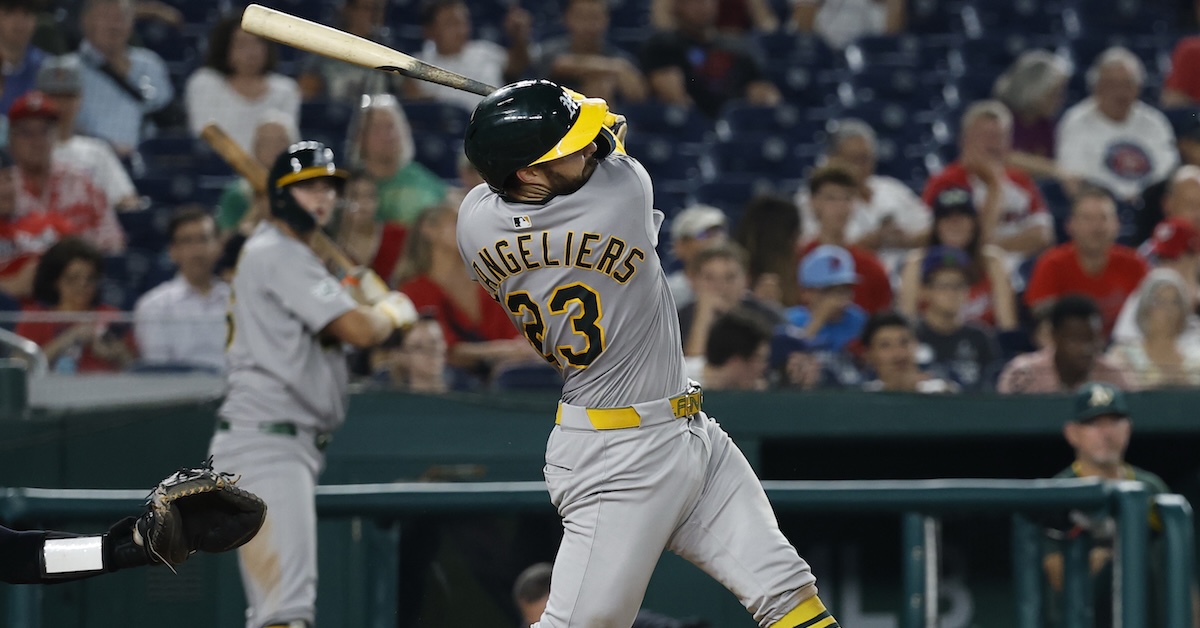
Shea Langeliers Talks Hitting

Geoff Burke-Imagn Images

Shea Langeliers has emerged as one of baseball’s best backstops. Building on a 2024 season in which he swatted 29 home runs while logging a 109 wRC+, the 27-year-old slashed .277/.325/.536 with 31 home runs and a 132 wRC+. Moreover, he lowered his strikeout rate from 27.2% to 19.7%, and upped his WAR from 2.0 to 3.9. Those numbers came with the Athletics, who acquired Langeliers in the March 2022 trade that sent Matt Olson to the Braves.

Taken ninth overall by Atlanta in 2019 out of Baylor University, Langeliers was called “the consensus best catcher in [that year’s] draft not named Adley Rutschman” by Eric Longenhagen and Kevin Goldstein. When ranking Langeliers fifth in the Braves system in the spring of 2021, our then-prospect analyst duo also opined that “offensive development will dictate his ultimate value, as his defense is big league-ready right now.” As the numbers show, the right-handed hitter’s offense has developed just fine.

Langeliers sat down to talk hitting when the A’s visited Boston in September.

———

David Laurila: How have you changed as a hitter over the years? For instance, are your swing and setup any different from when you got to pro ball?

Shea Langeliers: “Those haven’t changed a whole lot. What has changed is how I’m mentally ready to hit sooner, throughout the process, if that makes sense. A good way to explain it would be, before release being able to physically pull the trigger on my swing. Being ready to hit earlier in the loading process gives me more time to see the pitch and react to it. It’s also a good mental cue for me.

“Another thing is that when I first got to the big leagues, I was trying to hit everything as hard as I can, all the time. I’ve dialed that down a little bit. There is a little more bat control now, so I’m missing fewer pitches.”

Laurila: Can you elaborate on being ready to hit earlier? Read the rest of this entry »


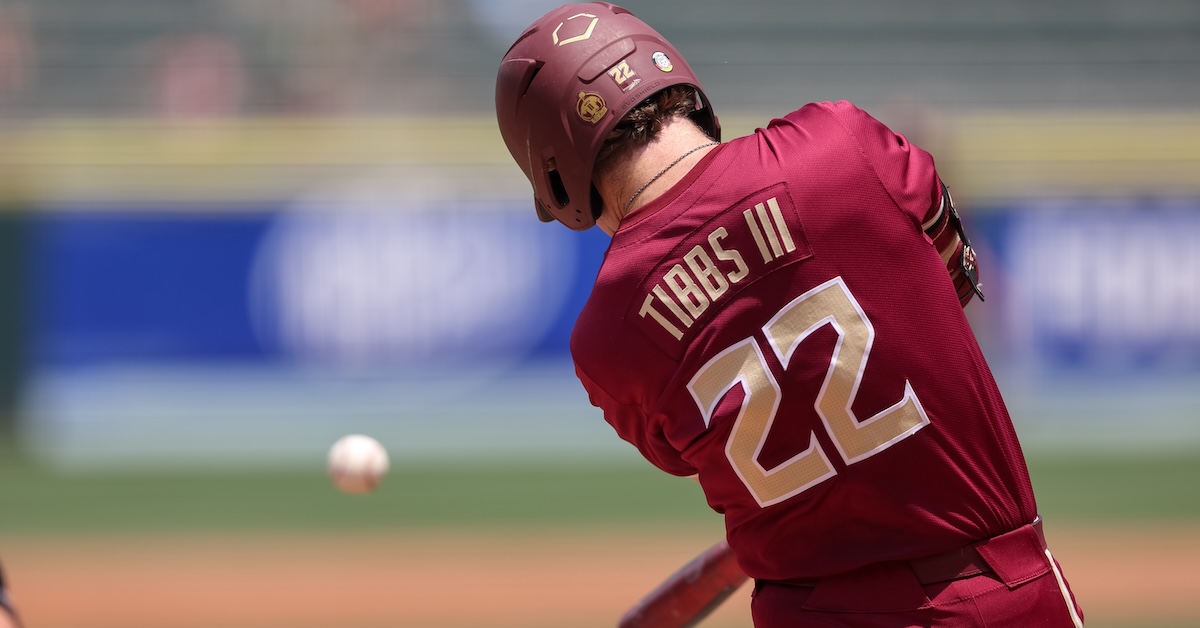
Red Sox Prospect James Tibbs III Talks Hitting

Cory Knowlton-USA TODAY Sports

James Tibbs III might best be described as a hitting rat. Drafted 13th overall last year by the San Francisco Giants out of Florida State University, and subsequently shipped to the Boston Red Sox in last month’s blockbuster Rafael Devers deal, the 22-year-old outfielder lives and breathes baseball — particularly the part that entails standing in the batter’s box. From a young age, Tibbs has doggedly worked on honing his left-handed stroke.

An Atlanta native who attended high school in nearby Marietta, Tibbs excelled collegiately, slashing .338/.462/.685 over three seasons at the ACC school, with a 28-homer junior campaign further enhancing his profile. And he’s continued to hit in pro ball. He played just 26 games after inking a contract last summer, and his results were mixed; he posted a 153 wRC+ in nine games (42 plate appearances) in A-ball, earned a promotion, then went cold in High-A. Now in his first full professional season, he’s back to doing what he does best: bashing baseballs. Tibbs put up a 132 wRC+ with a dozen home runs in High-A prior to the trade, and since joining his new organization, he has logged a 107 wRC+ over 86 plate appearances while acclimating to Double-A.

Ranked 14th in what Eric Longenhagen called “the best farm system in baseball” when our Red Sox Top Prospects list was published in late June, the promising young outfielder was assigned a 45 FV, with raw power graded as his best hitting tool. Tibbs sat down to talk hitting prior to a recent Portland Sea Dogs home game.

———

David Laurila: You were drafted one year ago. Are you the same hitter now, or has anything meaningfully changed?

James Tibbs III: “I’m pretty much the same. It’s what’s gotten me this far, and I’ve kind of tried to replicate that as much as possible. I’ve never been one to try to make changes unless it’s absolutely necessary, because I play off of feel. I’ll make adjustments based off of that feel, but I’m doing it trying to get back to my base. My base has been pretty consistent for the last… three years? Two years? Something like that.

“I feel like I cover the plate well. I feel like I can see the ball well from where I stand and how I load. I feel like I use my body well in order to get to the spots that I can’t necessarily cover. So yeah, it’s been pretty consistent for the most part.”

Laurila: How would you describe your approach at the plate? Read the rest of this entry »


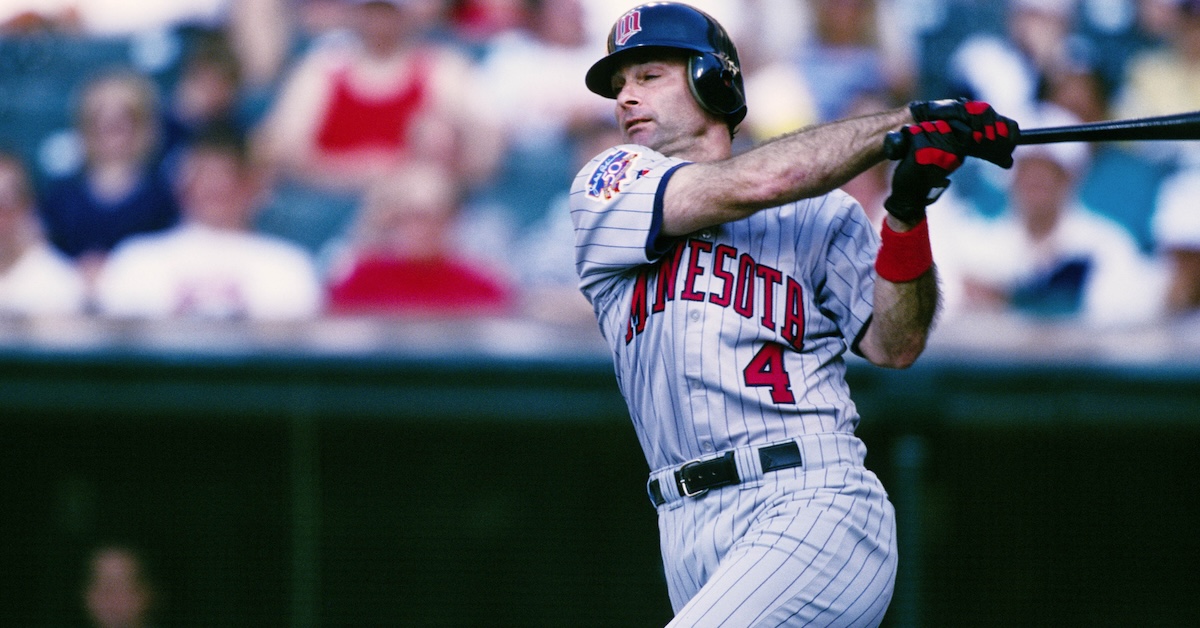
Paul Molitor Talks Hitting

Tony Tomsic-USA TODAY NETWORK

Paul Molitor was a maestro with the bat. Over 21 seasons — 15 with the Milwaukee Brewers and three each with the Minnesota Twins and the Toronto Blue Jays — he recorded 3,319 hits, the 11th-highest total in major league history. Moreover, Molitor’s 605 doubles are tied for 15th most, while his 2,366 singles are 12th most. Walking nearly as often as he struck out (1,094 BB, 1,244 K) the sweet-swinging corner infielder/designated hitter put up a .306/.369/.448 slash line and a 122 wRC+.

Elected to the Hall of Fame in 2004, the St. Paul, Minnesota native went on to manage the Twins from 2015-2018, and prior to that he served as the team’s bench coach and as the hitting coach for the Seattle Mariners. Now an analyst on Twins radio broadcasts, Molitor sat down to talk hitting on a recent visit to Fenway Park.

———

David Laurila: You played [from 1978-1998]. Did hitters and/or hitting change over the course of your long career?

Paul Molitor: “I don’t think as drastically as we’ve seen over the past 10 years or so. I don’t know if we’ve ever been through a period where the percentage of teams’ runs scored were as closely related to how many home runs they hit. The game is always evolving. Breaking down the game in terms of what plays, the numbers show how driving the baseball, getting extra-base hits, [produces runs].

“I do like the old-school. Trying to get hits is still a good thing. You’re obviously going to have guys in your lineup who are more prone to striking out, but they’re going to get you that two- or three-run homer every now and then. And then you have the guys who create the flow on the bases. If you can run the bases, you give yourself more opportunities to get in scoring position. A perfect example would be the 2025 Red Sox. They put a lot of pressure on teams defensively. I think both can work.

“So yeah, there have been changes, but again, not too much when I played. Guys were always trying to figure out how to get better, but the involvement of analytics has changed some of the approach — everything from uppercut swings to how pitchers are throwing the baseball, spinning the baseball. It all plays a part in the counter strategy that hitters are trying to employ.”

Laurila: What about you, personally? Did you change much over the years? Read the rest of this entry »


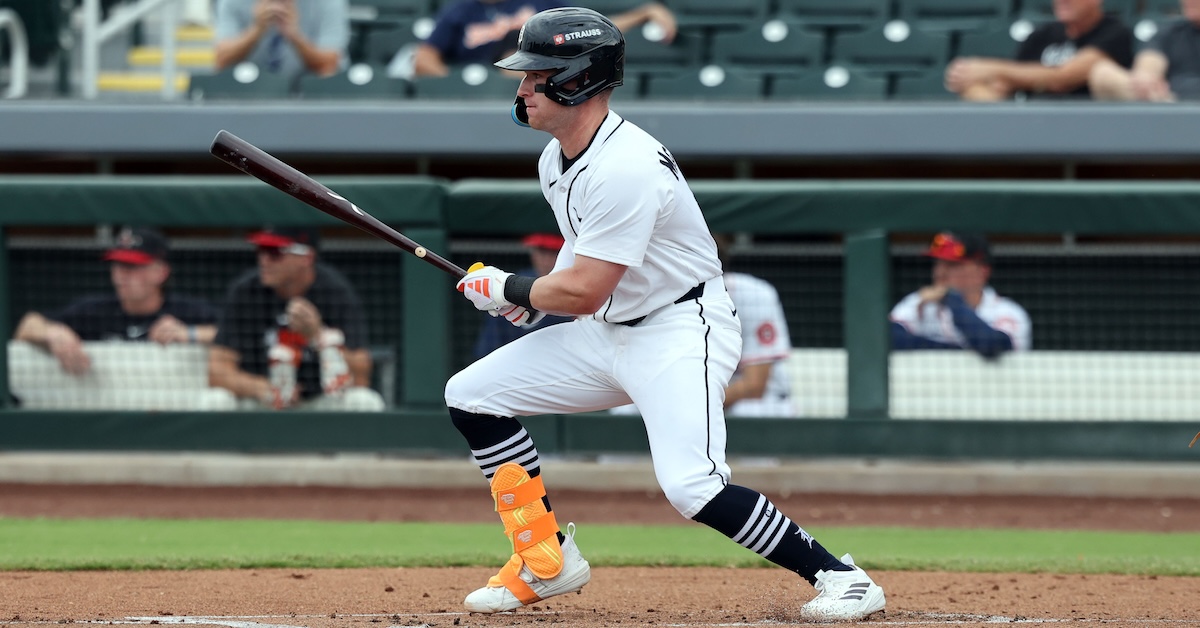
Walker Jenkins Wants To Hit the Ball Hard (and Usually Does)

Michael Cuneo/STARNEWS/USA TODAY NETWORK

Walker Jenkins is more than just the top-rated prospect in the Minnesota Twins system. Drafted fifth overall in 2023 out of Southport, North Carolina’s South Brunswick High School, the soon-to-turn-20-year-old is one of the game’s top prospects. His left-handed stroke is a big reason why. As Eric Longenhagen notes in Jenkins’ forthcoming Top 100 prospect report, the outfielder “has exciting feel to hit and barrel control. He tracks pitches exceptionally well and can move his hands all over the strike zone.” Longenhagen goes on to note that while Jenkins is likely a left fielder (the Twins have primarily deployed him in center so far), he “should hit enough to be a heart-of-the-order hitter and impact regular regardless of position.”

His first full professional season was impressive. In 368 plate appearances split across four levels — he finished the year in Double-A — Jenkins had a 139 wRC+ to go with six home runs and a .282/.394/.439 slash line. Moreover, he swiped 17 bases in 20 attempts.

Jenkins discussed his hitting approach in the final week of January.

———

David Laurila: How would you describe yourself as a hitter?

Walker Jenkins: “Above all things, I’m a hitter who is going to go up there and try to get my best swing off. You have guys that get categorized as, ‘Oh, they’re hitters, but they have no power,’ while for others it’s, ‘They’re all power, but no hit.’ I want to be a good hitter. I’m going to hit first, and when I get my A-swing off, that’s when my power is going to come.

“If you can continuously hit the ball on the barrel, good things are going to happen. That’s what I try to do, because I don’t like striking out. I don’t like giving at-bats away. But when I get in a hitter’s count, I’m not going to get cheated.” Read the rest of this entry »