Archive for Teams

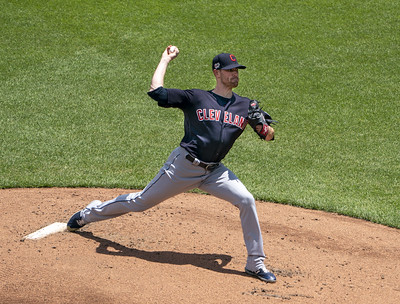
This Isn’t the Same Eduardo Rodriguez

It’s tempting to look at Eduardo Rodriguez’s 3.94 FIP in 2019, nearly identical the 3.97 FIP he has for his career, and think that nothing has substantively changed. His strikeout, walk, and homer numbers are all similarly in line with his career rates too, while his BABIP allowed and HR/FB rates are actually up a tick or two from what you’d typically expect from him. Pick a surface stat, any surface stat, and you’ll say, “yep, that sure is an Eduardo Rodriguez season, alright.” And yet, it’s not a typical Eduardo Rodriguez season. It’s something better.

Now, I’ll confess, my timing for this story is a little off. Rodriguez’s most recent game line is an ugly one, as he allowed the Rangers to score seven runs on 11 hits against him on Tuesday. The seven runs allowed were his most since giving up seven runs to the Orioles on June 1, 2017, and the 11 hits allowed were a career high. That’s a bad outing by any measure, but it was severely exacerbated by some goofy BABIP luck. In five innings, Rodriguez struck out six and walked three while allowing one homer — not great, but not necessarily numbers that would make you think he was about to give up seven runs. Opponents hit .556 on balls in play, however, which is how he ultimately ended up with a line as bad as this.

Why am I bothering to try and meekly defend an unarguably terrible outing in a game played by two teams out of the playoff race in the final week of the season? Because I need you to believe me when I tell you that before Tuesday’s debacle, Rodgriguez had been very, very good over this final quarter of the season. In his previous seven starts, he had allowed a mere five earned runs in 45 innings, striking out 54 while walking 14 and allowing just one home run. His 1.00 ERA in that stretch led all of MLB, while his 2.24 FIP ranked fourth. After Tuesday, his ERA dropped to the 11th best in baseball since August 17, but his FIP remains seventh. Read the rest of this entry »


Maximum Launch Angle is a Blast

Wherever you sit along the spectrum of baseball observers, from newcomer through casual fan, diehard, junkie, nerd and professional, you are by no means obligated to care about Statcast. Publicly available numbers quantifying three-dimensional coordinates, velocity, spin rate, and more are now attached to everything this side of how often the third baseman adjusts his cup between pitches, but that doesn’t mean it’s necessary for you even to acknowledge their existence in order to enjoy what you’re watching. Nevertheless, some of us do get a kick out of the occasional peek at those numbers, not for their own sake but because they increase our understanding of the game — and of ourselves.

Somewhere along the way — in fact, even before Statcast itself arrived — I realized that I have a particular appreciation for what I have termed “launch angle porn.”

I’ll allow you that nervous giggle before you get your mind out of the gutter. This is, after all, a family site, and while others have gone down the road of documenting bodily functions within the national pastime, that’s not where I’m heading. The trajectories to which I refer concern the flight of baseballs, and more specifically, the visceral thrill of watching the beginning of a towering home run even amid the unending barrage of such hits and their resultant highlights. In that instant of contact between ball and bat, particularly when viewed on a two-dimensional screen of whatever size, we have no idea of the final distance that struck sphere will travel, and we can only infer its exit velocity in the roughest sense. After the sight and sound of contact — and particularly, the mellifluous melody of a ball hitting the sweet spot of a wooden bat — launch angle is the first feedback we get, quickly followed by a very excited play-by-play announcer and a slugger admiring his own handiwork. Consider these three examples, classics from the late 20th century by three of the most prolific home run hitters ever.

Here’s Reggie Jackson at the 1971 All-Star Game, hitting one off the Tiger Stadium transformer on the roof:

Read the rest of this entry »


2019 Was a Rocky Mountain Low for Colorado

Nolan Arenado had another terrific season, but as in years past, the Rockies did little to supplement their star core. (Photo: Joey S)

“If you don’t know where you’re going, you might not get there.” – Yogi Berra

In 2017 and ’18, for the first time in franchise history, the Colorado Rockies made the playoffs in consecutive seasons. The team didn’t play deep into October in either season, but for an organization that hadn’t even had back-to-back winning seasons since the mid-90s, it was a wonderful result. Problem is, the team gave little thought as to how they got there or the weaknesses that could prevent them from doing so again in the future. The strengths Colorado rode in 2017 and 2018 were absent in 2019, and left the team high-and-dry with no real Plan B.

The Setup

The Rockies clearly believed that 2019 would be another year of contendership. But I’m not sure they realized how dependent they had been on the production of a few stars every season. 91 wins are nothing to scoff at, but to get to the point of barely making the playoffs, the Rockies had to have two legitimate MVP contenders and two legitimate Cy Young candidates. All told, Colorado received 19 WAR from their top four players in 2018, an identical sum as in 2017. In both years, that figure represented more than half the team’s value, a ratio far worse than every other postseason team from 2017, 2018, and now 2019.

In 2017, the Rockies made the playoffs despite an offense that ranked 26th in the league in wRC+. To fix this lack of run-scoring — the team ranked third in baseball in runs scored, but a good offense in Colorado should be crushing the league in runs, even given the most generous application of the Coors Field Hangover — the Rockies did, well, not much. They signed a 35-year-old catcher and given the opportunity to upgrade from fading veteran Carlos González, he of an 85 wRC+ and 0 WAR, decided to upgrade to…Carlos González. Read the rest of this entry »


Job Posting: Tigers Baseball Operations Analyst

Position: Baseball Operations Analyst

Location: Detroit, MI

Job Description:
The Detroit Tigers are currently seeking a full-time Analyst in the Baseball Operations Department. This role will be responsible for managing analytics and research within Baseball Operations. This position will report to the Director, Baseball Analytics.

Key Responsibilities:

  • Perform advanced quantitative analysis to improve Baseball Operations decision-making, including predictive modeling and player projection systems.
  • Complete ad hoc data queries and effectively present analysis through the use of written reports and data visualizations.
  • Assist with the integration of baseball analysis into the Tigers’ proprietary tools and applications.
  • Contribute to baseball decision-making by generating ideas for player acquisition, roster construction and in-game strategies.
  • Support the current data warehousing process within Baseball Operations.
  • Monitor, identify and recommend new or emerging techniques, technologies, models and algorithms.
  • Meet with vendors and make recommendations for investment in new data and technology resources.
  • Other projects as directed by Baseball Operations leadership team.

Minimum Knowledge, Skills, and Abilities:

  • Demonstrated expert-level knowledge of baseball-specific data, modern statistical techniques, and sabermetric analysis.
  • Expertise with SQL and relational databases is required.
  • Relevant work experience with statistical software (R, STATA, SPSS, SAS, or similar) and scripting languages such as Python.
  • Demonstrated ability to communicate difficult and complex concepts to colleagues possessing a wide range of backgrounds and perspectives.
  • Degree or equivalent experience in statistics, mathematics, computer science, or a related quantitative field.
  • Self-starter.
  • Team player.
  • Ability to work evenings, weekends and holidays as dictated by the baseball calendar.
  • Willing and able to relocate to the Detroit metro area.

To Apply:
To apply, please complete the application that can be found here.

The content in this posting was created and provided solely by the Detroit Tigers.


Jordan Lyles Thrives in Milwaukee, Again

No team in baseball has been hotter in September than the Brewers. They’ve lost just four games this month and that hot streak has them on the verge of clinching a playoff berth. That they’ve continued to win so many games without their superstar, MVP candidate Christian Yelich, makes their success all the more impressive. But while their offense has managed to find ways to score enough runs without Yelich in the lineup, their pitching staff has been simply dominant.

The Brewers have allowed just 66 runs to score this month, an average of three per game. That’s the fewest runs allowed in the majors and includes a 10-0 drubbing by the Cardinals on September 13. Their team ERA has easily been the best in baseball during this stretch. By park- and league-adjusted FIP, they’ve only been the fourth-best team in the majors, but still the best in the National League.

Surprisingly, their starting rotation has been led by Jordan Lyles. In four September starts, he’s allowed a total of six runs — four of them earned — giving him the lowest ERA of the Brewers regular starters (Brandon Woodruff hasn’t allowed a run in his two starts where he acted as the opener). This string of strong outings stretches back to late July when he joined the Brewers in a trade from Pittsburgh. Since being acquired, he’s been their most reliable starter, allowing two or fewer runs in eight of his 10 starts. Read the rest of this entry »


Cody Bellinger or Christian Yelich for NL MVP?

Anthony Rendon and Ketel Marte have both had very good seasons, but all year long they’ve been a few beats behind Christian Yelich and Cody Bellinger. With only a few days left in the regular season, Marte has already been shut down and Rendon would need a historic week to match the two favorites. While Yelich’s season is unfortunately over, his work already done clearly puts him, along with Bellinger, in the top two for the MVP. With the numbers on offense creating a substantial edge for Yelich, who deserves MVP comes down to a question nobody really likes answering: How much better is Cody Bellinger on defense than Christian Yelich?

It’s possible some voters will ding Yelich for his injuries and playing time lost, though it didn’t stop Mookie Betts and Mike Trout from finishing 1-2 in the AL MVP last year, or keep Josh Hamilton from winning in 2010 when he missed almost all of September. Historically, there haven’t been very many MVPs with around 130 games and 600 PAs, though that likely has less to do with voters being unwilling to vote for players who have missed some of the season and more to do with it just being incredibly difficult to be the best player in the league when other candidates have an extra three weeks to compile numbers.

Since 1931, there have only been 22 position player seasons of at least 7.5 WAR and fewer than 600 plate appearances. Of those 22 seasons, only 10 topped the league in WAR. Six of those 10 players won the MVP that season. In 2009, the under-appreciated Ben Zobrist topped the league in WAR, but Joe Mauer, behind by 0.3 WAR, won the trophy. In 1989, Lonnie Smith played in 134 games and tied Will Clark for the league lead in WAR at 8.1, but it was Clark’s teammate Kevin Mitchell and his 49 homers that took home the MVP. In 1985, Pedro Guerrero topped the NL in WAR at 7.8, but Willie McGee’s 7.1 WAR won him the award thanks in no small part to a .353 batting average. Finally, way back in 1954, Ted Williams topped the AL in WAR, but the Yankees’ Yogi Berra won the vote. Yelich’s situation isn’t unprecedented, but it is fairly rare; players in his position have won MVP around half the time. Read the rest of this entry »


For the Blue Jays, “Operation: Best Case Scenario” Was a 2019 Failure

After losing most of the old core in what was a disappointing 2019 campaign, the Blue Jays may need to look closely at their rebuild plans. (Photo: Arturo Pardavila III)

The retooling of the Toronto Blue Jays hasn’t gone quite as planned. While the team won’t say so in such explicit terms, I believe that the original plan was to keep the basic core of the team together just long enough that reinforcements would arrive and save the team from a more painful long-term rebuild. Toronto’s stable of All-Star relatives has started to arrive — possibly the most impressive such group in baseball history — but the MLB roster is in a worse state than I imagine the team had hoped.

The Setup

The 2017 Toronto Blue Jays could point to a run of bad luck as the possible culprit for dropping from 89 to 76 wins, but the 2018 Blue Jays probably ought to have let go of those hopes. The post-2018 offseason didn’t feature much that would change the trajectory of the team, and the transactions were consistent with a plan of trying to simply stay relevant before players like Vladimir Guerrero Jr., Bo Bichette, and Cavan Biggio started hitting the major leagues. Moves were made but generally featured the supporting cast. In a perfect world, a healthy Matt Shoemaker and the resurgent Clay Buchholz could fill out the rotation, making up for the losses of J.A. Happ by trade and Marco Estrada by decline and then free agency. The thin bullpen that finished 21st in ERA and 23rd in WAR in 2018 before losing its top two pitchers by WAR, Seunghwan Oh and Tyler Clippard, could hopefully be buttressed with veteran free agents Bud Norris, David Phelps, Daniel Hudson, and John Axford.

As the team attempted to keep a skeleton crew together, the need to simultaneously add minor-league talent was obvious. The Jays traded off some of the players that were perceived to be surplus talent in an attempt to add to the team’s depth. Russell Martin could be replaced by Danny Jansen, Aledmys Diaz didn’t bring much that Lourdes Gurriel Jr. or Richard Urena couldn’t, and Kendrys Morales’s 2018 production could be replicated by Rowdy Tellez.

With just enough luck, the winter pickups would be enough when combined with the existing core (Marcus Stroman, Justin Smoak, Aaron Sanchez, Ken Giles, Teoscar Hernandez, Randal Grichuk) to make the Blue Jays a .500 team, or even a skosh better. Then the fun would start. The Jays later made the public argument that Vladimir Guerrero Jr. was not one of the best 25 players in the organization, but I don’t imagine that a single person that heard that either believed it or even thought that Toronto actually believed it. Vladito and Bichette would be the latest on baseball’s list of exciting phenoms starring quickly in the majors (with more on the way!) and help get the Blue Jays to at least the mid-80s in wins. And in a bifurcated American League, with a few great teams and several that looked like spring training B-squads, that might be enough to make a serious playoff run. Read the rest of this entry »


Oliver Drake Changed His Game and Found a Home

Far from the bright lights of the pennant chase, history was made last August when Oliver Drake came in to pitch the ninth inning of an 8-2 Twins victory. That appearance marked the fifth major league team Drake had appeared for in 2018 alone. He wasn’t done there; Drake changed teams a further three times in the offseason, with some of the transactions just seeming silly:

Drake was good-natured about the whole ordeal, appearing on Effectively Wild to talk about his odyssey. Still, he was clearly eager to put the past behind him and find a home on a single roster. No one gets into baseball in hopes of endlessly bouncing between teams, good enough to play in the majors but replaceable enough to frequently be a roster crunch casualty.

If you haven’t been following closely this year, you might not have heard anything about Drake. Did he slip off the edge of major league relevance, stuck in the purgatory of Triple-A Durham? Nope! Neither did he continue his travels across the major leagues. Instead he got better, and he now figures into the Rays’ bullpen plans for the rest of the regular season and beyond.

How did a reliever who had previously defined the word journeyman turn into a key cog in one of the best bullpens in baseball? For lack of a better way to say it, Drake essentially took every part of his game and made it better. In a world of nonstop player development and video-aided pitch design, no player is ever truly a finished product, and even marginal ones are seemingly a tweak away from being effective; Drake is the perfect example of that. Read the rest of this entry »


Seth Lugo’s Three-Headed Monster

As a FanGraphs reader, Mets fan, baseball follower, or some combination of the three, you’re probably familiar with Seth Lugo. We at FanGraphs haven’t written a ton about Lugo in 2019, but he is one of baseball’s most fascinating pitchers, known for his high-spin curveball that consistently finds itself atop the Baseball Savant daily spin rate leaderboards, like this one from September 15:

Lugo’s curveball is cool, and its coolness has generated much discussion. For good measure, here’s another look:

Wil Myers had no chance. Read the rest of this entry »


Exit Ned Yost. Enter… Mike Matheny?

Yesterday, Ned Yost announced that he would retire at the end of the season. While the news came as a surprise, the man himself has always kept a healthy perspective on the game. Based on Alec Lewis’s profile, he’ll leave the game feeling fulfilled and ready for the next chapter of his life. His departure, along with a juicy rumor that Royals special advisor and former Cardinals manager Mike Matheny will replace him, made for an eventful Monday morning in Kansas City.

As a skipper, Yost was never a visionary strategist. He’s not analytically inclined by nature, and he struggled in game states that require managers to play the percentages. Too often, his choices looked reflexive and dated: He liked having his fast shortstop lead off, OBP be damned. His good players bunted far too often. He didn’t always know when to deploy his closer. Managing the bullpen proved particularly challenging.

In one 2014 game, Yost summoned young Danny Duffy into a tied, extra-inning contest on the road, and then turned to Louis Coleman after the lefty loaded the bases. All that time, he had all-world closer Greg Holland ready to go, but he never got to pitch; Baltimore walked it off against Coleman. Later that year, Yost brought in a lefty specialist specifically to face (then) feeble-hitting Jackie Bradley Jr. with one on late in a one-run game; the Red Sox predictably inserted lefty-basher Jonny Gomes, who socked a two-run homer to give Boston a one-run win. After that episode, the manager memorably took responsibility, saying he’d “outsmarted himself.” Perhaps more than anyone over the last decade, Yost earned an almost anti-analytic reputation, becoming the face of what sabermetric seamheads spent so much time ranting about on Twitter.

But as Yost’s time in the dugout stretched on, the criticisms of his tactical acumen felt like an increasingly small slice of the story. For subscribers of the iceberg theory of managing, it’s clear that he compensated with other strengths. Yost always absorbed the blame whenever things went haywire, a point that both his bosses and charges acknowledged and appreciated. He also had a steady hand with young players. In Milwaukee and Kansas City, he helped turn perennially losing teams into playoff-caliber squads, happily shepherding young talents through the inevitable growing pains. Notably, a number of highly touted prospects who began their big league careers slowly — Eric Hosmer, Alex Gordon, Mike Moustakas, Jorge Soler, and Adalberto Mondesi among them — eventually blossomed. Might they have done so sooner under another manager? Perhaps, perhaps not. Regardless, most of the best prospects under Yost’s watch figured things out eventually. Read the rest of this entry »