Tyler Mahle Addresses His 2018 FanGraphs Scouting Report
Kevin Jairaj-Imagn Images

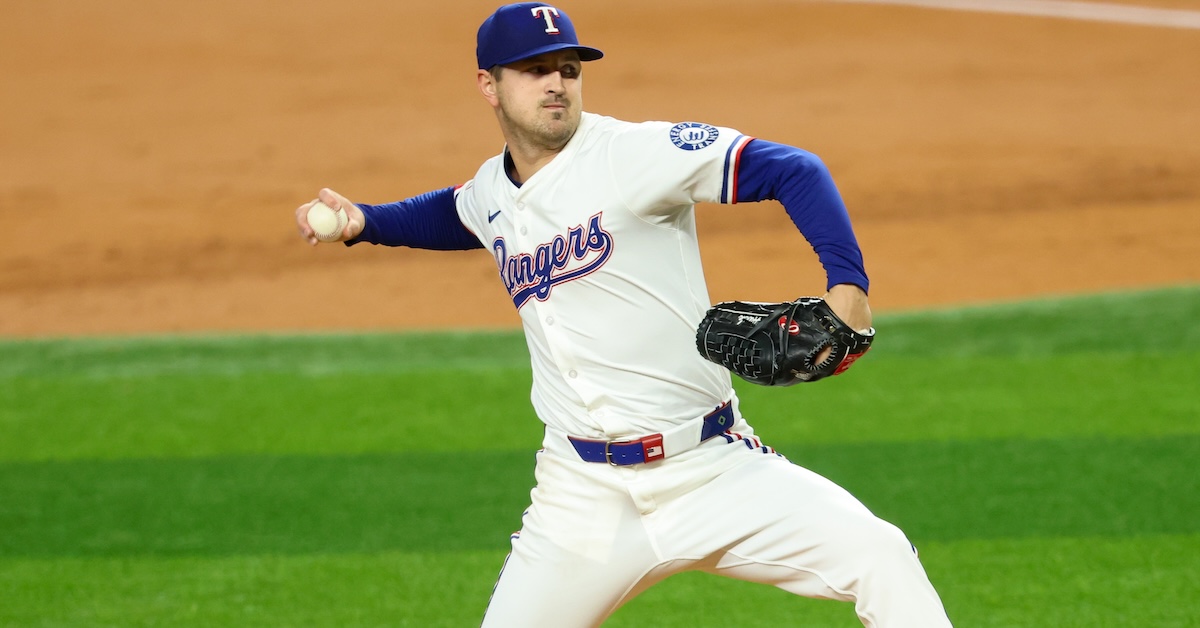
Tyler Mahle was 23 years old and had 20 big league innings under his belt when our 2018 Cincinnati Reds Top Prospects list was published in January of that year. A seventh-round pick out of an Orange County high school five years earlier, Mahle was ranked fourth in the system, with Eric Longenhagen assigning him a 50 FV.

Mahle has gone on to have an injury-marred career. Most notably, he underwent Tommy John surgery in May 2023, less than a year after he’d been dealt from the Reds to the Minnesota Twins in exchange for Christian Encarnacion-Strand, Spencer Steer, and Steve Hajjar at the trade deadline.

When healthy, the 30-year-old right-hander has been a quality pitcher more often than not. In 2021, he made 33 starts for Cincinnati and went 13-6 with a 3.75 ERA and a 3.80 FIP over 180 innings. Moreover, Mahle was on track for an even better season when he went on the shelf seven weeks ago with what has since been diagnosed as a right rotator cuff strain. In 14 starts comprising 77 innings with the Texas Rangers, Mahle had a record of 6-3 to go with a 2.34 ERA and a 3.37 FIP. His status for the remainder of the current campaign is unclear.

What did Mahle’s 2018 FanGraphs scouting report look like? Moreover, what does he think about it all these years later? Before he went on the injured list, I shared some of what Eric wrote and asked Mahle to respond to it.

———

“After 24 hyper-efficient starts at Double and Triple-A, Mahle finally got a four-start cup of coffee in Cincinnati at the end of the season. His ability to locate was not on display in the big leagues, but it’s what got Mahle there.”

“Not great,” Mahle said of his four starts in 2017. “I was wild. My first two or three starts, I’d thrown something like 50 pitches by time I got through two innings. So yeah, not very efficient. But I got through it. Then I got off to a decent start the next year, in 2018, but pitched kind of hurt toward the end of that season.”

“He has above-average fastball command despite a somewhat noisy delivery; it should tighten another half-grade as Mahle hits his peak.”

“Hmm… yeah, my delivery back then was super stiff,” he said. “I held my glove up high and it stayed there until I broke my hands. Looking back, my delivery was, again, super stiff. A lot has changed there.

“Honestly, I don’t remember exactly,” Mahle said when asked when he made the adjustment. “It must have been with [Reds pitching coach Derek Johnson]. We kind of took away some movement in the hands. Instead of going from up high to down low, we started going from the belt to make it a little simpler.”

“His stuff is middling, spearheaded by a slightly above-average fastball/slider combination out of which Mahle squeezes every ounce of juice due to his ability to locate.”

“I was pitching with pretty much all fastballs at that time,” the righty recalled. “My slider was super inconsistent. I didn’t have a splitter like I have now. I basically just relied on the fastball.”

“He adds and subtracts from his fastball, exhibiting velocities anywhere from 88 to 95, touching 96 regularly, and maxing out at 98.”

“Yeah, but not so much anymore,” Mahle admitted. “I kind of live low 90s now and will top around 95. But relying so much on my fastball back then, I had to try to overpower guys with it. I had to try to throw it hard.”

“While Mahle’s change doesn’t have terrific movement, his ability to manipulate pitch speed without noticeable arm deceleration helps make it a viable third offering.”

“Yep. I mean, that was me,” Mahle said. “I didn’t have much of a changeup, so I had to try to place it in the zone, or wherever I was trying to get it. Like my slider, it was just super inconsistent. The arm speed… I actually feel like I probably did have to change it, based on what I was throwing. I maybe telegraphed a lot back then. Now I can throw everything with pretty much the same arm speed.”

“His stuff isn’t overwhelming, but his command should allow him to survive as an average big league starter.”

“That’s how I’ve gotten by,” the nine-year veteran acknowledged. “My command, still now… like, my fastball isn’t an overpowering pitch velo-wise, but I locate it. I also get some good ride on it. Back then, I didn’t know that. I just knew that it did well up in the zone. But yeah, I kind of lived off the location of my pitches.

“I understand everything a lot more now,” Mahle added. “I know why it works well up in the zone, and what the separation is on each pitch, and why they’re doing what they’re doing. Compared to now, back then I was pretty much just throwing.”

——

Previous “Old Scouting Reports Revisited” interviews can be found through these links: Shane Baz, Cody Bellinger, Matthew Boyd, Dylan Cease, Matt Chapman, Erick Fedde, Kyle Freeland, Max Fried, Lucas Giolito, Randal Grichuk, Ian Happ, Jeff Hoffman, Tanner Houck, Matthew Liberatore, Sean Newcomb, Bailey Ober, Matt Olson, Austin Riley, Joe Ryan, Max Scherzer, Marcus Semien.

Can I Interest You in a Lightly Used Oriole?

Nathan Ray Seebeck-Imagn Images

Over the past month, every red-blooded American with a phone and a passing familiarity with baseball has posted some version of the following sentiment: This crop of trade candidates stinks. It’s true.

Somewhat conveniently for the purposes of my argument, Ben Clemens wrapped up his annual Trade Value series this morning. He has 50 players on his rankings proper, plus 65 more in the Honorable Mentions post. I’ve seen persistent, at least semi-credible trade rumors about one player on the top 50: Byron Buxton. Buxton is one of the most talented baseball players who ever lived, but his injuries and maddening inconsistency have become his reputation. This is reflected not only in his incredibly incentive-laden Twins contract, but his spot on the trade value list: no. 41.

More to the point, Buxton recently declared that he has no interest whatsoever in waiving his full no-trade clause to allow a move to a contender. His exact words: “I don’t want to play anywhere else.” It doesn’t get more unequivocal than that. Read the rest of this entry »


2025 Trade Value Series Chat

Read the rest of this entry »


2025 Trade Value: Nos. 1-10

Ron Chenoy-Imagn Images

As is tradition at FanGraphs, we’re using the lead-up to the trade deadline to take stock of the top 50 players in baseball by trade value. For a more detailed introduction to this year’s exercise, as well as a look at the players who fell just short of the top 50, be sure to read the Introduction and Honorable Mentions piece, which can be found in the widget above.

For those of you who have been reading the Trade Value Series the last few seasons, the format should look familiar. For every player, you’ll see a table with the player’s projected five-year WAR from 2026-2030, courtesy of Dan Szymborski’s ZiPS projections. The table will also include the player’s guaranteed money, if any, the year through which their team has contractual control of them, last year’s rank (if applicable), and then projections, contract status, and age for each individual season through 2030 (assuming the player is under contract or team control for those seasons). Last year’s rank includes a link to the relevant 2024 post. Thanks are due to Sean Dolinar for his technical wizardry. At the bottom of the page, there is a grid showing all of the players who have been ranked up to this point.

A note on the rankings: As we reach the top of the list, the tiers matter more and more. There are clear gaps in value. Don’t get too hung up on what number a player is, because who they’re grouped with is a more important indicator. There are three distinct tiers in today’s group of 10 players, and I think they have clearly different valuations; I’d prefer everyone in a given tier over everyone below it, but I’m far less certain within each group. There’s one exception here: the second- and third-ranked guys absolutely belong at the top of their tier. I’ll note places where I disagreed meaningfully with people I spoke with in calibrating this list, and I’ll also note players whose value was the subject of disagreement among my contacts. As I mentioned in the Introduction and Honorable Mentions piece, I’ll indicate tier breaks between players where appropriate, both in their capsules and bolded in the table at the end of the piece.

With that out of the way, let’s get to the final batch of players. Read the rest of this entry »


Effectively Wild Episode 2352: Turn Every Paige

EWFI
Ben Lindbergh and Meg Rowley banter about the long-awaited baseball events that occurred during Ben’s brief vacation, highlighted by Rich Hill’s return to the majors. They also discuss developments involving other quadragenarian pitchers, provide an update on their “2025 in 2025” Patreon campaign, and consider Bryan Woo’s parents’ dedication to attending all of his starts, additional aspects of the Brewers’ success, the Angels’ lack of rotation turnover, Myles Straw vs. Roki Sasaki, and an especially impressive Ronald Acuña Jr. throw. Then (59:10) they bring on author and researcher Mark Armour to talk about the Satchel Paige Project, Mark’s ongoing, yearslong effort to document every game Paige pitched.

Audio intro: Nate Emerson, “Effectively Wild Theme
Audio interstitial: The Gagnés, “Effectively Wild Theme 2
Audio outro: Josh Busman, “Effectively Wild Theme

Link to Effectively Wild on Patreon
Link to FG post on Hill
Link to Woo article
Link to Paine on the Brewers
Link to Brewers batters
Link to Mains on the Angels
Link to Whitley on Soriano
Link to pre-ASB SP WAR
Link to Sasaki/Straw post
Link to Ben on Meneses
Link to Acuña throw
Link to Acuña throw article
Link to Baseball Project song
Link to Paige Project article
Link to Mark’s announcement post
Link to Paige Project results
Link to Paige pitching map
Link to most wanted games
Link to Mark’s website
Link to Effectively Wild on Patreon

 Sponsor Us on Patreon
 Give a Gift Subscription
 Email Us: podcast@fangraphs.com
 Effectively Wild Subreddit
 Effectively Wild Wiki
 Apple Podcasts Feed 
 Spotify Feed
 YouTube Playlist
 Facebook Group
 Bluesky Account
 Twitter Account
 Get Our Merch!


RosterResource Chat – 7/24/25

Read the rest of this entry »


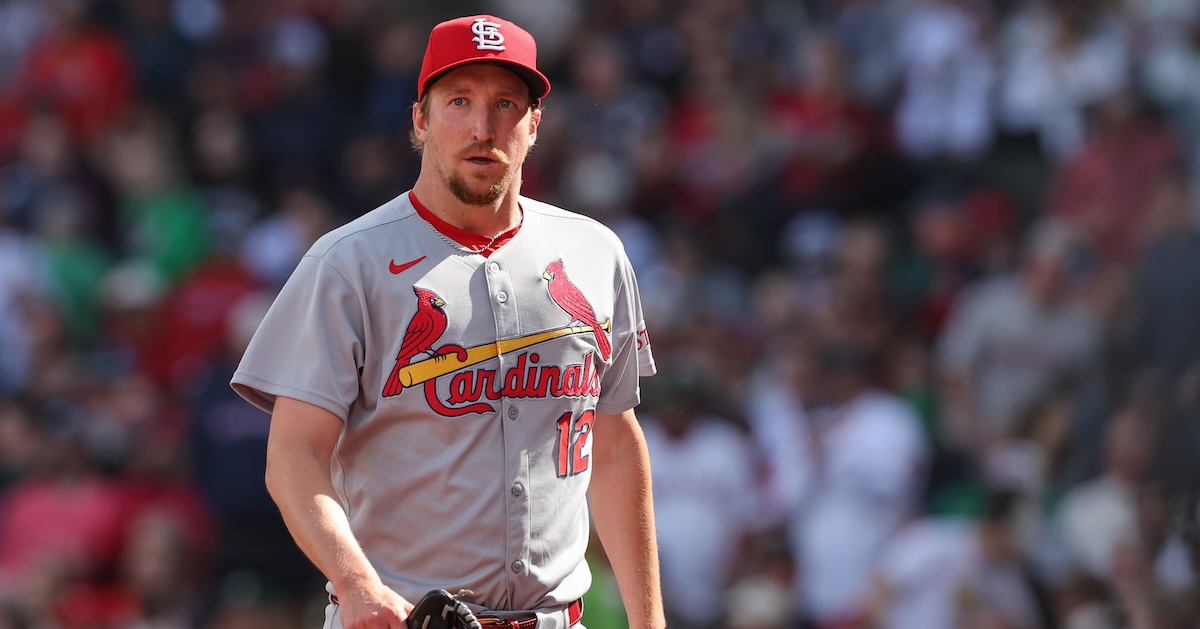
The Cardinals DFA Erick Fedde as They Slide Further From Contention

Paul Rutherford-Imagn Images

Last July 29, Erick Fedde was a key piece in a three-way blockbuster that ended up having a major impact on the postseason. Unfortunately, that impact wasn’t for the Cardinals, who acquired him from the White Sox; instead Tommy Edman, who was dealt from the Cardinals to the Dodgers in the same eight-player trade, won NLCS MVP honors and helped his new team to a championship. Fedde pitched reasonably well for St. Louis — who missed the 2024 playoffs — late last season, but his performance this year suddenly took a sharp turn for the worse. On Wednesday, the day after he was roughed up by the Rockies, the struggling 32-year-old righty was designated for assignment, a likely prelude to being released.

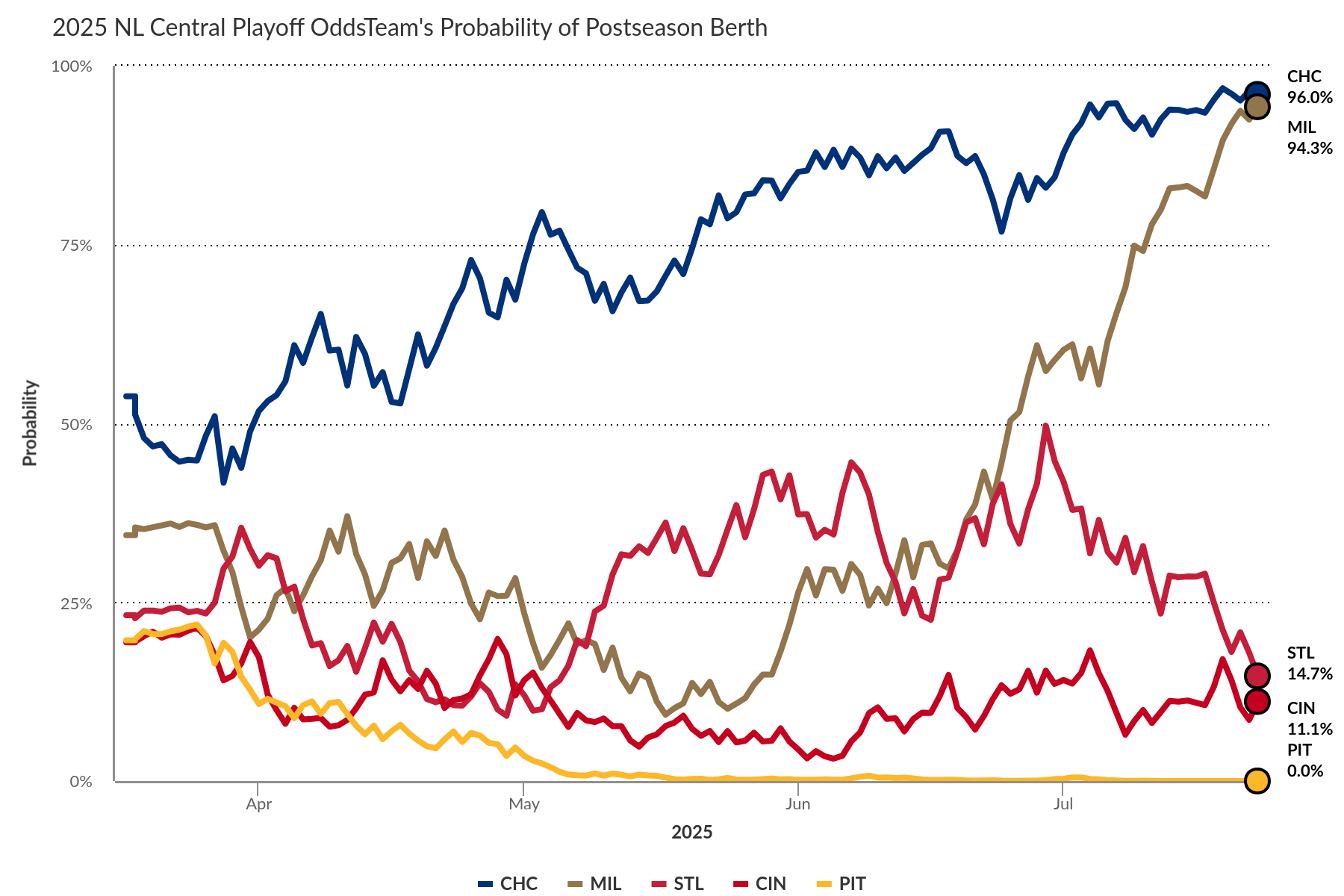
The move isn’t exactly a shock, and it comes as the Cardinals have slipped in the standings, in all likelihood ruling out an aggressive approach as the July 31 trade deadline approaches. The team has gone 5-12 in July to drop their record to 52-51, plummeting from three games out of first place in the NL Central to 9 1/2 out, and from having a one-game lead for the third Wild Card spot to being 3 1/2 back, with both the Reds (53-50) and Giants (54-49) between them and the Padres (55-47):

Change in Cardinals’ Playoff Odds
Date W L W% GB Win Div Clinch Bye Clinch WC Playoffs Win WS
Thru June 30 47 39 .547 3 14.7% 4.4% 30.0% 44.7% 1.6%
Thru July 22 52 51 .505 9.5 0.6% 0.2% 15.7% 16.3% 0.5%
Change -14.1% -4.2% -14.3% -28.4% -1.1%

While losing five out of their last six to the Diamondbacks and Rockies, the Cardinals’ Playoff Odds dipped below 20% for the first time since May 8:

Read the rest of this entry »


Dan Szymborski FanGraphs Chat – 7/24/25

12:09
Avatar Dan Szymborski: I’m here, sorry, got caught up in Hulk Hogan news!

12:12
Justin: Hi Dan, what is it about someone like Brandon Marsh that allows him to consistently have a high BABIP?

12:12
Avatar Dan Szymborski: Solidly above average speed, while he’s not a grounder machine, he hits a lot of *hard* grounders

12:14
Mitchell: Seems every article on deadline trade candidates includes Ryan McMahon. I get the guy packs a good glove, but he hits like a second division 2nd baseman, and that’s playing half his games in Denver. Why do we think he’s a desirable asset for a team trying to win?

12:14
Avatar Dan Szymborski: Theres’ the hope he got his crap together after an AWFUL April. He’s actually been solid since

12:14
Ryan: What lower level prospects are you intrigued by who no one is talking about?

Read the rest of this entry »


Rich Hill Is Alive With the Sound of Scream-Grunts

Kamil Krzaczynski-Imagn Images

There is a time in life when you expect the world to always be full of new things. And then comes a day when you realize that is not how it will be at all. You see that life will become a thing made of holes. Absences. Losses. Things that were there and are no longer. And you realize, too, that you have to grow around and between the gaps, though you can put your hand out to where things were and feel that tense, shining dullness of space where the memories are.

– Helen Macdonald

On Tuesday night, Rich Hill made his first major league start of the season and his first ever as a Kansas City Royal. Although he took the loss, the game lived up to its billing as a feel-good story. The 45-year-old lefty went five innings against the second-best offense in baseball, allowing one earned run and two unearned. He walked two Cubs, struck out one looking, induced 11 groundballs, and left the game with a 1.80 ERA. Stylistically, it was a vintage Rich Hill performance (from a vintage Rich Hill), featuring not-so-fastballs, loopy curves, and dropdown frisbee sliders. It was also a vintage Hill performance from a sensorial perspective, in that it involved a whole lot of strange human sounds.

I mentioned Hill’s vocalizations when I wrote about the minor league deal he signed with the Royals back in May. They’re right there in my mental map of a Hill start. But memory just can’t do justice to some things. It fades. It falters. Even the events that imprint upon us most deeply tend to loosen their hold with time. It’s cruel, but it’s for the best. If our memories could transport us exactly to who we were when we felt that first rush of puppy love, heard that one perfect song, tasted that one croissant in Paris, would we even bother to seek out new experiences, or would we just live within the old ones and keep playing the hits? All of this is to say that I thought I was prepared for the Rich Hill experience. I tuned into the game Tuesday night expecting to hear the man grunt. But then I actually heard the man grunt. I was not prepared. Read the rest of this entry »


The Circumstances Under Which I Would Happily Institute a Salary Cap

Kim Klement Neitzel-USA TODAY Sports

Those of you who listened to Episode 2351 of Effectively Wild can skip this preamble. You already know where I’m going.

Ben Lindbergh is on vacation, so Meg asked me to keep his seat warm for one episode of the podcast. And she was even kind enough to pick out a listener email that would give us something to talk about. I’ll skip over some extraneous context; if you want to hear the whole question go listen to the episode. The question comes down to this: If I were given the power to negotiate on the MLBPA’s behalf in the next CBA negotiation, what would it take for me to agree to a salary cap? Read the rest of this entry »