Archive for Prospect Week 2026

The Ridiculous Firewagon Offenses of College Baseball
Steven Branscombe-Imagn Images

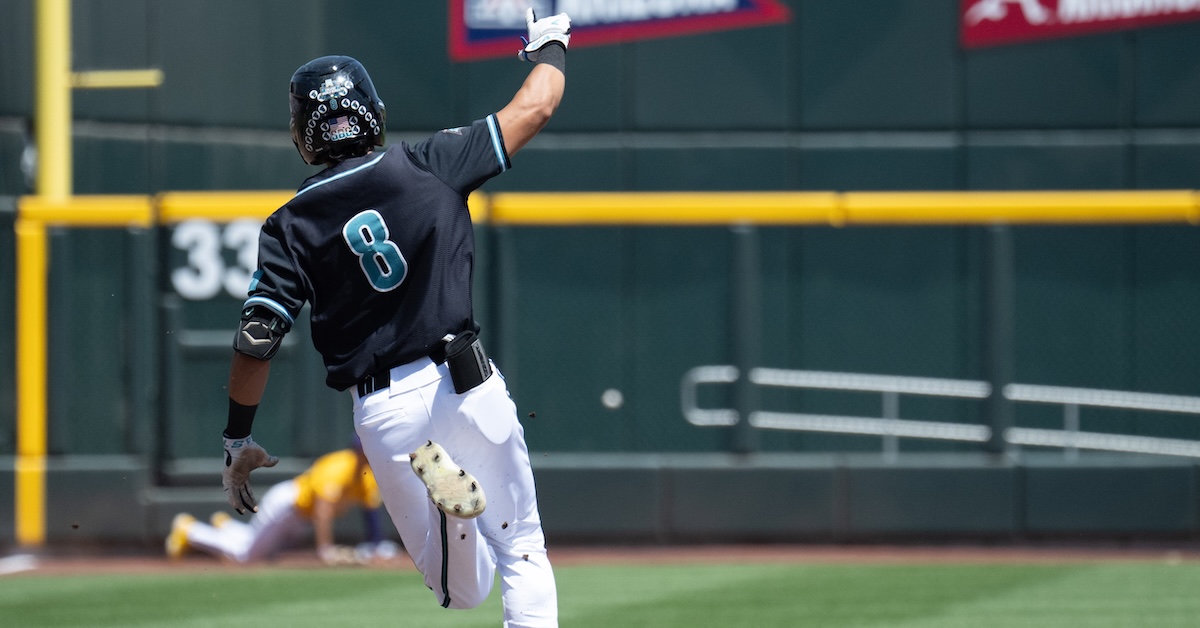
The pros are still moseying on down to Florida and Arizona for training camp, but the college baseball regular season starts today. I’ve long been an evangelist for the college game, and it’s hard to overstate how much more accessible it has become just in the past 15 to 20 years. Basically every power conference game gets aired either on cable or streamed on ESPN+ or a similarly accessible provider. I remember having to calculate OPS by hand from the press box in the mid-teens; now FanGraphs has wRC+ for every Division I player, while D1Baseball puts out batted ball stats.

And the quality of play is better now than it’s ever been. That’s true in most sports; societal standards of nutrition and fitness only tend to go up over time, as does the human understanding of science. And the past decade has seen not one revolution in college baseball but several. Professional-quality, data-driven coaching techniques have hit the amateur game. The truncation of the draft to 20 rounds and the imposition of bonus caps have led more elite prospects to college baseball, and the loosening of transfer policy has led more players to find programs where they can flourish.

In every way that matters, Division I baseball is more like the professional game than it’s ever been. So the statistical environments of the two forms of baseball should be pretty similar, right? Read the rest of this entry »
The Seven College Baseball Teams You Need To Know in 2026

Dylan Widger-Imagn Images

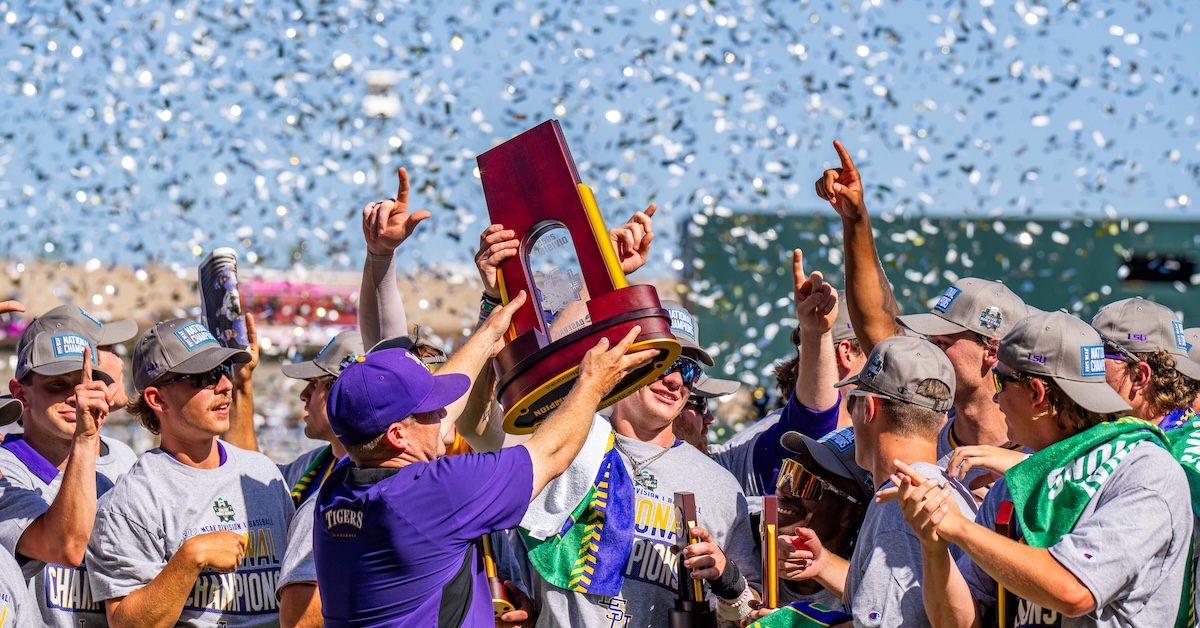
If you’re not already into college baseball, I’ll give you the briefest possible form of my annual elevator pitch. It comes in three parts. First: The regional round of the NCAA Tournament isn’t for another four months, but it’s one of the best weekends of TV in all of sports. That’s true even if you drop in cold, but it’s better if you know some of the characters involved. The time to start one’s homework is now.

Second: If you watch college baseball, you can have opinions about the draft that’ll make you look smart in front of your friends. If you’re wrong, no one will remember who you were even talking about, but if you’re right, you can dine out on that prediction forever.

Third: What are you going to do, watch spring training? Davy Andrews wrote last week about a blurry photo of a white guy with a goatee in a blue uniform. He says that was Nolan McLean, but for all I know, it was Civil War General Daniel Sickles. You can watch meaningful regular season baseball tomorrow, or you can delude yourself into thinking there’s anything to be learned from watching Carlos Correa get walked by a minor league pitcher with a uniform number in the 80s.

An actual exhaustive college baseball preview takes months of research and dozens of articles, even for specialist publications that can devote a full staff to the undertaking. Me? I’m one guy with about 3,000 words to play with, so I’m giving you a brief rundown of seven teams I’m interested in. These seven teams include national championship contenders — specifically the two heavy preseason College World Series favorites — but this is not a ranking. I tried to pick good, talented teams from a few conferences that could end up having interesting seasons. Make of it what you will. Read the rest of this entry »


My Worst Report: Lessons Learned From the Field

Scout long enough, and you’ll write every kind of report. Good ones, bad ones, accurate projections for the wrong reasons, misfires despite a good process. Like baseball itself, evaluating players is hard. You’ll be right plenty, but everyone has whiffs. While some reports miss the mark more than others, the ones that sting most are the ones you don’t learn from. Even the worst reports can turn into a positive if they change your thinking or provide a valuable lesson along the way.

Sometimes, these lessons are simple. Bet on the athletes. Be leery of the guy with a 55% contact rate. Others come in waves, sometimes over an extended period of time. Such was the case with Richy Valdez, a Royals pitcher with a live arm who was both the subject of the report with the greatest misalignment between the grade I submitted and what wound up happening, and the bridge between two lessons that made me a better evaluator than if I’d never come across him. We’ll come back to him in a second. Read the rest of this entry »


How’s My Driving: 2019 Top 100 Audit

Kiyoshi Mio and David Frerker, Imagn Images

I have been FanGraphs’ Lead Prospect Analyst since the summer of 2016, and enough time has now passed that many of the players from the early era of my prospecting here have had big league careers unfold (or fail to). Hindsight allows me to have a pretty definitive idea of whether my call on a player was right or wrong in a binary sense, and to gauge any gap that may exist between my evaluation and what the player ultimately became. Looking back allows me to rate my approach to grading and ranking players so that I might begin to establish some baselines of self-assessment and see how I perform compared to my peers at other publications. For the third year — the 2017 review is here, while the 2018 review is here — I have gathered the various Top 100 prospect rankings from seven years ago for the purposes of such a self-assessment, an exercise I call “How’s My Driving?” This is my audit of the 2019 rankings. Read the rest of this entry »


Padres Assistant Director of Player Development Mike Daly Sees Promise in a Depleted San Diego System

Ethan Salas and Kash Mayfield Photos: Orlando Ramirez-Imagn Images and Bryan Terry-The Oklahoman

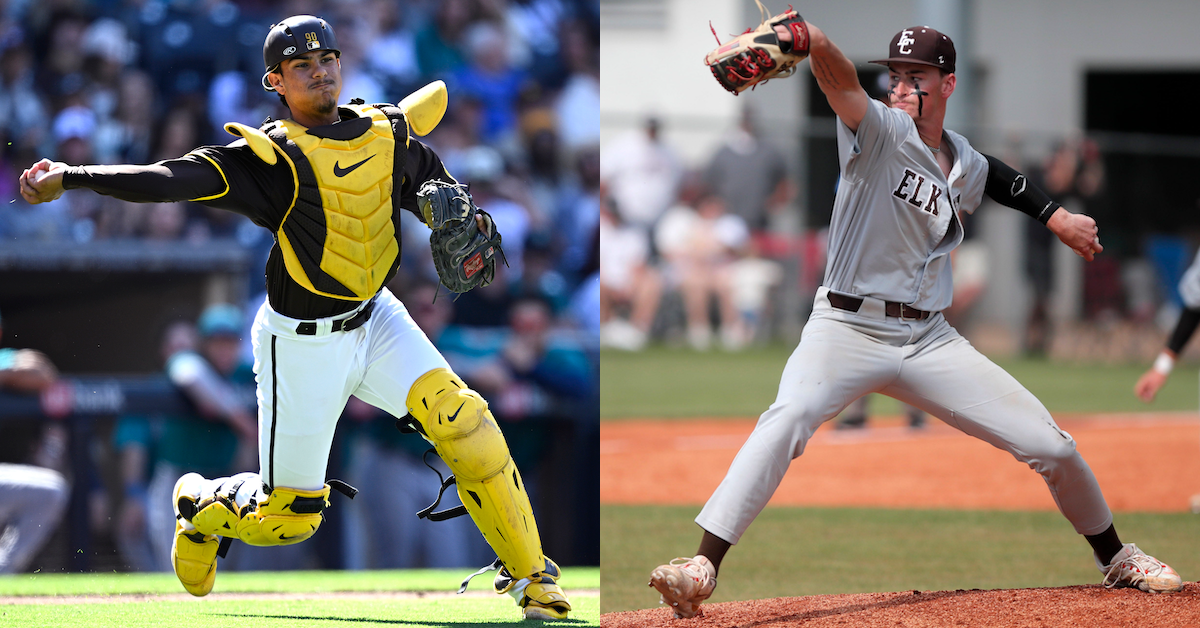
The Padres farm system is currently ranked among the worst in the majors, but that isn’t the fault of their scouting or player development departments. Rather, it is because A.J. Preller keeps trading away quality prospects in an effort to boost the big league roster. Just last summer, San Diego’s president of baseball operations dealt Leo De Vries — the best prospect moved at the deadline in the opinion of Eric Longenhagen — as well as Braden Nett, Boston Bateman, Ryan Bergert, and several others. One year earlier, Jakob Marsee and Robby Snelling were among the youngsters moved.

That isn’t to say the cupboard has been left bare. While admittedly on the lighter side, the system does include a number of promising players. Mike Daly plays an important role in their development. Currently the club’s assistant director of player development, Daly has two-plus decades of experience in professional baseball, serving not only in player dev positions, but also as a scout and, for one season, a minor league manager.

Daly discussed the state of the Padres pipeline in a recent phone conversation.

———

David Laurila: A.J. trades a lot of prospects. What is the process when prospective deals are discussed? I assume the player development and scouting departments have at least some say?

Mike Daly: “I can’t speak for A.J., but there is a lot of continuity. There are a number of people that have been with A.J., with the organization, for a number of years: Josh Stein, Pete DeYoung, Chris Kemp, to name just a few of the leaders. A lot of scouts come into our system and are able to see our players, and spend time with our players and our coaches. Certainly, our R&D department has a heavy say on our players. They know their value. They know what their projections look like. And then there are a lot of conversations amongst the PD group. So, whenever decisions are made about trading players, there are many voices factored in as we try to make the best decision for the organization.” Read the rest of this entry »


Cardinals Assistant General Manager Rob Cerfolio Discusses a Deep St. Louis System

Rich Storry-Imagn Images and Saul Young/News Sentinel-USA TODAY NETWORK via Imagn Images

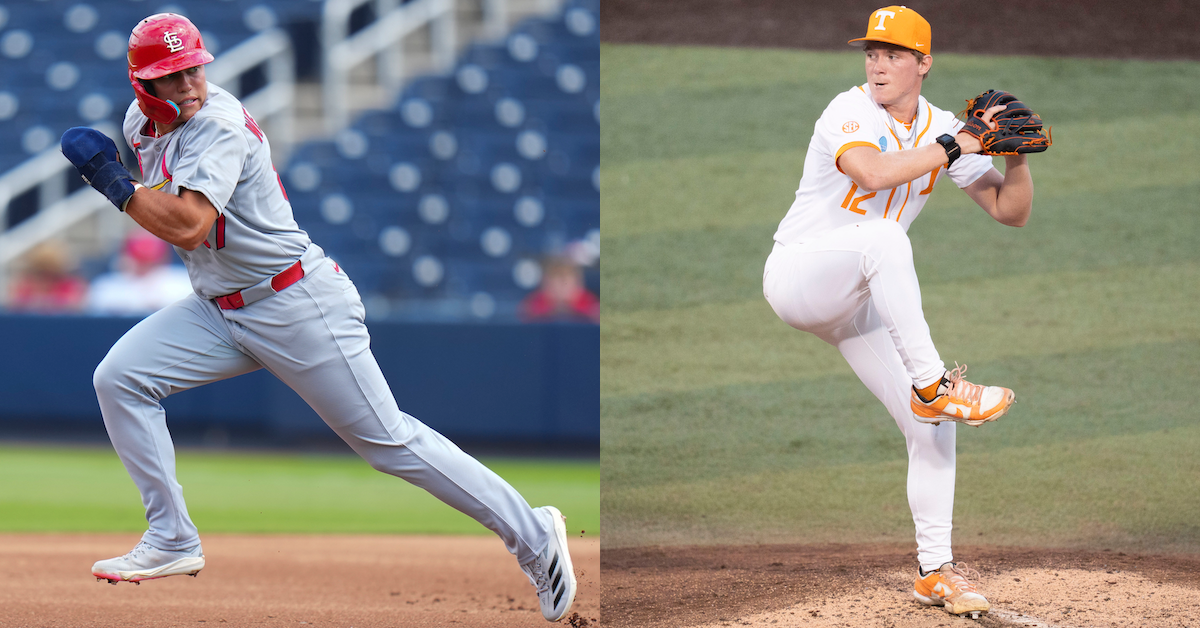
The St. Louis Cardinals boast one of the game’s best farm systems. Strong at the top and as deep as anyone’s — 53 players were profiled in yesterday’s rundown of the team’s top prospects — the pipeline possesses not only high-level talent procured through the amateur draft and international market, but also high-ceiling youngsters acquired via trade. Led by president of baseball operations Chaim Bloom, the NL Central club is firmly in rebuild mode, trusting its player development department to turn present-day promise into quality performance in the majors.

Rob Cerfolio is playing an important role in those efforts. Hired away from the Cleveland Guardians by Bloom — a fellow Yale University graduate — in October 2024, the 33-year-old holds the title of assistant general manager for player development and player performance. He profiles as a good fit for the job. Formerly Cleveland’s farm director, Cerfolio has been described by former Cardinals beat writer John Denton as someone who “prefers to operate while studying reams of biomechanical data, analyzing pitching arm angles and hitter swing paths and load profiles.”

Cerfolio discussed St. Louis’ player development philosophy, and some of the team’s most notable prospects, in a recent phone conversation.

———

David Laurila: Your club recently acquired Jurrangelo Cijntje from Seattle. I assume you and Matt Pierpont — he used to be with the Mariners — were part of the in-house trade discussions?

Rob Cerfolio: “Yes, our director of pitching, Matt Pierpont, had Jurrangelo for half a year before I hired him over here. We did have input. That’s a fun part of this job, and part of why I left Cleveland for the opportunity: to impact deals like this, to have a voice in the room. Obviously, Chaim is the final decision-maker, but we run a really collaborative acquisition process. Everybody from Matt, who you brought up, to myself and the rest of our senior leadership team is weighing in on the various concepts and packages. Read the rest of this entry »