Jeff: In your 2026 prospects article, you mentioned that Zips is aware of postseason performance. I agree with this approach. Can you share how you decided to include this data? It seems to me that many other projection systems do not include post season information.
2:08
Dan Szymborski: I just tested it and it was slightly helpful!
2:09
Dan Szymborski: I mean it wasn’t going to be a game-changer since it’s not enough games
2:09
Dan Szymborski: But isn’t it weird that we don’t “count” the most important games against the best quality opposition?
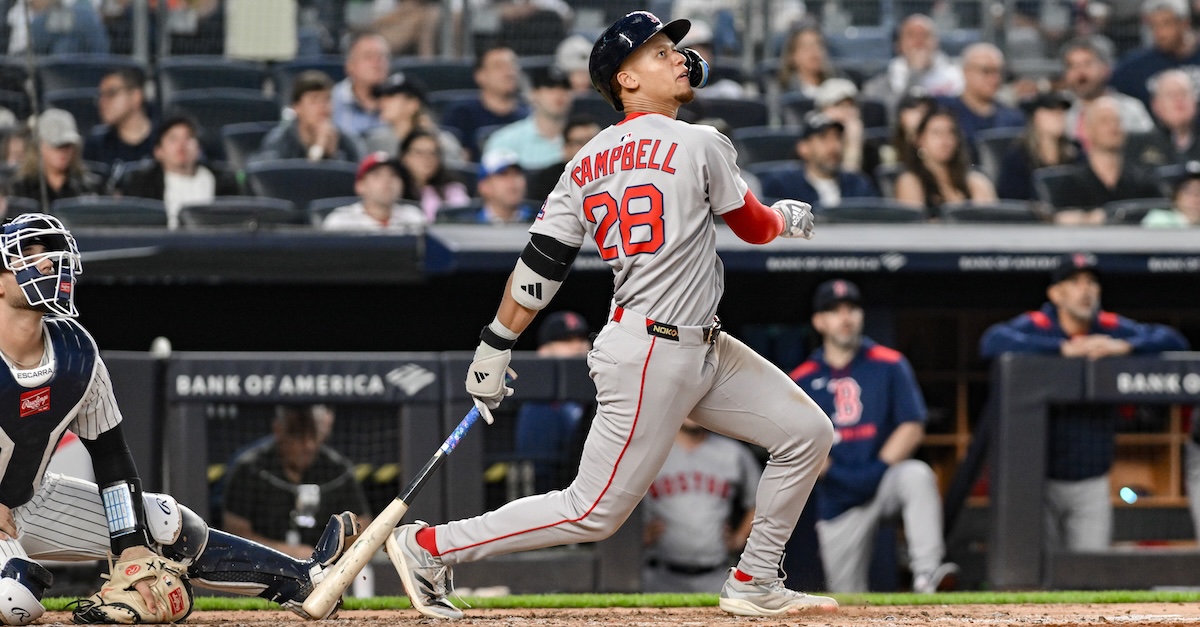
We’re putting a bow on Prospect Week with a post-hype look at one of last season’s top farmhands, Kristian Campbell. This time last year, Campbell was the biggest riser on prospect lists across the industry, a consensus top 10 player who had gone from relative obscurity to the cusp of the big leagues in just a year. Now, as we head into the spring’s first contests, he’s fallen out of the lineup and is likely to begin the 2026 season in Triple-A. His career path serves as a good reminder that growth isn’t linear, and that a player’s development path doesn’t conclude when he reaches the majors or exhausts his status as a rookie.
After playing just one season of college baseball, Boston selected Campbell in the fourth round of the 2023 draft as a toolsy player with contact skill but also a quirky, choppy swing. He put on 15-20 pounds of muscle that offseason, which helped spark an offensive explosion. His power shot from average to plus overnight, and he started lifting the ball more, both of which he managed without ballooning his whiff rates out of proportion. He posted a 178 wRC+ across three levels that season, with 20 homers and a sub-20% strikeout rate. Though little about his operation in the box looked conventional, plenty of evaluators — including, critically, the Red Sox brass — fully bought in. The Red Sox put Campbell on the Opening Day roster and then inked him to an eight-year, $60 million extension less than a week into the season.
Initially, all went well. Campbell won AL Rookie of the Month honors in April after hitting .301/.407/.495 with four homers. His strikeout rate crept north of 25%, which wasn’t itself alarming, as it came with power and a 15% walk rate; it’s perfectly normal for rookies to swing and miss a bunch as they adjust to the league anyway. Defensively, Campbell was primarily playing second base while also filling in left and center. He didn’t look great at the keystone, and the jury was still out on his long-term defensive home, but if nothing else, his versatility was itself a boost for the ballclub.
On April 30, Campbell went 0-4 in a game against the Blue Jays, and then missed the next three games with rib discomfort. We can’t know to what extent that injury bothered him. Campbell, for his part, said it wasn’t an issue by late May: “No. That’s all clear. There was just a little side discomfort, but it’s all good.” Regardless, it was a turning point in his season:
April Flowers and May Showers
BA
OBP
Slugging
K%
BB%
ISO
wRC+
March-April
.301
.407
.495
26%
15.4%
.194
150
May-June
.159
.243
.222
28.5%
7.1%
.063
30
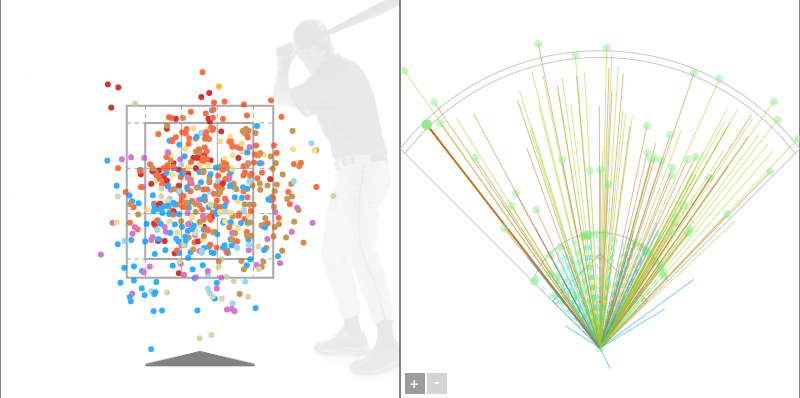
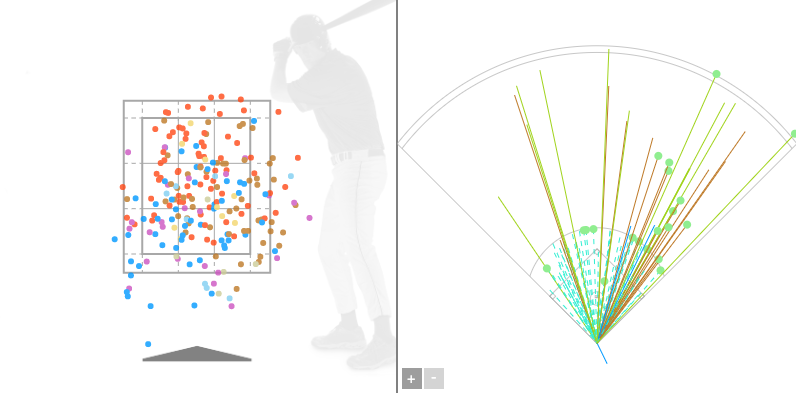
By mid-June, the Red Sox had seen enough and sent Campbell to Triple-A for the remainder of the season. Critically, his dip in production coincided with a sudden and complete inability to pull the ball.
April:
May:
Campbell wasn’t mauling good velo over the Green Monster even in April, but he did hit some heaters hard to the left of second base and had no trouble driving spin out to left. He got back to that in Triple-A, though somewhat troublingly all of his pull-side damage came on hanging breaking balls. As Campbell gutted through an unspectacular summer in Worcester — 118 wRC+, 26.7% strikeout rate — the Red Sox lineup hummed without him. A mix of players capably filled in at second, Romy Gonzalez most notably among them, while Boston had more good outfielders than room to play them. All over the headlines in March and April, Campbell ended the 2025 campaign a forgotten man.
Even at his peak, Campbell was a somewhat divisive player. While some scouts were willing to overlook his unorthodox swing, others were apprehensive about his mechanics. He had a double toe tap and then a big front hip leak that worked in part because he has huge hip-shoulder separation and was able to keep from flying open even as his lower half crept toward third base. The upper half was also concerning for some evaluators, as Campbell’s violent and rotational hack came with a lot of head movement and often left him off balance. Plus bat speed and good hand-eye coordination helped, but not everybody loved what they saw.
Having literally bought the breakout, it’s fair to wonder if Boston is now taking the collapse at face value as well. There are signs, if you want to look at it that way. The Red Sox sent Campbell to winter ball this offseason, hoping that quieter movements in the box will again let him get to his power. Between those adjustments, the trade for Caleb Durbin, and unsettled defensive plans that initially seemed to focus on the outfield but then made room for him to take groundballs once back in camp (all of this just a few months removed from when he started working in at first base), you’d be forgiven for thinking that he’s not in the club’s immediate plans. Fair enough, given last season’s production and this season’s lineup.
But all of the tinkering raises more questions than it answers. Were Campbell’s struggles last May and June really the inevitable result of an unconventional swing? Is it possible that the league’s adjustments to the young upstart, possibly combined with a nagging rib issue, did a number on a rookie already shouldering a difficult defensive load after very little collegiate and minor-league seasoning? You can make arguments for, against, or in between on those questions; the guy is in limbo, after all.
Last year, just after Campbell’s demotion, Eric wrote, “I, like most everyone, entered 2025 convinced that this weirdo swing would work for Campbell even though it’s unconventional. Though he was demoted shortly before [list] publication, I still think it will… two years ago, this guy was playing in his lone college baseball season and now he’s facing the best pitchers in the world. He deserves time to adjust and hopefully get stronger so it doesn’t take his entire body winding up for him to swing hard.”
I’ll sign on to that idea, and the comment about increased strength in particular. It’s a long season, and all the moving parts in Campbell’s swing mean that a minor disruption to one area of the body might just throw off the whole operation; having the strength to withstand the rigors of the schedule is important for everyone, but perhaps him especially. And let’s not lose sight of the talent here. However unusual, Campbell’s bat speed, short swing, and good approach were, for a time, effective. The history of this sport is full of guys who went the other way with fastballs and tugged breaking balls, and for a month it looked like Campbell had found a way to follow those footsteps. I still think he can; whether or not he will is for us to find out.
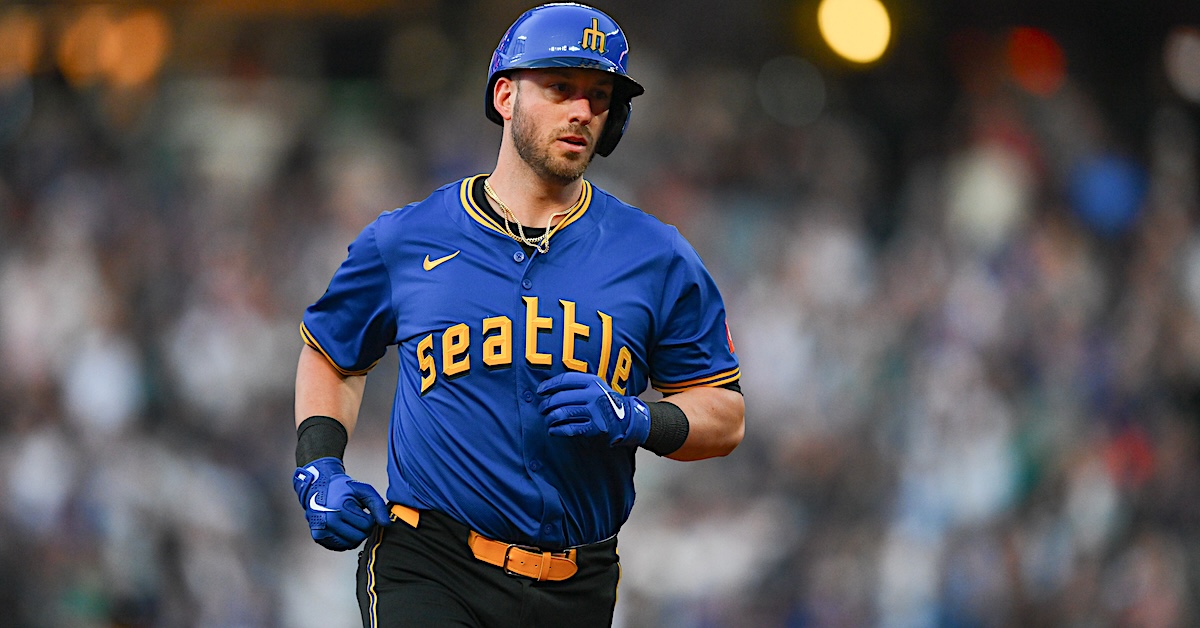
On Wednesday, catcher Mitch Garver agreed to a minor league deal to remain with the Mariners in 2026. He reported to camp for a physical on Thursday, and should he make the major league roster, he’ll earn a prorated $2.55 million for any time he spends with the big club. Because of his veteran status, Garver will have the ability to opt out and look for a job elsewhere, in late March, on May 1, or June 1 if he remains in the minors. We don’t often devote entire articles to minor league deals, but I wanted to highlight this one, because the 35-year-old Garver has had such an interesting career and such a dramatic turnaround over the past two years.
A bit over two years ago, Garver signed a very different contract with Seattle. It was a two-year deal for $24 million, nearly five times as much per year as his new one. He was coming off a 2023 season in which he launched 19 home runs and finished with a 142 wRC+ despite an April knee sprain that knocked him out for more than two months. It was just the 18th time this century a catcher that had put up such a good offensive line over at least 300 plate appearances, and it wasn’t even Garver’s best season. He debuted at age 26 in 2017, and over the first seven years of his career, he ran a 124 wRC+. If you go to our leaderboards and rank catchers through their age-32 seasons, that mark ties him with Hall of Famer Gary Carter and Mickey Tettleton for 32nd all-time (just behind his teammate Cal Raleigh’s 126).
That’s not to say that Garver was on pace to be one of the best catchers ever. Thanks to a wide variety of injuries, he’d only reached 80 games played in a season three times. And because of both the injuries and his very poor defense, he’d spent more than 40% of his time at first base or DH. Despite being one of the best hitting catchers in the game, he had just 8.3 WAR to his name. Still, the bat was so undeniable that he became the first non-pitcher Jerry Dipoto had ever signed to a multi-year contract while leading the Mariners. The move carried risk, but that risk was about whether Garver would stay healthy, about whether his bat would play up enough if, as expected, he spent the vast majority of his time as a DH. Read the rest of this entry »
It’s Friday once again, and it’s time for the first abbreviated Matrix Reloaded in quite a while — there wasn’t even a trade this week! That sound you hear is Meg breathing a sigh of relief. Once we’ve run out of meaningful transactions and I declare that the Offseason is Officially Over, I’ll run through some fun summary statistics, but in the meantime, you can view those at the bottom of the Matrix.
Free Agent Signings
Because the market has whittled down to so few free agents, I’ll just run through the past week’s signings in one big section, and then I’ll dive into who’s left in the very limited pool down at the bottom.
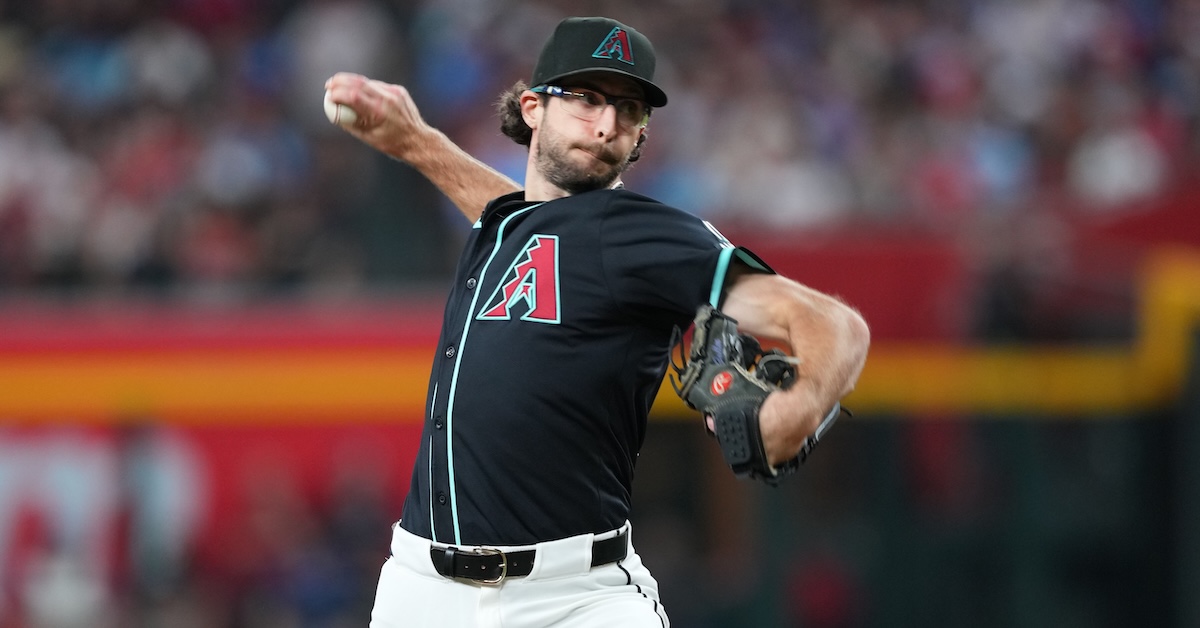
Diamondbacks Sign Zac Gallen for One Year, $22.025 Million ($14.025 Million Deferred)
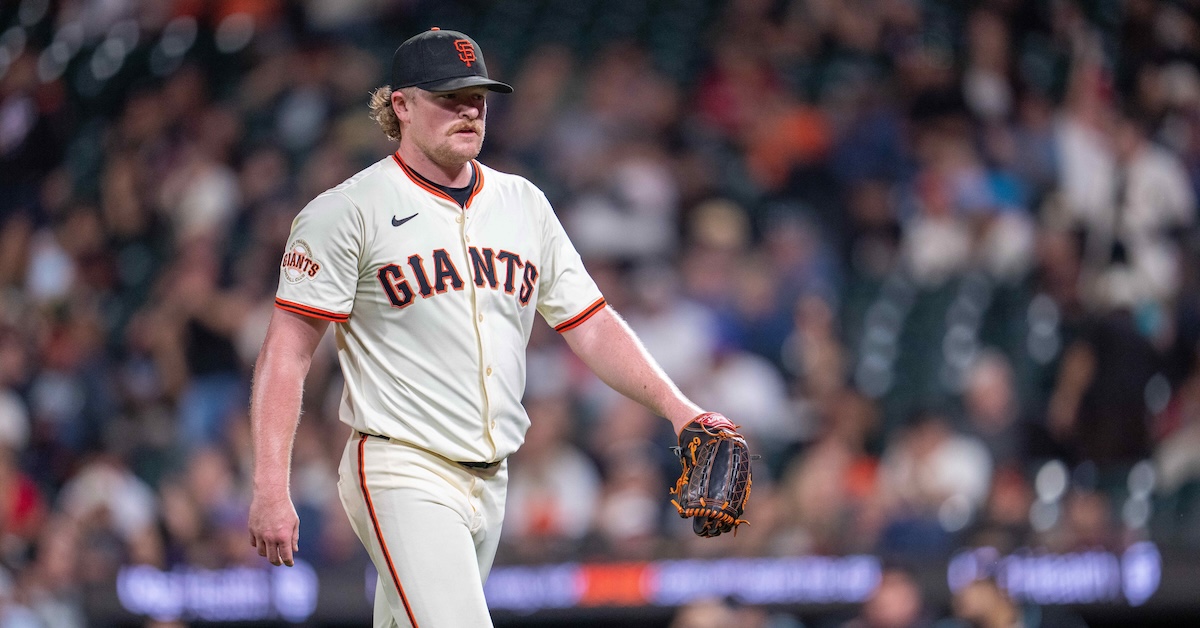
I’ve been playing around with the new FanGraphs Lab tools a lot recently. At first, it was bug testing, but it pretty quickly turned into fun. One minute, you’re making sure that sliders show up correctly. Next minute, you’re wondering about Logan Webb’s backwards slider. See, Webb throws a big-bending sweeper instead of a gyro slider, but it doesn’t behave at all how you’d expect: It’s good against lefties and bad against righties.
In 2025, Webb put up 5.5 WAR, a career-high mark and his fifth straight season of four or more wins. He used his sweeper a lot to get there. Webb was one of the most frequent right-on-left sweeper users in the majors, and also one of the best. Measured by run value added per 100 pitches, he was 11th in baseball among all righties who threw even 100 such sweepers – and he threw 400 of them. He was 15th in whiff rate for good measure. He was as effective as Paul Skenes was in this situation while going to the pitch three times as often.
But while he was lights out with the pitch against lefties, it fared quite poorly against righties. He was below average, and by a lot. Ninety-one pitchers threw 100 or more right-right sweepers; Webb finished 75th in run value added (or lost, in this case) per 100 pitches. While the league gets about 25% more whiffs with the platoon advantage, his whiff rate with his sweeper was the same against righties and lefties. This all sounds very strange. But when I dug into it, I got some answers. Read the rest of this entry »
I’m of the opinion that you usually don’t learn much from watching spring training. It’s glorified practice, with inconsistent quality of competition even before you consider the fact that some guys are going all-out while others are working on a specific issue rather than trying to win the game. This is especially true for position players who came into camp with at least an inside track on a starting job. It’s why I pay more attention to college baseball during February and March. Hell, the new season of Love Is Blind is out and I need to catch up so I can see if there are any ex-college ballplayers in the cast.
Ben Lindbergh and Meg Rowley banter about a generous podcast listener, Bruce Meyer’s elevation to interim executive director of the MLBPA, his framing of the sport’s competitive challenges, media messaging vis-à-vis the owners’ and players’ potential responsibility for missed games in 2027, and the creep of pitch-calling from the dugout, then preview the 2026 Detroit Tigers (53:35) with The Athletic’s Cody Stavenhagen, and the 2026 Athletics (1:31:28) with A’s on SI’s Jason Burke.
It’s common for readers to ask which of the players who aren’t on this year’s Top 100 might grace next year’s edition. Who has a chance to really break out? This is the piece for those readers, our “Picks to Click,” the gut-feel guys we think can make the 2027 Top 100.
This is the ninth year Eric has conducted this exercise at FanGraphs, and there are some rules. First, none of the players you see below will have ever been graded as a 50 FV or better in any of our write-ups or rankings. Second, we can’t pick players who we’ve picked in prior years, though we can take players who other writers have previously selected. For instance, Eric picked Demetrio Crisantes last year, but he got hurt and didn’t make this year’s Top 100. He can’t select him again (though he would if he could), but James or Brendan could if they wanted to (though they didn’t). Cam Caminiti, on the other hand… Read the rest of this entry »


 Dan Szymborski: Sorry, technical diffculties

 Sponsor Us on Patreon
 Give a Gift Subscription
 Effectively Wild Subreddit
 Effectively Wild Wiki
 Apple Podcasts Feed
 Spotify Feed
 YouTube Playlist
 Facebook Group
 Bluesky Account
 Twitter Account
 Get Our Merch!