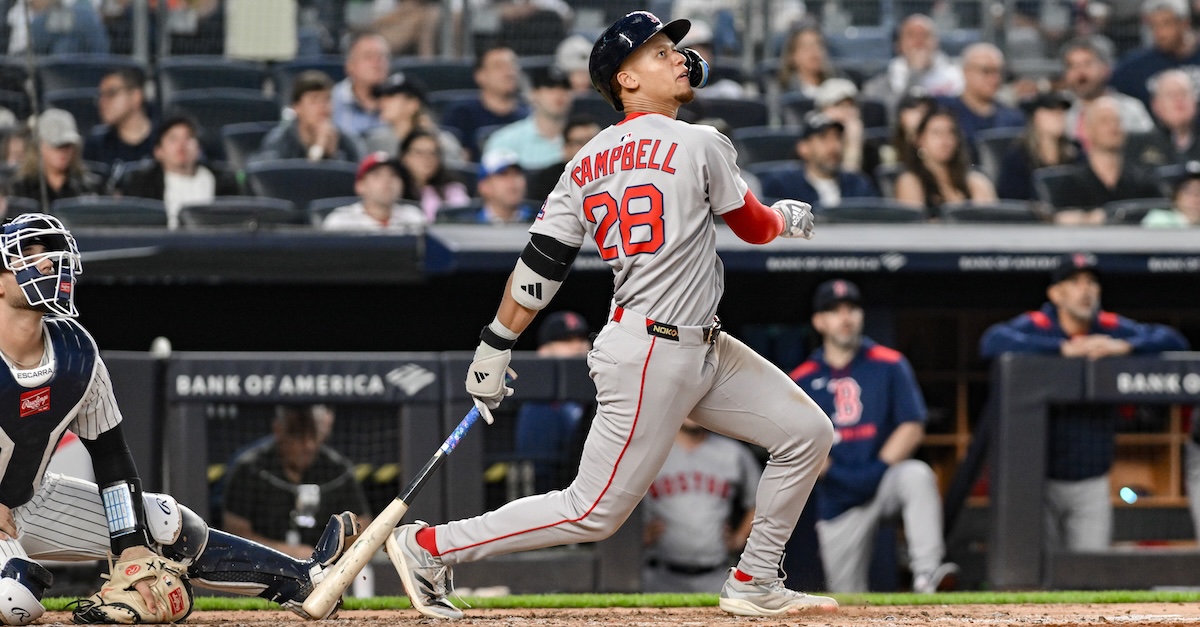
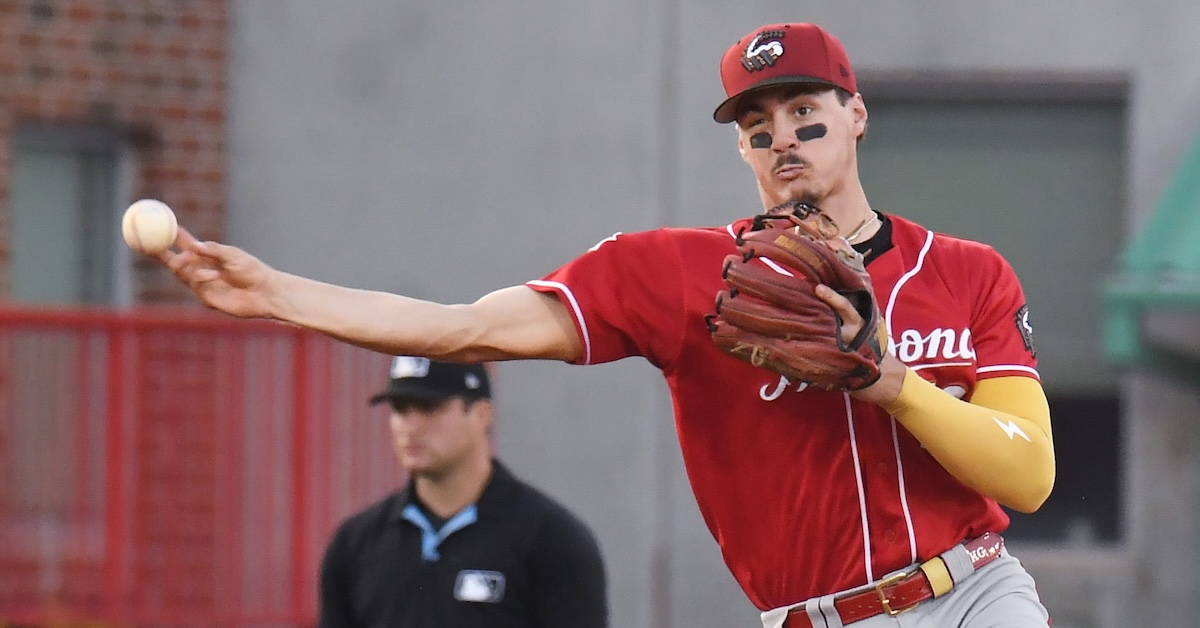
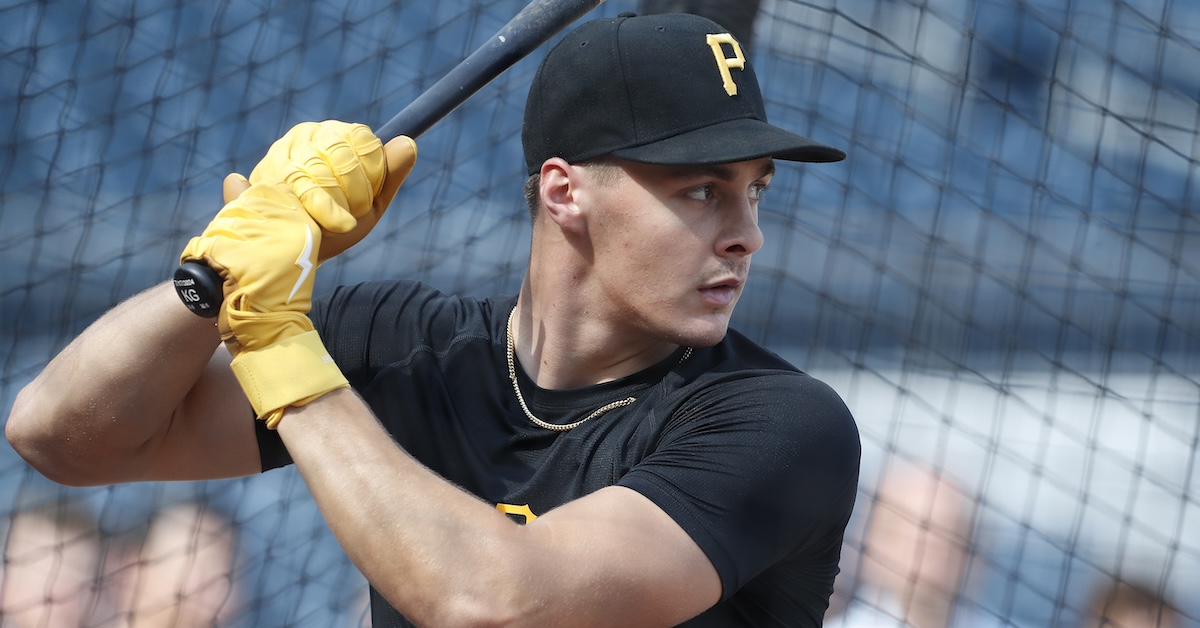
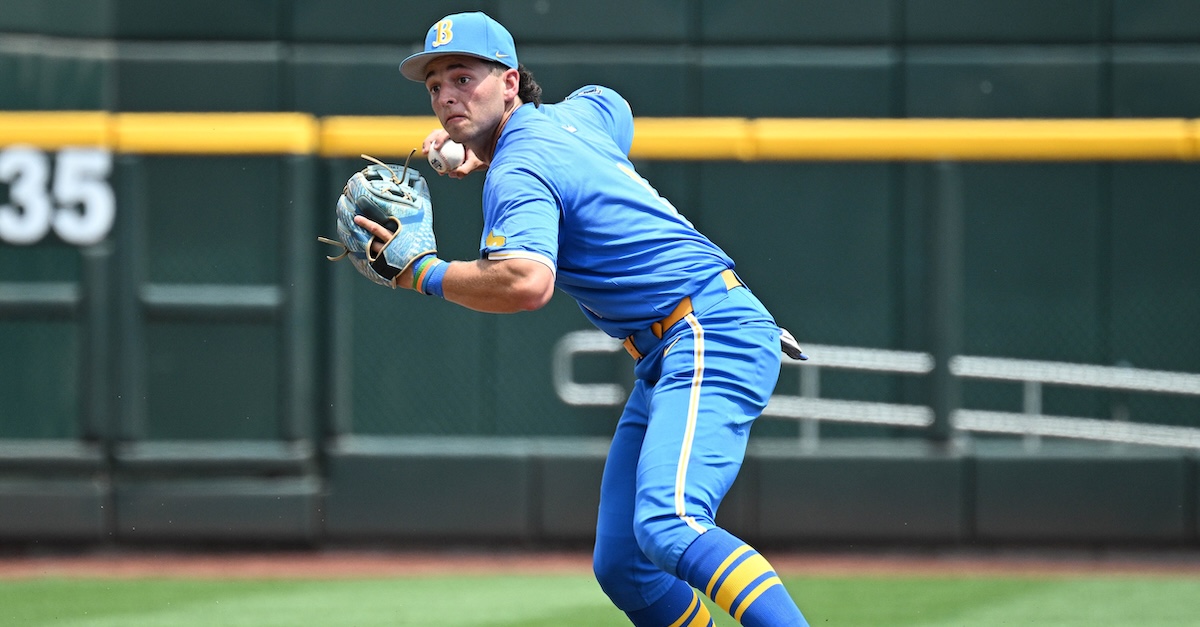
We’re putting a bow on Prospect Week with a post-hype look at one of last season’s top farmhands, Kristian Campbell. This time last year, Campbell was the biggest riser on prospect lists across the industry, a consensus top 10 player who had gone from relative obscurity to the cusp of the big leagues in just a year. Now, as we head into the spring’s first contests, he’s fallen out of the lineup and is likely to begin the 2026 season in Triple-A. His career path serves as a good reminder that growth isn’t linear, and that a player’s development path doesn’t conclude when he reaches the majors or exhausts his status as a rookie.
After playing just one season of college baseball, Boston selected Campbell in the fourth round of the 2023 draft as a toolsy player with contact skill but also a quirky, choppy swing. He put on 15-20 pounds of muscle that offseason, which helped spark an offensive explosion. His power shot from average to plus overnight, and he started lifting the ball more, both of which he managed without ballooning his whiff rates out of proportion. He posted a 178 wRC+ across three levels that season, with 20 homers and a sub-20% strikeout rate. Though little about his operation in the box looked conventional, plenty of evaluators — including, critically, the Red Sox brass — fully bought in. The Red Sox put Campbell on the Opening Day roster and then inked him to an eight-year, $60 million extension less than a week into the season.
Initially, all went well. Campbell won AL Rookie of the Month honors in April after hitting .301/.407/.495 with four homers. His strikeout rate crept north of 25%, which wasn’t itself alarming, as it came with power and a 15% walk rate; it’s perfectly normal for rookies to swing and miss a bunch as they adjust to the league anyway. Defensively, Campbell was primarily playing second base while also filling in left and center. He didn’t look great at the keystone, and the jury was still out on his long-term defensive home, but if nothing else, his versatility was itself a boost for the ballclub.
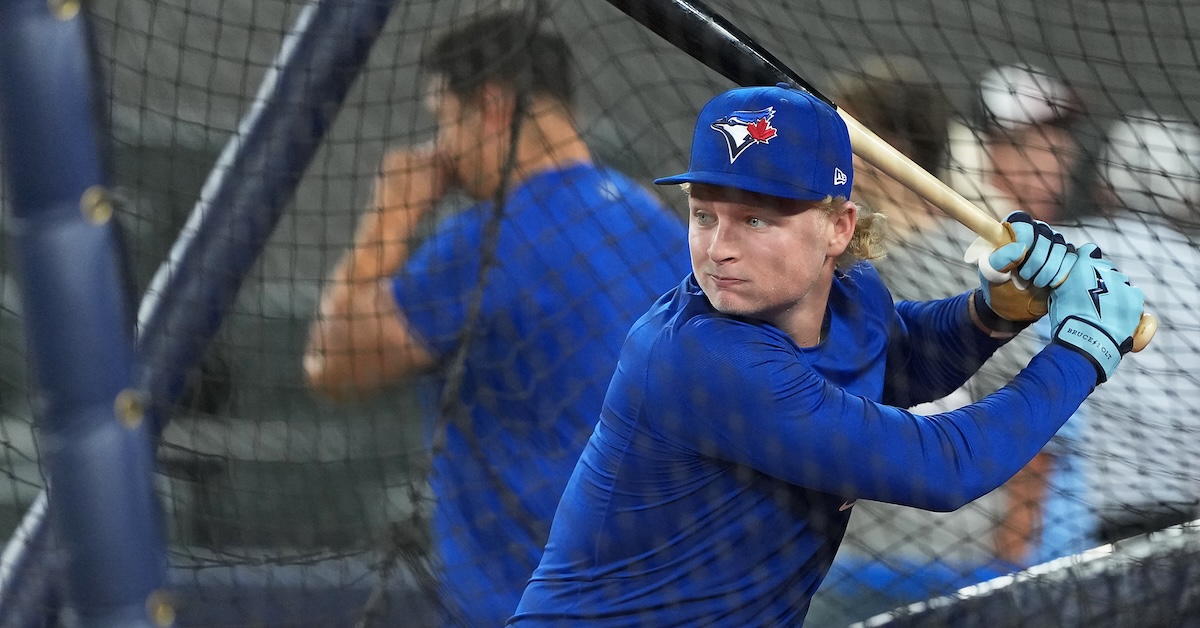
On April 30, Campbell went 0-4 in a game against the Blue Jays, and then missed the next three games with rib discomfort. We can’t know to what extent that injury bothered him. Campbell, for his part, said it wasn’t an issue by late May: “No. That’s all clear. There was just a little side discomfort, but it’s all good.” Regardless, it was a turning point in his season:
April Flowers and May Showers
BA
OBP
Slugging
K%
BB%
ISO
wRC+
March-April
.301
.407
.495
26%
15.4%
.194
150
May-June
.159
.243
.222
28.5%
7.1%
.063
30
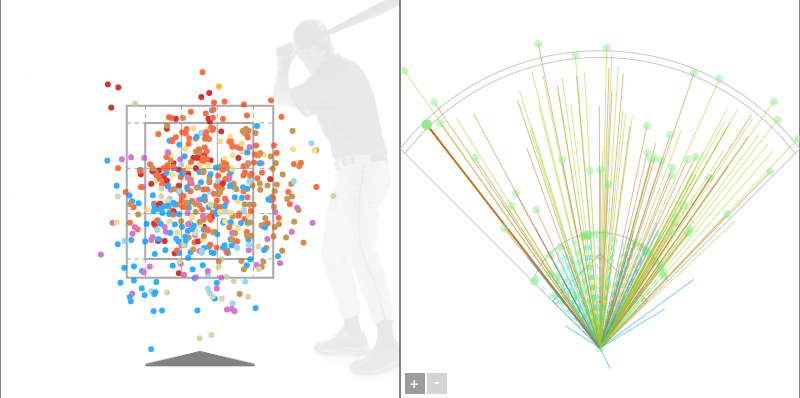
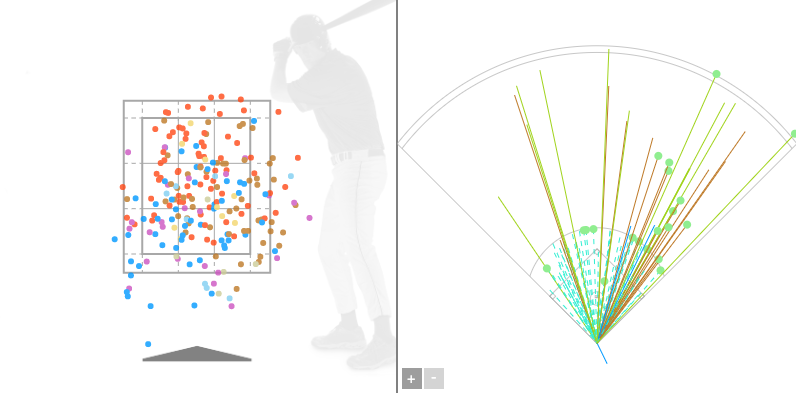
By mid-June, the Red Sox had seen enough and sent Campbell to Triple-A for the remainder of the season. Critically, his dip in production coincided with a sudden and complete inability to pull the ball.
April:
May:
Campbell wasn’t mauling good velo over the Green Monster even in April, but he did hit some heaters hard to the left of second base and had no trouble driving spin out to left. He got back to that in Triple-A, though somewhat troublingly all of his pull-side damage came on hanging breaking balls. As Campbell gutted through an unspectacular summer in Worcester — 118 wRC+, 26.7% strikeout rate — the Red Sox lineup hummed without him. A mix of players capably filled in at second, Romy Gonzalez most notably among them, while Boston had more good outfielders than room to play them. All over the headlines in March and April, Campbell ended the 2025 campaign a forgotten man.
Even at his peak, Campbell was a somewhat divisive player. While some scouts were willing to overlook his unorthodox swing, others were apprehensive about his mechanics. He had a double toe tap and then a big front hip leak that worked in part because he has huge hip-shoulder separation and was able to keep from flying open even as his lower half crept toward third base. The upper half was also concerning for some evaluators, as Campbell’s violent and rotational hack came with a lot of head movement and often left him off balance. Plus bat speed and good hand-eye coordination helped, but not everybody loved what they saw.
Having literally bought the breakout, it’s fair to wonder if Boston is now taking the collapse at face value as well. There are signs, if you want to look at it that way. The Red Sox sent Campbell to winter ball this offseason, hoping that quieter movements in the box will again let him get to his power. Between those adjustments, the trade for Caleb Durbin, and unsettled defensive plans that initially seemed to focus on the outfield but then made room for him to take groundballs once back in camp (all of this just a few months removed from when he started working in at first base), you’d be forgiven for thinking that he’s not in the club’s immediate plans. Fair enough, given last season’s production and this season’s lineup.
But all of the tinkering raises more questions than it answers. Were Campbell’s struggles last May and June really the inevitable result of an unconventional swing? Is it possible that the league’s adjustments to the young upstart, possibly combined with a nagging rib issue, did a number on a rookie already shouldering a difficult defensive load after very little collegiate and minor-league seasoning? You can make arguments for, against, or in between on those questions; the guy is in limbo, after all.
Last year, just after Campbell’s demotion, Eric wrote, “I, like most everyone, entered 2025 convinced that this weirdo swing would work for Campbell even though it’s unconventional. Though he was demoted shortly before [list] publication, I still think it will… two years ago, this guy was playing in his lone college baseball season and now he’s facing the best pitchers in the world. He deserves time to adjust and hopefully get stronger so it doesn’t take his entire body winding up for him to swing hard.”
I’ll sign on to that idea, and the comment about increased strength in particular. It’s a long season, and all the moving parts in Campbell’s swing mean that a minor disruption to one area of the body might just throw off the whole operation; having the strength to withstand the rigors of the schedule is important for everyone, but perhaps him especially. And let’s not lose sight of the talent here. However unusual, Campbell’s bat speed, short swing, and good approach were, for a time, effective. The history of this sport is full of guys who went the other way with fastballs and tugged breaking balls, and for a month it looked like Campbell had found a way to follow those footsteps. I still think he can; whether or not he will is for us to find out.
It’s common for readers to ask which of the players who aren’t on this year’s Top 100 might grace next year’s edition. Who has a chance to really break out? This is the piece for those readers, our “Picks to Click,” the gut-feel guys we think can make the 2027 Top 100.
This is the ninth year Eric has conducted this exercise at FanGraphs, and there are some rules. First, none of the players you see below will have ever been graded as a 50 FV or better in any of our write-ups or rankings. Second, we can’t pick players who we’ve picked in prior years, though we can take players who other writers have previously selected. For instance, Eric picked Demetrio Crisantes last year, but he got hurt and didn’t make this year’s Top 100. He can’t select him again (though he would if he could), but James or Brendan could if they wanted to (though they didn’t). Cam Caminiti, on the other hand… Read the rest of this entry »
This article unveils OOPSY’s first WAR-based Top 100 prospects list.
Broadly put, OOPSY mirrors the other projections systems at FanGraphs, but it uses its own ingredients, including its own aging curves, regression amounts, recency weights, major league equivalencies, and park factors. In terms of accuracy, it has held its own with the other projection systems, including when projecting rookies.
Since 2024, I have published OOPSY’s top prospect lists over at RotoGraphs with more of a fantasy focus, ranking pitchers by peak ERA and hitters by peak wRC+. In 2025, I began incorporating average fastball velocity into my prospect pitching projections, using data from The Board, as well as Stuff+, provided by Eno Sarris, where possible. Midway through 2025, I started accounting for EV90 in my prospect hitting projections, using data from Prospect Savant; I also include bat speed where data permits. And now that OOPSY accounts for defense as well as baserunning, I can rank prospects by projected WAR, to theoretically align more closely with the valuations used by major league organizations. Read the rest of this entry »
No two scouts or evaluators are going to agree on everything, and we’re no exception. We get asked all the time about who liked which player more, or who was more lukewarm on this guy versus that one — not to mention the steady stream of “Outlet A ranked Player B here, but you had him there, what gives?” questions that populate our chats. These are especially compelling and relevant inquiries this time of year, because inevitably we had to resolve a degree of disagreement as we compiled our list of the Top 100 prospects in baseball.
This year, we’ve decided to address those questions head on. Throughout our list-building process, we came to similar, or similar enough, conclusions about most players. Oftentimes Eric was a tick higher on one player here, or Brendan the high man there, and usually a quick back and forth was enough to bridge any gaps. In a couple cases though, we didn’t reach consensus. There were a handful of players that Brendan was happy to rank, but Eric would have preferred to leave off, and vice versa. We think offering a peek into those discussions will prove insightful for readers. These back and forths highlight the types of players who are generally more difficult to evaluate, as well as the metrics and scouting practices that guide decision-making when you have to make a call one way or the other. Through it all, we hope you’ll arrive at a conclusion that most scouts and analysts eventually reach: That spirited debate is a healthy part of the evaluative process, and disagreements without clean resolution are occasionally the cost of doing business in an uncertain world.
Kendry Chourio, RHP, Kansas City Royals
Brendan: Let’s start with a pitcher who ultimately didn’t make our list. I never caught Kendry Chourio live, but I adored his stuff when I put on the tape. He throws hard, I see a path to a plus curve and changeup, and he’s advanced for someone who played all of last season as a 17-year-old. The Royals rightly promoted him off of the Dominican complex, and then he dominated in Arizona to the point that he actually wound up in Low-A down the stretch. And you can see why: For his age, his ability to command the ball and execute his secondaries stands out immediately. His line – 51.1 innings, 63 strikeouts, 0.95 WHIP, just five walks – was incredible. I think we both agree that there are a lot of good things going on here. Can you elaborate on why you were still a little skeptical of him when it came time to build the list? Read the rest of this entry »
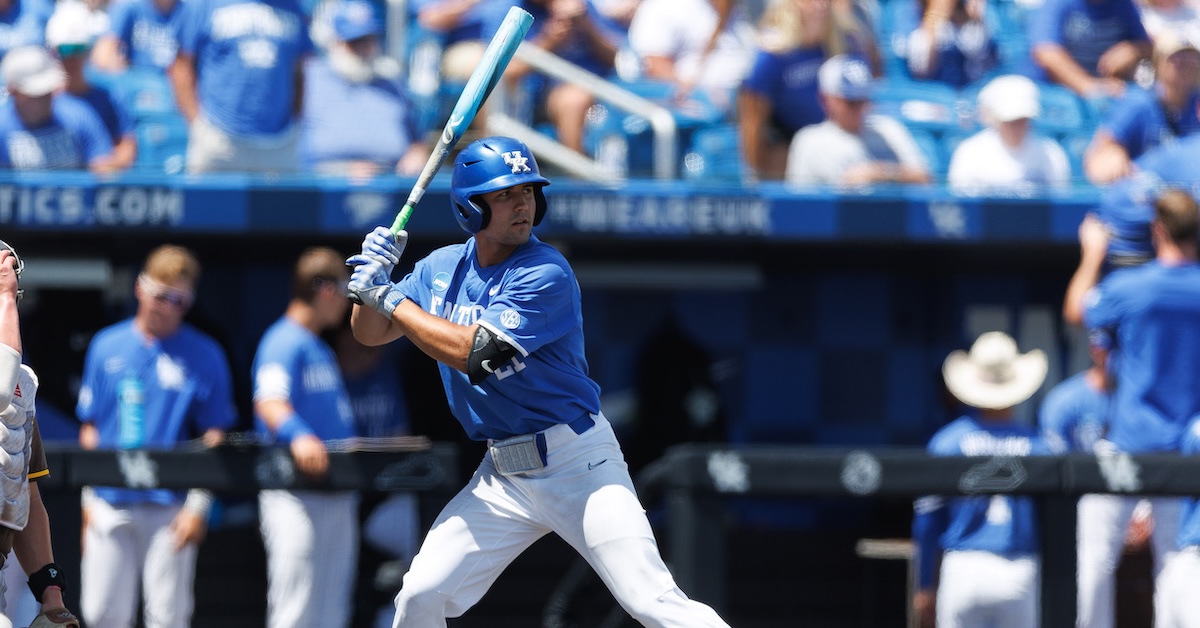
Ryan Waldschmidt is ranked 35th on our newly-released 2026 Top 100 Prospects list, and his right-handed stroke is a big reason why. Along with assigning him a 50 FV, our prospect team wrote that the 23-year-old outfielder in the Arizona Diamondbacks system “does just about everything you want at the plate and he looks the part of a bat-first future regular in the box.” Drafted 31st overall in 2024 out of the University of Kentucky, Waldschmidt is coming off of a 2025 season in which he put up a .289/.419/.473 slash line with 18 home runs and a 142 wRC+ between High-A Hillsboro and Double-A Amarillo.
The way he goes about his craft differs somewhat from his contemporaries. Waldschmidt’s setup is unorthodox, and his swing isn’t exactly what you would draw up in the lab. When it comes to mechanics, the 6-foot-2, 215-pound Sarasota native isn’t a poster child for the science of hitting, but rather an advocate of the art of hitting. Fitting a paint-by-numbers mold isn’t his goal, squaring up baseballs is — and that’s precisely what he does. As evidenced by his track record and presence in the top half of our Top 100, Waldschmidt’s way works just fine.
Waldschmidt discussed his atypical hitting profile earlier this month.
———
David Laurila: Your hitting mechanics have been described as “low maintenance.” What does that mean to you, and how long have your mechanics been in place?
Ryan Waldschmidt: “Throughout my whole entire life, I’ve had a pretty similar variation of what I do now. I mean, there was a time when I was younger that I had a little bit of a pick-it-up, put-it-back-down stride. Once I got to college… my freshman year, I even had a stride at Charleston Southern. Then once I got to Kentucky [as a sophomore] is when I kind of tapped into the no-stride from my setup. Read the rest of this entry »
Now that the coal has been shoveled into the steam engine and the gears are moving, the ZiPS projection system is back for the 11th year with its take on the top prospects in baseball. Just in case this is your first time with ZiPS, it’s a computer projection system that uses a whole bunch of algorithms, and more data than you can shake a stick at, to generate a forecast of how baseball players might perform in the future. There’s no truth to the rumors that it also utilizes my obvious disdain for your favorite team; it only harnesses some of that!
ZiPS prospect projections are not designed to replace traditional scouting, but rather to be a supplemental look, one that estimates where things stand if we only had data to work with. ZiPS has a strong history of projecting prospects — it liked players such as Mookie Betts and Pete Alonso far more than the prospecteers who aren’t in my computer — but all models are wrong; it’s just that some are useful. There is a great deal of uncertainty attendant with lower-level minor league stats that isn’t present at the higher levels, so ZiPS tends to be more confident about prospects with more time under their belts. As a result, non-statistical information about players, things ZiPS can’t and doesn’t know, is very relevant to how they’ll progress! This is not the one-prospect-list-to-bring-them-all-and-in-the-darkness-bind-them.
As is tradition, I dialed back a decade to look at the ZiPS Top 100 from 2016 to review its hits and misses:
As expected, there are some good hits and some huge misses. ZiPS was a very early adopter on Trea Turner, Ozzie Albies, and Ryan McMahon, and had more than its share of back-end top 100 prospects who rated more positively than consensus (Brandon Nimmo, Reynaldo López, Jack Flaherty, Matt Olson, Matt Chapman). But naturally there are some splats, most notably AJ Reed, but also José Peraza, Austin Barnes, Brian Johnson, and Renato Nuñez. All but two of the top 100 did in fact play in the majors, with the exceptions being Jomar Reyes and Kevin Ziomek, whose professional career only lasted one more start due to thoracic outlet syndrome.
But let’s get to why you’re here. Presenting the ZiPS 2026 Top 100:
There are a few important things to remember here. First, ZiPS has absolutely no way to consider high school prospects with little or no professional experience. Eli Willits absence from this list isn’t due to anything wrong with his statistics, but simply the fact that ZiPS doesn’t have anything useful to say about a player with 15 professional games and no college experience. ZiPS is a good tool, but I see little point in using it for something it can’t possibly be good at. There are some college-only players on this list, but they do take a hit if the projections are based mostly or exclusively on college data, similar to Nick Kurtz last year.
ZiPS tends to be higher on high-floor/low-ceiling prospects than scouts are, but I’ve minimized that tendency in recent years by using the average of the 80th- and 20th-percentile projections, resulting in Triple-A players who are projected to be safe, middling role players, but who don’t have big upside, ranking lower on the list.
Unsurprisingly, there’s a lot of agreement between the ZiPS and FanGraphs Top 100 lists, with 62 players appearing on both (compared to 63 last year). To keep things apples to apples, I’m not including players from foreign leagues on this list, but you can see their projections in the normal spots.
From a team standpoint, here’s how many prospects each club has among the top 50, 100, 200, and 500 prospects. I’ve highlighted the leaders in each category:
ZiPS Top Prospects by Team – 2026
Organization
Top 50
Top 100
Top 200
Top 500
Milwaukee Brewers
3
10
13
26
Pittsburgh Pirates
3
7
11
24
St. Louis Cardinals
4
6
9
18
Minnesota Twins
2
5
12
23
Los Angeles Dodgers
3
5
8
22
Tampa Bay Rays
3
5
8
22
New York Mets
3
5
6
11
Seattle Mariners
3
5
5
12
Washington Nationals
2
5
5
15
Cleveland Guardians
2
4
14
23
Boston Red Sox
2
4
10
17
Arizona Diamondbacks
0
3
13
29
Miami Marlins
3
3
8
16
Los Angeles Angels
0
3
8
14
Athletics
2
3
6
17
Chicago White Sox
0
3
6
18
Detroit Tigers
3
3
5
13
Atlanta Braves
1
2
8
15
Toronto Blue Jays
2
2
6
13
San Francisco Giants
1
2
5
14
Cincinnati Reds
2
2
4
15
Philadelphia Phillies
1
2
4
8
Houston Astros
0
2
4
17
Colorado Rockies
0
2
3
16
Kansas City Royals
1
2
2
12
Baltimore Orioles
1
1
6
24
Chicago Cubs
1
1
4
14
Texas Rangers
1
1
3
14
New York Yankees
1
1
3
10
San Diego Padres
0
1
1
8
The Pirates and Brewers have moved up considerably since last year, as have the Cardinals. This is probably the best showing for the Angels in years, though they are still only middle of the pack. The Yankees and Padres are really hurting, and while the Orioles still do very well in terms of the ZiPS Top 500 prospects, the computer thinks that aside from Samuel Basallo, their flow of top prospects has slowed considerably.
Looking at a big list of 100 players is a daunting task, so let’s break it down by position, and dig into some of the players who ZiPS does or doesn’t like. We’ll start with the first basemen:
There being five first baseman in the ZiPS Top 100 is actually an unusually large number these days! Bryce Eldridge wasn’t impressive in 2025, and there are some holes in his game, but he was still a very young player in the high minors with serious power upside. Edward Florentino’s A-ball performance was quite impressive for the level, and ZiPS thinks he has huge power upside. ZiPS doesn’t see Ryan Clifford becoming a star, but thinks he’s one of the safer home run bets among prospects today, albeit with low batting average and on-base figures. He does project as well as Pete Alonso at a similar point in their careers, though he probably isn’t going to be that good. Luke Adams and Eric Bitonti give the Brewers interesting options at a position they’ve struggled at lately, and Adams is already fairly high in the minors. ZiPS is a bit lower than our rankings on Ralphy Velazquez, who the system sees as having a good bit of bust potential. Turning to the second basemen:
ZiPS thinks that Kevin McGonigle should be in the majors right now, and would be a strong contender for the Rookie of the Year award in the American League. (As an aging Gen X’er, I also will enjoy years of making McGonigle/McGarnable jokes that 80% of people won’t get.) Yes, Michael Arroyo is a Walks Guy, but he also has really good power at a young age, and isn’t so atrocious defensively that he’s already been exiled to first base or anything. JJ Wetherholt only ranks third on this list because of how highly ZiPS ranks McGonigle and Arroyo, and like the former, he deserves to be a starter in 2026. Travis Bazzana is interesting in that ZiPS is unsure if his batting averages will be enough to make him a big plus in the majors, but the computer also likes his defense more than the general consensus. Jadher Areinamo is the arguable reach on this list, but ZiPS thinks he has reasonable power upside, and that he can stick at second base. To the shortstops:
ZiPS Top 10 Shortstop Prospects – 2026
ZiPS Rank
Name
Organization
FanGraphs Rank
1
Konnor Griffin
Pittsburgh Pirates
1
3
Colt Emerson
Seattle Mariners
11
5
Leo De Vries
Athletics
6
8
Jesús Made
Milwaukee Brewers
2
10
Carson Williams
Tampa Bay Rays
28
11
Franklin Arias
Boston Red Sox
14
17
Emil Morales
Los Angeles Dodgers
61
21
George Lombard Jr.
New York Yankees
49
22
Sebastian Walcott
Texas Rangers
30
36
Aidan Miller
Philadelphia Phillies
13
Shortstop is the position where there is the most agreement between ZiPS and our prospect team. Nine of the top 10 shortstop prospects in ZiPS rank in the FanGraphs top 50. You don’t find a real significant disagreement until Cooper Pratt; ZiPS is giving him a lot of rope for his 2025 because of how young he was.
ZiPS has a weird tendency to flip the prospect team’s top two guys, but this time it’s absolutely convinced on Konnor Griffin. ZiPS thinks that Griffin would be a serious All-Star contender if he starts from Opening Day, and my projections very rarely say that about any prospect. Colt Emerson and Leo De Vries both get bumps up from very good 2025 rankings, and Jesús Made has nearly unlimited upside if his power develops as expected — and maybe even if it doesn’t! ZiPS remains relatively unfazed by Carson Williams’ unimpressive debut. He didn’t make the top 10, but ZiPS is really big on Kaelen Culpepper, enough that it sort of forgives the Twins for sending Carlos Correa back to Houston. Next, to the hot corner:
Third base has really fallen off in the ZiPS projections. Last year, the 10th-ranked third baseman, Cam Smith, was 129th overall; this year, the fifth-ranked third baseman would have been 129th! The top third base prospect, Sal Stewart, is probably a first baseman in the majors — that’s likely where he will play in 2026 — but wherever he ends up long-term, ZiPS is pretty confident that he’ll hit. Jacob Reimer is a big mover this year, and if you read my article from last week, you’ll know he has one of the most improved year-to-year projections, though he may need to be in the outfield to get a shot with the Mets. Mikey Romero isn’t a finished product, but ZiPS thinks he’ll at least hit some homers, albeit without a terribly good batting average. Ethan Holliday didn’t have enough professional time for ZiPS to consider, and the projections are far from sold on Charlie Condon, though he ought to at least be a good role player. ZiPS want to see more progress from Caleb Bonemer beyond walks before it places him as highly as our rankings do. Let’s turn to the catchers:
ZiPS Top 10 Catching Prospects – 2026
ZiPS Rank
Name
Organization
FanGraphs Rank
6
Samuel Basallo
Baltimore Orioles
4
15
Carter Jensen
Kansas City Royals
32
18
Alfredo Duno
Cincinnati Reds
22
26
Rainiel Rodriguez
St. Louis Cardinals
25
30
Eduardo Tait
Minnesota Twins
46
31
Josue Briceño
Detroit Tigers
63
33
Leonardo Bernal
St. Louis Cardinals
Unranked
35
Moisés Ballesteros
Chicago Cubs
84
50
Harry Ford
Washington Nationals
74
88
Jimmy Crooks
St. Louis Cardinals
93
It remains to be seen if Samuel Basallo actually ends up a catcher, but wherever he plays, ZiPS at least thinks he’ll hit. The same goes for Carter Jensen, who ZiPS thinks ought to be Kansas City’s catcher right now; I suspect he has a better chance at sticking behind the plate than Basallo does. Teenage catchers are dangerous, but Alfredo Duno absolutely torched the minors in 2025, and doesn’t appear to be plagued with any defensive questions. Somehow, the St. Louis Cardinals have three catchers in the ZiPS Top 100, so it’s going to be interesting to see how they give everyone a chance in the minors. It’s no wonder they don’t seem to be in any particular hurry to get Iván Herrera back behind the plate. Most likely someone will end up being traded. Moisés Ballesteros would rank higher purely as a bat, but ZiPS isn’t bullish about his defense staying in the acceptable-ish range in the majors. He could explode very quickly offensively as a DH, however. Lastly for the position players, the outfielders:
Max Clark, who ranked 12th overall last year, jumps into the top 10, remaining quite on target for Detroit. Like McGonigle, he could contribute right now in the majors, though the path isn’t quite as easy for him; the Tigers have a lot of platoon combos that squeeze out value in the outfield. A healthy season keeps Jett Williams ranked highly, and ZiPS likes Emmanuel Rodriguez’s upside so much that he doesn’t take all that much of a hit due to injury. Theo Gillen is a rather unorthodox pick, as ZiPS knows to be skeptical of walk-heavy guys, but the computer thinks his defense is better than most do, and his speed will play especially nicely in Tampa. Owen Caissie isn’t a well-rounded player, but he can hit a giant boatload of home runs, something the Marlins need, and he’s been a fave of ZiPS for a while now. ZiPS sees Yeremy Cabrera as a sneaky-good pickup in the MacKenzie Gore trade.
ZiPS remains more unsure of Walker Jenkins than the scouts, and won’t be on the Zyhir Hope bandwagon until his power either develops further or his contact improves. ZiPS has thought that Joshua Baez is more interesting than Jordan Walker for a while now, and the downside of his contact rate is what has ZiPS relatively low on Spencer Jones, at least compared to his decent overall projection. ZiPS still loves Jace LaViolette’s 2024 minor league performance, which is why it has him so high for a college-only guy; I swear it’s not that I’ve programmed ZiPS to have extra love for a player whose name sounds like that of a the protagonist in a Southern Gothic detective mystery set in a creepy Louisiana mansion, though I should probably consider it. Justin Crawford is probably more interesting than his ranking is; his 20th-percentile projection is quite low, but he does have a high chance, relative to his ranking, of being a real contributor in the majors. Finally, the pitchers:
ZiPS Top 25 Pitching Prospects – 2026
ZiPS Rank
Name
Organization
FanGraphs Rank
9
Trey Yesavage
Toronto Blue Jays
8
13
Nolan McLean
New York Mets
3
16
Bubba Chandler
Pittsburgh Pirates
10
19
Ryan Sloan
Seattle Mariners
20
20
Jonah Tong
New York Mets
58
24
Liam Doyle
St. Louis Cardinals
19
25
Robby Snelling
Miami Marlins
80
27
Thomas White
Miami Marlins
9
32
Braylon Doughty
Cleveland Guardians
Unranked
42
Travis Sykora
Washington Nationals
109
44
Wei-En Lin
Athletics
Unranked
46
Connelly Early
Boston Red Sox
38
47
Didier Fuentes
Atlanta Braves
90
55
Dasan Hill
Minnesota Twins
Unranked
56
Mitch Bratt
Arizona Diamondbacks
Unranked
59
Noah Schultz
Chicago White Sox
36
62
Alex Clemmey
Washington Nationals
Unranked
63
Owen Murphy
Atlanta Braves
Unranked
64
Gage Jump
Athletics
81
65
Kade Anderson
Seattle Mariners
50
65
Tyler Bremner
Los Angeles Angels
52
69
Jarlin Susana
Washington Nationals
29
70
Andrew Painter
Philadelphia Phillies
27
72
Payton Tolle
Boston Red Sox
18
73
Kash Mayfield
San Diego Padres
Unranked
Thirteen pitchers make the ZiPS top 50, one of the largest groups ever. The system is aware of postseason performance, and Trey Yesavage just barely edges out Nolan McLean among the late-season pitching prospects who showed a lot in the majors, yet still retain rookie status for 2026. You can add another holdover, Bubba Chandler, to that list. Some may roll their eyes about Ryan Sloan ranking so high, especially nudging out Liam Doyle, but excelling at all as a professional is a hurdle Sloan’s already cleared. It’s not like ZiPS doesn’t like Doyle; that’s about as good a projection as I’ve ever seen from ZiPS for a pitcher based mainly on college performance.
ZiPS always seems to like some unexpected pitcher right around 30, with Braylon Doughty being the first pitcher on the ZiPS board to not make the FanGraphs Top 100. ZiPS liked his command in the low minors, and he missed plenty of bats along the way. Like Jacob Reimer, Mitch Bratt made the most-improved projection list, and ZiPS sees him as the rare highly interesting control-heavy prospect. Jonah Tong is a ZiPS favorite, and both Connelly Early and Payton Tolle had some real highlights for Boston; that they are basically depth guys at the moment is one reason ZiPS likes the Red Sox rotation so much. Alex Clemmey still has to lose a walk or two before he’ll make an impact, but young, hard-throwing lefties who get lots of swings and misses are worth watching.
If you’re enjoying the ZiPS Top 100 and the rest of our Prospect Week coverage, why not become a FanGraphs Member, and banish those obnoxious ads to the land of wind and ghosts? Your continued support over the years has been absolutely key to me being able to focus a large percentage of my time to this and related baseball nerdery. While I’d be happy to be paid in tacos, my car insurance company has been frustratingly insistent about being paid in actual currency.
Eric A Longenhagen: Hello everyone, hope you had a nice weekend and enjoyed some combo of college baseball, the Olympics, and NBA All Star stuff (or non-sports delights) as I certainly did.
1:03
Eric A Longenhagen: The top 100 was published today! Brendan and I are here to talk about it with you, as well as whatever else might be on your mind.
1:03
Eric A Longenhagen: It can be procedural stuff, questions specific to players, your dynasty roster, whatever. We know a lot of you may be stopping by for the first time today because the Top 100 list brought you here. Thanks for coming, please look around and make yourself at home.
1:05
Guest: how close is Jojo Parker to being on the list?
1:05
Brendan Gawlowski: Parker was very close, Eric and I went back and forth on it while I was doing the Toronto list. At the end of the day, we didn’t have anything new on him to bump him from the post-draft updates. Good reminder that the gap between player 90 and player 135 is tiny.
1:05
Eric A Longenhagen: Parker’s good, probably a little less projectable than most of the same-age infielders who made the list.
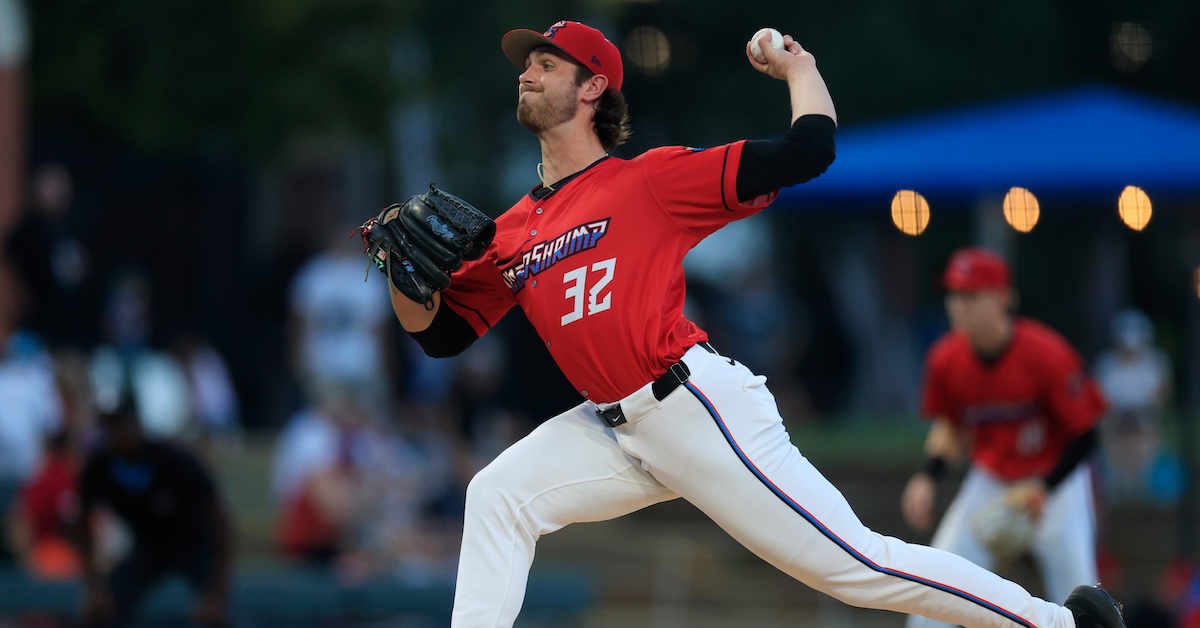
Thomas White is one of the game’s top pitching prospects. Drafted 35th overall in 2023 by the Miami Marlins out of an Andover, Massachusetts high school, the 21-year-old southpaw is ranked ninth on our newly-released 2026 Top 100 Prospects list as a 60-FV prospect. Moreover, only two pitchers rank in front of him, neither of whom throws left-handed.
The 6-foot-5, 240-pound hurler has grown as a pitcher since he was first featured here at FanGraphs in an August 2024 Sunday Notes column. Which isn’t to say he hadn’t already been making a name for himself. White, who was taking the mound for the High-A Beloit Sky Carp when I first spoke with him, ranked as Miami’s no. 4 prospect that summer, with Eric Longenhagen citing both his mid-90s fastball and plus slider when assigning him a 45+ FV. Our lead prospect analyst did include a caveat in that writeup: “He has impact starter upside and carries with him the risks typical of a volatile teenage pitching prospect.”
A year-and-a-half later, White is coming off of a 2025 season during which he dominated hitters to the tune of a 2.31 ERA, a 2.27 FIP, and an eye-opening 38.6% strikeout rate across three levels. He finished the year with the Triple-A Jacksonville, and while he is expected to return there to start the upcoming campaign, he shouldn’t be a Jumbo Shrimp for long. Possessing one of the highest ceilings among his prospect contemporaries, White is on the doorstep of the big leagues.
White discussed the continued development of his arsenal, and the mechanical tweaks he’s recently made to his delivery, in a recent phone conversation.
———
David Laurila: We first talked before a game at West Michigan, when you were playing in the Midwest League. Outside of being 18 months older and presumably 18 months smarter, has anything changed for you as a pitcher?
Thomas White: “I mean, there has been a lot of mechanical stuff and a little bit of approach. Other than that, nothing revolutionary, I would say.” Read the rest of this entry »
Below is our list of the top 100 prospects in baseball. The scouting summaries were compiled with information provided by available data and our own observations. The ETAs listed generally correspond to the year a player has to be added to the 40-man roster to avoid being made eligible for the Rule 5 draft. Manual adjustments are made where they seem appropriate, but we use that as a rule of thumb.
All of the prospects below also appear on The Board, a resource the site offers featuring sortable scouting information for every organization. It has more details than this article and integrates every team’s list so readers can compare prospects across farm systems. It can be found here.
And now, a few important things to keep in mind as you’re perusing the Top 100. You’ll note that prospects are ranked by number, but also lie within tiers demarcated by their Future Value grades. The FV grade is more important than the ordinal ranking. For example, the gap between Nolan McLean (no. 3) and Sal Stewart (no. 34) is about 30 spots, and there’s a substantial difference in talent between them. The gap between Stewart and Luis De León (no. 64), meanwhile, is also 30 numerical places, but the difference in talent is relatively small. You may have also noticed that there are more than 100 prospects in the table below, and more than 100 scouting summaries. That’s because we have also included the 50-FV prospects whose ordinal rankings fall outside the top 100, an acknowledgement both that the choice to rank exactly 100 prospects (as opposed to 110 or 210 or some other number entirely) is an arbitrary one, and that there isn’t a ton of daylight between the prospects who appear in that part of the list. Read the rest of this entry »
Today is the first day of the 2026 college baseball season, and to celebrate, I’m cutting the ribbon on our 2026 draft rankings and scouting reports. They’re now live on The Board, so head over there for all of these players’ tool grades and blurbs. In this piece, I’ll touch on several individual players who I think are among this year’s best and most interesting prospects for readers to watch and monitor over the next five months as we approach July’s draft in Philadelphia (I can’t wait). I’ll also discuss the class as a whole from a talent standpoint, as well as which teams are in position to have a huge draft.
First, some quick housekeeping on the rankings. I’ve got 51 players on The Board right now. I’ve hard-ranked the players with a 40+ FV and above, while the 40-FV players are clustered by demographic below them. Draft-eligible sophomores are denoted with an asterisks. At this stage in the draft process, players are more in neighborhoods or clusters. It’s too early to have many dozens of players ordinally ranked in a way that won’t change drastically between now and draft day, especially once we get beyond the players who fit within the first two rounds. More players will be added to The Board as the spring progresses.
This is also your reminder that we now have collegeleaderboards on the site, as well as college player pages, all of which I will be wearing out this spring as the class produces another season of data. Read the rest of this entry »