Hall of Fame season is underway, and in addition to working my way through the eight candidates on the Contemporary Baseball Era Committtee ballot, I’ve gotten a start on the annual BBWAA ballot. With the latter, it’s time to launch what’s become a yearly tradition at FanGraphs. In the spirit of our annual free agent contract crowdsourcing, we’re inviting registered users to fill out their own virtual Hall of Fame ballots using a cool gizmo that Sean Dolinar built a few years ago. I’m also going to use this page to lay out a tentative schedule for the remainder of the series, as well as links to the profiles that have been published.
To participate in the crowdsourcing, you must be signed in, and you may only vote once. While you don’t have to be a FanGraphs Member to do so, this is a perfect time to mention that buying a Membership does help to fund the development of cool tools like this — and it makes a great holiday gift! To replicate the actual voting process, you may vote for anywhere from zero to 10 players; ballots with more than 10 votes won’t be counted. You may change your ballot until the deadline, which is December 31, 2025, the same as that of the actual BBWAA voters, who have to schlep their paper ballot to the mailbox. Read the rest of this entry »
The following article is part of Jay Jaffe’s ongoing look at the candidates on the BBWAA 2026 Hall of Fame ballot. For a detailed introduction to this year’s ballot, and other candidates in the series, use the navigation tool above; an introduction to JAWS can be found here. For a tentative schedule, and a chance to fill out a Hall of Fame ballot for our crowdsourcing project, see here. All WAR figures refer to the Baseball-Reference version unless otherwise indicated.
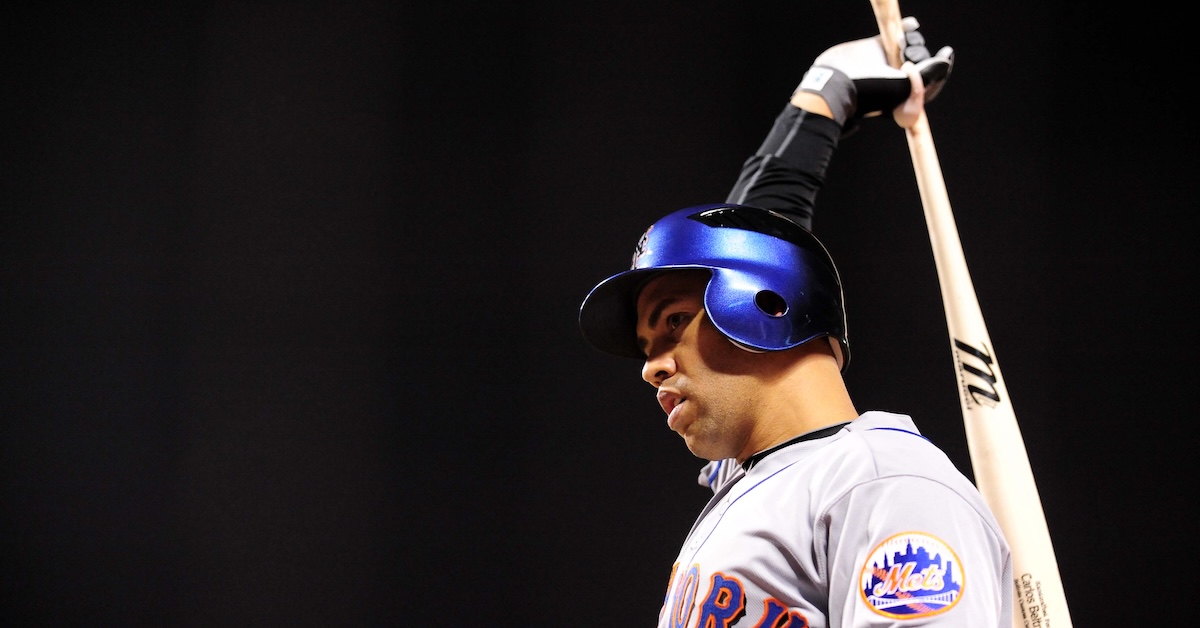
Carlos Beltrán was the quintessential five-tool player, a switch-hitting center fielder who harnessed his physical talents and became a superstar. Aided by a high baseball IQ that was essentially his sixth tool, he spent 20 seasons in the majors, making nine All-Star teams, winning three Gold Gloves, and helping five different franchises reach the playoffs, where he put together some of the most dominant stretches in postseason history. At the end of his career, he helped the Astros win a championship.
Drafted out of Puerto Rico by the Royals, Beltrán didn’t truly thrive until he was traded away. He spent the heart of his career in New York, first with the Mets — on what was at the time the largest free-agent contract in team history — and later the Yankees. He endured his ups and downs in the Big Apple and elsewhere, including his share of injuries. Had he not missed substantial portions of three seasons, he might well have reached 3,000 hits, but even as it is, he put up impressive, Cooperstown-caliber career numbers. Not only is he one of just eight players with 300 home runs and 300 stolen bases, but he also owns the highest stolen base success rate (86.4%) of any player with at least 200 attempts.
Alas, two years after Beltrán’s career ended, he was identified as the player at the center of the biggest baseball scandal in a generation: the Astros’ illegal use of video replay to steal opponents’ signs in 2017 and ’18. He was “the godfather of the whole program” in the words of Tom Koch-Weser, the team’s director of advance information, and the only player identified in commissioner Rob Manfred’s January 2020 report. But between that report and additional reporting by the Wall Street Journal, it seems apparent that the whole roster, as well as higher-ups including bench coach Alex Cora, manager A.J. Hinch, and general manager Jeff Luhnow, was well aware of the system and didn’t stop him or his co-conspirators. In that light, it’s worth wondering about the easy narrative that has left Beltrán holding the bag; Hinch hardly had to break stride in getting another managerial job once his suspension ended, and Cora was rehired as Red Sox manager after he served his suspension. While Beltrán was not disciplined by the league, the fallout cost him his job as manager of the Mets before he could even oversee a game, and he has yet to get another opportunity. Read the rest of this entry »
After a bit of a dry spell — two honorees in three years — the last two BBWAA Hall of Fame ballots have yielded bumper crops, with trios elected each year. Last year, Ichiro Suzuki fell one vote short of unanimity, while fellow newcomer CC Sabathia and 10th-year holdover Billy Wagner were elected as well. In 2024, it was newcomers Adrian Beltré and Joe Mauer, joining holdover Todd Helton. Alas, we’re in for a comparatively slow cycle this time around, as the 2026 BBWAA ballot — which was released on Monday — lacks a single newcomer who’s likely to be elected, at least on this ballot and possibly ever. If the writers are going to honor anyone, it will be a holdover candidate, or perhaps two.
That’s my quick read on the new ballot, which contains 27 candidates (12 newcomers and 15 holdovers). Over the next six weeks, I’ll profile all of the candidates likely to wind up on voters’ ballots ahead of the December 31 deadline, with a handful of profiles — the “one-and-dones” — trickling into January. I’ll be examining their cases in light of my Jaffe WAR Score (JAWS) system, which I’ve used to break down Hall of Fame ballots as part of an annual tradition that as of last January is old enough to drink. The series debuted at Baseball Prospectus (2004-12), then moved to SI.com (2013-18), which provided me an opportunity to go into greater depth on each candidate. In 2018, I brought the series to FanGraphs, where my coverage has become even more expansive.
Today I’ll offer a quick look at the biggest questions attached to this year’s election cycle, but first…
The Basics
To be eligible for election to the Hall of Fame via the BBWAA ballot, a candidate must have played in the majors for parts of 10 years (one game is sufficient to be counted as a year in this context), have been out of the majors for five years (the minors or foreign leagues don’t count), and then have been nominated by two members of the BBWAA’s six-member screening committee. Since the balloting is titled with respect to induction year, not the year of release, that means that this year’s newcomers last appeared in the majors in 2020. Each new candidate has 10 years of eligibility on the ballot, a reduction from the 15-year period that was in effect for several decades. The last candidate grandfathered into getting the full 15 years was Lee Smith, whose eligibility expired in 2017, while the last to have his eligibility window truncated mid-candidacy was Jeff Kent, who fell off after the 2023 cycle. Coincidentally, Kent might be the best bet for election on the 2026 Contemporary Baseball Era Committee ballot, but that’s a whole different process. Read the rest of this entry »
The following article is part of my ongoing look at the candidates on the 2026 Contemporary Baseball Era Committee ballot. For a detailed introduction to this year’s ballot, use the navigation tool above. An introduction to JAWS can be found here.
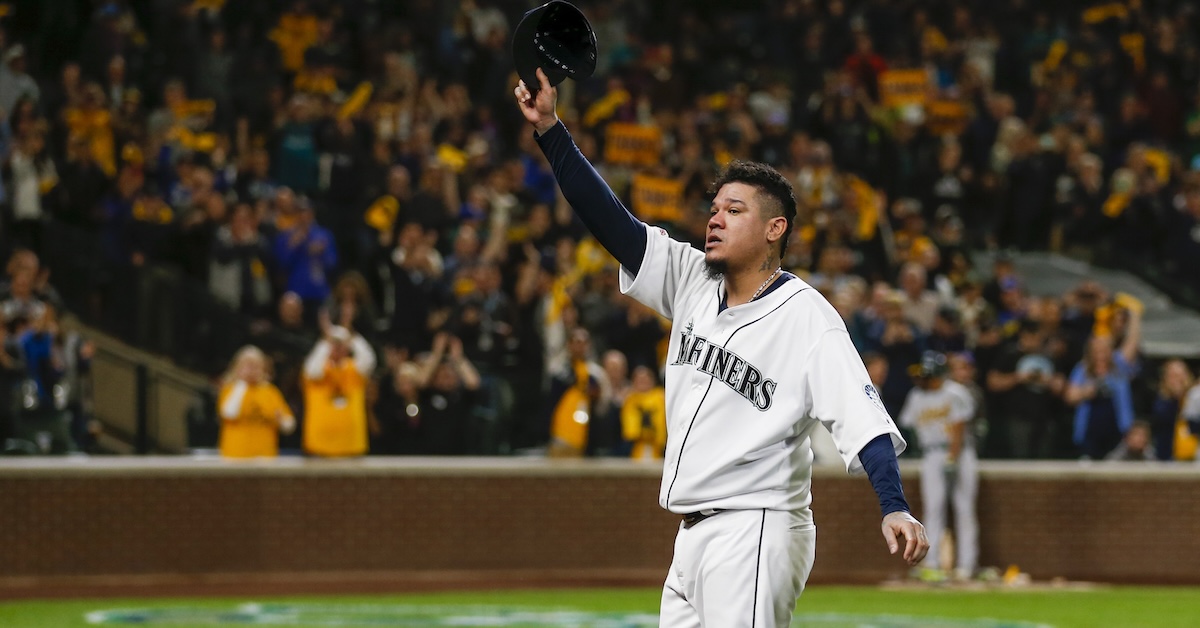
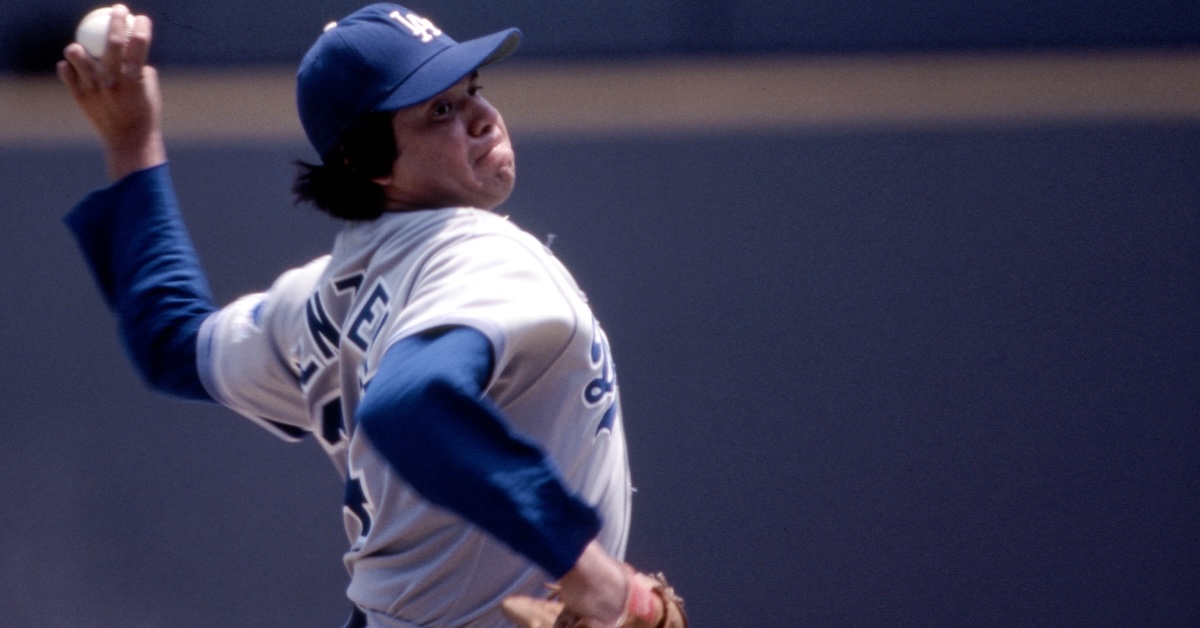
Though he won the Rookie of the Year award, a Cy Young, and a World Series all in his first full season while beginning a six-year streak of All-Star selections — the first of those as the game’s starter — Fernando Valenzuela wasn’t just a star pitcher. He was an international icon, the centerpiece of a cultural phenomenon, and a beloved global ambassador who brought generations of Mexican American and Latino fans to baseball while helping to heal the wounds caused by the building of Dodger Stadium, the very ballpark in which he starred.
“Roberto Clemente is ‘The Great One,’ but culturally, Fernando Valenzuela has been more significant in terms of bringing a fan base that didn’t exist in baseball,” José de Jesus Ortiz, the first Latino president of the BBWAA, told author Erik Sherman for Daybreak at Chavez Ravine, a 2023 biography of Valenzuela. Sherman himself described the pitcher as “like a composite of the Beatles — only in Dodger blue. His appeal was universal.”
After excelling in a relief role during a September 1980 cup of coffee with the Dodgers — as a 19-year-old in the heat of a playoff race, no less — Valenzuela took the world by storm the following spring. Pressed into service as the Opening Day starter, he threw a five-hit shutout, then reeled off four more shutouts and six more complete games within his first eight starts, a span during which he posted a 0.50 ERA. Despite speaking barely a word of English, the portly portsider (listed at 5-foot-11 and 180 pounds, but generally presumed to be at least 20 pounds heavier) charmed the baseball world with his bashful smile while bedeviling hitters with impeccable command of his screwball, delivered following a high leg kick and a skyward gaze at the peak of his windup.
The following article is part of my ongoing look at the candidates on the 2026 Contemporary Baseball Era Committee ballot. Originally written for the 2014 election at SI.com, it has been updated to reflect recent voting results as well as additional research. For a detailed introduction to this year’s ballot, use the navigation tool above. An introduction to JAWS can be found here.
Jeff Kent took a long time to find a home. Drafted by the Blue Jays in 1989, he passed through the hands of three teams that didn’t quite realize the value of what they had. Not until a trade to the Giants in November 1996 — prior to his age-29 season — did he really settle in. Once he did, he established himself as a standout complement to Barry Bonds, helping the Giants become perennial contenders and spending more than a decade as a middle-of-the-lineup force.
Despite his late-arriving stardom and a prickly personality that sometimes rubbed teammates and media the wrong way, Kent earned All-Star honors five times, won an MVP award, and helped four different franchises reach the playoffs a total of seven times. His résumé gives him a claim as the best-hitting second baseman of the post-1960 expansion era — not an iron-clad one, but not one that’s easily dismissed. For starters, he holds the all-time record for most home runs by a second baseman (not counting any other positions) with 351. That’s 35 more than Robinson Canó, 74 more than Ryne Sandberg, 85 more than Joe Morgan, and 87 more than Rogers Hornsby — all Hall of Famers, and in Hornsby’s case, one from before the expansion era. Among players with at least 7,000 plate appearances who spent at least half their time at second base, only Hornsby (.577) has a higher slugging percentage than Kent’s .500. From that latter set, only Hornsby (1.010) and another pre-expansion Hall of Famer, Charlie Gehringer (.884), have a higher OPS than Kent (.855). Read the rest of this entry »
The following article is part of my ongoing look at the candidates on the 2026 Contemporary Baseball Era Committee ballot. Originally written for the 2015 election at SI.com, it has been updated to reflect recent voting results as well as additional research. For a detailed introduction to this year’s ballot, use the navigation tool above. An introduction to JAWS can be found here.
Wherever Gary Sheffield went, he made noise, both with his bat and his voice. For the better part of two decades, he ranked among the game’s most dangerous hitters, a slugger with a keen batting eye and a penchant for contact that belied his quick, violent swing. For even longer than that, he was one of the game’s most outspoken players, unafraid to speak up when he felt he was being wronged and unwilling to endure a situation that wasn’t to his liking. He was a polarizing player, and hardly one for the faint of heart.
At the plate, Sheffield was viscerally impressive like few others. With his bat twitching back and forth like the tail of a tiger waiting to pounce, he was pure menace in the batter’s box. He won a batting title, launched over 500 home runs — he had 14 seasons with at least 20 and eight with at least 30 — and put many a third base coach in peril with some of the most terrifying foul balls anyone has ever seen. For as violent as his swing may have been, it was hardly wild; not until his late 30s did he strike out more than 80 times in a season, and in his prime, he walked far more often than he struck out.
Bill James wrote of Sheffield in the 2019 Bill James Handbook:
“In all the years that I have been with the Red Sox, 16 years now, there has never been a player the Red Sox were more concerned about, as an opponent, than Gary Sheffield. Sheffield was a dynamite hitter and a fierce competitor… When he was in the game, you knew exactly where he was from the first pitch to the last pitch. He conceded nothing; he was looking not only to beat you, but to embarrass you. He was on the highest level.”
Two decades before that, James referred to Sheffield as “an urban legend in his own mind,” referencing the slugger’s penchant for controversy. Sheffield found it before he ever reached the majors through his connection to his uncle, Dwight Gooden. He was drafted and developed by the Brewers, who had no idea how to handle such a volatile player and wound up doing far more harm than good. Small wonder then that from the time he was sent down midway through his rookie season after being accused of faking an injury, he was mistrustful of team management and wanted out. And when he wanted out — of Milwaukee, Los Angeles, or New York — he let everyone know it, and if a bridge had to burn, so be it; it was Festivus every day for Sheffield, who was always willing to air his grievances. Read the rest of this entry »
The following article is part of my ongoing look at the candidates on the 2026 Contemporary Baseball Era Committee ballot. Originally written for the 2015 election at SI.com, it has been expanded and updated. For a detailed introduction to this year’s ballot, use the tool above. An introduction to JAWS can be found here.
Though blessed with as much talent to crush a baseball as nearly anyone in his era, Carlos Delgado had a hard time getting the attention that his performance might have merited. Almost certainly, that owed something to the record numbers of balls flying out of the park during his heyday, with a proliferation of 30- or 40-homer seasons. That he spent the bulk of his prime in Toronto, arriving just after the Blue Jays’ back-to-back world championships but unable to aid in replicating that accomplishment, didn’t help either; not until late in his career would he reach the postseason.
Beyond that, Delgado didn’t fit the mold of what the public has come to expect from professional athletes. The controversies in which he was engulfed weren’t the garden-variety ones of so many other jocks — money, respect, performance-enhancing drugs, off-field lifestyle. No, they were bigger. In an age when most athletes shirk political stances because they can narrow their public appeal and impact their personal brands, Delgado was unafraid to protest against what he felt was wrong, even if his stance was unpopular. He spoke out against the United States Navy using part of his native Puerto Rico for bombing practice, and publicly opposed the war in Iraq. He took a stand by taking a seat (to borrow a headline from The New York Times), refusing to go through the motions during the post-9/11 ritual of “God Bless America” — an action that prefigured San Francisco 49ers quarterback Colin Kaepernick’s kneeling during the national anthem to protest police brutality against people of color in 2016. Delgado was the conscientious slugger.
Deglado’s outspokenness and activism stemmed from his admiration for Hall of Famer and Puerto Rican hero Roberto Clemente. He died six months after Delgado was born, but his legacy of humanitarianism and fighting for social justice left a deep impression on Delgado. He wore Clemente’s no. 21 briefly with the Blue Jays and later with the Mets, and thanks to his charitable endeavors — which included raising money for homeless, underprivileged and handicapped Puerto Rican children, and sponsoring college scholarships through his Extra Bases Foundation, Delgado won the 2006 Roberto Clemente Award. Read the rest of this entry »
The following article is part of my ongoing look at the candidates on the 2026 Contemporary Baseball Era Committee ballot. Originally written for the 2013 election at SI.com, it has been expanded and updated. For a detailed introduction to this year’s ballot, use the tool above. An introduction to JAWS can be found here.
Don Mattingly was the golden child of the Great Yankees Dark Age. He debuted in September 1982, the year after the team finished a stretch of four World Series appearances in six seasons, and retired in 1995 after finally reaching the postseason — a year too early for the franchise’s run of six pennants and four titles in eight years under Joe Torre.
A lefty-swinging first baseman with a sweet stroke, “Donnie Baseball” was both an outstanding hitter and a slick fielder at his peak. He made six straight All-Star teams from 1984 to ’89 and won a batting title, an MVP award, and nine Gold Gloves. Along the way, he battled with owner George Steinbrenner even while becoming the standard bearer of the pinstripes, the team captain, and something of a cultural icon. Alas, a back injury sapped his power, not only shortening his peak, but also bringing his career to a premature end at age 34. At its root, the problem was that Mattingly was so driven to succeed that he overworked himself in the batting cage.
“Donnie was one of the hardest workers I had ever seen and played with. He would go in the cage before batting practice and take batting practice. And after batting practice was over, he’d take batting practice,” former teammate Ron Guidry said for a 2022 MLB Network documentary, Donnie Baseball (for which this scribe was also interviewed).
“I should have learned quicker to not to beat my body up, and if I did less, I could perform better,” said Mattingly for the same documentary. Read the rest of this entry »
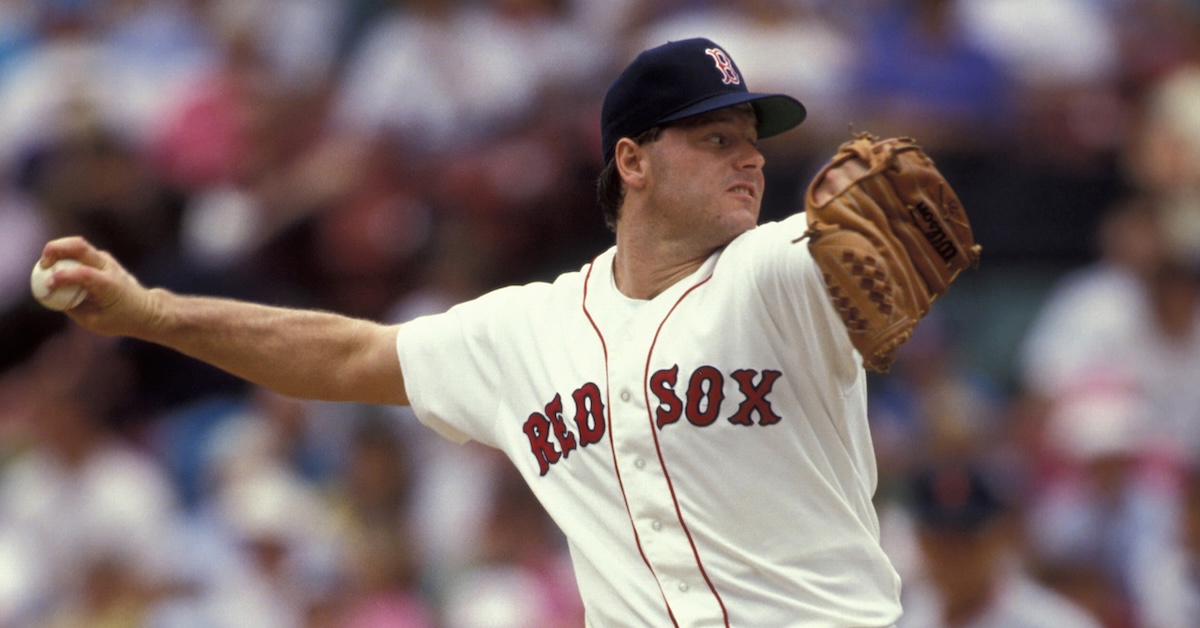
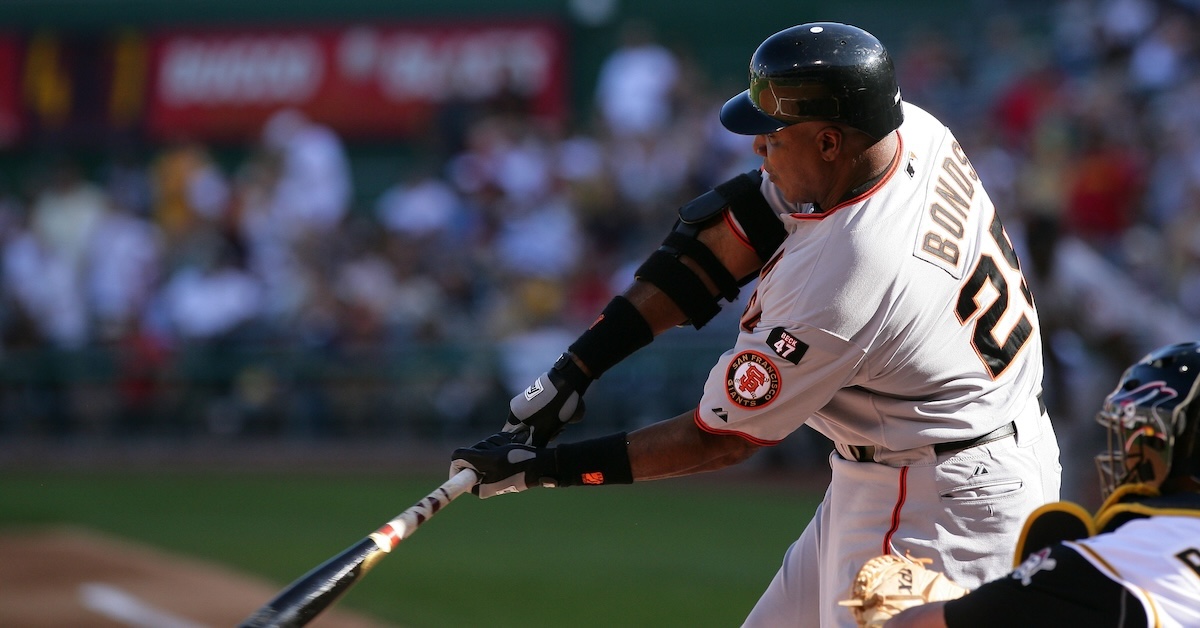
The champagne and tears have barely dried in the wake of this year’s instant-classic World Series, but election season is already upon us. On Monday, the National Baseball Hall of Fame officially unveiled the 2026 Contemporary Baseball Era Committee ballot, an eight-man slate covering players who made their greatest impact on the game from 1980 to the present and whose eligibility on the BBWAA ballot has lapsed. For the second year in a row, the Hall stole its own thunder, as an article in the Winter 2025 volume of its bimonthly Memories and Dreams magazine revealed the identities of the eight candidates prior to the official announcement. The mix includes some — but not all — of the controversial characters who have slipped off the writers’ ballot in recent years, including Barry Bonds and Roger Clemens, as well as a couple surprises. This cycle also marks the first application of a new rule that could shape future elections.
Assembled by the Historical Overview Committee, an 11-person group of senior BBWAA members, the ballot includes Bonds, Clemens, and fellow holdovers Don Mattingly and Dale Murphy, as well as newcomers Carlos Delgado, Jeff Kent, Gary Sheffield, and Fernando Valenzuela. As with any Hall election, this one requires 75% from the voters to gain entry. In this case, the panel — whose members won’t be revealed until much closer to election time — will consist of Hall of Famers, executives, and media members/historians, each of whom may tab up to three candidates when they meet on Sunday, December 7, at the Winter Meetings in Orlando. Anyone elected will be inducted alongside those elected by the BBWAA (whose own ballot will be released on November 17) on July 26, 2026 in Cooperstown. In the weeks before that, I’ll cover each candidate’s case in depth here at FanGraphs.
This is the fourth ballot since the Hall of Fame reconfigured its Era Committee system into a triennial format in April 2022, after a bumper crop of six honorees was elected by the Early Baseball and Golden Days Era Committees the previous December. The current format splits the pool of potential candidates into two timeframes: those who made their greatest impact on the game before 1980 (Classic Baseball Era), including Negro Leagues and pre-Negro Leagues Black players, and those who made their greatest impact from 1980 to the present day (Contemporary Baseball Era). The Contemporary group is further split into two ballots, one for players whose eligibility on BBWAA ballots has lapsed (Fred McGriff was elected in December 2022), and one for managers, executives, and umpires (Jim Leyland was elected in December 2023). Non-players from the Classic timeframe are lumped in with players, which doesn’t guarantee representation on the final ballot. Read the rest of this entry »
The end of an era is coming to Los Angeles. On Thursday at Dodger Stadium, Clayton Kershaw announced that he will retire at the end of this season, and thus will make the final regular season home start of his career on Friday night. The news isn’t exactly a surprise, given that the 37-year-old lefty has been working more or less year-to-year while occasionally musing about retirement since his three-year, $39 million contract expired after the 2021 season. When Kershaw notched his 3,000th strikeout on July 2, it was generally understood as the final major milestone of his illustrious 18-year career that will one day be celebrated in Cooperstown. Just days later, commissioner Rob Manfred named him to the NL All-Star team as a “Legend Pick.”
On Thursday morning, Kershaw sent a group text to his teammates, telling them of his decision to retire. Teammates Freddie Freeman and Max Muncy both revealed that the pitcher had told them of his plans about a month ago, but swore them to secrecy. On Thursday afternoon, the Dodger released a statement regarding the iconic southpaw’s impending announcement.
At his press conference, Kershaw expressed measures of gratitude and relief, his voice occasionally cracking as he thanked the organization and his family. He said that he and his wife Ellen had been discussing his retirement all year. “Usually we wait until the offseason to make a final call, but almost going into this season, we kinda knew this was going to be it,” he said. “So [I] didn’t want to say anything in case I changed my mind, but over the course of the season, how grateful I am to have been healthy and out on the mound, being able to pitch, I think it just made it obvious that this was a good sending-off point.”
With 222 career victories, 3,039 strikeouts, 11 All-Star selections, five ERA titles, three Cy Young Awards (2011, ’13, ’14), an MVP award (2014), a Pitching Triple Crown (2011), a no-hitter (June 18, 2014), and two World Series rings (2020 and ’24), Kershaw is a surefire first-ballot Hall of Famer who will be eligible for election on the 2031 BBWAA ballot. He is 20th all-time in S-JAWS, second among active pitchers behind Justin Verlander, who has one more point (66.1 to Kershaw’s 65.1) in about 700 more career innings. Kershaw’s 2.54 ERA is the lowest of any integration-era pitcher with at least 2,500 innings:
If you’re wondering about the rankings of another three-time Cy Young-winning Dodgers lefty, Sandy Koufax pitched to a 2.76 ERA and 75 ERA- in 2,324 1/3 innings; at a 2,000-inning cutoff, he would rank fourth in ERA and seventh in ERA-. Kershaw is tied with outfielder Zack Wheat and shortstop Bill Russell for the most seasons played with the Dodgers (18), and he holds the franchise records for strikeouts and pitching WAR (78.7 fWAR, 77.6 bWAR) while ranking second in wins only to Don Sutton (233).
After reaching free agency following the 2021, ’22 and ’23 seasons, Kershaw mulled the possibility of leaving the Dodgers to sign with the Rangers, his hometown team. But between his various offseason rehabilitation programs, the 2021–22 owners’ lockout, and the Rangers’ financial uncertainty regarding their cable television deal, staying with the team that drafted him out of Highland Park High School with the seventh pick in 2006 — a round that accounts for eight Cy Youngs between Kershaw, 10th pick Tim Lincecum, and 11th pick Max Scherzer — always made more sense. When he reported to Camelback Ranch in February, Kershaw admitted that he may have previously undervalued the possibility of spending his entire career with the Dodgers:
“I don’t think I put enough merit on it at times, what it means to be able to be in one organization for your entire career. You look at people throughout all of sports that have been able to do that, and it is special, it is. I don’t want to lose sight of that. Getting to be here for my whole career, however long that is, is definitely a goal.”
It’s been an amazing run in Los Angeles. Kershaw first turned heads during spring training in 2008. In a March 9 Grapefruit League game against the Red Sox, 10 days short of his 20th birthday, he threw a curveball that buckled the knees of Sean Casey and awed broadcaster Vin Scully, whose nickname for that big-bending pitch stuck: “Ohhh, what a curve ball! Holy mackerel! He just broke off Public Enemy Number One. Look at this thing! It’s up there, it’s right there, and Casey is history.”
Kershaw began that season at Double-A Jacksonville, making 11 starts before being called up to debut against the Cardinals on May 25, 2008. In his prime, he pumped his fastball in the mid-90s — it averaged 95.0 mph in his rookie season, and was still at 94.3 mph as of 2015 — but that famous curveball and its similarly devastating cousin, his slider, are the pitches that have earned him a spot in the pantheon. According to Baseball Savant — which covers the entirety of his career via PITCHf/x and Statcast — batters have hit .145 and slugged .216 with a 36.5% whiff rate against his curve, and hit .183 and slugged .292 with a 38.8% whiff rate against his slider; the former was strike three 753 times, the latter a jaw-dropping 1,332 times.
Though he flirted with adding a changeup here and there, and over the past three seasons has dabbled with an effective splitter, Kershaw’s three-pitch combination, coming from an extremely over-the-top arm slot (62 degrees as of 2020, the first year of Statcast’s measurements in that area, and 56 degrees as of this season), with a familiar hesitation at the top of his delivery, was enough to befuddle batters. His .211 batting average allowed is the second lowest at the 2,500-inning cutoff since integration, nestled between Nolan Ryan (.204) and Martínez (.214), while his 65 OPS+ allowed is second to Martínez’s 61, ahead of Clemens’ third-ranked 68. That dominance drove his success, and that of the Dodgers, for the better part of the past two decades. If the team holds on to win the NL West this season, it will be its 14th division title in his 18 seasons, and its 15th playoff berth.
Kershaw’s announcement comes at a time when he has begun to scuffle a bit; over his last three starts, he’s yielded 10 runs and walked nine in 13 2/3 innings, and he hasn’t lasted six innings since his August 15 start against the Padres — a memorable outing in which he helped the Dodgers halt a four-game losing streak and reclaim a share of first place in the NL West. Even so, he has generally pitched well this season despite working with a fastball that has averaged just 89 mph, topping 90 only a handful of times per start.
After undergoing a pair of offseason surgeries — one to repair the torn meniscus in his left knee, the other to remove a bone spur and repair a ruptured plantar plate in his left foot — Kershaw didn’t make his season debut until May 17. But aside from a start skipped just before the All-Star break, he’s taken the ball on turn, though almost always with five or six days of rest. In 102 innings, he’s pitched to a 3.53 ERA and 3.59 FIP, offsetting a career-low 17% strikeout rate by holding batters to a 4.1% barrel rate and generally avoiding the long ball. The solo homer he allowed to the Padres’ Ramón Laureano in that August 15 outing is the only one he’s served up in his last 60 1/3 innings dating back to July 2. That was the night he struck out Vinny Capra of the White Sox with the 100th and final pitch of his night — a slider on the outside edge of the plate, naturally — to give him an even 3,000 for his career.
That strikeout made Kershaw the 20th pitcher to reach 3,000 but just the fourth left-hander, after Steve Carlton, Randy Johnson, and CC Sabathia. While Kershaw was the fourth-fastest pitcher to reach the milestone in terms of innings pitched, getting there turned into quite a slog due to his injuries, which have prevented him from making 30 starts in any season since 2015 and sent him to the injured list at least once in every season since.
Kershaw finished the 2021 season, his age-33 campaign, needing just 330 strikeouts to reach 3,000, which based on his 2019–21 performances looked doable across a pair of 25-start seasons. While he pitched his way onto the NL All-Star teams in both 2022 and ’23, with ERAs of 2.28 and 2.46, he totaled just 46 starts and 274 strikeouts in that span, leaving him 56 strikeouts shy of the magic mark. With last season bracketed by his recovery from November 2023 surgery to repair the glenohumeral ligaments and capsule of his left shoulder on one side, and the aforementioned left leg surgeries on the other, he made just seven starts totaling 30 innings, with just 24 strikeouts. He was not on the active roster during the Dodgers’ run to a championship, and at the team’s victory parade in Los Angeles, he exclaimed, “I didn’t have anything to do with this championship, but it feels like I have the best feeling in the world — that I get to celebrate with you guys!”
As for what comes next for Kershaw after Friday’s start, it’s not yet clear. Barring an injury, he will almost certainly be on the postseason roster, but unlike the past two Octobers, the Dodgers are headed toward the playoffs with their best starters healthy and effective. Indeed, since the All-Star break, the Dodgers have the majors’ best rotation in terms of both ERA (3.27) and FIP (2.99); the latter mark is nearly three-quarters of a run better than that of the second-ranked Phillies (3.70). Every starter but Kershaw is missing bats galore:
Dodgers Starting Pitchers Since the All-Star Break
*Includes two bulk relief appearances totaling eight innings.
There’s no question that Glasnow, Snell, and Yamamoto will start for the Dodgers this October, and all signs point to Ohtani being the fourth. The team has kept the two-way superstar on a short leash in his first season back from his second UCL reconstruction surgery; only twice has he reached the five-inning mark or gone past 70 pitches. Though the Dodgers have considered the possibility of using Ohtani in relief à lathe 2023 World Baseball Classic championship game, that prospect is complicated by the fact that removing him would cost the team its designated hitter spot — thus requiring Ohtani to play the outfield in order to remain in the game, something he hasn’t done since 2021. Manager Dave Roberts all but shut that alternative scenario down earlier this week, saying in part, “[T]o think that now it’s feasible for a guy that’s just coming off what he’s done last year, or didn’t do last year, to then now put him in a role that’s very, very unique… You potentially could be taking on risk, and we’ve come this far, certainly with the kid gloves and managing.”
As for the other two starters, Sheehan has been brilliant lately but may face an innings cap given in his first year back from Tommy John surgery. Both he and Kershaw could be used as multi-inning relievers, possibly able to go three or four innings after a starter goes five or six, which would help to mitigate a bullpen that’s been torched for a 5.43 ERA this month. “I feel that there’s a place for him on our postseason roster,” Roberts said of Kershaw on Thursday. “I don’t know what role, but I think that the bottom line is, I trust him. And so, for me, the postseason is about players you trust.”
The postseason has often been a fraught subject when it comes to Kershaw. His 4.49 ERA in October is nearly two full runs higher than his regular season mark, and his 3.81 postseason FIP nearly one run higher than his regular season one (2.85), with his home run rate almost doubling, from 0.74 to 1.39. At times he’s been let down by his offenses and his bullpens, as is the case for just about every starting pitcher given enough opportunities. At times he’s been let down by his managers; think Don Mattingly leaving him in to allow eight seventh-inning runs in the 2014 Division Series opener against the Cardinals. At times he’s been let down by his opponents’ skullduggery and his own hubris; in the wake of commissioner Rob Manfred’s investigation into the Astros’ 2017 sign-stealing scheme, Kershaw expressed regret in early 2020 that he didn’t heed warnings to change signs with a runner on second base in Game 5 of the World Series, during which he allowed six runs. And of course, at times Kershaw has been let down by his own failing body; he retired just one out of eight Diamondbacks in the Division Series opener in 2023 while pitching through the shoulder issues that led him to undergo surgery less than a month later.
While his postseason heroics never reached the level of a Gibson or a Madison Bumgarner, Kershaw has had some shining moments in October. He made a dominant pair of starts against the Braves in the 2013 Division Series, allowing one earned run in 13 innings. He came out of the bullpen on one day of rest to record a two-out save in Game 5 of the 2016 Division Series against the Nationals, after closer Kenley Jansen had thrown 2 1/3 innings; Kershaw followed that with seven shutout innings against the Cubs in Game 2 of the NLCS. He struck out 11 while allowing one run and three hits in seven innings against the Astros in the 2017 World Series opener at Dodger Stadium, where Houston’s notorious trash cans were out of reach. He spun eight shutout innings with 13 strikeouts against the Brewers in the 2020 NL Wild Card Series clincher, and authored two gutty wins in that year’s World Series against the Rays, the second of which, in Game 5, came after Tampa Bay’s bizarre walk-off win in Game 4 and set up the Dodgers’ chance to clinch.
Regarding Kershaw’s career, one other blemish can’t escape mention. Twice in the past three seasons, he has upstaged the Dodgers’ annual LGBTQ Pride Night, and it’s cost him some amount of goodwill. In 2023, he publicly pressured the Dodgers to rescind an invitation to the Sisters of Perpetual Indulgence, a drag troupe that describes itself as a “leading-edge Order of queer and trans nuns.”
The Dodgers at first heeded the calls of Kershaw and others to disinvite the Sisters, only to reverse course after they received backlash for canceling on them. But Kershaw’s comments did force the team to accelerate its announcement of its Christian Faith and Family Day, for which the pitcher served as the primary organizer. “This has nothing to do with the LGBTQ community or Pride or anything like that,” he said at the time. “This is simply a group that was making fun of a religion — that I don’t agree with.”
It might have been easier for some to overlook Kershaw’s reaction to the Sisters as an isolated incident had it not been for this year’s Dodgers Pride Night on June 13, when Kershaw altered his cap, which featured the team’s interlocking LA filled in with the colors of the rainbow. On it, he wrote “Gen. 9:12-16,” an Old Testament verse that, as Michael Elizondo at True Blue LA notes, has been “frequently used by homophobic Christians to denounce the LGBT community as their appropriation of the rainbow is allegedly blasphemous.” On a night meant to celebrate diversity, Kershaw instead chose a message of defiance and intolerance.
Particularly in these politically polarizing times, with LGBTQ+ rights under daily attack by the Trump administration, Kershaw’s move was divisive and disappointing, but it went unchallenged on the Dodgers beat even as the photo of him wearing the altered hat wentviral. As best I can tell, he’s never publicly commented on the matter, so if a picture is worth a thousand words, he’s left that image to be his statement on the subject without offering any alternative interpretations. Three months later, the cap controversy was still being referred to on social media as news of Kershaw’s retirement announcement began to circulate.
Kershaw is not without his imperfections, his impact in the game not without complication. Inarguably, he has defined one of the most fruitful eras in Dodgers history while carving his own niche, not only as one of the best pitchers of his generation, but of all time. His public persona has been marked by his charitable foundation, Kershaw’s Challenge, which according to its web page has raised $23 million “to support at-risk children and families around the globe,” as well as his comments denouncingracial injustice in June 2020, in the wake of the murder of George Floyd. Yet it also carries with it his Pride Night remarks and protest at a moment of profound vulnerability for the LGBTQ+ community. To appreciate Kershaw’s immense legacy is to view him in his totality, the greatness, the disappointments, and everything in between, all taken together.